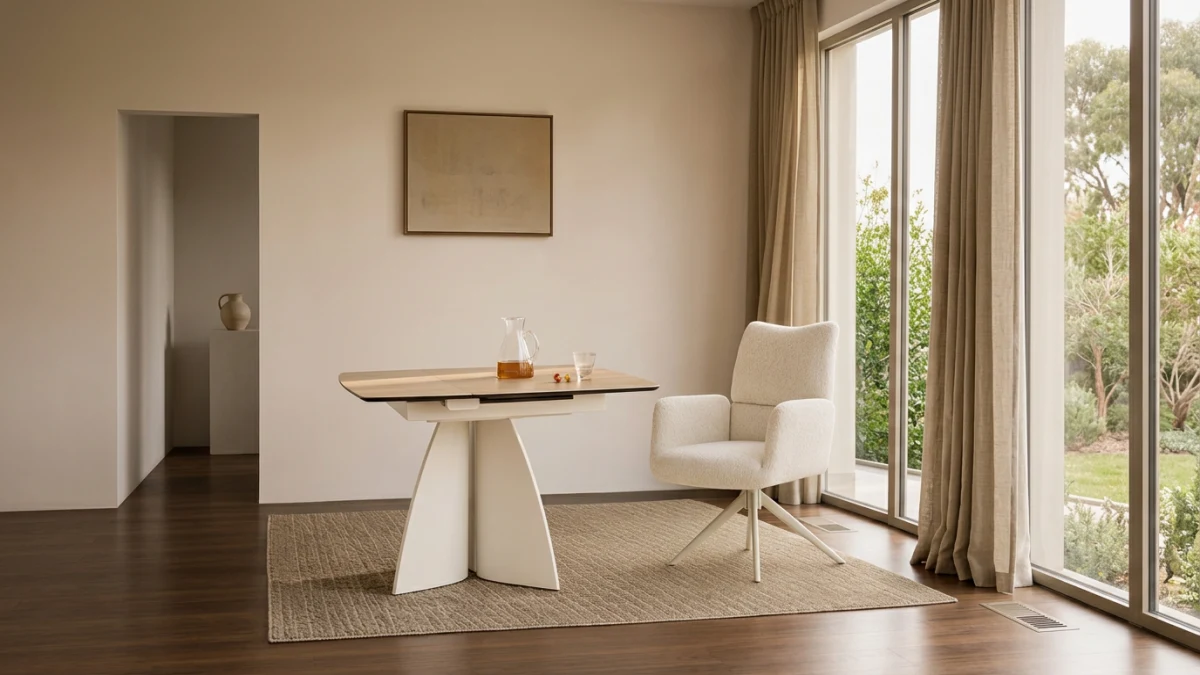
180 vs 360 Degree Swivel Dining Chairs Auto Return: Sourcing Guide
In contemporary European residential and commercial dining spaces, seating mobility has evolved from an occasional novelty into an essential functional feature. Furniture importers, retail buyers, and contract procurement specialists across Germany, the Netherlands, the UK, Poland, Switzerland, and Ireland increasingly prioritize motion-enabled dining chairs. However, when developing or expanding a dining chair program, product managers face a pivotal technical decision: evaluating 180 vs 360 degree swivel dining chairs auto return mechanisms to balance user ergonomics, visual order, structural longevity, and landed logistics margins.
For commercial buyers, choosing the wrong swivel base configuration leads directly to post-sale operational friction, including scraped dining tables, misaligned showroom displays, damaged floor surfaces, and elevated customer warranty claims. A dining chair in a hospitality or high-end residential environment must withstand repetitive dynamic loads while maintaining its mechanical integrity. This guide breaks down the structural mechanics, testing criteria, manufacturing quality control, and commercial trade-offs of 180-degree and 360-degree swivel dining chairs equipped with auto-return functionality.
Understanding Swivel Mechanisms: 180-Degree vs 360-Degree Systems
To make informed sourcing decisions, product teams must understand the mechanical distinctions between limited-rotation and continuous-rotation turntables. At the engineering level, a swivel base is designed to deliver smooth rotational torque while maintaining vertical and lateral stability under shifting body weight.
The Anatomy of the 180 Degree Swivel Chair Mechanism
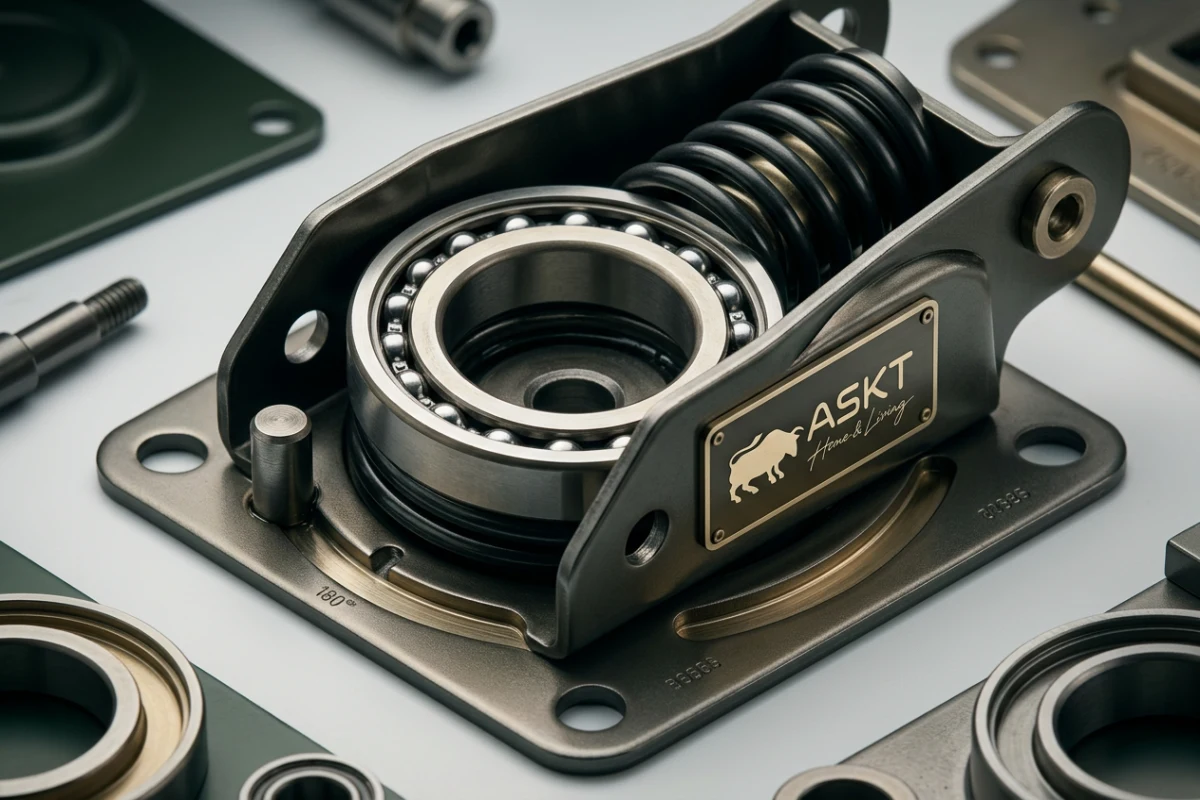
A 180 degree swivel chair mechanism is engineered to rotate 90 degrees to the left and 90 degrees to the right from a fixed, forward-facing centre baseline. Internal mechanical stops integrated into the turntable restrict over-rotation beyond this 180-degree arc. Within this movement envelope, an internal spring system stores kinetic energy as the seated user turns away from the dining table. Once the user stands up or relieves torsional pressure, the stored spring tension automatically returns the seat to its original zero-degree baseline.
Because rotation is restricted to a 180-degree sweep, this mechanism prevents occupants from rotating completely around and colliding the chair backrest or integrated armrests against table aprons, adjoining walls, sideboards, or neighboring chairs. This controlled range makes it especially desirable in European dining spaces where compact room layouts demand strict clearance planning.
The Mechanics of 360-Degree Swivel Turntables
In contrast, standard 360-degree swivels utilize continuous circular raceways filled with ball bearings, enabling endless, unrestricted circular rotation. These provide seamless ingress and egress from any angle, which appeals to open-concept hospitality lounges, dynamic co-working cafes, and informal residential dining environments.
However, incorporating an automatic centring function into a 360-degree base introduces greater mechanical complexity. Standard 360-degree free swivels do not reset themselves; when left unoccupied, seats point in varying directions. To achieve self-centring on a 360-degree platform, manufacturers must integrate a specialized internal cam-track or return cylinder. This allows multi-directional turning while guiding the chair back to its home orientation when unoccupied.
How the Auto-Return Function Works: Mechanics, Springs, and Centring Logic
The auto-return swivel dining chair is engineered specifically to eliminate dining area disarray while protecting dining tabletop edges from abrasive impact. Understanding the underlying engineering ensures buyers can distinguish high-grade commercial assemblies from light-duty domestic substitutes.
Spring-Loaded Return Logic in 180-Degree Units
In high-performance 180-degree mechanisms, auto-return relies on a torsion spring or dual opposing compression springs mounted within a steel housing plate:
- Initial Engagement: When a user swivels to sit down or exit, the central pivot spindle winds the internal spring along a precision track.
- Centring Tension: The spring applies progressive return resistance as rotation approaches 90 degrees in either direction.
- Damped Reset: When the seat is vacated, the spring releases force, returning the top mounting plate smoothly back to the central detent notch. Premium mechanisms incorporate damping buffers that decelerate the return stroke during the final degrees of rotation, preventing abrupt clacking noises or aggressive snapping motions.
Self-Centring Mechanisms in 360-Degree Turntables
Achieving auto-return in 360-degree swivels requires continuous rotary torsion assemblies with reset cams or specialized gravity-assisted return pivots:
- Cam-and-Roller Systems: As the chair rotates through full circular arcs, an internal roller bearing travels along a contoured cam plate. When vacated, gravitational and spring forces guide the roller down into the lowest point of the cam valley, naturally aligning the seat to its predetermined forward orientation.
- Return Cylinders: Frequently utilized in heavier commercial dining chair swivel base assemblies, internal fluid cylinders provide constant rotational resistance and controlled self-centring without noisy mechanical snap-back.
Swivel Mechanism Quality Comparison: Engineering, Materials, and Failure Points
For B2B buyers importing volume containers into Europe, mechanism reliability directly dictates return rates and post-sale warranty costs. A detailed swivel mechanism quality comparison reveals substantial differences in construction materials, steel thickness, bearing assemblies, and long-term durability.
| Engineering Feature | Budget 180° Swivel | Industrial Commercial 180° Auto-Return | Standard 360° Free Swivel | Commercial 360° Auto-Return Base |
|---|---|---|---|---|
| Mounting Plate Steel Gauge | Stamped light sheet | Heavy-gauge cold-rolled steel | Standard stamped plate | Laser-cut heavy steel plate |
| Bearing Configuration | Partial nylon ball ring | Full-perimeter hardened steel ball bearings | Full caged steel ball bearings | Sealed precision bearing cartridge |
| Spring Durability | Standard carbon wire | High-tensile alloy spring steel | N/A (no return) | Reinforced torsion/cam reset |
| Damping System | None (rigid metal stop) | Integrated polyurethane/fluid damper | N/A | Dual-direction hydraulic damper |
| Return Accuracy | High deviation after wear | Tight tolerance to true centre | None | Tight tolerance to true centre |
| Target Application | Promotional retail | High-end retail chains, contract dining | Casual residential dining | Premium hotels, commercial dining spaces |
Common Factory Failure Points and How to Identify Them
During incoming material inspection and supplier evaluations, quality teams should watch for distinct failure indicators common in low-tier swivel chair mechanisms:
- Plate Deflection and Wobble: Under lateral leverage, thin mounting plates flex, creating a noticeable tilt that causes premature wear on central pivot rivets.
- Spring Fatigue and Sag: Low-grade spring alloys lose elastic memory after extended cycling, causing the chair to stop off-centre rather than returning flush with the table.
- Lubricant Leakage and Drying: Inferior greases degrade quickly under friction or leak out during container shipping across variable temperature zones, producing dry friction, squeaking, and metal grinding.
- Rivet Loosening: Central retaining pins that lack precision staking develop mechanical play over time, making the chair feel unstable to the end consumer.
Visual Uniformity vs Rotational Freedom: Choosing the Right Swivel for Commercial and Retail Lines
When curating collections for European retail catalogues or specifying furniture for commercial hospitality tenders, design buyers must weigh the aesthetic neatness of auto-return against unrestricted motion.
Sourcing Scenarios Best Suited for 180-Degree Auto-Return Chairs
The 180-degree auto-return chair is the premier choice for settings where orderliness and table surface preservation are paramount:
- Modern European Residential Dining: In open-plan kitchen and living areas across Germany, the Netherlands, and the UK, messy dining chairs left askew degrade the visual flow of the room. A 180-degree auto-reset mechanism ensures every chair automatically aligns parallel to the dining table.
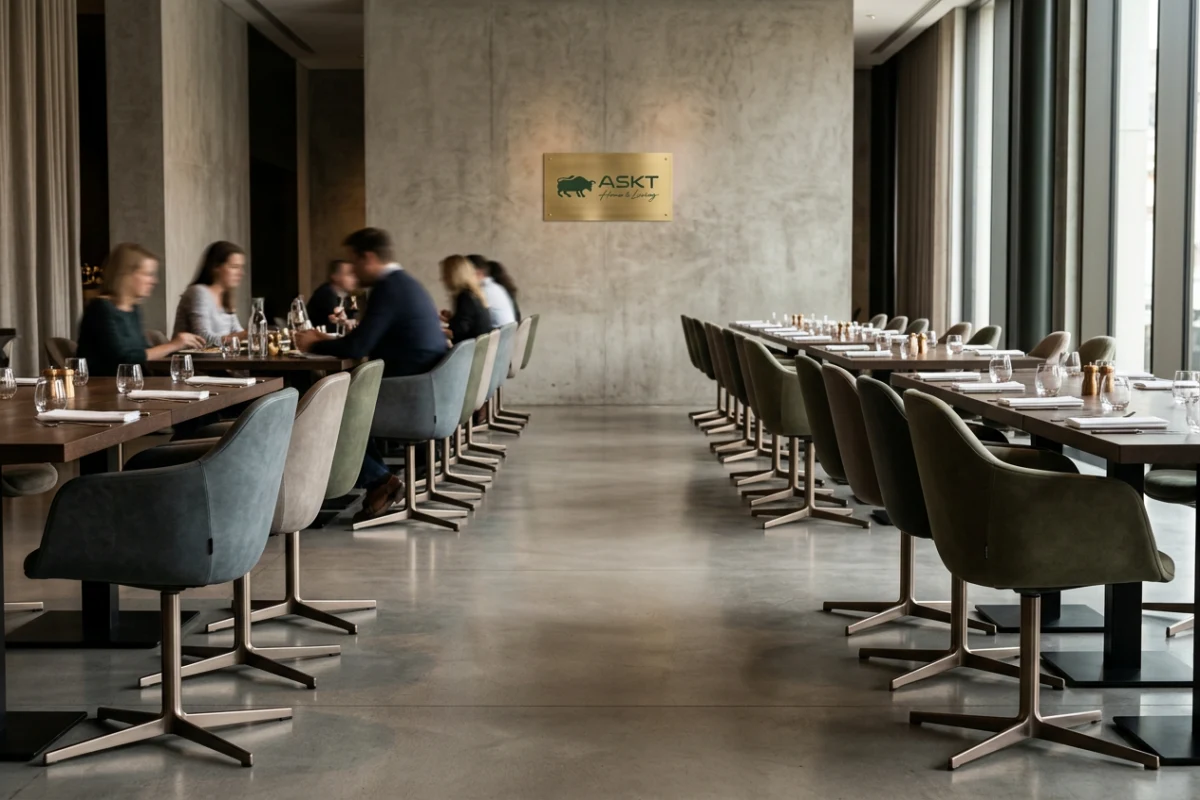
- High-End Restaurants and Boardrooms: Hospitality managers require immediate turn-down neatness. After diners or meeting participants leave their seats, the chairs self-align without requiring service staff to manually straighten every unit.
- Chairs with Fixed Armrests or Bulky Backrests: If an upholstered chair features wide wraparound wings or high arms, a full 360-degree rotation invites users to spin the chair directly into the table apron or edge, causing fabric abrasion and dented wood or sintered stone edges. A 180-degree arc prevents complete spin-around impact.
Sourcing Scenarios Best Suited for 360-Degree Swivel Chairs
Unrestricted 360-degree swivel options—both free-spinning and cam-returned—are ideal for specific commercial and open-concept layouts:
- Bustling Cafe and Bistro Layouts: In fast-paced dining establishments where patrons constantly slide into banquette booths or pivot toward multiple social interaction points, complete 360-degree freedom provides maximum accessibility.
- Armless Sculptural Shell Chairs: For armless, rounded seating shells without protruding hard edges, risk of table collision is minimal, allowing buyers to capitalise on the casual, dynamic feel of 360-degree motion.
- Compact Bar and Counter Dining: High dining counters benefit from 360-degree swivel pedestals, enabling users to mount and dismount effortlessly without having to drag chair legs across hard flooring surfaces.
Durability and Load-Bearing Testing: Assessing Swivel Lifespan and European Standards
European commercial furniture must comply with rigorous safety, strength, and durability standards, such as EN standards for domestic and non-domestic contract seating. Swivel bases present unique failure modes under cyclic testing, making thorough mechanical validation indispensable.
Cyclic Durability Testing for Swivel Mechanisms
To ensure warranty safety across thousands of seating cycles, commercial dining chair swivel base units undergo automated laboratory testing:
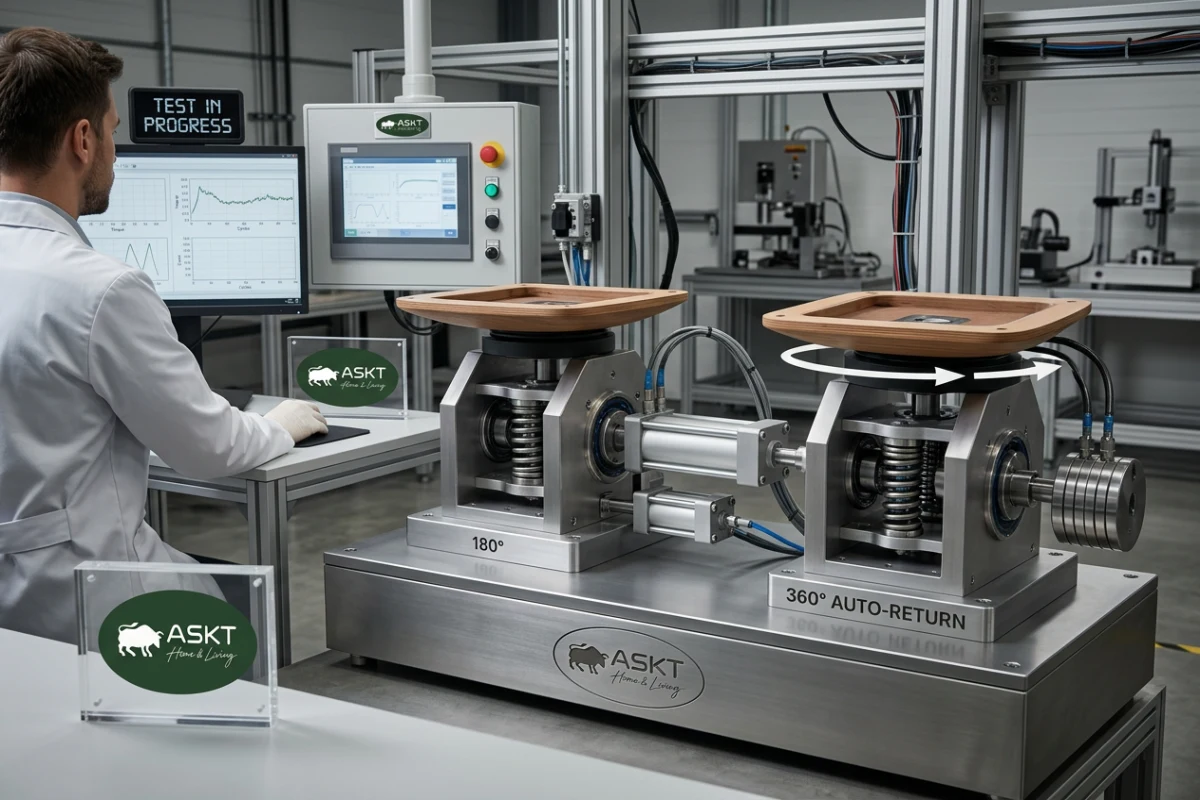
- Rotational Fatigue Cycle Test: The mechanism is mounted to a weighted test rig and driven through its full rotational arc (±90 degrees for 180° bases; full revolutions for 360° bases) for tens of thousands of cycles at a controlled rate.
- Auto-Return Centring Precision Test: Testing verifies whether the return mechanism maintains its designated return position within a tight tolerance after completion of endurance cycling.
- Static Vertical Load and Drop Testing: Simulating severe real-world seating impact, the base undergoes concentrated vertical downward drops to ensure no bearing cage cracking, ball bearing deformation, or plate bending occurs.
- Torsional Sidewall Deflection: Evaluates the swivel mechanism's ability to resist racking forces when a user leans heavily over one armrest while twisting.
Surface Treatments and Environmental Resilience
Swivel turntable plates must endure humidity and temperature changes encountered during ocean transport and varied European indoor climates. High-grade mechanisms feature electro-galvanised zinc plating, heavy black e-coating, or electrostatically applied powder coating to prevent corrosion, oxidisation, and grease contamination.
Manufacturing Quality Control: Structural Integration and KD Packaging Optimization
For volume importers, product excellence extends beyond the mechanism alone to how the swivel interacts with the overall chair frame, structural upholstery, and shipping footprint.
- Chair Shell and Seat Core Integration: Heavy-gauge steel mounting plates distribute torsional strain evenly across the bottom substrate, avoiding concentrated stress on fasteners.
- Swivel Turntable Assembly: Precision bearings and springs housed in reinforced steel ensure quiet, level rotation under dynamic loads.
- Robotic-Welded Metal Spider Base: Metal spider legs and splayed tube assemblies provide a balanced foundation resistant to frame warpage.
- Floor Protection: High-density leveling glides protect hard flooring from scuffs while accommodating slight floor variations.
Knock-Down (KD) Engineering for Container Loading Efficiency
Integrating swivel mechanisms into Knock-Down (KD) dining chairs presents engineering challenges that directly influence sea freight economy:
- Pre-Assembled Welded Legs: Fixed welded bases attached directly to swivels result in bulky shipping boxes, driving down container loading quantities per 40ft High Cube container.
- Optimized Modular KD Four-Leg Base: Engineering a KD metal spider frame that secures rigidly to the swivel turntable plate via machine bolts and locking nuts allows chairs to be packaged flat (shells nested, bases stacked). This significantly boosts container loading density, drastically cutting ocean freight landed costs per unit.
Precision Frame Fabrication and Robotic Welding
To prevent uneven rotational friction, the mounting spider frame must provide perfect plane flatness. High-efficiency factories utilize automated robotic welding arms to secure leg brackets to the central swivel mounting plate. Robotic welding ensures exact weld penetration, uniform leg angles, and zero frame warpage, eliminating chair wobble and uneven bearing loads.
B2B Sourcing Checklist: Key Specifications for Swivel Dining Chairs
When compiling Requests for Quotation (RFQs) or evaluating pre-production samples from OEM/ODM manufacturing partners, European procurement teams should run through this essential technical checklist:
- Plate Steel Thickness: Specify heavy-gauge cold-rolled steel plates for residential retail lines, and reinforced heavy-duty plates for contract hospitality applications.
- Bearing Quality and Count: Request hardened chrome steel ball bearings in full, enclosed polymer or steel retainers. Avoid loose ball systems that can shift out of alignment.
- Spring Composition: Require high-grade tempered spring alloy steel tested to extensive reset cycles without tensile fatigue.
- Damping Performance: Confirm whether the auto-return feature uses soft-close damping or elastomer stops to eliminate metallic return noise when the seat snaps back.
- Fastener Locking Architecture: Ensure all mounting bolts incorporate thread-locking fluid or lock washers paired with locking nuts to resist vibrational loosening from repeated rotational motion.
- Upholstery Foam Stability: Check that the bottom seat base is reinforced with internal steel inserts or spreader plates to prevent swivel mounting screws from pulling out under sustained lateral leverage.
- Packaging Protection: Verify that shipping cartons use high-density edge guards, custom-fit paper board, or molded inserts so swivel spindles cannot punch through packaging cartons during sea transit and pallet handling.
Strategic Sourcing Decisions for European Dining Programs
In the competitive European furniture retail market, introducing motion dining chairs is an effective strategy for increasing average order value and modernising legacy product catalogues. Deciding between a 180-degree auto-return swivel mechanism and a 360-degree system comes down to functional context:
- Opt for 180-degree auto-return mechanisms when developing structured, premium dining collections, armchair silhouettes, compact apartment dining ranges, and contract hospitality projects where spatial neatness and table edge protection are essential.
- Opt for 360-degree rotation systems (either free-swivel or specialized cam-return) for casual dining bars, open cafe environments, lounge meeting zones, and armless occasional dining concepts where multi-directional freedom takes precedence.
By establishing precise engineering specifications, insisting on rigorous cyclic durability standards, and engineering flat-packed KD leg structures, European furniture buyers can minimize customer return rates while maximizing freight volume efficiency.
If you are evaluating dining chair or dining table suppliers for the European market, ASKT can support you with product development, customization, quality testing, and stable export experience. Compare our swivel mechanisms and available chair models to strengthen your next furniture collection.