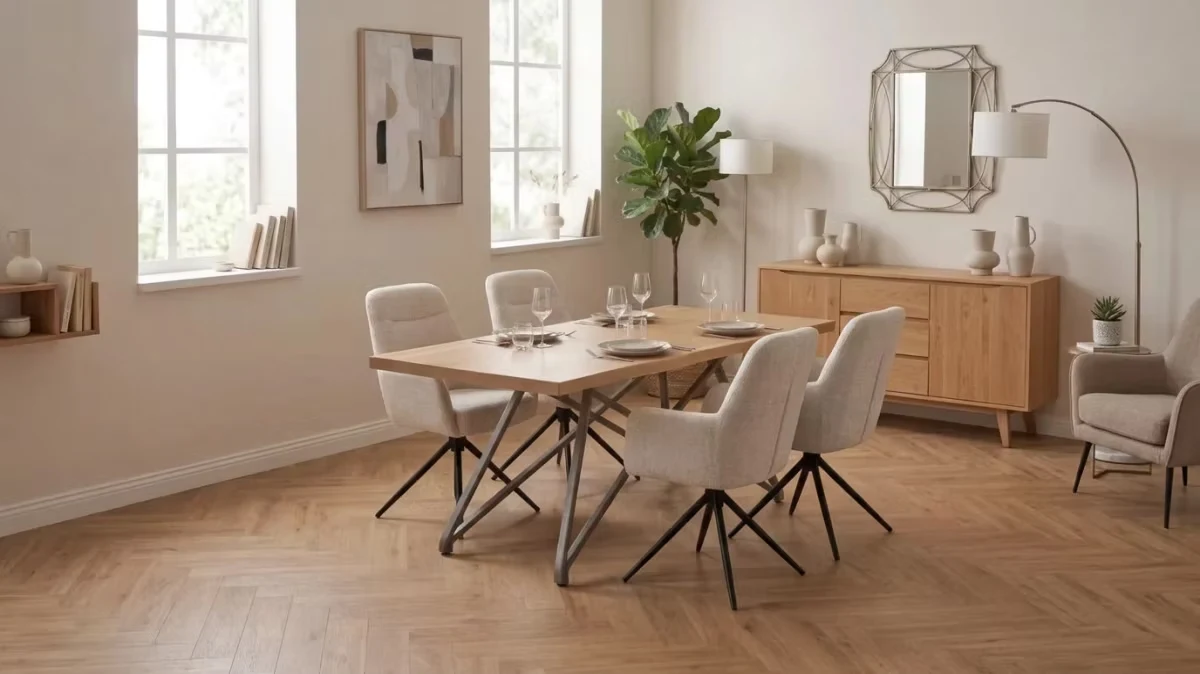
Advantages of Modular Chair Collection in B2B Purchasing for European Buyers
A modular chair collection built on interchangeable seat shells and bases gives B2B furniture buyers more product variety, lower per-SKU MOQ pressure, simpler inventory planning and reduced sourcing risk by sharing standard components across designs.
What does a modular chair collection actually mean for B2B sourcing?
For professional buyers, a modular chair collection is not just a design concept. It is a sourcing and inventory strategy based on a modular seat shell base chair system, where a small number of standard seat shells combine with a range of standard bases to create a much larger number of finished chair SKUs.
Instead of treating every dining chair model as a completely separate product with separate tooling, separate materials and separate production lines, the manufacturer designs the collection around shared components. The seat shell, internal frame structure, upholstery preparation and base attachment points are standardized, while the visible base style, fabric choice and finishing options become variables.
From a buyer's perspective, this changes the economics of building a chair range. You are no longer paying for a new product from scratch every time you add a variant. You are adding a new combination of existing components, which means faster sampling, lower development cost, more predictable quality and better control over your purchasing budget.
I have seen this difference firsthand with buyers who first came to us wanting six separate dining chair models. When we showed them how the same collection could be built from three seat shells and four base types, they immediately understood the commercial logic. Their range did not become smaller — it became smarter.
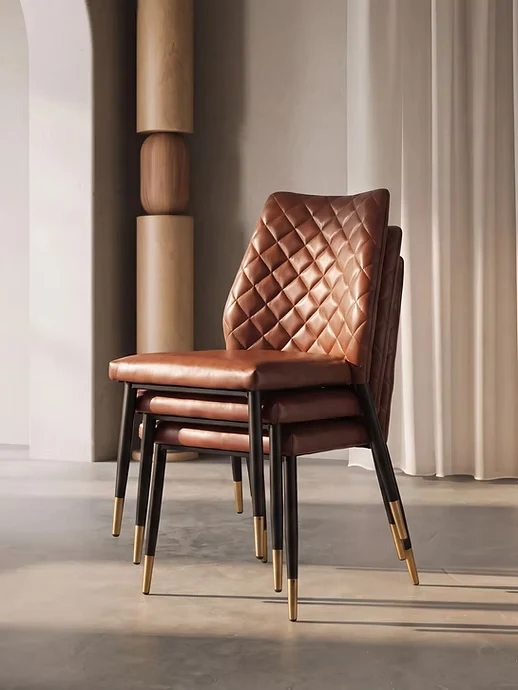
How do seat shell and base combinations create variety without extra tooling cost?
The core commercial advantage of a modular seat shell base chair system is that product variety is generated through combination rather than through separate product development. A well-designed modular system can deliver dozens of visible SKUs from a surprisingly small pool of standard parts.
Consider a realistic component set:
- 3 standard seat shell options (different back shapes or seat depths)
- 4 standard base options (four-leg metal, sled base, wooden leg, swivel base)
- 8 standard fabric colours
- 3 standard frame finishes
Even with that relatively small component set, the number of distinct finished chairs runs into the hundreds. More importantly, every one of those variants is built on proven, tested, production-validated components.
Tooling, frame welding jigs, seat shell moulds, cutting patterns and assembly fixtures all stay the same. The only things that change are the base that gets bolted on and the fabric that gets applied. For a B2B buyer, this means you can expand your product range without carrying the risk and delay of full new product development.
It also means shorter sampling lead times. When a retailer asks for a new look for the upcoming season, the manufacturer does not have to start from a blank sheet. They can take an existing seat shell, pair it with a different base, apply a new fabric and send a sample in a fraction of the time — and at a fraction of the cost.
Why do modular collections help with MOQ flexibility and container loading efficiency?
One of the biggest practical advantages of modular chair collection in B2B purchasing is MOQ flexibility furniture sourcing. Most furniture buyers know the problem well: you want a broad range of models in your catalogue, but every separate SKU comes with its own minimum order quantity. Before you know it, you are committed to far more units than you actually wanted just to fill out your collection.
A modular system solves this by pooling volume across shared components. The seat shells are common to multiple finished chair models, so the manufacturer can produce them in larger, more efficient batches even if the final SKU quantities are relatively small. The per-SKU MOQ effectively drops because the component-level volume is already there.
This matters most for three types of buyers:
- E-commerce brands that need a wide product catalogue but cannot commit to huge volumes on every single variant
- Retail chains that want to test new designs in a limited number of stores before rolling out nationally
- Project buyers who need mixed chair styles for one contract but have a fixed overall quantity
There is also a clear logistics benefit. Modular collections are usually designed with KD (knock-down) structure in mind, so seat shells and bases can be packed separately, stacked efficiently and assembled on arrival. This improves container fill rates, reduces shipping damage and gives you more flexibility in how you allocate stock across warehouses.
Container loading efficiency is not a small detail. For European buyers importing from China, freight cost per unit is a major part of the landed price. A modular collection that packs better directly improves your margin on every chair.
What is the impact of modular systems on inventory planning and stock risk?
Inventory control modular furniture collection is one of the strongest, but least discussed, benefits for European buyers. If you carry ten separate chair models, you need to hold stock of ten separate products, each with its own demand pattern, its own reorder point and its own risk of sitting unsold in a warehouse.
With a modular system, you hold stock of components instead of — or alongside — finished chairs. A seat shell that fits four different base options is a much more flexible asset than a fully assembled chair that only fits one product listing.
The practical advantages for inventory management include:
- Lower safety stock requirement: shared components cover demand from multiple SKUs, so you need less buffer stock overall
- Faster reaction to demand shifts: if one base style suddenly becomes more popular, you can allocate more seat shells to that variant without waiting for a full production cycle
- Reduced dead stock risk: if a particular combination underperforms, the components can still be used for other variants instead of being written off
- Simpler replenishment planning: fewer component types mean fewer purchase orders and fewer items to track
This is especially valuable for buyers who sell through multiple channels. You might have fast-moving SKUs on your online store, slower-moving premium variants in retail showrooms and project stock for contract customers. A modular component pool serves all of them with the same inventory.
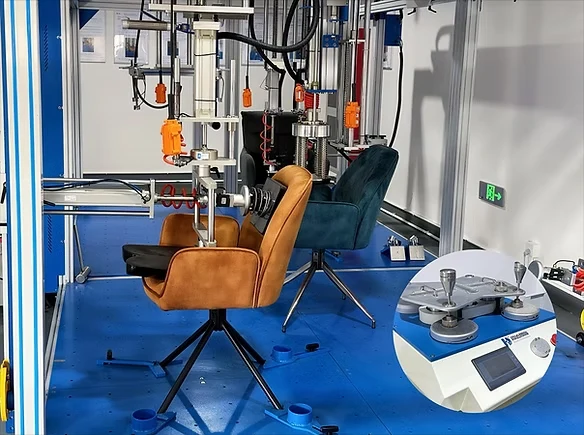
What quality and consistency advantages do shared standard components offer?
Buyers sometimes worry that modular means lower quality or less attention to detail. In practice, the opposite is usually true. When components are shared across many SKUs, the manufacturer has every reason to get them right, because every finished chair in the collection depends on them.
Standardized seat shells and base attachment points mean every unit goes through the same quality control checks, the same assembly tolerances and the same testing procedures. There is no risk that one model uses a slightly different frame thickness or a different bolt pattern because a different production team handled it.
The consistency benefits show up in several ways:
- More predictable durability: the seat shell structure is proven across thousands of units, not just a small batch of one model
- Easier replacement parts: if a customer damages a base or needs a spare, the same part fits multiple chair models
- Simpler incoming inspection: your QC team can focus on a smaller set of critical components rather than learning a new checklist for every SKU
- Better after-sales support: common parts mean faster, cheaper warranty handling
At the manufacturing level, shared components also allow for more investment in production equipment and process control. A factory that produces the same seat shell at high volume can justify automated cutting, robotic welding and dedicated assembly stations — all of which improve consistency compared to small-batch manual production.
How do modular systems support OEM and private label development in Europe?
For private label modular dining chairs Europe market buyers, modular systems are an extremely effective way to build a branded collection quickly and with lower upfront risk. This is a big reason why more European importers and retail chains are moving away from buying off-the-shelf models and toward curated private label ranges.
With a modular base system, you do not need to develop an entirely new chair to have your own branded product. You can select a seat shell, choose a base, specify your own fabric and finish combination, add your branding details — and you have a product that looks and feels like your own, without the cost and lead time of full product development.
This approach is particularly well suited to:
- Furniture retail chains building a mid-market own-brand dining chair collection
- E-commerce brands that need differentiated product photography and listing content
- Purchasing groups that want to offer a common range to their members while allowing individual branding
- Hospitality suppliers that need matching chairs across multiple venues with slight visual variations
Modular systems also make it easier to localize a collection for different European markets. You can keep the same core seat shell and offer different base styles or fabric ranges for Germany, the Netherlands, the UK or Poland, without setting up separate production for each market.
What should buyers check when evaluating a modular chair supplier?
Not every modular collection is built the same way, and the advantages only apply if the system is genuinely well designed. When you are evaluating a supplier's modular chair offering, there are several practical points worth checking before you commit.
First, confirm that the system is truly modular at the component level, not just a marketing name applied to a group of visually similar chairs. The test is simple: can the same seat shell be mounted on multiple bases, and can the same base be used with multiple seat shells? If the answer is no, it is not really a modular system — it is just a coordinated range.
Second, check the quality of the connection between the seat shell and the base. This is the structural heart of the system. The mounting points must be reinforced, the hardware must be consistent and the attachment must be strong enough for every base variant. A weak connection point will cause warranty problems no matter how good the upholstery looks.
Third, understand the real MOQ structure. Ask for the MOQ per seat shell, per base type and per fabric colour separately. Some suppliers advertise low MOQ for the finished chair but then impose high MOQ on individual components or fabric options, which undermines the whole benefit.
Fourth, check that the supplier has proper testing data for the complete chair, not just for individual parts. EN standards apply to the finished product in use, so you need to know that every combination has been evaluated for stability, strength and durability — or at least that the shared components have been tested in multiple configurations.
Finally, ask about spare parts and long-term supply. The whole point of a modular system is that components are standard and available over time. If the supplier changes the seat shell design every year, your spare parts stock becomes obsolete and the modular advantage disappears.
What does ASKT's KINEXA modular system offer for European buyers?
As someone who works with European furniture buyers every day, I can tell you that we developed our KINEXA modular system because we kept hearing the same three problems: MOQ pressure making it hard to build a range, inventory risk tying up too much working capital, and the constant cost of developing new SKUs.
The KINEXA system is built around a core set of standard seat shells and interchangeable bases, designed specifically for the European dining chair market. It follows the principle we call “test first, ship second” — every component and every common combination is validated before it enters the range, so buyers know exactly what they are getting.
What makes it practical for B2B buyers is that it is not just a product system. It is built to support the way buyers actually work:
- Smaller initial orders per variant: shared component volume means lower per-SKU MOQ, so you can test more designs with less financial commitment
- Faster repeat orders: common components are kept in production rotation, so replenishment is quicker than ordering a custom model
- Simpler private label setup: select shell, base, fabric and finish, and you have a branded dining chair range ready for the European market
- Consistent quality across the collection: every chair uses the same proven seat shell structure and the same quality control standards
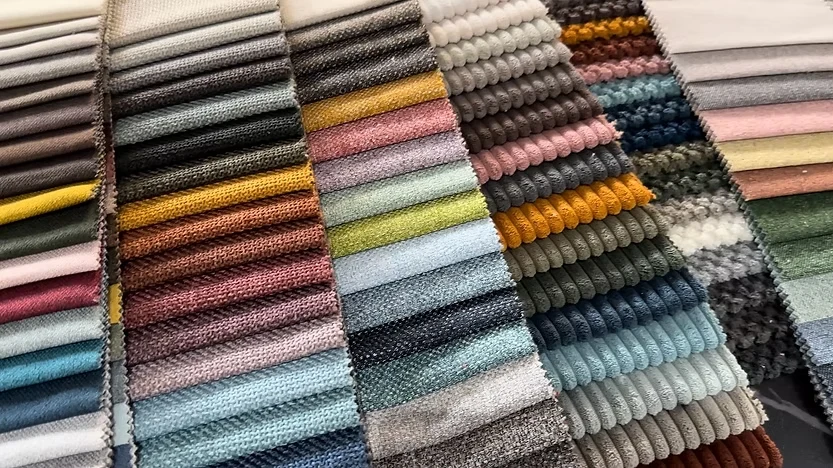
We also support private label modular dining chairs Europe customers with fabric customization, frame finish options and packaging branding. All fabrics used in the system meet OEKO-TEX STANDARD 100 requirements, and our ASKT-Tex functional fabric option gives buyers a high-performance, easy-clean material suitable for both residential and contract use.
The system has already been covered by the German furniture trade magazine möbelmarkt as a practical answer to the sourcing efficiency challenges European buyers face. For us, the goal is not to sell more chairs. It is to help buyers build collections that are easier to manage, less risky to stock and more profitable over time.
Frequently Asked Questions
Is a modular chair collection less profitable than selling unique models?
Not usually. While the unit cost of a modular chair may be similar to a standard model, the total cost of ownership is lower because you save on development cost, sampling cost, inventory holding cost and freight per unit. Most buyers find that the margin per sale is comparable and the return on invested capital is better because less capital is tied up in stock and tooling.
How many different chair models can a typical modular system produce?
It depends on how many seat shells, base types, finishes and fabrics are available, but a practical B2B system usually offers dozens to hundreds of visible combinations. The exact number matters less than the fact that you can select the variants that fit your market without paying for full product development on each one.
Can modular dining chairs be used for contract and hospitality projects?
Yes, they work very well for contract projects because you can match different seating styles across the same venue using a common chair structure. A restaurant might use four-leg chairs on the main floor, sled-base chairs in the bar area and bar stools at the counter, all from the same modular family. This simplifies ordering, spare parts and maintenance while keeping a consistent visual identity.