What Are the Best Dining Chair Manufacturers in China for European Buyers?
The best dining chair manufacturers in China for European buyers must integrate compliance with stringent European standards, high manufacturing automation, and innovative modular logistics. Rather than looking solely at unit costs, top-tier B2B furniture suppliers in China offer verified BSCI audits, certified EN12520 durability testing, and advanced modular designs that minimize shipping volumes and simplify inventory management.
H2: What Market-Specific Sourcing Criteria Do European Buyers Prioritise for Dining Chairs?
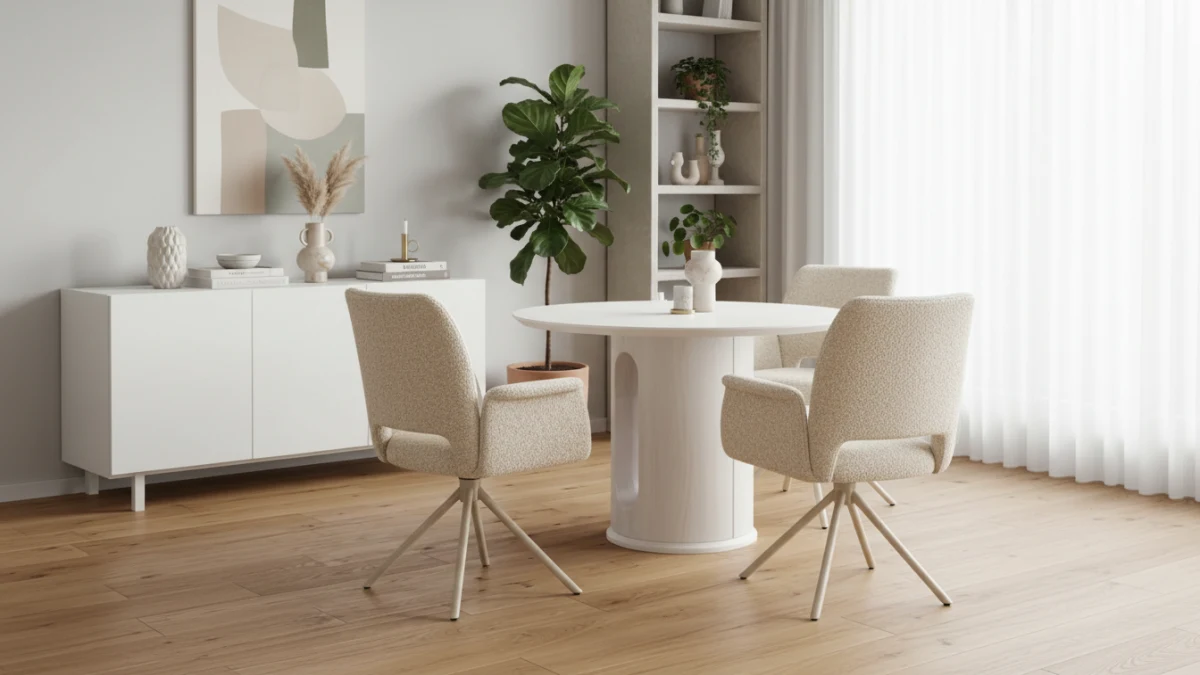
In the highly competitive European furniture market—particularly within the DACH region, the Netherlands, and the UK—successful sourcing is driven by actual consumer data and strict physical constraints. When looking for the best dining chair manufacturers in China for European buyers, experienced purchasing managers focus heavily on market-specific product alignment. For instance, dining spaces in urban European apartments demand specific ergonomic profiles. This means manufacturers must base their designs on meticulous market research, such as analyzing over 1,000 household layouts to understand common dining table heights, walk-space dimensions, and floor material transitions.
Furthermore, category managers require absolute design exclusivity. Unauthorised duplication of chair designs across regional retailers triggers devastating price wars that destroy profit margins. Therefore, sourcing dining chairs from China requires partnering with suppliers who guarantee strict regional design protection and provide transparent OEM/ODM development. This level of commercial security is what separates transactional vendors from true strategic supply chain partners. For example, a reliable supplier should be capable of producing high-volume shipments—such as delivering over 550,000 units to a single demanding European market in a year—while maintaining consistent quality and design integrity.
H2: Why Are BSCI Audits and EN12520 Certifications Crucial When Sourcing Dining Chairs from China?
For European furniture importers, regulatory compliance and ethical manufacturing are mandatory under modern corporate Environmental, Social, and Governance (ESG) frameworks. Sourcing from a dining chair manufacturer from China requires absolute verification of ethical factory standards. Top-tier factories actively undergo independent Business Social Compliance Initiative (BSCI) audits. These audits guarantee that the production facility adheres to fair labor practices, safe working hours, and healthy environments. On the production floor, this translates to tangible protective protocols: providing workers with specialized safety apparel, supplying heavy-duty cut-resistant metal gloves for manual fabric cutting, enforcing the use of protective masks in adhesive assembly areas, and utilizing strictly formaldehyde-free, eco-friendly glues.
Equally vital is verifying physical product safety through rigorous structural testing. To be sold legally and safely in European retail and contract markets, dining chairs must comply with the EN12520 standard (for domestic seating) or the more demanding EN16139 standard (for non-domestic or contract seating). A professional dining chair manufacturer from China should offer fully transparent EN12520 test reports from verified, independent testing laboratories. This certification involves putting the chairs through rigorous testing, including seat and back durability cycles exceeding 100,000 repetitions, severe impact drop testing, and side-stability load tests. Providing these verified reports protects importers from expensive product recalls, structural failures, and liability claims.
H2: How Does Factory Automation Impact the Production Quality of B2B Furniture Suppliers China?
To achieve the strict consistency demanded by major European wholesale chains, a manufacturer must move away from manual workshop processes and invest heavily in industrial automation. Human error in high-frequency manufacturing leads to dimensional variances, weak structural joints, and misaligned upholstery, which inevitably results in high retail return rates.
Leading B2B furniture suppliers China address these risks by integrating advanced automated equipment across critical production stages:
- Automated Fabric Cutting: High-precision computerized cutting systems ensure fabric pieces are cut perfectly to pattern dimensions, preventing seam slippage, loose threads, and uneven upholstery tension.
- Precision Board Punching: Automatic multi-axis drilling machines ensure that bolt hole positions on wooden seat boards are perfectly aligned, guaranteeing that knock-down (KD) components fit together effortlessly during assembly.
- Automated Structural Nailing: Advanced high-speed nailing machines securely anchor four-legged nails into the seat frames, preventing loose structural joints and squeaking under heavy loads.
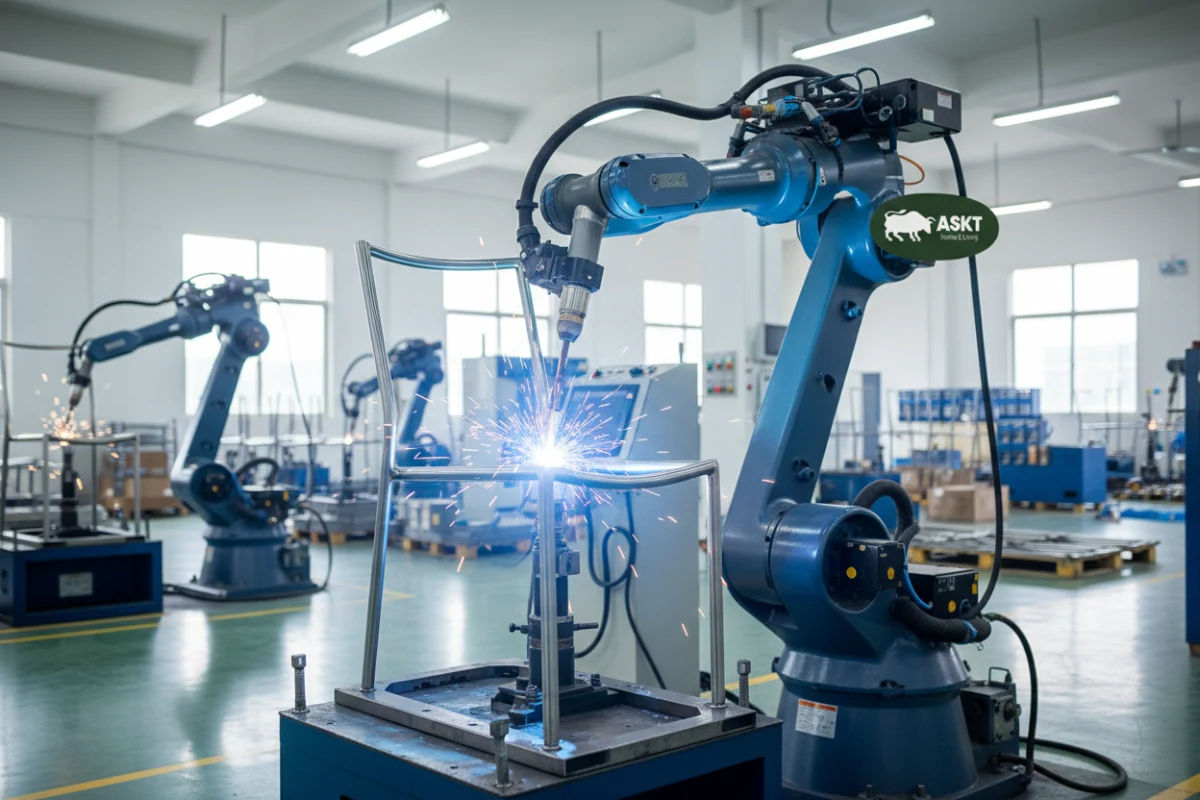
- Robotic Welding Arms: Automated welding robots perform uniform, deep-penetration welds on metal chair frames, eliminating the brittle weld joints and surface imperfections typical of manual welding.
H2: What Fabric Technologies and Material Standards Reduce Commercial Risks for Importers?
Upholstery durability is a primary source of customer dissatisfaction and retail returns. When sourcing furniture, product managers must look for advanced fabric engineering that withstands daily domestic use while meeting strict ecological criteria.
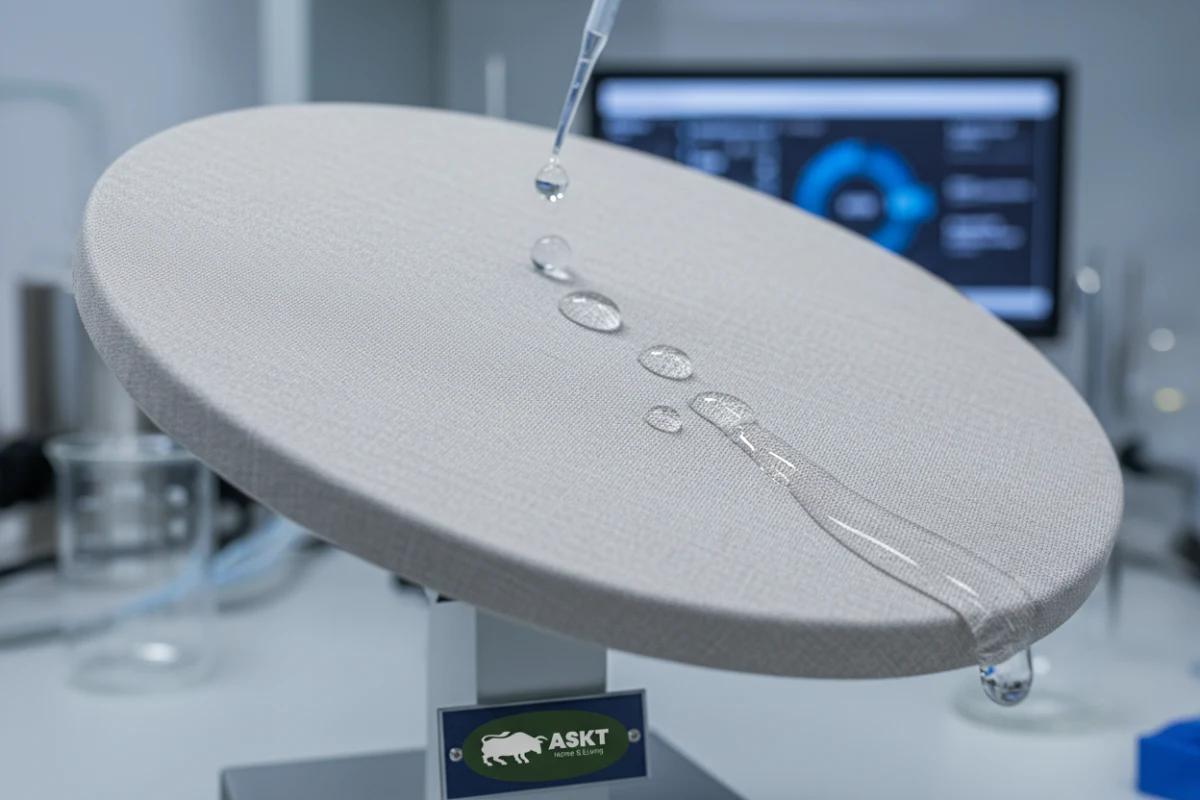
High-performance functional fabrics, such as ASKT-Tex, offer significant business value. This fabric is engineered with molecular-level hydrophobic nano-coatings that repel common household liquids (like water, coffee, and wine) while maintaining micro-ventilation channels. This ensures the material remains fully breathable, preventing heat buildup while remaining exceptionally stain-resistant and easy to clean. These materials must undergo laboratory testing to verify high abrasion resistance (measured via the Martindale method) and high colour fastness under light and rubbing, ensuring the chairs look new even after years of active use.
Additionally, all fabrics must conform to the OEKO-TEX Standard 100 certification. This guarantees the material is entirely free from harmful chemicals, heavy metals, and toxic flame retardants, making it completely safe for direct skin contact and pet-friendly environments. To align with European green policies, professional manufacturers also offer sustainable upholstery options, such as durable polyester woven entirely from recycled PET bottles.
H2: How Can the KINEXA Modular Furniture System Lower MOQs and Optimise Storage?
One of the greatest challenges for European wholesalers and e-commerce brands is managing high Minimum Order Quantities (MOQs) and the substantial capital tied up in slow-moving inventory. Standard sourcing models require buying complete container loads of a single color or design, leading to high inventory carrying costs and warehouse congestion.
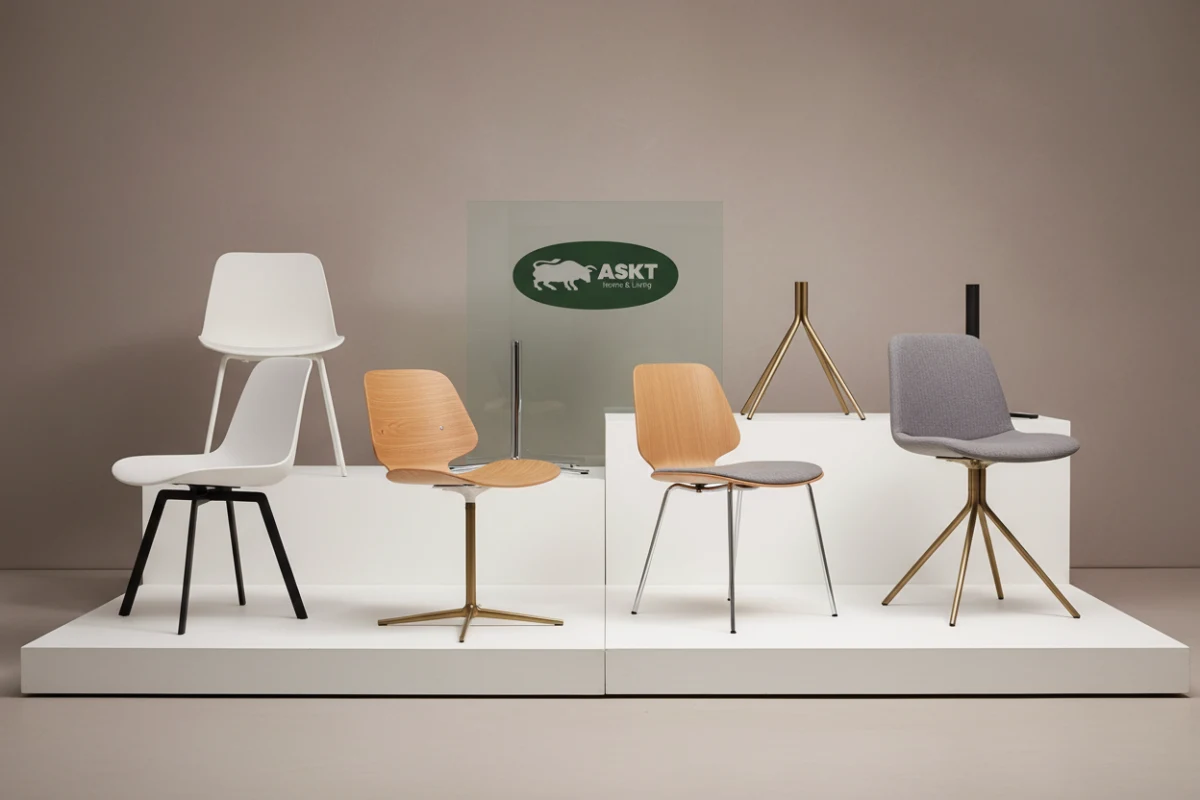
The KINEXA modular furniture system directly solves this bottleneck through modular component engineering. By designing a highly adaptable matrix of interchangeable seat shells and metal bases, the system allows buyers to configure dozens of unique chair styles from a small, standardized pool of components.
This modular design provides substantial B2B advantages:
- Mixed Container Loading: Buyers can mix various chair designs and upholstery materials in a single shipping container, vastly improving logistics flexibility and reducing the initial capital required for new product lines.
- Unified Cost Calculations: Standardized components simplify pricing models, making landed cost calculations highly predictable and easier to manage.
- Optimised Warehouse Footprints: Rather than storing hundreds of bulky, pre-assembled finished chairs, importers can stock compact, flat-packed shells and bases separately, only assembling the final configurations as orders arrive.
- Low-Risk Market Testing: The modular nature allows wholesalers to order small quantities of new styles to test market demand, minimizing financial risk.
H2: How Do Modern AI Procurement Platforms Improve B2B Supply Chain Efficiency?
Cross-border B2B procurement is frequently hindered by communication delays, linguistic misunderstandings, and protracted sample development cycles. Traditional email threads often fail to capture complex technical specifications, leading to costly manufacturing errors and delayed launch schedules.
To bridge this gap, progressive B2B furniture suppliers China utilize specialized AI procurement platforms, such as the Sunbin KI conversational system. This platform acts as an intelligent digital bridge between European purchasing managers and Chinese manufacturing engineers. Instead of simple, literal translations, the platform uses a structured "reverse questioning" protocol. It systematically asks buyers for precise technical inputs—such as specific wood densities, powder coating thicknesses, fabric performance metrics, and compliance certifications—before production starts.
This proactive approach ensures that every detail is aligned with European expectations from the outset. Consequently, the sample development cycle is shortened from several weeks to just a few days, and the risk of technical deviations during mass production is virtually eliminated.
H2: How Do Strategic Dining Chair Partners Compare with Transactional Suppliers?
Evaluating potential manufacturing partners requires looking beyond unit pricing to analyze the total cost of ownership (TCO) and long-term supply chain resilience. The table below illustrates the critical differences between a transactional supplier and a strategic B2B manufacturing partner:
| Sourcing Metric | Transactional Supplier | Strategic B2B Partner (e.g., ASKT) | Practical Importer Business Value |
|---|---|---|---|
| Design & Market Alignment | Copies standard catalog designs without localized research | Designs based on structured research of 1,000+ European homes | Ensures products fit perfectly into localized European dining spaces |
| ESG & Factory Compliance | No active or outdated social audits | Verified BSCI certification, active worker safety programs | Eliminates legal and reputational risks under European ESG laws |
| Structural Quality & Safety | Simple visual quality checks; lacks official certifications | Fully certified EN12520 durability and stability testing | Minimises customer return rates and expensive product recalls |
| Logistics & Inventory | Rigid SKU requirements; full containers of one style | KINEXA modular furniture system with interchangeable parts | Reduces capital expenditure and warehouse storage footprints |
| Communication & Integration | Prone to translation errors and slow email exchanges | Integrated AI tools (e.g., Sunbin KI) with structured validation | Drastically shortens sampling lead times and prevents design errors |
| Environmental Safety | Cheap, uncertified materials and toxic adhesives | OEKO-TEX Standard 100 fabrics, recycled PET, eco-glues | Aligns with green policies; safe for child and pet environments |
H2: What Are the Most Common Durability Tests Required for European Seating?
For the European contract and hospitality sectors, dining chairs must pass demanding safety standards before they can be placed in commercial venues. The primary domestic certification is the EN12520 standard, which evaluates strength, durability, and safety under typical home usage. For commercial environments like restaurants, offices, or hotels, the chairs must satisfy the more rigorous EN16139 standard. These evaluations include static load testing, back fatigue testing, and high-velocity drop tests on the seat surface. Furthermore, the metal frames must feature high-durability powder coating or electroplated finishes to resist rust, moisture, and scratch damage over long periods of frequent use.
H2: How Does Flat-Pack KD Design Reduce Last-Mile Shipping Costs for E-Commerce?
Most damage and return costs in the e-commerce furniture sector occur during "last-mile" courier shipping. Bulky, pre-assembled chairs are highly vulnerable to crushing and rough handling. To combat this, leading Chinese manufacturers engineer high-density Knock-Down (KD) structures. By designing the seat shell and frame to disassemble flat, the packaging volume is significantly reduced, allowing more units to fit in a single shipping container and lowering domestic shipping costs. Furthermore, utilizing high-strength, sustainable packaging materials like dense honeycomb paper instead of traditional plastics ensures the cartons easily pass rigorous ISTA drop tests, protecting the product through transit and home delivery.
H2: Can Wholesalers Order Custom Fabric Swatches to Match Existing Sintered Stone Tables?
Yes, professional B2B manufacturers offer robust OEM and ODM customization services. This includes matching upholstery colors and frame finishes to existing interior collections, such as sintered stone or oak veneer dining tables. Utilizing advanced procurement platforms like Sunbin KI, product managers can quickly share Pantone references, physical swatch standards, or CAD files. The supplier's development team then creates physical samples and runs fabric testing to ensure absolute color consistency and material compatibility, preventing visible tone mismatches in retail showrooms.