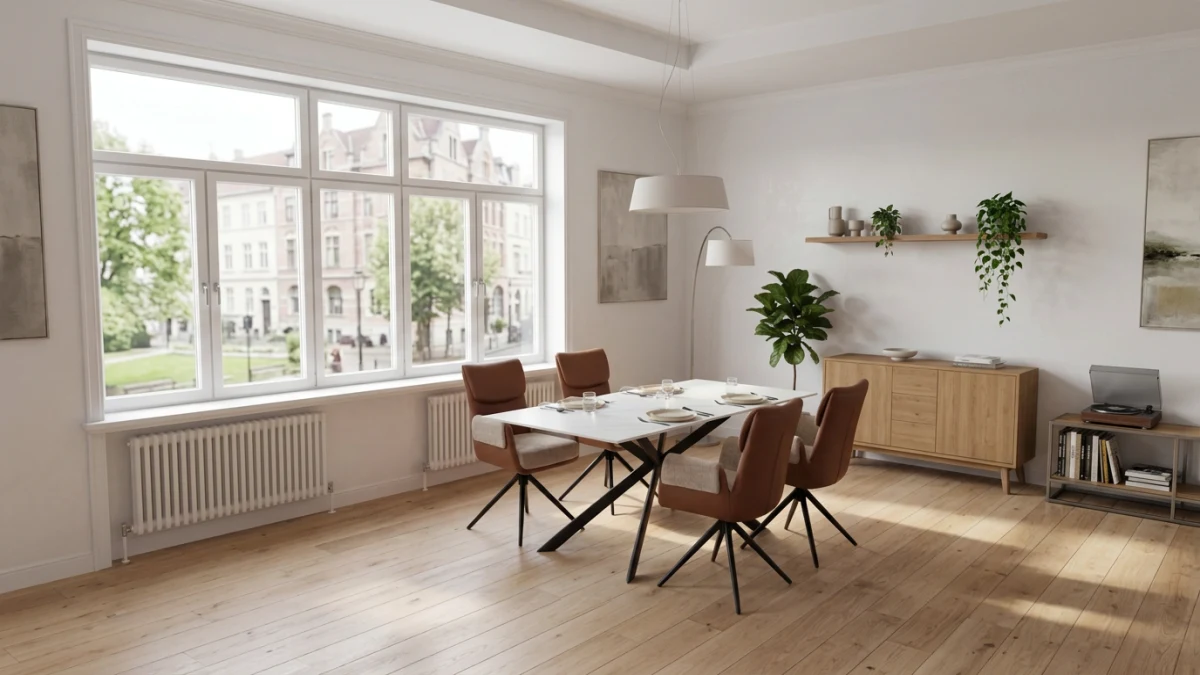
Best Dining Table Materials for Hotels, Restaurants, and Cafes: Commercial Sourcing Guide
The best dining table materials for hotels, restaurants, and cafes balance high-frequency commercial durability, daily cleaning efficiency, structural stability, and replacement cycles. Sintered stone offers exceptional scratch, heat, and stain resistance for intensive food service environments, while high-quality oak veneer provides warm, tactile aesthetics and dimensional stability for upscale hospitality interiors when supported by engineered frames.
What Key Performance Factors Define Contract Dining Table Materials in High-Traffic Hospitality?
Selecting contract dining table materials for commercial hospitality requires a completely different approach from sourcing residential furniture. In domestic settings, dining tables encounter light, controlled use and gentle cleaning routines. In contrast, hospitality environments—ranging from high-turnover breakfast buffets in city hotels to fast-paced bistro dining rooms and vibrant cafes—subject furniture to continuous mechanical, chemical, and physical stress throughout the day.
Commercial table surfaces must endure hundreds of patron seatings, heavy tableware placement, constant cutlery contact, and direct exposure to hot serving dishes. Furthermore, dining furniture in restaurants must withstand repeated exposure to acidic food spills, such as citrus juice, vinegar, coffee, and wine, as well as frequent wipe-downs with commercial sanitising solutions and degreasers. Without appropriate material engineering, ordinary tabletops quickly suffer from surface dulling, staining, scratches, and structural edge chipping.
To make reliable sourcing decisions, procurement managers and project buyers use a structured HoReCa tabletop selection guide focusing on several core performance requirements:
- Abrasion and Scratch Resistance: The surface must withstand the friction of ceramic plates, metal cutlery, glassware, and condiment holders being dragged across it without leaving permanent marks.
- Heat and Thermal Shock Resistance: The tabletop material must resist blistering, discoloration, or cracking when hot plates, teapots, or serving cookware are placed directly on the surface.
- Non-Porous Stain Defense: The material must prevent liquids, cooking oils, and acidic sauces from penetrating beneath the surface, ensuring that fast wipe-downs restore a clean presentation.
- Impact and Edge Protection: Table perimeters and corners must withstand repeated collisions with heavy metal or wooden dining chairs during busy turnover periods.
- Chemical and Moisture Stability: Protective coatings and substrate layers must resist warping, swelling, or delamination caused by constant contact with damp cleaning cloths and disinfectants.
- Structural Load Support: Understructures must remain completely rigid under heavy static loads and dynamic leaning forces without developing wobbles or joint fatigue.
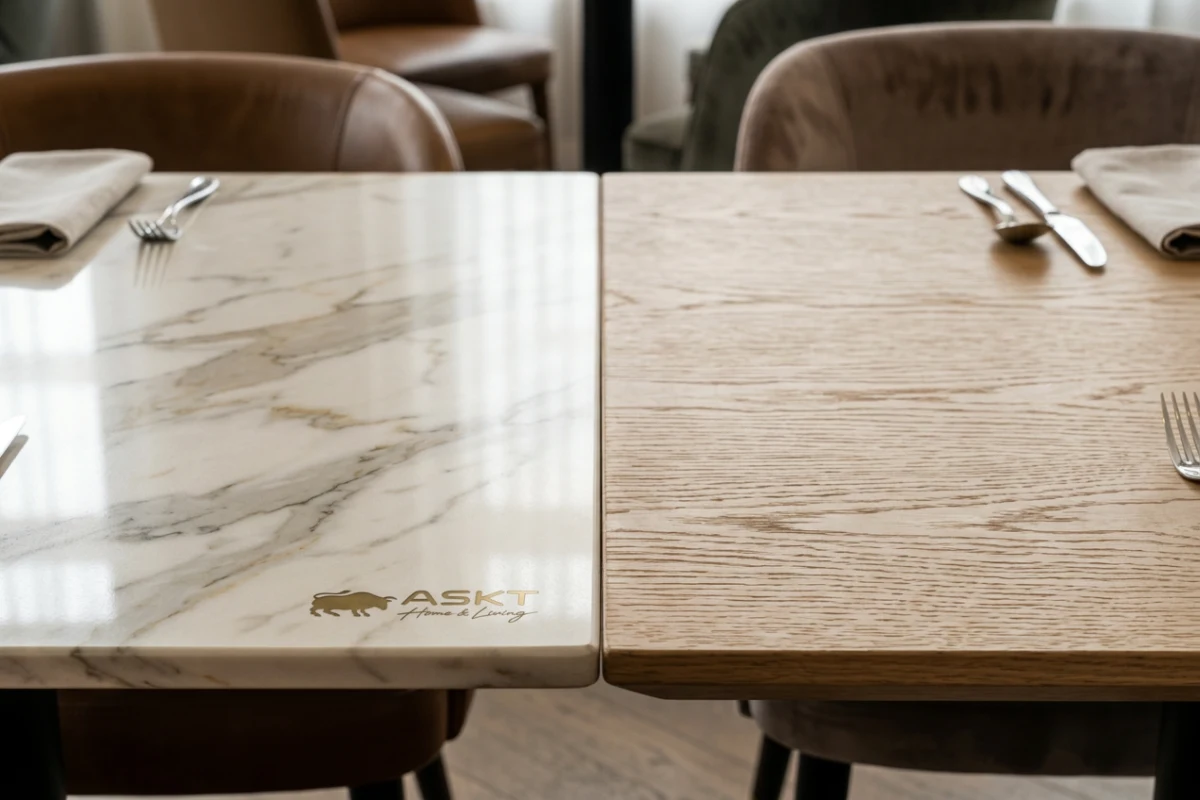
How Does Sintered Stone Compare with Oak Veneer and Other Common Tabletop Materials?
Every commercial dining venue operates with specific aesthetic expectations, traffic densities, and operational budgets. Understanding the technical differences between primary tabletop materials helps buyers choose the right solution for specific areas within a hotel, restaurant, or cafe project.
| Tabletop Material | Surface Hardness & Scratch Resistance | Heat & Thermal Tolerance | Stain & Moisture Resistance | Aesthetic Profile | Maintenance Demands | Typical Commercial Application |
|---|---|---|---|---|---|---|
| Sintered Stone | Very High (Resists knives, ceramics, and abrasions) | High (Tolerates hot plates and serving dishes) | Non-porous (Impervious to liquid penetration) | Contemporary luxury, marble and stone visuals | Minimal (Simple wipe-down with neutral cleaners) | High-turnover bistros, hotel dining, busy cafes |
| Oak Veneer on Engineered Core | Medium (Protected by commercial clear lacquers) | Moderate (Requires mats for very hot dishes) | High (When properly sealed against moisture) | Warm, natural wood grain with tactile character | Low to Moderate (Requires non-abrasive cleaners) | Fine dining rooms, boutique hotels, lounges |
| Solid Wood | Moderate (Prone to indentations and surface wear) | Moderate (Susceptible to heat ring marks) | Moderate (Requires periodic surface maintenance) | Traditional, authentic natural timber look | High (Needs ongoing care and periodic resealing) | Traditional gastro-pubs, rustic cafes, classic dining |
| Compact Laminate | High (Good everyday surface resilience) | Moderate (Tolerates short-term moderate warmth) | Non-porous (Resin-sealed surface layer) | Functional, modern solid-colour or pattern finish | Low (Resistant to common commercial detergents) | Casual dining chains, food halls, staff canteens |
Material Profiles and Manufacturing Characteristics
1. Sintered Stone
Sintered stone is an advanced mineral composite created by subjecting natural mineral components to intense compaction pressure and high-temperature firing. This industrial process creates a dense slab with virtually zero internal porosity. Sintered stone hospitality tables provide an impervious barrier against grease, wine, coffee, and acidic liquids. The surface is exceptionally hard, preventing surface scoring from cutlery or heavy tableware. Because the colour and patterning are integral mineral components, the surface does not fade or degrade under strong interior lighting or sunlight.
2. Oak Veneer on Engineered Core
Oak veneer dining tables combine the natural warmth, authentic wood grain, and tactile appeal of genuine timber with the structural stability of an engineered base core. Solid timber boards naturally expand and contract in response to ambient humidity and temperature changes, which can lead to warping or joint separation in climate-controlled dining rooms. Applying sliced oak veneer over a stable, high-density engineered substrate prevents structural movement while delivering a refined natural aesthetic. When finished with protective commercial lacquers, oak veneer creates an inviting atmosphere in boutique hotels and upscale restaurants.
3. Solid Wood
Solid timber collections remain a classic choice for traditional dining spaces where natural patina and substantial weight are desired. Solid wood tables offer the benefit of being sandable and refinishable over extended ownership periods. However, because natural timber remains porous, it requires consistent maintenance to prevent oil absorption and surface water marks. In fast-paced dining venues with high table turnover, solid timber demands greater cleaning discipline and regular surface care from staff.
4. Compact Laminate
Compact laminate is made by pressing resin-impregnated core sheets under heat and pressure, capped with a decorative protective layer. It provides solid water resistance and practical durability at a competitive price point. While widely used in high-volume casual dining and canteen environments, laminate surfaces lack the visual depth, tactile richness, and acoustic dampening provided by natural wood veneers and sintered stone.
Why Are Sintered Stone Hospitality Tables Ideally Suited for Busy Restaurants and Cafes?
Sintered stone hospitality tables have gained widespread adoption across European commercial projects because they solve common operational maintenance issues that affect traditional surfaces.
In busy food service venues, service speed and table turnaround time directly impact venue revenue. Floor staff need to clear, sanitize, and reset dining tables in seconds. Tabletops that require specialized cleaning routines, gentle polishes, or immediate coaster placement slow down service staff and increase operational friction. Sintered stone eliminates these bottlenecks through several practical advantages:
- Effortless Hygiene Maintenance: Sintered stone does not absorb moisture, oils, or food pigments. Spilled red wine, balsamic dressing, turmeric sauces, and coffee remain entirely on the top surface, wiping away cleanly without ghost stains or sticky residue.
- Superior Cutlery and Tableware Durability: In high-volume cafes and restaurants, heavy plates and steel cutlery frequently scrape across tabletops. Sintered stone surfaces resist everyday scratching, preserving their clean appearance over years of daily commercial use.
- Direct Heat Tolerance: Hot serving plates, coffee carafes, and warm platters can be placed directly on sintered stone surfaces without blistering protective topcoats or leaving discoloured heat rings.
- Consistent Batch Aesthetics: Natural marble quarries exhibit wide variations in veining, colour tone, and structural fissures. In contrast, precision manufacturing allows sintered stone tables to offer consistent stone and marble finishes across large multi-table project orders.
For commercial buyers, pairing sintered stone tops with sturdy metal understructures creates dining tables that withstand intense commercial traffic while maintaining an upscale, modern aesthetic.
How Do Commercial Buyers Assess Commercial Restaurant Table Durability and Structural Integrity?
Professional furniture importers, contract furniture dealers, and project purchasing directors must evaluate the structural integrity and durability of commercial tables before placing volume orders. Sourcing reliable furniture requires reviewing quality control methods, structural engineering, and standard commercial testing criteria.
To ensure consistent commercial restaurant table durability, commercial buyers should inspect several critical structural and material aspects during sample evaluation and factory audits:
- Static Load and Weight Distribution: The tabletop and frame assembly must comfortably support heavy downward static loads at both the centre and perimeter edges without flexing, bending, or shifting.
- Horizontal Impact and Lateral Fatigue: Commercial tables experience frequent sideways forces when patrons lean against table edges or staff move tables during floor cleaning. Testing must verify that base connections and weld points withstand repeated lateral stress without loosening.
- Surface Finish Adhesion and Scratch Resistance: For veneered and lacquered tables, testing must confirm strong bonding between the veneer layer and the substrate core, ensuring the finish will not peel, bubble, or crack under commercial wiping.
- Stain and Liquid Immersion Testing: Sample surfaces should undergo extended exposure tests with common hospitality liquids—such as red wine, coffee, vegetable oil, and sanitising detergents—to ensure no chemical etching, swelling, or discolouration occurs.
- Corner and Edge Impact Testing: Edges and corners must be inspected for chip resistance to verify that contact with dining chair frames will not fracture the tabletop material.
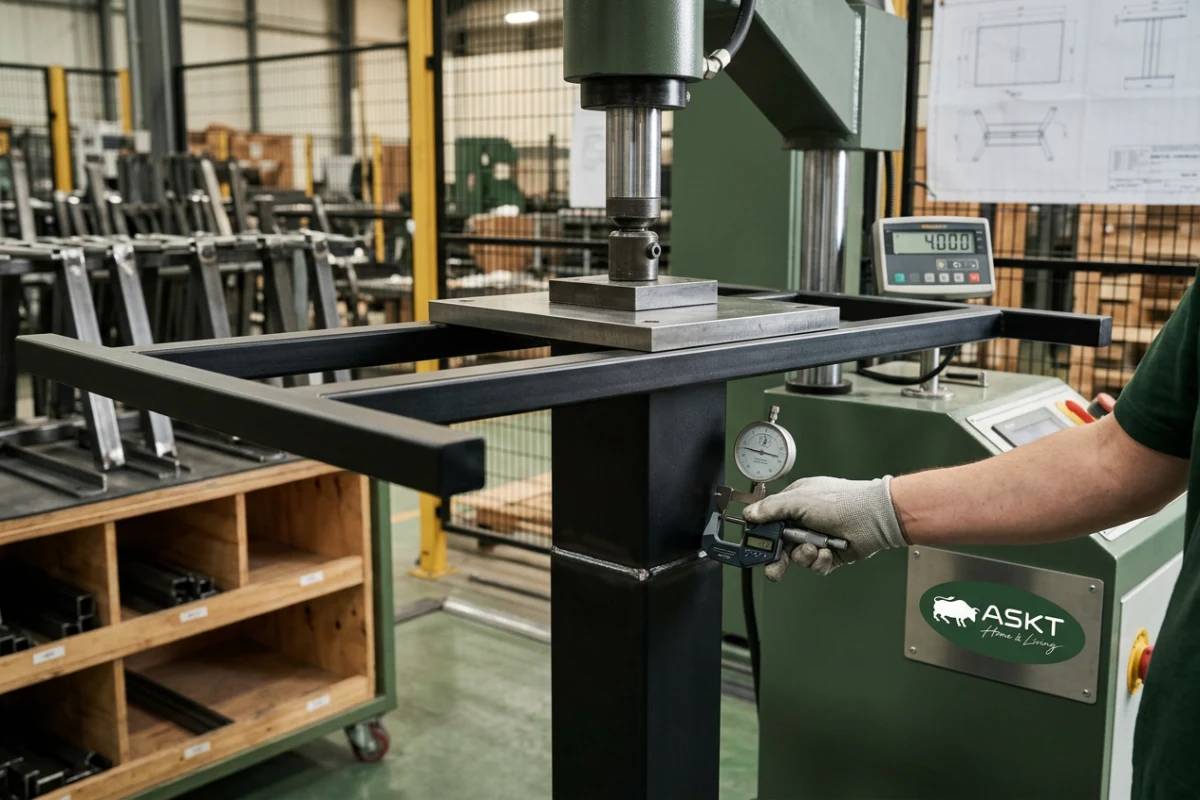
What Frame Engineering and Knock-Down (KD) Designs Ensure Long-Term Table Stability?
Even the most durable tabletop material will fail in a commercial setting if it is supported by an inadequate frame. Unstable table legs, loose connection bolts, and wobbly bases represent frequent customer complaints in restaurant environments.
Achieving long-term stability requires careful attention to understructure materials, metal fabrication, and knock-down (KD) hardware engineering:
- Heavy-Gauge Metal Frames: Commercial dining table frames must use durable steel or aluminium tubing with sufficient wall thickness. Thin, lightweight metal tubes flex under lateral loads, eventually stressing weld joints and causing persistent table instability.
- Robust Welding and Fabrication: Structural joints between table legs, columns, and mounting plates must feature deep, consistent welds. High-precision welding processes ensure uniform seam strength, providing rigid support for heavy sintered stone slabs or timber tops.
- Durable Powder Coating: Metal table bases should receive electrostatically applied powder coating over properly cleaned and pre-treated metal. This protective finish resists chipping, scratching, and corrosion caused by vacuum cleaners, cleaning mops, and chair leg impacts.
- Threaded KD Fastener Systems: Contract furniture must ship efficiently in flat-packed formats while remaining rigid after on-site assembly. Durable commercial tables rely on steel threaded inserts, solid metal connection plates, and high-tensile machine bolts rather than simple wood screws driven directly into composite boards. Metal-to-metal machine screw connections allow tables to be assembled, tightened, or disassembled for storage without stripping fastener threads.
- Adjustable Floor Glides: Hospitality floors in historic buildings, tiled dining rooms, or outdoor terraces are rarely perfectly level. Commercial table bases must include adjustable leveling glides with durable nylon or rubber bases, enabling floor staff to eliminate rocking easily while protecting flooring surfaces.
Typical Contract Table Construction Hierarchy
- Top Surface Layer: Sintered stone slab or lacquered oak veneer layer.
- Substrate Support Board: Engineered backing board providing impact cushioning and secure mounting points.
- Structural Mounting Subframe: Solid steel mounting plate distributing structural loads evenly.
- Central Column or Leg Assemblies: Heavy-gauge metal frame with precision-welded connection brackets.
- Knock-Down (KD) Hardware: Metal threaded inserts and machine bolts ensuring rigid, repeatable assembly.
- Base Plate with Leveling Glides: Weighted base plate equipped with adjustable floor glides for multi-surface stability.
How Can European Project Buyers Balance Upfront Procurement Costs and Long-Term Service Life?
Professional B2B buyers evaluate furniture purchases based on Total Cost of Ownership (TCO) rather than upfront unit price alone. In hospitality environments, premature furniture replacement, frequent repair calls, and poor guest impressions caused by worn tables rapidly erase initial purchasing savings.
When evaluating contract dining table materials, buyers should consider the full operational life-cycle equation:
$$ ext{Total Cost of Ownership} = ext{Initial Sourcing Cost} + ext{Shipping & Handling} + ext{Maintenance & Upkeep Costs} + ext{Early Replacement Costs} - ext{End-of-Life Residual Value}$$
1. Sintered Stone Life-Cycle Considerations
- Initial Procurement Level: Moderate to higher initial cost compared to standard melamine or lightweight laminates.
- Ongoing Maintenance Demands: Extremely low; requires only standard wiping with neutral detergents, with zero need for surface oiling, sanding, or protective resealing.
- Expected Commercial Lifespan: Long service life in intensive, high-turnover hospitality environments.
- Commercial Sourcing Value: Delivers an attractive long-term cost per cover served due to minimal maintenance requirements and high physical resilience.
2. Commercial Oak Veneer Life-Cycle Considerations
- Initial Procurement Level: Balanced, mid-tier commercial investment.
- Ongoing Maintenance Demands: Low to moderate; requires non-abrasive cleaning products and periodic surface checks.
- Expected Commercial Lifespan: Reliable multi-year performance in medium-to-high traffic dining rooms.
- Commercial Sourcing Value: Ideal for boutique hotels, upscale restaurants, and executive dining venues where natural wood grain creates an inviting, premium dining atmosphere.
3. Solid Hardwood Life-Cycle Considerations
- Initial Procurement Level: Higher initial capital expenditure.
- Ongoing Maintenance Demands: Moderate to high; requires routine surface care and periodic refinishing to maintain appearance.
- Expected Commercial Lifespan: Long potential lifespan if properly maintained by on-site facility staff.
- Commercial Sourcing Value: Well-suited for heritage hospitality venues, traditional bistros, and concept restaurants where aged natural wood character adds distinct brand value.
What Sourcing, Packaging, and Quality Control Practices Reduce Risk for Furniture Importers?
Importing commercial dining furniture from international manufacturing partners requires proactive supply chain management, container space optimization, and robust packaging protection. Heavy metal frames and large tabletop slabs present distinct logistics requirements that must be managed to avoid transit damage.
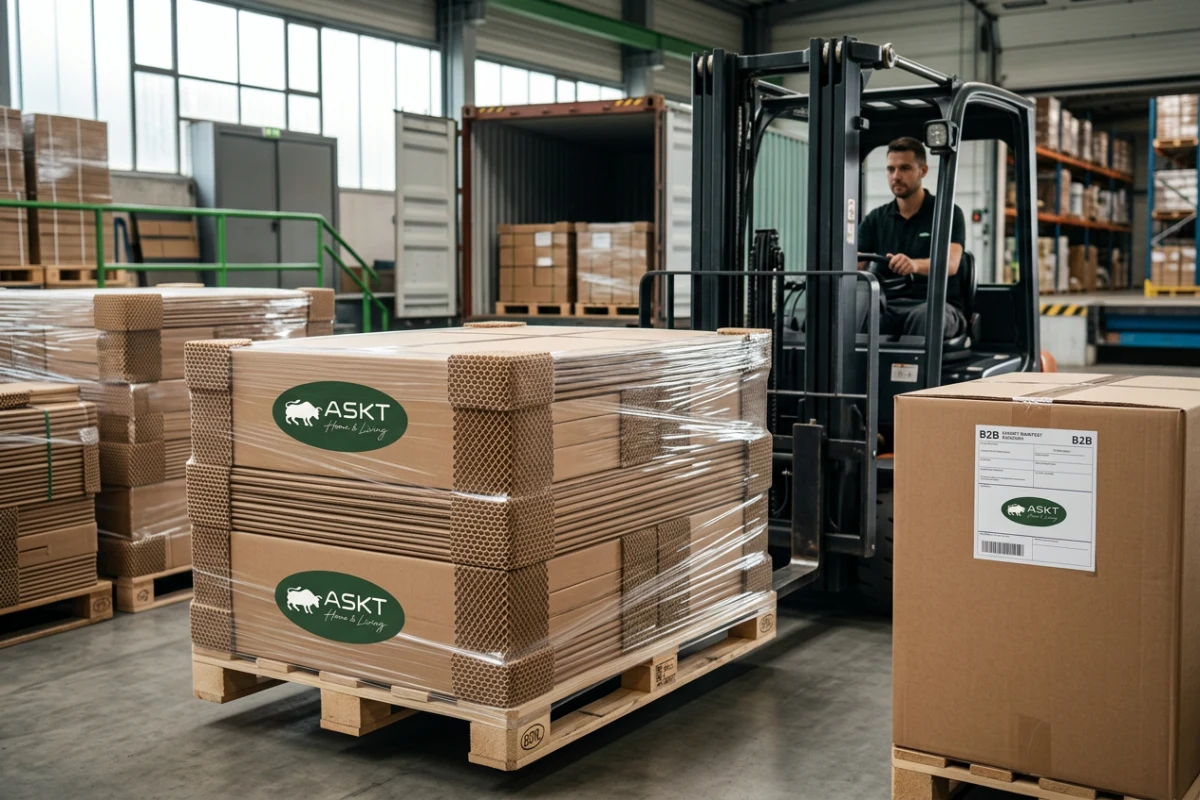
Key Logistics and Packaging Optimization Strategies
- Protective Edge and Corner Cushioning: Tabletop corners are particularly vulnerable to transit shocks during container handling and road freight. Using dense honeycomb paper buffers, reinforced edge guards, and multi-layer corrugated outer cartons protects sensitive edges while reducing reliance on disposable plastic packaging.
- Flat-Pack KD Engineering: Designing dining tables with modular knock-down bases allows tabletops and frame components to pack compactly into separate flat cartons. This engineering approach maximizes container volume utilization, allowing importers to combine tables and dining chairs in single container shipments and reduce per-unit shipping costs.
- Comprehensive Pre-Shipment Inspection: Professional buyers should work with manufacturers that enforce systematic pre-shipment quality control. Inspection routines should verify dimensional accuracy, finish quality, surface hardness, weld integrity, and trial assembly consistency across production batches before loading.
At ASKT, we provide reliable B2B dining furniture manufacturing and supply chain solutions tailored to European furniture wholesalers, retail chains, and hospitality project buyers. With over 20 years of production experience, we specialize in high-performance dining tables and seating collections, combining robust metal frames, durable powder coatings, sintered stone tops, and natural oak veneers. Our manufacturing operations support flexible OEM and ODM customization, rigorous quality control, and sustainable, container-optimized packaging designed for markets across Germany, the Netherlands, the UK, Poland, Switzerland, and Ireland.
Discover our comprehensive table solutions for gastronomy and hospitality projects by exploring our commercial dining table solutions.
Frequently Asked Questions
What thickness of sintered stone is commonly used for commercial restaurant tables?
For commercial dining applications, sintered stone tabletops typically use a 6 mm or 12 mm slab. A 6 mm sintered stone layer is commonly bonded to a stable engineered backing board or metal support subframe, which provides impact cushioning and solid screw retention for table base mounting plates. Thicker 12 mm sintered stone slabs provide high standalone rigidity and can be mounted directly to structural metal subframes.
How does commercial oak veneer differ from standard residential wood finishes?
Commercial-grade oak veneer tables utilize high-density engineered substrate cores that prevent warping, combined with durable multi-layer commercial lacquers or protective polyurethane topcoats. These commercial finishes seal the natural wood grain against moisture, food oils, and alcohol spills, whereas residential tables often feature lighter oil finishes that require frequent reapplication and offer less resistance to commercial cleaning.
How should hospitality operators clean and maintain sintered stone dining tables daily?
Sintered stone tables require simple daily cleaning using warm water, mild neutral dish soap, and soft microfibre cloths. Because the material is non-porous and chemically resistant, standard food service sanitising sprays can be used without damaging or clouding the surface. Abrasive scrubbing pads and harsh acidic sealers are unnecessary, as stains remain on the top surface and wipe away easily.