
Ceramic Dining Table Quality: 7 Details B2B Buyers Should Inspect Before Shipment
The B2B Stakes: Why Sintered Stone Quality Control Cannot Be Left to Chance
For a European B2B furniture importer, wholesaler, or retail chain coordinator, opening a newly arrived shipping container at a distribution center is always a critical moment. If the container reveals compromised products, a highly anticipated shipment can quickly transform into a logistical and financial setback. For instance, discovering that a significant portion of a high-end ceramic dining table batch has sustained hairline fractures during transit, or that the extension mechanisms do not align correctly, immediately halts distribution. Such defects render the tables unsellable to retail clients and lead to complex return discussions, replacement delays, and damaged commercial trust.
In the premium contemporary indoor furniture sector, ceramic and sintered stone dining tables have gained massive popularity. European consumers prize them for their exceptional scratch resistance, heat tolerance, and refined modern aesthetics. However, because sintered stone is a highly dense, mineral-based material, its inherent rigidity means that improper handling or minor manufacturing flaws can lead to chips, micro-cracks, and structural failures under stress. This is why collaborating with a professional ceramic dining table manufacturer requires establishing a rigorous gatekeeping process long before any shipping container leaves the factory floor.
Implementing a robust programme for B2B furniture quality control China ensures that you do not inherit latent manufacturing defects that become nearly impossible to resolve once the cargo is ocean-bound. Relying solely on a supplier's self-declaration of quality is rarely sufficient when supplying demanding markets such as Germany, the Netherlands, or the UK. Instead, experienced procurement teams employ an objective, structured pre-shipment furniture inspection checklist to verify safety, structural stability, and visual uniformity. This comprehensive guide outlines the seven essential quality details that B2B buyers should inspect before shipment to guarantee retail success.
Detail 1: Sintered Stone Surface Inspection and Edge Beveling Precision
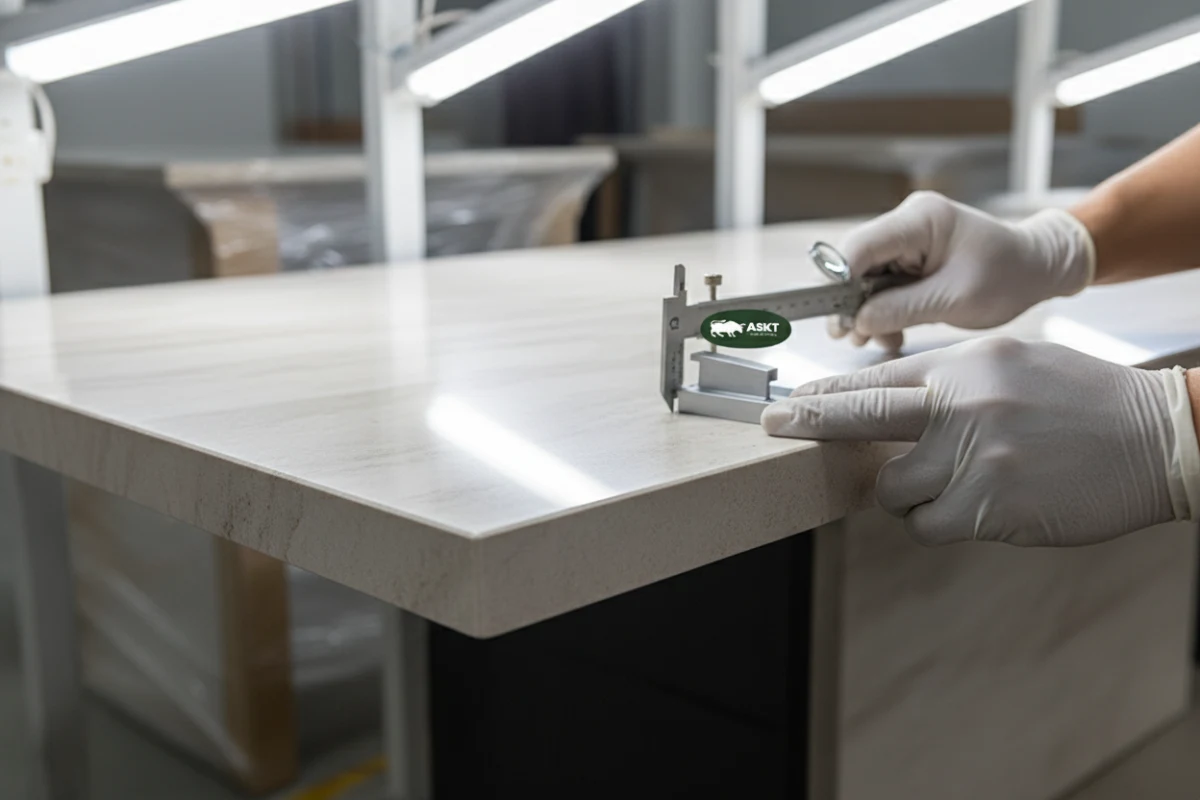
The tabletop is the defining feature and the most expensive component of any contemporary dining table. During a professional sintered stone table inspection, the slab must be examined under bright, standardized lighting. The goal is to uncover surface variations, printing inconsistencies, or microscopic structural flaws. Low-quality slabs or poorly calibrated industrial cutting tools can easily leave tiny micro-fractures along the cut lines. While these fractures might look invisible to the naked eye initially, they can quickly propagate into visible cracks due to the vibrations experienced during sea transit.
Inspectors should pay close attention to the following surface and edge details:
- Surface Consistency: Run a gloved hand across the entire top to check for microscopic pinholes, uneven glazing, or an unwanted texture on the finish.
- Edge Beveling Quality: A sharp, ninety-degree cut on a ceramic slab leaves the edge highly exposed to chipping. Premium tables must feature a precise, uniform bevel or rounded chamfer along the entire perimeter. This edge profile helps redistribute impact forces, significantly reducing the likelihood of chipping during transport, assembly, and daily domestic use.
- Cut Line Cleanliness: The edge profile must be perfectly smooth, showing no signs of small jagged chips or rough patches from dull cutting blades.
Detail 2: Sub-Top Adhesion Strength and Mounting Plate Alignment
A sintered stone slab cannot simply rest on a metal base without structural support. To ensure safety and distribute weight evenly, the ceramic top must be securely bonded to a rigid sub-top, typically made of dense engineered wood, marine plywood, or tempered glass. The quality of this bond determines the long-term durability and safety of the table.
During a pre-shipment inspection, the bonding process must be verified:
- Adhesive Coverage: Inspect the boundary line between the ceramic slab and the sub-top to ensure that the adhesive has been applied evenly. There must be no visible air gaps or voids, which could allow moisture to penetrate or create weak points under pressure.
- Adhesive Performance: Low-grade adhesives can become brittle or lose their bonding strength under the extreme temperature and humidity fluctuations inside a sealed shipping container. Ensure the manufacturer uses high-performance industrial adhesives designed to withstand environmental shifts.
- Mounting Plate Alignment: The sub-top contains embedded metal plates and threaded inserts to secure the table legs or frame. Inspectors must check that these inserts are positioned perfectly according to the technical drawings. Even a minor alignment error will prevent the legs from being bolted on smoothly, creating massive assembly headaches for retail partners or end consumers.
Detail 3: Metal Frame Welding Integrity and Powder Coating Durability
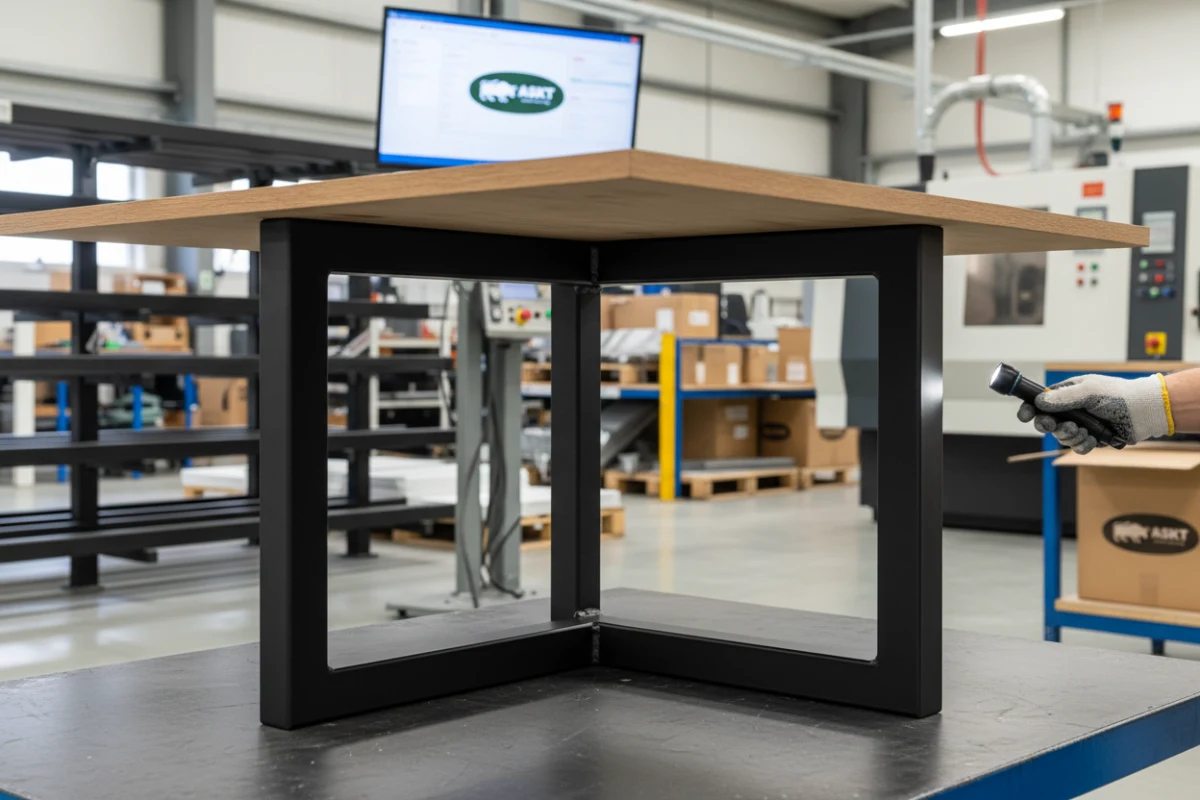
The metal frame serves as the foundation of the dining table, bearing the heavy weight of the ceramic or sintered stone top. Any failure in the metal base or support brackets poses a significant product liability risk. Therefore, evaluating the weld quality and surface finish of the metal components is a critical step in the inspection process.
Key areas to inspect on the metal frame include:
- Welding Quality: Examine all joint connections closely. High-quality frames feature continuous, uniform welds that have been ground smooth to ensure a clean visual appearance. Spot welding or joints with uneven surfaces, gaps, or welding slag must be rejected, as they lack the strength required to support heavy loads.
- Powder Coating Adhesion: The protective finish must be tested for durability. A common method is performing a standard cross-hatch adhesion tape test on a sample frame to ensure the powder coat is firmly bonded to the metal substrate and will not peel or chip easily under physical impact.
- Surface Uniformity: Check the entire frame for scratches, bubbles, or spots where the raw metal is exposed. An incomplete coat allows moisture to make contact with the metal, leading to rust over time.
Detail 4: Extension Mechanism and Hardware Tolerance Checks
Extension dining tables are highly sought after in European markets due to their versatility in space-constrained homes. However, because they contain moving parts, they introduce additional quality risks. A stiff, misaligned, or noisy extension mechanism will immediately ruin the user experience and trigger customer returns.
When inspecting extension dining tables, verify the following mechanical aspects:
- Operational Smoothness: Open and close the extension mechanism multiple times. The movement should be smooth and require minimal effort, without any catching, scraping, or sticking.
- Alignment of the Leaves: When fully extended, the main slab and the extension leaves must sit perfectly flush. Run a level across the joints to check for any height discrepancies. A noticeable step between the panels is unacceptable.
- Gap Consistency: Inspect the joint lines where the leaves meet. The gap must be uniform along the entire width, ensuring a clean and seamless look when the table is closed or open.
- Locking Stability: Ensure that the locks hold the extension panels firmly in place. There should be no sliding movement or wobble when the mechanisms are locked.
Detail 5: Assembled Leveling, Load-Bearing, and Wobble Verification
A common mistake in furniture quality control is inspecting parts only in their disassembled state. A complete assembly check of random production samples—selected from the actual batch—is essential to verify how all the components work together.
Once the table is fully assembled on a flat test floor, inspectors should check:
- Tabletop Flatness: Use a professional straightedge across the surface to confirm the tabletop is completely flat, with no bowing or warping from the manufacturing process.
- Leveling and Wobble: Apply vertical pressure to different corners and edges of the table. The table must remain stable and show no signs of wobbling. Ensure that the table feet are fitted with adjustable, non-marking glides to help compensate for minor variations in residential flooring.
- Structural Stability: Confirm that all joints, support brackets, and frame screws hold together firmly under realistic weight loads, ensuring the table meets the durability expectations of European retail and contract furniture buyers.
Detail 6: Batch Color Consistency and Pattern Matching Standards
For premium ceramic furniture, visual appeal is just as important as structural strength. Many sintered stone slabs are designed to replicate natural marble, stone, or concrete patterns. Because these patterns are printed and glazed, color shifts and alignment errors can occur between production runs.
To ensure your shipment matches the approved samples, incorporate the following visual checks:
- Color Matching: Compare the production table tops directly against the approved master sample under consistent, neutral lighting. The color shades and tone depth must match to ensure batch consistency across your inventory.
- Pattern Flow: For large tables or multi-panel extension models, the direction of the veins or patterns should flow logically. If the leaves are cut without considering the pattern direction, the veins will clash when the table is extended, making the final product look uncoordinated.
- Underside Finish: Inspect the bottom of the supporting sub-top. It should be clean, evenly finished, and free from glue residue or marks, maintaining a professional look from every angle.
Detail 7: Honeycomb Packaging Integrity and Drop-Test Compliance
Even a flawlessly manufactured ceramic table is of no value if it arrives damaged at its final destination. Sintered stone slabs are particularly vulnerable to corner impacts and vibrations during long-distance shipping and final-mile delivery. Therefore, evaluating the packaging is just as critical as checking the physical product.
B2B buyers should look for sustainable, highly protective packaging solutions:
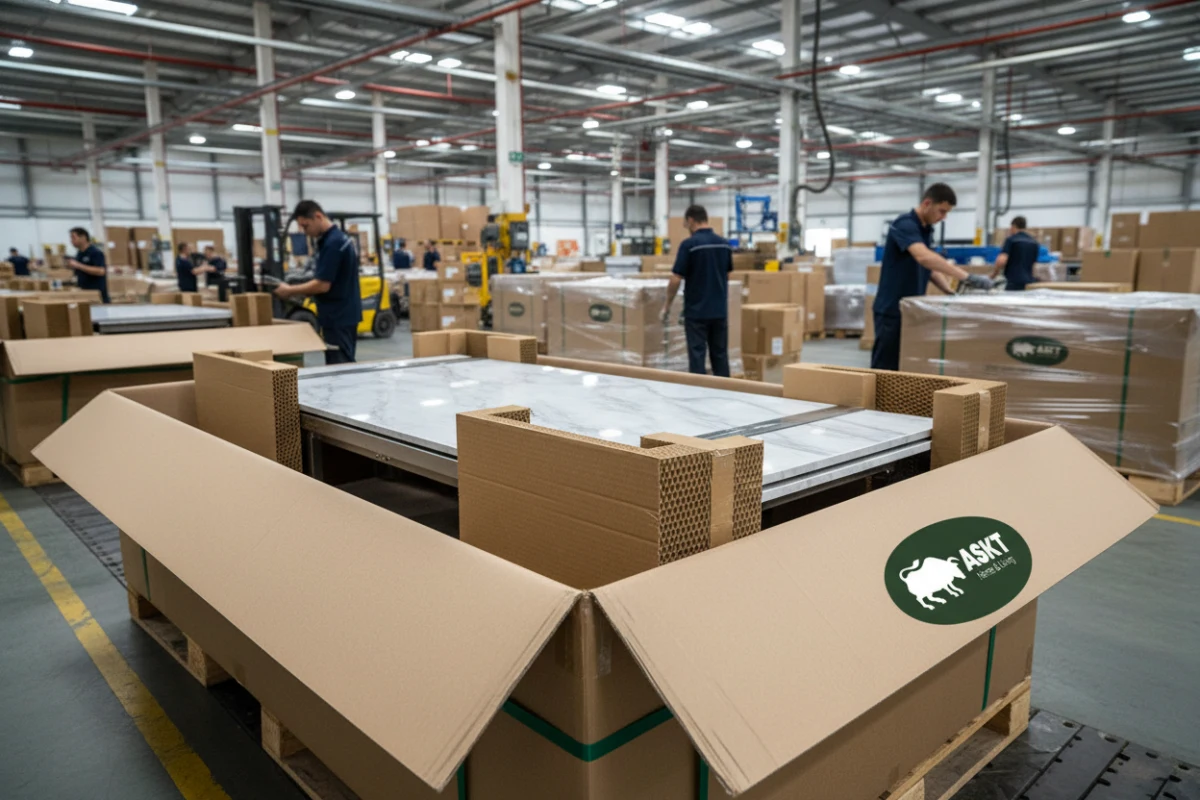
- High-Density Honeycomb Cardboard: Instead of relying on fragile plastic foams that are difficult to recycle, premium manufacturers use thick, multi-layered honeycomb paperboard structures. These provide excellent shock absorption and align with green procurement standards in Europe.
- Reinforced Corner Protection: The corners of the ceramic slabs must be wrapped in heavy-duty protective caps to prevent damage from accidental drops or shifts inside the shipping container.
- Packaging Drop-Test Verification: Request the factory to perform a standardized drop-test on a fully packaged table from the production run. The package should be dropped from a specified height onto its faces, edges, and corners. Upon opening, the ceramic tabletop and metal frame must show absolutely zero damage.
Pre-Shipment Furniture Inspection Checklist for B2B Buyers
Use this quick-reference checklist to guide your quality control inspectors during their factory visits:
- Slab Surface & Bevel: Examine the ceramic surface for micro-cracks under bright light and verify the presence of a smooth, uniform edge bevel.
- Sub-Top Adhesion: Check for an even, seamless bond between the ceramic slab and the supporting board without gaps or air bubbles.
- Insert & Thread Alignment: Verify that the pre-installed mounting inserts on the sub-top align perfectly with the metal frame holes.
- Frame Welding & Coating: Inspect weld joints for smooth, continuous application and test the durability of the powder coating finish.
- Mechanism Smoothness: Test extension tables to ensure the mechanism operates smoothly, locks securely, and aligns flush when extended.
- Assembly & Leveling: Perform a full assembly check on a flat surface to confirm overall stability, leveling, and lack of wobble.
- Packaging Durability: Verify that the table is packed securely using thick honeycomb paperboards and has successfully passed a package drop-test.
A Manufacturer's Promise: How ASKT Minimizes Sourcing Risks Through Transparent Quality Workflows
Successfully managing sourcing risks when importing furniture from China requires partnering with a manufacturer that prioritizes transparency and structured quality control over rapid, unverified output. At ASKT, we bring over twenty years of industry experience to the table, specializing in contemporary dining tables and chairs specifically designed for the European market. We serve wholesalers, retailers, and contract buyers across Germany, the Netherlands, the UK, and other key regions, understanding that product consistency, structural safety, and efficient packaging are the true drivers of your commercial success.
Our approach is built on process transparency. From initial design and sample development to final container loading, we enforce strict testing and inspection procedures. By utilizing advanced welding processes, high-quality materials, and eco-friendly, drop-tested honeycomb packaging solutions, we help our B2B clients minimize product returns, protect their retail margins, and streamline their supply chains.
If you are currently evaluating dining table suppliers or planning your next product collection, our professional team is ready to support you with reliable manufacturing, flexible OEM/ODM customization, and comprehensive quality control. Please contact our product development specialists at https://www.asktfurniture.com/ to discuss your specific sourcing requirements and learn how we can bring stability and peace of mind to your business operations.