Which Chinese Furniture Factories Understand European Furniture Standards?
To find Chinese furniture factories that truly understand European standards, B2B buyers must evaluate compliance with EN12520 structural safety benchmarks, verify OEKO-TEX® Standard 100 upholstery material sourcing, confirm ethical auditing via BSCI, and assess high-end automated manufacturing processes. Partnering with a dedicated European B2B furniture supply chain partner ensures your contemporary collections meet localized consumer expectations and rigorous European regulatory frameworks.
Why is structural compliance with EN12520 and EN12521 essential for European retail success?
In the highly competitive European furniture market, product safety and structural integrity are not optional design features—they are legally mandated business safeguards. For dining chairs and tables, structural failure doesn't just result in customer returns; it exposes B2B wholesalers, retail chains, and e-commerce importers to costly product liability claims and severe brand damage.
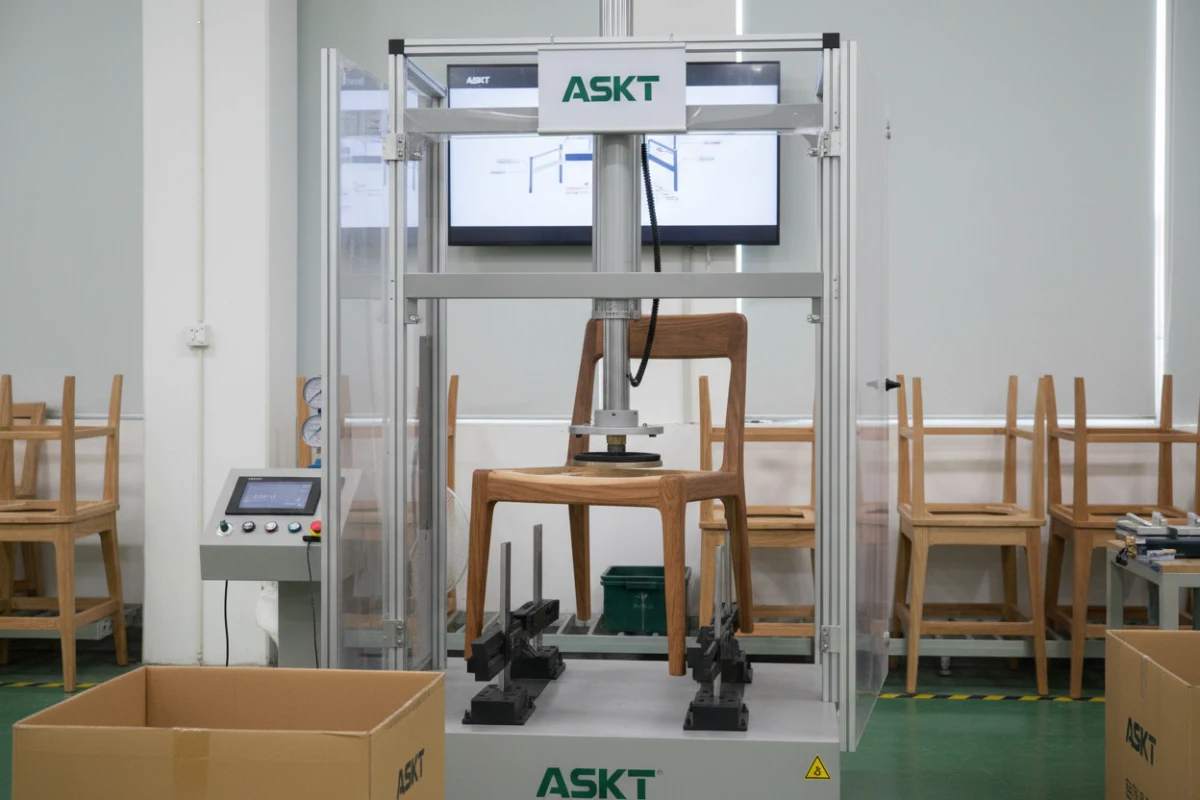
To mitigate these commercial risks, professional purchasing managers must verify that their manufacturing partners comply with EN12520 and EN12521. These standards establish the minimum requirements for the safety, strength, and durability of domestic seating and tables in the European Union. When auditing Chinese furniture factories European standards must be treated as the absolute baseline for quality. Sourcing specialists should verify that their manufacturing partners conduct systematic physical testing on their furniture models:
- Static Load and Fatigue Testing: Heavy forces are applied repeatedly to the seat, backrest, and legs of contemporary dining chairs or lounge chairs to simulate thousands of sitting cycles. This ensures that structural joints, metal frames, and pocket spring systems remain intact over years of daily use.
- Stability Testing: Force is applied at multiple angles to ensure the chair does not tip forward, backward, or sideways, which is a crucial safety benchmark for domestic and contract environments.
- Impact Testing: Simulating sudden drops and impacts to verify that the core structural materials—whether metal frames, swivel mechanisms, or wooden parts—do not fracture under abrupt pressure.
- Table Strength Testing (EN12521): Applying vertical and horizontal static loads to table tops (including sintered stone, extension tables, and oak veneer) to verify they can support high weight distribution without structural collapse or tilting.
As an EN12520 compliance furniture manufacturer, ASKT integrates these safety testing principles into our entire product development cycle. By conducting rigorous pre-shipment tests on our dining chairs, bar chairs, and tables, we help B2B buyers protect their profit margins and avoid costly cross-border product recalls.
How can buyers verify chemical safety and OEKO-TEX fabric standards in upholstery sourcing?
For European B2B furniture importers and retail chains, the fabric cover of an upholstered dining chair or lounge chair is a major touchpoint that directly influences a customer's purchasing decision. Sourcing non-compliant fabrics can result in border customs seizures, heavy fines, and brand damage because European chemical regulations impose strict limits on formaldehyde, heavy metals, and harmful dye residues in household textiles.
To avoid these compliance traps, professional buyers should insist on OEKO-TEX dining chair fabric sourcing. A valid OEKO-TEX® Standard 100 certification ensures that every thread, foam core, and fiber in the upholstery is free from harmful levels of toxic substances.
In addition to chemical safety, fabric performance must be tested to withstand daily wear in both residential and contract environments:
- Abrasion Resistance: Verifying how many friction cycles a textile can withstand before thinning or pilling, which is essential for ensuring the longevity of high-use dining benches and chairs.
- Colour Fastness: Ensuring that the upholstery does not fade when exposed to intense indoor light, maintaining its premium aesthetic over long-term use.
- Stain and Water Resistance: High-quality dining fabrics should feature reliable waterproof and easy-clean finishes. This is especially vital for family-friendly homes and high-traffic hospitality spaces.
- Pet-Friendly Upholstery: Selecting fabrics that resist claw scratches and allow easy removal of pet hair, providing a massive selling point for modern retail collections.
At ASKT, we offer an extensive library of OEKO-TEX® certified fabrics, including eco-friendly options made from recycled materials to align with your corporate environmental, social, and governance (ESG) goals. By prioritizing material safety, we ensure your contemporary collections meet the strict environmental demands of European consumers.
Why does social responsibility through a BSCI audit safeguard your European furniture supply chain?
A Chinese furniture factory's technical capabilities represent only half of the sourcing equation; the other half is defined by social responsibility and ethical manufacturing. European retailers and institutional contract buyers operate under strict corporate social responsibility (CSR) policies. Sourcing from a BSCI certified Chinese furniture factory has transitioned from a competitive advantage to a fundamental prerequisite for entering the European market.
The Business Social Compliance Initiative (BSCI) provides a standardized auditing framework that monitors working conditions, environmental practices, and health and safety compliance across global supply chains. When sourcing from an ethically audited factory, B2B buyers secure several key protections:
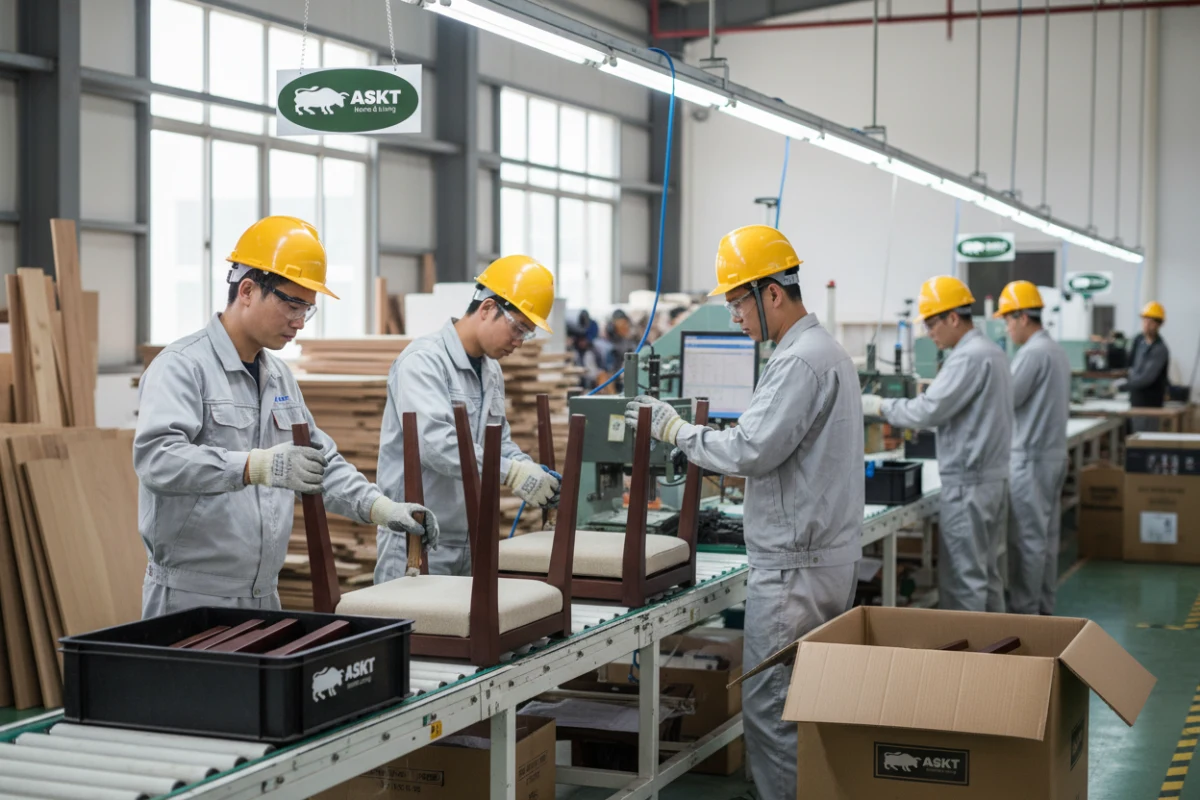
- Safe Working Conditions: Active BSCI certification verifies that factory workers are provided with necessary safety equipment, such as protective gloves, masks, and overalls in manufacturing, welding, and assembly departments.
- Non-Toxic Manufacturing: Utilizing eco-friendly adhesives, non-toxic powder coating processes, and formaldehyde-free materials ensures a clean working environment for factory staff and safer final products for end-users.
- Labor Rights and Fair Wages: BSCI audits confirm fair compensation, regulated working hours, and ethical treatment, protecting your brand from negative public relations.
By ensuring our operations adhere to BSCI standards, ASKT helps B2B wholesalers, purchasing managers, and e-commerce brands build transparent, legally compliant supply chains that withstand the most demanding retail audits.
How does automated manufacturing machinery guarantee consistent product quality across large B2B batches?
One of the primary challenges when sourcing from Chinese furniture factories is maintaining consistency between the approved golden sample and mass-produced shipping batches. Manual production methods often introduce minor variations in assembly, joint alignment, or upholstery sewing, which can lead to high defect rates and assembly issues for knock-down (KD) furniture at the destination warehouse.
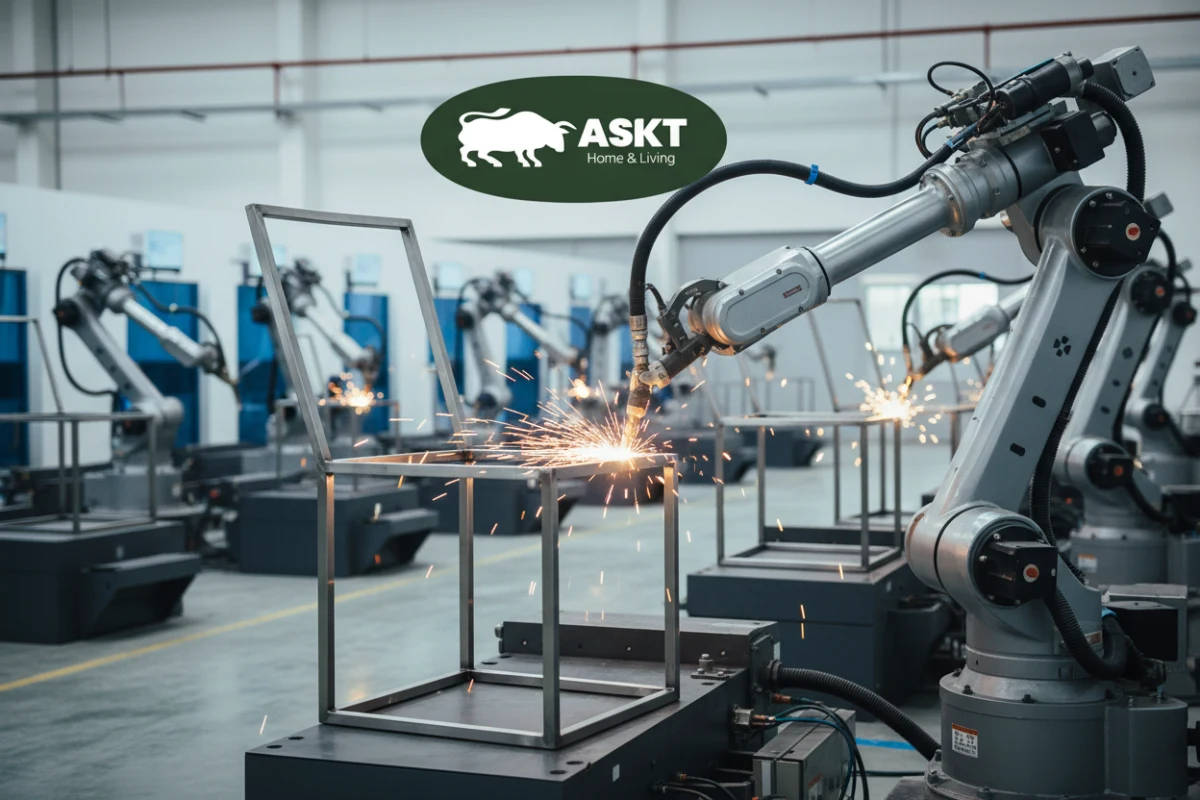
To eliminate human error, modern Chinese manufacturers utilize high-precision automated machinery. Standardizing production through automation provides distinct advantages for B2B buyers:
- Automated Fabric Cutting: Computerized cutting machines use precise digital patterns to slice upholstery fabrics to the exact millimeter. This guarantees that sewing lines, cushion shapes, and tight fabric fits are identical across thousands of dining chairs.
- Precision Metal Welding and Frame Production: Automated robotic welding arms create uniform joints on steel frames. This ensures that every leg frame has the exact same structural strength and alignment, preventing wobbling chairs.
- Consistent Wood and Board Processing: CNC routing and precise drilling machines ensure that screw holes on inner wooden seat shells and dining tables are perfectly aligned. This dramatically simplifies the home-assembly process for end consumers purchasing KD furniture.
- Uniform Powder Coating: Automated coating lines apply a durable, scratch-resistant powder layer to metal leg frames. This ensures consistent color matching and prevents rust or chipping during transport and daily use.
By combining advanced machinery with systematic quality control, professional manufacturers achieve a low defect rate, ensuring that every container shipped meets your precise specifications.
How can modular component systems minimize inventory risks and MOQs for European importers?
In the modern B2B furniture sector, managing inventory levels and cash flow is a constant challenge for wholesalers and e-commerce retail brands. High minimum order quantities (MOQs) on individual models can lead to overstocking, slow inventory turnover, and high warehousing costs.
To solve this operational challenge, leading manufacturers utilize modular component systems. This design approach focuses on standardizing core structural parts while allowing high levels of aesthetic customization:
- Interchangeable Shells and Bases: By design, a single upholstered seat shell can be paired with multiple leg designs—such as a classic four-legged metal frame, an auto-return swivel mechanism, or a wooden frame. This allows buyers to create multiple distinct SKUs from a minimal inventory of parts.
- Container Loading Optimization: Standardized components can be packed more tightly, maximizing container capacity and lowering shipping costs per unit. Knock-down (KD) packaging optimization ensures that items are protected during transit while occupying minimal volume.
- Lower MOQs per Style: Importers can mix different colors, fabrics, and base styles within a single container. Instead of buying hundreds of identical chairs, you can offer a diverse contemporary collection to your market without tying up valuable capital.
- Rapid Customization (OEM/ODM): Modular components make it easier to develop private-label designs, swap fabric types, or adjust dimensions to meet specific local customer preferences or contract project requirements.
ASKT specializes in modular dining chair and table solutions, allowing our European B2B partners to enjoy maximum procurement flexibility and minimal inventory risk.
What key verification steps should purchasing managers take to qualify a Chinese manufacturing partner?
Qualifying a Chinese furniture factory as a long-term supply chain partner requires systematic due diligence. Relying solely on catalog photos or basic promises is not enough to secure your investments.
To help your procurement team make informed decisions, use this practical verification checklist during your supplier evaluation process:
| Evaluation Category | Key Verification Requirements | Why It Matters to B2B Buyers |
|---|---|---|
| Structural Testing | Third-party EN12520 (seating) and EN12521 (tables) test reports from accredited bodies (SGS, TÜV, Intertek). | Prevents structural failures, reduces product liability risk, and ensures compliance with EU laws. |
| Material Certification | Valid OEKO-TEX® Standard 100 certificates for upholstery fabric sourcing. | Guarantees chemical and environmental safety, passing customs inspections and protecting consumer health. |
| Social Auditing | Up-to-date BSCI audit report with transparent factory grading. | Protects your corporate reputation, meets ESG compliance, and secures supply chain transparency. |
| Manufacturing QC | Standard operating procedures for raw materials, inline production, and pre-shipment checks. | Guarantees batch-to-batch consistency and prevents costly manufacturing defects. |
| Packaging & Logistics | Drop-tested KD packaging, ISTA standards compliance, and container loading optimization. | Minimizes transit damage, lowers return rates, and optimizes ocean freight expenses. |
Through professional OEM and ODM services, ASKT fully supports these strict qualification standards, acting as an open, transparent manufacturing partner dedicated to the long-term commercial success of our clients.
Navigating cross-border furniture sourcing requires more than finding low unit prices—it demands a manufacturer that prioritizes regulatory compliance, material safety, and ethical manufacturing. By partnering with a factory that actively demonstrates EN12520 structural compliance, OEKO-TEX fabric safety, and BSCI social responsibility, you protect your brand reputation, lower return rates, and secure stable profit margins. If you are looking for a reliable, transparent manufacturer to develop your next dining table or chair collection, let's start a professional conversation. As your dedicated European B2B furniture supply chain partner, ASKT is ready to support your business with high-quality production, flexible customization, and reliable export logistics.