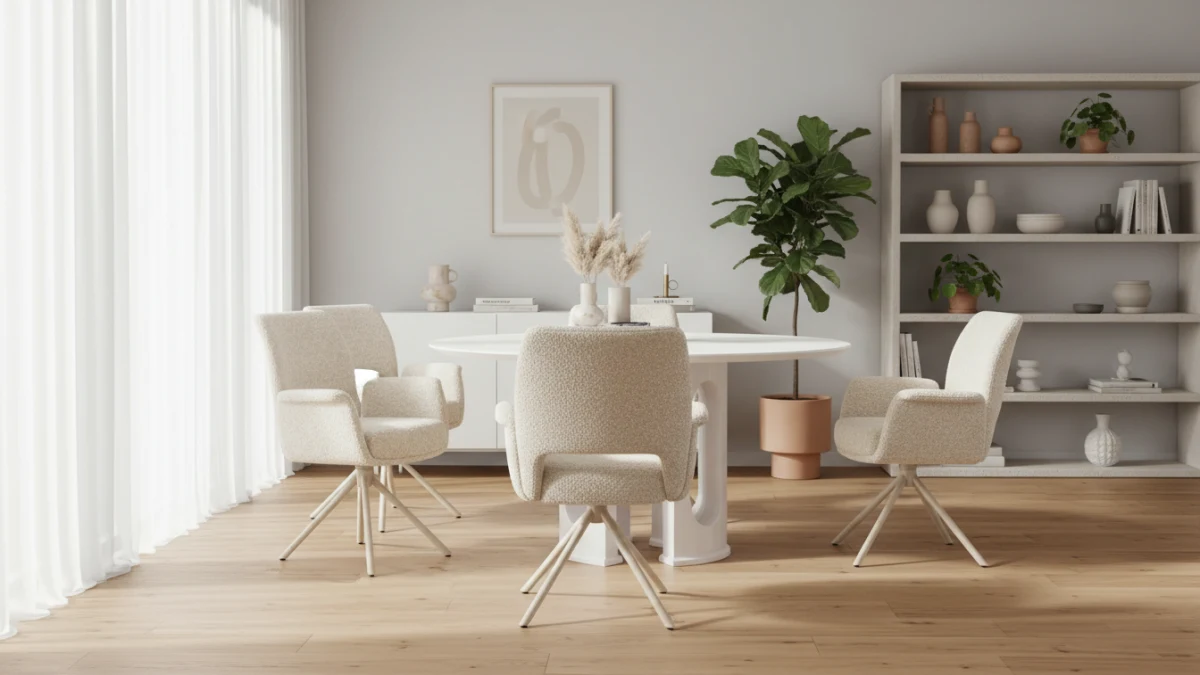
Which Chinese Furniture Manufacturers Specialize in Dining Chairs?
To source from reliable Chinese furniture manufacturers specializing in dining chairs, European B2B buyers must evaluate factories on their automated production capabilities, compliance with certifications like BSCI, and adoption of modular systems that mitigate MOQ and high logistics costs. Partnering with a highly specialized OEM ODM dining chair supplier ensures design exclusivity, reliable structural safety, and high-performance fabric solutions tailored to strict Western European commercial standards.
Why does specialization matter when selecting Chinese furniture manufacturers specializing in dining chairs?
When assembling a commercial indoor furniture portfolio, many importers mistake a generalist furniture factory for a specialized manufacturer. In the highly competitive B2B furniture market, sourcing from a dedicated B2B dining chair factory China provides critical structural, aesthetic, and financial advantages over sourcing from generalist producers who fabricate everything from beds to heavy wooden wardrobes.
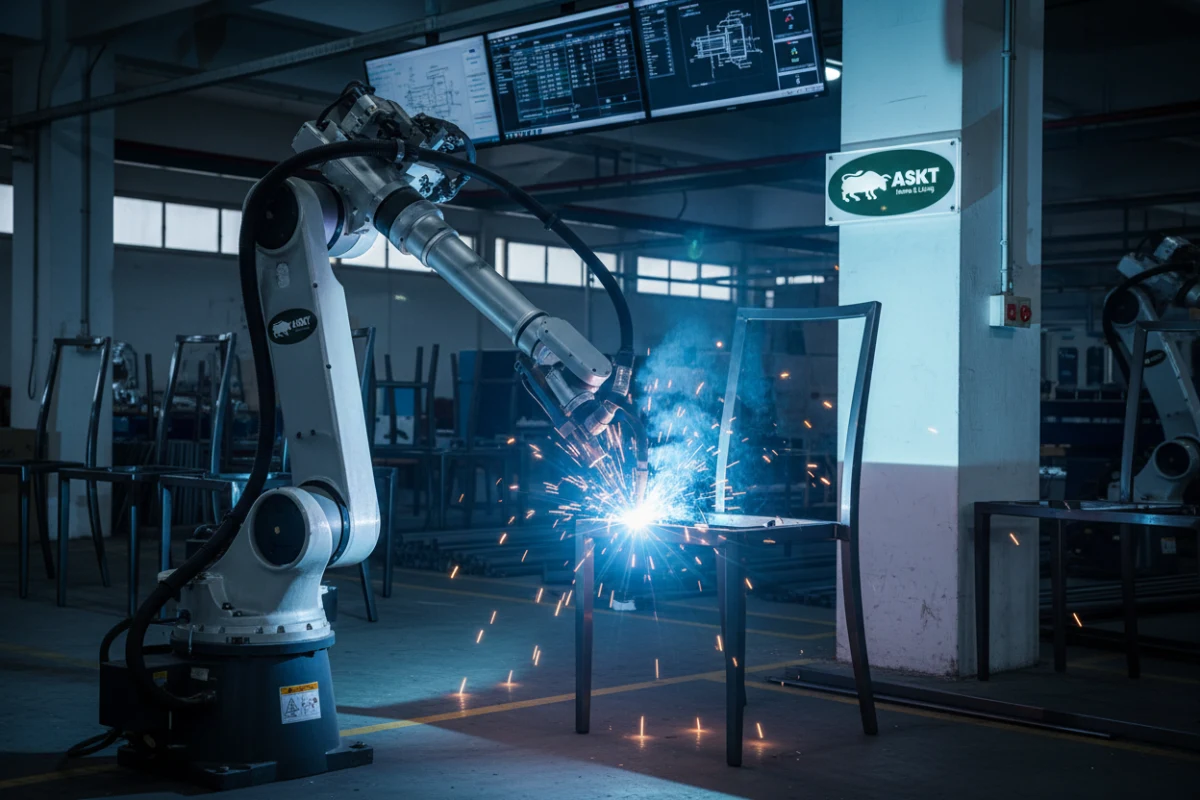
Dining chairs are subject to unique physical forces compared to static furniture. They experience continuous movement, lateral frame deflection, and high-frequency friction from daily use. A specialized factory understands the precise engineering required to withstand these complex structural stresses. They focus their machinery, supply chains, and personnel exclusively on perfecting the manufacturing workflows for seating. This includes metal pipe bending, robotic welding, polyurethane foam density configuration, and precision fabric upholstery.
For instance, the interior seat construction dictates a chair's lifespan. While a generalist manufacturer might use standard block foam that quickly sags, a specialist dining chair manufacturer integrates pocket springs within high-resilience polyurethane foam. This prevents the sagging and elasticity loss that typically occurs within 12 to 18 months of intensive use, making the chairs highly suitable for both retail and demanding contract environments.
Specialization also directly influences design efficiency. Rather than chasing generic furniture trends, specialized manufacturers conduct rigorous market research to understand local user habits. For example, our design team analyzed the actual dining environments of over 1,000 German households. We studied table heights, wall-to-chair clearances, traffic patterns, and wood veneer compatibility. This level of localization ensures that our designs match the functional and aesthetic preferences of European consumers, allowing B2B buyers to acquire collections that integrate flawlessly with existing dining tables and spatial layouts.
How should B2B buyers evaluate the manufacturing machinery of a dining chair factory in China?
To secure high product consistency and minimize defective return rates, European sourcing specialists must assess the automation levels of their manufacturing partners. Relying on manually cut fabrics and hand-bent metal frames inevitably leads to dimensional deviation, which undermines the quality of upholstered dining chairs wholesale China.
Professional factories implement precise, high-end production machinery designed to eliminate human error, increase manufacturing speed, and stabilize wholesale pricing. When touring potential manufacturing partners in China, look for the following production capabilities:
- Automated Fabric Cutting Systems: CNC laser and blade cutters process multiple layers of fabric simultaneously with sub-millimeter precision. These systems utilize automated vacuum tables to compress the fabric stack, ensuring zero shifting while high-speed oscillating blades execute cuts accurate to 0.5 millimetres. This guarantees that every fabric panel matches the CAD drawing exactly, preventing loose or over-stretched upholstery.
- Board Punching and Nailing Machinery: For upholstered chairs utilizing wooden inner backrests and seat shells, batch punching and four-legged boarding nailers are indispensable. This equipment ensures that load-bearing joints are firmly secured with uniform torque.
- Robotic Welding Arms: For steel-framed dining chairs, hand welding lacks the penetration and consistency needed for commercial durability. Automated welding robotic arms execute flawless, identical welds across thousands of frame cycles, eliminating weak points that could fail under dynamic weight load tests.
- Automated Pipe Bending Machinery: Perfect symmetry of the chair's leg frames is essential to prevent wobbling when placed on flat European oak floors. Automated CNC pipe-bending machines ensure that every angle, bend radius, and length matches the master CAD drawing with perfect repeatability.
- Electrostatic Powder Coating Systems: To prevent corrosion, surface scratching, and color fading, specialized factories utilize automated powder coating lines with advanced multi-stage pre-treatment phases to clean and prime metal surfaces before painting.
| Manufacturing Process | Manual Production Sourcing Risks | Automated Machine Business Value |
|---|---|---|
| Fabric Panel Cutting | Dimensional deviations, seam misalignment, loose fabric | Precise CAD matching, perfect fabric tension, no surface wrinkles |
| Metal Frame Welding | Weak penetration, weld spatter, high failure rate under stress | Flawless joint structural integrity, high aesthetic finish, zero failures |
| Board Preparation & Nailing | Split wooden panels, misaligned dowels, fragile joint connections | Uniform boarding nailing, high pull-out resistance, long-term stability |
| Powder Coating Application | Uneven coating thickness, pinholes, prone to rust and chipping | High adhesion electrostatic coating, uniform surface thickness, durable finish |
What compliance standards and fabric technologies are required for European compliant dining chair sourcing?
The textile cover is the first component an end-consumer interacts with, and it is also the most vulnerable to wear, spills, and chemical hazards. For European compliant dining chair sourcing, fabric selection requires strict technical evaluation.
European B2B buyers must prioritize fabrics certified under the OEKO-TEX® STANDARD 100. This standard verifies that the upholstery is completely free of formaldehyde, heavy metals, and carcinogenic colorants, making the finished furniture safe for domestic and commercial environments. Additionally, progressive manufacturers are increasingly integrating green materials, such as fabrics woven from recycled plastic bottles, which directly support corporate ESG mandates and comply with the European Green Policy.
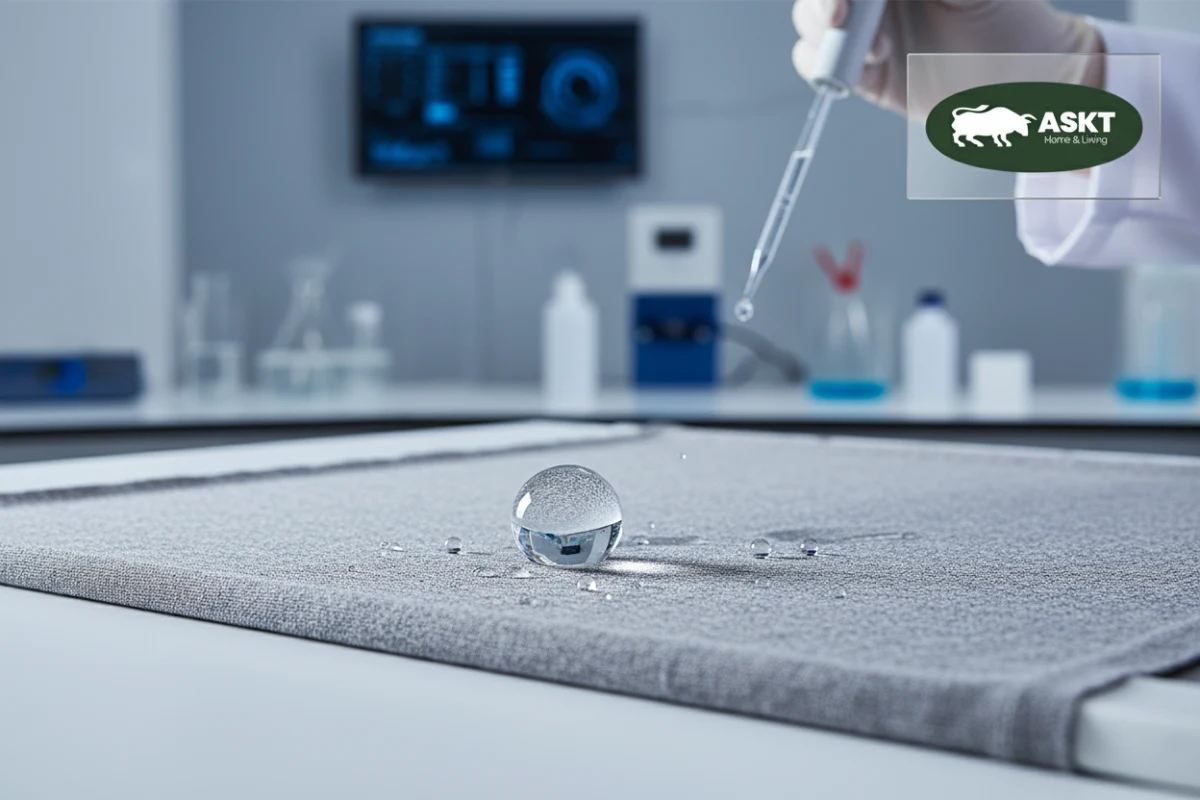
To bridge the gap between delicate tactile comfort and commercial-grade durability, specialized manufacturers have developed performance fabrics like ASKT-Tex. Engineered with a hydrophobic nano-coating at the molecular level, ASKT-Tex creates an impenetrable barrier against liquids and stains without sacrificing breathability. Micro-ventilation pathways allow heat and moisture to escape from the polyurethane seat foam, ensuring long-term seating comfort.
Crucially, the fabric undergoes strict Martindale abrasion resistance and color fastness testing. While standard residential chairs require around 15,000 to 20,000 Martindale rubs, commercial hospitality seating requires over 50,000 rubs. Color fastness to rubbing (both wet and dry) is also verified to prevent dye transfer onto light-colored clothing or adjacent walls. This rigorous testing guarantees that the fabric stands up to pet claws, household spills, and the daily wear of high-frequency dining.
Why are BSCI audits and worker welfare critical when auditing an upholstered dining chairs wholesale China manufacturer?
Modern European furniture retailing is defined by strict supply chain accountability. With the implementation of the German Supply Chain Due Diligence Act (LkSG) and similar EU-wide corporate sustainability directives, importers can no longer separate product quality from the social conditions under which it was produced.
This is why partnerships must focus on factories that actively maintain Business Social Compliance Initiative (BSCI) human rights certifications. A BSCI audit verifies that the manufacturer adheres to ethical working hours, pays fair wages, prohibits child labor, and maintains clean, safe working environments.
At our production facilities, we recognize that worker welfare directly correlates with manufacturing quality. Our craftsmen are provided with comprehensive protective gear, including custom protective overalls, cut-resistant steel-mesh gloves for fabric cutting operators, and specialized gas masks with filtration cartridges for the gluing department.
Furthermore, we use environmentally friendly, formaldehyde-free water-based adhesives instead of cheap, solvent-based glues. Solvent-based adhesives release high levels of Volatile Organic Compounds (VOCs), which harm assembly workers and lead to unpleasant off-gassing for the end-consumer. By ensuring our workers undergo detailed safety and process training, we achieve high manufacturing consistency and eliminate supply chain interruption risks for our international partners.
How do specialized manufacturers guarantee the structural integrity and design exclusivity of dining chairs?
A dining chair must be structurally robust to protect retailers from commercial liability and brand damage. The benchmark for structural integrity in European markets is the EN 12520 standard, which specifies strength, durability, and safety requirements for all types of domestic seating.
To comply with EN 12520, manufacturers must run prototypes through rigorous physical stress testing, including:
- Seat and Back Fatigue Tests: Applying alternating forces of 1,000 Newtons to the seat and 300 Newtons to the backrest for up to 100,000 cycles to simulate years of daily use.
- Seat Impact Drop Tests: Dropping a heavy weight from heights up to 200mm to verify the resilience of internal seat foundations, such as high-density foam and integrated pocket springs. This prevents structural collapse and foam deformation under sudden loads.
- Forward and Sideways Stability Tests: Evaluating tipping thresholds to prevent accidental falls during normal movement.
Additionally, professional manufacturers perform the ISTA 3A packaging drop-test standard. This series of drop, vibration, and compression tests guarantees that the knocked-down chairs do not suffer transit damage during long maritime journeys or last-mile delivery.
Alongside structural security, specialized Chinese furniture manufacturers specializing in dining chairs must offer robust design protection. We provide our B2B partners with Design Exclusivity agreements. This legally guarantees that custom ODM designs or engineered product improvements will not be duplicated or sold to competing retail networks within your target market, protecting your commercial margins and preserving your brand uniqueness.
How can KINEXA modular systems help buyers overcome high MOQ and logistics barriers?
Two of the most pressing challenges for European wholesalers and e-commerce furniture brands are high minimum order quantities (MOQs) and high warehousing overheads. Shipping pre-assembled dining chairs in low-density containers leads to high volumetric freight charges per unit, drastically eating into business margins.
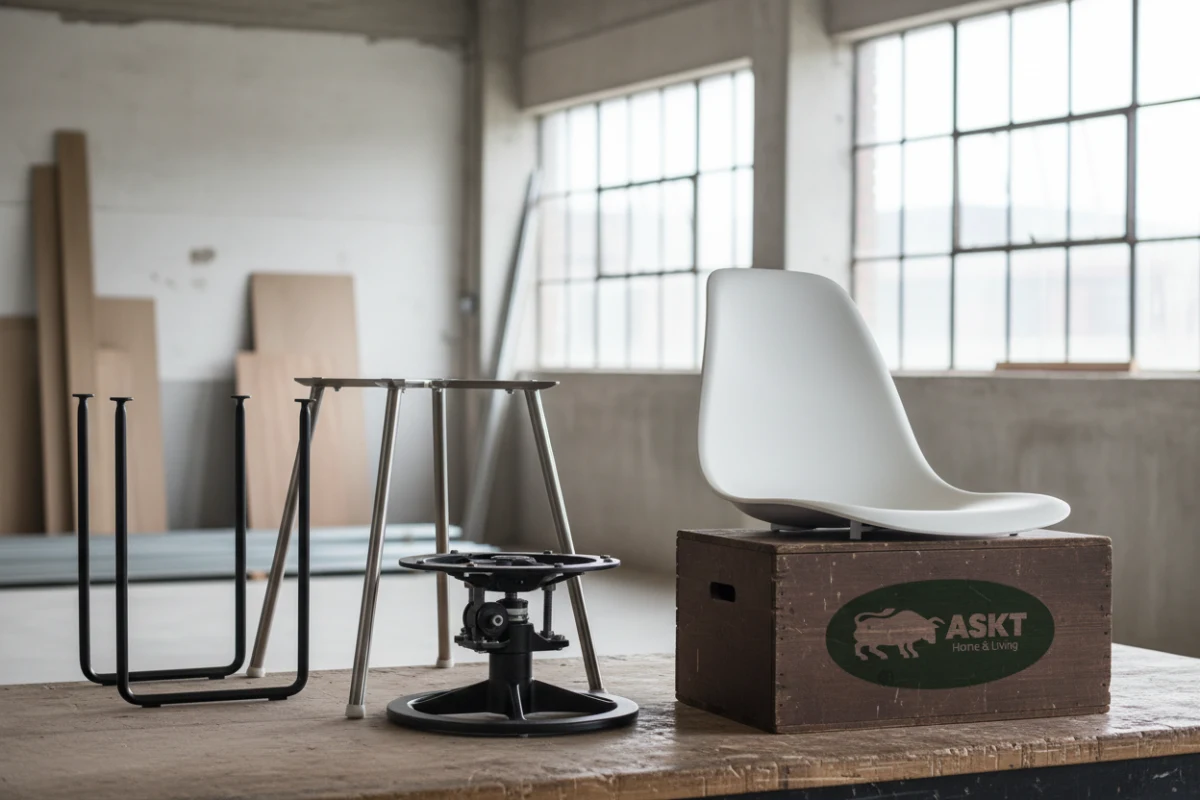
To directly address these supply chain pain points, we engineered the KINEXA modular system. Built on a "Test first, ship second" philosophy, KINEXA utilizes a standardized mounting interface that allows buyers to mix and match a curated selection of upholstered seat shells with multiple metal and wooden base designs.
This modular architecture transforms procurement in several ways:
- MOQ Reduction: Instead of ordering 300 units of a single, fully customized chair model, buyers can purchase standardized components and combine them to create dozens of distinct aesthetic options, significantly lowering individual SKU entry barriers.
- Container Loading Optimization: KINEXA components are designed for Knocked-Down (KD) packaging. Flat-packed seat shells and stackable metal leg frames optimize space utilization inside shipping containers. While a 40-foot HQ container holds only around 200 to 300 fully assembled chairs, KD packaging accommodates 1,000 to 1,200 units, dropping the per-unit ocean freight cost from $15 down to just $3.75.
- Inventory Flexibility: Wholesalers can maintain a safety stock of high-demand bases and seat shells in their domestic warehouses, rapidly assembling finished models to order and reducing overall inventory holding costs.
In what ways does Sunbin KI simplify communication with an OEM ODM dining chair supplier?
Language barriers, time-zone gaps, and ambiguous technical terms frequently lead to critical errors during the product development and sample approval phases. A simple misunderstanding of a welt line seam or a powder coating gloss level can delay a production run by months.
To bridge this communication gap, we developed Sunbin KI, an AI-powered conversational B2B assistant platform. Tailored specifically for professional category product managers and sourcing directors, Sunbin KI acts as an on-demand technical advisor.
Instead of relying on fragmented email exchanges, buyers use Sunbin KI to process structured "reverse questioning." The tool systematically prompts buyers for critical technical parameters, including fabric performance classes, frame wall thickness, regulatory compliance certifications, and packing density limits.
For instance, Sunbin KI acts as a central repository of data, ensuring that product managers in Germany, the Netherlands, or the UK can review the exact specifications of the metal frames, fabrics, and packaging at any time. By clarifying specifications before engineers begin prototyping, Sunbin KI eliminates data loss, minimizes design modifications, and shortens the sample development cycle from weeks to days.
What are the key steps to establish a successful partnership with a Chinese dining chair factory?
Transitioning to a highly specialized B2B dining chair factory China is a strategic decision that requires careful planning. Successful partnerships are built on technical clarity, mutual trust, and rigorous quality control.
To begin, ensure your product development team drafts a comprehensive Product Specification Sheet. This document should detail not only the visual design and dimensions but also your specific performance targets: Martindale cycles, EN 12520 compliance, packaging drop-test requirements (such as ISTA 3A), and eco-label constraints.
Once specifications are aligned, request a golden sample to verify manufacturing quality. Evaluate the sample's internal frame welding, seam straightness, fabric tension, and the comfort of the pocket spring seating.
At our facilities, we encourage buyers to participate in virtual or third-party pre-shipment inspections. We utilize Acceptable Quality Limit (AQL) standards—such as AQL 1.5 for major defects and AQL 4.0 for minor defects—to inspect everything from raw steel tubes to the finished container loading process. This complete manufacturing transparency ensures that only perfect, defect-free products leave the factory floor, minimizing the risk of expensive overseas returns.