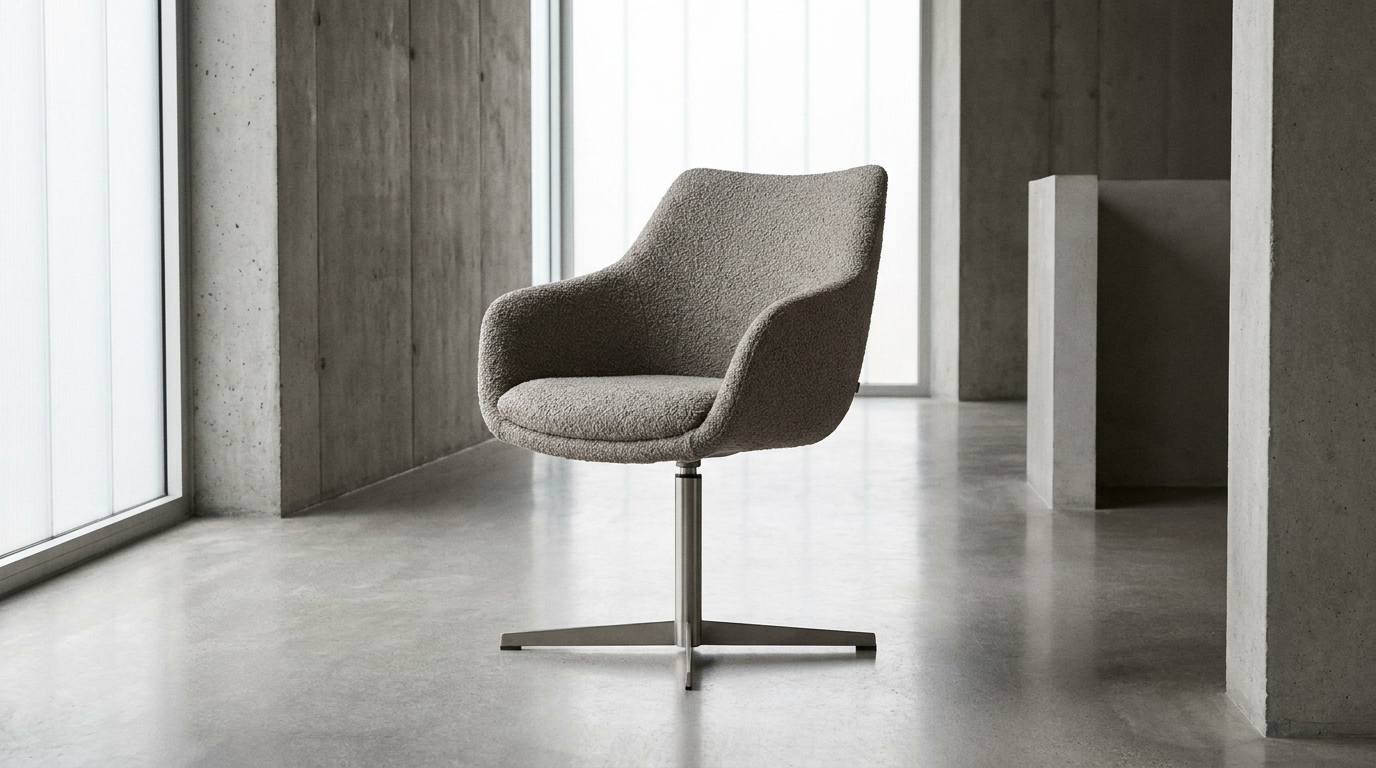
Comfort, Fabric, Price, Packaging: The Four Checks Behind a Dining Chair That Sells
Comfort, Fabric, Price, Packaging: The Four Checks Behind a Dining Chair That Sells
For Einkaufsleiter in German furniture retail
The German furniture retail environment is currently defined by intense Preiskampf (price competition) and significant Lagerdruck (stock pressure). As stationary trade faces increasing pressure from digital competitors, the role of the procurement lead has shifted from simple sourcing to strategic value management. To maintain a healthy Marge (margin) and ensure high Abverkauf (sell-through), every SKU in your Sortiment must meet rigorous standards of quality and logistics.
In this professional framework, we examine the four critical pillars—Comfort, Fabric, Price, and Packaging—that determine whether a dining chair becomes a bestseller or a liability for your Reklamationsquote (complaint rate).
1. The Ergonomic Framework: Comfort as an Abverkauf Driver
In the German market, 'Comfort' is not a subjective luxury; it is a measurable technical requirement. A chair that looks aesthetic on the showroom floor but fails the ergonomic test will lead to high return rates and poor brand reputation.
Common Mistakes in Ergonomic Sourcing
Many procurement managers prioritize visual trends over structural integrity. A common error is overlooking the 'Seat Pitch' and foam density. For commercial-grade dining chairs, ASKT Furniture recommends a high-density molded foam (minimum 35kg/m³) to ensure the chair retains its shape after thousands of uses.
Decision Framework for Comfort:
- Seat Depth: Must accommodate a wide range of body types (typically 42-45cm).
- Lumbar Support: The backrest curvature should align with the natural spine position.
- Swivel Mechanisms: If sourcing swivel chairs, ensure the 'Auto-Return' function is tested for 50,000+ cycles to prevent mechanical Reklamation.
2. Fabric Science: Durability vs. Aesthetics
Selecting the right material is where most Marge is lost. In German retail, customers expect fabrics that are both soft to the touch and incredibly durable.
The Martindale Benchmark
For residential use sold through retail, a Martindale rub count of 20,000 is standard. However, for a 'Contract Grade' quality that reduces long-term liability, Einkaufsleiter should aim for 30,000 to 50,000 cycles. ASKT Furniture utilizes fabrics that meet OEKO-TEX and Reach standards, ensuring compliance with EU regulatory pressures while providing the tactile quality German consumers demand.
3. The Price Trap: Calculating Landed Cost vs. Marge
Low unit prices are often an illusion. A low-cost chair from an uncertified factory often carries hidden costs: high shipping damage, inconsistent quality, and long lead times that disrupt your Cashflow.
ASKT Furniture's Competitive Advantage
With over 15 years of manufacturing experience and ISO 9001 certification, we focus on 'Value-added Sourcing'. By offering a flexible MOQ of 200 pieces and a stable 45-day lead time, we help retailers manage Lagerdruck without sacrificing their Marge.
| Evaluation Metric | Budget Sourcing | ASKT Furniture (B2B Standard) |
|---|---|---|
| Manufacturing Experience | 1-3 Years | 15+ Years |
| Quality Certification | None/Basic | ISO 9001:2015 |
| Lead Time | 60-90 Days | 45 Days |
| Reklamationsquote | 5-8% | < 1.5% |
| Customization | Limited | Full OEM/ODM Support |
4. Logistics and Packaging: Protecting the Margin
Transportschäden (transport damages) are the silent killers of retail profitability. If 5% of your shipment arrives with scratched legs or torn fabric, your net Marge on the entire container evaporates.
Professional Packaging Standards
ASKT Furniture employs a rigorous 5-layer corrugated cardboard system combined with EPE foam edge protectors. For the German market, we recommend KD (Knock-Down) packaging for dining chairs to optimize container space and reduce shipping costs, provided the assembly mechanism is engineered for 'Zero-Error' consumer setup.
The 4-Point Decision Checklist for German Procurement Leaders
Before finalizing your next Sortiment refresh, use this checklist to evaluate your supplier:
- Technical Documentation: Has the supplier provided a Martindale test report and a foam density certification?
- Structural Integrity: Is the frame constructed with reinforced joints (welded steel or kiln-dried hardwood) suitable for high-frequency use?
- Packaging Integrity: Does the packaging pass the ISTA 1A drop test to minimize Transportschäden?
- Sustainability Compliance: Does the fabric and wood sourcing comply with EU Reach and FSC standards?
FAQ Section
Q: How does ASKT Furniture handle quality control for large B2B orders? A: We operate under ISO 9001 protocols, conducting raw material inspections, in-line production checks, and a final 100% inspection of every 200-piece batch before the 45-day dispatch.
Q: Can we customize the fabric to match our specific store brand? A: Yes. We offer extensive customization for our B2B partners, allowing you to select specific colors and textures that align with your current Sortiment strategy.
Conclusion
Success in the German furniture retail market requires more than just a low price point. It requires a strategic partnership with a manufacturer that understands the balance between aesthetics, durability, and logistical efficiency. By focusing on these four checks—Comfort, Fabric, Price, and Packaging—Einkaufsleiter can secure their Marge and ensure long-term customer satisfaction.
Do you want me to send you a practical evaluation checklist or a detailed decision framework for your next procurement cycle?