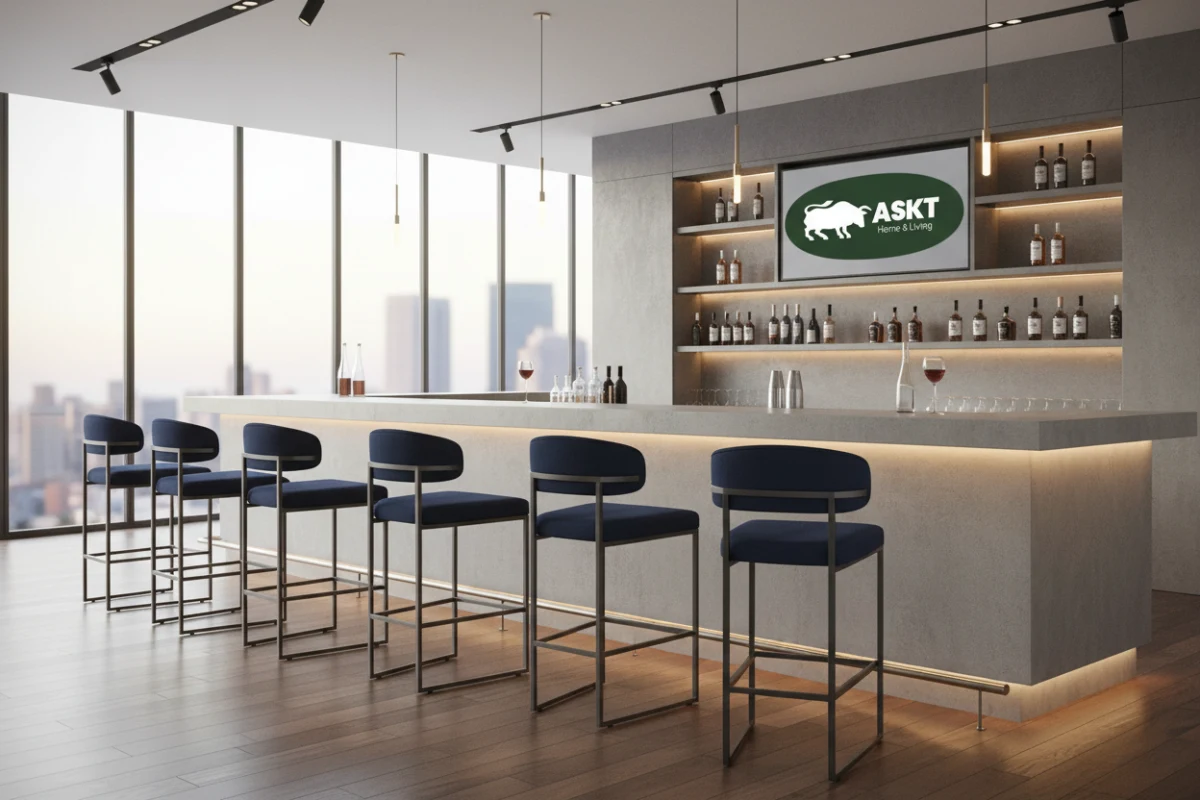
How to Choose a Reliable Commercial Bar Stool Manufacturer for Your B2B Furniture Business
Every seasoned B2B buyer, whether importing for a major retail chain in Germany, distributing to wholesalers in France, or sourcing contract furniture for a hospitality group in the UK, knows that a beautiful catalogue is only the beginning of a successful product line. As a professional in the global furniture sector, working alongside European purchasing managers, wholesalers, and project specifiers over many years, I have watched countless furniture brands and contract buyers struggle with the costly fallout of poorly manufactured seating. The true cost of sourcing bar stools is never simply the initial FOB price. It is the long-term cost of warranty claims, structural failures, delayed container shipments, and damaged brand reputations. When a seat shell cracks or a frame wobbles in a high-traffic hotel or bar, the buyer pays the price in expensive replacements, shipping fees, and lost customer trust.
This is why selecting a professional, transparent commercial bar stool manufacturer is a critical operational decision. Unlike residential furniture, commercial seating must withstand constant, punishing use day in and day out. It requires a deep understanding of structural forces, material wear, and regulatory compliance. Throughout this guide, we will share the manufacturing insights and technical parameters we use at ASKT to help B2B buyers navigate the complexities of contract bar stool sourcing, ensuring your collections are durable, compliant, and commercially successful in the competitive European market.
Critical Dimensions: Getting Seat Height and Footrest Ergonomics Right
In the world of professional furniture procurement, precision in dimensions is non-negotiable. One of the most common friction points in contract bar stool sourcing arises from a mismatch between bar counter heights and stool seat heights. For the European market, standards are incredibly precise. A standard bar stool designed for a counter of approximately 100 to 105 cm requires a seat height of 75 cm to maintain the ideal ergonomic clearance of 25 to 30 cm. For counter-height tables, typically standing at 90 to 95 cm, a seat height of 65 cm is required. If these dimensions are off by even a few centimetres, the user experience is ruined, leading to immediate complaints from commercial operators.
Ergonomics, however, extends far beyond seat height. The placement of the footrest is critical to preventing fatigue and ensuring structural stability. If the footrest is too low, the user’s legs dangle, placing pressure on the thighs; if it is too high, the knees are pushed upward, disrupting pelvic alignment. At ASKT, our product managers work closely with designers to ensure our seat shells work in perfect harmony with integrated footrests, which are structurally welded to the frame to distribute weight evenly. Furthermore, when specifying seating with an auto-return swivel mechanism, the internal components must be built to withstand thousands of rotations without losing alignment. A cheap swivel mechanism will quickly develop lateral play, causing the stool to tilt and ultimately fail. By working with an experienced commercial bar stool manufacturer, buyers can ensure that every auto-return mechanism and upholstered seat shell is designed with these strict human factors in mind, reducing returned goods and elevating the end-user experience.
Structural Stability: Verifying Frames and Joints for High-Traffic Environments
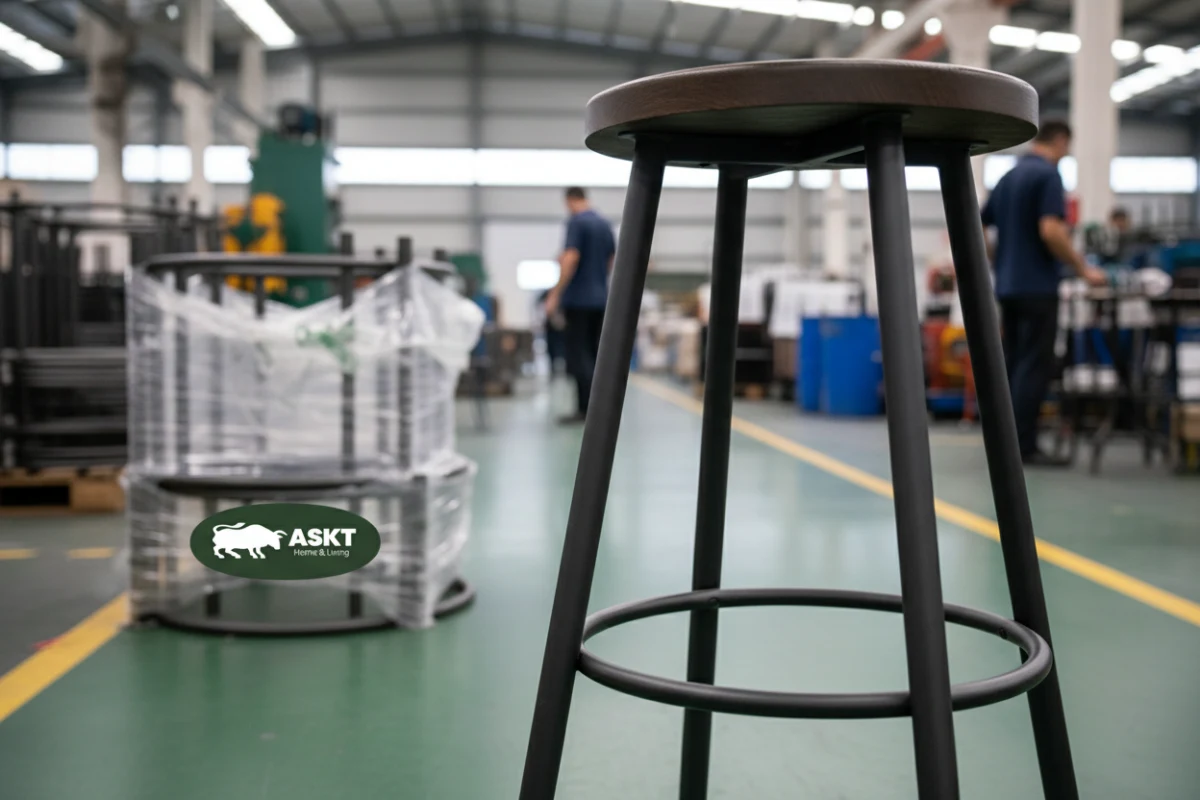
When evaluating heavy duty bar stools B2B options, the frame construction must be the primary focus of your technical evaluation. High-traffic environments like hotels, airports, and busy restaurants put extreme stress on joints and welds. In these settings, a standard residential joint will fail within months. This is why our manufacturing facility utilizes automatic welding robotic arms rather than relying solely on manual welding. Robotic welding ensures complete penetration, uniform bead width, and consistent structural strength across thousands of production cycles, eliminating the human error inherent in batch manufacturing. This high degree of consistency is what separates a true commercial bar stool manufacturer from standard domestic furniture producers.
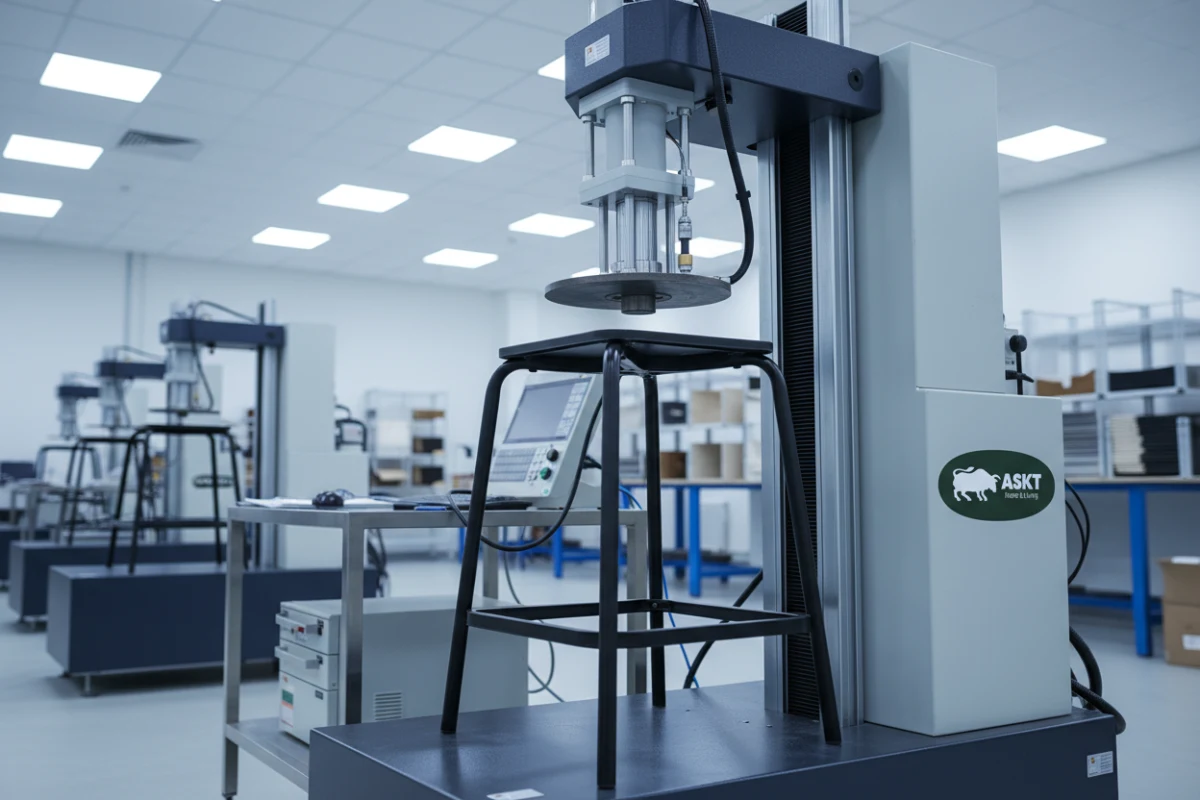
For metal frames, we focus strictly on high-tensile steel tubing, which undergoes rigorous load-bearing and stability testing under the EN12520 standard—the European safety, strength, and durability standard for domestic and non-domestic seating. A reliable commercial bar chairs supplier must be able to demonstrate that their products can withstand cyclic load tests of up to 110,000 cycles on the seat and backrest, alongside impact testing that simulates real-world abuse. Beyond the welds, the surface finish of the metal frame plays a massive role in durability. We apply an industrial-grade powder coating that is baked at high temperatures, creating a scratch-resistant barrier that protects against moisture, cleaning chemicals, and shoe scuffs. When you import heavy-duty seating, ensuring these structural and chemical processes are tightly controlled is the only way to avoid the catastrophic failures that lead to costly litigation and brand erosion.
Minimizing Maintenance Costs: Specifying Wear-Resistant Fabrics and Finishes
For hospitality projects and commercial retail lines, cleanability and wear resistance are directly tied to the total cost of ownership. Wholesalers and purchasing managers looking for hospitality bar stools wholesale solutions must specify upholstery fabrics that pass strict performance tests. At ASKT, we believe that the dining and bar chair fabric is the most important component of the seat. That is why our materials are subjected to rigorous abrasion resistance tests (such as the Martindale rub test), colour fastness testing to light and rubbing, and breathability assessments.
To solve the classic trade-off between luxurious touch and commercial durability, we developed ASKT-Tex, a proprietary functional fabric collection. By utilizing a molecular-level hydrophobic nano-coating combined with micro-ventilation channels, ASKT-Tex achieves complete water and stain resistance while remaining highly breathable and pet-friendly. Liquids simply bead on the surface, allowing staff in high-volume venues to wipe away spills instantly, preventing deep staining and odour accumulation. This technology is incredibly valuable for hotel, restaurant, and cafe (HoReCa) operators who cannot afford to take chairs out of service for deep cleaning.
Importantly, our commitment to safety and compliance means all our upholstery fabrics are OEKO-TEX® STANDARD 100 certified, formaldehyde-free, and baby-friendly, ensuring they contain no harmful substances. To align with the European Green Policy and meet the rising demand for ESG-compliant products from European buyers, we also offer an innovative upholstery option made entirely from recycled plastic bottles. Combined with our use of environmentally friendly, formaldehyde-free glues and sustainably sourced wood boards, we enable B2B buyers to partner with a commercial bar stool manufacturer that meets both aesthetic and ecological expectations.
Technical Trade-offs: Knock-Down (KD) vs. Welded Structures
One of the most critical structural decisions in commercial bar stool sourcing is choosing between a fully welded frame and a Knock-Down (KD) structure. As a leading commercial bar stool manufacturer, we recognize that this decision is not just about aesthetics—it directly impacts your bottom line, international shipping costs, and assembly labour at the final destination.
| Structural Type | Logistics & Shipping Efficiency | Structural Integrity & Durability | Assembly Labour Requirement | Ideal Target Audience |
|---|---|---|---|---|
| Fully Welded Frame | High shipping volume per unit; fewer units per container. | Ultimate durability; zero joint loosening under vibration. | None; ready to use immediately out of the box. | Luxury hotels, premium bars, high-end contract projects. |
| Knock-Down (KD) Structure | Highly optimized shipping volume; lowers container costs by up to 60%. | Requires high-quality steel-to-metal bolt threads to prevent loosening. | Minor assembly required; must include precise instructions and tools. | E-commerce brands, retail chains, high-volume distributors. |
When specifying a KD structure, a reputable commercial bar stool manufacturer must use metal inserts or steel-to-metal bolt threads rather than simple wood screws. Wood screws strip easily under the rocking forces typical of a bar stool, leading to dangerous frame wobbles over time. Our KD designs utilize reinforced steel brackets and precision-threaded bolts that can be tightened securely and remain rigid even under the dynamic loads of high-traffic commercial environments.
Evaluating Your Commercial Bar Stool Manufacturer: A Sourcing Checklist
With hundreds of factories operating in the Asian supply chain, separating a middleman from a genuine, high-compliance partner can be difficult. Professional buyers must evaluate potential suppliers on their factory floor realities, worker welfare, and supply chain transparency. A true commercial bar stool manufacturer must prioritize worker safety and international compliance standards. For example, our factories are fully BSCI (Business Social Compliance Initiative) audited, demonstrating our dedication to fair labor practices. On our production lines, we provide cut protection overalls, metal cut-resistant gloves for workers operating fabric-cutting machinery, and gas masks for those handling adhesives. We provide detailed training for each worker to ensure they are familiar with the operation process before they are put into the production line.
Furthermore, B2B buyers should look for advanced batch production equipment. At ASKT, our investment in high-end machinery—including automated fabric cutting machines, batch punching machines for wooden boards, and automated board nailing machines—not only increases manufacturing efficiency but also guarantees absolute dimensional consistency across thousands of units. When choosing a commercial bar stool manufacturer, look closely at how they handle their manufacturing consistency, because even small deviations in assembly can lead to unstable seating and negative customer feedback.
To help you screen potential manufacturing partners, we recommend focusing on three core operational areas:
- Customisation & OEM/ODM Capability: Can the supplier customize fabrics, dimensions, powder-coat finishes, and packaging to match your private label requirements?
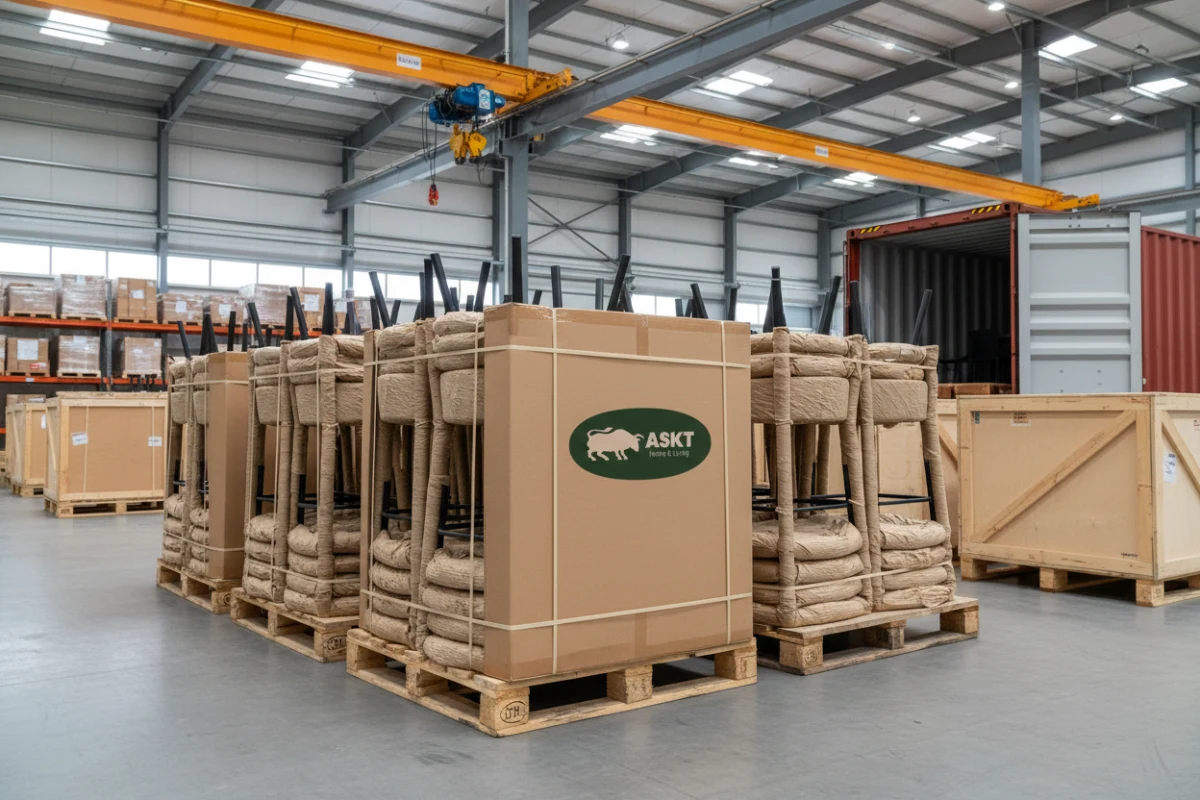
- Logistics & Container Loading Optimization: Are the bar stools designed with a knock-down (KD) structure to optimize container loading and lower shipping costs per unit?
- Quality Assurance Workflow: Does the manufacturer enforce a "Test first, ship second" philosophy with in-house testing rigs for stability, load capacity, and drop testing?
How ASKT Combines European Design Standards with Manufacturing Transparency
At ASKT, we have built our reputation as a trusted commercial bar stool manufacturer and sourcing partner for the European market—particularly in Germany, the Netherlands, the UK, Poland, and Switzerland. Our success, highlighted by the prestigious B2B furniture trade magazine möbelmarkt, is built on bridging the gap between efficient Chinese manufacturing and localized European market needs. Rather than blindly chasing design trends, we base our product development on deep empirical research, including surveys of over 1,000 German households to understand real-world dining and kitchen space configurations, moving paths, and floor colours. This allows us to offer our partners exclusive design protection (Design Exclusivity), safeguarding your market share and protecting you from direct price competition.
To solve the traditional inefficiencies of cross-border procurement, we have introduced advanced digital tools like our Sunbin KI conversational AI platform. This system acts as an interactive B2B category assistant, using structured "reverse questioning" to guide product managers through the technical specification process, eliminating communication errors before samples are even built. To address inventory risk and high shipping costs, our KINEXA modular system allows buyers to combine standardized seat shells with multiple frame designs. This standardization dramatically lowers Minimum Order Quantities (MOQs), optimizes container loading, and allows you to test new market trends with minimal capital exposure.
Choosing the Right Sourcing Path for Long-Term Growth
Ultimately, successful contract bar stool sourcing requires a balance of engineering precision, design sensitivity, and shipping optimization. It is not enough to find a workshop that can copy a design from a photo; you need a strategic partner that can translate that photo into a certified, structurally stable product that fits perfectly into a shipping container and survives years of heavy daily use. By partnering with a dedicated commercial bar stool manufacturer like ASKT, you gain access to decades of manufacturing experience, advanced QC processes, and design-led solutions tailored specifically to the discerning European market.
If you are currently evaluating your supply chain or preparing for an upcoming project, we are here to assist. Our team can help you navigate fabric selection, structural testing protocols, and packaging design to ensure your bar stool collections perform flawlessly in the field. To help streamline your next procurement cycle, we invite you to Request Bar Stool Spec Checklist and discover how our manufacturing transparency can protect your margins and eliminate sourcing risks.