Commercial Cafe Chairs Wholesale Sourcing Guide: Balancing Durability, Design, and Logistics
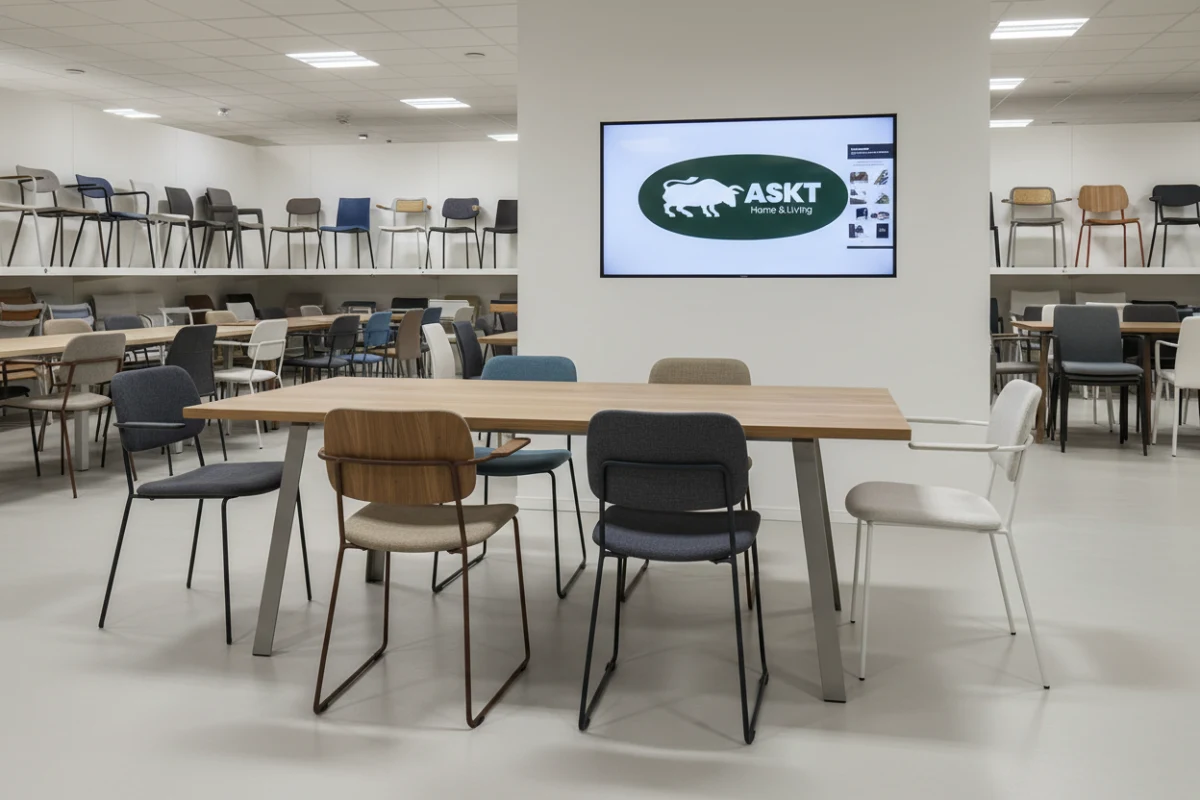
In the highly competitive European hospitality sector, particularly across Germany, the Netherlands, the United Kingdom, and Poland, selecting the right furniture for commercial spaces is a crucial decision. For furniture wholesalers, contract procurement managers, retail chains, and commercial importers, sourcing commercial cafe chairs wholesale is not merely about finding attractive seating; it is a calculated capital investment. The financial success of a high-traffic cafe, restaurant, or bistro relies heavily on optimizing space, reducing ongoing maintenance costs, ensuring customer safety, and guaranteeing long-term product durability. In demanding commercial environments, low-quality seating quickly becomes a serious liability, leading to early wear, safety hazards, and costly replacements.
For over twenty years, ASKT has operated as a professional, dedicated B2B manufacturing and supply chain partner, specializing in the design, production, and export of contemporary indoor furniture for the European contract market. We understand that experienced B2B buyers require structural predictability, consistent manufacturing quality, and highly efficient logistics support. To build a reliable and profitable furniture supply chain, procurement specialists must look beyond the visual design of a chair and carefully evaluate its engineering, material composition, packaging optimization, and international compliance standards. This comprehensive guide provides an in-depth, manufacturer-level analysis of sourcing high-quality cafe seating, demonstrating how strategic manufacturing choices translate directly into long-term commercial value and minimized supply chain risks.
Maximizing Floor Yield and Nesting Efficiency with Stackable Commercial Dining Chairs
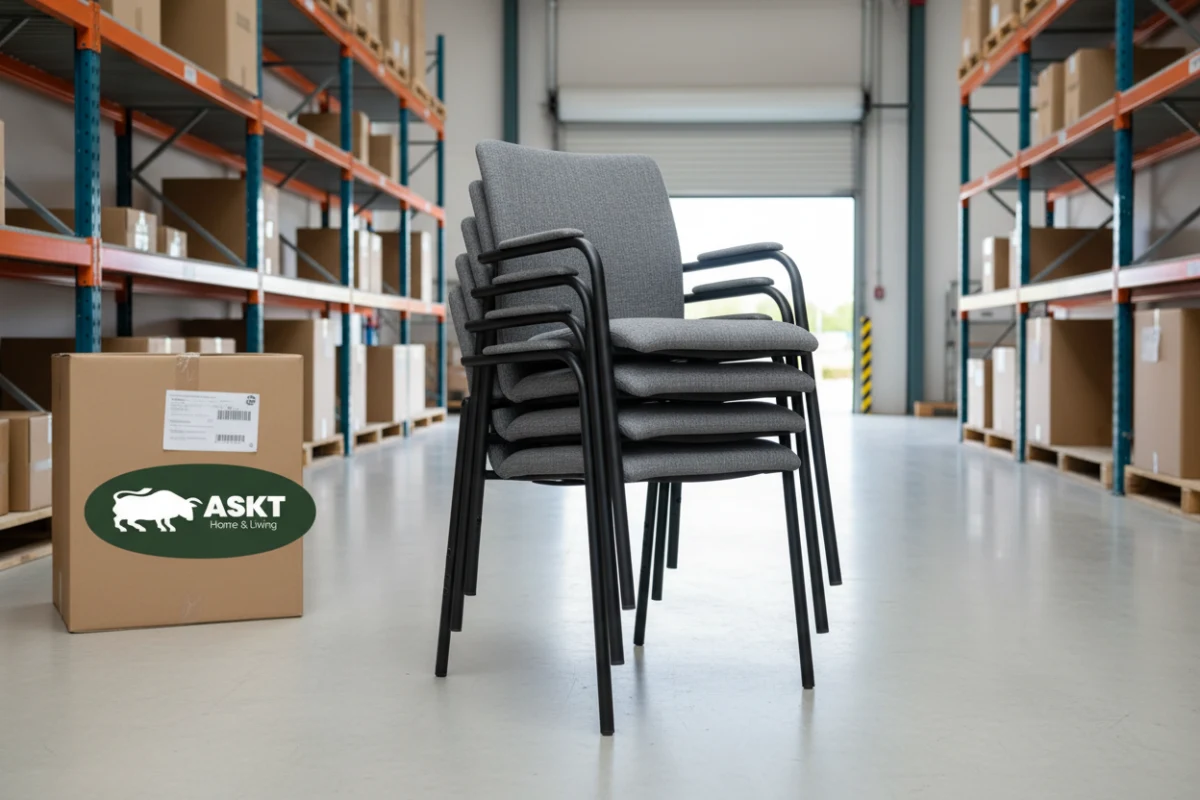
Spatial yield is one of the most critical factors influencing profitability in modern European hospitality venues. Cafe and bistro owners must regularly adapt their floor layouts to accommodate varying customer numbers, private events, and daily cleaning routines. To address this operational need, professional contract buyers consistently seek space-saving seating designs. This is why investing in high-quality stackable commercial dining chairs offers a significant advantage for B2B wholesalers supplying the restaurant and hospitality sectors.
However, designing a stackable upholstered chair that can withstand high-frequency commercial use requires precise mechanical engineering. When chairs are stacked vertically, physical stress on the lower units is substantial. Poor design leads to two major issues. First, upholstery compression and friction wear are common. In lower-quality designs, the metal frame of the upper chair rests directly against the foam cushion or fabric shell of the chair underneath it. Over time, this concentrated pressure permanently crushes the high-density foam padding, leaving unsightly indentation marks, and wears down the fabric fibers. To prevent this, premium contract cafe seating wholesale designs utilize integrated under-seat stacking bumpers or carefully engineered frame geometries. These features distribute the vertical weight of the stack directly through the metal legs to the floor, completely protecting the upholstered seat shell from pressure.
Second, metal-on-metal friction during stacking can quickly cause paint chipping. Low-grade finishes chip easily, exposing raw metal to moisture and rust. We solve this by applying a thick, multi-stage electrostatic powder coating paired with low-friction plastic stacking glides, keeping frames rust-free and professional even after years of handling.
In addition to improving cafe floor management, stackability has a direct impact on the logistics costs of importing bulk restaurant chairs. Shipping fully assembled, non-stackable chairs from manufacturing facilities in China to distribution hubs in Europe is highly inefficient, as it requires paying a premium to ship empty space. By choosing space-saving stackable designs or optimized Knocked Down (KD) structures, B2B wholesalers can significantly increase container density. Increasing container capacity from 200 units to over 500 units per 40-foot High Cube (HQ) container immediately reduces the shipping cost per unit, allowing wholesalers to offer competitive pricing while protecting their profit margins.
To help your procurement team make informed decisions, let's look at how different chair structures impact container capacity and floor efficiency:
| Chair Structure Type | Container Loading Density (40' HQ) | Assembly Requirement at Destination | Storage Efficiency on Cafe Floor | Structural Integrity Rating |
|---|---|---|---|---|
| Fully Assembled (Non-Stackable) | Low (approx. 180 - 240 units) | Zero assembly required. | Low; occupies fixed floor space. | High; factory-welded joints. |
| Stackable (Fully Assembled) | Medium-High (approx. 350 - 450 units) | Zero assembly required. | Excellent; stacks vertically up to 4-6 units. | Outstanding; engineered to withstand stacking. |
| Knocked Down (KD Structure) | High (approx. 500 - 700 units) | Medium assembly required. | Low; typically non-stackable once assembled. | High; depends on fastener quality. |
Engineered for High-Frequency Use: Frame Durability and EN 12520 Standards
A commercial dining chair in a busy cafe can undergo dozens of seating cycles every single day. The constant weight of patrons, combined with lateral and twisting movements, puts immense pressure on the frame's load-bearing joints. In high-volume B2B sourcing, verifying the structural integrity of these frames is essential for preventing joint failures, which can lead to product returns, damage claims, and a damaged brand reputation.
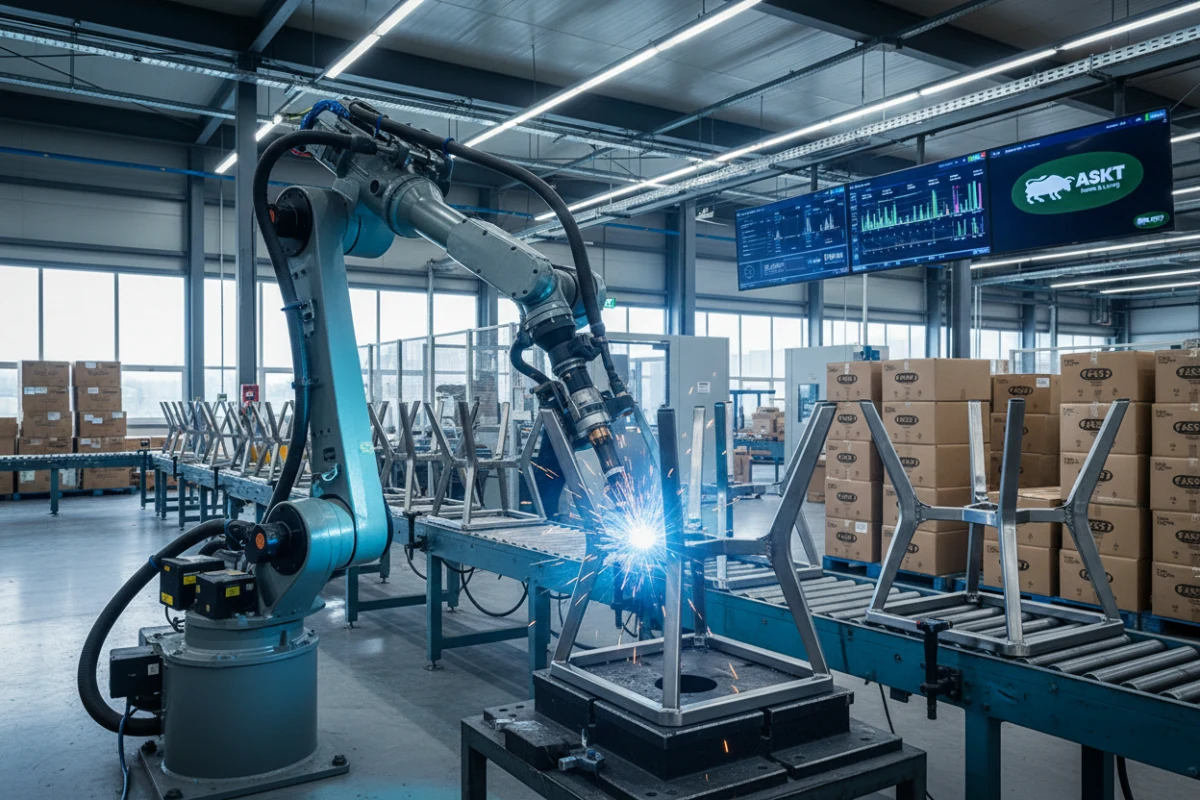
When evaluating bulk restaurant chairs, purchasing managers must carefully examine the metal frame manufacturing process, particularly the welding techniques used. In low-cost manufacturing facilities, manual welding is still widely used. However, manual welding is prone to human error, resulting in inconsistent weld thickness, internal air pockets, and thin weld beads. These minor defects act as weak points that can easily crack when a customer leans back on the rear legs of the chair. To eliminate this structural risk, ASKT integrates advanced automated robotic welding arms into our metal frame production lines. Robotic welding ensures absolute consistency, applying precise heat and wire feed to every joint. This uniform penetration creates exceptionally strong welds, providing the long-term structural reliability required for demanding contract environments.
Furthermore, to be safely specified for European commercial projects, cafe seating must comply with strict safety regulations. The key standard for commercial seating in Europe is EN 12520, which outlines the requirements for strength, durability, and safety in non-domestic seating. Meeting these standards requires putting the furniture through intensive mechanical testing in independent laboratories. These tests include static load testing, where massive forces are applied to the seat and backrest to ensure they do not bend; cyclic durability testing, where robotic arms apply repeating loads of up to 1,000 Newtons tens of thousands of times to check for material fatigue; and leg impact testing, which simulates the forces of chairs being dragged across uneven floors or tipped over.
Beyond structural strength, the environmental conditions in busy European cafes require high-quality surface protection. Specifying durable bistro chairs b2b requires frames finished with premium, multi-layered powder coatings. The coating must resist scratching from shoes, cleaning equipment, and occasional bumps, while offering excellent corrosion resistance in humid coastal areas or high-moisture indoor environments. At ASKT, our quality standards are based on extensive practical research into real-world dining scenarios, allowing us to engineer metal-framed chairs that perform reliably under the most demanding contract conditions.
Reducing Operational Overheads: Easy-Clean Fabric Sourcing and Material Engineering
For cafe owners and managers, a chair that is difficult to clean is a major daily problem. Spilled drinks, greasy food, and stains are inevitable in the food service industry. If a spill results in a permanent stain, the chair must be taken out of service or reupholstered, which disrupts the cafe's seating plan and increases operating costs. For this reason, selecting high-performance, easy-clean fabrics is a critical requirement for commercial cafe chairs wholesale orders.
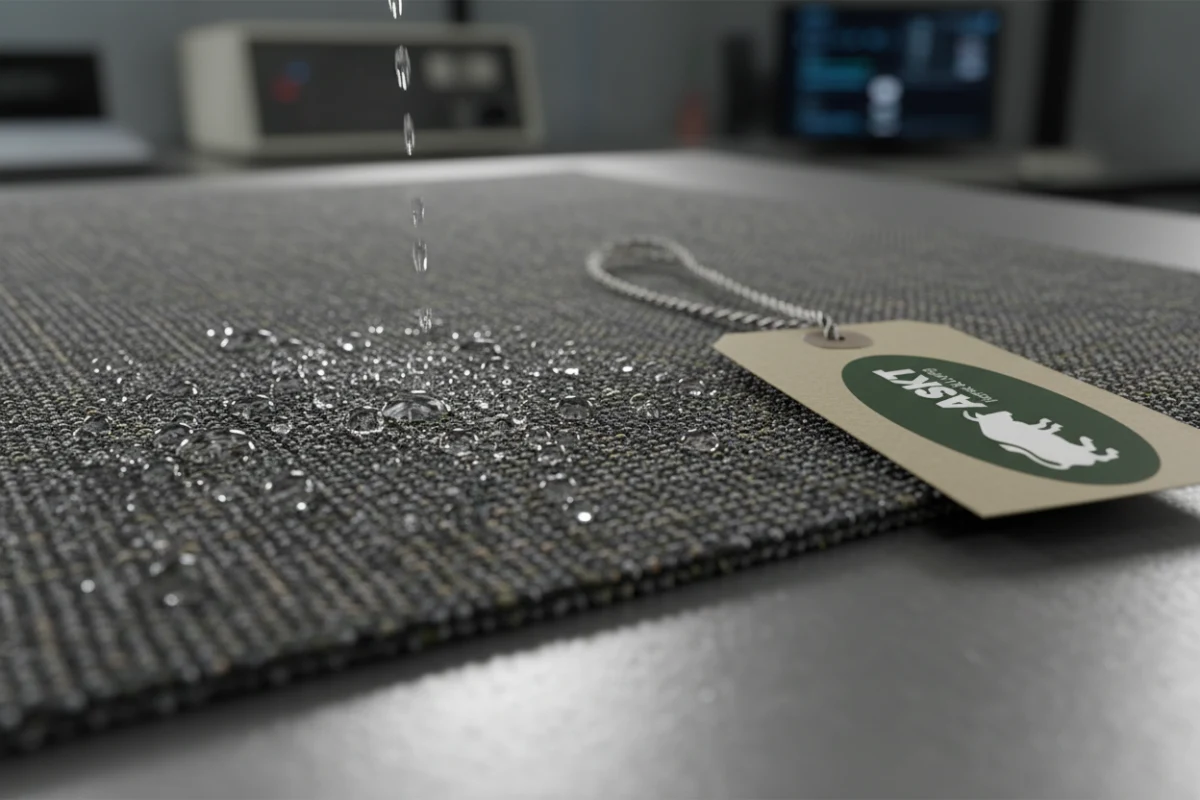
Many standard retail fabrics rely on temporary, sprayed-on chemical coatings to repel liquids. These surface treatments quickly wear away after a few cleanings with standard commercial detergents. For professional B2B contract applications, we recommend fabrics that are engineered for durability at the fiber level. These advanced performance fabrics feature hydrophobic nano-treatments integrated directly into the yarn, combined with a tight, high-density weave. This advanced technology ensures that liquids cannot penetrate the fabric fibers; instead, spills pool on the surface and can be easily wiped away with a dry cloth, leaving no stains or marks.
This upholstery provides major benefits. First, it offers superior resistance to liquid stains. Second, the fabric remains highly breathable, preventing heat buildup. Third, the high-density weave resists scratching from bags or pets, making it excellent for animal-friendly cafes. Fourth, it withstands high abrasion; while standard fabrics handle 15,000 rubs, contract-grade fabrics survive over 50,000 to 100,000 Martindale cycles, ensuring long-term aesthetic durability.
Chemical safety and environmental compliance are also essential considerations for European B2B buyers. The performance fabrics used in our furniture meet strict ecological standards, such as the OEKO-TEX Standard 100 certification. This guarantees that the upholstery is completely free from harmful chemicals, formaldehyde, and heavy metals, protecting the health of cafe customers. Additionally, to support our partners' environmental, social, and governance (ESG) goals, we offer sustainable fabric options made from recycled materials. This allows wholesalers and contract specifiers to provide eco-friendly seating solutions that appeal to green-conscious European businesses.
Streamlining B2B Procurement: Modular Component Systems and Shipping Efficiency
One of the greatest challenges for furniture wholesalers and large retailers is balancing product variety with inventory risk. Managing a wide range of unique product styles based on small variations in frame designs, fabric colors, and finishes can lead to high warehouse costs and tied-up capital. Additionally, meeting the Minimum Order Quantities (MOQs) for full-container-load shipping from factories in China can make procurement difficult for smaller product lines. To solve this problem, we advocate for a modular seating design system that standardizes the physical connections between different seat shells and base frames.
With a modular component system, a B2B importer can stock a streamlined inventory of universal steel and wooden leg bases alongside a diverse selection of upholstered seat shells. By mixing and matching these interchangeable parts, wholesalers can quickly assemble dozens of different chair configurations to meet specific customer demands. This modular strategy offers major business benefits:
First, it simplifies MOQ consolidation. Importers can meet container-load shipping requirements by ordering standardized base frames, while varying seat shell colors and fabrics to test local market trends with minimal risk.
Second, it optimizes warehouse space. Disassembled modular components occupy less space than fully assembled chairs, packing flat in uniform boxes to reduce storage overheads.
Third, it reduces delivery lead times. When a buyer places an urgent order for durable bistro chairs b2b setups, wholesalers can assemble the requested style directly from their on-hand modular stock, cutting delivery times to days.
Beyond modular assembly, shipping efficiency is heavily influenced by packaging design. During long-distance sea transit, cargo shifting, high humidity, and physical handling can easily damage fragile upholstery or scratch powder-coated metal legs. To mitigate these risks, our engineering team utilizes computerized board-punching and precise batch-cutting machinery to create customized flat-pack KD (Knocked Down) packaging. These high-density boxes are structured to minimize empty space, which directly lowers shipping volumes and ocean freight rates. To protect the contents, we replace traditional single-use plastic wraps with high-strength, recyclable honeycomb paper buffers. These eco-friendly paper cushions absorb physical shocks and drop impacts during transit while matching the sustainability expectations of the European market.
Practical B2B Sourcing Checklist for Cafe Seating
Before signing a contract with any commercial cafe chairs wholesale supplier, purchasing teams should carry out a thorough technical audit to ensure the manufacturer can maintain consistent quality across high-volume orders. To help your team, we have created a practical sourcing checklist based on our twenty years of B2B manufacturing and export experience:
- Check Weld Quality: Ask for clear, close-up photos of the load-bearing joint welds. Look for smooth, uniform weld beads and the absence of pinholes or weld slag, which indicate automated robotic welding precision.
- Verify EN Compliance: Request official, verifiable third-party test reports showing compliance with the EN 12520 standard for non-domestic seating to ensure structural safety.
- Review Fabric Performance: Check the technical specifications of the upholstery. Ensure the fabric meets the Martindale rub count required for high-traffic contract environments (minimum 50,000 rubs) and holds a valid OEKO-TEX Standard 100 certification.
- Confirm Social Compliance Audits: Ensure the factory holds a recognized social compliance certification, such as a BSCI audit. This is a vital requirement for securing contracts with major European retail chains and public commercial tenders.
- Evaluate Packaging Protection: Verify that the packaging designs have passed professional drop testing and use sustainable, high-density honeycomb paper protectors instead of excessive plastic wraps.
Partnering for Long-Term Commercial Success
Choosing the right manufacturing partner for commercial cafe seating is a critical business decision that directly impacts your profit margins, product reliability, and brand reputation in the European market. At ASKT, our focus is on building long-term B2B relationships based on complete manufacturing transparency, strict quality control, and reliable shipping performance. Our "Test first, ship second" quality assurance process ensures that every single chair frame, weld joint, and upholstered shell is thoroughly inspected before being loaded into the container, reducing your risk of receiving defective products.
We are dedicated to helping your procurement team optimize your product range, minimize inventory risks, and secure successful contract tenders. Whether you are sourcing bulk restaurant chairs, contract cafe seating wholesale, stackable commercial dining chairs, or durable bistro chairs b2b, our manufacturing expertise and European market focus make us a reliable partner for your supply chain.
If you are currently evaluating dining seating options for an upcoming wholesale product line or commercial hospitality project, we are here to help. To get a comprehensive, technical comparison of structural materials, frame configurations, and container shipping optimization tailored specifically to your target market, Request Cafe Chair Selection Matrix today.