Compact Laminate vs HPL Tabletop: Technical Sourcing Guide for B2B Furniture Buyers
When comparing a compact laminate vs HPL tabletop, the fundamental distinction lies in core construction: standard High Pressure Laminate (HPL) is a decorative surface sheet bonded to a carrier board such as MDF or chipboard, whereas compact laminate is a dense, self-supporting solid composite board. For high-traffic hospitality and contract projects, compact laminate provides structural water resistance and a slim profile, while standard bonded HPL offers cost-effective volume production and diverse thickness profiles for indoor dining ranges.
What Are the Core Structural Differences in a High Pressure Laminate Comparison?
To choose the right tabletop specification for commercial and retail furniture programs, professional buyers and product managers must evaluate the internal construction of each material. Both surfaces belong to the high-pressure laminate family, yet their structural composition and manufacturing methods lead to different performance profiles.
Standard High Pressure Laminate (HPL) consists of layers of Kraft paper saturated with thermosetting phenolic resin, topped with a decorative printed decor paper saturated with melamine resin. These individual layers are fused together under intense heat and high pressure. The resulting laminate sheet is thin, durable, and resilient, but it is not self-supporting. Therefore, hpl tabletop manufacturing requires pressing and bonding this thin laminate sheet onto a core substrate. Typical carrier boards include medium-density fibreboard (MDF), high-density fibreboard (HDF), or particleboard (chipboard). Because the core substrate remains exposed at the cut edges, standard HPL tabletops require edge banding, such as ABS, PVC, or wood edging, to seal the internal core and present a finished edge appearance.
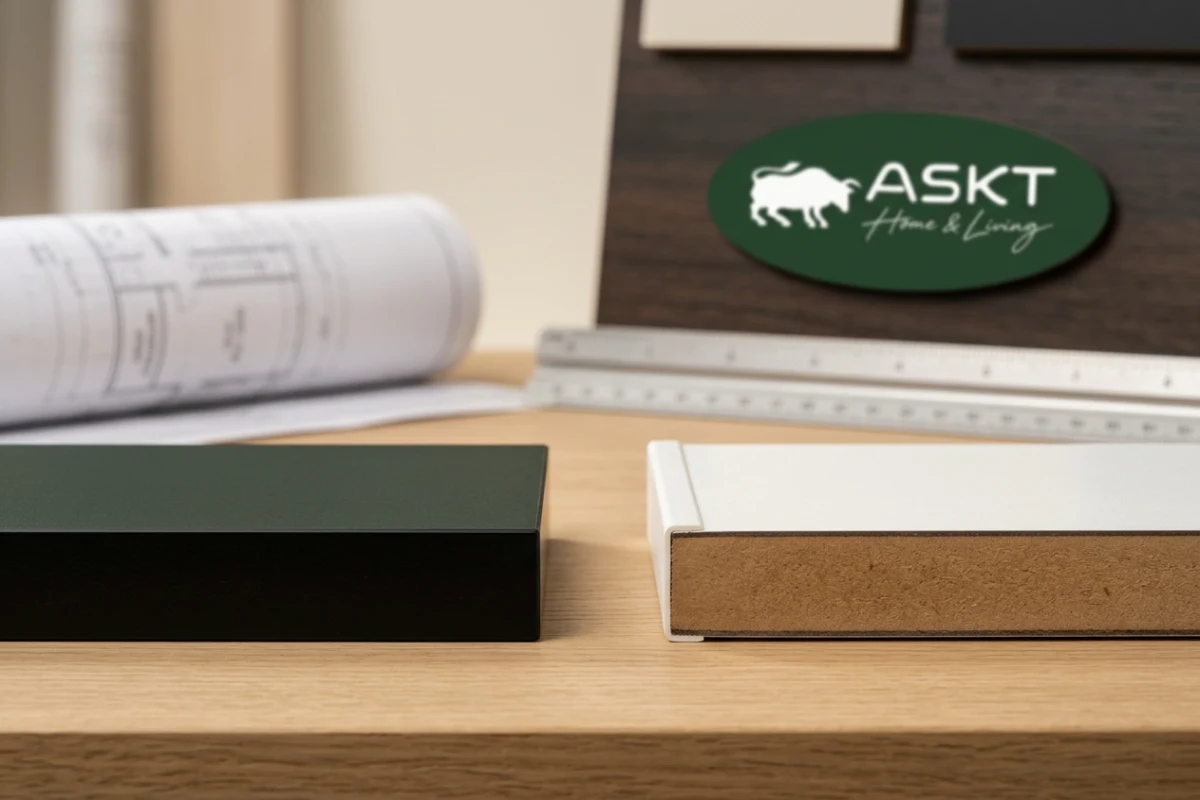
In contrast, compact laminate (often referred to as solid phenolic sheet or compact board) takes this high-pressure fusion process to a structural scale. Rather than creating a thin decorative skin, manufacturers stack multiple resin-saturated Kraft core sheets between two decorative melamine wear layers. When compressed under industrial heat and pressure, these layers fuse into a solid, monolithic board. Compact laminate does not rely on any wooden carrier board or adhesive bond lines. The resulting panel is homogeneous, dense, and structurally independent. The exposed edge of a compact laminate top is the solid resin core itself, which is machined, chamfered, and finished without requiring edge-banding strips.
| Feature | Standard Bonded HPL Tabletop | Solid Compact Laminate Tabletop |
|---|---|---|
| Structural Composition | Laminate sheet bonded to wood substrate (MDF/Chipboard) | Monolithic solid-core resin board |
| Panel Thickness | Typically 18 mm to 38 mm (determined by core substrate) | Typically 10 mm to 13 mm (slimline profile) |
| Edge Treatment | ABS/PVC edge banding or solid wood trim required | Machined, bevelled, or chamfered exposed core |
| Core Water Resistance | Melamine surface waterproof; wooden core vulnerable to moisture | 100% waterproof throughout entire solid core |
| Density & Solid Core | Dependent on carrier substrate (standard wood density) | High density throughout the homogeneous panel |
| Fixing Method | Standard wood screws or direct plate fastening | Pre-drilled blind pilot holes with threaded metal inserts |
How Do Moisture Resistance and Edge Durability Compare Across Commercial Tabletop Materials?
In hospitality venues, corporate dining halls, and high-turnover restaurant environments, tabletops are subject to continuous physical demands. Evaluating commercial tabletop materials requires understanding how each structure behaves when exposed to daily cleaning, spilled liquids, physical impacts, and constant table movement.
Core Water Resistance and Delamination Risk
On a standard bonded HPL tabletop, the top melamine surface provides a hygienic, non-porous layer that resists food stains, coffee spills, and mild surface sanitizers. However, the long-term operational vulnerability is located along the edge joints. The junction where the decorative HPL surface meets the ABS or PVC edge banding relies on adhesive lines. If liquids pool along table edges, or if frequent damp wiping weakens the adhesive, moisture can penetrate the joint. Once water reaches an internal MDF or chipboard substrate, the wood fibres absorb moisture, leading to localized swelling, core deformation, and edge-banding detachment. Once swelling occurs, the substrate cannot be repaired and requires complete tabletop replacement.
Conversely, a compact laminate dining table provides structural moisture security. Because the panel core is formed from solid phenolic resin and compressed kraft layers, it contains no raw wood fibres that can swell or delaminate. The entire board is impermeable to liquids. Even if liquids remain on the edge for extended periods, or if the tabletop is cleaned frequently with wet cloths and commercial detergents, the core retains its dimensional integrity. This makes compact laminate a dependable choice for busy restaurant dining rooms, cafe terraces, and moisture-prone hospitality environments.
Impact Resistance and Edge Performance
Edge impact is one of the most frequent causes of furniture damage in commercial dining spaces. As chairs are repeatedly pushed into tables, and as staff move tables together to accommodate larger dining groups, edges experience repeated mechanical shocks:
- Bonded HPL Tops: Severe impact from metal chair frames or service trolleys can crack the thin laminate surface layer along the perimeter or chip the plastic edge banding. Once an edge band cracks, the core becomes vulnerable to moisture ingress.
- Compact Laminate Tops: The dense, solid core absorbs physical impacts evenly. Because there is no separate edge trim to peel or crack, minor impacts do not compromise structural stability. The solid core simply retains its uniform appearance, preventing premature service failures in contract dining facilities.
Surface Hygiene and Maintenance
Both materials feature non-porous melamine decorative wear layers that inhibit bacterial absorption and allow rapid sanitisation between table turns. For daily maintenance, staff can wipe both surfaces clean with warm water and neutral commercial detergents. However, because compact laminate features seamless, joint-free edges, it provides superior hygiene in environments where thorough washing and sanitation are required.
What Are the Key Considerations in HPL Tabletop Manufacturing and Substrate Bonding?
Understanding the production workflow of hpl tabletop manufacturing allows furniture importers, brand managers, and sourcing specialists to identify quality differences between low-cost commercial boards and durable contract-grade furniture.
Substrate Selection and Balancing Sheets
A high-quality bonded HPL tabletop requires precise substrate preparation. High-density MDF or moisture-resistant chipboard provides a uniform, smooth surface that prevents surface telegraphing—a visual defect where core imperfections show through thin decorative laminates. Furthermore, proper manufacturing requires balancing the board: applying a balancing laminate sheet to the underside of the panel equal in thickness and tension to the top decorative sheet. If an unbranded manufacturer applies decorative HPL to the top while leaving the underside unprotected or backed with inferior paper, the uneven moisture absorption and thermal expansion will cause the tabletop to bow or cup over time.
Adhesive Application and Edge-Banding Technology
The durability of an HPL tabletop depends heavily on the adhesive technology used during panel lamination and edge application:
- Surface Lamination: Industrial roller presses apply uniform adhesive layers across the core board before bonding the HPL sheet under controlled mechanical pressure to prevent air pockets, blisters, or weak spots.
- Edge-Banding Adhesives: High-traffic dining tables require water-resistant PUR (polyurethane) hot-melt adhesive rather than basic EVA glue. PUR creates a tighter, more moisture-resistant adhesive bond line between the panel edge and the ABS edge banding, significantly lowering the risk of edge separation during commercial service.
- Corner Trimming and Finishing: Precision CNC edge-banding machines trim, scrape, and buff the ABS edges to remove sharp corners and create a smooth, comfortable perimeter for seated guests.

How Do Logistics, Packaging Optimisation, and Container Loading Differ for Each Material?
For European furniture wholesalers, retail chains, and purchasing groups importing container volumes, tabletop material selection directly influences freight efficiency, transport safety, and warehouse handling.
Weight Distribution and Carton Profiles
Solid compact laminate has a density substantially higher than standard MDF or particleboard. However, because compact laminate provides structural rigidity at slim thicknesses (typically 10 mm to 12 mm) compared to standard bonded tops (typically 25 mm to 38 mm), the overall weight per tabletop remains manageable. More importantly, the thin profile of compact laminate significantly reduces carton thickness.
Slimmer packaging allows logistics managers to stack more units per pallet and fit a higher quantity of finished tabletops into standard 40ft High Cube shipping containers. This volumetric efficiency reduces freight cost per unit, which helps offset the higher raw material price of solid compact laminate boards.
| Logistics & Handling Parameter | Standard Bonded HPL Tabletop | Compact Laminate Tabletop |
|---|---|---|
| Typical Carton Profile Thickness | 40 mm – 60 mm (with internal padding) | 20 mm – 35 mm (with corner protection) |
| Carton Stackability & Volume | Moderate carton volume per container | High volumetric packing density in containers |
| Core Density | Standard core density (650–750 kg/m³) | High core density (approx. 1,400 kg/m³) |
| Knock-Down (KD) Integration | Direct wood screw fixing to metal subframe | Factory-fitted threaded inserts with machine bolts |
| Transit Protection Focus | Surface protection and edge crush prevention | Reinforced corner protection to prevent chipping |
Knock-Down (KD) Engineering and Hardware Fixings
Securing metal dining table frames or central pedestal bases requires different engineering approaches for each material:
- Standard HPL Tabletops: Because the wood core accepts standard fasteners, table bases can be attached using wood screws or threaded inserts inserted into pre-drilled holes. Sourcing teams must ensure the pilot holes are accurately located to prevent core splitting during final assembly.
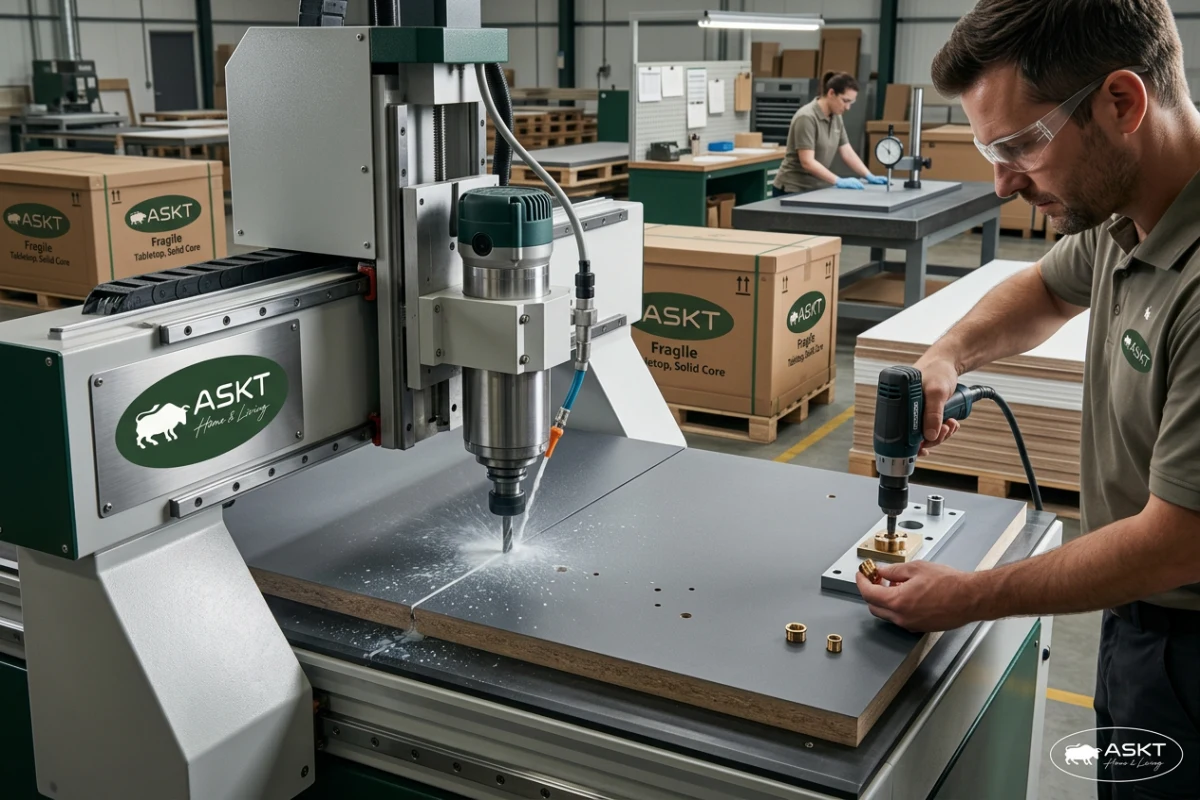
- Compact Laminate Tabletops: Due to the material's solid hardness and slim profile, standard self-tapping screws cannot be used. Table manufacturers drill precise blind pilot holes on CNC machines and fit factory-installed threaded brass or steel inserts. This allows buyers and end users to bolt metal table bases directly into the tabletop using metric machine screws, ensuring a rigid mechanical connection that can be assembled, disassembled, and reassembled multiple times without stripping threads.
Protective Packaging for Long-Distance Export
During ocean transit, containerized furniture undergoes continuous vibration, temperature fluctuations, and humidity variations. Reliable B2B manufacturers employ sustainable packaging strategies with reduced plastic use, replacing expanded polystyrene where feasible with heavy-duty corrugated honeycomb cardboard, reinforced edge guards, and custom corner caps. Because compact laminate corners are dense and rigid, corner protectors are essential to prevent tip damage during warehouse handling and multi-stop freight distribution.
When Should Commercial Furniture Buyers Choose a Compact Laminate Dining Table Over Bonded HPL?
Selecting between compact laminate and standard bonded HPL requires balancing design aesthetic, functional environment, project budget, and expected product lifespan. Sourcing teams must evaluate the specific commercial use case before issuing manufacturing specifications.
Ideal Applications for Compact Laminate Tabletops
A compact laminate dining table is the preferred specification under the following commercial conditions:
- High-Frequency Hospitality Venues: Fast-casual dining chains, food courts, coffee shops, and busy bistros where tables are wiped down constantly throughout the day and experience continuous chair impacts.
- Covered Outdoor and Semi-Outdoor Spaces: Verandas, covered hotel terraces, and beer gardens where ambient humidity, morning dew, or occasional rain exposure would cause bonded wood cores to swell.
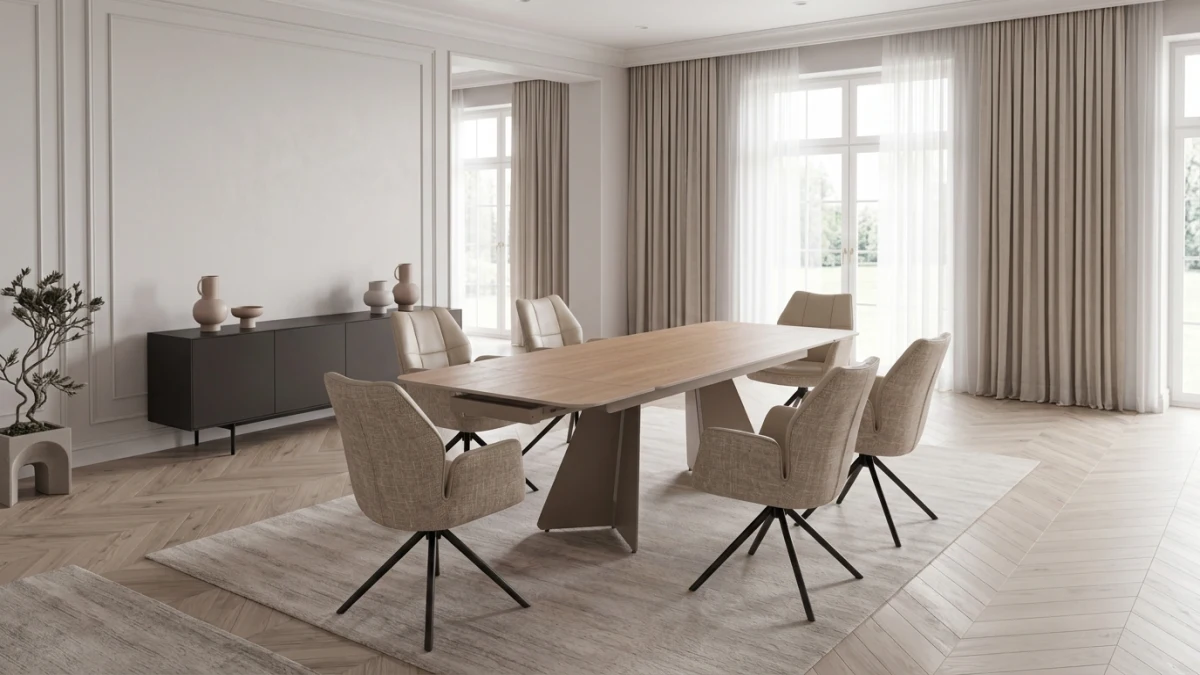
- Modern Architectural Furniture Lines: Contemporary dining collections where designers seek an ultra-slim, floating tabletop aesthetic paired with minimalist metal or powder-coated steel underframes.
- Public and Institutional Canteens: University dining halls, corporate cafeterias, and healthcare staff dining spaces where maximum durability, hygienic surfaces, and zero-delamination performance are required.
Ideal Applications for Standard Bonded HPL Tabletops
Standard bonded HPL tabletops remain the industry benchmark for standard commercial and residential furniture programs under these circumstances:
- Volume Residential Dining Ranges: Furniture retail chains and online brands targeting residential consumers, where tables are placed in climate-controlled dining rooms and do not face aggressive commercial cleaning.
- Substantial Visual Profiles: Traditional, industrial, or executive dining collections where the design language calls for a thick, substantial tabletop appearance (such as 25 mm, 30 mm, or 38 mm edges) that would be excessively heavy and costly in solid compact laminate.
- Budget-Conscious Commercial Furnishing: Large-scale office breakout rooms or student housing projects where procurement budgets require low unit costs and standard indoor durability.
- Coordinated Casegoods Programs: Product lines where dining tabletops must visually match sideboards, coffee tables, and storage units using identical wood-grain decors and ABS edge trims.
How Can Sourcing Teams and Purchasing Managers Evaluate Tabletop Quality and Reduce Supply Chain Risks?
When sourcing dining tables from overseas manufacturing partners, purchasing managers, product developers, and quality control teams must verify technical specifications before initiating mass production. Using a structured evaluation checklist helps eliminate sourcing risks and prevents costly product claims.
Technical Tabletop Quality Checklist
Before approving production samples or issuing purchase orders for dining collections, evaluate suppliers against the following quality checkpoints:
- Surface Flatness and Panel Balancing: For bonded HPL tops, verify that balancing backing sheets are applied to the underside to prevent warping under shifting seasonal humidity in European target markets.
- CNC Machining and Edge Smoothness: For compact laminate, inspect the exposed machined edges. The perimeter bevel or radius should be smooth, consistent, and free of cutter marks, burning, or burrs.
- Hardware Insert Pull-Out Resistance: Verify that factory-installed threaded inserts in compact laminate tops withstand required torque specifications and remain securely seated when tightening metal leg frames.
- Edge-Banding Adhesion (For HPL): Confirm that edge-banding lines on HPL tops are clean, tightly sealed with moisture-resistant glue, and free from visible glue squeeze-out or surface gaps.
- Packaging and Corner Protection: Check that export packaging includes heavy honeycomb corner caps and dense protective framing capable of passing drop and vibration tests for containerized distribution.
- Structural KD Frame Integration: Ensure the tabletop connects securely to the metal dining frame, distributing load forces evenly across all mounting points without creating stress concentrations.
By establishing clear material specifications and conducting standardized sample inspections, European furniture buyers can deliver reliable, durable dining products that protect brand reputation and minimize after-sales claims across wholesale, retail, and contract channels.
Frequently Asked Questions (FAQ)
What is the primary difference between compact laminate and standard HPL?
Standard HPL is a thin decorative laminate sheet (generally under 1.2 mm) that must be glued to a carrier board like MDF or chipboard, requiring edge banding to seal the sides. Compact laminate is a solid, self-supporting panel (typically 10 mm to 13 mm thick) made entirely of resin-impregnated kraft paper and melamine wear layers, requiring no substrate or edge banding.
Is compact laminate completely waterproof compared to bonded HPL?
Yes. Compact laminate is homogeneous and solid throughout, making the entire core completely waterproof and resistant to swelling. On bonded HPL tabletops, while the top melamine surface is waterproof, the internal wood core remains vulnerable if water penetrates the edge-banding seam.
How are metal legs and frames attached to compact laminate tops?
Because compact laminate is extremely dense and typically only 10 mm to 12 mm thick, standard wood screws cannot be used. Manufacturers drill precise blind holes on CNC routers and insert threaded brass or steel inserts, allowing metal subframes and legs to be securely fastened with metric machine bolts.
Why does compact laminate cost more than standard HPL tabletops?
Compact laminate uses a substantially higher volume of Kraft paper and thermosetting phenolic resins to produce a dense, monolithic panel. While raw material costs are higher, the elimination of manual edge banding and superior commercial durability often balances total lifecycle costs for contract furniture projects.
If you are planning new dining table collections or sourcing contract furniture for European retail or hospitality markets, ask our team for tailored guidance on tabletop materials to determine the ideal structural and commercial fit for your product line.