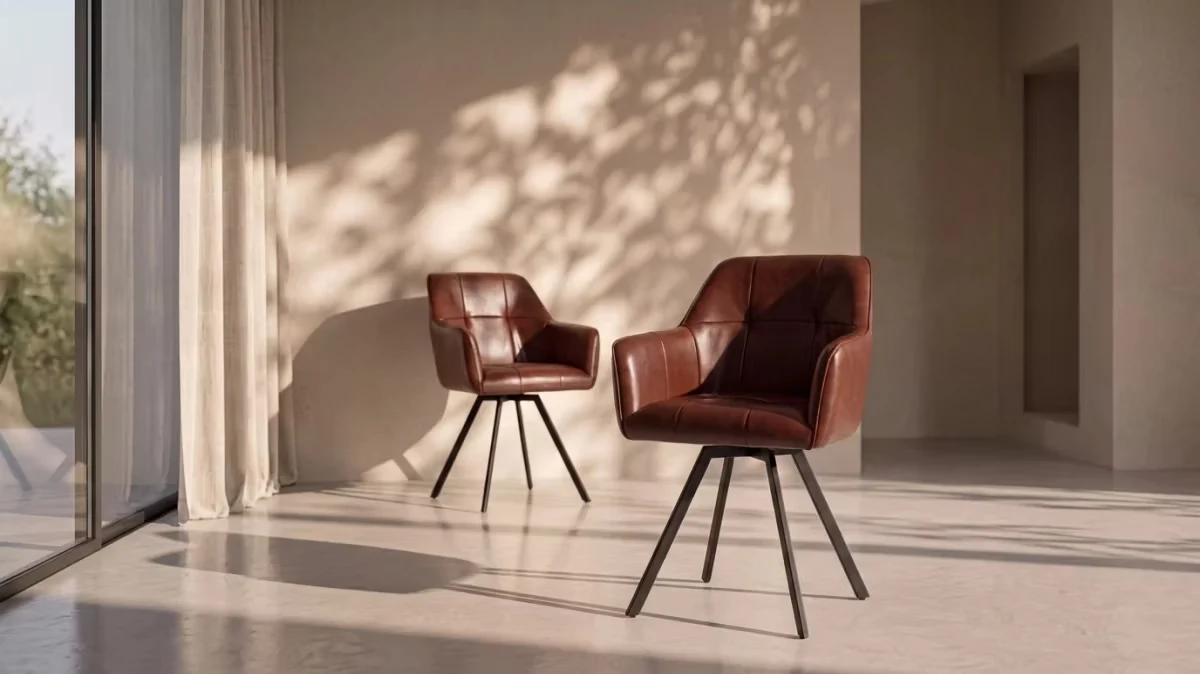
Is a More Expensive Dining Chair Cheaper Over Its Five Year Life?
A more expensive dining chair can be cheaper over a five-year lifespan if it delivers lower replacement, maintenance and downtime costs — but this depends on real quality factors like fabric durability, frame stability and manufacturing consistency, not just a higher price tag. For professional buyers, the question is never which chair costs less today, but which costs less across its full service life.
Why purchase price alone tells you very little about long-term cost
Having worked with European furniture buyers for over two decades, I often see the same mistake: judging a dining chair by its unit price on a quotation sheet. A chair that looks identical in a catalogue can perform completely differently after 12 months of regular use, and the gap only widens by year three, four and five.
Purchase price is just one line on the balance sheet. For retailers, every returned chair, every warranty claim and every damaged customer review eats into margin. For contract buyers such as restaurants and hotels, every chair that fails mid-shift creates downtime, reordering delays and guest dissatisfaction. The long-term cost of budget vs quality dining chairs is therefore not a debate about taste or brand — it is a purely financial calculation.
The reason budget chairs rarely show up as more expensive in simple comparisons is that most buyers only track the initial invoice. They do not add up replacement orders, spare parts, cleaning products, staff time spent handling complaints, shipping costs for reorders and disposal costs for broken units. When you include all of those factors, a chair with double the ticket price can easily work out cheaper over five years.
What goes into the total cost of ownership of a dining chair?
To properly evaluate the TCO of dining chairs for retail buyers and contract operators, you need to account for every cost that appears between placing the first order and taking the last chair out of service. Most of these costs are predictable once you know what to look for.
The main components of 5-year dining chair total cost of ownership are:
- Initial purchase cost: Unit price, MOQ commitment, sample fees and tooling charges if applicable
- Logistics cost: Container loading, sea freight, customs duties, inland transport and warehousing
- Installation and assembly: Labour time for KD (knock-down) assembly, quality checks and placement
- Replacement cost: How many times you need to reorder the same chair within five years due to failure or wear
- Maintenance and repair: Spare parts, re-upholstery, frame tightening, touch-up paint and cleaning products
- Cleaning cost: Labour hours and cleaning chemicals, especially for light-coloured or absorbent fabrics
- Downtime cost: Lost revenue in contract settings, or lost retail margin from out-of-stock lines and warranty replacements
- Disposal cost: Collection, recycling or landfill fees for chairs that reach end of life
- Indirect cost: Customer complaints, negative reviews, staff time spent resolving issues and brand reputation impact
For a retail buyer, the biggest hidden cost is usually returns and warranty claims. For a hospitality buyer, it is usually downtime and replacement disruption. For a wholesaler supplying both, it is the combination of both multiplied across your customer base.
How do budget and quality chairs compare over five years of use?
Numbers make this discussion much clearer. Below is a simplified comparison of a typical budget dining chair and a mid-range quality dining chair, both used in a medium-traffic European retail or light contract setting. The figures illustrate how TCO stacks up, rather than representing a universal promise, because every use case is different.
| Cost component | Budget chair (€40 unit price) | Quality chair (€90 unit price) |
|---|---|---|
| Initial purchase for 100 chairs | €4,000 | €9,000 |
| Average lifespan under regular use | 1.5–2 years | 7–10 years |
| Full replacements needed in 5 years | 2 full sets (200 chairs) | 0 full sets |
| Total replacement chairs | 200 units = €8,000 | 0–10 units = €0–€900 |
| Fabric cleaning and maintenance | €1,200 (stains, pilling, frequent cleaning) | €400 (stain-resistant, durable fabric) |
| Frame repairs and spare parts | €800 (loose joints, bent legs, powder coat chipping) | €150 (minimal, mostly preventive checks) |
| Estimated downtime / complaint cost | €2,000 (returns, complaints, guest issues) | €300 (occasional minor issues) |
| Disposal and logistics for replacements | €1,400 | €100 |
| Total 5-year cost for 100 chairs | €17,400 | €9,950 |
| Cost per chair per year | €34.80 | €19.90 |
The budget chair starts at less than half the price, yet ends up costing almost twice as much per year by the end of year five. This is the core of the contract dining chair lifespan cost comparison: cheaper upfront almost always means more expensive over time, especially in high-frequency settings.
What makes the difference is not that the quality chair is nicer to sit on — although it usually is. What makes the difference is that every component is built to survive repeated use without failing. Higher quality does not guarantee better TCO on its own, but when the price reflects genuine structural and material improvements, the math usually works in favour of the more expensive chair.
What quality factors actually reduce five-year cost?
Not every expensive chair is good value, and not every affordable chair is a bad long-term bet. What matters is whether the higher price is invested in the components that drive longevity, or spent on branding, marketing and retail markup. From a manufacturing perspective, there are a handful of quality factors that move the needle on TCO more than anything else.
Fabric durability and performance
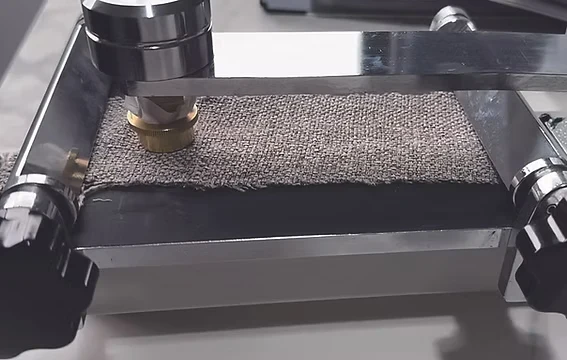
Fabric is the single most visible and most frequently damaged part of a dining chair. A budget chair may use a thin polyester weave that pills, fades or tears within 18 months. A quality chair built for contract use will use fabrics tested for abrasion resistance, colour fastness and breathability, often with additional stain-resistant or waterproof properties.
At ASKT, for example, we test all our fabrics for abrasion resistance, colour fastness and breathability, and we offer OEKO-TEX® STANDARD 100 certified options that are formaldehyde-free and safe for end consumers. We also supply performance fabrics such as ASKT-Tex, which combines a hydrophobic nano-coating with micro ventilation channels to deliver water resistance, stain resistance, breathability and high abrasion resistance without sacrificing a soft, premium feel. For buyers, a better fabric means fewer stains, less pilling, longer visual life and lower cleaning costs.
Frame construction and stability
The frame determines whether a chair stays solid and safe for years or wobbles, creaks and eventually breaks. Budget chairs often use thin-gauge metal, poorly aligned welds or thin wooden frames that cannot handle repeated loading. Quality chairs use thicker tubing, consistent welding and proper powder coating to resist corrosion and chipping.
At a factory level, this difference shows up in the production equipment. Factories that produce long-lasting chairs use automatic welding robotic arms for consistent weld quality, precision punching machines for accurate hole alignment and automated cutting equipment for repeatable parts. These investments cost more upfront, but they remove human error from the process and deliver far more consistent results batch after batch.
Seat support and comfort retention
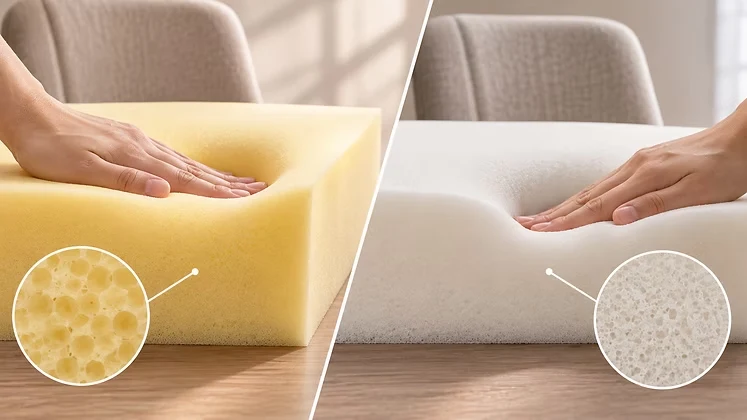
A chair that loses its shape and comfort after six months is effectively a broken chair, even if the frame still stands. Budget seating often uses low-density foam that compresses permanently, while better-quality chairs use higher-density foam, pocket spring systems or layered support structures that retain their shape for years. For retail buyers, comfort retention directly affects return rates and repeat purchases. For contract buyers, it affects guest satisfaction and review scores.
Manufacturing consistency
For professional buyers ordering in volume, consistency is a cost factor in itself. If every chair from a batch looks slightly different — different fabric tension, slightly different leg angle, uneven paint finish — you spend extra time in QC, sorting and customer service. A manufacturer with robust quality control, trained workers and BSCI-accredited production processes will deliver more consistent units, which means fewer rejects, fewer complaints and lower long-term cost.
How can you tell if a higher-priced chair is worth the extra investment?
A higher price tag alone is not proof of better long-term value. Some brands charge more for the same chair simply because they have higher marketing budgets or operate at higher retail margins. Before you pay more, verify that the extra cost is actually going into the chair itself, not into branding.
Here is a practical checklist you can use to evaluate five-year value before you place an order:
- Ask for fabric specifications: Is it tested for abrasion, colour fastness and breathability? Does it have any stain-resistant or waterproof treatment?
- Check the frame details: What gauge metal is used? How are the joints constructed? What type of powder coating or finish is applied?
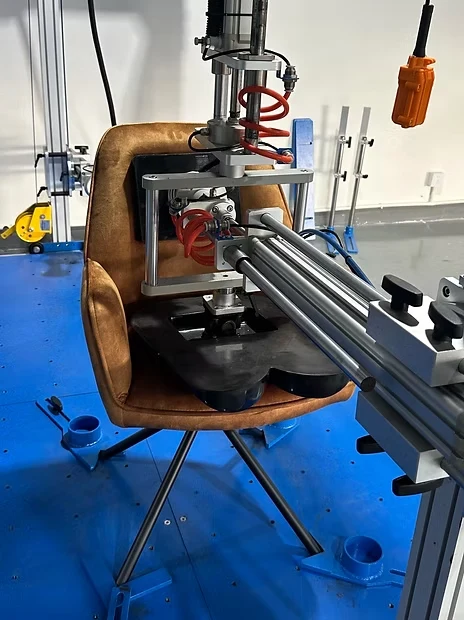
- Request test reports: Look for evidence of structural testing, load-bearing testing, stability testing and fabric performance testing, rather than relying on marketing claims.
- Evaluate the manufacturer: How long have they been producing dining chairs? Do they serve contract and hospitality buyers, or only low-price retail? Do they have a documented QC process?
- Order samples and test them: Sit on them, push them, spill a little coffee on the fabric, check the welds and feel the frame weight. A sample will tell you more than any catalogue.
- Calculate replacement frequency: Based on the build quality, how many times would you realistically need to replace this chair in five years?
- Check spare part availability: Can you buy replacement seats, backrests, feet or screws later, or do you have to replace the entire chair if one part breaks?
If the more expensive chair scores clearly better on most of these points, the higher initial cost will almost always pay for itself within five years. If the only difference is the brand name or the showroom presentation, you are paying for marketing, not durability.
What are the most common mistakes when comparing dining chair TCO?
Even experienced buyers fall into a few predictable traps when comparing the long-term cost of budget vs quality dining chairs. Avoiding these mistakes will make your TCO calculations much more accurate.
Mistake 1: Comparing unit price instead of cost per year of service A €40 chair that lasts two years costs €20 per year. A €90 chair that lasts eight years costs €11.25 per year. The cheaper chair is actually almost twice as expensive when measured by useful life.
Mistake 2: Ignoring freight and logistics for replacements Every time you reorder replacement chairs, you pay shipping, customs and handling again. For small replacement orders, the logistics cost can easily exceed the unit price of the chair itself.
Mistake 3: Forgetting about staff and management time Someone has to deal with complaints, arrange replacements, coordinate reorders and inspect faulty units. That labour is expensive, and it is almost never included in a simple price comparison.
Mistake 4: Assuming all chairs in the same price range are the same Two chairs with the same price can have wildly different build quality. One manufacturer may spend most of the budget on frame and fabric; another may spend it on packaging, branding and retailer margins.
Mistake 5: Applying domestic use assumptions to contract settings A chair that works perfectly in a home dining room used twice a day will not last six months in a restaurant with 10+ seatings per day. Always match the chair's durability rating to its actual use environment.
For anyone working through the TCO of dining chairs for retail buyers or contract operators, the simplest test is this: if you had to guarantee the chair for five years, would you be comfortable doing so? If the answer is no, you can be fairly sure the total cost of ownership will be higher than the ticket price suggests.
Practical advice for buyers choosing between budget and quality dining chairs
There is no universal answer to whether a more expensive chair is always better. For some retail segments — such as entry-level price-point lines or short-term promotional ranges — a budget chair may be the commercially correct choice, as long as you and your customers understand the expected lifespan.
For most mainstream retail, hospitality and contract buyers, however, the balance usually tips towards a better-built chair once you extend the horizon to five years. The reason is simple: most of the cost of a failing chair comes after the sale, not before it.
If you are building a long-term furniture collection or supplying contract projects where reliability matters, focus on the components that directly affect lifespan: fabric durability, frame construction, seat support and manufacturing consistency. A slightly higher unit price is rarely expensive if it halves your replacement rate and substantially reduces complaint volume.
The right strategy is usually not to buy the cheapest chair you can find, and not to buy the most expensive chair you can find, but to buy the chair that delivers the longest reliable service life at a price that makes sense for your market.
Frequently asked questions
Does a more expensive dining chair always last longer? No, not always. A higher price only translates to a longer life if the extra cost is invested in durable components such as abrasion-resistant fabric, a robust frame, quality foam or pocket spring seating, and consistent manufacturing. Some expensive chairs carry a large brand markup without meaningful differences in build quality. Always verify specifications, test reports and sample quality instead of assuming price equals durability.
How long should a good-quality dining chair last in a contract setting? A well-built contract dining chair with a metal frame and commercial-grade upholstery should typically last 7–10 years in regular hospitality use, and longer in lower-traffic environments. Budget chairs intended for domestic retail use often last 1–3 years under the same contract conditions. Your own maintenance, cleaning schedule and usage intensity will also affect the actual lifespan.
Is TCO more important for retail buyers or contract buyers? Total cost of ownership matters for both, but in different ways. For contract buyers such as restaurants and hotels, TCO is usually dominated by downtime, replacement disruption and maintenance labour. For retail buyers, TCO is more affected by returns, warranty claims, customer complaints and repeat replacement orders. In both cases, a chair with a longer service life almost always reduces total five-year cost.
If you are evaluating dining chair suppliers and want to compare product specifications and long-term sourcing costs for the European market, you can discuss your collection requirements with our team. We work with wholesalers, retailers and contract buyers across Germany, the Netherlands, the UK, Poland, Switzerland and Ireland, providing transparent pricing, clear quality specifications and OEM/ODM customization for durable, commercially reliable dining chair collections.