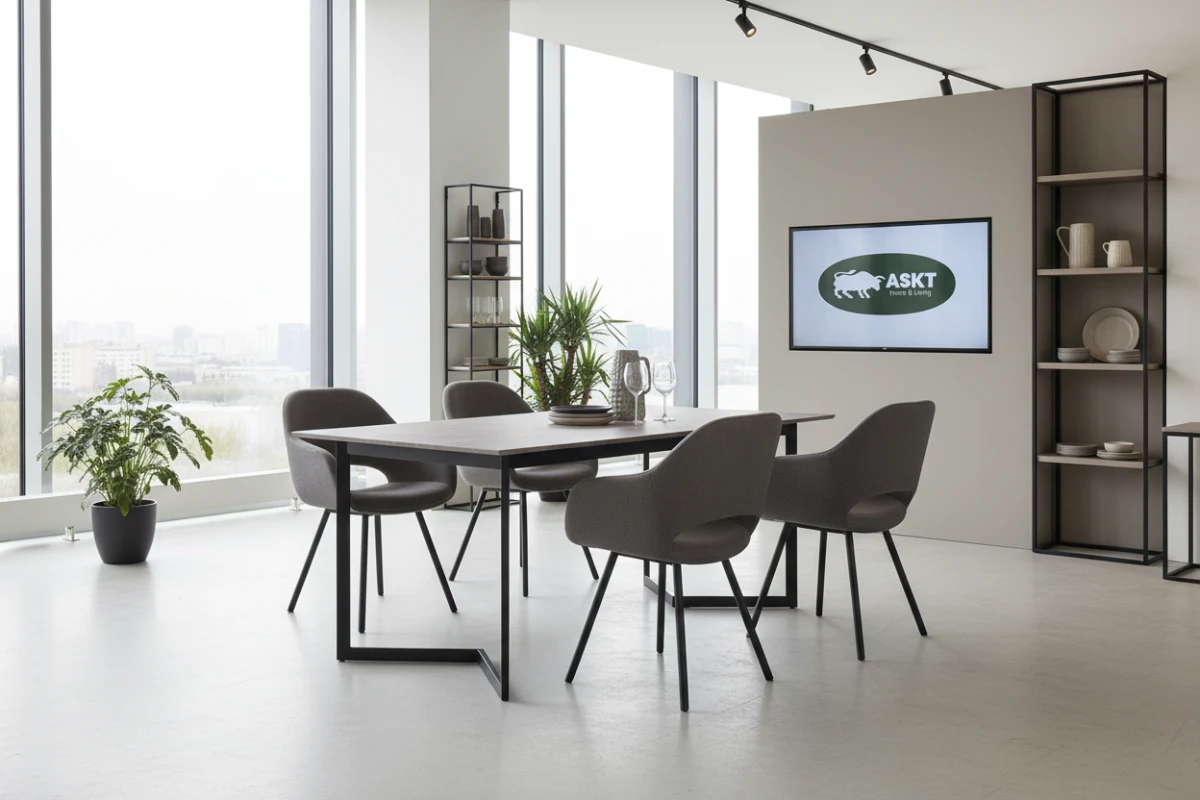
Why a Unified Dining Chair and Table Supplier Eliminates B2B Portfolio Friction
For European furniture importers, retail chains, and wholesalers, building a cohesive dining room collection is a balancing act of aesthetics, engineering, and logistics. Too often, category managers treat dining tables and chairs as independent portfolios. They negotiate with a specialised table maker in one province and source upholstered chairs from another. While this segmented approach seems to promise cost efficiency through extreme specialisation, it frequently introduces systemic procurement friction. From slight colour variations in powder-coated steel bases to mismatched wood veneers and logistical nightmares at the port, the hidden costs of split-supplier procurement can quickly erode profit margins.
As an experienced B2B supply chain partner, we understand that a dining chair is never just a chair, and a dining table is never just a surface. For a B2B buyer, they are parts of a unified commercial system. Choosing the right dining chair and table supplier is not merely a matter of aesthetic matching; it is a strategic decision that directly impacts operational efficiency, lead times, and landed costs. This article explores the commercial realities of dining furniture sourcing and demonstrates how a single, integrated dining chair and table supplier resolves portfolio friction while streamlining global supply chains.
The B2B Sourcing Dilemma: Combined vs. Segmented Dining Furniture Sourcing
European buyers often face a choice: do they buy chairs and tables from specialised factories, or do they consolidate with a single dining chair and table supplier? In the B2B dining furniture market, specialisation is a compelling argument. A factory that only produces sintered stone tables will have refined raw material access, and a dedicated chair workshop is likely to master complex seat upholstery.
However, segmented procurement shifts the burden of quality control, portfolio alignment, and physical consolidation entirely onto the buyer. When you split your sourcing between multiple vendors, you become the default systems integrator. This role introduces three distinct operational challenges:
- Development Friction: To launch a coordinated set, you must send physical colour swatches, veneer samples, or metal tubes between the two separate factories. This process doubles sample lead times and increases shipping costs for prototypes.
- Aesthetic Inconsistency: Even with detailed product specification sheets, differences in chemical compositions of powder coatings, gloss levels, or veneer drying techniques result in visible mismatches under European showroom lighting.
- Administrative Overhead: Your purchasing managers must handle double the purchase orders, track separate production queues, and manage distinct trade compliance and customs documents.
By contrast, relying on a unified dining chair and table supplier allows you to treat the entire dining group as a single product development system. The dining chair and table supplier takes on the responsibility of structural engineering, material calibration, and aesthetic harmony, letting your product managers focus on market positioning and sales velocity.
How a Single Dining Chair and Table Supplier Resolves Design Discrepancies
When a consumer walks into a retail showroom or visits an e-commerce platform in Germany, France, or the Netherlands, they expect a dining set to look unified. However, when furniture is sourced from different manufacturers, subtle design discrepancies often escape pre-production checks.
Dimensional compatibility is the first failure point in segmented sourcing. For instance, the clearance height between the bottom of a dining table's apron or support frame and the top of a chair's seat cushion directly affects ergonomic comfort. If a chair features an auto-return swivel mechanism or an internal pocket spring core, the seat thickness increases. Sourcing this chair from a manufacturer who does not coordinate with your table supplier can result in inadequate thigh clearance, making the entire set unsellable to contract project buyers.
Furthermore, visual design languages must match. A contemporary, slim-profile sintered stone table requires chairs with complementary metal leg diameters and angles. A unified dining chair and table supplier designs tables and chairs in parallel. The engineering team constructs digital 3D models of the combined set to simulate real-world use. This verification ensures that the sweep of a chair's backrest does not conflict with the table leg positioning, allowing the chairs to be neatly tucked under the table when not in use. Such detailed spatial planning is only possible when a single dining chair and table supplier oversees both product lines.
Material Matching: Aligning Metal Finishes, Oak Veneers, and Sintered Stone
The most glaring issues in segmented sourcing appear in material finishes. Metal frames, wood veneers, and technical fabrics are highly sensitive to manufacturing processes, and minor formula variations can lead to noticeable discrepancies on the retail floor.
Metal Base Co-ordination and Powder Coating
If your chairs and tables feature black steel legs, you might assume "matt black" is a universal standard. It is not. One factory may use an epoxy-polyester powder coating with a 10% gloss level, while another uses a polyurethane coating with a 30% gloss level. When placed side-by-side under showroom lights, one will look charcoal grey and the other deep black. A professional b2b dining furniture manufacturer eliminates this issue by using identical powder-coating formulas and identical steel tube treatment lines for both the table bases and chair frames. Choosing a qualified dining chair and table supplier ensures that all metal components undergo the same chemical pretreatment and curing temperatures, achieving perfect gloss and texture alignment.
Veneer Grain and Stain Consistency
Solid oak and oak veneers are notoriously difficult to match across different production facilities. Factors like the moisture content of the wood, the slicing method (crown cut versus quarter cut), and the application of protective lacquers all affect the final appearance. When you source from a unified dining chair and table supplier, the wood components are processed in the same wood-preparation workshop. This ensures that the grain structure and stain colour of a dining bench or table surface align perfectly with the wooden elements of an upholstered dining chair.
Technical Fabric Performance
For upholstered chairs, fabric performance is critical to retail success. A certified dining chair and table supplier ensures that the selected fabrics undergo rigorous testing for abrasion resistance, colour fastness, and cleanability. These technical fabrics are chosen not only for their durability but also to complement the visual characteristics of sintered stone and ceramic table finishes. This level of material alignment is difficult to achieve when coordinating with multiple independent suppliers.
Logistical Efficiency: Container Loading Optimization and Freight Cost Control
For European importers, sea freight remains a major cost driver. Sourcing dining furniture requires balancing weight and volume within a shipping container. Sintered stone and solid wood tables are heavy but flat, while upholstered dining chairs are light but occupy significant volumetric space.
If you source these items from separate factories, you end up shipping heavy containers of tables (often risking over-weight penalties before filling the volume) and light containers of chairs (paying to ship mostly empty air). This imbalance significantly increases your landed cost per item.
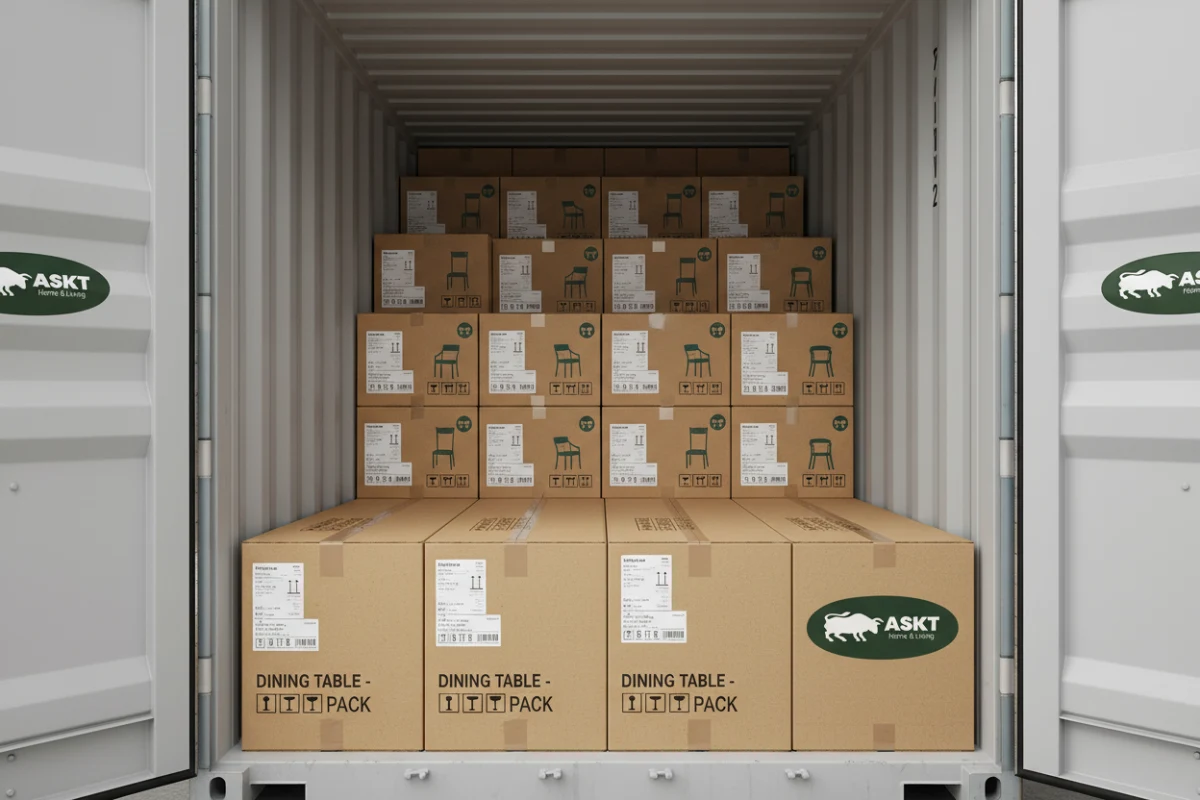
By utilizing bundled furniture sourcing from a unified dining chair and table supplier, you can execute a highly efficient furniture container loading optimization strategy. This approach balances the weight and volume of your cargo to maximize container utilization, as shown in the table below:
| Product Category | Physical Characteristics | Container Loading Impact | Optimization Strategy |
|---|---|---|---|
| Dining Tables (Sintered Stone/Oak) | High weight, low volume (flat-packed) | Acts as ballast, placed at the bottom of the container. | Floor-load flat cartons to establish a stable, heavy base. |
| Upholstered Dining Chairs | Low weight, high volume (even as KD structure) | Fills the remaining vertical space without exceeding weight limits. | Stack lightweight chair cartons securely on top of table crates. |
| Bar Stools & Benches | Medium weight, medium volume | Fills irregular volumetric gaps near the container door. | Use as modular fillers to eliminate movement during transit. |
An experienced dining chair and table supplier designs packaging with standard container dimensions in mind. By ensuring that chair seat shells and knock-down (KD) metal frames fit together tightly, wasted space is significantly reduced. Combining heavy tables and high-volume chairs in a single shipment regularly helps buyers achieve 100% volumetric and weight utilization in a standard 40ft HC container. This furniture container loading optimization directly lowers your sea freight cost per unit, giving you a competitive edge in your local market.
The Strategic Trade-Offs: When Specialized Sourcing Beats Bundled Packages
As a transparent B2B partner, we believe in discussing the trade-offs of procurement strategies. While consolidating your orders with a single dining set wholesale supplier offers clear operational benefits, there are specific scenarios where specialised, segmented sourcing might be necessary.
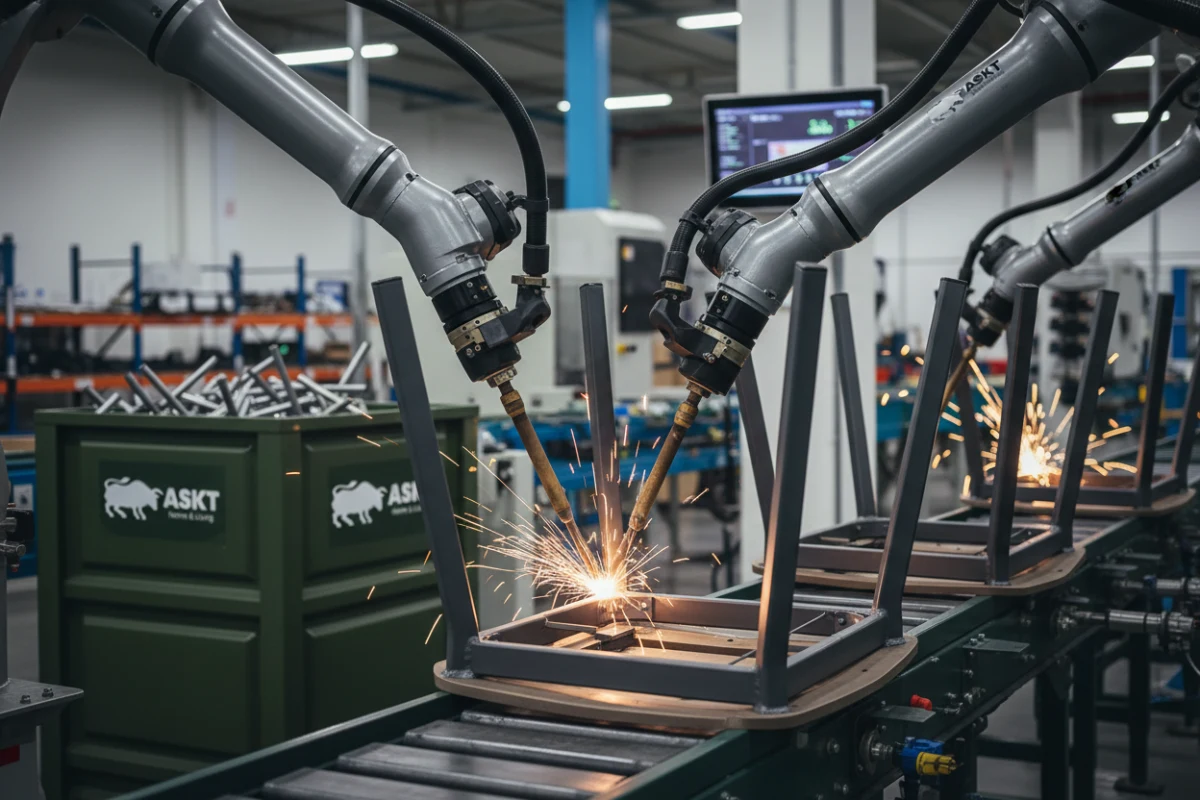
If your retail brand focuses on ultra-premium, hand-carved solid wood tables or highly complex, artisan-upholstered chairs, a single factory may not have the specialised machinery or craft skills for both. High-volume automated steel cutting and robotic welding arms—which are essential for manufacturing consistent metal-frame chairs—are entirely different from the artisanal tools used for luxury antique reproductions.
Additionally, contract buyers for major hotel chains sometimes require highly customised, bespoke dining chair designs that must match an existing interior concept, while the tables are standard utility items. In such cases, split sourcing may be necessary to meet strict architectural guidelines.
For the vast majority of mainstream retail and wholesale collections, however, the benefits of a consolidated dining chair and table supplier far outweigh the advantages of split sourcing. The key is to evaluate your supplier's dual manufacturing capabilities. A reliable dining chair and table supplier must show equal expertise in both woodworking/table assembly and steel frame/chair upholstery, supported by verified manufacturing compliance and professional quality control standards.
Minimising Inventory Risks through Modular Design
One of the biggest hurdles in combined furniture sourcing is managing Minimum Order Quantities (MOQs). Traditional factories often require a full container load per model, forcing B2B buyers to tie up significant capital in slow-moving table inventory just to get the matching chairs.
To solve this major pain point, advanced dining furniture manufacturers have developed modular production and design frameworks. These systems are engineered specifically for European category managers who want to test new styles without committing to excessive inventory.
How a modular design system works in practice:
- Standardised Components: The factory manufactures a select range of highly comfortable seat shells and standard table frames using automated precision machinery.
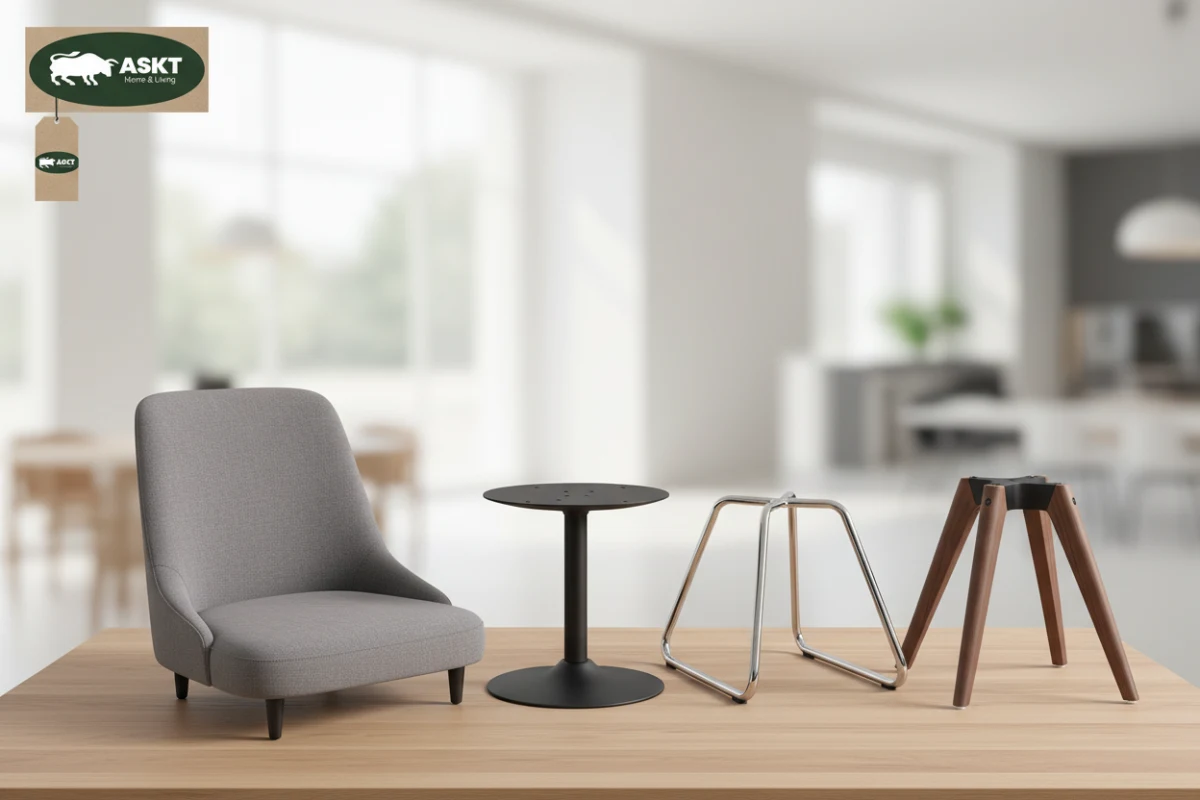
- Interchangeable Bases: These seat shells can be combined with various base designs, including classic four-legged metal frames, sleek sled bases, or high-performance auto-return swivel mechanisms.
- Low-Risk Testing: Buyers can order a single container filled with a variety of coordinated dining sets. You can mix and match different fabrics on a standardised shell, pairing them with matching sintered stone or oak veneer tables.
- MOQ Reduction: Instead of ordering 500 units of a single chair design, you can order smaller batches of multiple styles built on standardised frame platforms, vastly reducing your inventory risk.
This modular approach is supported by digital configuration tools. Product managers can easily configure custom collections, clarify technical specifications, and calculate exact container load mixes. This digital integration eliminates communication barriers, speeds up sample development, and ensures you receive structurally sound, market-ready furniture sets from your dining chair and table supplier.
Streamlining Procurement for the European Market
Sourcing dining tables and chairs should not be a constant struggle against mismatched finishes, inefficient container loads, and high inventory risks. By partnering with a unified dining chair and table supplier that understands the technical and aesthetic demands of the European market, you can transform your procurement process from a logistical challenge into a streamlined, high-margin operation.
At ASKT, we combine advanced manufacturing efficiency with deep European market insights. Our factories, rigorous quality control testing, and innovative modular systems are designed to help you launch cohesive, durable, and highly profitable dining furniture collections with confidence.
Ready to optimise your supply chain, resolve product development friction, and maximise your container capacity? Let our engineering and logistics teams design a customised loading and style coordination plan tailored to your retail or wholesale network. Request Combined Collection Plan