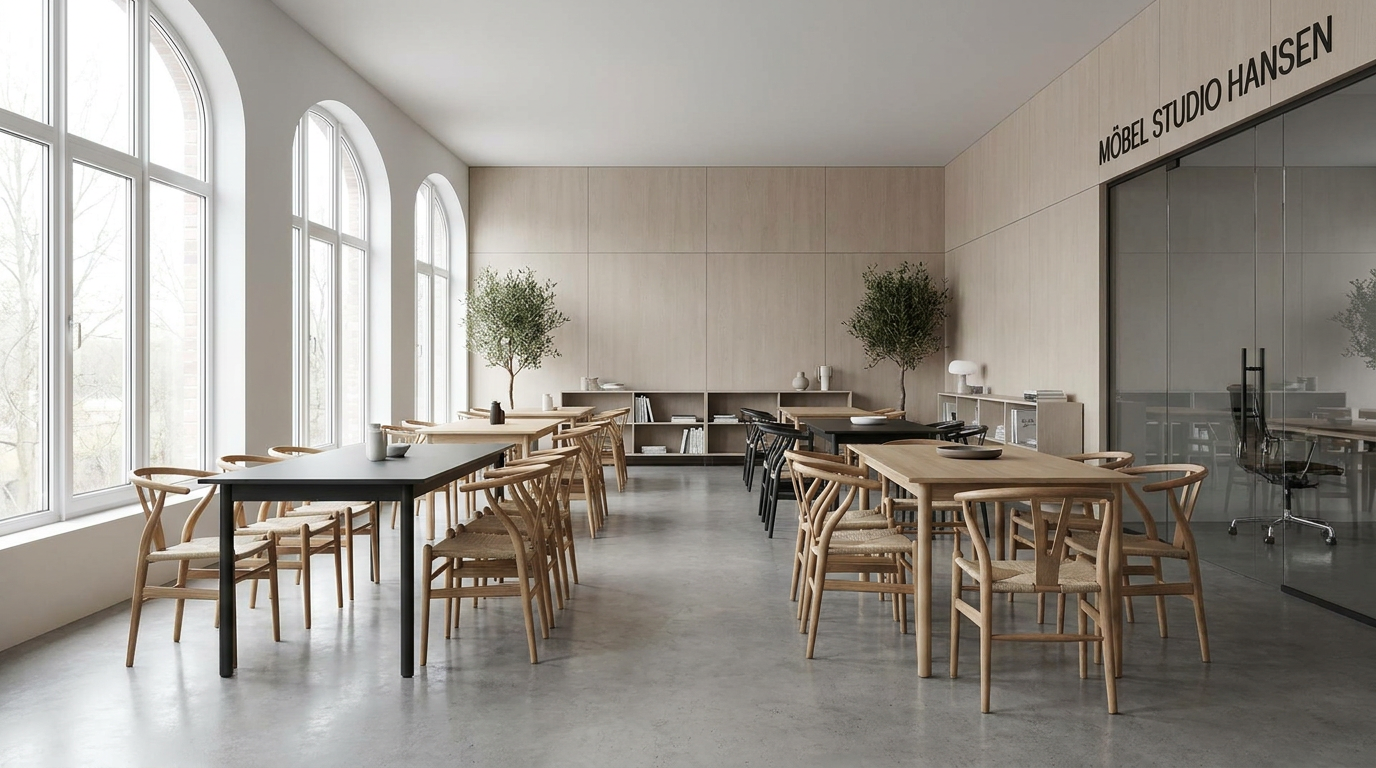
Don’t Blame the Design: 7 Hidden Reasons Dining Chair Projects Fail in Retail
Don’t Blame the Design: 7 Hidden Reasons Dining Chair Projects Fail in Retail
For Einkaufsleiter in German furniture retail
In the current German furniture retail environment, stationary trade is under unprecedented pressure. With rising operating costs and intense pricing competition, the success of a new Sortiment (assortment) depends on more than just a trendy silhouette. For a Einkaufsleiter (Procurement Lead), the true measure of a dining chair project is not how it looks in a catalog, but its Abverkauf (sell-through) speed and its impact on the bottom line after accounting for Reklamation (complaints).
When a dining chair project fails, the blame often falls on the design. However, the reality is usually found in the technical and logistical execution. At ASKT Furniture, with over 15 years of manufacturing experience, we have observed that the most successful retail projects are those that prioritize structural integrity and supply chain reliability over mere aesthetics.
The High Cost of Procurement Failure
In the DACH region, a high Reklamationsquote (complaint rate) can instantly evaporate your Marge (margin). If a chair fails in a customer’s dining room, the cost of logistics, replacement, and reputation damage far outweighs the initial purchase price. To protect your Cashflow, you must look beyond the surface.
1. Structural Fatigue and the Reklamationsquote
Many retail buyers select chairs based on a sample that looks perfect. However, mass production without rigorous quality control leads to structural inconsistencies. For German retailers, where consumer protection and quality expectations are high, a joint failure or a finish that peels is a project killer. ASKT Furniture mitigates this through ISO 9001 certified processes, ensuring that the 200th chair is as stable as the first.
2. Unreliable Lieferzuverlässigkeit (Delivery Reliability)
A project fails if the goods aren't on the floor when the marketing campaign starts. In German retail, Lieferzuverlässigkeit is non-negotiable. Many manufacturers overpromise on lead times, leading to empty floor space and missed Abverkauf windows. We maintain a strict 45-day delivery cycle to ensure your inventory turnover stays on track.
3. Ignoring the Total Cost of Ownership
A low Preislage (price point) is attractive, but hidden costs—such as assembly time, excessive packaging waste, or high damage rates during transit—can erode the Marge. Procurement must calculate the landed cost and the post-sale support costs to see the true picture.
4. Inflexible MOQ and Lagerdruck
Large-scale procurement often forces retailers into massive Minimum Order Quantities (MOQs), creating significant Lagerdruck (inventory pressure). If a specific SKU doesn't perform, the retailer is stuck with capital-heavy stock. ASKT Furniture offers a flexible MOQ of 200 pieces, allowing Einkaufsleiter to test new designs without overextending their warehouse capacity.
5. Material Non-Compliance
German standards for chemicals (REACH) and fire safety are stringent. Failure to verify material certifications can lead to legal risks and forced product recalls. Always demand documented proof of material origins and safety compliance.
6. Poor Ergonomics Affecting Abverkauf
A chair that is uncomfortable will not sell in a stationary trade environment where customers 'test-sit.' If the seat height or backrest angle is slightly off-spec, the Abverkauf will stagnate, regardless of how modern the design looks.
7. Lack of Customization for the Local Market
Standard global designs often miss the specific ergonomic or aesthetic preferences of the German consumer. A manufacturer that cannot provide customization—whether in fabric durability or wood finish—limits the retailer's ability to differentiate their Sortiment from competitors.
The Retailer’s Decision Framework
To avoid these pitfalls, use the following matrix to evaluate potential manufacturing partners:
| Criteria | Low-Cost Model | ASKT Furniture Partner Model |
|---|---|---|
| Focus | Unit Price | Total Cost of Ownership & Marge |
| Quality Assurance | Visual only | ISO 9001 & Structural Testing |
| Lead Time | 60-90 Days (Variable) | 45 Days (Stable) |
| MOQ | 500+ Pieces | 200 Pieces (Flexible) |
| Reklamation Risk | High | Minimal (Proven B2B track record) |
Actionable Recommendations for Einkaufsleiter
- Audit the Factory: Ensure they have at least 10+ years of experience in commercial-grade manufacturing.
- Verify Lead Times: Ask for historical data on Lieferzuverlässigkeit to ensure your seasonal Sortimentswechsel (assortment change) stays on schedule.
- Test for Durability: Don't just look at the chair; stress-test the joints and the fabric rub-count (Martindale).
Checklist: The Pre-Order Risk Assessment
- Does the manufacturer hold ISO 9001 certification?
- Is the MOQ low enough to prevent excessive Lagerdruck?
- Has the structural integrity been tested for high-traffic commercial use?
- Is the lead time guaranteed within 45-50 days?
- Are all materials compliant with EU/German safety regulations?
- Does the manufacturer offer customization to fit our specific Sortiment needs?
FAQ
Q: How does a 45-day lead time impact our cash flow? A: Shorter, reliable lead times allow for 'Just-in-Time' inventory management, reducing the capital tied up in the warehouse and improving your overall Cashflow.
Q: Why is 200 pieces considered a 'flexible' MOQ? A: In commercial manufacturing, 200 pieces allows for production efficiency while giving the retailer enough volume to stock multiple locations without the risk of overstocking a single SKU.
Conclusion
Success in the German furniture retail market requires a balance between design and operational excellence. By focusing on reducing Reklamation and ensuring Lieferzuverlässigkeit, Einkaufsleiter can protect their Marge and build a resilient Sortiment. ASKT Furniture is committed to providing the quality and reliability that professional retailers demand.
Do you want me to send you a practical evaluation checklist or decision framework?