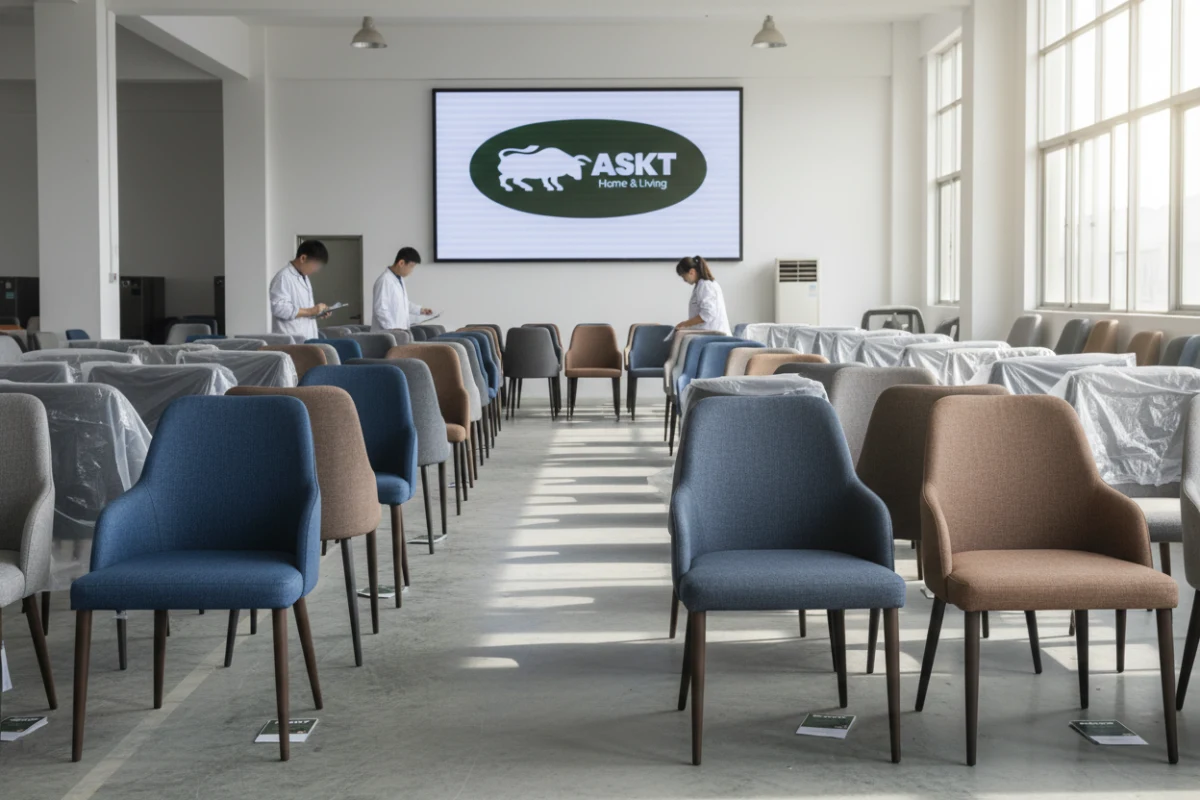
The B2B Guide to Dining Chair Quality Control China
For European furniture wholesalers, retail chains, and e-commerce brands distributing across Germany, the Netherlands, and the UK, importing upholstered dining chairs is a major operational undertaking. In this competitive landscape, maintaining product consistency represents the ultimate marker of supply chain reliability. A dining chair is a complex combination of ergonomic design, chemical compliance, raw material durability, and structural strength. When sourcing these products internationally, securing a robust system for dining chair quality control China is the most effective safeguard against high return rates and customer dissatisfaction.
When a single product defect can compromise an entire shipping container, B2B buyers must move beyond surface-level evaluations. A systematic approach to quality assurance must cover every phase of production, from raw material receipt to final dispatch. This comprehensive guide breaks down the critical control points, international standards, and factory protocols required to protect your brand, lower your operational risks, and secure long-term commercial success in the European furniture market.
Sourcing Vulnerabilities in the B2B Furniture Supply Chain
Many sourcing challenges begin long before the assembly line starts moving. Wholesalers and purchasing managers often struggle to balance the aesthetic expectations of European designers with the physical realities of mass production. A dining chair must withstand thousands of cycles of shifting weight, domestic friction, and everyday load. When evaluating prospective partners, buyers often find that without detailed oversight, factories may compromise on internal components that are completely hidden from view.
Common structural failures include weak internal wooden boards, loose joints, low-density foam that loses shape within months, and non-compliant textiles that release volatile organic compounds. When these structural or chemical issues surface in European retail stores, the cost of returns, refunds, and brand damage far outweighs the initial savings of a cheaper unit price. Therefore, implementing a robust dining chair quality control China strategy is essential. It transitions your procurement process from a reactive, crisis-management model to a proactive, standardized system that guarantees predictable product quality batch after batch.
Raw Material Verification and Chemical Safety Compliance
The first line of defense in a premium furniture manufacturing process China offers is the verification of incoming raw materials. Upholstery fabrics and internal seat structures represent the primary touchpoints for consumers, making material safety and durability paramount. High-performance textiles must satisfy strict European chemical safety standards while maintaining high physical wear resistance under constant use.
A professional factory must verify that all fabrics utilized are free from harmful substances and fully compliant with environmental regulations. This is achieved by sourcing OEKO-TEX Standard 100 certified fabrics, which ensures the upholstery is formaldehyde-free, allergen-safe, and secure for everyday household use. For European retail buyers, this level of certification is not merely a marketing asset; it is a critical regulatory shield that prevents expensive customs delays or product recalls under European chemical safety standards.
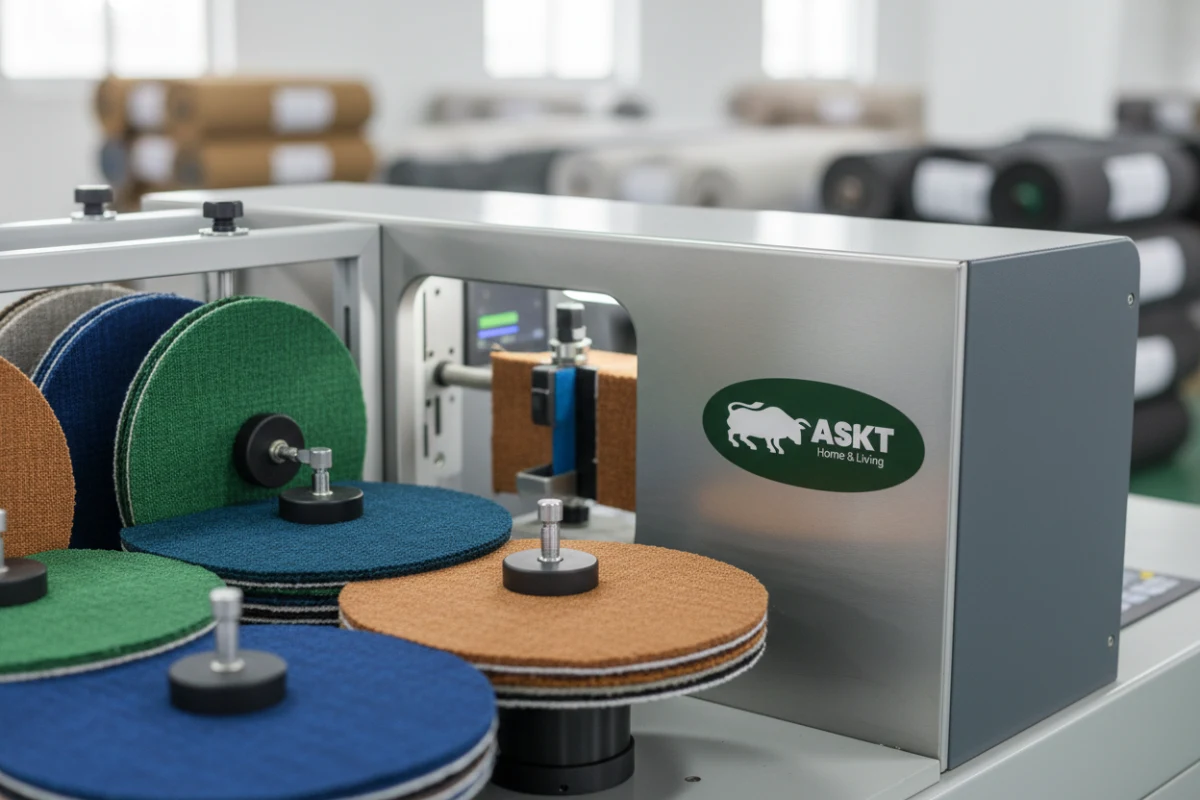
In modern commercial environments, the demand for high-performance and sustainable materials is rising. To support these market needs, innovative manufacturers offer fabric solutions that integrate advanced technical features. For instance, the specialized ASKT-Tex material incorporates a molecular-level hydrophobic nano-coating combined with micro-ventilation channels. This technical achievement provides superior stain resistance, waterproof characteristics, and pet-friendly scratch resistance without sacrificing the breathable, soft texture expected of premium domestic seating. During a Chinese dining chair factory audit, inspecting the raw material warehouse and reviewing the material testing certificates must be your starting point for verifying dining chair quality control China standards.
Precision Engineering in the Furniture Manufacturing Process China
Beyond the soft upholstery, the structural longevity of a dining chair depends on the precision of its underlying skeleton. Relying heavily on manual labor for structural components leads to unavoidable dimensional variations, which directly cause wobbly legs, misaligned screw holes, and structural instability. Transitioning to advanced automation is a defining characteristic of a professional furniture manufacturing process China today.
To eliminate human error and secure absolute dimensional consistency, a professional factory must invest in high-end automated machinery. Within high-tier production facilities, specialized cutting machines are designed for the precise batch cutting of upholstery fabrics. For the internal wooden structures, automated wooden board punching machines and industrial nailing machines install four-legged nails with consistent pressure, ensuring that the base frame never wobbles or loosens over time.
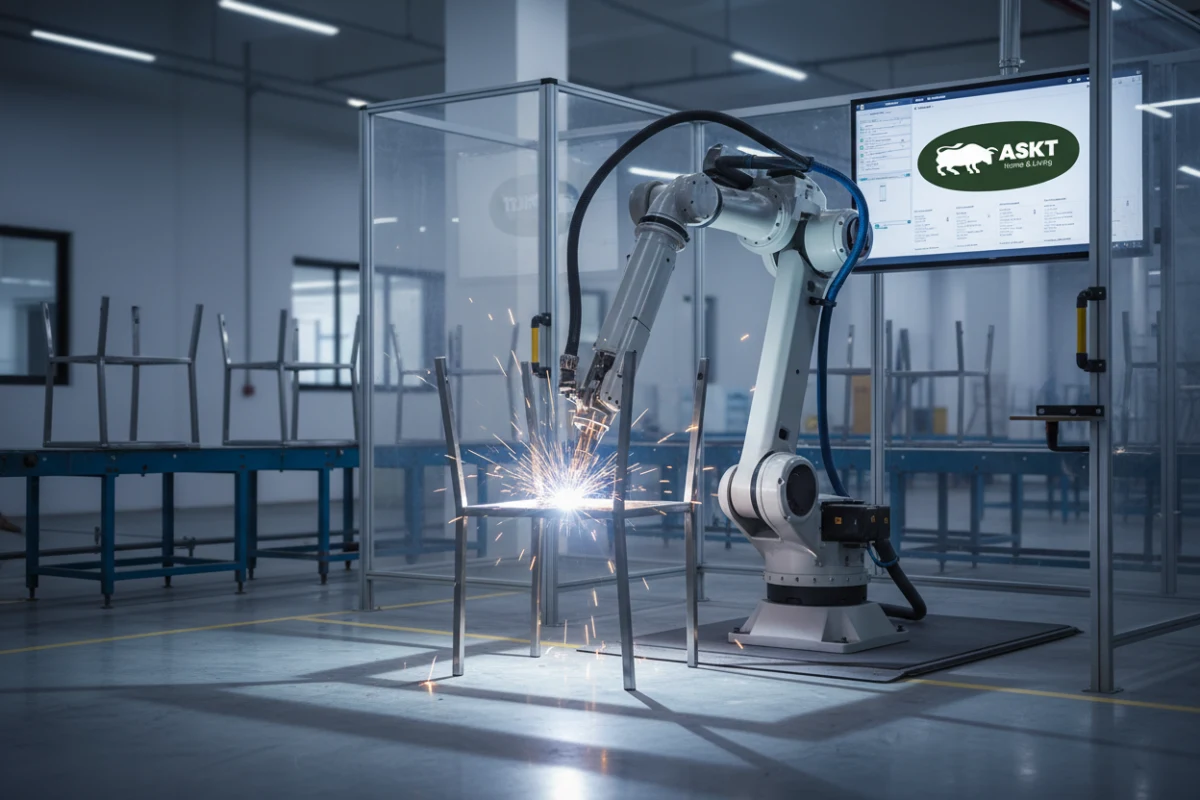
When it comes to metal-frame dining chairs, manual welding simply cannot guarantee the load-bearing capacity required for commercial environments. We employ automatic welding robotic arms that execute flawless, uniform welds every single time. This level of machine precision ensures that the structural stress points of the metal frame are evenly reinforced, preventing joint failures after years of daily use. Additionally, high-quality metal frames undergo precise powder coating processes to prevent rust, scratching, and finish degradation, representing an essential phase of dining chair quality control China.
Chinese Dining Chair Factory Audit and Operational Compliance
A successful procurement strategy requires a thorough evaluation of the supplier’s operational environment. A comprehensive Chinese dining chair factory audit must assess both mechanical capabilities and social responsibility practices. In today's B2B environment, environmental, social, and governance (ESG) compliance has become a primary requirement for European buying groups, wholesalers, and contract furniture buyers. Sourcing from factories with poor worker safety or low environmental standards introduces severe reputational and legal risks.
When inspecting furniture suppliers in China, a key indicator of operational quality is the factory's adherence to international social compliance frameworks, such as the Business Social Compliance Initiative (BSCI) standards. A BSCI-certified factory demonstrates a commitment to fair wages, safe working environments, and structured worker training programs.
A physical walk-through of the assembly floor reveals the true quality culture of a factory. Look closely at the protective equipment provided to the workforce. On a compliant production line, fabric cutters use steel mesh cut-resistant safety gloves, and workers handling chemical adhesives or spray finishes are equipped with high-efficiency gas masks. Furthermore, the adhesives used in the assembly process must be environmentally friendly and completely formaldehyde-free. This meticulous focus on employee health and environmental hygiene directly translates into a more stable workforce, lower turnover, and a significantly lower rate of manufacturing defects on the final assembly line, thereby strengthening your overall program of dining chair quality control China.
Structural Standards and B2B Furniture Quality Assurance
To ensure that shipped products meet the expectations of European consumers and corporate clients, manufacturers must implement a dedicated B2B furniture quality assurance program based on empirical, objective testing. Relying on visual inspections alone is insufficient to verify the structural integrity of furniture designed for long-term use.
A professional quality assurance strategy is guided by the fundamental rule: "Test first, ship second." Under this framework, random samples are drawn from every production batch and subjected to rigorous laboratory testing before any products are loaded into shipping containers. These evaluations test the physical limits of the dining chairs against recognized international performance standards, including EN12520 for domestic seating strength and durability, as well as EN12521 for general commercial stability and structural safety.
The testing protocol includes several key procedures:
- Static Load Testing: Applying high downward pressure on the seat and backrest to confirm the ultimate load-bearing capacity of the frame without any structural deformation.
- Cyclic Durability Testing: Simulating years of daily use by repeatedly loading the seat and backrest to check for joint fatigue, especially on advanced features like auto-return swivel mechanisms and pocket spring seat structures.
- Stability and Drop Testing: Dropping the chair from specified angles and heights to ensure the legs and frame joints withstand sudden physical impacts without cracking or tipping over.
By enforcing these empirical standards before dispatch, importers can confidently distribute products across European markets, knowing that the structural integrity of the inventory is verified by scientific data. This rigorous testing phase represents the core of effective dining chair quality control China.
Container Optimization and Inspecting Furniture Suppliers in China for Logistics Readiness
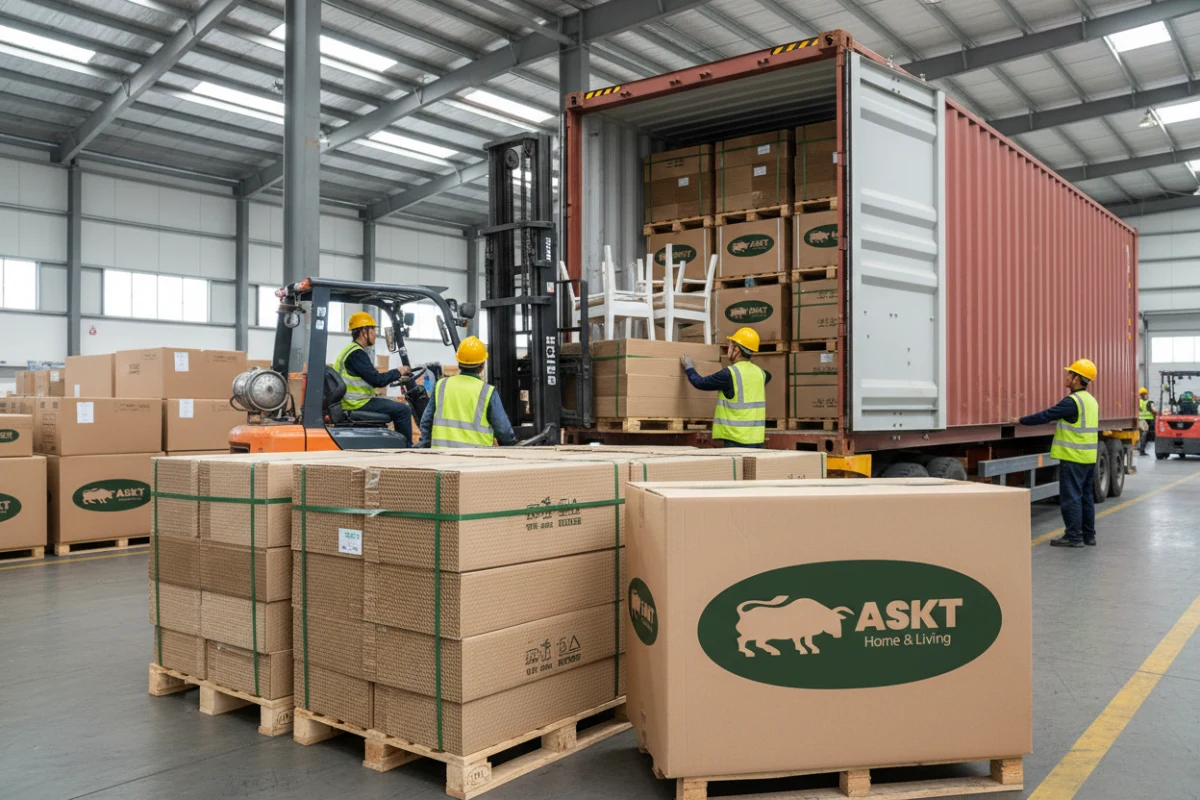
The final phase of a complete dining chair quality control China program occurs at the shipping bay. A beautifully crafted dining chair is of no value if it is damaged during the long ocean transit from China to European ports. Sea freight involves exposure to intense physical vibrations, shifting container loads, and significant temperature and humidity fluctuations. Therefore, verifying packaging design and loading procedures is a critical final step in the quality control chain.
When inspecting furniture suppliers in China, professional buyers must evaluate the engineering of the packaging materials. Premium B2B suppliers utilize high-density cardboard boxes combined with internal honeycomb paper protection instead of excessive, non-recyclable single-use plastics. This eco-friendly packaging design provides superior shock absorption while helping European wholesalers and retail chains comply with increasingly strict local environmental packaging waste laws.
Logistical efficiency is also enhanced by selecting Knocked Down (KD) structures for upholstered chairs. KD designs allow the components to pack flat, significantly reducing the shipping volume of each unit. This optimization allows more chairs to fit into a single container, lowering ocean freight costs per unit and optimizing warehousing space upon arrival in Europe.
Furthermore, managing inventory risks and meeting high minimum order quantities (MOQs) remains a consistent challenge for B2B purchasing managers. To solve this operational bottleneck, modern suppliers offer modular solutions, such as the KINEXA system. By standardizing a highly compatible range of ergonomic seat shells and durable metal base options, the KINEXA system allows buyers to mix and match different dining chair styles within a single shipping container. This modular approach significantly lowers individual item MOQs, reduces overall inventory risk, and optimizes container volume, allowing B2B buyers to adapt quickly to changing market trends in Germany, the Netherlands, and the UK.
Establishing a Reliable B2B Sourcing Partnership in China
Ultimately, securing a resilient and high-performing supply chain requires more than just testing and audits; it requires a strategic partnership built on transparency, technical expertise, and localization. ASKT has spent over two decades developing high-quality dining chairs designed specifically for the demanding European market. Our product development process is informed by deep market research, such as localized studies analyzing real-world household habits, dining environments, and spatial preferences across European homes.
To safeguard our clients' competitive advantage, we establish clear Design Exclusivity agreements, ensuring that the customized designs developed for your brand remain exclusive to your specific geographic market. Furthermore, to simplify the communication of technical requirements and prevent expensive manufacturing errors, we utilize advanced digital tools like our specialized conversational system, helping B2B procurement and product managers specify custom fabric finishes, frame dimensions, and packaging parameters with complete accuracy before production begins.
By combining advanced manufacturing automation with a rigorous, transparent quality control process, we eliminate sourcing risks and deliver consistent commercial value to our European B2B partners. Contact our team today to learn how we can secure your supply chain with our comprehensive dining chair quality control China solutions.
If you want to secure your supply chain, minimize expensive quality issues, and implement an absolute, transparent approach to B2B quality control, we are ready to assist you. To get started, please Request QC Process Overview.