Dining Chair Seat Height: A Practical Sizing Guide for European Furniture Buyers
If you have ever walked through a furniture showroom and noticed a dining chair that looks perfect on its own, but somehow feels wrong at the table, the issue is almost never the colour or the fabric. More often than not, it is the relationship between seat height, table height and legroom that quietly decides whether a chair feels comfortable or awkward.
For European furniture wholesalers, retailers and project buyers, getting the Sitzhöhe Esszimmerstuhl right is not just a detail. It is one of the main factors behind customer satisfaction, return rates, contract project success and long-term brand reputation. A chair that is slightly too high or too low may look fine in a catalogue, but it will quickly feel wrong in a real home, restaurant or hotel.
Over the years, our teams at ASKT have worked with many buyers across Germany, the Netherlands, the UK, Poland and other European markets to refine dining chair collections. We have seen how small differences in seat height can change the entire commercial performance of a product line. In this guide, we break down what you need to know about standard seat heights, table matching, ergonomics, legroom and quality indicators — all from a practical buyer perspective.
Why Dining Chair Seat Height Matters for Your Product Range
Seat height is one of the most underrated dimensions in dining furniture. Because buyers tend to focus on style, upholstery and price first, sizing problems often come to light only after a product has been launched, delivered and used. Once complaints or returns start coming in, the cost of correcting the issue can be much higher than getting the specification right from the beginning.
For retail customers, a good seat height supports a natural sitting position. Feet should rest flat on the floor, knees should bend at roughly a right angle, and elbows should rest comfortably at the table surface without being raised or lowered too much. When that balance is missing, people notice it quickly — even if they cannot name exactly why the chair feels uncomfortable.
For contract buyers such as restaurants, cafés and hotels, the stakes are even higher. Dining chairs in commercial settings are used for long periods, by guests of very different heights, and often in combination with several table types. A seat height that works in a domestic setting may be too soft, too high or too unstable in a high-traffic hospitality environment.
From a sourcing perspective, seat height also affects other business decisions. It influences container loading efficiency, packaging design, range architecture, customer reviews and warranty claims. A well-sized chair is not only more comfortable — it is also more likely to be reordered, recommended and kept in the assortment for longer.
Standard Dimensions: Seat Height, Table Height and Legroom
When planning a dining chair collection, it helps to start with the basic sizing relationship between chair, table and user. In European markets, the Esszimmerstuhl Sitzhöhe Standard typically falls within a range that balances comfort for most adults with compatibility with common table heights.
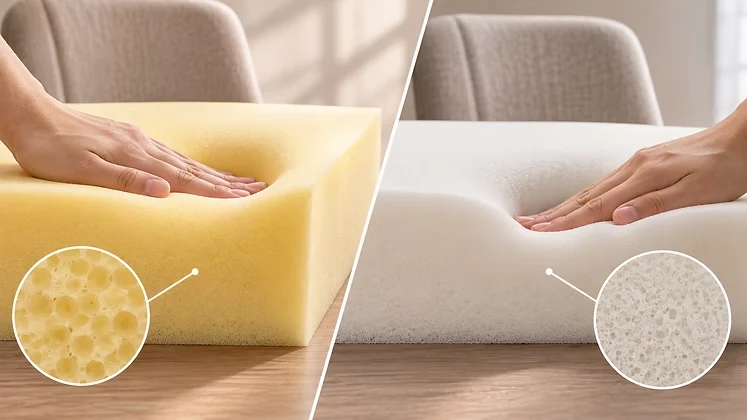
Seat height is measured from the floor to the top surface of the seat cushion. For upholstered chairs, it is important to remember that the measured height can look different from the actual sitting height, because soft foams or pocket spring systems compress under weight. A chair that measures 50 cm at rest may sit closer to 47 or 48 cm when a person is actually using it.
The Tischhöhe Esszimmer Sitzhöhe relationship follows a simple principle: there should be enough vertical distance between the top of the seat and the underside of the tabletop for thighs to fit comfortably without hitting the table frame or apron. This gap is one of the key factors people mean when they talk about legroom.
| Dimension | Typical European range | Why it matters |
|---|---|---|
| Dining chair seat height | Approximately 45–50 cm | Determines sitting posture and table compatibility |
| Dining table height | Approximately 72–78 cm | Sets the reference point for seat height selection |
| Vertical gap between seat and table | Approximately 25–30 cm | Ensures thighs fit comfortably under the table |
| Seat depth | Approximately 40–45 cm | Affects back support and pressure under the knees |
| Seat width | Approximately 45–55 cm per place setting | Influences shoulder room and table seating capacity |
When we talk about Beinfreiheit Esszimmerstuhl Maße, we are usually referring to two things: the vertical clearance under the table and the horizontal space available between chair legs, table legs or table aprons. A chair can have the perfect seat height and still feel cramped if the table frame or crossbar gets in the way of the knees or feet.
For retail assortments, it is usually best to offer seat heights that sit in the middle of the standard range, because they pair well with the largest number of dining tables already in customers' homes. For project buyers, on the other hand, it often makes sense to specify seat height, table height and legroom together as a coordinated set — especially in restaurants or hotels where furniture is purchased as a complete interior concept.
Ergonomic Requirements for the European Market
Ergonomics in dining chairs is not just about office-chair-style adjustability. It is about designing a fixed-height seat that works well for a wide range of body types, across a typical meal length, without causing fatigue or discomfort.
In European markets, customers have come to expect dining chairs that look refined but also feel supportive. The most common complaints about poorly designed chairs are pressure under the thighs, back strain after sitting for an hour, and feet that dangle or are pushed too far forward. All of these issues are closely connected to seat height and how it interacts with seat depth, cushion firmness and backrest angle.
The Ergonomische Esszimmerstühle Sitzhöhe should allow feet to rest flat on the floor, with the ankle roughly aligned under the knee, thighs supported without the front edge of the seat pressing into the back of the knee, backrest support for the lower back without pushing the shoulders forward, and elbows that can rest on the table in a relaxed position when eating.
Because dining chairs are used by people of different heights, fixed seat height is always a compromise. That is why manufacturers with strong market knowledge tend to design for the middle of the adult height range and then optimise cushion shape, seat depth and back angle to compensate for the rest. For commercial environments, some buyers also mix slightly different seating types around the same table, such as side chairs and benches, to give guests more options.

Cushion firmness also plays a role in ergonomics. A very soft seat may feel comfortable at first, but it can compress too much and change the effective seat height over time. This is especially important for contract furniture, where chairs are used many times a day and cushions must keep their shape and support for years. Manufacturers that focus on durability usually specify seat foam density, frame stiffness and upholstery tension carefully, so that the sitting height remains consistent across units and over time.
At ASKT, we have learned through long-term cooperation with European buyers that ergonomics is not a marketing buzzword. It is something customers feel immediately, and it has a direct impact on reviews, repeat orders and project satisfaction. That is why seat height, seat depth, cushion feel and back support are always evaluated together, not as separate numbers on a drawing.
How to Match Dining Chair Height and Table Height Correctly
Matching chair and table heights sounds simple, but it is one of the most common sources of sizing mistakes in furniture assortments. The main reason is that many buyers select chairs and tables from different suppliers, or plan them as separate categories, without testing how they work together in real use.
A useful starting point is to calculate the difference between table height and seat height. In most European dining sets, this difference is between 25 and 30 cm. This range gives enough room for the thighs, a tablecloth if used, and a small amount of cushion compression without making the table feel too high or too low.
When you evaluate the Tischhöhe Esszimmer Sitzhöhe relationship, there are a few practical checks you can carry out with samples. First, run a sit test with a range of users, asking colleagues of different heights to sit at the table for 15–20 minutes rather than a few seconds, because discomfort often appears gradually. Second, check the table apron and frame, since a thick apron or low crossbar can reduce legroom significantly even if the seat height itself is correct. Third, measure seat height under load if the chair has soft upholstery, rather than relying only on the unloaded height. Fourth, test with armrests if present, because armrests can collide with the tabletop or get caught under the table edge when pushed in. Finally, consider floor materials, since thick carpets or raised floor finishes can slightly change the effective height of both chair and table.
For buyers who sell complete dining sets, it is worth developing chair and table collections side by side, so that seat height, table height and legroom are balanced from the start. For buyers who source chairs and tables separately, it is good practice to keep a sizing table or fitting guide internally, so that sales teams and customers can check compatibility before ordering.
Special Cases: Bar Stools, Adjustable Chairs and Seat Cushions
While standard dining chairs make up the largest part of most assortments, there are several related seating categories where seat height rules change. It is useful to understand how they fit into a broader range, especially if you supply hospitality or mixed-use spaces.
Bar stools and counter stools are designed for higher table surfaces. Counter-height seating is usually matched to kitchen counters or high tables, while bar-height seating is intended for classic bar tops. The same matching principle applies — the seat should be low enough to give legroom under the surface, but high enough that the person can rest their arms comfortably. Because these chairs are often used in restaurants and cafés, stability and footrest position become even more important than they are with standard dining chairs.
Height-adjustable dining chairs are less common in traditional dining settings, but they can be useful in multi-purpose spaces or for buyers who want a one-size-fits-all solution. The trade-off is usually in design, durability and price. Adjustment mechanisms add moving parts, which means more potential wear points and higher quality control requirements. For contract use, it is especially important that any adjustment mechanism is robust enough for frequent use by different guests.
Seat cushions and removable pads are another factor. They can change the effective seat height by several centimetres, which is why it is important to specify whether seat height is measured with or without additional cushions. For retail customers, cushions can be a simple way to customise comfort, but they can also create confusion if the product images show a different height than the actual delivered chair.
Quality Indicators Buyers Should Pay Attention To
Seat height is not only a question of design intent. It is also a question of manufacturing consistency. A chair that is specified at 48 cm will only perform well if every unit that leaves the factory is actually 48 cm, with the same cushion feel and the same frame geometry.
When you evaluate suppliers, there are several quality indicators that can tell you whether seat height will be reliable across a full order. Frame accuracy matters because metal frames, wooden frames and mixed constructions must be cut and assembled with enough precision that leg length is consistent across all four legs. Cushion specification matters because foam density, spring system and upholstery tension affect how much the seat compresses under weight, and clear specifications reduce variation between units. Defined measurement points, structured QC checkpoints and adequate packaging protection also play an important part.
From a sourcing perspective, it is also worth remembering that small differences in seat height are not necessarily a problem — as long as they are intentional and well documented. What causes issues is when one batch of chairs sits noticeably higher or lower than the previous batch, or when the specification on the website does not match the delivered product.
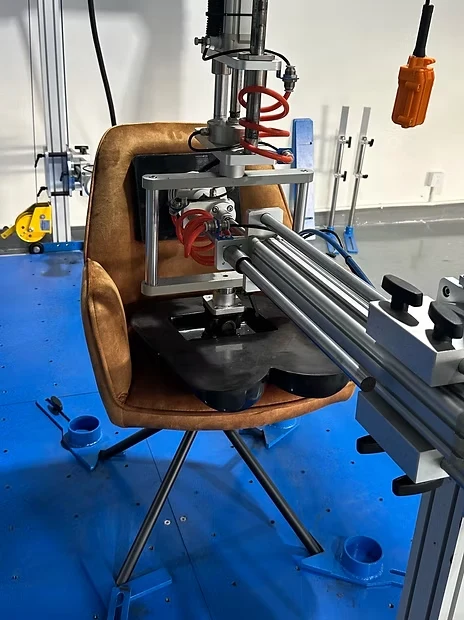
At ASKT, we use a structured QC process that includes dimensional checks, stability tests and sitting-feel evaluation. We also work closely with buyers to define which measurements are critical for their market, so that production tolerances are realistic and commercial risk is kept low. This kind of transparency is especially important when you are building a private-label collection or supplying contract projects where every unit must match.
Common Selection Mistakes and How to Avoid Them
Even experienced buyers can make seat height mistakes, because the issue is often hidden behind more visible features like fabric, colour or shape. Here are some of the most common pitfalls and how you can reduce the risk of running into them.
Mistake 1: Choosing seat height based on catalogue images only. Catalogue photos are useful for styling and design, but they do not tell you how a chair feels in real use. Always evaluate samples in person, with a table of typical height, before placing a large order.
Mistake 2: Ignoring cushion compression. A 50 cm seat height with very soft foam is not the same as a 50 cm seat height with firm, high-density foam. Ask for the loaded height or do your own sit test with a representative weight.
Mistake 3: Forgetting table legroom. Seat height is only half of the equation. The other half is the space under the table. Always check apron height, table leg position and any crossbars that could reduce knee room.
Mistake 4: Skipping batch-to-batch consistency checks. A good first sample does not guarantee a good full order. Make sure your supplier has a clear QC process and that you can verify key dimensions, including seat height, before shipment.
The best way to avoid these mistakes is to treat seat height as a commercial decision, not just a technical one. It influences customer satisfaction, returns, reviews and reorders. When you approach it that way, investing a little extra time in sample evaluation and supplier quality control becomes a very cost-effective decision.
Practical Tips for Assortment Planning
When you build or refresh a dining chair assortment, seat height can be used as a structural tool, not just a detail on a spec sheet. Here are a few practical ideas that many European buyers find useful.
First, define a clear sizing architecture for your range. For example, you might have one entry-level chair at the lower end of the standard seat height range, one mid-range chair in the middle, and one premium ergonomic model slightly higher. This gives customers a choice and reduces the chance that they leave because no chair fits their table properly.
Second, make table compatibility part of your product information. If you also sell dining tables, show which chair models are recommended with which table heights. If you sell chairs only, consider adding a short sizing guide or a compatibility note on the product page. Clear sizing information reduces questions, returns and customer uncertainty.
Third, test combinations before you launch them. This sounds obvious, but it is surprising how many assortments are planned on paper without a real sit test. A few hours of testing with different users, table types and floor finishes can prevent months of customer complaints.
Finally, remember that seat height works together with other comfort factors such as seat depth, backrest angle, armrest height and cushion firmness. A chair with a perfect seat height can still be uncomfortable if the backrest is too straight or the seat is too deep. The best approach is to evaluate the chair as a whole, not as a list of isolated measurements.
Conclusion
Seat height is one of those product details that is easy to overlook, but it has a surprisingly large effect on how customers experience a dining chair. Whether you are building a retail assortment, a private-label line or a contract furniture project, the Sitzhöhe Esszimmerstuhl is a key factor behind comfort, ergonomics, table compatibility and long-term satisfaction.
The most important thing to remember is that seat height never works alone. It must be matched to table height, legroom, cushion feel and the needs of the intended user group. For European buyers, this means working with manufacturers that understand not only how to produce a chair to a given dimension, but also why those dimensions matter in real homes and real commercial spaces.
At ASKT, we support furniture wholesalers, retail chains, importers, e-commerce brands and contract buyers with dining chair collections designed around real European usage scenarios. Our manufacturing process includes clear dimensional specifications, structured quality control and flexible OEM / ODM options, so that you can build an assortment that looks good, feels comfortable and performs reliably over time.
If you are planning to update your dining chair range or refine seat heights and model variants for your market, you can request tailored advice on seat heights and model options for your assortment.