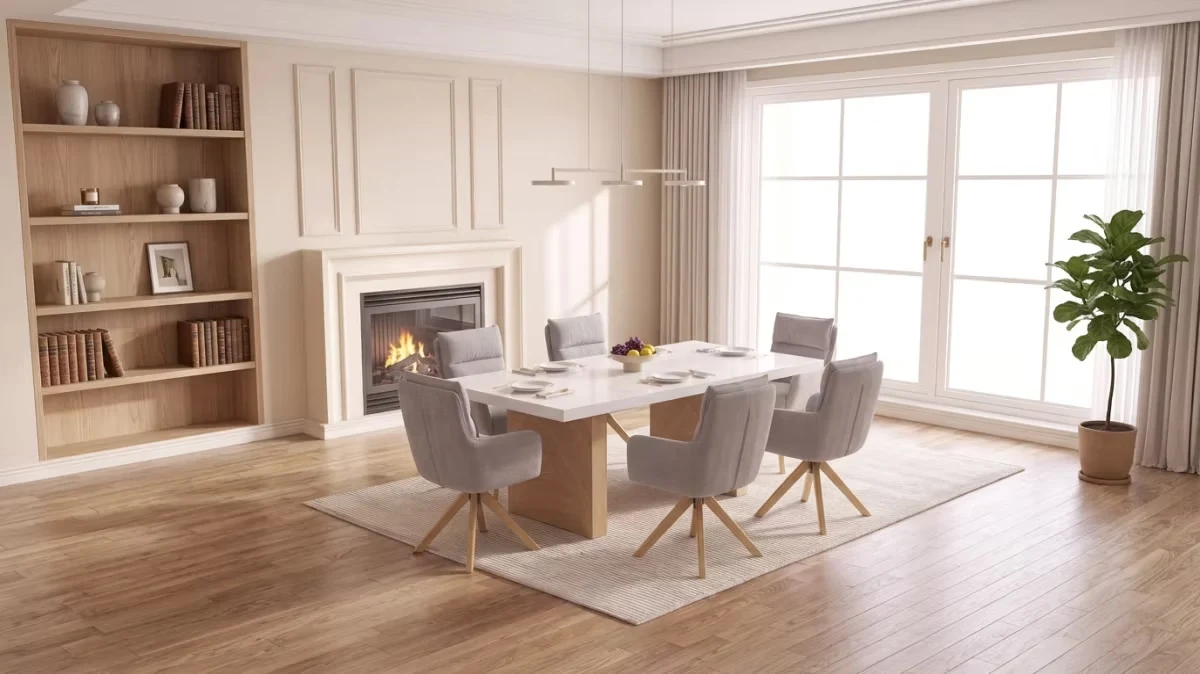
How to Test Dining Chair Demand Before Bulk Orders: A Practical 5-SKU Testing Guide for European Buyers
Furniture buyers can significantly reduce inventory risk by running a structured Esszimmerstuhl SKU Test with 5 strategically selected models in a small trial order, then scaling only the best-performing SKUs into a full container purchase. This test-first approach validates real customer demand, exposes quality issues early and prevents costly overstock of slow-moving models.
Why should you test dining chair models before a full container order?
In my years working with European furniture wholesalers, retailers and importers, I have seen the same pattern repeat itself: a buyer is drawn to a design at a fair, orders a full container based on instinct, and six months later a large share of the stock is still sitting in the warehouse, heavily discounted and tying up working capital.
The core problem is simple: bulk furniture orders carry high inventory exposure because dining chairs are bulky, season-sensitive and often slow to turn over. A full 40-foot container can hold hundreds of units per SKU, and if just two or three models underperform, the financial impact can erase the margin of an entire shipment. Strategies to Lagerrisiko senken Möbel collections start with limiting the number of unproven models you commit to at scale.
Testing dining chairs before a bulk order solves this by giving you real market data instead of guesswork. You learn which fabrics sell, which price points convert, which frame finishes resonate locally and which ergonomic details customers actually comment on. You also validate manufacturing quality, packaging durability and logistics handling at a small scale before you commit larger budgets to a bigger shipment.
There are six key reasons professional buyers run pre-bulk tests:
- Validate actual customer demand in your specific market, not just trade-show hype
- Compare price-point elasticity across different model positions
- Verify product quality, fabric durability and frame consistency in real use
- Test packaging performance through actual ocean freight and last-mile delivery
- Identify assembly, instructions or damage issues before a large rollout
- Build sales forecasts based on real data for more accurate stock planning
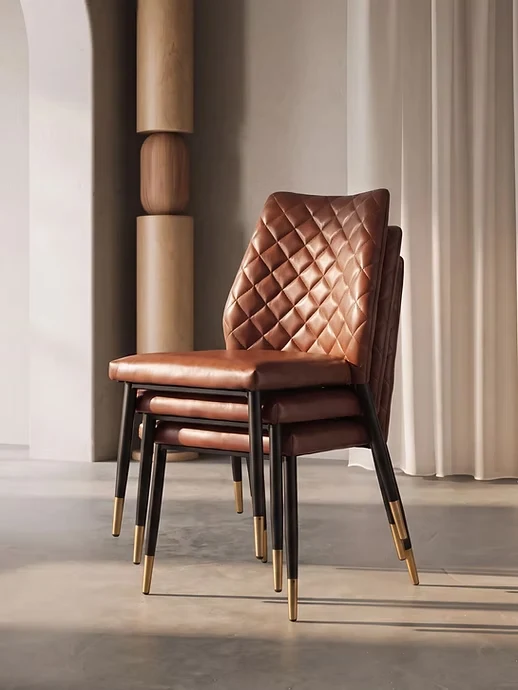
How do you select 5 dining chair SKUs for a meaningful test?
When I advise buyers on an Esszimmerstuhl SKU Test, I always recommend testing exactly 5 models. Fewer than 5 does not give you enough breadth to compare positions; more than 5 spreads your test budget too thin and makes it harder to draw useful conclusions in a reasonable timeframe.
The 5 Esszimmerstuhl Modelle testen should not be 5 random chairs. They should be 5 strategically positioned SKUs that together cover the main segments of your target customer base. Think of it as a miniature product range — each model tests a different hypothesis about what your buyers will actually purchase.
Here is a proven 5-SKU selection framework I have seen work for German, Dutch and UK retailers:
| Position | Role in the test | What it validates | Typical quantity per test |
|---|---|---|---|
| Entry price | Price-sensitive volume driver | Whether low-price shoppers convert and whether quality holds at the price point | 30–40 units |
| Core bestseller candidate | Main margin and volume model | Broad appeal across your core customer group | 40–50 units |
| Premium upgrade | Higher-margin aspirational model | Willingness to pay for better fabric, comfort or design | 20–30 units |
| Design statement | Trend and style leader | Whether modern / bold designs resonate with your audience | 15–20 units |
| Niche functional | Specific use case (e.g. swivel, pet-friendly, contract-grade) | Demand for specialised dining chairs | 15–20 units |
A common mistake I see is choosing 5 chairs that all look similar and sit in the same price band. That does not teach you anything useful — if they all sell at similar rates, you still do not know whether customers bought them because of the design, the fabric, the colour or the price. With 5 clearly differentiated positions, you can isolate what actually drives purchase decisions in your market.
You should also consider fabric and finish diversity within the test. For example, include one model with ASKT-Tex easy-clean fabric, one with recycled-polyester fabric, one with a dark powder-coated metal frame and one with a light oak-veneer shell. This breadth gives you insights into material preferences, not just shape preferences.
How do you structure a test order for dining chairs?
A Testbestellung Esszimmerstühle is not just a small version of a bulk order. It is a structured experiment designed to answer specific questions before you invest in larger quantities. How you structure the order directly affects how much useful information you get out of the test phase.
First, agree on realistic test-order MOQs with your manufacturer. Many suppliers have high minimums per SKU, which makes 5-model testing expensive. Look for partners who offer flexible trial-order terms, ideally with mixed-SKU container or pallet options. At ASKT, for example, we use the KINEXA modular system — shared seat shells and base components across models let us keep test-order quantities lower because the underlying parts are standardised, which directly supports efforts to Lagerrisiko senken Möbel inventory exposure.
Second, keep quantities proportional to each position's expected role. Do not order the same number of premium chairs as entry-price chairs; you will end up with unsold premium stock and sold-out entry stock, which tells you nothing about relative performance because the supply was not matched to demand.
Third, standardise as many variables as possible so you can compare apples to apples. If 4 models come in dark grey fabric and 1 in bright green, you cannot tell whether the green one underperformed because of the design or because of the colour. Where possible, offer each model in one neutral fabric and one accent colour, and keep the fabric quality consistent across the test unless you are specifically testing fabric differences.
Fourth, plan your test timeline in advance. I recommend a 12 to 16 week test window, broken down as follows:
- Weeks 1–3: Order placement, production and ocean freight
- Week 4: Receipt, quality check, photography and listing setup
- Weeks 5–14: Active sales test across your sales channels
- Weeks 15–16: Data analysis and SKU selection for bulk order
Fifth, make sure all 5 SKUs launch at the same time. Staggered launches distort the comparison because some models get more exposure than others, and seasonal factors can affect the results. The whole point of Esszimmerstühle vor Bulk Bestellung prüfen is that you are testing them against each other under the same market conditions.
How do you evaluate the test results and pick winners?
The evaluation phase is where many test programs fall short. Buyers look at total units sold and pick the top 2, but that is a shallow analysis that misses most of the value of running a 5 Esszimmerstuhl Modelle testen in the first place.
You should evaluate the test on at least five dimensions, not just raw sales volume:
Sales velocity — units sold per week per SKU, normalised for starting inventory. This tells you which models customers actually choose when they see them.
Gross margin per unit — a model that sells fewer units but at double the margin may be more profitable than a high-volume, low-margin entry model. Calculate margin per square metre of warehouse space too, since dining chairs take up significant storage room.
Return and damage rate — one model may sell well, but if it has a high return rate due to wobbly legs, fabric pilling or transit damage, it will destroy your profitability in bulk. The test phase is exactly when you want to discover these issues, not after a large order.
Customer feedback — read every review, every customer service note and every in-store comment. Qualitative feedback often predicts future returns. For example, "seat is too firm" sounds minor, but if you hear it repeatedly, it signals a comfort problem that will limit word-of-mouth and repeat purchases.
Cross-sell behaviour — which dining chair models are bought together with which dining tables, bar stools or benches? This tells you how each SKU fits into your wider product range and can inform your merchandising strategy once you scale.
I also strongly recommend running a small in-house durability check during the test period. Use one unit of each SKU for two weeks in a staff canteen, a showroom or a partner café. Look at how the fabric wears, how the frame holds up to frequent movement and how easy the chairs are to clean. Real-world use reveals details that a factory sample inspection never will.
After the evaluation, you should end up with three categories of SKUs:
- Clear winners: scale immediately into bulk production
- Borderline: adjust fabric, colour or price and retest with the next batch
- Clear losers: drop from the range and move remaining stock through clearance
What should you do after the test when moving to a bulk order?
The test is only valuable if you actually apply what you learned to your bulk purchasing strategy. Too many buyers run a test, note the results mentally and then fall back into old habits when they place the container order — ordering the same mix they always have, out of familiarity.
Based on your test results, adjust your bulk order in four specific ways:
Shift the SKU mix. Double down on the winners, reduce or eliminate the losers, and keep 1–2 borderline models in smaller quantities to continue testing. A good rule of thumb is to allocate 70% of your bulk order to proven winners, 20% to adjusted borderline models and 10% to new test SKUs for your next evaluation cycle.
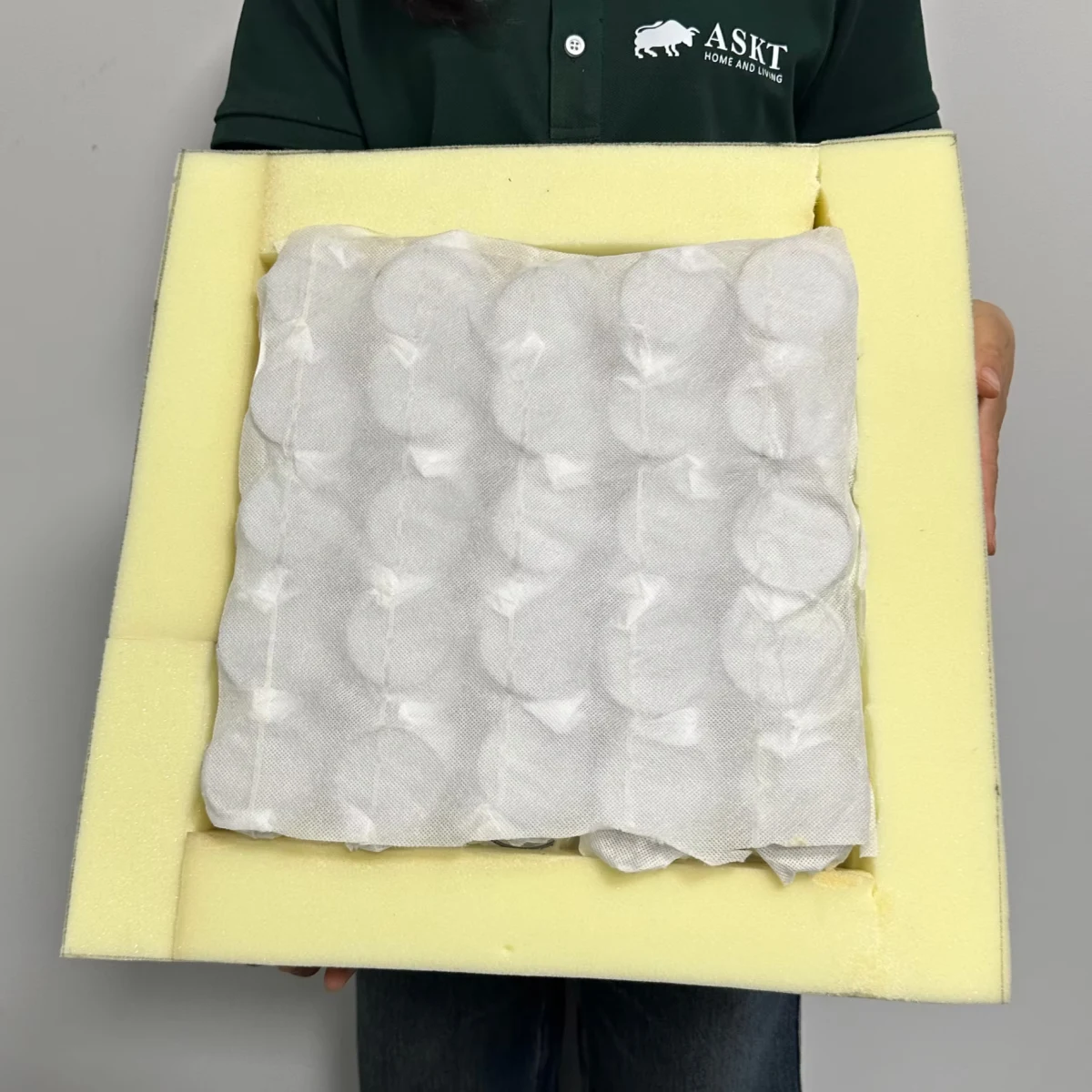
Refine the specifications. If customers complained about firm seating, switch to a pocket-spring seat cushion. If dark grey sold three times faster than beige, adjust your colour ratio. If assembly instructions generated support calls, improve them before the bulk run. The test phase gives you the data to make these changes confidently instead of guessing.
Optimise packaging and logistics. If you noticed damage patterns during the test — for example, scuffed legs or crushed corners — work with your supplier to upgrade corner protection, add honeycomb paper layers or adjust the master-carton configuration before the bulk shipment. Small packaging improvements can reduce damage rates substantially and save significantly in returns.
Negotiate better terms with your supplier. Once you have proven sales data, you are in a much stronger position to discuss lead times, MOQs, exclusivity and pricing for the winning SKUs. Suppliers prefer working with buyers who have a clear data-backed plan because it reduces risk on both sides.
How can a manufacturer support dining chair SKU testing effectively?
Not all furniture suppliers are set up to support small-scale test orders with multiple SKUs. Many factories prefer large runs of a single model because it is simpler for their production scheduling, and they will push back on mixed-SKU orders or charge a heavy premium for them.
When evaluating a manufacturing partner for an Esszimmerstuhl SKU Test, look for these capabilities:
- Flexible MOQs that allow 5 or more SKUs in a single test shipment
- Modular product architecture where shared components reduce cost and lead time for small runs
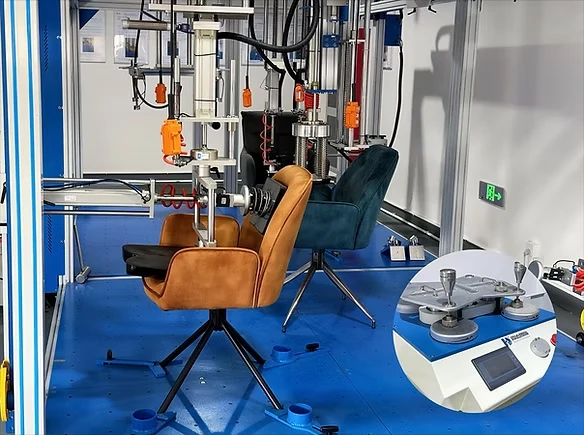
- Clear quality-control documentation for every test batch, including fabric test reports and frame inspection records
- Customisation options so you can adjust fabrics, colours and finishes between test and bulk phases
- Design exclusivity protection so your test models do not end up being sold to your competitor shortly after
At ASKT, we approach test orders the same way our buyers do — as the first step in a long-term relationship, not as a one-off small sale. We know from experience that a well-run Testbestellung Esszimmerstühle leads to better bulk orders, fewer quality disputes and stronger partnerships. That is why we built the KINEXA modular system specifically to make it easier for European buyers to test multiple dining chair models without committing to high per-SKU minimums, directly addressing the goal of Lagerrisiko senken Möbel inventory exposure.
We also support the Esszimmerstühle vor Bulk Bestellung prüfen process with full fabric documentation — including OEKO-TEX® STANDARD 100 certification, abrasion resistance data, colour fastness reports and waterproof / stain-resistant performance data for our ASKT-Tex fabric range — so you have all the technical information you need to evaluate each model both commercially and from a quality perspective.
FAQ
Is testing 5 dining chair SKUs enough, or should I test more?
Testing 5 SKUs is the sweet spot for most European furniture buyers. It gives you enough breadth to cover entry, core, premium, design and niche positions, while keeping the test budget manageable and the data easy to interpret. Testing more than 7–8 SKUs usually spreads demand too thin, extends the test period and makes it harder to draw clear conclusions within a single season.
How many units per SKU do I need for a meaningful test?
It depends on the price position, but a practical starting point is 15–50 units per SKU, with higher quantities for your core and entry-price models and lower quantities for premium or niche SKUs. The goal is to have enough units to see real sales patterns without tying up excessive capital. A good test order should feel like a meaningful commitment — not so small that one customer buying two chairs distorts the results, but not so large that you are carrying leftover stock for a year.
How long does a dining chair test order typically take from placement to results?
Plan for 12–16 weeks in total. Production of a mixed-SKU test order usually takes a few weeks, ocean freight to Europe adds another several weeks, and then you need 8–10 weeks of active selling to get reliable demand data. If you are testing for a specific season, work backwards from your launch date to make sure the test order arrives early enough to inform your bulk buying decision.
Can I apply the 5-SKU test method to contract or hospitality projects?
Yes, but the evaluation criteria shift. For contract buyers, the test phase focuses less on retail sales velocity and more on durability, cleanability, batch consistency and guest comfort. You would still test 5 models, but you would evaluate them based on stain resistance, frame stability, upholstery wear after heavy use and how easy they are to maintain in a commercial environment, rather than on which one sells the fastest on a webshop.
If you are planning a new dining chair collection and want to run a structured test order to validate demand before committing to a full container, ASKT can support you with model selection, product development and flexible trial-order terms. To discuss your 5-SKU testing plan with our team, book a sourcing consultation.