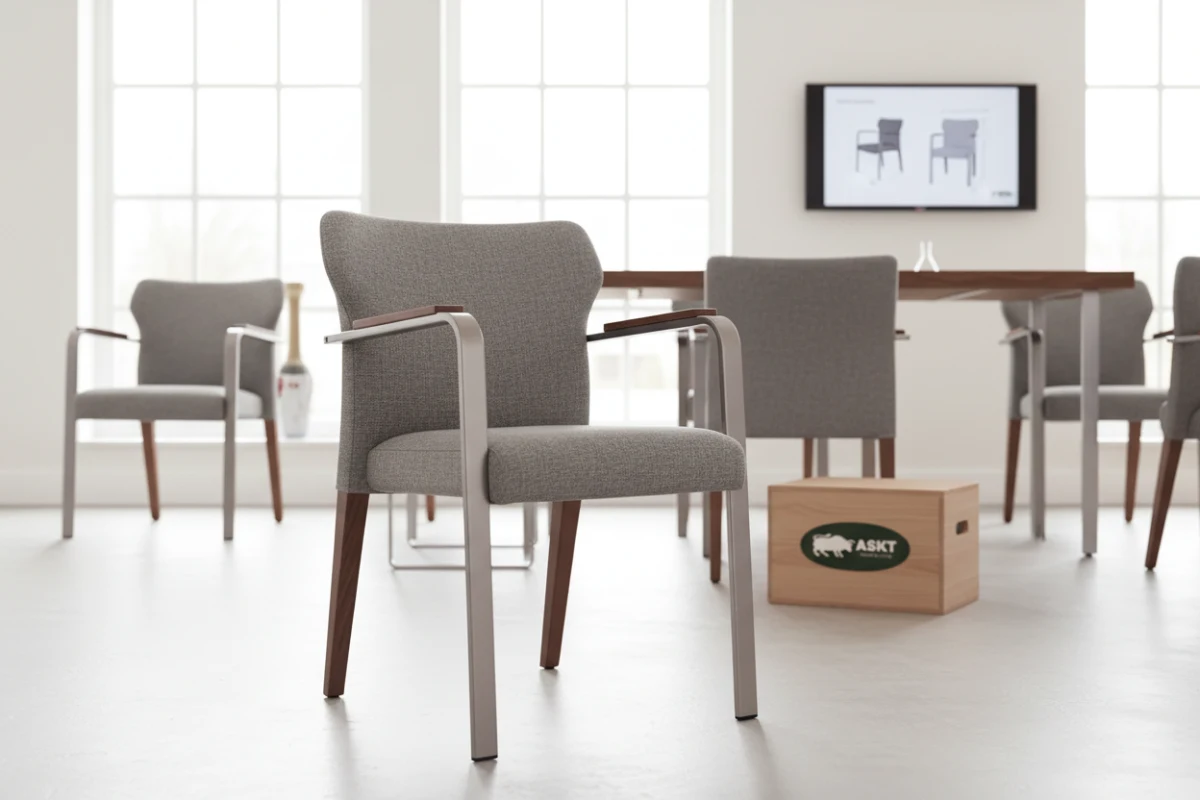
A B2B Sourcing Guide to Dining Chairs for Elderly with Arms
Sourcing Dining Chairs for the Elderly: Why Dimensions Matter to B2B Buyers
When furniture wholesalers, senior housing procurement officers, and contract importers source seating for age-restricted environments, they are not simply purchasing aesthetic assets. They are managing liability, operational efficiency, and user safety. In my decades of navigating the European furniture trade, particularly in Germany, the Netherlands, the UK, Poland, Switzerland, and Ireland, I have seen many beautifully designed chairs fail in senior living settings. The reason is rarely aesthetic; it is almost always dimensional and structural. For a senior citizen, a dining chair is a critical mobility aid. Sourcing the correct dining chairs for elderly with arms requires a deep understanding of human mechanics, material science, and the functional demands of high-traffic facilities.
At ASKT, we base our product development on real-world data rather than abstract aesthetic trends. In fact, our design philosophy is built on our comprehensive study of dining environments, examining real dining table matching configurations, room clearance dynamics, and floor interactions. What we discovered is that elderly seating demands a highly specialized ergonomic profile. If a chair is too deep, the user cannot sit with proper posture; if it lacks armrests of a specific height, standing becomes a painful struggle; if the frame lacks structural stability under lateral force, a catastrophic tip-over is inevitable.
For commercial buyers, purchasing the wrong furniture results in high return rates, premature replacement cycles, and potential safety incidents. On the other hand, supplying the right assisted living dining chairs creates long-term business value, establishing your brand as a trusted partner for hospitals, nursing homes, and retirement communities. In this guide, I will share the exact manufacturing standards and technical dimensions you must look for when evaluating a Chinese production partner for senior-friendly seating.
Critical Seat Dimensions: Seat Height, Depth, and Width Specifications
When importing assisted living dining chairs, the first step in quality control is verifying the technical blueprint. Standard residential dining chairs are designed for younger, agile bodies. Senior-centric designs, however, require strict adherence to specific nursing home dining chairs dimensions to ensure ease of entry and exit.
| Chair Component | Standard Residential Dimension | Recommended Senior Care Dimension | B2B Sourcing Impact |
|---|---|---|---|
| Seat Height | 420–440 mm | 450–480 mm | Prevents excessive knee flexion; easier to rise. |
| Seat Depth | 460–500 mm | 430–450 mm | Keeps spine supported without cutting off circulation. |
| Seat Width | 420–450 mm | Minimum 480 mm | Accommodates mobility aids and diverse body types. |
| Armrest Height | Varying / None | 620–650 mm | Balances standing support with table apron clearance. |
Let us break down the engineering logic behind these figures. The standard seat height for residential dining chairs usually hovers around 420–440 mm. For an elderly user with reduced lower-body strength, standing up from this height requires significant momentum, which can lead to knee strain or loss of balance. Our manufacturing standard specifies a seat height of 450–480 mm. This higher plane reduces the degree of knee flexion required to sit down or stand up, providing a safer and much more comfortable experience.
Seat depth is equally critical. If the seat is too deep (exceeding 460 mm), the user's back cannot reach the backrest comfortably. This forces them to slouch, leading to spinal pressure, or to sit forward, which deprives them of pelvic support and increases the risk of sliding off the chair. By standardizing our seat depth at 430–450 mm, we ensure that the user’s thighs are fully supported while leaving a clear space behind the knees to prevent friction and maintain optimal blood circulation.
Finally, seat width must be generous. A minimum seat width of 480 mm is essential in commercial senior care settings. This width ensures that the chair accommodates users of different sizes, provides comfort over long periods, and leaves enough room for users who may wear bulkier clothing or require small personal mobility aids. From a B2B buying perspective, specifying these exact dimensions during the product development phase is the most effective way to minimize post-purchase complaints and high return rates from demanding European retirement facilities.
Armrest Engineering: Balancing Standing Support with Table Clearance
Adding armrests to a senior dining chair is not just an aesthetic upgrade; it is a mechanical necessity. When searching for dining chairs for elderly with arms, you must examine how the armrest is joined to the frame, the shape of the front grip, and the height from the floor.
For an older adult, armrests function as levers. When rising, they push down on the front portion of the armrest with their entire upper-body weight. This is why contract chairs with armrests must feature front posts that extend vertically to the floor. Suspended or cantilevered armrests are completely unsuitable for senior living; they bend under repeated downward force, creating a clear tipping hazard. The front of the armrest should have a rounded, easy-to-grip edge that extends slightly past the front leg. This provides a tactile anchor that the user can find easily when preparing to sit down.
However, this mechanical requirement introduces a major challenge for contract designers: table clearance. If the armrest is too high, the chair cannot be pushed under the dining table. This wastes valuable space in common areas and makes it difficult for residents to sit close enough to their food. Standard dining tables have an apron height of 720–750 mm. Therefore, we carefully engineer our armrests to a height of 620–650 mm. This provides the exact height needed for comfortable arm support while clearing standard table aprons.
When we develop customized OEM or ODM solutions at ASKT, we always ask our buyers for their dining table blueprints first. We perform virtual clearance testing to ensure that the dining chairs and tables work together perfectly before we start mass production. This transparent approach to engineering is what sets professional B2B manufacturers apart from standard trading companies.
Structural Safety Standards: Specifying Load-Bearing Stability (EN 16139)
In public and commercial spaces, safety and durability are paramount. Any professional buyer purchasing for retirement complexes must insist on furniture that meets the EN 16139 (Level 1 or Level 2) European standard. This standard governs the strength, durability, and safety of non-domestic seating. Because senior care environments experience continuous, heavy-duty use, the structural integrity of your imported seating directly affects your brand's reputation.
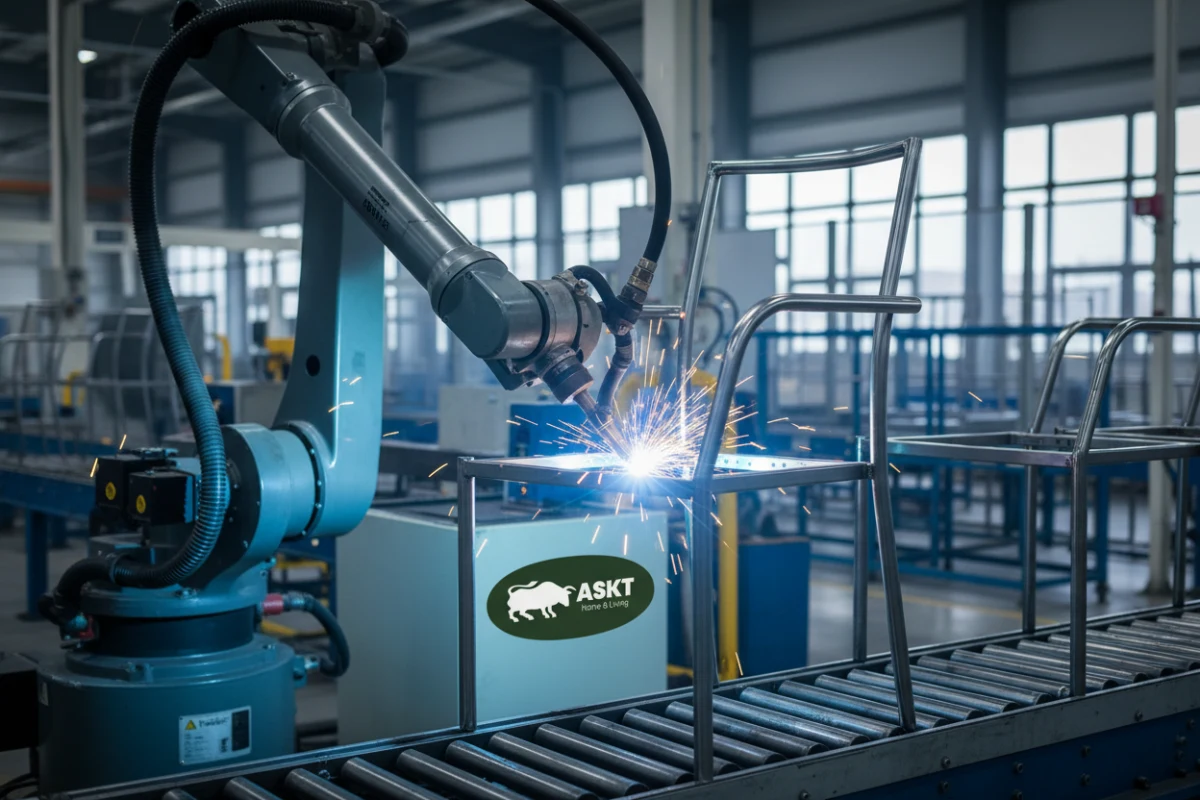
To meet these rigorous standards, the choice of frame construction is critical. Wooden frames are elegant, but they are vulnerable to joint loosening over time due to seasonal humidity changes and the leverage forces exerted on the armrests. At ASKT, we specialize in high-strength metal frames finished with durable powder coating. To guarantee absolute consistency and structural integrity, our factory utilizes automated robotic welding arms. Unlike manual welding, which is subject to human error and fatigue, robotic welding ensures that every single joint has identical penetration and strength, eliminating weak spots that could lead to structural failure.
Our automated production line also includes precision wood board cutting machines, specialized board punching systems, and automated nailing machines that install four-legged T-nuts on wooden seat bases. This advanced machinery significantly reduces manual labor while maximizing manufacturing precision.
Furthermore, load-bearing tests are integrated into our strict quality control workflow. We test structural resistance against vertical static loads, vertical impact, and lateral forces on the armrests. By combining high-end automation with systematic quality testing, we ensure that our contract-grade seating can withstand the high-frequency use typical of public dining spaces, giving B2B buyers complete confidence in their product supply.
Contract-Grade Materials: Sourcing Easy-Clean and Abrasion-Resistant Upholstery
When sourcing for the senior care furniture wholesale market, fabric selection is just as important as the frame itself. In a senior dining facility, spills, ink stains, food grease, and incontinence are everyday occurrences. If the fabric is difficult to clean, the facility will quickly suffer from hygiene issues and unpleasant odors, forcing premature replacement of the furniture.
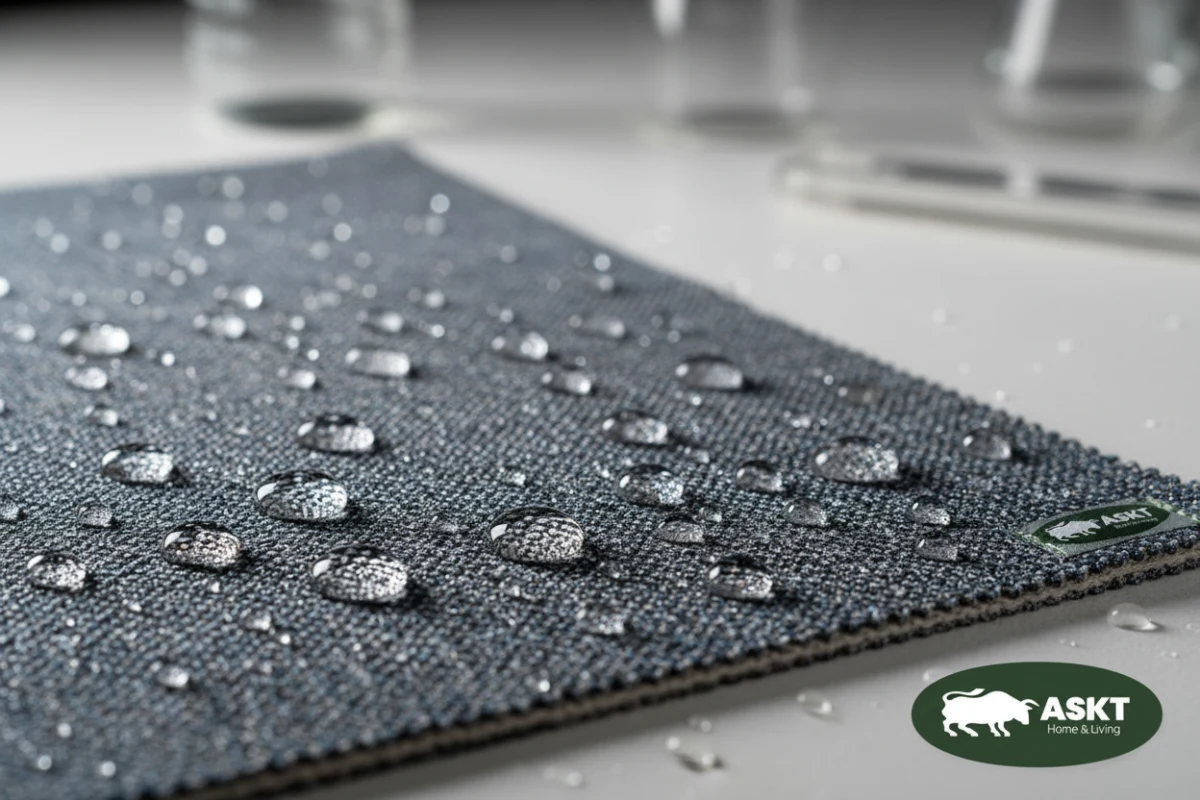
For many years, the industry standard was vinyl, which is easy to wipe down but cold, institutional, and sweaty to sit on. Modern senior care facilities deserve a warmer, more dignified aesthetic. To meet this demand, we developed ASKT-Tex, our exclusive functional fabric. ASKT-Tex features a molecular-level hydrophobic nano-coating combined with micro-ventilation channels. This advanced technology prevents water and stains from penetrating the inner foam while remaining highly breathable and soft to the touch. This means coffee, soup, or bodily fluids can be wiped away with a simple damp cloth, keeping the foam dry and hygienic.
Our commitment to material quality is validated by third-party testing:
- Eco-Friendly and Safe: All ASKT-Tex fabrics are certified under the OEKO-TEX STANDARD 100 system, certifying they are formaldehyde-free, hypoallergenic, and completely safe for skin contact.
- High Durability: Our fabrics undergo rigorous Martindale abrasion testing, achieving over 100,000 rubs, ensuring they will not thin or tear even after years of daily use.
- Sustainability-Driven: To help our buyers meet modern ESG (Environmental, Social, and Governance) targets, we offer an eco-friendly fabric option made entirely from recycled plastic bottles, supporting European green procurement policies.
As a factory that values transparency and labor standards, our operations are fully certified under the BSCI (Business Social Compliance Initiative). We prioritize worker safety by providing metal cut-resistant gloves to our fabric-cutting team and advanced protective gear to our assembly workers. This ethical approach to manufacturing reduces compliance risks for European importers, ensuring a clean and socially responsible supply chain from start to finish.
A Buyer's Sourcing Checklist for Assisted Living Dining Chairs
To help your purchasing team navigate the complexities of sourcing dining chairs for elderly with arms from China, we have compiled this practical B2B evaluation checklist. Use this to compare potential manufacturing partners and ensure they have the technical capability to deliver consistent quality.
- Verify True Contract-Grade Dimensions: Ensure the manufacturer can supply blueprints showing a seat height of 450–480 mm and an armrests height of 620–650 mm.
- Review Factory Automation: Ask if the factory uses automatic welding robotic arms and automated board-punching machines, as these are essential for maintaining structural consistency across large batches.
- Confirm Compliance Certifications: Request copies of current BSCI audit reports, EN 16139 structural test certificates, and OEKO-TEX Standard 100 fabric documents.
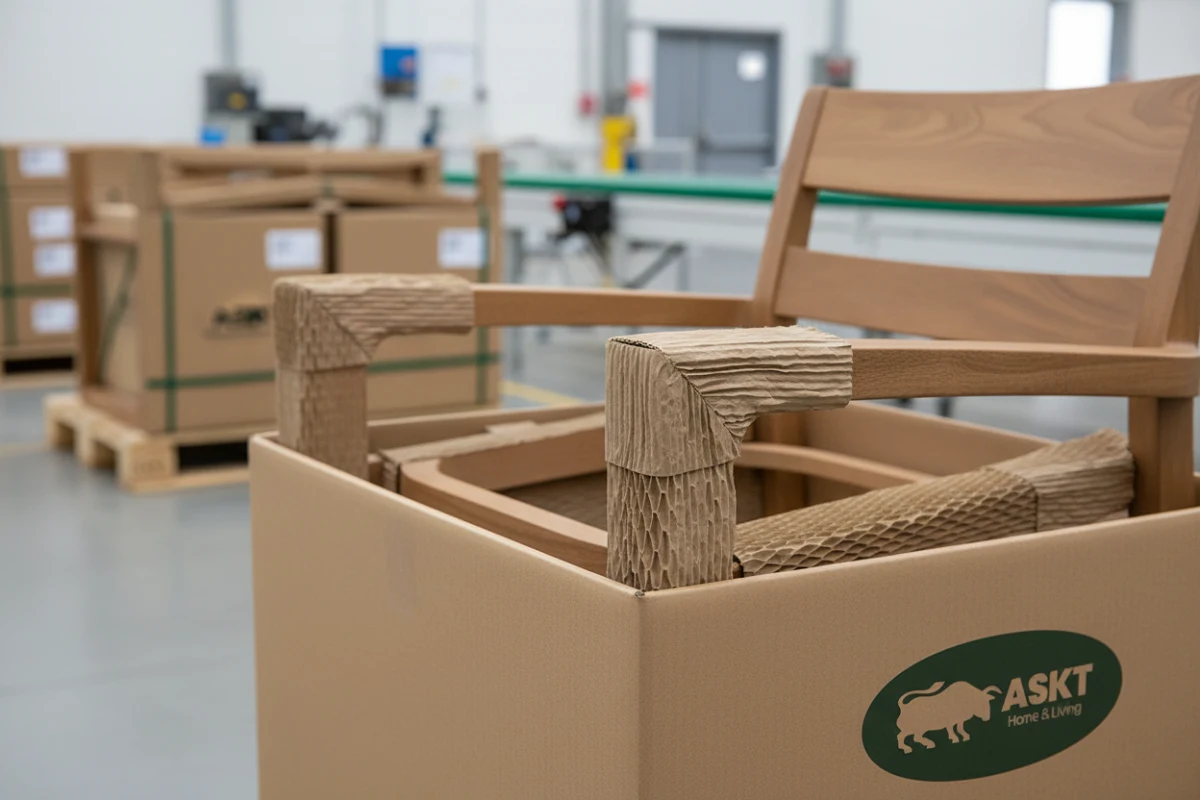
- Inquire About Protective Packaging: Check if the factory uses sustainable, plastic-reduced packaging like high-density honeycomb paper corners to protect fragile armrests during container transit.
- Evaluate Customization and MOQ Flexibility: Look for suppliers that can customize wood finishes, metal powder coat colors, and upholstery fabrics to match your brand's style guide.
At ASKT, we understand that managing inventory risk is a major pain point for European furniture wholesalers and retail chains. To address this, we developed our KINEXA modular system. KINEXA allows buyers to combine standard, pre-engineered seat shells with various metal or wood base configurations. This clever approach simplifies product development, drastically reduces your Minimum Order Quantity (MOQ) requirements, and allows you to test new market designs with minimal financial risk. By combining efficient Chinese manufacturing with deep localized insights, we help European buyers build reliable, highly profitable commercial furniture collections.
Sourcing high-performance seating for the elderly is a balance of human anatomy, safety compliance, and manufacturing precision. If you are currently evaluating your supply chain, seeking custom fabric solutions, or need precise structural drawings to secure your next commercial contract, our engineering team is here to help.
To ensure your next inventory selection matches these rigorous standards, we invite you to Request Senior Chair Dimension Guide today and begin optimizing your purchasing decisions with our engineering specialists.