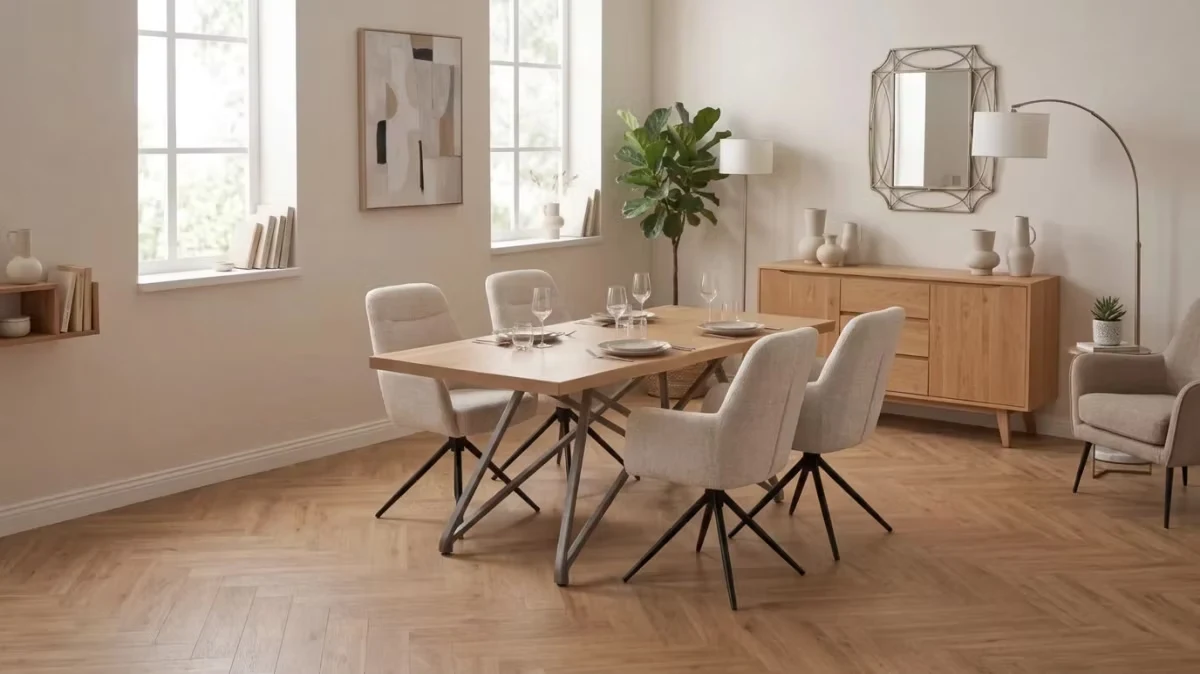
Dining Room Chair Size: A Practical Guide for European B2B Furniture Buyers
If you have ever walked into a furniture showroom, sat down at a display table and felt slightly awkward because the chair felt too high, too low or too narrow for the table, you already know why dining room chair size matters. For end customers it is a question of comfort. For a product manager, wholesaler or contract buyer, it is a question of returns, reviews, repeat orders and long-term brand reputation.
In my years of working with European furniture buyers, I have seen too many collections fail not because the fabric was wrong or the frame looked cheap, but because the basic proportions were off. A chair that looks beautiful on a render can feel completely wrong in real life if the seat height is a couple of centimetres too high or the depth is a few centimetres too deep for the average European user. Getting dining room chair size right is not a detail—it is the foundation of a commercially successful dining chair range.
Why Dining Room Chair Size Matters for B2B Buyers
At a consumer level, people talk about dining chair size in fairly simple terms: does it fit the table, and does it feel comfortable? For professional buyers, the picture is much larger. Size touches almost every part of your business, from product positioning to logistics and customer service.
First, size directly affects comfort and perceived quality. A chair with correct ergonomic proportions will feel premium even with mid-range upholstery, while a badly sized chair with expensive fabric will still feel cheap and uncomfortable. For retailers, this translates into return rates and online reviews. For hospitality and contract buyers, it affects guest satisfaction and long-term durability under heavy use.
Second, size determines how well a chair pairs with dining tables. If you are building a coordinated dining collection, the relationship between table height, apron position and chair seat height is critical. Mismatched proportions mean customers will not buy sets together, which lowers your average order value and makes cross-selling much harder.
Third, size has major logistics and inventory implications. Larger chairs take up more container space, increasing per-unit shipping costs. Heavier or bulkier designs also affect warehouse handling, last-mile delivery costs and damage rates in transit. For e-commerce brands in particular, the outer carton dimensions and weight are almost as important as the product dimensions themselves.
Fourth, size shapes your target audience. A wide, deep upholstered chair appeals to customers with large dining rooms, while a narrower, lighter chair suits apartment living. Choosing the right dining chair size for small spaces can open up an entire segment of urban customers, but only if you plan it into the range from the start.
Standard Dining Chair Dimensions: Key Measurements to Know
When people say standard dining chair dimensions, they usually refer to four core measurements: seat height, seat width, seat depth and back height. Each one serves a different purpose, and each one can make or break the user experience.

Seat height and ergonomics
Dining chair seat height is the distance from the floor to the top of the seat cushion. For most European dining chairs, this typically falls between 45 cm and 48 cm. This range works well with standard dining table heights of around 75 cm, leaving roughly 27 cm to 30 cm of clearance between the seat and the table apron. That gap is the sweet spot for most adults to sit comfortably without their knees hitting the table or their shoulders hunching to reach the plate.
Seat height sounds simple, but there are hidden variables. Cushion compression changes the effective seat height. A soft, thick cushion may measure 48 cm out of the box but sink noticeably under body weight, which is a very different seating experience. Buyers often forget this when reviewing technical drawings and only discover the issue during sample testing. For commercial environments such as restaurants, where chairs are used for hours every day, a more supportive seat with less compression will keep the perceived height consistent for longer.
Seat width and depth
Dining chair width and depth are the two measurements that most influence how spacious a chair feels. Seat width is measured across the widest part of the seat, usually from arm to arm on an armed chair or from edge to edge on an armless design. Seat depth is measured from the front edge of the seat to the point where the seat meets the backrest.
For armless dining chairs, widths commonly range from 40 cm to 45 cm at the seat. Armed chairs are typically wider, often 50 cm to 55 cm. Width is a trade-off: wider chairs feel more generous, but you can fit fewer chairs around a table, and they take up more space in storage and transit. Narrower chairs are more space-efficient, but they can feel cramped for larger users.
Seat depth usually ranges from 40 cm to 45 cm for standard adult dining chairs. The right depth depends on the average leg length of your target market and the angle of the backrest. If a seat is too deep, users will slouch forward to reach the table, which causes back strain and discomfort over a meal. If it is too shallow, people feel as though they are about to slide off. For markets with taller average heights, slightly deeper seats can be a genuine selling point.
Backrest height and overall proportions
Back height varies more than any other dimension, from low contemporary designs to high-backed traditional chairs. Back height affects both visual style and comfort. Higher backs provide more shoulder support and create a more formal dining feel, while lower backs feel lighter and more modern, and are easier to store.
For contract and hospitality buyers, back height also influences acoustics and sightlines. In restaurants, lower backs allow better visibility across the room and easier conversation between tables. In more formal dining settings, higher backs can create a sense of privacy and luxury.
How to Match Chair Size to Your Dining Table
Even the best-sized chair will feel wrong if it does not work with the table it is sold with. Matching dining room chair size to table dimensions is one of the most common sources of customer complaints, and one of the easiest to avoid with a little planning.
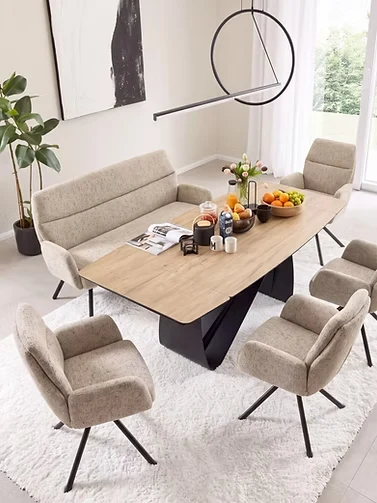
The table-to-seat clearance rule
The single most important number in table-and-chair matching is the vertical clearance between the top of the seat and the underside of the table or table apron. Aim for roughly 27 cm to 30 cm for comfortable dining. Too little clearance and people will hit their knees or thighs on the apron when they pull in. Too much clearance and they will feel as though they are sitting too low, with their elbows raised uncomfortably to eat.
If your tables have thick tops, sintered stone surfaces or low aprons, you need to be especially careful. A table with a thick stone top and a deep apron reduces usable clearance considerably, which can turn a normal seat height into a very tight fit. Always check apron position, not just overall table height, when pairing chairs and tables in a collection.
Width per person and table length
For customers buying sets, the number of chairs that fit around a table is a primary buying decision. As a rough guide, allow about 60 cm of table length per place setting for armless chairs, and 65 cm to 70 cm for armed chairs. That means a 180 cm table typically seats six people comfortably with armless chairs, but only four with wide armed designs.
This is an important point for product managers. If your dining range is built around common extension table sizes, your chair width should be chosen so that the numbers work out cleanly for standard place settings. Otherwise, customers will buy the table and then look elsewhere for chairs that fit, rather than purchasing the full set from you.
Chair depth and overhang when pushed in
Another often-overlooked detail is how far the chair protrudes from the table when it is pushed fully in. This matters in small dining rooms and open-plan kitchens where every centimetre of walkway space counts. Chairs with deep seats or deep upholstered backs can stick out much further than slimmer designs, even when pushed all the way under the table.
For retailers marketing to apartment buyers, this is a genuine selling point. A chair that tucks neatly under the table makes a small room feel bigger and less cluttered. If you are targeting that segment, dining chair size for small spaces should include overall depth and pushed-in clearance as key product specifications.
Chair Size Guidelines for Common Room Layouts
Dining room chair size does not exist in isolation. It has to fit the room, the table and the way people move around the space. For buyers building ranges for different market segments, it pays to think in terms of typical room layouts rather than just individual chair measurements.
Formal dining rooms
In larger homes with a separate dining room, customers usually prioritise comfort and presence over space saving. Chairs for this segment tend to be wider, deeper and higher-backed, often with arms. Standard dining chair dimensions here lean toward the upper end of the scale, with wider seats and deeper cushioning.
For wholesale and retail buyers, this segment supports higher price points and more premium upholstery options, but volumes are usually lower and logistics costs per unit are higher. It is also a segment where fabric quality and finish matter a great deal, because the chair is on permanent display in a formal room.
Open-plan living and kitchen dining
Open-plan spaces are the dominant dining setup across most of Northern and Western Europe. In these rooms, the dining area shares space with the kitchen and living area, so chairs need to feel visually light and not dominate the room. Mid-size armless or slim-armed chairs work best here, with moderate seat widths and balanced back heights.
For e-commerce brands and furniture retailers, this is the volume segment. It is where standard dining chair dimensions sell in the highest numbers, and where small differences in price, comfort and visual weight have a big impact on sales performance.
Compact apartments and small dining nooks
In city apartments, studio flats and small terraced homes, dining space is at a premium. This is where dining chair size for small spaces becomes a critical product differentiator. Chairs for this segment are narrower, lighter and often stackable or designed with KD (knock-down) structures for easier transport and storage.
Typical seat widths for small-space chairs are on the narrower end of the scale, with overall depths kept as slim as possible without sacrificing basic comfort. Stackability is a major plus, because it allows customers to store extra chairs out of the way when they are not needed. For buyers serving urban markets, offering a dedicated small-space dining chair line can be a very profitable niche.
Space-Saving vs. Comfort: Trade-Offs for Different Buyer Segments
One of the biggest mistakes product teams make is trying to build a chair that does everything well. In reality, dining room chair size is always a set of trade-offs. The best ranges are designed with clear priorities for specific customer segments, not with the vague goal of being good for everyone.
When comfort should be the priority
For high-end retail, formal dining and premium hospitality, comfort usually comes first. That means wider seats, deeper cushions and higher backs. It also means slightly higher per-unit costs, higher shipping costs and lower container fill rates. In these segments, customers are willing to pay for comfort and presence, so the trade-off is commercially worthwhile.
Comfort-focused chairs also tend to work well in upholstered collections where the fabric and finish are the main selling points. A generous seat shows off the upholstery better and creates a stronger perception of quality, which supports higher retail prices and better margins.
When space efficiency matters more
For urban retail, student housing, cafés and small restaurants, space efficiency is usually the top priority. Narrower chairs mean more seats per table, more chairs per container and lower shipping costs per unit. Stackable designs reduce storage requirements, which is a huge benefit for seasonal businesses and venues that change their layout frequently.
The key with space-efficient chairs is to avoid going too far. A chair that is too narrow or too shallow will feel uncomfortable even for short meals, and it will get bad reviews. The goal is to find the smallest dining chair size that still delivers acceptable comfort for the intended use case, not the smallest chair you can physically build.
Balancing both for mid-market retail
Most mid-market furniture collections need to balance comfort and space efficiency. This is where standard dining chair dimensions in the middle of the typical range perform best—seat heights around the middle of the 45 cm to 48 cm band, moderate seat widths and sensible seat depths. These proportions work for the majority of users and fit comfortably around most standard tables.
For buyers building a core range, starting with these mid-range dimensions and then offering one wider premium option and one narrower space-saving option is a common and commercially effective structure. It lets customers trade up or trade down within your brand rather than going to a competitor.
Other Size-Related Factors: Stackability, KD Structure and Logistics
Dining room chair size is not just about the chair itself. It is also about how the chair moves through your supply chain, from the factory floor to the customer's home. For B2B buyers, these behind-the-scenes size factors often have a bigger impact on profitability than the visible dimensions.
Stacking height and storage efficiency
Stackable chairs are popular in hospitality and events because they save storage space, but not all stackable designs are equally efficient. The stacking height per chair determines how many chairs fit on a trolley, in a storage room or in a shipping container. A small difference per chair can add up to several extra chairs per stack over a full load.
If you are sourcing stackable chairs for contract use, always check the stacked height per unit and the maximum recommended stack height, not just the individual chair dimensions. Also check whether the stacking design protects the upholstery, because chairs that rub against each other in storage will show wear much faster.
KD structure and packaging size
KD (knock-down) chairs are shipped in parts and assembled on site, which dramatically reduces packaging volume. For e-commerce brands and buyers with high logistics costs, KD structures can make the difference between a profitable product line and one that loses money on shipping.
However, KD designs also affect perceived dining room chair size. A chair that assembles with visible brackets or looser joints can feel flimsier than a fully welded frame, even if the overall dimensions are identical. For mid-market and premium retail, it is important to balance packaging efficiency with structural quality and the feel of the finished chair.
Container loading and per-unit shipping cost
One of the biggest hidden costs of dining chair size is container utilisation. Larger chairs take up more space, and irregular shapes can leave empty gaps that you still pay for. Experienced manufacturers design chair dimensions and packaging with container loading in mind, so that cartons stack neatly and fill the container as efficiently as possible.
For high-volume buyers, a small improvement in container fill can save significant amounts per year in shipping costs. This is another reason why working with a manufacturer that understands both product design and export logistics pays off. They can help you fine-tune dining chair width and depth so that the product still works for your market and also loads efficiently into a container.
Practical Checklist for Selecting Dining Chair Sizes
With so many factors to consider, it is easy to lose track of the basics. Here is a simple checklist you can use when evaluating a new dining chair size for your collection:
- Seat height: Does it fall within 45 cm to 48 cm, and does it leave 27 cm to 30 cm of clearance under your standard table apron?
- Seat width: Does it match your target segment—wider for premium dining, narrower for small spaces?
- Seat depth: Is the depth appropriate for the average height of your market, and does it encourage an upright sitting posture?
- Back height: Does the back style match the room type and price point you are targeting?
- Table pairing: How many chairs fit around your standard table sizes, and do the numbers make sense for common place settings?
- Room clearance: How far does the chair protrude when pushed fully under the table?
- Logistics: What is the packaged size, weight and container fill rate?
- Stackability: Do you need stackable designs for contract or small-space segments?
- KD vs fully assembled: Which structure best fits your sales channel and logistics setup?
Use this checklist early in the product development process, before you commit to tooling or large production runs. It is much cheaper to adjust dimensions on a drawing than it is to fix them after you have thousands of chairs in a warehouse.
How ASKT Approaches Dimension Consistency and Customization
After working with European furniture buyers for over 20 years, we know that consistency in dining room chair size is just as important as the size itself. A customer who buys six chairs expects all six to be the same height, width and depth, and even small variations are noticeable when the chairs are arranged around a table.
At ASKT, we control dimensional consistency through stable production processes, including automated cutting equipment for fabrics and precision tooling for metal and wooden components. Every batch is checked against defined tolerances before it leaves the factory, so that what you approve in the sample stage is what you receive in production. Our factories operate under BSCI-certified conditions, which supports consistent worker training and process discipline.
We also offer flexible dimension customization for buyers who need specific sizes for their market or project. Whether you need slightly deeper seats for taller Northern European markets, narrower profiles for urban small-space ranges, or custom seat heights for unusual table dimensions, we can adjust the design within sensible engineering limits. We work with both OEM and ODM projects, including custom fabrics, finishes, frame designs and packaging. Our fabric range includes OEKO-TEX® STANDARD 100 certified options, waterproof and stain-resistant finishes, pet-friendly materials and recycled fabrics made from plastic bottles, so you can match both size and material performance to your target market.
Our product portfolio covers upholstered, metal-frame, swivel and auto-return dining chairs, as well as matching dining tables, bar chairs and lounge furniture. We serve wholesalers, retail chains, e-commerce brands, purchasing groups and contract furniture buyers across Germany, the Netherlands, the UK, Poland, Switzerland, Ireland and other European markets.
Frequently Asked Questions
What is the most common dining chair seat height?
For European dining chairs, the most common seat height is between 45 cm and 48 cm. This range works well with standard 75 cm dining tables and provides comfortable leg clearance for most adult users.
How wide should a dining chair be?
Dining chair width depends on the intended use. Armless chairs typically range from 40 cm to 45 cm wide at the seat, while armed chairs are usually 50 cm to 55 cm wide. Small-space designs can be as narrow as 38 cm, while premium formal chairs can be wider still.
How much space do you need behind a dining chair?
As a general rule, allow at least 75 cm to 90 cm from the table edge to the wall behind the chair. This gives enough room to pull the chair out and sit down comfortably. For high-traffic areas such as restaurants, 100 cm or more is recommended for safe movement between tables.
Can I customise dining chair dimensions for my market?
Yes, many manufacturers offer dimension customization within reasonable engineering limits. Common adjustments include seat height, seat width, seat depth and back height. It is usually easier and less expensive to customise dimensions during the product development stage than to modify existing production tooling later.
Does a KD chair change the perceived size?
A well-designed KD chair should feel identical to a fully assembled chair once it is put together. Lower-quality KD designs with weak joints or loose fittings can feel less stable, which makes the chair feel smaller or flimsier than it actually is. Always assemble and test KD samples before placing a production order.
If you are evaluating dining chair collections for the European market and want to discuss size options, customization or production consistency, it is worth talking to a manufacturer that understands both the product and the market. Getting the dimensions right at the start saves returns, protects your brand and makes the whole sourcing process much smoother.