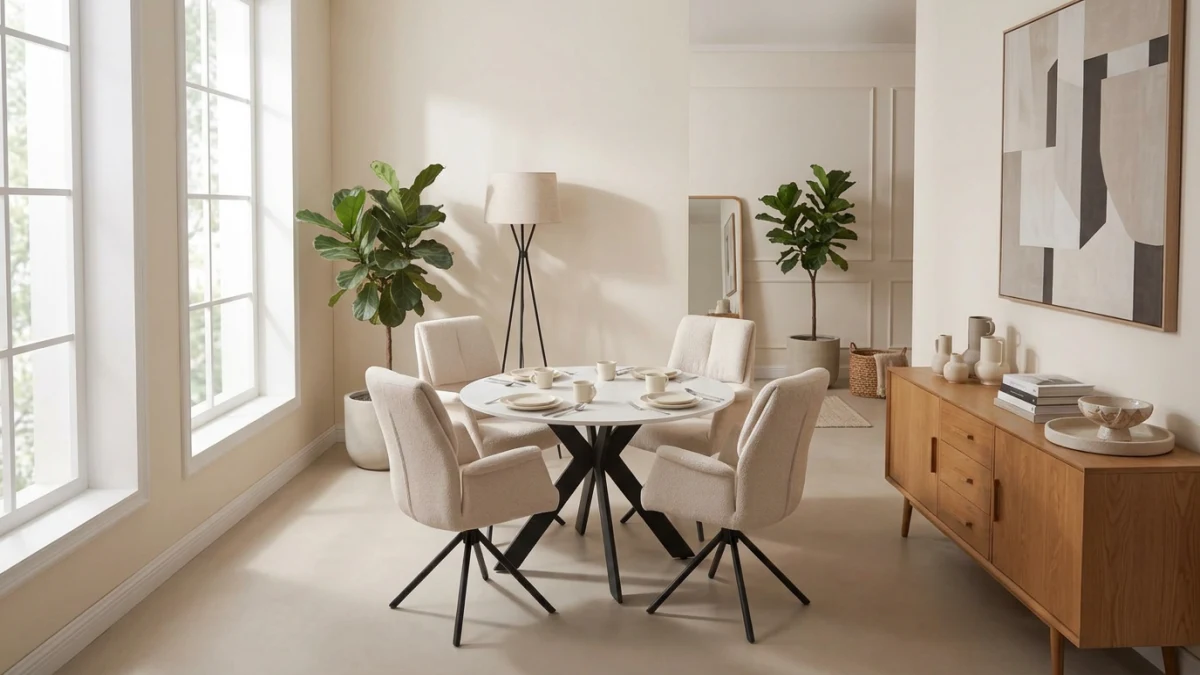
Dining Table Fire Resistance Standards: Contract Furniture Compliance Guide
Dining table fire resistance standards define the heat tolerance, flammability limits, and reaction-to-fire benchmarks required for commercial and hospitality projects across European markets. Achieving commercial dining table compliance involves distinguishing inherently non-combustible surfaces like sintered stone tops and powder-coated metal frames from flame retardant table materials such as treated oak veneer, while verifying test documentation and structural performance to ensure safety and regulatory alignment.
What Are Dining Table Fire Resistance Standards and Why Do They Matter for Contract Furniture Buyers?
Dining table fire resistance standards are technical specifications, safety regulations, and evaluation protocols designed to assess how indoor commercial furniture reacts when subjected to elevated temperatures, direct heat, or ignition sources. For European furniture wholesalers, retail chains, importers, purchasing groups, and hospitality sourcing managers supplying projects in Germany, the Netherlands, the United Kingdom, Poland, Switzerland, Ireland, and across Europe, adhering to these requirements is an essential element of contract procurement.
In domestic furniture distribution, purchasing decisions often centre on visual design, consumer pricing, and basic structural stability. In contract and commercial environments, however, contract furniture fire safety is a foundational baseline. High-density spaces—including hotel dining rooms, restaurants, corporate cafeterias, and communal lounges—present distinct safety considerations. Sourcing teams must ensure that dining tables do not contribute to rapid flame spread, generate unmanageable smoke, or suffer sudden structural failure during a thermal emergency.
Failing to address dining table fire resistance standards during supplier evaluation and contract development introduces measurable procurement and operational risks:
- Regulatory Non-Compliance and Handover Delays: Commercial projects require complete documentation before sign-off. Shipments lacking traceable testing records risk rejection by project inspectors, resulting in costly project delays and contract disputes.
- Liability and Commercial Risk: Furniture importers and wholesalers can face significant commercial liability if dining furniture supplied to commercial premises fails to meet local contract fire safety expectations.
- Aesthetic and Surface Degradation: Tables exposed to hot serveware, heated dishes, or warm display elements can suffer finish blistering, surface discolouration, or veneer delamination if thermal limits are not clearly verified during product development.
- Structural Instability Under Heat: A commercial table must maintain structural integrity under mechanical load and elevated temperatures. Structural joints, Knock-Down (KD) hardware, and frame assemblies must remain stable to prevent collapse.
How Do Inherently Non-Combustible Materials Compare with Flame Retardant Table Materials?
When developing or sourcing commercial dining tables, product managers and purchasing teams must differentiate between materials that are naturally non-combustible and those that rely on engineered chemical treatments or protective surface finishes. Understanding these distinctions ensures accurate Bill of Materials (BOM) specifications and prevents misalignment between project tenders and delivered goods.
1. Inherently Non-Combustible Surfaces (Sintered Stone)
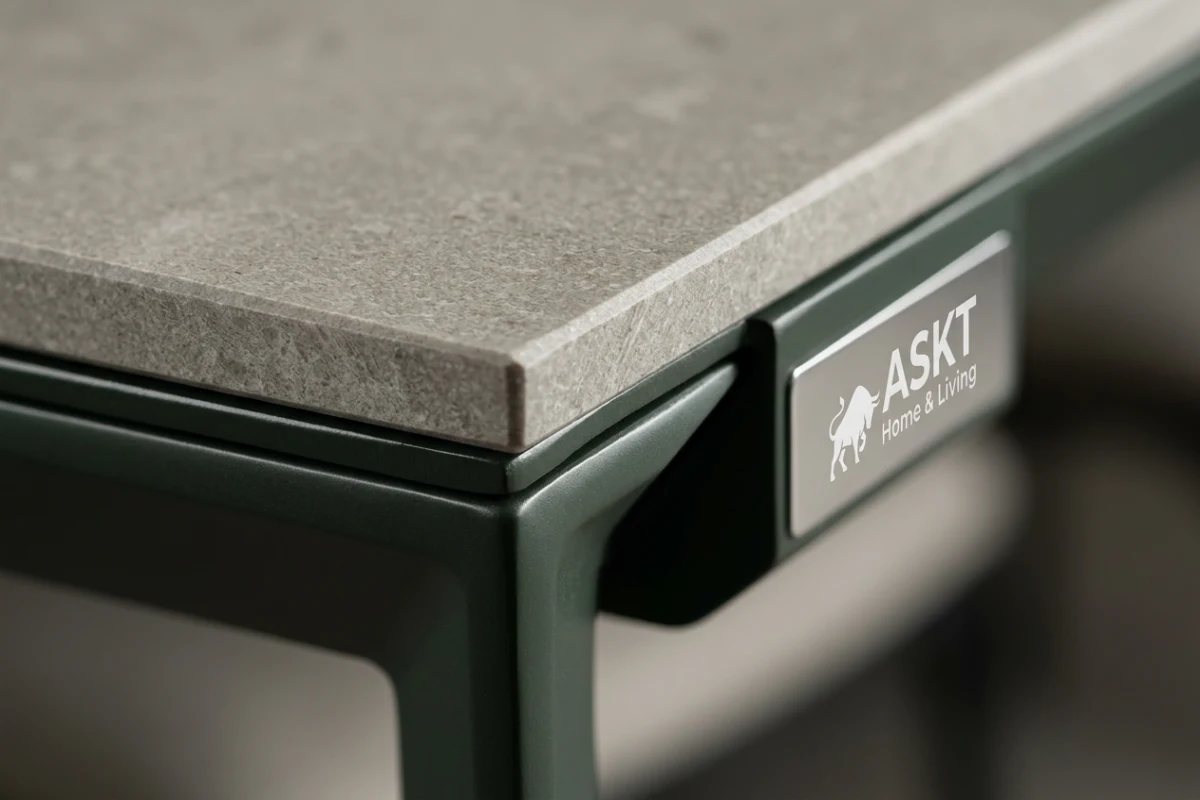
Inherently non-combustible table tops do not ignite, char, or emit toxic gases when exposed to flame or high contact heat. Sintered stone surfaces are formed through advanced manufacturing processes that subject natural minerals to extreme pressure and high kiln temperatures. Because the resulting slab contains no synthetic binders or organic polymers, sintered stone is naturally non-flammable and provides superior thermal stability for high-traffic contract dining spaces.
2. Flame Retardant Table Materials (Engineered and Treated Woods)
Organic materials, including natural wood and engineered timber composites, are combustible in their untreated state. To serve commercial projects requiring timber aesthetics, manufacturers use flame retardant table materials. This process involves pairing fire-rated core substrates with natural wood veneers (such as oak veneer) and applying specialised protective lacquers or fire-resistant clear coats. These coatings and substrates suppress surface ignition, slow flame propagation, and create an insulating char layer.
3. Powder-Coated Metal Frames and Structural Underframes
Contract dining tables frequently feature steel or iron metal subframes and table legs. Metal is non-combustible, providing exceptional structural stability under mechanical and thermal stress. Applying architectural-grade powder coating adds surface protection, corrosion resistance, and an even finish without adding combustible synthetic layers. When combined with precision welding and robust KD structural connectors, metal frames provide reliable structural support across demanding commercial environments.
| Material Category | Primary Material Characteristics | Thermal & Reaction-to-Fire Profile | Contract Applications | Procurement Considerations |
|---|---|---|---|---|
| Sintered Stone Table Tops | Dense mineral composition, non-porous structure, scratch-resistant | Non-combustible, immune to hot cookware, high heat tolerance | High-traffic hospitality, hotel restaurants, commercial dining halls | Higher unit weight; requires reinforced protective packaging and sturdy corner protection |
| Treated Oak Veneer on Core Board | Natural oak timber surface layer over engineered substrate | Flame retardant when combined with treated core and certified protective lacquers | Boutique hotels, premium restaurants, commercial executive lounges | Requires strict verification of surface lacquers and bonding adhesives; sensitive to aggressive cleaners |
| Powder-Coated Metal Underframe | Steel or iron tube construction with thermoset powder coating | Non-combustible base frame; maintains structural load capacity under thermal exposure | Universal contract furniture, restaurant chains, dining spaces | Inspect weld penetration, coating consistency, and Knock-Down (KD) joint rigidity |
| Untreated Solid Timber / Standard Board | Raw timber lumber or untreated standard core board | Combustible; ignites under direct flame; supports flame spread | Residential dining only; not recommended for strict contract projects | Cost-effective for retail, but carries non-compliance risks in regulated contract spaces |
How Does Sintered Stone Compare to Oak Veneer for Commercial Dining Table Compliance?
Selecting between sintered stone and oak veneer requires balancing commercial dining table compliance, tactile qualities, project aesthetics, maintenance expectations, and overall supply chain logistics. Both surface solutions have distinct roles within the European contract dining market.
Sintered Stone: Passive Fire Safety and Operational Durability
Sintered stone has emerged as a preferred surface for modern commercial dining tables due to its comprehensive durability profile. In bustling hospitality environments, surfaces regularly interact with hot dishes, warm plates, and daily commercial cleaning routines.
Key performance characteristics include:
- Total Flame and Heat Immunity: Sintered stone surfaces will not ignite or discolour when exposed to high surface temperatures, open chafing flames, or accidental contact with hot vessels.
- Chemical and Stain Resistance: The dense, non-porous structure resists liquid penetration, food acids, wine, oils, and sanitising chemicals, preserving long-term visual appearance.
- Abrasion and Scratch Resistance: High surface hardness ensures that cutlery, tableware, and continuous commercial use do not leave micro-scratches or dull patches.
- Logistical Trade-Offs: The notable density and weight of sintered stone require careful packaging engineering. Importers must ensure suppliers utilise reinforced, sustainable packaging—such as heavy-duty honeycomb paperboards and rigid edge protectors—to prevent edge chipping during ocean transit and container handling.
Oak Veneer: Natural Warmth and Engineered Fire Retardancy
Oak veneer remains in high demand across European hospitality concepts that prioritise natural textures, acoustic warmth, and contemporary Scandinavian or modern industrial aesthetics. Meeting contract furniture fire safety with oak veneer requires meticulous manufacturing controls:
- Engineered Substrate Control: The core board beneath the veneer must be specified with fire-retardant properties to prevent internal combustion and core degradation.
- Adhesive System Stability: The bonding agents used to press natural oak veneer onto the core must maintain adhesion under temperature fluctuations to prevent surface bubbling or edge delamination.
- Protective Lacquer Formulation: Sourcing teams must verify that the applied topcoats consist of certified flame-retardant clear lacquers that resist localised heat without discolouring or flaking.
- Logistical Trade-Offs: Oak veneer tops are lighter than stone, reducing container weight and freight expenses. However, they require careful environmental control during production and storage to maintain stable wood moisture content and prevent warping.
What Testing and Verification Protocols Should Buyers Require for Fireproof Table Top Testing?
Professional B2B buyers must implement clear verification workflows when evaluating suppliers and placing purchase orders for contract dining tables. Relying solely on verbal assertions or non-specific product sheets creates commercial risk. Importers should establish structured test audit protocols before container dispatch.
Essential Testing Categories for Contract Tables
- Reaction-to-Fire and Ignitability Testing: Evaluates surface behaviour when exposed to small open flames or smouldering ignition sources. Compliant commercial surfaces must self-extinguish and resist continuous flame spread.
- Dry and Wet Heat Surface Resistance: Assesses surface resilience when heated metal objects or hot liquids contact the tabletop. Surfaces must not show visible blisters, cracking, colour changes, or loss of coating adhesion.
- Mechanical Safety, Durability, and Structural Stability (EN Testing): Table frames, extension mechanisms, and structural joints must be tested against European standards for non-domestic furniture strength, stability, and mechanical durability (including EN testing for contract and commercial tables). A table must remain physically stable and support rated loads without wobbling or joint fatigue.
- Chemical and Finish Emission Verification: Verifies that coatings, adhesives, and composite materials comply with European chemical safety regulations and low-emission requirements.
Audit Checklist for Supplier Compliance Documentation
When reviewing laboratory documentation from manufacturing partners, sourcing managers should verify the following details:
- Accredited Laboratory Verification: Test reports must originate from recognised third-party testing institutions with accredited testing facilities.
- BOM Consistency: The materials listed in the test report (veneer thickness, core density, lacquer reference, stone grade, and frame gauge) must correspond precisely with the technical Bill of Materials ordered for production.
- Recent Testing Dates: Ensure that test certificates reflect active production formulas rather than legacy samples from outdated material batches.
- Batch Traceability: Confirm that the manufacturer's Quality Control (QC) system links raw material batch inspections to outgoing container shipping lots.
How Can Contract Buyers Reduce Sourcing and Quality Risks with Overseas Manufacturers?
Sourcing contract furniture from manufacturing hubs in China allows European buyers to combine scalable, cost-efficient manufacturing with tailored OEM and ODM customization. However, securing consistent fire safety, material durability, and structural performance requires partnering with an experienced B2B manufacturer that maintains transparent quality control systems.
1. Structural Manufacturing and Automation
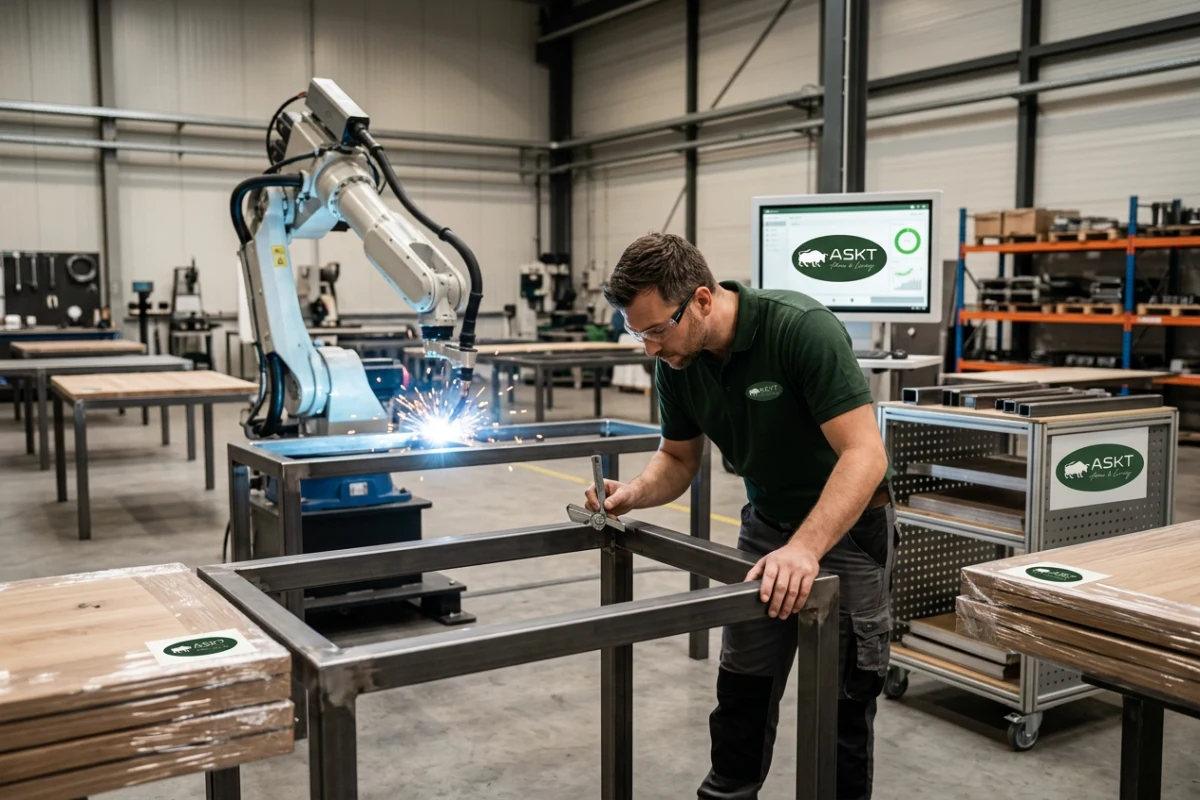
Consistent dimensional accuracy is critical for Knock-Down (KD) dining tables and contract collections. Advanced manufacturing infrastructure—including precision CNC cutting for wooden components, multi-spindle drilling, and automated robotic welding for metal frames—ensures uniform joint fitment, clean weld penetration, and dependable load-bearing stability across high-volume production runs.
2. Multi-Stage Quality Control Protocols
A professional manufacturing partner operates a structured quality management framework to identify potential material or assembly defects before products are packaged:
- Incoming Quality Control (IQC): Inspecting raw sintered stone slabs for surface consistency, measuring steel tube wall thickness, testing veneer moisture content, and checking incoming lacquers and adhesives against specification sheets.
- In-Process Quality Control (IPQC): Auditing metal frame welding quality, verifying veneer pressing adhesion, checking powder coating thickness, and inspecting KD structural hardware alignment during assembly.
- Final Quality Control (FQC): Performing pre-shipment assembly audits on random units from the production line to evaluate surface flatness, joint rigidity, load-bearing stability, finish uniformity, and packaging integrity.
3. Packaging Engineering and Container Optimization
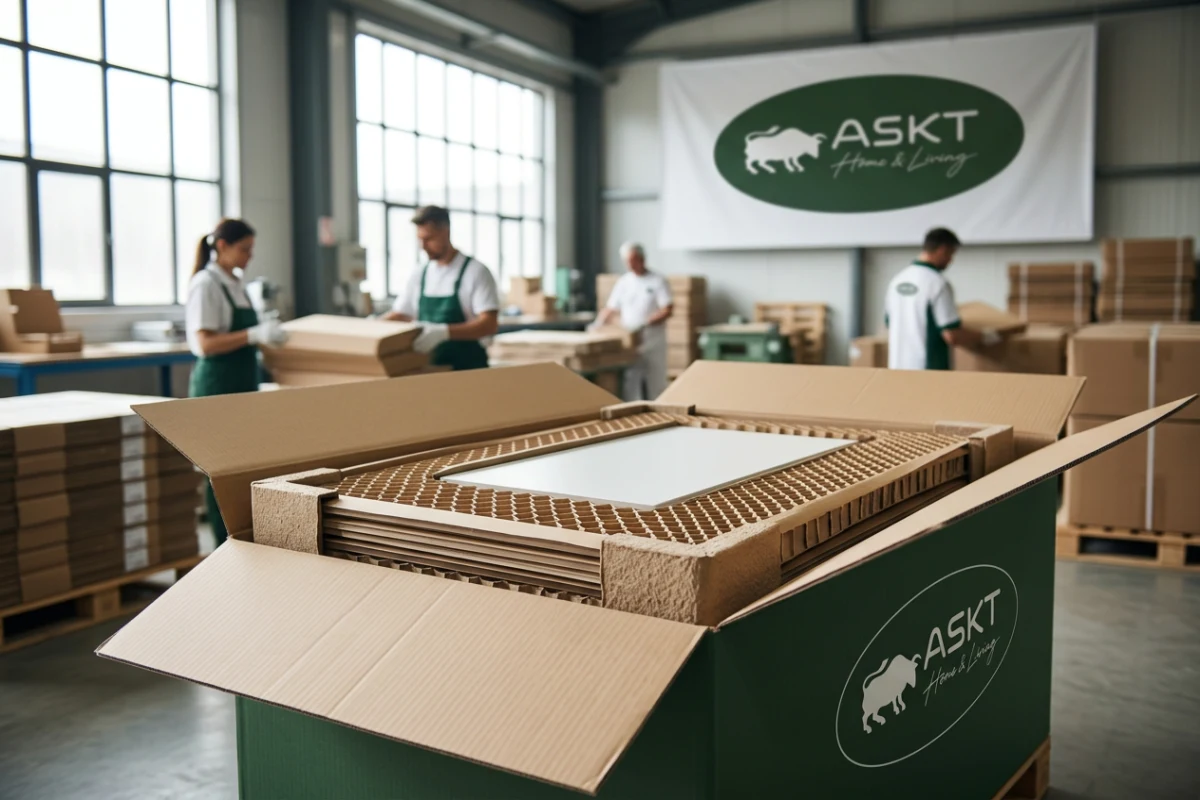
Commercial dining tables represent substantial shipping volume and weight. Heavy stone tops and metal underframes require careful packaging design to survive intermodal shipping while supporting environmental sustainability goals:
- Sustainable Packaging with Reduced Plastic: Replacing oversized polystyrene blocks with high-density honeycomb paperboard, corrugated corner protectors, and reinforced perimeter guards protects fragile table edges while minimising plastic waste.
- Knock-Down (KD) Design and Container Loading: Engineering modular table bases, detachable legs, and compact flat-pack configurations maximises space utilisation in 40ft High Cube containers. This reduces ocean freight costs per unit, cuts carbon emissions per delivered product, and streamlines warehouse handling for European importers and wholesalers.
Summary Checklist: Procuring Fire-Compliant Commercial Dining Tables
To ensure consistent quality, regulatory compliance, and smooth project execution across European markets, use this sourcing checklist during your next procurement cycle:
- Define Commercial Application Requirements: Determine whether the dining tables are destined for standard commercial hospitality, high-density hotel dining halls, or regulated public contract environments.
- Select the Right Table Top Surface: Specify non-combustible sintered stone for maximum passive heat and flame resistance, or engineered oak veneer with flame-retardant core boards and certified protective lacquers for natural wood aesthetics.
- Verify Frame Construction and Finish: Mandate robust steel or iron subframes with durable powder coating, precision robotic welds, and stable KD connection hardware.
- Review Independent Test Documentation: Require verified test reports covering surface heat resistance, material flammability, and European mechanical durability (EN testing).
- Audit Manufacturing and QC Standards: Partner with established B2B manufacturers equipped with automated welding and CNC processing, supported by structured IQC, IPQC, and FQC inspection workflows.
- Incorporate Sustainable Protective Packaging: Ensure flat-packed KD structures utilize reinforced honeycomb paper protection and robust edge guards to pass drop tests and optimise container loading.
By systematically verifying material characteristics, structural safety, and testing records, European furniture buyers can protect their brand reputation, satisfy contract regulations, and supply durable, elegant dining collections with complete commercial confidence.
If you are currently evaluating dining tables for European commercial projects or developing private-label collections, inquire about our detailed material specifications and available test documentation to ensure full compliance and reliable manufacturing support.