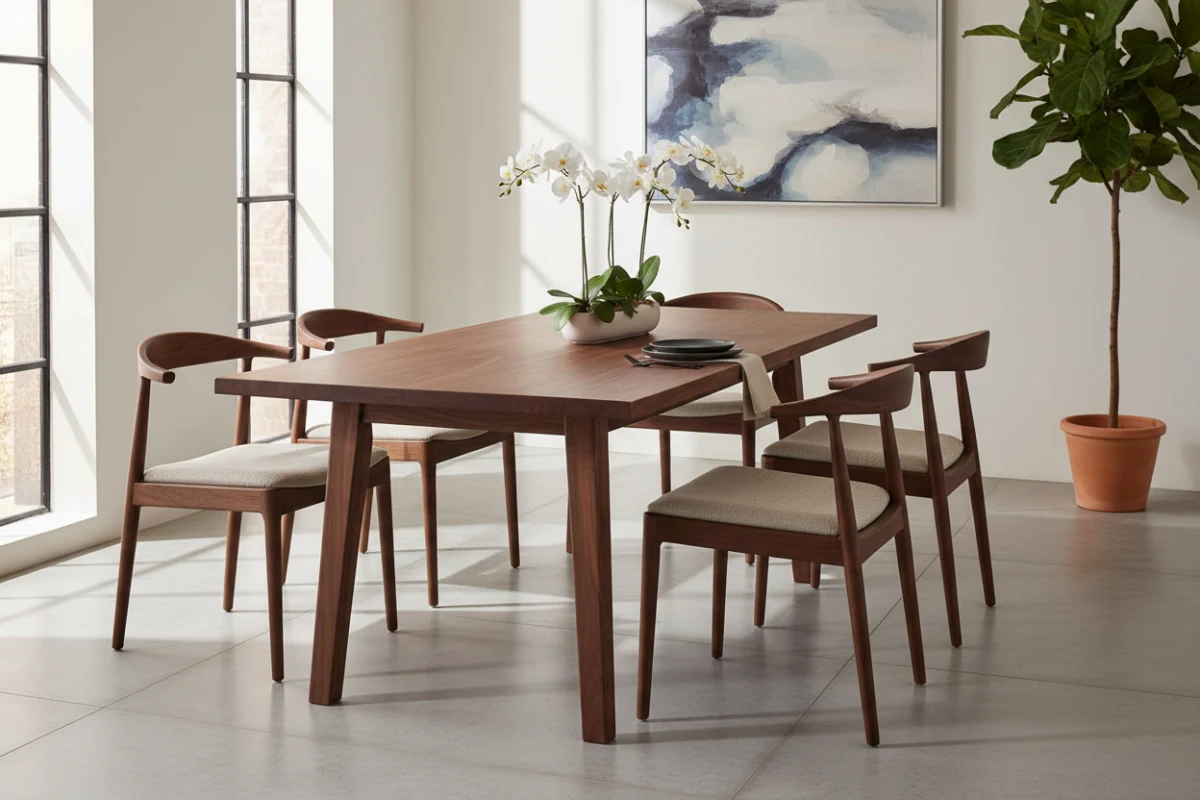
Dining Table Supplier Comparison Guide: Style, Craftsmanship, Function, and Price
Dining tables from different suppliers differ significantly in design aesthetics, manufacturing craftsmanship, structural functionality, and cost structures, requiring B2B buyers to use a comprehensive evaluation framework to select the right product portfolio. High-end manufacturers prioritize material durability, seamless extension mechanisms, and custom OEM/ODM capabilities, while low-cost suppliers focus on high-volume production, standardized designs, and cost-effective synthetic materials.
How Do Supplier Styles Match Global Dining Table Market Demands?
Dining table suppliers generally specialize in specific design aesthetics depending on their target geographical markets and manufacturing setups. When compiling a dining table supplier comparison guide, it is helpful to categorize suppliers into three primary style directions:
- Nordic & Minimalist: Characterized by light-toned woods (such as white oak or ash), clean lines, and tapered legs. Suppliers in this segment focus on subtle details, matte protective finishes, and organic shapes.
- Industrial & Rustic: Featuring heavy solid wood tops paired with powder-coated steel or iron frames. These tables appeal to markets seeking a rugged, bold aesthetic and are often produced by manufacturers with dual wood-and-metal capabilities.
- Classic & Traditional: Highlighting ornate carvings, rich dark finishes (like walnut or cherry), and robust pedestal bases. These suppliers rely on traditional woodworking techniques and cater to premium, conservative retail segments.
| Style Category | Key Materials Used | Common Joinery & Construction | Best-Fit Retail Demands |
|---|---|---|---|
| Nordic Minimalist | White Oak, Ash, MDF with Natural Veneers | Mortise & Tenon, KD (Knock-Down) | Urban apartments, modern homes |
| Industrial Modern | Reclaimed Pine, Metal Tubes/Plates | Welded steel joints, threaded inserts | Loft style, casual dining rooms |
| Classic Premium | Solid Walnut, Oak, Beech wood | Traditional joinery, heavy pedestal bases | Large family dining, upscale interiors |
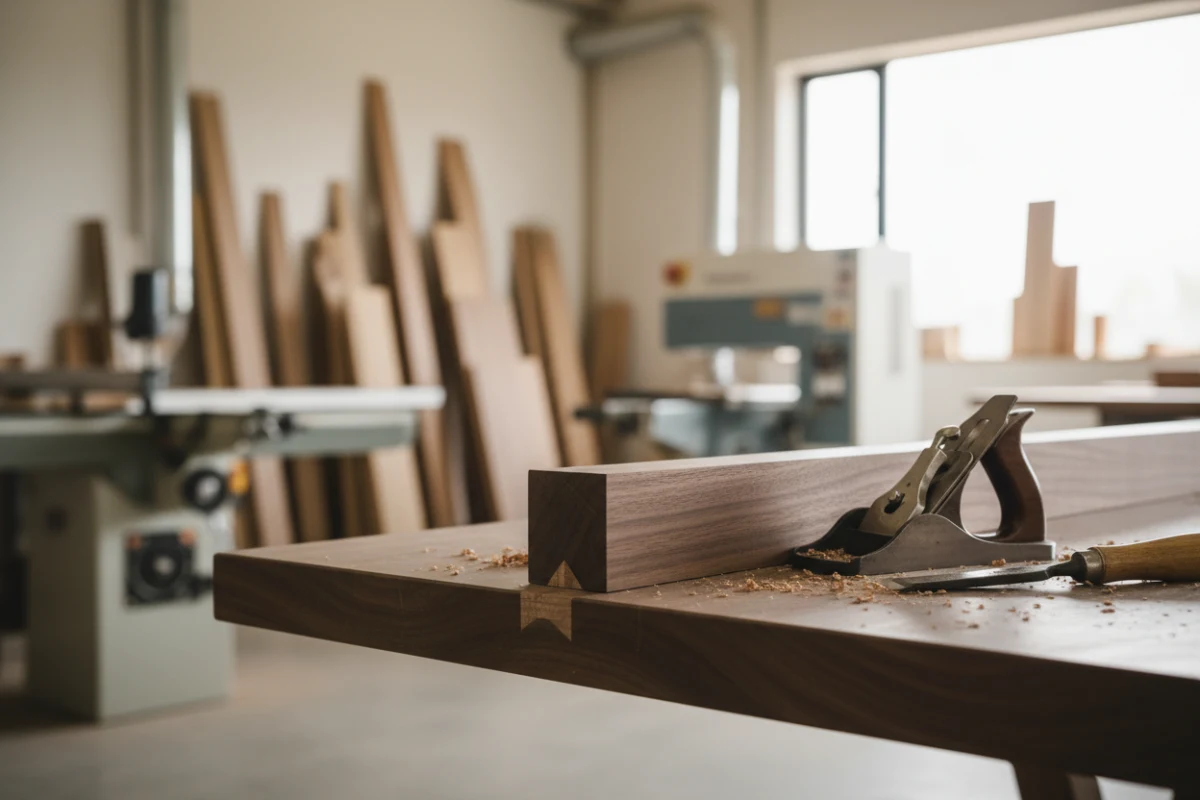 Exemplary joinery and smooth edge finishing demonstrate adherence to strict wholesale quality standards.
What Wholesale Dining Table Quality Standards Define Craftsmanship?
Craftsmanship determines a table's lifespan, resistance to environmental changes, and overall premium feel. B2B buyers must evaluate potential partners against strict wholesale dining table quality standards to avoid costly customer returns and damage during transit. Crucial craftsmanship indicators include:
- Moisture Content Control: Wood must be kiln-dried to an optimal moisture level of 8% to 12%. Poor moisture control leads to warping, splitting, and cracking when the furniture transitions between different climates.
- Surface Finish Integrity: High-quality suppliers use multi-layered PU (Polyurethane) lacquers or eco-friendly UV finishes that protect against water rings, heat marks, and household scratches.
- Under-Table Structural Support: Premium tables feature metal tension rods or robust wooden aprons underneath the tabletop to prevent sagging over time, particularly for tables exceeding 180 cm in length.
How Does Manufacturing Technology Impact Extendable Dining Table Functionality?
In urban markets where space-saving furniture is in high demand, functional hardware is a massive selling point. The complexity of extendable dining table manufacturing separates entry-level factories from high-precision manufacturers.
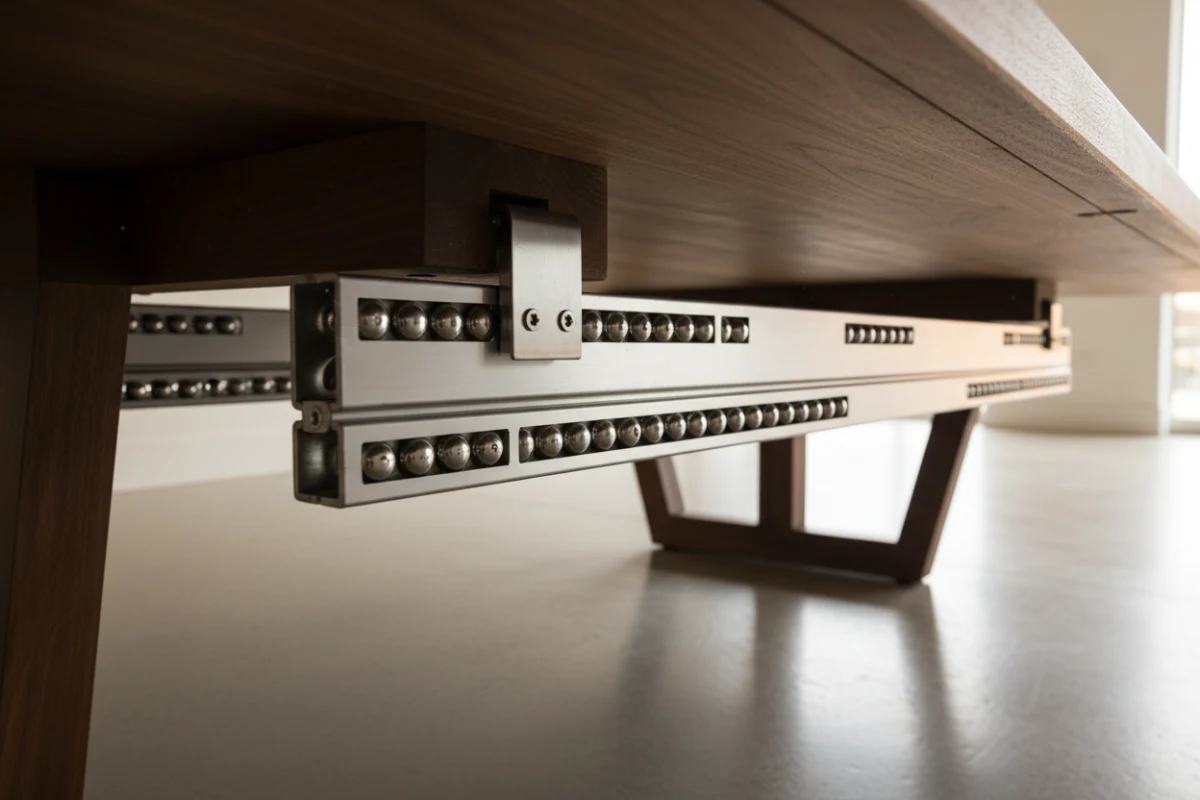 Advanced extendable dining table manufacturing relies on robust, synchronized aluminum track systems.
When evaluating a supplier's engineering capabilities, analyze their extension mechanisms across these categories:
- Butterfly Extension Mechanisms: Hidden leaf designs that store inside the table and flip open. High-quality manufacturers use synchronized steel ball-bearing slides, allowing a single person to open the table effortlessly.
- Slide Mechanisms: Standard wooden runners are highly susceptible to humidity changes, causing sticking or jamming. Premium suppliers install anodized aluminum profiles or heavy-duty galvanized steel tracks that maintain smooth movement for years.
- Locking Systems: Safe, reliable under-table toggle locks prevent accidental separation of the leaves when fully extended.
What Factors Drive OEM ODM Dining Table Manufacturer Costs and Pricing?
Understanding the breakdown of OEM ODM dining table manufacturer cost structures is essential for successful price negotiations and strategic retail planning. A typical high-quality dining table's manufacturing cost is divided into the following segments:
- Raw Materials (45% - 55%): Solid European oak or North American walnut is significantly more expensive than rubberwood, pine, or veneered MDF. Additionally, high-end sintered stone or ceramic tops drive up material costs.
- Hardware & Mechanisms (15% - 20%): Premium German-engineered or Italian-designed extension hardware can add considerable cost but guarantees flawless long-term operation.
- Labor & Craftsmanship (15% - 20%): Hand-sanding, custom staining, and intricate joinery require skilled carpenters, whereas automated CNC milling reduces labor costs but may lack artisanal detail.
- Quality Control & Compliance (10%): Testing certifications (such as FSC for sustainable wood sourcing or EN 12521 for strength and safety standards) add to the baseline production cost but are crucial for entry into strict markets like Europe and North America.
What Sourcing Criteria Should Furniture Retailers Use for Table Selection?
Establishing clear furniture retail table selection criteria protects your business from unreliable supply chains and high defect rates. When auditing dining table suppliers, ensure they meet these standard operational benchmarks:
- ISTA 3A Packaging Compliance: Solid wood and ceramic tables are heavy and fragile. Suppliers must use high-density foam edge protectors, double-wall corrugated cartons, and drop-tested packaging to survive ocean transit and last-mile delivery.
- Flexible MOQ (Minimum Order Quantity): While large container volumes offer the lowest per-unit price, look for suppliers who offer mixed-container options, allowing you to test multiple styles without overextending inventory.
- Customization Capabilities (OEM/ODM): The ability to adjust dimensions, switch wood species, or apply custom color ways is a competitive advantage that lets you react quickly to shifting consumer trends.
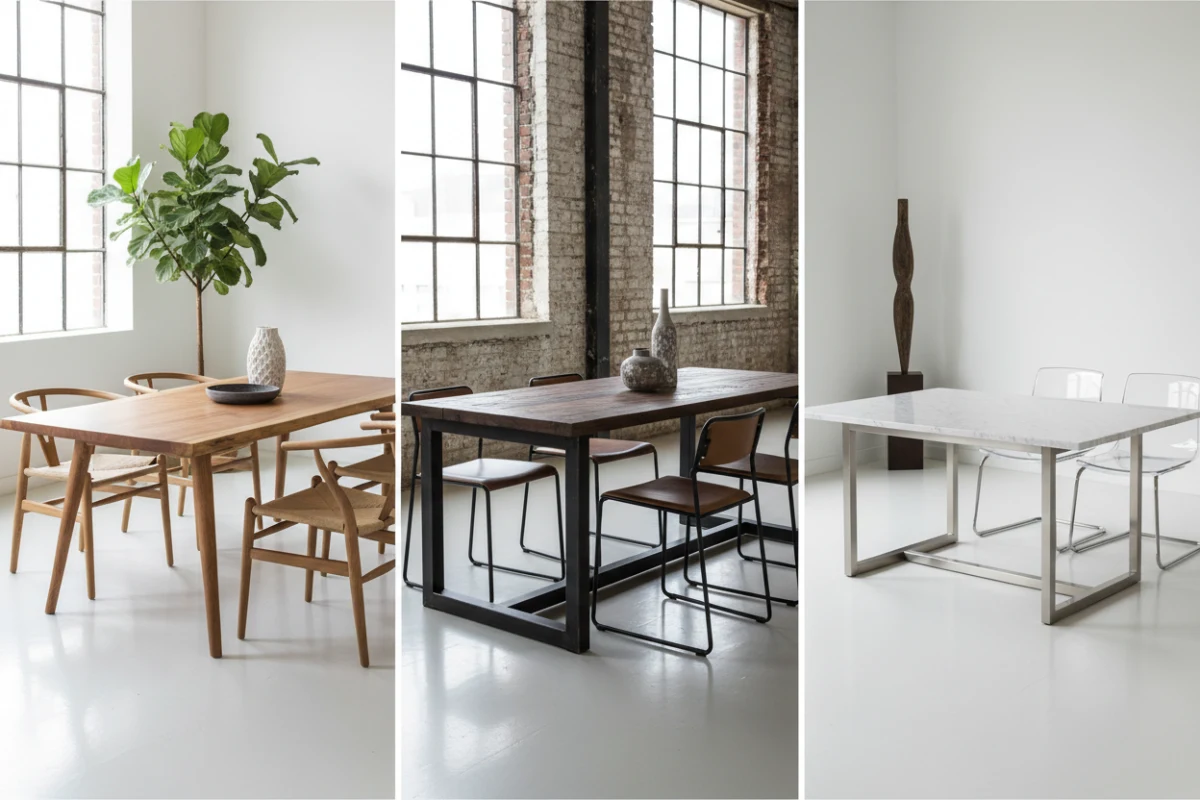 A comparative overview of diverse dining table styles catering to varied retail demographics.
If you need dining table selection, price range planning, samples, or OEM/ODM development support, please contact ASKT.