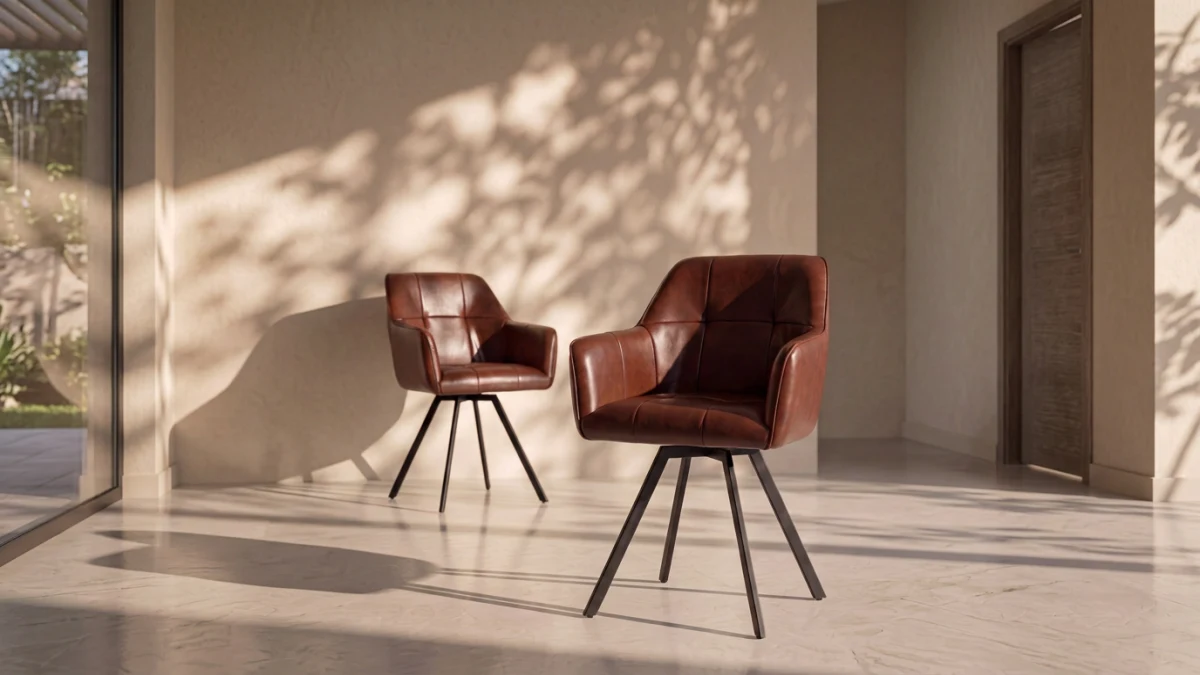
Engineering Durable KD Furniture: Sourcing Guide for Dining Chair Stability and Structural Durability
Durable KD furniture achieves dining chair stability by combining precision-engineered metal frames, robust connection hardware, reinforced seat platforms, and rigorous testing protocols. By replacing vulnerable direct fasteners with reliable metal-to-metal joints and maintaining strict manufacturing tolerances across production batches, manufacturers deliver flat-pack container loading efficiency without sacrificing structural durability, long-term joint integrity, or European consumer safety.
Why Is Dining Chair Stability More Difficult to Achieve in KD Furniture Than Assembled Seating?
Dining chairs endure continuous dynamic stress during daily use. Unlike static storage furniture, a dining chair absorbs compound forces: vertical user weight, rearward leverage as the user leans back, and lateral shear when occupants shift or pivot. In fully welded or factory-assembled chairs, these stresses transfer across permanent joints that do not shift. In knock-down (KD) seating, however, these dynamic loads concentrate directly on mechanical fasteners and connection plates.
For European furniture wholesalers, retail chains, and e-commerce brands, instability in flat-pack dining chairs represents a major commercial risk. Poor joint design leads to wobbling, fastener loosening, customer complaints, and costly product returns. Achieving high dining chair stability in a flat-pack format requires overcoming specific mechanical vulnerabilities:
- Dynamic Lever Forces: The chair backrest acts as a lever arm. When an occupant leans back, the mechanical joint between the seat pan and the back legs experiences intense tensile and pull-out stress.
- Multi-Directional Shear: Daily movements subject chair legs to diagonal and rotational forces, which can gradually widen bolt holes in soft substrates.
- Assembly Variability: Because final assembly occurs in consumer homes or hospitality venues rather than under controlled factory conditions, the connection system must tolerate minor user tightening variations without losing structural alignment.
- Component Deflection: Inadequate metal tube wall thickness or flexible seat baseboards can flex under load, transferring secondary stress into connection bolts and accelerating joint fatigue.
| Chair Construction Factor | Fully Assembled Seating | Low-Grade KD Construction | Durable KD Furniture Engineering |
|---|---|---|---|
| Primary Joint Type | Permanent factory welds / fixed dowels | Direct wood screws or light bolts | Heavy-duty metal plates and machine inserts |
| Load Distribution | Continuous across welded frame | Concentrated on small fastener threads | Dispersed across reinforced steel subframes |
| Assembly Resilience | Pre-set at factory; non-adjustable | Weakens rapidly upon re-tightening | Maintains torque retention across repeated cycles |
| Freight Volume (CBM) | High cubic volume per unit | Low cubic volume per unit | Low cubic volume with optimized container density |
| Commercial Return Risk | Low assembly error; higher freight cost | High return rate from wobbling and loosening | Low return rate with reliable joint integrity |
What Metal Frame and Joint Engineering Techniques Ensure Furniture Structural Durability?
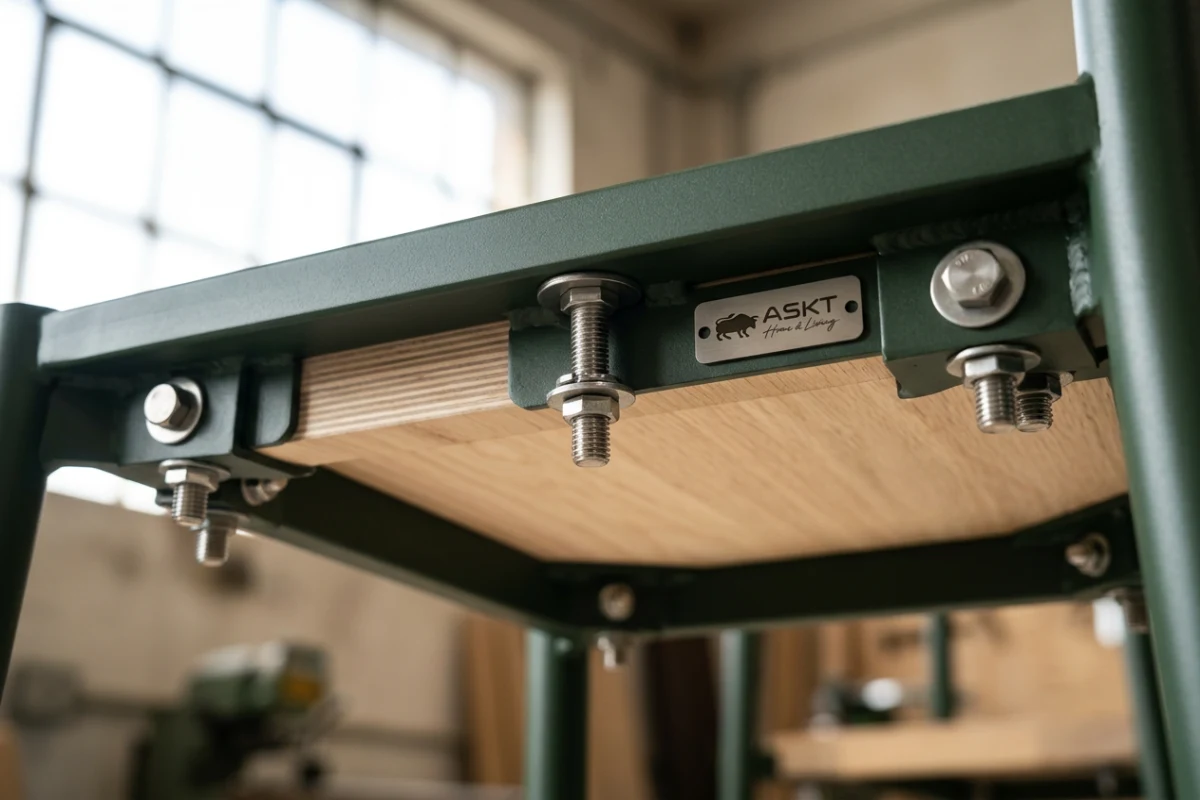
To build durable KD furniture, structural durability must be designed into the metal frame and seat sub-structure before any upholstery is applied. The core objective is to divert mechanical stresses away from fastener threads and into rigid structural components.
Reinforced Steel Subframes and Baseplates
High-performance KD dining chairs utilize internal metal frames or welded steel baseplates beneath the seat shell. When chair legs bolt directly into a welded steel frame rather than into an unreinforced wooden seat core, the load is shared across the entire metal structure. This engineering technique prevents local substrate crushing and ensures that dynamic weight does not distort the seat pan.
Precision Wall Thickness and Powder Coating
Metal tubing for dining chair bases must balance strength, weight, and flexural resilience. Structural metal frames require verified wall thickness to withstand heavy contract and domestic use without bending or fracturing at weld seams. Furthermore, high-quality electrostatic powder coating protects the underlying steel against oxidation, corrosion, and surface wear, ensuring that moisture in residential dining rooms or hospitality environments does not degrade the frame over years of service.
Gusseting and Triangulation at Critical Stress Points
Where chair legs meet the central mounting zone, welded corner gussets or diagonal bracing plates add rigidity against lateral sway. Triangulation prevents the legs from splaying outward under vertical loads and eliminates the microscopic movement that causes bolts to back out over time.
Engineered Swivel and Auto-Return Mechanisms
For contemporary dining chairs featuring 360-degree swivel or 180-degree auto-return mechanisms, joint engineering requires even greater precision. ASKT integrates heavy-duty turntable plates and internal return bearings directly between the metal leg base and the seat structure. These mechanisms must absorb rotational torque and off-center loads without wobbling, tilting, or producing mechanical noise over thousands of daily cycles.
How Does Precision Connection Hardware Prevent Fastener Loosening in KD Chairs?
Fastener failure is the leading cause of joint instability in knock-down dining furniture. When fasteners loosen, the chair frame develops play, which rapidly accelerates wear across all mating surfaces. Professional KD engineering eliminates this risk through high-grade hardware configurations.
Threaded Metal-to-Metal Fastening
Direct wood screws driven into wooden cores or plywood shells represent a major structural liability in KD seating. Under cyclic occupant loads, wood fibers compress and strip out, leading to irreversible joint failure. High-durability KD construction relies entirely on threaded metal-to-metal connections. Steel threaded inserts, welded nut plates, and heavy-duty metric machine bolts allow high tightening torque without damaging the seat substrate, ensuring a permanent, rigid hold.
Anti-Loosening Washers and Locking Systems
Micro-vibrations generated during seating can gradually back standard bolts out of their threads. Durable KD furniture overcomes this by integrating dedicated locking components into every hardware pack:
- Spring Washers and Split Lock Washers: Provide continuous spring tension against the bolt head to resist vibration-induced loosening.
- Serrated Flange Bolts: Feature integrated teeth on the underside of the bolt head that bite into the metal bracket, preventing reverse rotation.
- Pre-Applied Thread-Locking Compounds: Factory-applied patches on bolt threads create chemical and friction resistance against backing out under cyclic dining loads.
Hardened Steel Hardware vs. Standard Soft Fasteners
Using low-grade fasteners can lead to stripped bolt heads and sheared threads during customer assembly. High-tensile steel bolts resist tensile stretching and head deformation, ensuring that European retail customers and contract installers can achieve specified tightening torque cleanly using standard tools.
What Role Does Knock-Down Furniture Testing and EN Structural Testing Play in Quality Assurance?
For European furniture importers, wholesalers, and retail chains, third-party and in-house testing verification is essential to mitigate commercial risk and comply with market standards. Demonstrating knowledge of EN testing, durability, and structural performance protects brand reputation and validates product safety before mass shipments leave the factory.
Knock-down furniture testing uses automated pneumatic test rigs to simulate years of intensive daily use in domestic and contract dining settings.
| Structural Test Category | Typical Test Parameter & Motion | Sourcing Purpose & Failure Prevention |
|---|---|---|
| Static Seat Load Testing | High-force downward pressure applied to the center of the seat | Confirms ultimate load-bearing capacity and prevents frame collapse under heavy static loads |
| Static Backrest Testing | Sustained horizontal force applied against the top and middle backrest | Verifies rear leg joint strength and prevents catastrophic backrest fracture under backward lean |
| Cyclic Fatigue Testing | Tens of thousands of repeated load cycles on seat and backrest alternately | Simulates long-term residential and commercial use to detect joint loosening, weld fatigue, and material wear |
| Diagonal Leg Drop / Impact | Repeated mechanical impact shocks applied to chair base and legs | Assesses structural ductility and weld seam integrity against rough handling or sudden drops |
| Swivel Mechanism Endurance | Continuous rotational cycles under simulated occupant weight | Confirms internal bearing longevity, smooth rotation, and precise auto-return alignment without play |
During rigorous KD testing, chairs are inspected at regular cycle intervals. A successful test outcome requires zero structural fractures, no loosening of threaded fasteners, no deformation of metal subframes, and no visible play in the KD connection joints. This structural validation ensures that dining collections meet the demanding durability expectations of European buyers across residential, commercial, and contract hospitality environments.
How Does Professional KD Chair Quality Control Prevent Assembly Issues on the Factory Floor?
High manufacturing consistency is the foundation of furniture structural durability. If mounting holes vary by even one millimeter between production runs, chair legs will sit unevenly, creating inherent instability before the consumer even sits down. ASKT maintains comprehensive KD chair quality control throughout every manufacturing stage to guarantee precise part interchangeability.
Automated Tooling and Precision Batch Processing
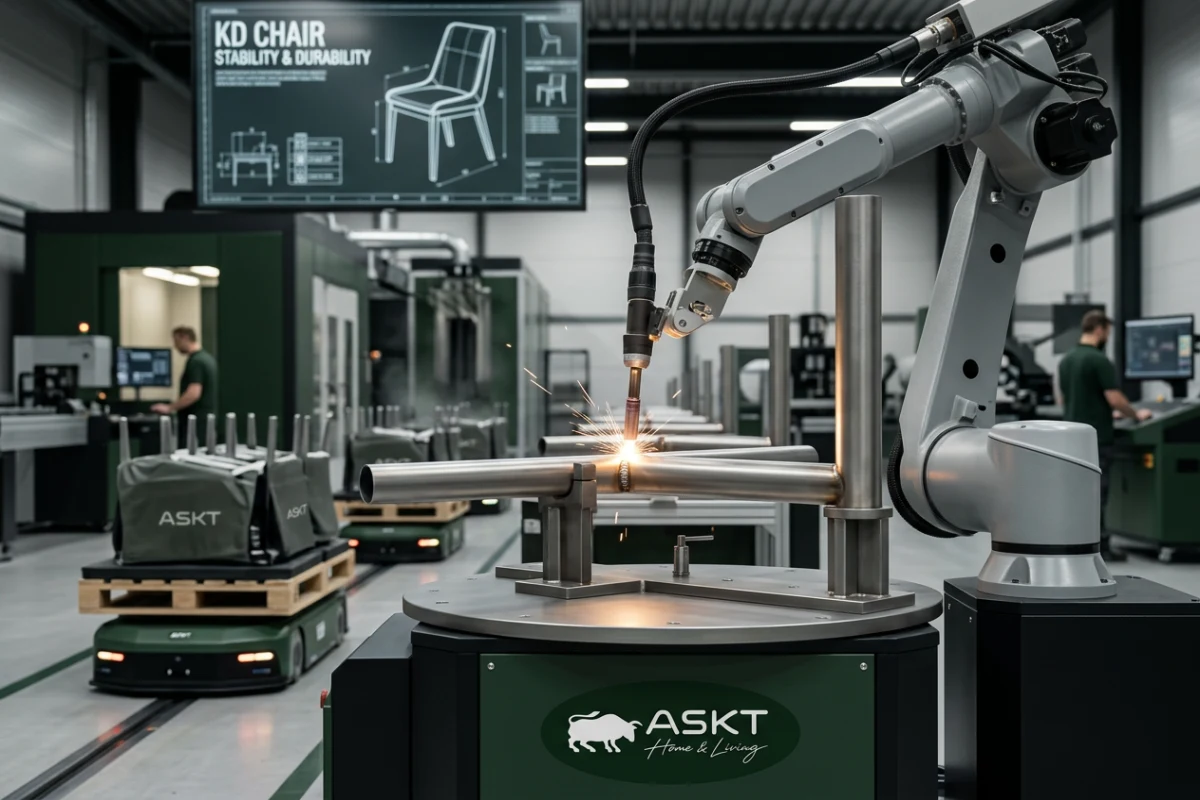
Manual drilling and cut-and-weld processes introduce human error that causes frame misalignment. Advanced furniture production relies on automated equipment to maintain strict manufacturing tolerances:
- Robotic Welding Systems: Ensure consistent weld penetration, uniform bead geometry, and structural strength across 100% of metal frame joints, eliminating cold welds and weak attachment points.
- Automated Wood Drilling and Punching: Positions bolt holes and threaded insert locations with sub-millimeter precision, ensuring that seat shells align effortlessly with metal leg frames during assembly.
- CNC Fabric and Foam Cutting: Ensures upholstered covers and internal padding fit seat shells without pulling or creating asymmetric tension that could twist the underlying frame.
Systematic Quality Inspection Checkpoints
Quality control must be embedded into the workflow rather than treated as a final check. A professional manufacturing workflow incorporates multiple verification gates:
- Raw Material Incoming Inspection: Verification of metal tube dimensions, wall thickness, powder coating adhesion, plywood core density, and hardware tensile strength.
- In-Process Fixture Verification: Leg frames and seat plates are checked in dedicated assembly jigs to confirm angular accuracy and flatness across all four contact points.
- Trial Assembly Audits: Random finished units from every production batch undergo complete assembly testing to verify bolt alignment, thread smoothness, leveling, and overall dining chair stability.
- Packaging and Hardware Bag Verification: Complete hardware counts, including spare fasteners and allen keys, are weighed and verified to ensure end users never receive missing components.
How Do Durable KD Furniture Designs Optimize Container Loading While Lowering European Sourcing Risks?
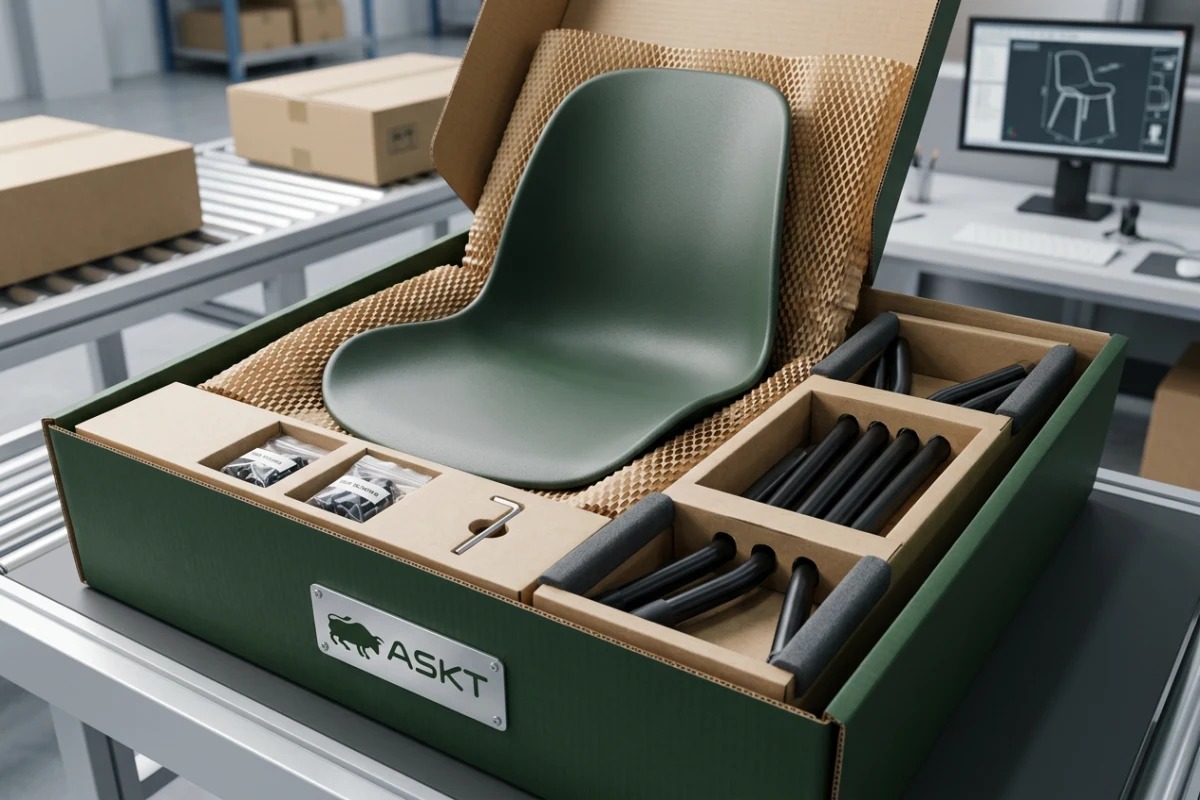
Freight efficiency is one of the most powerful economic drivers for sourcing KD dining chairs. Fully assembled dining chairs take up significant cubic meters (CBM) of empty space inside shipping containers, driving up per-unit ocean freight and domestic transport costs. KD engineering resolves this challenge by nesting seat shells and detaching leg bases for compact flat packing.
However, achieving container optimization must not come at the expense of product protection or structural integrity. European importers must balance logistics savings with robust packaging design:
Maximizing Container Loading Capacity
By separating the upholstered seat shell from the metal leg assembly, KD dining chairs achieve substantial volume reduction compared to fully assembled models. A standard 40-foot high cube (40ft HQ) container can hold significantly more KD units, dramatically lowering the shipping cost per chair. For European retail chains and e-commerce platforms, this logistics efficiency directly improves profit margins and landed cost competitiveness.
Sustainable Packaging with Reduced Plastic Use
European markets increasingly demand eco-friendly and recyclable packaging solutions. ASKT focuses on sustainable packaging practices that reduce plastic use without compromising transport protection:
- High-Density Honeycomb Paper and Molded Pulp: Replace expanded polystyrene (EPS) foam with recyclable paper-based cushioning that absorbs transit shocks.
- Flat-Pack Edge and Corner Protectors: Heavy-duty reinforced cardboard corners protect powder-coated metal legs and upholstered edges against impact damage during long-distance ocean transit and domestic parcel delivery.
- Compact Box Dimensions: Optimized carton sizes reduce void space, eliminating the need for excessive filler materials while improving pallet stacking efficiency in European distribution warehouses.
Lowering Sourcing Risks for European Importers
Working with an experienced B2B manufacturer that understands European market standards, contract specifications, and transit conditions significantly reduces sourcing risks. High structural durability combined with optimized packaging minimizes shipping damages, eliminates customer assembly frustration, and maintains low return rates across both retail and online sales channels.
What Key Criteria Should European B2B Buyers Include in a Durable KD Furniture Sourcing Checklist?
When evaluating potential furniture manufacturers for knock-down dining collections, professional purchasing managers and product developers should review critical engineering, manufacturing, and compliance factors:
- Metal Frame Construction: Confirm tubular metal wall thickness, weld consistency, and corrosion-resistant powder coating quality across all leg bases.
- Connection System Engineering: Ensure the design uses threaded steel inserts or welded nut baseplates rather than direct wood screws in load-bearing areas.
- Anti-Loosening Hardware: Verify the inclusion of spring washers, locking flange bolts, or thread-locking treatments in the hardware pack.
- Structural and EN Testing Knowledge: Confirm supplier understanding of European seating durability requirements and cyclic load testing protocols.
- Automated Production Tooling: Evaluate the manufacturer's use of automated welding, CNC cutting, and precision punching machinery for batch consistency.
- Upholstery and Internal Materials: Inspect internal pocket spring seating, high-density foam resilience, and functional fabric performance (abrasion resistance, colour fastness, easy-clean, and pet-friendly properties).
- Eco-Friendly Packaging Standards: Ensure packaging utilizes sustainable, recyclable materials with reduced plastic usage while passing drop and transit safety requirements.
- OEM & ODM Customization Capabilities: Partner with a manufacturer offering flexible options in fabrics, metal finishes, base designs (fixed, swivel, auto-return), dimensions, and private-label packaging.
Developing a high-performing dining chair collection requires balancing structural engineering, aesthetic design, and cost-effective logistics. If you are developing new dining programs or seeking to upgrade the structural durability of your KD seating lines, speak with ASKT about engineering design and testing requirements to ensure your furniture delivers exceptional stability, commercial reliability, and long-term customer satisfaction.