
EN 12521 Domestic Dining Table Stability Strength Testing: A Practical Guide for European B2B Buyers
If you source dining tables for the European market, you have probably seen EN 12521 mentioned on specification sheets, in test reports, or in retailer quality manuals. Many buyers know it is a furniture standard linked to stability and strength, but fewer understand exactly what it tests, what it does not cover, and how to use it effectively in day-to-day sourcing. At ASKT, we work with furniture wholesalers, retail chains, importers and e-commerce brands across Germany, the Netherlands, the UK, Poland and other European markets, and we consistently see that buyers who understand EN 12521 domestic dining table stability strength testing make fewer expensive quality mistakes. This guide explains the standard in practical B2B terms, so you can use it to evaluate suppliers, write clearer specifications and reduce quality-related sourcing risk.
What EN 12521 Means for Dining Table Sourcing
EN 12521 is the European standard that specifies stability, strength and durability requirements and test methods for domestic dining tables. It is part of a wider family of furniture safety and performance standards used across Europe, and it is one of the most commonly referenced standards when buyers ask for proof that a dining table is structurally fit for purpose.
It is important to be clear about scope from the start. EN 12521 applies to domestic dining tables intended for private household use. It focuses on structural behaviour: whether the table is stable enough not to tip under foreseeable loads, whether the tabletop and frame are strong enough to resist normal use, and whether the structure will hold up over time. It is not primarily a standard for appearance, colour fastness, surface scratch resistance or chemical safety, which are covered by other standards, material specifications and retailer requirements.
For B2B buyers, EN 12521 matters because it gives you a common language with suppliers. Instead of saying the table should feel sturdy, you can refer to specific tests and acceptance criteria. Instead of guessing whether a table design is safe, you can check whether it has been tested against recognised methods. This is why EN 12521 dining table test requirements appear so often in product specifications, quality manuals and sourcing contracts for the European furniture market.
Core Test Areas: Stability, Strength and Durability
EN 12521 covers three main areas: stability, strength and durability. Each area addresses a different type of risk, and each matters for different reasons when you are building a dining table collection.
Stability Testing
Stability is probably the most critical area from a consumer safety perspective. A table that tips too easily can cause injury, product liability risk and reputational damage. Stability tests evaluate how resistant the table is to overturning when forces or loads are applied in ways that could realistically happen in a home, such as someone leaning on the table edge, placing a heavy item near the corner, or pushing down on one side.
Stability performance depends on several design factors: the base width, the position of the legs, the overall weight of the table, the distribution of weight between the top and the base, and the presence or absence of features such as extending leaves that can change the balance of the table when in use.
For buyers, domestic dining table stability testing for buyers is not just about passing a standard. It is also about reducing returns and complaints. A table that wobbles or feels unstable on an even floor will quickly generate customer dissatisfaction, especially in markets where buyers have high expectations for basic structural quality.
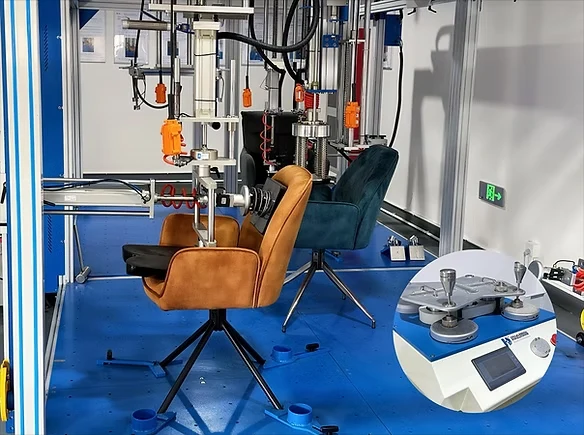
Strength Testing
Strength testing looks at whether the table structure can resist applied loads without breaking or suffering unacceptable deformation. Tests may involve loading the tabletop, applying forces to the edges or corners, and checking how the frame, joints and legs respond. Strength requirements reflect normal household use, including everyday loads and foreseeable misuse.
Strength is closely related to design and materials, but it is not simply a question of using heavier or thicker parts. Joint design, leg fixing systems, frame geometry and tabletop construction all play a role. A well-designed light table can perform better in strength tests than a poorly designed heavy one.
When you evaluate suppliers, it is useful to ask not only whether a model meets the dining table strength and durability standard, but also which specific construction details contribute to that performance. That knowledge helps you compare different factories and understand why one table costs more or less than another.
Durability and Cyclic Testing
Durability testing evaluates how the table performs over repeated use over time. Instead of one heavy load, cyclic tests apply repeated forces or loads to simulate the kind of wear a table might see over years of household use: chairs being pushed against the apron, people leaning on the table, objects being placed and removed, and so on.
Durability matters because a table that passes a one-off strength test may still loosen, develop play in the joints, or degrade prematurely in real life. For wholesalers and retailers, durability is directly linked to warranty risk and long-term brand reputation. A table that looks fine on delivery but develops structural problems after six months is a costly problem, both financially and in terms of customer trust.
Why EN 12521 Matters for European B2B Buyers
If you sell dining tables in Europe, you might wonder whether EN 12521 is truly relevant or just another technical document that adds cost. From a practical sourcing perspective, it matters for several reasons.
First, it supports compliance and due diligence. While EN 12521 is not necessarily a legal requirement in every market on its own, it is widely recognised as a way to demonstrate that a product meets acceptable levels of safety and structural performance. Many retailers, purchasing groups and online marketplaces expect suppliers to show that their dining tables meet EN 12521 or equivalent criteria. Having test evidence ready makes onboarding and listing processes smoother.
Second, it reduces sourcing risk. When you buy furniture in large quantities, small structural weaknesses can become expensive problems across a full container or an entire season. EN 12521 gives you a structured way to check structural performance before you commit to mass production, and before goods are shipped.
Third, it helps you compare suppliers objectively. Two factories can both say their tables are high quality, but one may have tested designs according to EN 12521 and have a clear QC process, while the other relies on visual inspection and intuition. Using a common standard makes the comparison fairer and more transparent.
Fourth, it supports product positioning. If you sell into premium or quality-focused segments, being able to reference recognised performance testing reinforces the value story behind your collection. It gives sales teams and product managers something concrete to talk about beyond aesthetics.

How to Use EN 12521 in Supplier Evaluation and QC
Knowing the standard is useful, but the real value comes from applying it in your sourcing process. Here is how furniture sourcing acceptance test criteria EN 12521 can be integrated into supplier evaluation, sample approval and production quality control.
Include EN 12521 in Your Enquiry and Specification
From the very first enquiry, make it clear that your domestic dining table range must meet EN 12521 requirements. Do not assume the supplier knows which tests you expect. Be explicit about the standard name, the test types that matter for your product, and whether you require third-party lab reports, in-house test evidence or both.
Ask for Existing Test Evidence
When evaluating a new supplier or a new table model, ask whether similar models have already been tested according to EN 12521. Existing test data can give you an early indication of whether the supplier understands the requirements. Keep in mind, however, that test results are usually model-specific. A test report for one table design does not automatically apply to another, especially if the dimensions, frame design, leg position or tabletop construction are different.
Verify What Was Actually Tested
Not all test reports are equally useful. When you receive a test report, check the sample description, the test date, the test methods used and the pass or fail result. Make sure the tested sample is representative of the product you intend to buy. Small details, such as leg hardware, joint type, tabletop thickness or base size, can have a big effect on stability and strength.
Use Testing at the Sample Approval Stage
Sample approval is the right time to identify structural issues. If you are developing a new dining table model, consider testing at prototype or golden sample stage, before mass production begins. Catching a stability or strength problem early saves rework cost, avoids production delays and prevents unsuitable product from being shipped.
Integrate Key Checks into Pre-Shipment Inspection
Full EN 12521 testing in a laboratory is normally done on a sample basis at the development stage, but you can still include key structural and stability checks in your routine pre-shipment inspection. For example, your QC team or third-party inspector can check that legs are securely fixed, that the table stands evenly on a flat surface, and that there is no excessive play or obvious weakness in critical joints.
At ASKT, we use this layered approach with our European buyers: structural validation and reference testing at the development stage, followed by consistent in-process and final inspection to ensure that the mass-produced product matches the approved sample. This is how EN 12521 moves from a paper standard into a practical quality tool.
Common Misconceptions About Dining Table Testing
After working with dining table buyers for many years, I have noticed a few recurring misconceptions about EN 12521 and structural testing. Clearing them up can help you use the standard more effectively.
Misconception 1: If the table is heavy, it is automatically stable
Weight helps with stability, but it is not enough on its own. A heavy table with legs set too far inward can still tip more easily than a lighter table with a wide, well-designed base. What matters is the overall geometry, the relationship between the centre of gravity and the support footprint, and how loads are distributed when the table is in use.
Misconception 2: Passing EN 12521 means the table is suitable for contract use
EN 12521 is designed for domestic dining tables. Contract, hospitality and commercial environments typically involve higher loads, more frequent use and different risk profiles. If you are buying tables for hotels, restaurants or cafes, you should not rely on EN 12521 alone.
Misconception 3: One test report covers all sizes and finishes
Stability and strength performance can change significantly with size, shape and construction. A rectangular dining table and a round dining table from the same family may behave very differently. An extending table with the leaf open may have different stability characteristics than the same table in its closed position. For this reason, you should always check which specific configuration was tested.
Misconception 4: Testing is only for safety, not for commercial value
Testing certainly supports safety, but it also has clear commercial value. Tables that perform well in structural tests are less likely to generate complaints, returns, warranty claims and negative reviews. For a B2B buyer, avoiding those costs is at least as important as checking a compliance box.
Practical Checklist for Procurement and QA Teams
Turning EN 12521 from a technical concept into an everyday sourcing tool is easier if you have a simple checklist. Here is a practical list you can use when evaluating dining table suppliers, reviewing samples and planning quality control.
- Confirm in writing that the supplier is familiar with EN 12521 domestic dining table stability strength testing and can provide relevant evidence.
- Specify in your product brief that the dining table must meet EN 12521 stability, strength and durability requirements for domestic use.
- Ask for existing test reports and check which model, size and configuration they apply to.
- Identify any high-risk features in your design, such as very large tabletops, extending leaves, narrow bases or unusual leg positions, and discuss them with the supplier early.
- Plan structural validation at prototype or golden sample stage before mass production starts.
- Include basic structural and assembly checks in your incoming or pre-shipment inspection checklist.
- Make sure the approved sample, mass production specification and test sample are all consistent in materials, hardware and construction.
- Keep test documentation and approvals on file for compliance, customer queries and retailer audits.
This checklist will not replace formal lab testing, but it will help you ask the right questions, compare suppliers more effectively and avoid the most common structural sourcing mistakes.

Frequently Asked Questions About EN 12521
What does EN 12521 cover for domestic dining tables?
EN 12521 sets out stability, strength and durability requirements and corresponding test methods for domestic dining tables placed on the European market. It focuses on structural performance rather than appearance, materials or finishes, and helps B2B buyers evaluate whether a table can withstand normal household use without tipping, collapsing or suffering premature structural damage.
Why is domestic dining table stability testing important for furniture buyers?
Stability testing helps buyers reduce sourcing risk by identifying tables that may tip under normal load, wobble excessively, or fail in everyday use. For European wholesalers, retailers and importers, passing EN 12521 is also an important part of product compliance, consumer protection and long-term brand reputation, as unsafe or weak tables can lead to returns, complaints and liability issues.
Is EN 12521 a legal requirement in Europe?
EN 12521 is a harmonised European standard. It is not always a standalone legal obligation on its own, but it is widely used to demonstrate compliance with general product safety obligations and is a common requirement for retailers, purchasing groups and e-commerce platforms selling dining tables in European markets.
How can I use EN 12521 when evaluating dining table suppliers?
You can use EN 12521 dining table test requirements as part of your supplier evaluation and incoming quality control process. Ask suppliers for test reports, clarify which tests have been performed on which table models, check whether tests were done on production-representative samples, and include key acceptance criteria in your purchase specifications and inspection checklists.
Final Thoughts
EN 12521 is much more than a technical standard for quality engineers. For European B2B furniture buyers, it is a practical tool that helps you define structural expectations, compare suppliers objectively and reduce the risk of expensive quality problems. It supports compliance, improves product consistency and gives you a stronger foundation for building reliable dining table collections.
The most effective way to use EN 12521 is not as a box-ticking exercise after production is finished, but as part of your sourcing process from the very beginning. By including it in your specifications, discussing it with suppliers at the sampling stage, and integrating key checks into your quality control workflow, you turn a standard into a real source of commercial value.
If you are currently evaluating dining table suppliers or developing a new domestic dining table range for the European market and would like to discuss how structural testing and transparent quality control can support your project, feel free to request technical information about our dining table models. At ASKT, we work with wholesalers, retailers and importers across Europe on dining tables and dining furniture collections, from development and testing through to consistent mass production and export logistics.