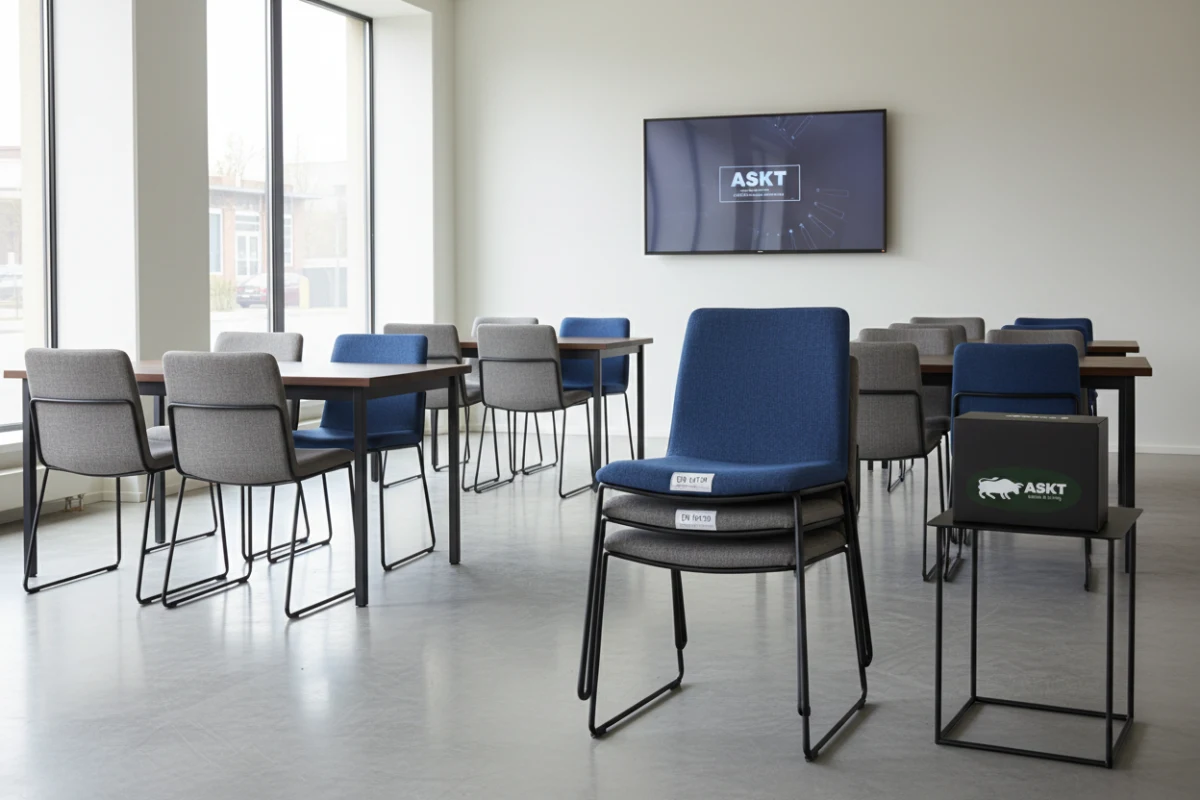
Sourcing Commercial Seating: Why Working with a Certified EN 16139 Chair Supplier Protects Your B2B Sourcing
As someone who has worked with European furniture buyers for many years, I have learned that a dining chair is never just a chair. For a furniture wholesaler, a retail chain category manager, or a contract project importer, a single structural failure in a public space can lead to immense liability, costly product recalls, and damaged brand reputation. Sourcing contemporary indoor seating for high-traffic environments requires a deep commitment to durability and structural safety. Finding a verified, reliable EN 16139 chair supplier is the most direct way to secure contract furniture compliance and build a commercially stable product portfolio.
In the competitive European B2B furniture market—spanning Germany, the Netherlands, the UK, Poland, Switzerland, and Ireland—professional buyers care about predictability, supply chain transparency, and minimizing import risks. In this guide, I will break down the technical realities of commercial dining chair testing, explain how to scrutinize an EN 16139 test report, and demonstrate how state-of-the-art factory automation bridges the gap between hand-made prototype samples and consistent mass-produced products.
What is EN 16139 and Why Does It Matter for B2B Sourcing?
EN 16139 is the official European harmonized standard that specifies requirements for the safety, strength, and durability of all types of non-domestic seating. Unlike domestic furniture testing (such as EN 12520 for residential use), commercial seating must withstand continuous, high-frequency, and often severe loads by individuals of varying body weights.
When importing chairs for restaurants, hotels, workspaces, or public venues, establishing contract furniture compliance is a legal safeguard. If a chair frame breaks or a joint splits under a customer in a German restaurant or a Dutch cafe, the legal and financial responsibility falls directly on the importer of record.
This is why ASKT was prominently featured in möbelmarkt, the authoritative German B2B furniture trade magazine. Our focus is not simply on selling contemporary dining furniture, but on providing absolute certainty for European buyers. By delivering products tested strictly against EN 16139 standards, we help our partners minimize sourcing risks. In fact, our commitment to safety and transparent quality standards enabled us to deliver over 550,000 chairs in the German market alone in 2024, proving that rigorous compliance is the foundation of high-volume commercial success.
Understanding EN 16139 Test Levels: Level 1 vs. Level 2
To optimize your purchasing budget without compromising on safety, it is vital to understand that EN 16139 is divided into two distinct test levels based on the intended environment:
- Test Level 1 (General Use): This level is designed for areas where seating is used regularly but not subjected to continuous, severe abuse. Typical applications include hotels, cafes, restaurants, corporate offices, and showrooms.
- Test Level 2 (Severe Use): This level is reserved for extreme high-traffic environments where users are likely to treat the furniture with less care. Typical applications include nightclubs, public waiting rooms, transport terminals, athletic facilities, and police stations.
For the vast majority of commercial dining and hospitality projects, Level 1 testing provides an excellent safety margin while keeping manufacturing costs competitive. The table below outlines how these two levels compare under standard commercial dining chair testing protocols:
| Performance Criteria | Test Level 1 (General Use) | Test Level 2 (Severe Use) |
|---|---|---|
| Primary Settings | Hotels, Cafes, Restaurants, Offices | Nightclubs, Waiting Areas, Terminals |
| Static Load on Seat | Tested up to 1,600 Newtons (~160 kg) | Tested up to 2,000 Newtons (~200 kg) |
| Static Load on Backrest | Tested up to 560 Newtons | Tested up to 700 Newtons |
| Seat & Back Durability | 100,000 fatigue cycles | 200,000 fatigue cycles |
| Seat Front Edge Durability | 50,000 cycles | 100,000 cycles |
| Leg Forward Static Load | 500 Newtons | 620 Newtons |
| Leg Sideway Static Load | 400 Newtons | 490 Newtons |
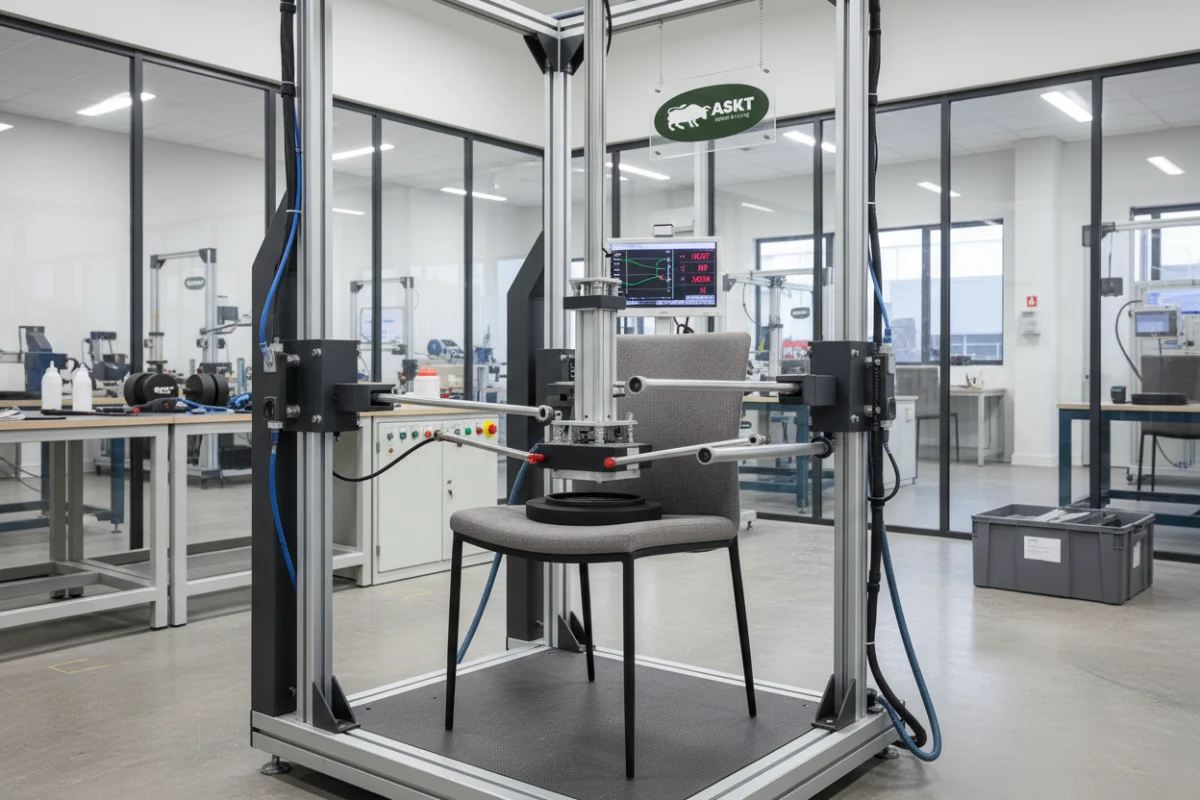
Step-by-Step Guide: How to Verify an EN 16139 Test Report
Unfortunately, the global sourcing market is filled with vague compliance claims. Some factories claim their designs are "compliant" but cannot produce verified physical documentation, or they present outdated documents belonging to an entirely different chair. To protect your brand, you must perform due diligence. Follow this verified checklist to evaluate any EN 16139 test report before finalizing your purchase contract:
- Check the Testing Laboratory: The report must be issued by a globally recognized, accredited third-party testing body, such as SGS or TÜV. Internal factory self-declarations hold no legal weight in European contract markets.
- Match the Product Specifications: Carefully review the "Product Description" in the report. The physical dimensions, frame materials (such as steel tubing thickness or wood density), weld patterns, joint reinforcements, and structural design must perfectly match the product you are importing.
- Confirm the Standard and Level: Verify that the report explicitly references the current standard "EN 16139" and states whether the product passed under Test Level 1 or Test Level 2.
- Verify the Applicant Name: The applicant on the report should match your direct manufacturer or their verified supply chain partner. If it belongs to an unrelated trading company, request a formal, signed letter of authorization linking the document to your specific manufacturing line.
- Assess the Document Date: Although technical test reports do not have a formal expiration date, European retail chains and contract buyers usually expect reports to be less than three to five years old to ensure they reflect current raw material configurations.
Bridging the Gap: Achieving Furniture Mass Production Consistency
One of the most common friction points in B2B furniture importing is the gap between the pristine hand-made "golden sample" and the actual mass-produced units inside your shipping container. A factory can easily spend weeks hand-crafting a single, perfect dining chair to pass laboratory tests. However, replicating those exact tolerances across a production run of 5,000 units is a completely different challenge.
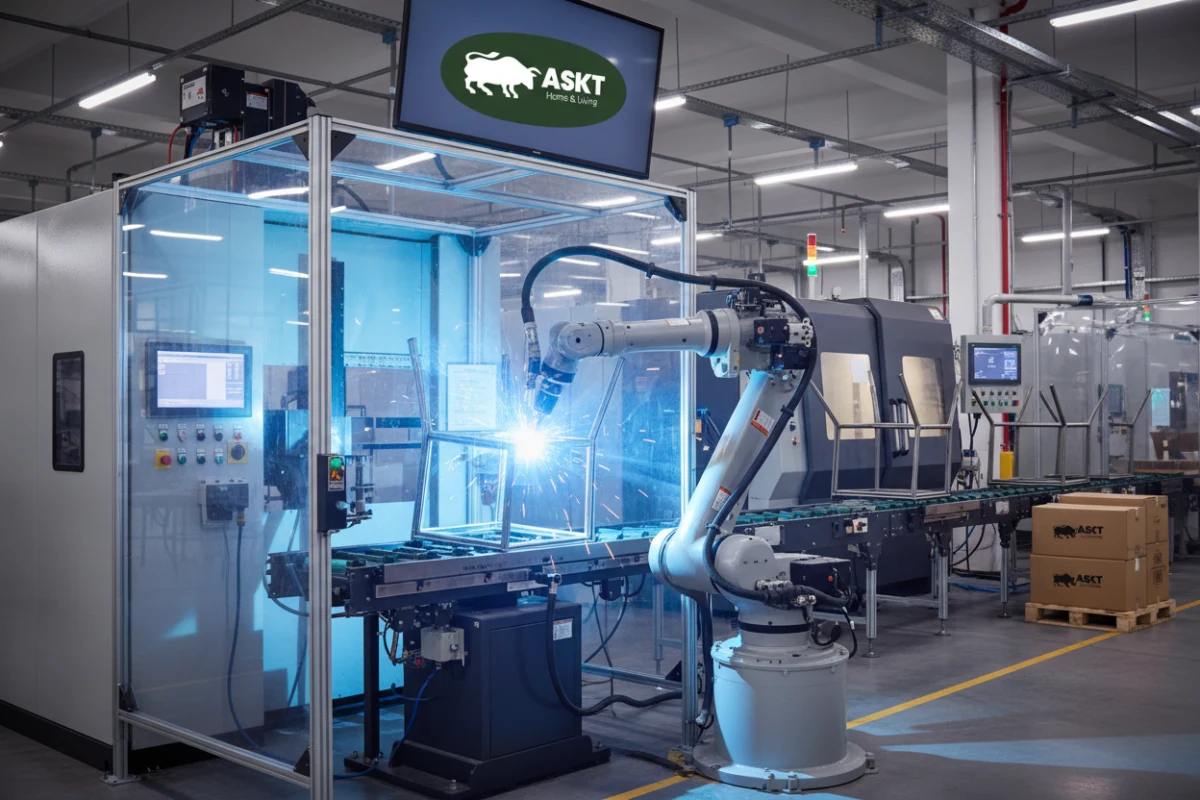
Achieving furniture mass production consistency is what separates a standard supplier from a reliable strategic partner. At ASKT, we bridge this gap by replacing manual, highly variable processes with advanced, precision-engineered automated equipment:
- Automated Fabric Cutting: We utilize advanced fabric cutting machines for the batch cutting of fabrics. This ensures absolute dimensional accuracy for every upholstered cover, eliminating uneven seam stress and loose upholstery.
- Batch Wood Preparation: We employ high-end wooden board punching machines for batch drilling, alongside specialized nailing machines that install four-legged nails into wooden boards. This guarantees that every inner seat shell is structurally identical and free of loose, noisy joints.
- Robotic Welding Arms: For our metal-frame collections, automated welding robotic arms deliver deep, uniform weld penetration across every single joint. This completely removes the risk of human welding fatigue, ensuring every chair base can withstand years of heavy contract use.
By prioritizing technical precision over manual labor, we ensure that the thousands of dining chairs arriving at your warehouse match the exact structural integrity of the certified prototype that passed the laboratory testing.
Material Safety and Human Rights: BSCI and Eco-Friendly Upholstery
In the European market, contract furniture compliance goes beyond physical durability. Today’s category managers, buying groups, and contract specifiers must align their sourcing with strict environmental, social, and governance (ESG) standards.
Material health is non-negotiable. At ASKT, our upholstered dining chair collections utilize raw materials tested strictly for safety. All our contract-grade fabrics are OEKO-TEX® STANDARD 100 certified, ensuring they are completely formaldehyde-free and safe for high-frequency contract spaces. In response to the European Green Policy, we have also integrated sustainable upholstery options, including a specialized high-performance fabric made entirely from recycled plastic bottles, helping our clients appeal to eco-conscious commercial buyers.
Furthermore, social compliance is deeply integrated into our operations. ASKT factories have successfully passed the BSCI human rights certification. We actively protect our workers by providing tailored training, protective overalls, metal cut-resistant gloves for our fabric cutters, and gas masks for workers operating near adhesives. Our factory only utilizes eco-friendly, formaldehyde-free glues to ensure both worker safety and clean indoor air quality for the end consumer. Buying from a socially responsible manufacturer eliminates compliance risks and protects your brand from negative ethical scrutiny.
Reducing Sourcing Friction with KINEXA Modular Systems
Sourcing high-quality commercial dining chairs often comes with commercial trade-offs: balancing minimum order quantities (MOQs), managing high inventory carrying costs, and maximizing container loading efficiency.
To solve these practical B2B sourcing challenges, ASKT developed the KINEXA modular system. KINEXA allows buyers to pair standardized, commercially certified seat shells with multiple interchangeable metal or wooden bases. This modular approach allows you to:
- Lower Your MOQs: Mix and match different base styles and seat shells in a single shipment without needing to meet high MOQs for every single product variation.
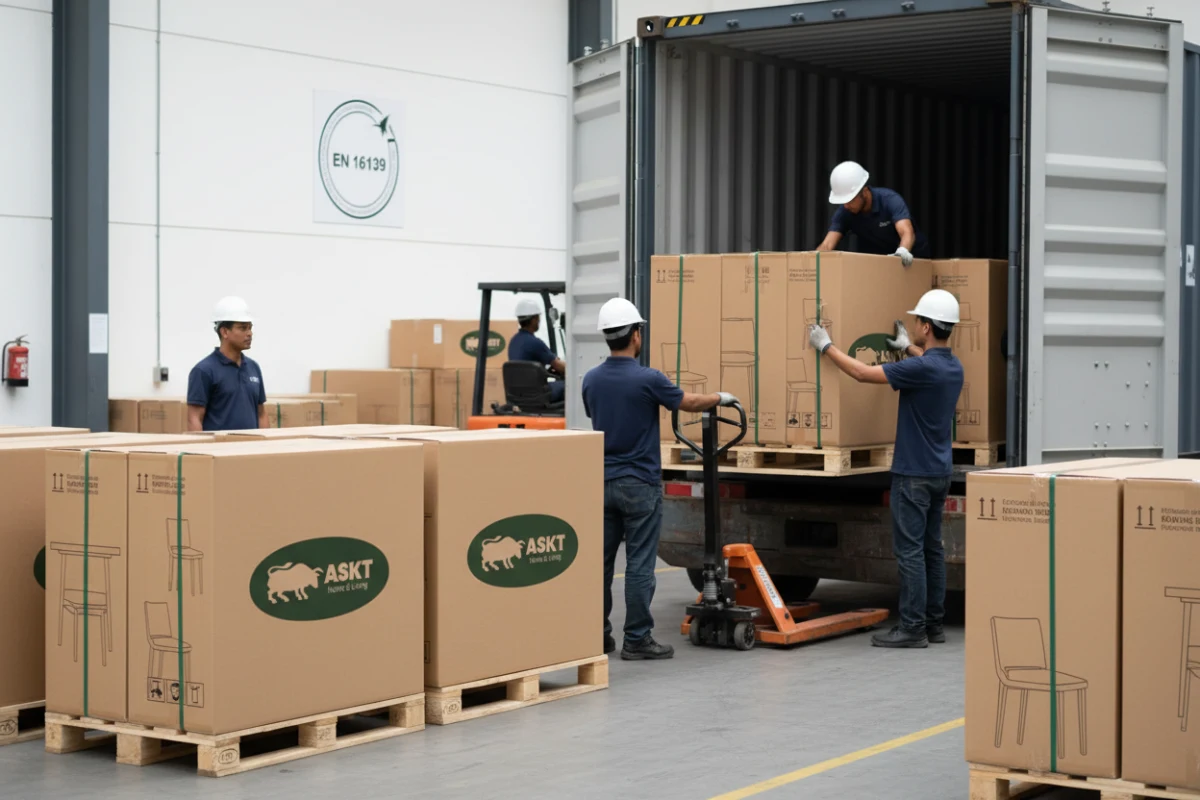
- Optimize Container Loading: Shipped in efficient knock-down (KD) structures, our modular seating reduces empty space inside shipping containers, lowering transport costs per unit.
- Reduce Inventory Risks: Wholesalers can stock standard seat shells and assemble them with specific bases only when a project order is secured, dramatically improving cash flow.
Our design philosophy is never abstract; it is built upon deep physical research. Our metal frame quality control and contemporary aesthetics are developed from surveying more than 1,000 real German home dining setups, analyzing matching tables, movement pathways, and floor finishes. This meticulous attention to detail allows us to offer exclusive design protection (Design Exclusivity) to our strategic partners, ensuring you can build a highly differentiated, legally secure, and profitable dining chair collection.
Frequently Asked Questions About Commercial Dining Seating
Can residential-grade dining chairs be used in commercial hospitality projects?
No. Residential chairs are tested under milder standards (such as EN 12520) and are not structurally reinforced to withstand the continuous, high-frequency stress of a commercial environment. Using residential chairs in a cafe, restaurant, or hotel leads to rapid structural failure, frequent warranty claims, and significant safety liabilities. Always source from a dedicated EN 16139 chair supplier for contract projects.
What are the main characteristics of ASKT-Tex functional fabrics?
Our proprietary ASKT-Tex functional fabrics feature a molecular-level hydrophobic nano-coating combined with micro-ventilation channels. This advanced material engineering provides a stain-resistant, waterproof, pet-friendly, and scratch-resistant barrier that remains highly breathable and soft to the touch. It delivers the heavy-duty durability required for busy commercial dining areas without sacrificing premium seating comfort.
How does factory automation impact the consistency of chair frames?
Manual welding and manual wooden board assembly are highly dependent on the skill and fatigue levels of individual workers. Robotic welding arms and automatic nailing machines perform identical operations with sub-millimeter precision 24 hours a day. This uniform production eliminates structural weak points, ensuring that every unit delivered in a container is as robust as the laboratory-tested sample.
What is the philosophy of "Test first, ship second"?
This is ASKT’s core transparency commitment. We believe that no furniture should ever leave our production lines without rigorous, preemptive testing. Before mass production begins, prototypes undergo intensive testing to simulate years of heavy use. Once mass production is active, we maintain consistent batch inspections to ensure the final shipment matches the approved technical specifications, minimizing quality claims and import risks.
Conclusion and Strategic Buyer Advice
In the competitive European contract furniture market, compliance, quality transparency, and production consistency are the main pillars of long-term business success. Sourcing your product lines from a certified EN 16139 chair supplier like ASKT ensures that your wholesale brand or retail chain is fully protected against structural failures and safety liabilities.
By conducting thorough due diligence on testing documentation, investing in precision-engineered automated production, and choosing sustainable, human-centric materials, you can build a resilient supply chain that satisfies your customers and drives steady commercial growth.
If you are currently evaluating dining seating partners for the European market and require fully transparent compliance documentation, we invite you to consult with our B2B sourcing team. Request EN 16139 Test File today to verify our structural test performance and discuss how we can turn your custom product designs into commercially stable, market-ready furniture collections.