
How European Furniture Retailers Can Select Dining Chairs Using Sales and Customer Data
European furniture retailers can select dining chairs using sales and customer data by building a structured selection funnel that starts with broad demand signals, narrows to 5–10 candidate SKUs based on performance metrics and customer feedback, and validates final picks against return rates, margin and existing assortment fit. This approach reduces guesswork, lowers inventory risk and aligns product choices with what European shoppers actually buy and keep.
Why does data-driven dining chair selection matter for European retailers?
In most European furniture stores, dining chairs are a high-volume, high-return category. They look simple on the showroom floor, but small differences in seat height, fabric feel, frame stability and packaging can change sell-through rates dramatically. For category managers, the cost of picking the wrong SKU is not just dead stock — it is also returns, customer complaints, re-stocking fees and damage to brand reputation.
A data-driven dining chair assortment for European retailers addresses this problem by replacing intuition with evidence at every step. Instead of selecting chairs based on a single trend photo or a supplier presentation, you layer sales history, customer feedback and supply-side data until only the strongest candidates remain. Over 20 years of working with furniture buyers across Germany, the Netherlands, the UK, Poland, Switzerland and Ireland, I have seen this funnel approach consistently cut return rates and improve stock turn in dining chair categories.
The core idea is simple: use sales data to find what is already working, use customer feedback to understand why it is working, and use supply-side validation to make sure you can sell it profitably at scale.
What should retailers define before looking at sales data?
Before you open any spreadsheet, define the assortment context. Without this guardrail, sales data can pull you in too many directions and you end up with a dining chair range that has no clear identity.
Start with five basic filters:
- Target customer group: Are you serving urban apartment buyers, family households, contract clients or premium design shoppers? Each group values different features.
- Price tier: Decide whether you are comparing entry-level, mid-market or premium dining chairs. Mixing tiers in one analysis distorts margin and return-rate conclusions.
- Assortment gap: Are you replacing a poor-performing SKU, expanding a popular fabric family, or filling a gap in a specific style such as metal-frame or upholstered dining chairs?
- Channel mix: Sales patterns differ between physical retail, web shop and contract channels. Make sure the data you analyse matches the channel the chairs will sell through.
- Regional context: Customer preferences across northern Europe, the DACH region and the UK are not identical. Local floor heights, table heights and colour palettes all influence which chairs sell best.
Once these boundaries are clear, you can pull sales data confident that you are comparing like with like. This step is one of the most overlooked in any category manager guide to dining chair sourcing, but it is also the one that prevents the biggest mistakes.
How do you build the top of the funnel with sales and category data?
The top of the funnel is where you generate a long list of candidates using hard sales numbers. At this stage you want breadth, not perfection — pull every dining chair SKU that fits your predefined context and rank them by objective metrics.
Start with these six sales signals:
- Unit sales volume over the last 12 months: Shows which designs have broad customer appeal.
- Sell-through rate: Units sold divided by units received, adjusted for time in stock. This is more reliable than raw volume because it accounts for how long the product has been on sale.
- Gross margin per unit: Identifies which SKUs contribute the most profit, not just the most revenue.
- Stock turn: How quickly inventory cycles. Fast stock turn often justifies lower per-unit margin because capital is reused more often.
- Seasonality pattern: Dining chairs may peak in spring and autumn renovation seasons. Make sure you are not judging a SKU on a slow quarter alone.
- Attach rate to dining tables: If a chair sells well when paired with a popular table, it has extra value as a matching set.
I recommend ranking each SKU on a simple 1–5 scale across these metrics, then adding up the scores. The top 15–20 SKUs move to the next stage. Do not try to make a final decision yet — sales data tells you what people buy, but it does not tell you why they buy it or why they send it back.
How do you narrow the list using customer feedback and usage data?
This is where dining chair SKU selection using sales data gets sharper. Sales numbers tell you which chairs are selling, but customer feedback tells you which chairs are satisfying customers. A chair that sells in high volume but also comes back at a high return rate is not a good long-term assortment choice.
For European retailers, the most useful feedback sources are:
- Post-delivery surveys: Look for repeat mentions of comfort, assembly difficulty, fabric feel and colour accuracy.
- Product reviews on your web shop: Pay special attention to 3-star and 4-star reviews — they often contain the most balanced feedback.
- Return reason codes: Sort returns by category such as “too firm”, “too low”, “colour not as expected”, “damaged on arrival” or “poor quality”.
- Customer service contact logs: Complaints about wobbling, fabric pilling, or missing screws reveal hidden quality issues that return codes alone may miss.
- In-store staff feedback: Floor teams hear honest reactions from shoppers who sit in chairs before buying, which is hard to capture online.
When selecting dining chairs based on customer feedback Europe, look for patterns rather than isolated complaints. One customer saying a chair is too firm is a personal preference; many customers saying the same thing is a product issue.
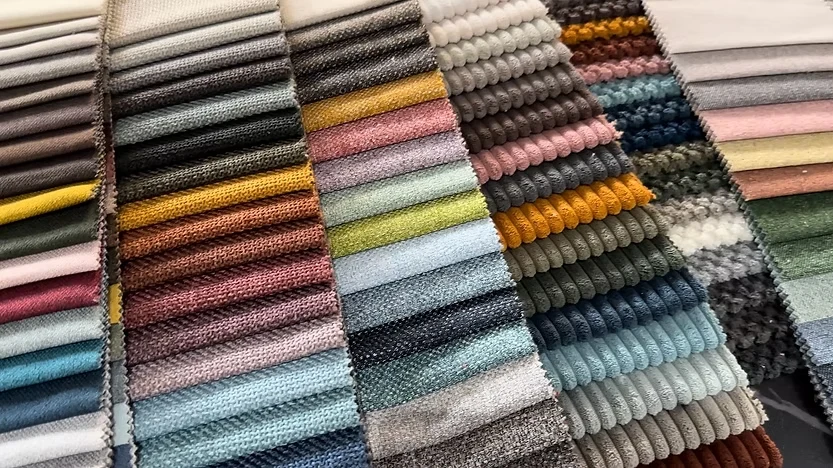
Pay particular attention to fabric feedback. From our work with European buyers, we know that fabric performance is the single most discussed feature in dining chair reviews. ASKT’s own fabric range, for example, is tested for abrasion resistance, colour fastness and breathability, and includes waterproof, stain-resistant and pet-friendly options with OEKO-TEX® STANDARD 100 certification. When feedback consistently mentions staining, scratch marks or fabric wear, you know that upgrading to a higher-performance fabric family can transform an average SKU into a top seller.
At the end of this stage, your long list of 15–20 SKUs should narrow down to 5–10 candidates that sell well and satisfy customers.

How do you validate the final shortlist with quality and supply data?
Now you have 5–10 strong candidates based on sales and customer data. Before you commit to a full order, validate them against supply-side and quality criteria. This step separates retailers who have one good season from those who build stable, profitable dining chair categories.
Use this checklist for each shortlisted SKU:
| Validation area | What to check | Why it matters for European retailers |
|---|---|---|
| Structural quality | Frame material, weld quality, stability, load-bearing capacity | Prevents returns from wobbling or breakage and reduces warranty claims |
| Fabric performance | Abrasion resistance, colour fastness, water and stain resistance, certification status | Directly impacts customer satisfaction and long-term durability |
| Compliance | Relevant European safety and environmental regulations | Avoids customs delays and legal risk in European markets |
| Supply reliability | Lead time consistency, MOQ flexibility, re-order speed | Protects stock availability during peak seasons |
| Packaging & logistics | Carton protection, KD structure, container fill rate | Reduces transport damage and lowers per-unit logistics cost |
| Customisation options | Fabric colours, frame finishes, branding possibilities | Allows you to differentiate from competing retailers |
| Return history by supplier | Defect rate per batch, consistency over time | Reveals whether past returns were one-off or systematic |
In my experience, this validation step eliminates roughly half of the shortlist. A chair can look like a winner in sales reports, but if it has a consistent defect rate at source or a lead time that jumps unpredictably, it will cost you money in the long run.
Working with a manufacturer that shares quality data transparently makes this step much easier. At ASKT, for example, we provide batch-level quality records, fabric test reports and clear lead-time commitments so buyers can validate a shortlist without flying to the factory for every order. We also use automated equipment such as batch fabric cutters, automatic welding robotic arms and nailing machines to improve consistency across large production runs, and our factories operate under BSCI certification with clear worker safety standards.
What is the best way to finalise selection and scale?
Once you have a smaller set of validated SKUs, do not jump straight into a full container order. The smartest European retailers use a test-before-scale approach — exactly the “Test first, ship second” logic we built into our own supply model.
A practical test sequence looks like this:
- Sample evaluation: Order physical samples of each finalist and test them in a real retail or showroom environment for at least two weeks.
- Staff feedback: Let store staff and category managers sit on them, move them, clean them and compare them side by side.
- Small pilot order: Place a limited order across a handful of stores or a dedicated web test page.
- Track real-world performance: Measure sell-through, return rate and customer review score over several weeks.
- Scale the winners: Promote the top performers to full assortment status and place larger repeat orders.
This approach keeps inventory risk low while giving you real customer data in your own sales environment. No spreadsheet can fully replace seeing how shoppers in your stores react to a chair in person.
For retailers worried about MOQ constraints when testing small batches, modular supply systems help. Our KINEXA modular system, for example, uses a small number of standard seat shells and base combinations so that buyers can test multiple looks without meeting a separate high MOQ for each design. This makes the test-first approach practical even for smaller retail chains.
What are the most common pitfalls in data-led dining chair selection?
Even experienced category managers fall into a few predictable traps. Knowing them in advance will save you time and money.
Mistake 1: Judging SKUs on sales volume alone. A bestseller with a high return rate is less profitable than a slower seller with a low return rate. Always look at net sales after returns, not gross sales.
Mistake 2: Ignoring assembly and packaging issues. Many returns are not about the chair itself — they are about missing parts, confusing instructions or damage in transit. If feedback mentions assembly or delivery damage, the fix is packaging and instructions, not necessarily the chair design.
Mistake 3: Overreacting to short-term trends. A viral social media style can sell fast for a few months, then die completely. Check if demand has held for at least two full seasons before making it a core SKU.
Mistake 4: Copying competitors without data. Just because another retailer lists a certain chair does not mean it performs well for them. Use your own customer data first.
Mistake 5: Forgetting the dining table connection. Dining chairs almost never sell in isolation. A chair that looks great on its own may sit too high or too low for your best-selling dining table. Always validate table-and-chair pairing before finalising the range.

Frequently asked questions
How many dining chair SKUs should a European furniture retailer carry?
It depends on store size and customer base, but most mid-sized European retailers do best with 6–12 core dining chair SKUs across 2–3 style families. Too few SKUs limit customer choice; too many spread inventory too thin and confuse shoppers. Use sales velocity and return data to prune the bottom performers every season.
Can customer feedback from one European country be used to select chairs for another?
Broad comfort and quality feedback usually travels well across European markets, but colour, style and size preferences differ by region. Always validate country-specific choices with local sales data or a small pilot before committing to a full roll-out. What sells strongly in Germany may not sell as well in the UK or the Netherlands without minor adjustments to fabric or finish.
How often should retailers refresh their dining chair assortment with data?
A full data review every six months is a good rhythm for most European furniture retailers. This aligns with spring and autumn collection updates and gives you enough sales data to spot real patterns instead of seasonal noise. Top-performing SKUs can stay for 2–3 years; underperformers should be replaced or reworked with better fabrics or finishes.
Building a data-driven dining chair assortment for European retailers is not about having the fanciest analytics tool. It is about working through a clear funnel — define the context, rank by sales data, narrow with customer feedback, validate with quality and supply data, then test before you scale. Done consistently, this process reduces returns, improves stock turn and gives your customers the dining chairs they actually want to keep.
If you are a European furniture retailer or wholesaler evaluating dining chair suppliers and would like to discuss a product selection tailored to your assortment, you can talk to our team about a range matched to your data profile.