
Furniture in China: A Practical B2B Sourcing Guide for European Buyers
If you work in furniture procurement in Europe, you have almost certainly considered furniture in China as a core part of your supply strategy. You may also have mixed feelings about it. On one hand, the manufacturing scale, product variety and commercial flexibility are hard to match. On the other, quality surprises, communication friction, hidden costs and supply instability can turn an attractive quotation into a costly problem.
The truth is that furniture sourcing from China works best when it is treated as a structured procurement process, not a price comparison exercise. For wholesalers, retail chains, importers, e-commerce brands and contract buyers, the real question is not whether to buy from China, but how to select the right partner, control quality, manage compliance and build supply reliability over time.
This guide explains the practical realities of sourcing contemporary indoor furniture from China for the European market, with a focus on dining chairs, dining tables and related categories. It is written for buyers who care about consistency, durability, logistics efficiency and long-term commercial value, not just unit cost.
Why European buyers source furniture from China
There is a reason why so many European furniture collections include products made in China. The country has built a deep industrial ecosystem around furniture production, with specialised supply chains for metal frames, upholstery, wooden components, sintered stone surfaces, fabrics and packaging. This ecosystem makes it possible to launch new models relatively quickly, adjust volumes and combine different materials within one production programme.
For European buyers, the main advantages are breadth of range, manufacturing capacity, customization flexibility and competitive cost structure when compared with local European production. This is especially true for categories such as dining chairs, bar chairs, lounge chairs, dining tables, benches and contract furniture, where repeatable quality and efficient production matter most.
However, not all Chinese furniture suppliers are the same. Some are trading companies with no direct production control. Some factories are strong in one category but weak in others. Some focus on very low prices and accept quality trade-offs that are unacceptable for the European market. That is why the biggest risk in furniture sourcing from China is not the country itself, but poor supplier selection.
A professional B2B furniture China supplier will usually combine manufacturing capability with European market understanding. That means they know how a dining chair should feel for a German end customer, how packaging must survive European distribution, what information a retailer’s quality team needs, and how to keep lead times predictable even during peak seasons.
Key product categories to consider from a Chinese furniture manufacturer
When evaluating furniture in China, it helps to focus on categories where the supply chain is mature and quality can be controlled reliably. For European B2B buyers, the strongest categories are typically those with clear structural requirements, repeatable production and strong material expertise.
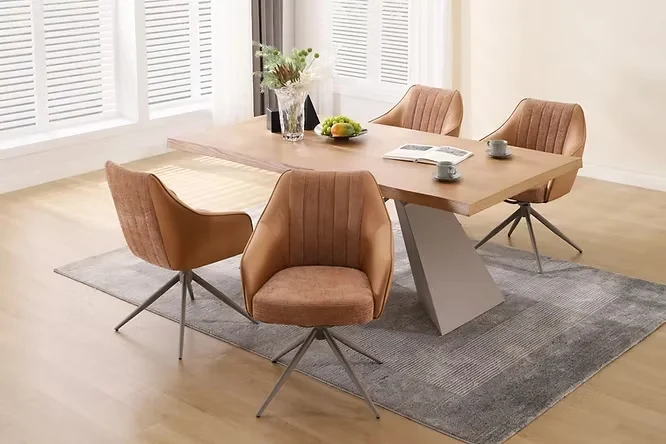
Dining chairs are one of the most important categories. They combine upholstery, frame engineering, comfort and design, and they are bought in high volumes by retailers, wholesalers and hospitality operators. A capable Chinese furniture manufacturer will offer a range of dining chair constructions, including metal frame, upholstered, swivel and auto-return models, with different comfort systems such as pocket spring seating.
Dining tables are another major category, especially extension tables, sintered stone tops and oak veneer designs. Here, the critical factors are structural stability, finish consistency, extension mechanism reliability and packaging protection.
Bar chairs and lounge chairs are also popular because they share many production technologies with dining chairs, including metal frames, powder coating and upholstery. Benches, coffee tables and office desks can often be added to a collection with the same supplier, reducing the number of partners a buyer needs to manage.
For contract and hospitality buyers, the emphasis shifts towards high-frequency use, easy-clean materials, batch consistency and replacement availability. In these cases, working with a B2B furniture China supplier experienced in project-based orders is more important than chasing the lowest catalogue price.
How to evaluate a reliable Chinese furniture manufacturer
Choosing the right partner is the single most important step when you import furniture from China to Europe. A good supplier will reduce risk, improve margins and help you grow your collection. A poor supplier will consume your time, damage your reputation and create expensive quality problems.
Start by understanding what kind of company you are talking to. Is it a manufacturer with its own production lines, a trading company, or a mixed model? There is no universal right or wrong answer, but you should know where the production control sits. If quality consistency is a priority, direct manufacturing control is usually a strong advantage.
Next, look at specialisation. Factories that try to make everything from sofas to bedrooms to outdoor furniture often lack depth in any single category. A supplier focused on dining chairs and dining tables, for example, will usually have better jigging, more experienced workers, stronger fabric knowledge and tighter quality systems.
You should also evaluate their European market experience. Have they supplied Germany, the Netherlands, the UK, Poland, Switzerland or Ireland before? Do they understand packaging requirements, labelling needs and commercial expectations? A supplier that knows European retail standards will ask better questions, anticipate issues and require less correction from your team.
Quality transparency is another clear indicator. Can they explain their incoming material checks, in-process inspection points and final testing process? Do they have equipment for fabric testing, frame testing and packaging validation? A reliable partner will talk about quality in concrete steps, not vague promises.
Finally, look at the commercial relationship. Do they offer design exclusivity for developed models? Can they support OEM and ODM development? Are they open to sample refinement and small-batch testing? Long-term success in furniture sourcing from China depends on trust, transparency and shared commercial goals.
Quality control and testing standards that matter for Europe
Quality is not a feeling. It is a set of defined checks applied consistently across every order. When evaluating furniture in China, you should pay attention to three layers of quality: materials, construction and finished product performance.
At the material level, fabric is one of the most critical components for upholstered seating. Fabrics should be tested for abrasion resistance, colour fastness and breathability. For the European market, OEKO-TEX® STANDARD 100 certification is an important baseline for harmful substance safety, especially for products sold to families and hospitality venues. Waterproof, stain-resistant and pet-friendly performance fabrics are increasingly requested because they reduce returns and support premium positioning.
At the construction level, metal frames, welding quality and powder coating deserve close attention. A professional Chinese furniture manufacturer will use automated welding equipment to improve consistency, followed by proper surface preparation and powder application. The frame determines the stability, durability and safety of the chair, so this is not an area where corners should be cut.
Finished product testing covers stability, load-bearing capacity, durability and, in some cases, drop testing for packaging validation. For contract furniture and high-volume retail, these tests are not optional. They help you avoid recalls, complaints and warranty costs that are far more expensive than the original product saving.
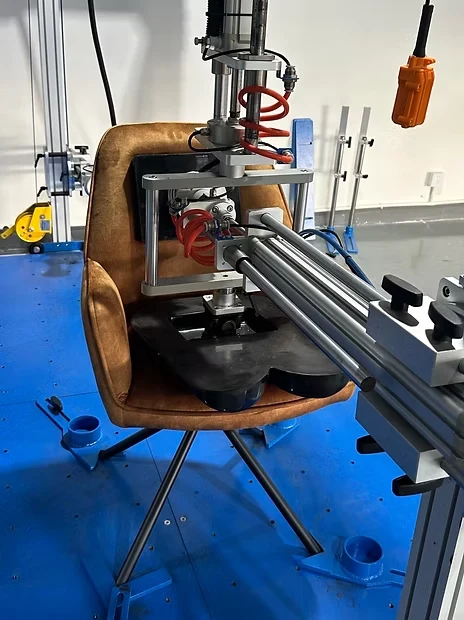
It is also important to distinguish between marketing claims and real quality systems. A factory certificate on the wall is useful, but what you really want to see is a documented process, inspection records and a team that can explain what they check, when they check it and what happens when something fails.
Customization, OEM and ODM options for European buyers
One of the strongest reasons for sourcing furniture in China is the flexibility to adapt products to your market, brand and channel. OEM and ODM services allow European buyers to build differentiated collections without maintaining their own production.
OEM customization typically starts with an existing model and adjusts the details. The most common options include fabric type, colour, leg finish, seat firmness, dimensions and packaging. For dining chairs, buyers often choose between different back heights, arm configurations and base types such as swivel or fixed legs. For dining tables, customisation may involve tabletop material, extension size, leg design and finish.
ODM development goes a step further and involves creating a new product based on a buyer’s design, sketch or market brief. This is particularly valuable for retail brands and private label programmes that want a unique look and exclusivity in their market. A good B2B furniture China supplier will support sample development, material selection, engineering refinement and pilot runs before full production.
However, customization is only useful if it is commercially sound. Every additional variation adds complexity to production, purchasing and quality control. The best approach is usually a modular one, where a limited number of core components are combined with variable finishes, fabrics and bases. This keeps MOQ pressure manageable, reduces inventory risk and makes cost calculation more predictable.
Before you start a custom project, confirm who owns the design, what the sample lead time is, how many revisions are included and what the minimum order quantity will be for serial production. Clear agreements at the beginning prevent misunderstandings later.
Packaging, logistics and container loading best practices
When you import furniture from China to Europe, the product is only half the story. The other half is how it travels. Poor packaging leads to damage, returns, customer complaints and wasted margin. Overlooked container loading costs you money in unused space and increased per-unit transport cost.
For flat-pack furniture, which is common in furniture sourcing from China, the packaging must protect edges, corners, glass or sintered stone surfaces, and upholstered parts. Honeycomb paper protection, corner protectors and properly sized cartons reduce damage without relying on excessive plastic. This is not only a quality issue, but also an ESG issue, as European buyers face growing pressure to reduce packaging waste.
Container loading optimisation is another often-neglected area. A supplier that understands carton dimensions, stacking patterns and weight distribution can significantly increase the number of units per container. This directly reduces the landed cost per piece and improves overall project economics. For buyers with large or regular volumes, it is worth asking for a loading plan before finalising an order.
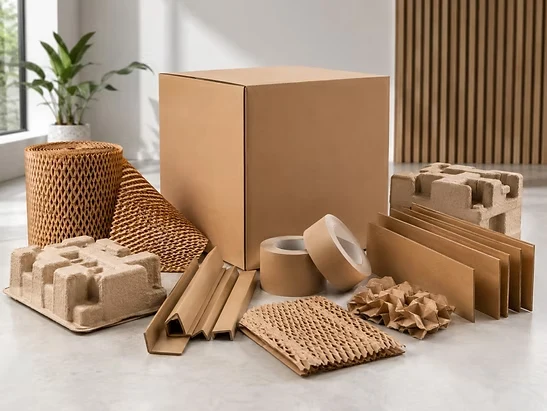
You should also consider how packaging supports your sales channel. Retail-ready packaging requires different printing, labelling and opening experience than wholesale bulk packaging. E-commerce channels often need stronger cartons because parcels pass through more handling steps. A capable Chinese furniture manufacturer will treat packaging design as part of the product, not an afterthought.
Sustainability and compliance requirements for the European market
Sustainability is no longer a nice-to-have in European furniture procurement. It is becoming a basic requirement for retailers, purchasing groups and public-sector contracts. When evaluating furniture in China, you should look beyond product features and consider the broader compliance picture.
On the material side, there is growing demand for recycled content, such as fabrics made from recycled plastic bottles. These materials support sustainability messaging, align with European green policies and can open doors to buyers with strong ESG targets. However, suppliers should be able to provide traceability and supporting documentation, not just a label on a swatch card.
Social compliance is another critical area. BSCI certification, for example, is widely recognised in European furniture sourcing and indicates that a factory follows recognised standards for working conditions, worker safety and operational transparency. Responsible suppliers provide protective equipment, training and clear operating procedures for workers in cutting, welding and gluing roles.
Environmental compliance also includes formaldehyde limits, glue safety and packaging regulations. For the European market, buyers need clear documentation and confidence that products meet applicable requirements. A professional B2B furniture China supplier will be familiar with these expectations and can organise the right testing and paperwork.
It is important to be realistic here. No supply chain is perfectly sustainable, and claims that sound too absolute usually are. What matters is measurable progress, transparent communication and a supplier willing to work with you on improvement over time.
Common sourcing risks and how to avoid them
Furniture sourcing from China can be highly rewarding, but it comes with well-known risks. The good news is that most problems are predictable and avoidable with the right process.
One common risk is the sample vs. mass production gap. A beautifully made prototype can look and feel very different from a later batch if materials, workmanship or suppliers change. The best defence is a golden sample approved by both sides, clear written specifications and inspection at multiple production stages, not just at the end.
Another risk is hidden cost. A low unit price can quickly become expensive if you add unexpected tooling charges, rework fees, testing costs, damage during transport or high MOQ obligations. Always compare total landed cost, not just factory price, and make sure you understand what is included and what is not.
Communication friction is a further risk, especially in cross-border procurement. Language barriers, time zone differences and cultural working styles can lead to misunderstandings about deadlines, quality standards and design changes. Working with a partner that has structured account management and understands European buyer expectations reduces this risk substantially.
Supply chain reliability is also a concern. A factory that is too small may struggle with volume peaks. One that is too large may deprioritise smaller orders. The ideal partner is usually a supplier large enough to be reliable, but focused enough to give your account proper attention.
Finally, there is the risk of weak after-sales support. If a problem appears after delivery, you want a partner that responds quickly, takes responsibility and works on a solution. This is much easier when the relationship is built on transparency and long-term intent, not one-off transactional buying.
Making furniture in China work for your European business
Furniture in China is not a shortcut to cheap products. It is a strategic sourcing option that works best when approached with clear standards, proper supplier evaluation and a long-term perspective. For European wholesalers, retailers, importers and contract buyers, the biggest rewards come from working with a partner that understands your market, controls its own production and treats quality as a shared responsibility.
If you are currently evaluating furniture sourcing from China or reviewing your existing supply base, start by listing what matters most to your business. Is it product consistency? Customization speed? Packaging quality? Compliance documentation? Container loading efficiency? Once you know your priorities, you can ask much better questions and compare suppliers on the things that actually drive your commercial results.
For European buyers looking for a reliable dining furniture partner, ASKT supports wholesalers, retail chains, importers, e-commerce brands and contract projects with transparent manufacturing, structured quality control, flexible OEM and ODM development and deep experience serving markets across Europe. The company focuses on dining chairs, dining tables and related categories, with a practical approach that prioritises supply reliability and long-term buyer success over short-term pricing games.