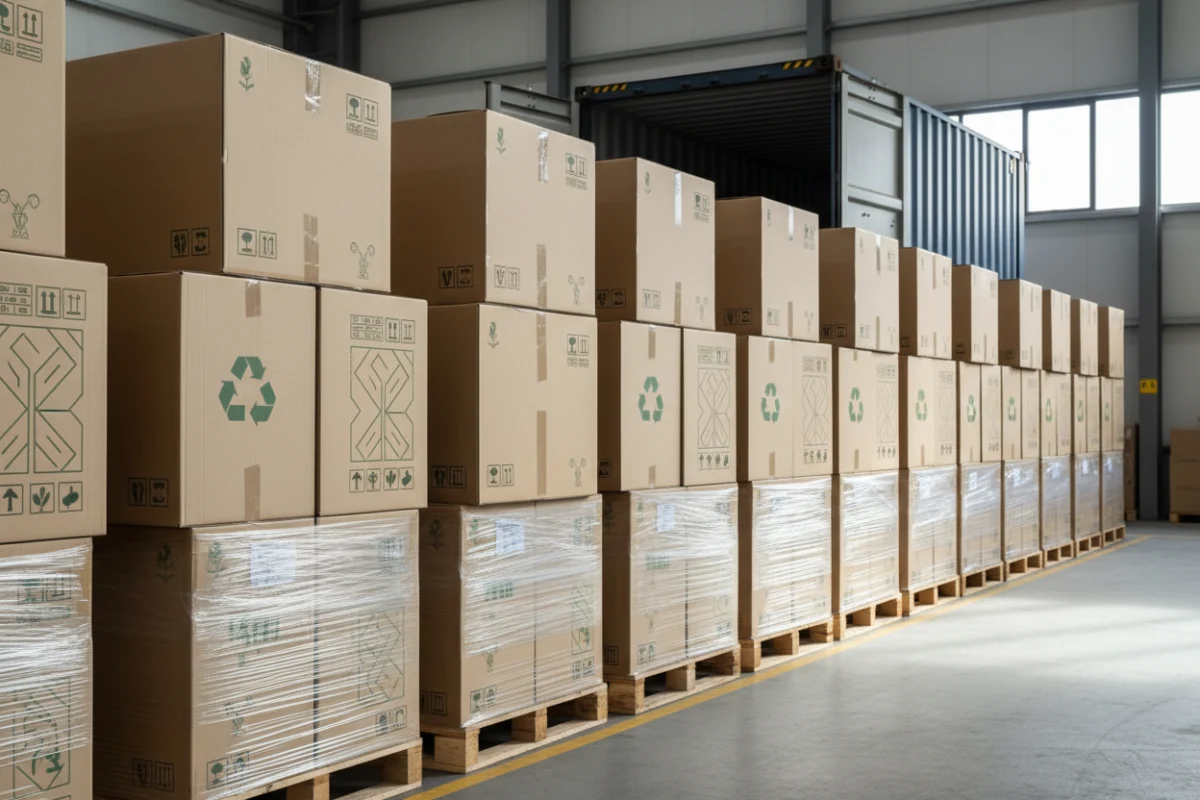
How to Reduce Furniture Shipping Damage, Freight Costs, and Plastic Use Simultaneously
Furniture packaging can simultaneously reduce damage, freight costs, and plastic use through smart engineering: utilizing custom-fit honeycomb paperboard structures, rightsizing box dimensions to maximize container loading, and replacing traditional plastic foam with biodegradable corrugated alternatives. By implementing holistic furniture packaging optimization, brands can eliminate wasteful void space, achieve furniture freight cost reduction, switch to plastic-free furniture wrapping, and significantly reduce furniture shipping damage during long-transit shipping.
Why is traditional plastic-heavy furniture packaging failing modern supply chains?
Traditional furniture shipping relies heavily on Expanded Polystyrene (EPS) foam, polyethylene (PE) bags, and extensive plastic stretch wrap. While these materials are cheap, they fail modern supply chains in three critical ways:
- High Volumetric Waste: Oversized boxes filled with plastic peanuts or foam blocks waste container space, leading to inflated shipping fees.
- Poor Compression Resistance: EPS foam easily crushes under heavy static loads in sea containers, causing structural collapses and scratches.
- Regulatory Penalties: Governments worldwide, especially in Europe under the Packaging and Packaging Waste Regulation (PPWR), are introducing strict taxes and bans on single-use plastics.
Transitioning to engineered paper-based packaging resolves these issues by utilizing materials that pack tighter, stack stronger, and decompose naturally.
How do right-sizing and honeycomb paperboard eliminate plastic foam?
Right-sizing is the process of designing the outer corrugated box to fit the exact dimensions of the flat-packed or pre-assembled furniture, leaving only enough tolerance for protective buffers. Instead of bulky plastic foam, high-density honeycomb paperboard is deployed at critical impact zones.
Honeycomb paperboard mimics nature's strongest structural geometry, offering exceptional flat compression resistance. When used as corner protectors, edge guards, and inner dividers, it absorbs kinetic shocks during transit far better than EPS. This shift allows manufacturers to transition to 100% plastic-free furniture wrapping while actually improving the load-bearing capacity of the packaging.
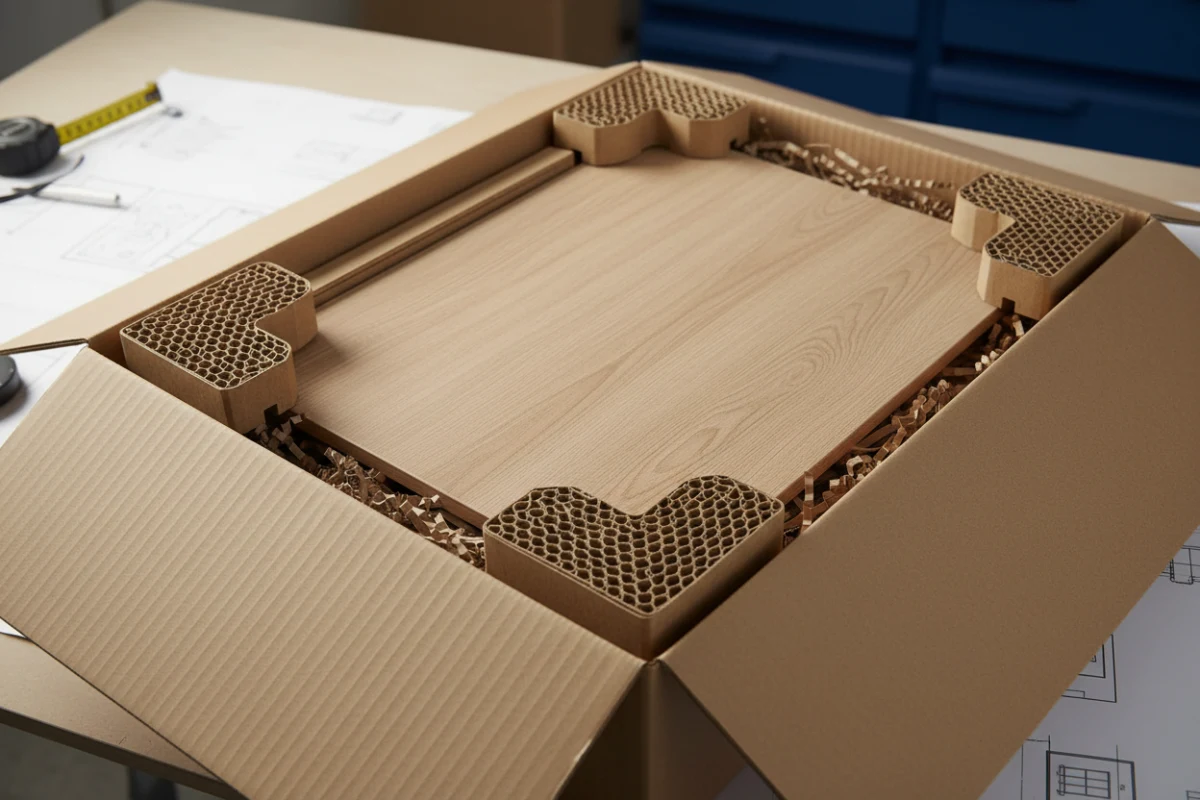 Custom-fit honeycomb paperboard provides high-impact edge protection without the use of plastic foam.
How does packaging optimization directly lower sea freight expenses?
Ocean freight rates are heavily dependent on container volume utilization (CBM). Traditional packaging often leaves up to 30% of a shipping box filled with air and plastic void fillers.
By executing a professional furniture packaging optimization program, engineers reduce the external volume of each shipping carton. Even a 5% reduction in carton height or width can result in:
- Increased Container Yield: Stacking 10% to 20% more units inside a standard 40ft HQ container.
- Lower Cost-per-Unit: Distributing the fixed cost of sea freight over a larger quantity of sellable products.
- Reduced Dimensional Weight Fees: Lowering domestic last-mile shipping rates for e-commerce deliveries.
This systematic approach guarantees a measurable furniture freight cost reduction without compromising structural safety.
How do traditional and eco-friendly furniture packaging solutions compare?
To understand the direct impact of switching to modern eco-friendly furniture packaging, review the comparison below:
| Performance Metric | Traditional Packaging (EPS Foam + Plastic Wrap) | Optimized Eco-Friendly Packaging (Honeycomb + Corrugated) |
|---|---|---|
| Plastic Content | High (Often 100% of inner cushioning) | Zero (100% recyclable paper) |
| Container Loading Efficiency | Poor (Bulky, non-standardized shapes) | Excellent (Right-sized for maximum CBM yield) |
| Stacking Strength | Low (Foam deforms under heavy pressure) | High (Honeycomb resists vertical compression) |
| Damage Rates | Moderate to High (1.5% - 5%) | Very Low (Under 0.5% after ISTA testing) |
| Disposal Cost / Taxes | High EPR taxes in Europe | Free or subsidized recycling streams |
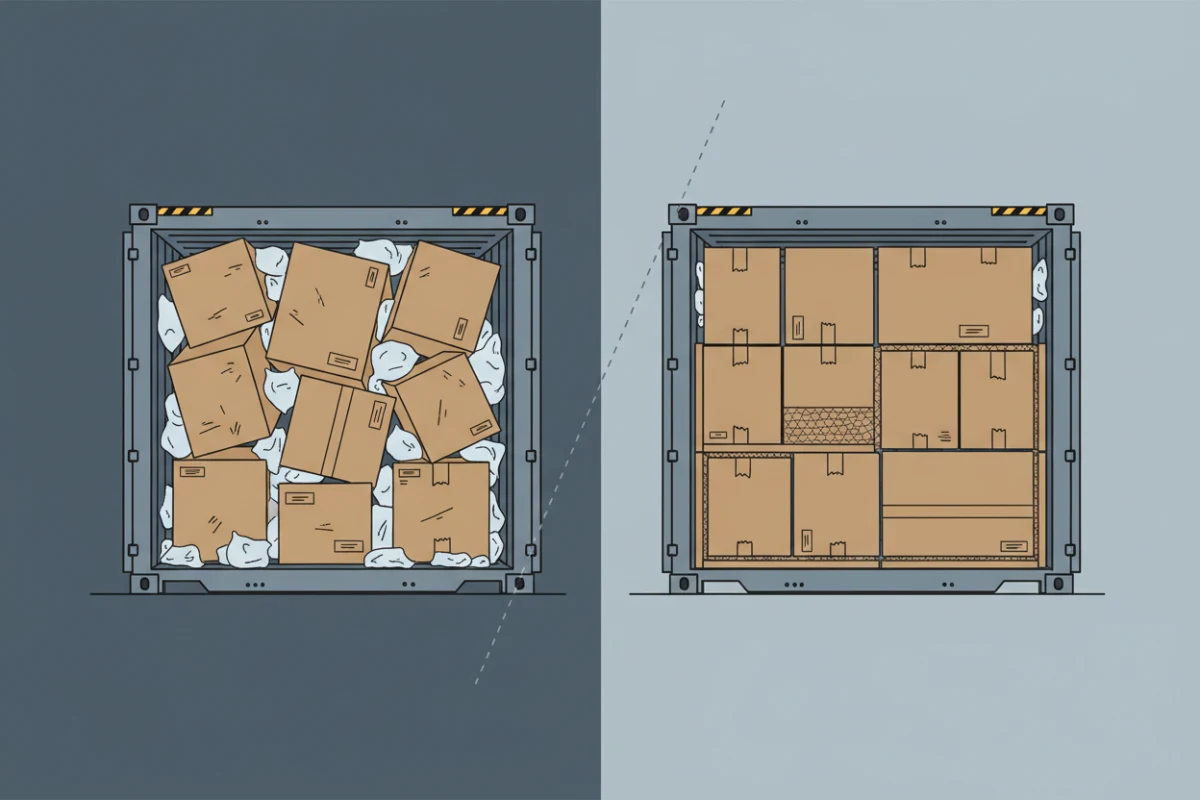 Right-sizing packages dramatically increases container utilization, directly lowering ocean freight costs.
How do you design for durability using drop-testing and transit protection standards?
Reducing damage is not about adding more layers of packaging; it is about placing structural protection where it matters most. Professional packaging design uses simulation software and physical transit testing to validate performance:
- ISTA 3A / 6-Amazon Tests: Packages undergo rigorous drop tests, rotational flat drops, and random vibration simulations to ensure they survive courier delivery.
- Localized Corner Reinforcements: Instead of wrapping the entire product in plastic, heavy duty corrugated corners are used to absorb the highest impact forces.
- Friction Reduction: Soft tissue or starch-based liners protect delicate wood finishes from surface abrasions, completely replacing plastic foam sheets.
These targeted designs systematically reduce furniture shipping damage while keeping total material weight low.
What is the step-by-step implementation guide for furniture importers?
If you are importing furniture from global manufacturing hubs, follow this framework to transition your packaging:
- Conduct a Packaging Audit: Measure the current box dimensions, CBM utilization, and damage rates per product line.
- Design for Flat-Packing: Work with designers to ensure furniture components nest tightly together, eliminating empty space.
- Replace Plastic Components: Direct factories to replace EPS blocks with custom-cut honeycomb sheets and cardboard U-guards.
- Simulate and Test: Request ISTA-certified drop tests from your manufacturing partners before mass production.
- Calculate the ROI: Compare the reduced damage rates and increased container capacity against any change in material costs.
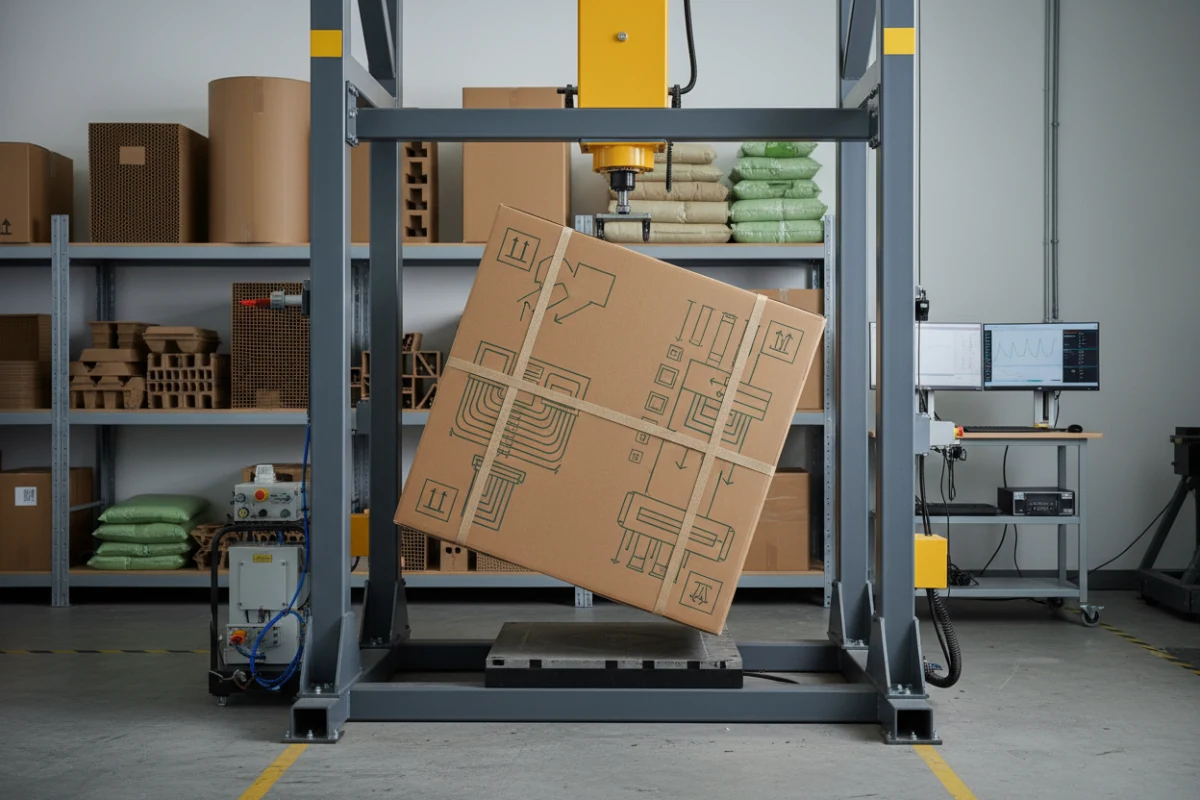 Rigorous drop-testing verifies that paper-based packaging protects heavy furniture during courier transit.
Ready to transform your supply chain efficiency and meet global sustainability standards? Take the first step toward modernizing your logistics by requesting a professional analysis of your current packing methods. Request Packaging Optimization Assessment today to minimize damage, cut shipping costs, and transition to fully sustainable materials.