
How Should Furniture Retailers Compare Margin and Volume When Selecting Dining Chairs?
Furniture retailers should evaluate dining chairs by calculating total gross profit per SKU and per container rather than comparing margin percentage alone, using a realistic 99 EUR vs 199 EUR scenario to test whether a price drop actually delivers higher overall earnings once volume, logistics and supply constraints are factored in.
Why does margin percentage alone mislead furniture buyers selecting dining chairs?
Margin percentage is a useful number, but it never tells the full story of a dining chair SKU. A chair with a 50% margin sounds attractive on paper, yet if it only sells 30 units a month and ties up warehouse space, it can generate less total profit than a lower-margin chair that moves in steady volume. This is the first mistake many retail buyers make: they stop at the margin number instead of looking at gross profit in absolute terms.
When you source dining chairs for a European retail range, you are not just buying a product. You are buying into a complete commercial equation that includes landed cost, retail ticket, expected sell-through rate, return rate, stock holding cost and container efficiency. A chair that looks like a strong margin play can become a burden if demand is weak, while a volume chair can lift total category profit even with a slimmer markup.
From over 20 years of working with European furniture retailers, we have seen the same pattern repeat. Buyers who focus only on margin percentage tend to build ranges that look good in a spreadsheet but underperform on the shop floor. Buyers who calculate gross profit per dining chair SKU and per collection over a full season make more reliable ranging decisions.
What does a 199 EUR dining chair profitability scenario look like?
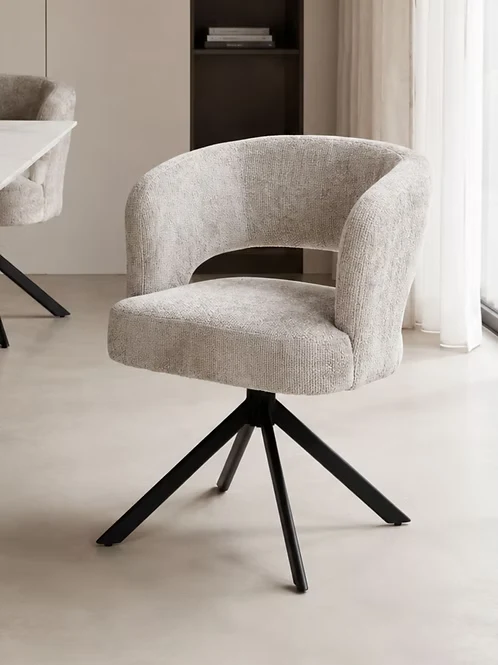
A 199 EUR dining chair typically sits in the mid-premium segment of the European retail market. It is usually an upholstered model with a metal or wooden frame, better fabric specification and a more distinctive design. For retailers, this price point carries a clear perception of quality and tends to attract customers who are less purely price-driven.
To understand the real profit picture, you have to build a simple dining chair retail profit margin calculation. Start with the retail selling price, subtract VAT in your market, then subtract the full landed cost per unit — including ex-works price, freight, duties, warehousing and a realistic allocation for marketing, returns and damaged stock. The remaining figure is your gross profit per unit.
For a 199 EUR chair, the unit gross profit in euros is usually higher in absolute terms than a budget model, even after accounting for a higher landed cost. The catch is volume. A mid-premium chair typically sells fewer units per month than an entry-level option, and it can carry higher stock risk because each unit ties up more working capital.
The 199 EUR price point also tends to work best when it sits alongside a clear trading-up path. Customers come in looking for a basic dining chair, see the difference in fabric, frame and comfort, and decide to spend more. Without that comparison, a standalone mid-premium SKU can struggle to justify its price.
How does the 99 EUR dining chair volume scenario compare?
A 99 EUR dining chair is built around accessibility and volume. It is usually a simpler construction, often a KD metal-frame model with a basic upholstered seat. The design is neutral, the packaging is optimised for efficient transport, and the whole proposition is built around getting a functional, attractive chair into as many homes as possible.
At this price point, margin percentage is almost always lower than a 199 EUR chair. That is why many retailers dismiss budget ranges too quickly. What matters is not the percentage, but the total gross profit per dining chair SKU multiplied by the number of units you can realistically sell in a season.
A 99 EUR chair can deliver very strong total profit if three conditions are met. First, the retail price point hits a clear sweet spot in your local market. Second, the product is reliable enough to keep return rates low. Third, you can source and stock it efficiently so that volume gains are not eaten up by logistics cost or inventory risk.
The biggest danger in the 99 EUR segment is underestimating quality. A chair that looks cheap and feels cheap will damage your brand, generate returns and create customer service work. Volume only works when the product is good enough to satisfy buyers at that price level.
How do 99 EUR vs 199 EUR dining chair profitability compare side by side?
The clearest way to compare these two strategies is to put them on the same page and look at total gross profit for a typical season, not just margin percentage. The table below uses a simplified example to show how the furniture retailer margin vs volume strategy plays out in practice.
| Metric | 99 EUR Dining Chair | 199 EUR Dining Chair |
|---|---|---|
| Retail selling price (incl. VAT) | 99 EUR | 199 EUR |
| Typical margin percentage | Lower | Higher |
| Gross profit per unit in EUR | Lower absolute amount | Higher absolute amount |
| Estimated monthly unit sales | Higher volume | Lower volume |
| Working capital per unit | Lower | Higher |
| Return and damage risk | Volume-dependent | Value-dependent |
| Container efficiency | Usually higher | Usually lower |
| Total gross profit per season | Can be higher with strong volume | Can be higher with strong sell-through |
What stands out from this comparison is that neither option is automatically better. A 199 EUR chair with strong sales and a solid margin can be extremely profitable. A 99 EUR chair with reliable volume and controlled costs can be equally profitable, or even more so. The answer depends entirely on your store, your customer base and your operational setup.
The most common mistake we see in 99 EUR vs 199 EUR dining chair profitability analysis is using unrealistic volume assumptions. Buyers often assume a lower price will automatically double or triple sales, but in reality demand only jumps if the product, marketing and store execution all work together.
What hidden costs change the real profit of a dining chair SKU?
The headline margin on a dining chair rarely matches the real margin you end up with at the end of the season. Several hidden costs can quietly erode profit, and they affect volume-focused and margin-focused SKUs in different ways.
First, returns and customer complaints. A budget chair that wobbles, stains easily or shows wear after a few months will come back to you. Every return eats into your gross profit, and with a low-margin volume product you do not have much room to absorb those costs. That is why we spend so much time on fabric testing — including abrasion resistance, colour fastness and waterproof, stain-resistant performance — and structural quality control at the factory level.
Second, warehousing and stock holding. Higher volume means more pallets, more space and more handling. If your volume chair sells slower than expected, the carrying cost of holding stock can cancel out the margin advantage. For retailers with limited warehouse space, this is often the hidden constraint that makes a volume strategy less attractive than it first appears.
Third, marketing and merchandising cost. A 99 EUR chair can require more promotional investment to drive the required volume. A 199 EUR chair may need better photography, more floor space and stronger sales support to justify its price. Both have commercial costs beyond the basic landed price.
Fourth, packaging and damage in transit. A chair that arrives scratched, dented or with torn upholstery is a direct loss. Volume strategies that rely on cheap packaging often suffer higher damage rates, which is why sustainable protective packaging — such as honeycomb paper and carefully optimised carton design — is not just an environmental choice but a profit-protection measure.
How do container loading and MOQ affect a volume-driven strategy?
When you are evaluating a furniture retailer margin vs volume strategy, you cannot separate the product decision from the supply chain decision. How many chairs fit in a container, and what the minimum order quantity is, can completely change the profitability equation.
Volume dining chairs are almost always designed with container efficiency in mind. KD structures, stackable designs and optimised packaging mean more units per shipment, lower freight cost per chair and a lower landed price. This is one of the reasons budget price points are possible in the first place.
However, volume strategies also require volume commitments. MOQs are typically higher for lower-priced models, which means you have to be confident you can sell through the stock. If you over-order, you are left with inventory that ties up cash and takes up warehouse space. If you under-order, you lose sales momentum and customer trust.
For retailers who are not sure about demand, modular product systems can be a useful middle ground. By combining a small number of standard seat shells and bases, you can create multiple SKUs without carrying separate stock for each one. This approach lowers the effective risk of testing a volume line, because you are not committing to a full container of a single design.

When should retailers prioritise higher margin over higher volume?
There are clear situations where a higher-margin dining chair strategy makes more sense than chasing volume. Knowing when to prioritise margin is just as important as knowing how to calculate it.
A higher-margin approach usually works best when:
- Your store has a strong brand position and customers trust your quality recommendation
- You cater to a customer base that values comfort, design and durability over the lowest price
- You have limited warehouse space and cannot support large stock volumes
- You already have a budget dining chair option and want to add a trading-up line
- You are building a curated collection rather than a mass-market assortment
On the other hand, a volume strategy usually works best when:
- Your store attracts price-conscious shoppers who compare heavily
- You have strong footfall or high online traffic in the dining category
- You can efficiently handle larger stock volumes and faster stock rotation
- You have a reliable supply partner who can maintain consistent quality at volume
- You can leverage container efficiency to keep landed costs low
The truth is that most successful furniture retailers do not choose one or the other. They build a balanced range with entry-level, mid-price and premium options. The budget chair brings customers in, the mid-price chair delivers the bulk of the profit, and the premium chair lifts the perceived quality of the whole collection.
What is a practical checklist for evaluating new dining chair ranges?
Before you commit to a new dining chair SKU or an entirely new collection, run through this checklist to make sure you are comparing margin and volume on a like-for-like basis.
- Calculate gross profit per dining chair SKU in euros, not just as a percentage. Include all landed costs, duties, freight and a realistic allocation for returns and damage.
- Estimate realistic monthly and seasonal sales volume for each price point. Be conservative; it is better to slightly underestimate volume and overdeliver than the other way around.
- Multiply unit gross profit by expected sales volume to get total gross profit per SKU per season. This is the number you should primarily compare.
- Check container loading and MOQ requirements. Make sure the volume you need to commit to matches the volume you realistically expect to sell.
- Factor in stock holding cost, warehouse space and working capital. A high-volume chair that ties up all your cash may not be worth the extra profit.
- Evaluate quality and expected return rate. A chair with a slightly higher unit cost but a much lower return rate can be more profitable in the long run.
- Look at the range as a whole. Will this SKU complement your existing chairs, or will it cannibalise sales from another model you already stock?
- Consider the supplier's ability to deliver consistently. A great margin on paper means nothing if the supplier cannot ship on time or if quality varies from batch to batch.
This checklist is not complicated, but it will save you from the most common ranging mistakes. The key is to compare total profit, not just margin percentage, and to ground every assumption in the reality of your own store and market.
Frequently Asked Questions
Should furniture retailers always choose the dining chair with the highest margin percentage?
No. Margin percentage only tells you part of the story. A chair with a higher percentage margin but low sales volume can generate less total gross profit than a lower-margin chair that sells consistently. Retailers should always calculate total gross profit per SKU over a full season and factor in stock cost, return rates and supply constraints.
How do you calculate retail profit margin for a dining chair?
To calculate dining chair retail profit margin, start with the final retail selling price excluding VAT, subtract the full landed cost per unit — including ex-works price, freight, duties, warehousing and an allowance for returns, damage and marketing — then divide the resulting gross profit by the retail price (excl. VAT) to get the margin percentage. For ranging decisions, always look at the euro amount of gross profit as well.
Which is more profitable: a 99 EUR or a 199 EUR dining chair?
It depends on volume, cost structure and operational efficiency. A 99 EUR chair can be more profitable if it sells in high enough volume with low return rates and efficient logistics. A 199 EUR chair can be more profitable if it achieves strong sell-through with a healthy unit margin. The only way to know is to compare total gross profit per season, not margin percentage alone.
How can retailers reduce the risk of a volume-based dining chair strategy?
Retailers can reduce risk by working with suppliers who offer flexible MOQ structures, modular product systems and consistent quality control. Testing a smaller initial order, monitoring return rates closely and optimising container loading can all help make a volume strategy more predictable and less dependent on hitting maximum sales targets.
As someone who has worked with European furniture buyers for many years, I know that the best ranging decisions almost never come from looking at a single number. Margin matters, volume matters, quality matters, and supply reliability matters — and the right balance is different for every retailer. If you are building or refreshing a dining chair collection and want to talk through product positioning, price points and supply options that fit your market, discuss the right product and price positioning with us.