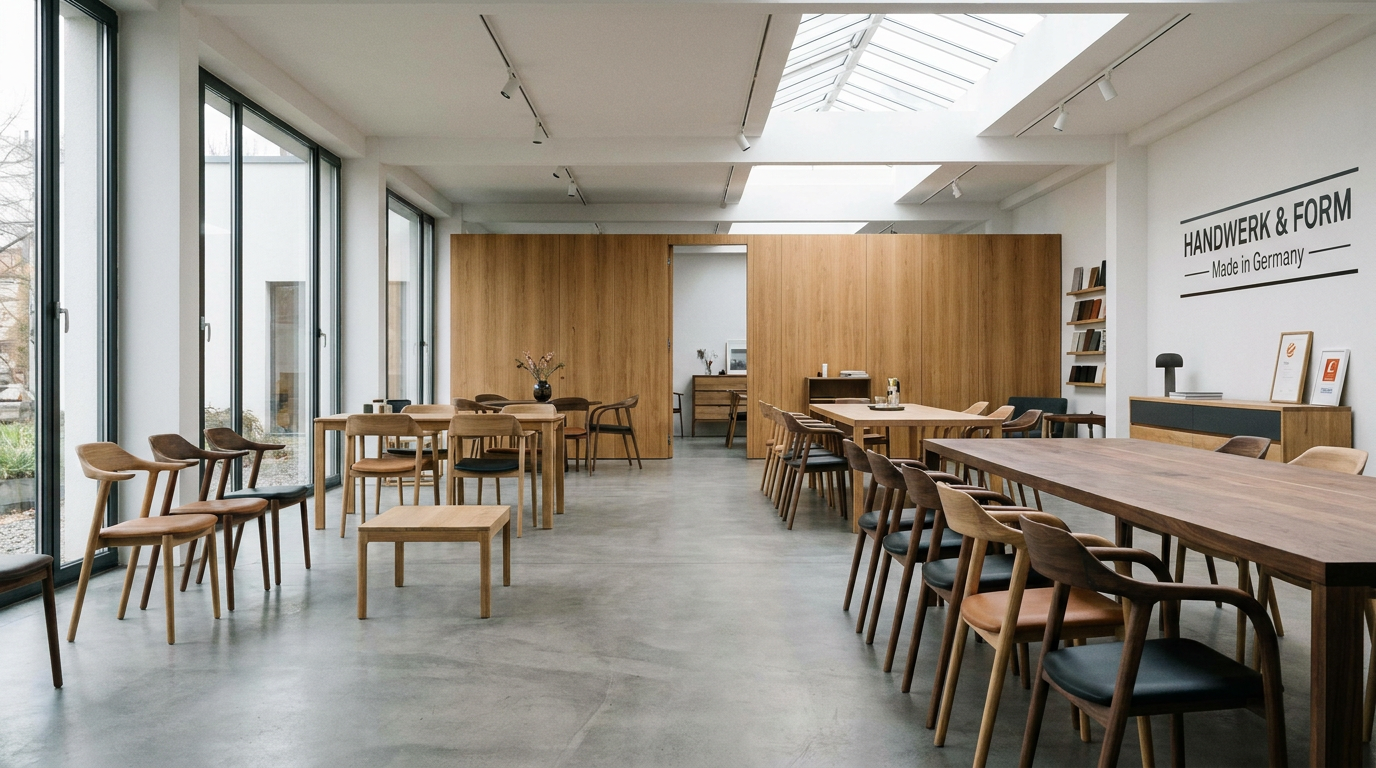
The German Furniture Market Doesn’t Need More Suppliers — It Needs More Reliable Dining
The German Furniture Market Doesn’t Need More Suppliers — It Needs More Reliable Dining
For Einkaufsleiter and CEOs in German Furniture Retail
The German furniture retail environment is currently navigating a period of extreme structural pressure. Stationary trade is battling rising operational costs and intense pricing competition from digital-first players. In this climate, the traditional strategy of expanding the Sortiment (assortment) with more suppliers is no longer viable. Instead, the focus must shift toward Abverkauf (sell-through) efficiency and protecting the Marge (margin).
For an Einkaufsleiter (Procurement Head), the challenge is not finding a chair; it is finding a partner who understands that a 5% lower unit price is rendered meaningless by a 10% Reklamationsquote (complaint rate) or a delay that disrupts seasonal floor planning. The German market doesn't need more options—it needs more reliability.
The Stationary Trade Dilemma: The Hidden Cost of Unreliability
Many German retailers are currently suffering from Lagerdruck (inventory pressure). When a supplier fails to meet the promised Lieferzuverlässigkeit (delivery reliability), the entire retail cycle breaks. Delayed shipments lead to empty floor space or, worse, cancelled customer orders, which directly impacts Cashflow.
At ASKT Furniture, we have observed that the most successful German partners are those moving away from 'mass sourcing' toward 'strategic reliability'. With over 15 years of experience in commercial furniture manufacturing, we recognize that for the German Fachhandel (specialist trade), the total cost of ownership is the only metric that matters.
3 Fatal Mistakes in Supplier Selection
1. Prioritizing Unit Price Over Reklamationsquote
In the pursuit of maintaining a competitive Preislage (price point), buyers often overlook the long-term cost of quality failures. A high complaint rate destroys brand trust and incurs massive logistics costs for returns.
2. Ignoring ISO 9001 and Standardized Processes
Without certified quality management, production consistency is a gamble. For the German market, where DIN norms and safety are paramount, an uncertified factory is a significant risk to the Geschäftsführer (CEO).
3. Over-committing to Massive MOQs
Rigid, high MOQs lead to stagnant Sortiment and capital lock-up. In a fluctuating market, the ability to test new designs with a flexible MOQ—such as the 200-piece threshold offered by ASKT Furniture—is a strategic necessity for maintaining SKU efficiency.
The ASKT Decision Framework: Evaluating Lieferzuverlässigkeit
To mitigate risk, procurement teams should use a structured framework to evaluate potential partners beyond the catalog photos. This framework focuses on three pillars: Quality Assurance, Lead-Time Stability, and Customization Flexibility.
The Reliability Matrix
| Evaluation Criteria | Traditional Sourcing | ASKT Reliability Model |
|---|---|---|
| Lead Time | 60-90 days (unstable) | 45 days (guaranteed) |
| Quality Standard | Basic inspection | ISO 9001 Certified |
| MOQ Flexibility | 500+ pieces | 200 pieces (Flexible) |
| Communication | General Sales | Professional B2B Support |
| Customization | Limited/None | Full OEM/ODM Support |
Actionable Recommendations for German Procurement
- Audit the 'Golden Sample': Never proceed to mass production without a signed-off 'Golden Sample' that matches German ergonomic and durability standards.
- Verify Delivery History: Ask for data on Liefertreue (delivery punctuality). At ASKT, our 45-day lead time is backed by a robust supply chain optimized for the European market.
- Focus on SKU Efficiency: Instead of 10 mediocre SKUs, invest in 3 high-margin, low-complaint models that guarantee steady Abverkauf.
The Procurement Checklist: Vetting Your Next Partner
Before signing your next import contract, ensure your supplier can check all these boxes:
- ISO 9001 Certification: Is the quality management system internationally recognized?
- 15+ Years Experience: Does the manufacturer understand the nuances of commercial-grade durability?
- 45-Day Lead Time: Can they support your inventory rotation needs without increasing Lagerdruck?
- Customization Capability: Can they adapt materials (wood, metal, fabric) to fit your specific Sortiment?
- Logistics Transparency: Do they provide clear shipping schedules to protect your Cashflow?
FAQ: Solving the Reklamation Puzzle
Q: How does a 45-day lead time specifically help my margin? A: Faster lead times allow for leaner inventory levels. This reduces the capital tied up in the warehouse and allows you to respond quicker to market trends, improving your overall Marge.
Q: Why is ISO 9001 critical for German imports? A: It ensures that the 200th chair is identical to the 1st. In the German market, inconsistency leads to immediate Reklamation, which is the fastest way to erode retail profits.
Conclusion
The German furniture market is saturated with products, but it is starved for consistency. For the Einkaufsleiter looking to secure the future of their stationary trade, the path forward is clear: prioritize reliability over volume. ASKT Furniture stands ready to support your business with ISO-certified quality, flexible MOQs, and the professional service that 15 years of industry leadership provides.
Do you want me to send you a practical evaluation checklist or our latest decision framework for dining furniture procurement?