Germany Office Furniture Market: A Practical Guide for B2B Sourcing and Contract Buyers
An Overview of the Germany Office Furniture Market for B2B Buyers
If you work in European furniture distribution, project procurement or wholesale sourcing, you know Germany is one of the continent's most demanding and most rewarding markets. The Germany office furniture market is no exception. It is a mature, quality-conscious segment where buyers do not make decisions on price alone. They evaluate product performance, supply consistency, compliance, ergonomic design and long-term commercial reliability before signing any long-term contract.
From open-plan workstations to executive desks, meeting room seating and ergonomic task chairs, office furniture buyers in Germany expect clear specifications, transparent quality control and on-time delivery. For B2B professionals already active in dining furniture, the office segment represents a natural adjacent category. Many of the same manufacturing fundamentals apply: metal frames, upholstery, fabric performance, structural testing, packaging optimization and container loading efficiency all transfer directly from one category to the other.
As someone who has spent two decades working with German-speaking buyers across furniture categories, I have seen first-hand how the same purchasing logic runs through both dining and office projects. Buyers want suppliers who understand the market, speak their quality language and do not disappear after the first container. The Germany office furniture market rewards consistency, and it punishes suppliers who treat quality as an afterthought.
Core Characteristics of German Contract Office Furniture Buyers
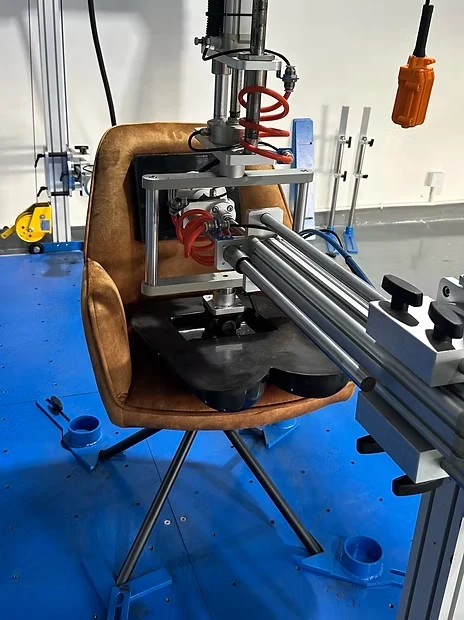
When you work with German contract office furniture buyers, you quickly notice that they evaluate suppliers differently than many other European markets. The decision process tends to be structured, detail-oriented and based on clearly defined criteria. A good product photograph is not enough. Buyers want to see technical data, testing evidence, material specifications and production transparency.
One reason for this approach is that office furniture is often purchased under contract for corporate offices, co-working spaces, public administration buildings, educational facilities and large-scale fit-out projects. In those cases, the buyer is not the end user. They are responsible for durability, safety, ergonomics and after-sales performance over many years. A chair that fails after six months is not just a product complaint; it is a contractual issue and a reputational risk.
German contract office furniture buyers typically focus on the following priorities:
- Ergonomic performance: Seating and desks must support long working hours without causing discomfort or health issues.
- Structural durability: Office furniture is used intensively, every day, by different users. Stability and load-bearing capacity are non-negotiable.
- Fabric and material quality: Upholstery must resist abrasion, maintain colour and withstand regular cleaning.
- Compliance and certification: Products must meet European safety, chemical and environmental requirements.
- Supply reliability: Project schedules are fixed. Delayed shipments have real financial consequences.
- Customization flexibility: Different projects require different sizes, colours, finishes and branding options.
- Consistent quality across batches: One good sample is not enough. Every delivery must match the approved standard.
These priorities are not unique to the ergonomic office furniture market in Germany. You will find the same mindset among dining furniture buyers supplying the contract hospitality segment. In both cases, the buyer is buying peace of mind as much as they are buying furniture.
Key Office Furniture Market Trends in Germany for 2025 and Beyond
The office sector has changed considerably since hybrid working became common across much of Europe. The Germany office furniture market has evolved with it. Demand is no longer focused purely on dense rows of identical desks and task chairs. Today, buyers are looking for flexible, multi-purpose solutions that can adapt to different work styles.
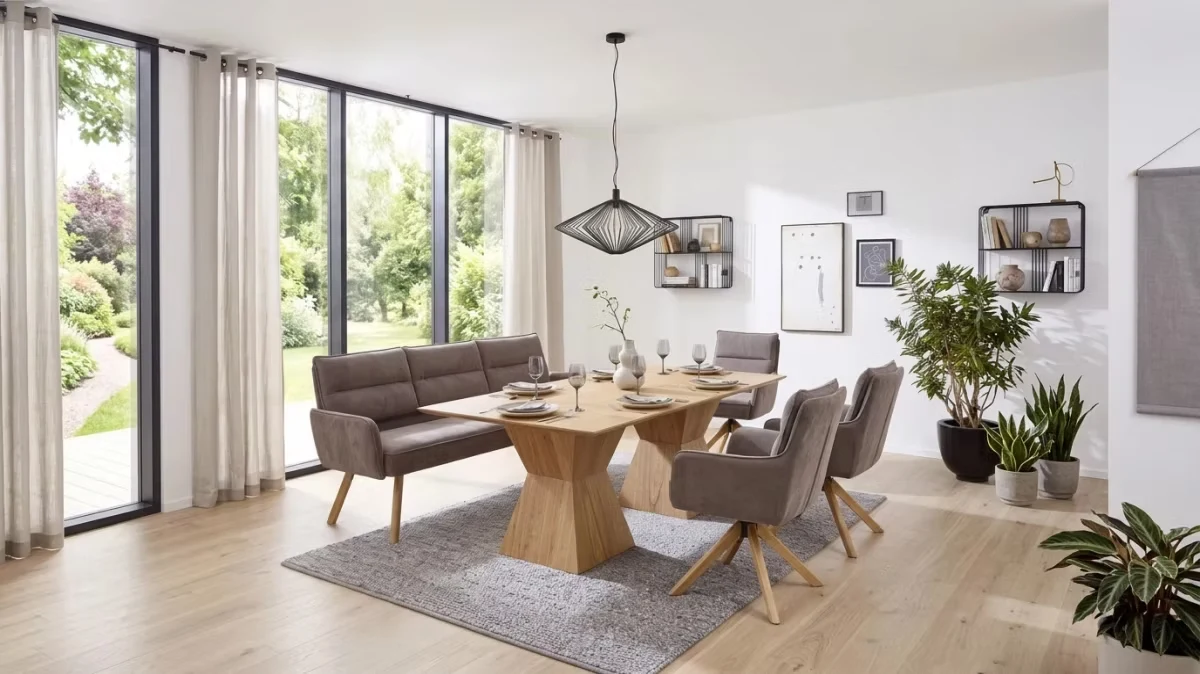
One of the clearest office furniture market trends in Germany is the blend of residential comfort and commercial performance. Modern office spaces increasingly look and feel more like living environments, with softer lighting, warmer materials and furniture that would not look out of place in a high-end home. This is where companies that already understand dining and lounge furniture have a natural advantage. The design language of upholstered seating, metal frames and wood finishes translates directly into modern office reception areas, break-out spaces and meeting rooms.
Another strong trend is the continued growth of the ergonomic office furniture market in Germany. Health and safety considerations, combined with greater awareness of posture-related issues, mean that adjustable seating, lumbar support and sit-stand desk solutions are no longer niche premium items. They are becoming standard expectations in many workplaces.
Sustainability is also moving from a marketing message to a hard commercial requirement. German buyers are increasingly asking about recycled materials, reduced packaging, environmentally friendly production processes and transparent supply chains. This is not just about brand image. It is about meeting corporate ESG targets, public procurement rules and evolving European environmental expectations.
Why Quality and Compliance Matter More Than Initial Price
In the Germany office furniture market, the cheapest offer rarely wins the contract. Professional buyers understand that a lower upfront price can lead to much higher costs later: warranty claims, replacement orders, project delays and damaged customer relationships. That is why quality and compliance are evaluated first, and price is discussed only after the product is proven to meet the required standard.
Take a metal-frame office chair as a practical example. It may look simple enough, but many decisions affect its real-world performance. The wall thickness of the tube, the quality of the welding, the adhesion of the powder coating, the density of the foam, the abrasion resistance of the fabric and the stability of the base all contribute to the final product. Cut one corner and the chair may still look fine in a catalogue. Put it in a busy office for 12 months and the difference becomes obvious.
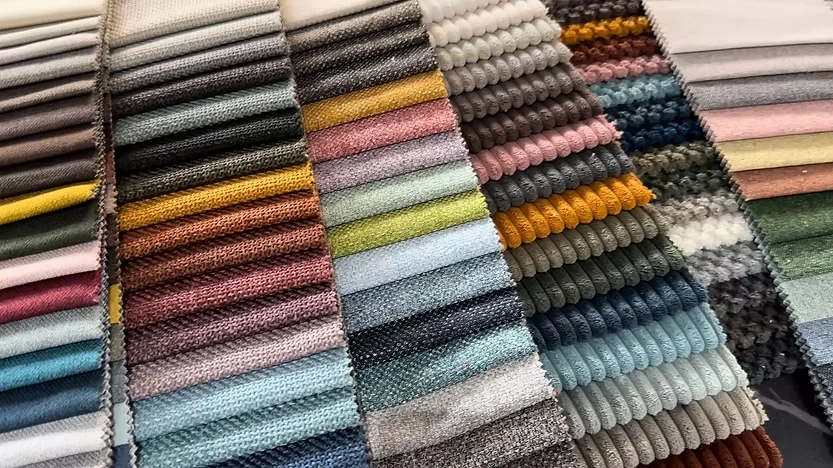
Fabric selection is one area where buyers should pay close attention. High-quality upholstery fabrics should be tested for abrasion resistance, colour fastness and breathability. Waterproof and stain-resistant properties are valuable in shared office environments, where spills and daily wear are inevitable. Fabrics that carry OEKO-TEX® STANDARD 100 certification provide an additional level of confidence regarding chemical safety, which matters in any space where people spend most of their day.
For manufacturers, this is where investment in equipment and process control pays off. Automated cutting machines, robotic welding and structured QC workflows do not just improve efficiency. They reduce variation from one unit to the next, which is exactly what German contract office furniture buyers are looking for. Consistency is a quality metric in itself.
Parallels Between Office and Dining Furniture Supply Requirements
If you are already sourcing dining furniture from China and considering expanding into the office category, you may be wondering how much of your existing supply chain knowledge transfers. The short answer is: most of it.
Both categories rely on many of the same core competencies:
| Requirement | Dining Furniture | Office Furniture |
|---|---|---|
| Metal frame construction | Yes | Yes |
| Upholstery and fabric performance | Yes | Yes |
| Structural stability testing | Yes | Yes |
| Powder coating finish quality | Yes | Yes |
| KD structure for logistics | Yes | Yes |
| Customization of colours and materials | Yes | Yes |
| Container loading optimization | Yes | Yes |
| Batch consistency | Yes | Yes |
| Compliance with European standards | Yes | Yes |
The table above shows why many European furniture buyers successfully extend their supplier relationships from dining into adjacent categories. A manufacturer that already understands European quality expectations, packaging requirements and communication standards is far easier to work with than starting from zero with a new partner.
The main difference lies in the specific ergonomic and functional requirements of each product type. A dining chair is designed for shorter periods of use at a time. An office task chair must remain comfortable and supportive for a full working day. A dining table needs to be stable and easy to clean. An office desk may need cable management, height adjustment and modular configuration options.
But the manufacturing logic, the quality control mindset and the commercial partnership model are very similar. That is why sourcing office furniture from China for Germany can be a smooth transition if you already have a reliable manufacturing partner with the right capabilities.
What Buyers Should Evaluate When Sourcing Office Furniture from China for Germany
Sourcing office furniture from China for Germany can be highly cost-effective and commercially successful, as long as you evaluate suppliers on the right criteria. It is not about finding the lowest price. It is about finding a partner that can deliver consistent quality, clear communication and reliable supply over multiple orders.
Based on over 20 years of manufacturing and export experience with European buyers, here are the areas I recommend you evaluate before placing a large office furniture order:
Manufacturing capability and specialization
Look for a manufacturer with proven experience producing furniture for the European market. Ask about their core product categories, their production capacity and their typical order sizes. A factory that specializes in a few product types will usually have better process control than one that tries to make everything.
Quality control systems
Quality should never be something you only check at the end of production. Ask about incoming material inspection, in-process checks, final inspection and testing procedures. The more transparent the workflow, the easier it is to prevent problems before they reach your warehouse.
Material and fabric specifications
Do not accept vague descriptions like "high-quality fabric" or "standard foam." Get specific: fibre composition, foam density, frame material thickness and finish standards. Everything that affects performance should be documented and agreed in advance.
Testing and compliance
European markets have clear expectations for product safety and environmental compliance. Make sure your supplier understands the requirements and can support you with the necessary documentation and testing. Responsible manufacturers use formaldehyde-free glues, certified fabrics and environmentally friendly production processes.
Customization flexibility
In the Germany office furniture market, one size rarely fits all. Buyers need different fabrics, colours, finishes, dimensions and packaging options. A good supplier can adapt their production to your requirements without compromising quality or extending lead times unnecessarily.
Packaging and logistics
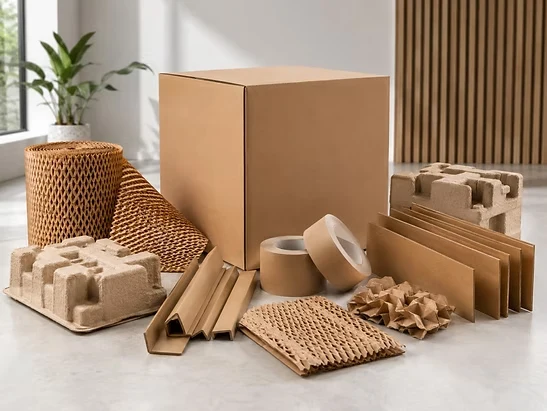
Office furniture often travels a long way before it reaches the end customer. Packaging must protect the product during transport, handling and storage. At the same time, efficient container loading has a major impact on landed cost. Experienced suppliers understand how to balance protection, sustainability and loading efficiency.
Communication and project support
Time zone differences and language barriers can create misunderstandings that cost you money. Look for a partner that responds clearly, confirms requirements in writing and keeps you informed throughout the production process. The best suppliers do not just take orders. They help you avoid mistakes.
How Adjacent Category Experience Supports Office Furniture Sourcing
For many German contract office furniture buyers, working with a supplier that already serves the dining furniture sector can be an advantage, not a drawback. Why? Because dining furniture, especially in the contract segment, demands extremely high standards of durability, cleanability and batch consistency. Those standards transfer directly to office reception seating, meeting room chairs, breakout furniture and executive lounges.
At ASKT, we have worked with German buyers across dining, contract and adjacent furniture categories for many years. Our manufacturing expertise in metal frames, upholstered seating, fabric engineering, powder coating and KD structures is directly relevant to office furniture projects. We also offer OEM and ODM support, including customization of fabrics, colours, finishes, dimensions, packaging and private-label solutions.
One capability that German buyers particularly value is our structured approach to quality control and production transparency. We believe buyers should be able to see how their products are made, not just receive a box at the end. That is why we focus on clear communication, documented specifications and consistent manufacturing processes across every order.
Another point worth mentioning is design exclusivity. For buyers building their own office furniture collection, knowing that a design will not be offered to your direct competitor is commercially important. Long-term partnerships built on trust and mutual respect are what make cross-border sourcing work reliably, year after year.
If you are evaluating manufacturers for the Germany office furniture market, take the time to look beyond product images and price lists. Ask about process, materials, testing and quality systems. The answers you get will tell you more about long-term reliability than any marketing brochure ever could.
Conclusion
The Germany office furniture market is competitive, demanding and full of opportunity for buyers who get the fundamentals right. Success does not come from finding the cheapest factory. It comes from finding a manufacturing partner that understands the market, respects the specifications and delivers consistent quality order after order.
Whether you are already active in the contract furniture sector or looking to expand from dining into office categories, the same principles apply: prioritize ergonomics, durability, compliance and supply reliability. Pay attention to fabric performance, structural quality and packaging efficiency. And choose partners who are transparent about their processes and committed to long-term commercial relationships.
The office furniture market trends in Germany show that demand is shifting towards flexible, sustainable and people-centred workplaces. Buyers who can offer quality products with reliable supply will be well placed to capture that growth. Sourcing office furniture from China for Germany remains one of the most effective ways to build a competitive and commercially successful product range, as long as you work with the right partner.
For European wholesalers, importers, retailers and contract furniture buyers looking for a reliable manufacturing partner with deep experience serving the German market, ASKT can support you with product development, customization, quality control and stable export supply across both dining and adjacent furniture categories.