What are Good Furniture Suppliers for the German Market? A B2B Sourcing Guide
Identifying good furniture suppliers for the German market requires evaluating partners on strict European compliance, structural durability, and manufacturing consistency. For professional importers and retailers, a trustworthy supplier must combine reliable manufacturing processes—ideally through a BSCI certified Chinese furniture factory—with verified product performance, certified materials, and customized logistics solutions. Choosing suppliers that focus on B2B-specific operational efficiencies ensures long-term commercial success across the DACH region.
What regulatory compliance and certification standards must good furniture suppliers for the German market guarantee?
German B2B buyers operate in a strict regulatory environment where supply chain transparency, social responsibility, and chemical compliance are legally binding. In Germany and the broader DACH region, furniture compliance is a fundamental requirement for entering mainstream retail channels. Product recalls or failure to meet structural safety standards can lead to catastrophic legal liabilities, heavy financial losses, and severe damage to brand reputation. Therefore, qualified wholesale furniture suppliers for DACH region must align their entire production flow with European standards.
Social compliance is no longer an optional asset but a strict baseline. A BSCI certified Chinese furniture factory provides verified assurance that the manufacturing facility complies with international labor standards, enforces fair wages, and maintains safe and humane working conditions. For German importers, sourcing from audited factories eliminates the risk of human rights violations in their supply chains, ensuring compliance with domestic supply chain due diligence mandates.
Chemical safety is another critical pillar of European compliance. Dining chairs and tables must be built using materials that do not emit harmful chemical residues or high levels of volatile organic compounds (VOCs). Reputable manufacturers prioritize chemical safety by utilizing formaldehyde-free adhesives and offering fabrics that meet strict safety standards. Choosing textiles with OEKO-TEX Standard certifications guarantees that every thread, foam core, and backing material has been thoroughly tested for hazardous substances, rendering the finished furniture completely safe and baby-friendly.
Furthermore, all dining furniture must meet rigorous structural safety requirements. Seating must comply with European EN testing standards for domestic seating, which evaluate the strength, durability, and safety of the product. These tests subject the furniture to static loads, vertical impacts, and repetitive stress cycles that simulate years of intensive daily use. When evaluating potential partners, buyers should demand transparent, verified testing documentation directly from the factory.
| Compliance Area | Standard Export Baseline | German B2B Procurement Benchmark | Business Value for Importers |
|---|---|---|---|
| Social Responsibility | No audited compliance | Verified BSCI audit certification | Protects brand from legal liabilities and retail bans |
| Chemical Safety | Basic self-declarations | REACH-compliant & OEKO-TEX certified fabrics | Prevents chemical hazards, ensures consumer safety |
| Structural Testing | Simple factory visual check | Certified European EN safety standards | Prevents structural failure and expensive retail returns |
| Wood Materials | Standard untreated lumber | Controlled moisture levels & stable veneer panels | Eliminates warping, cracking, and product deformation |
| Logistics Structure | Fully assembled bulk shipping | Optimized Knocked-Down (KD) structures | Reduces ocean freight costs and warehouse space needs |
How should B2B buyers evaluate the manufacturing capabilities of dining chair manufacturers for Germany?
Manufacturing consistency is the single most critical factor for B2B buyers. In a container of 1,000 dining chairs, even a minor defect rate can destroy a retailer's margin through return logistics, administrative overhead, and customer dissatisfaction. Therefore, evaluating dining chair manufacturers for Germany requires looking past beautiful showrooms and inspecting the technical capabilities of the actual manufacturing floor.
High-performance factories maintain consistency by replacing manual processes with specialized automated machinery. This transition ensures that every product batch adheres to exact tolerances, eliminating the dimensional variations that plague lower-tier suppliers. When auditing a facility, buyers should look for key manufacturing equipment, including:
- Computer-Controlled Fabric Cutting: Hand-cutting textiles leads to minor variations that cause upholstery seams to twist. Automated fabric batch cutting machines ensure every fabric piece is sliced to millimeter-level accuracy, guaranteeing perfect seam alignment on the finished chair shell.
- Precision Wood-Punching Systems: Automated drilling and routing systems ensure that insert holes for fastening hardware are placed in the exact same spot on every single wooden panel. This guarantees that legs and bases bolt together perfectly without misalignment.
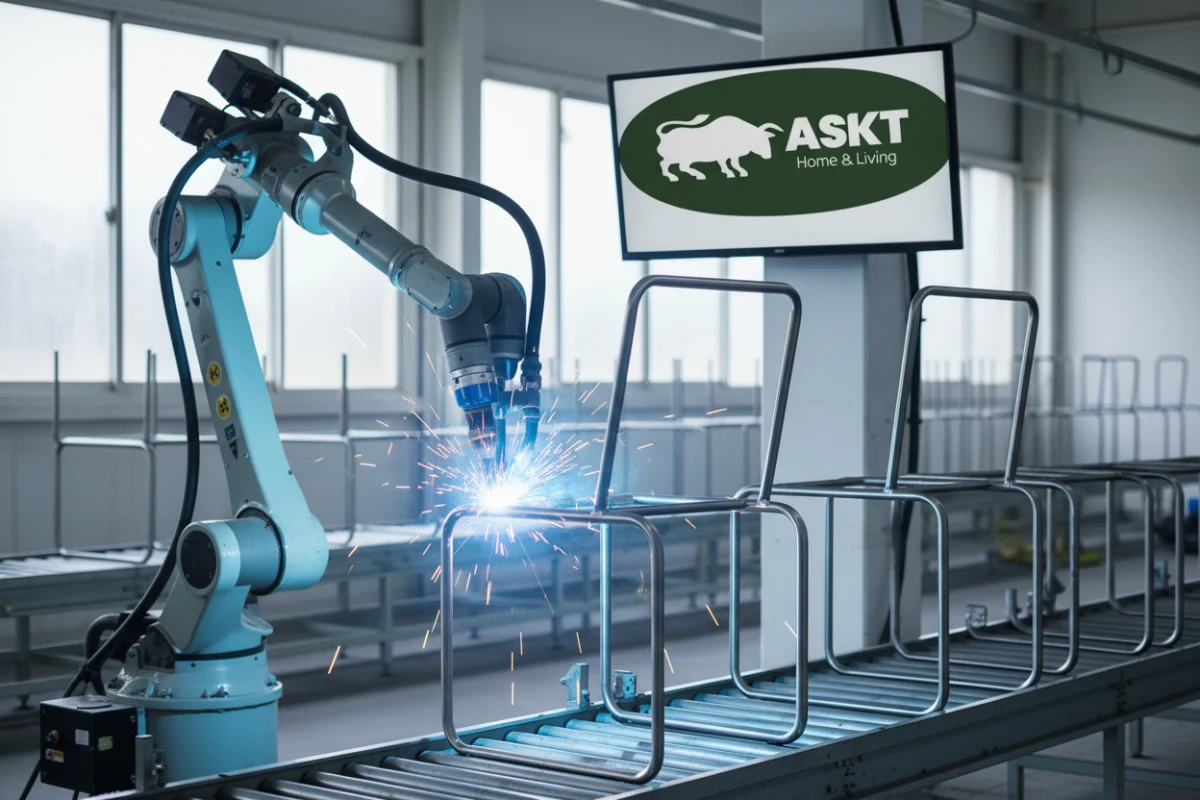
- Robotic Welding Arms: For metal-frame dining chairs, weld quality is a major point of structural failure. Under manual welding, worker fatigue leads to inconsistent penetration and weak joints. Robotic welding arms execute uniform, deeply penetrated welds that eliminate structural weak points, ensuring the frame can easily handle high-weight thresholds over many years.
- Four-Legged Structural Nailing: Specialty automated nailing machines install glides and floor protectors uniformly, preventing uneven chair legs and protecting delicate European flooring materials like parquet or laminate.
Furthermore, the interior design of the seat shell dictates longevity. While cheaper suppliers rely solely on basic foam, quality manufacturers integrate pocket spring seating systems. Similar to premium mattress construction, pocket springs maintain their ergonomic shape, prevent the seat from sagging over years of heavy use, and deliver superior sitting comfort. For contract and domestic markets alike, this high-resilience support directly translates to fewer customer complaints and longer product life cycles.
What upholstery and fabric performance criteria are essential for DACH region dining furniture?
The choice of upholstery directly influences customer satisfaction and product return rates. In the German market, where consumers expect high durability and easy maintenance, dining chair manufacturers for Germany must offer technically advanced fabrics that are thoroughly tested for performance.
Importers must demand verified laboratory data for the following fabric properties:
- Abrasion Resistance (Martindale Test): Seating fabrics must withstand high-cycle Martindale tests (typically at least 30,000 to 50,000 cycles for residential use, and higher for contract environments) to ensure the surface will not wear out, thin, or pill over time.
- Colour Fastness to Light: Dining rooms are often filled with natural light. Fabrics must demonstrate high color fastness to prevent fading and discoloration when exposed to UV rays.
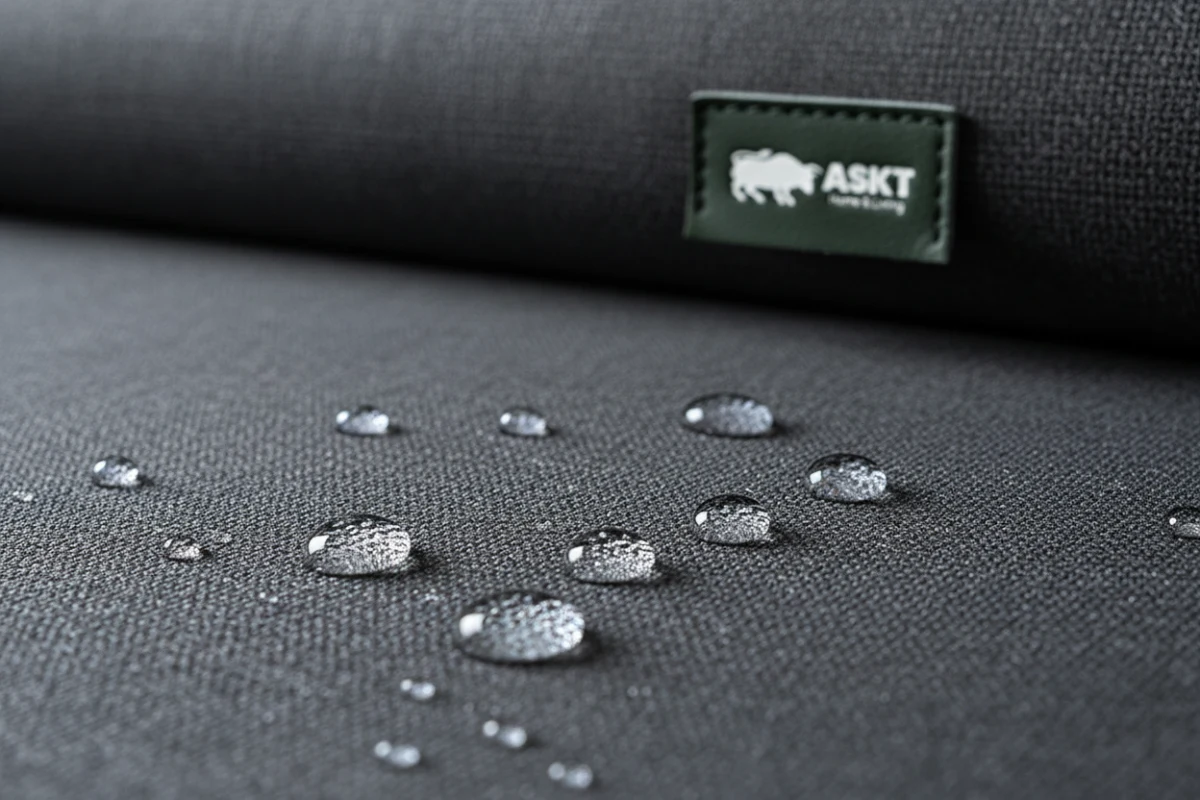
- Waterproof and Easy-Clean Performance: Modern B2B buyers look for advanced hydrophobic and oleophobic textiles. Liquid spills, such as red wine, coffee, or olive oil, should bead on the fabric's surface instead of soaking into the fibers. This allows end consumers to wipe away stains with a simple damp cloth, avoiding the use of harsh chemical cleaners.
- Pet-Friendly and Scratch Resistance: Pets are a common part of households in the DACH region. High-density weave structures prevent pet claws from snagging and pulling the threads. This scratch-resistant surface dramatically reduces fabric fatigue and maintains the chair's pristine appearance.
Additionally, the fabric must remain breathable. Hydrophobic coatings can sometimes trap heat, but quality materials use advanced micro-ventilation structures that allow air circulation, preventing heat build-up and ensuring a comfortable dining experience even during extended family gatherings.
What engineering and material standards are critical when sourcing dining tables for German B2B buyers?
Sourcing dining tables for German B2B buyers requires a deep appreciation for structural engineering, material science, and mechanical precision. A dining table is the physical centerpiece of the home; it must remain completely flat, stable, and durable under daily stress and seasonal climate shifts.
- Material Selection and Core Stability: Standard solid wood tables can react negatively to the dry, heated air of German homes during winter, leading to warping or cracking. To prevent this, good suppliers utilize stable material combinations like premium oak veneer applied over dense, multi-layer engineered cores. This construction gives the table the beautiful, warm appearance of natural solid oak while eliminating the structural shifting common in solid wood. Sintered stone is another highly demanded tabletop option. Sintered stone provides exceptional resistance to scratches, high temperatures, chemical cleaners, and staining, making it a highly durable solution for modern families.
- Precision Extension Mechanisms: Extendable dining tables are highly popular in Germany due to compact urban dining spaces. Importers must ensure that the extension tracks are made of heavy-duty, powder-coated metal that glides smoothly without binding. The gap between the table leaves must be minimal and perfectly uniform when closed, showcasing high precision.
- Knocked-Down (KD) Engineering: Shipping assembled tables is financially unviable due to high ocean freight rates. Thus, dining tables must feature robust KD designs. This requires high-strength metal-to-metal connection points rather than simple wood screws, ensuring that the table can be assembled and disassembled multiple times without losing structural rigidity.
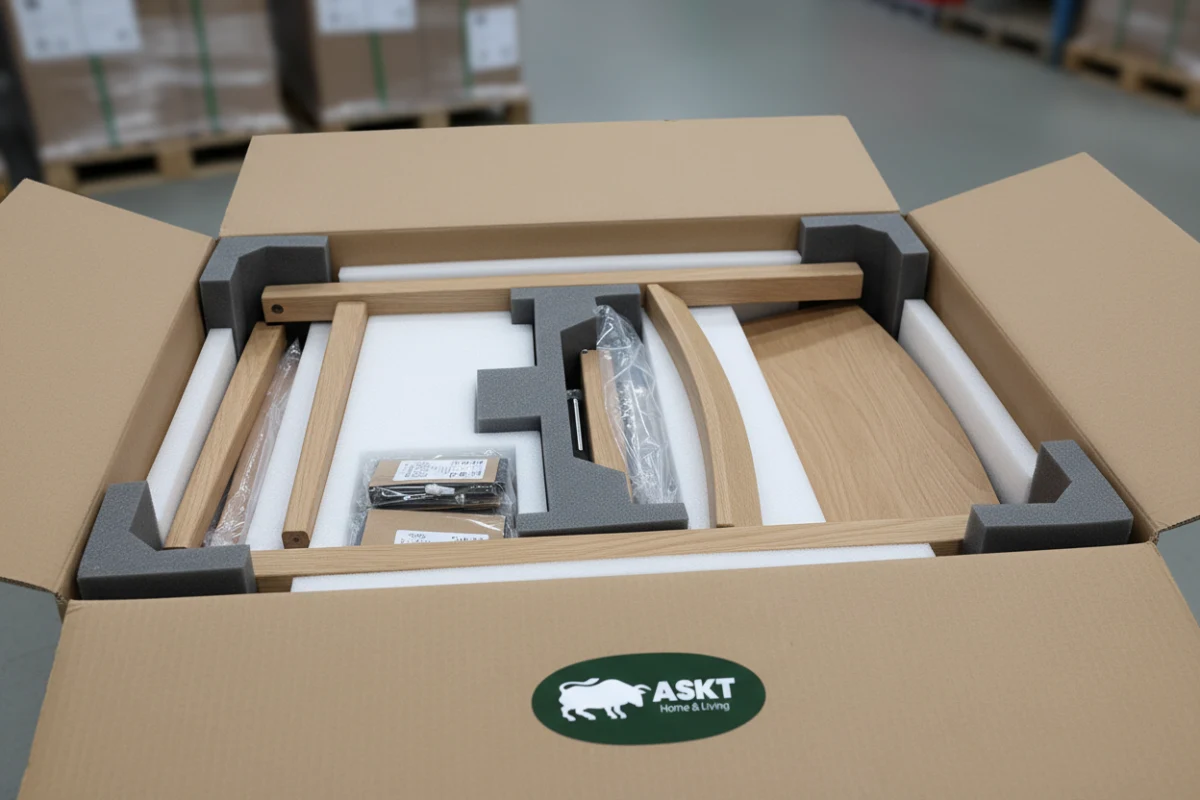
- Packaging and Transport Safety: Packaging is the final line of defense against logistical damage. Good suppliers wrap table edges in dense foam guards, place heavy-duty cardboard corners on all sides, and package everything in double-walled, five-layer corrugated cartons. The packaging must undergo strict drop-testing protocols to ensure it can survive container vibrations, transit transfers, and last-mile courier handling without scratching the delicate surfaces.
How do wholesale furniture suppliers for DACH region help importers optimize inventory and lower shipping costs?
For furniture wholesalers, importers, and e-commerce brands, managing high inventory costs and large minimum order quantities (MOQs) is a major business challenge. Traditional sourcing models often require buying a full container of a single SKU, which ties up substantial working capital and fills valuable warehouse space with slow-moving stock.
High-quality wholesale furniture suppliers for DACH region address this pain point through modular product design.
- Modular Component Systems: By engineering standardized seat shells that can be paired with multiple interchangeable leg styles (such as classic metal legs, solid wood legs, or auto-return swivel bases), suppliers enable buyers to create a massive variety of SKUs from a small inventory of components. For instance, stocking 200 seat shells in three core colors and 100 sets of different leg styles allows a retailer to offer up to nine different product configurations while minimizing warehousing risks.
- Mixed Container Support: Leading factories allow B2B buyers to mix multiple styles, fabrics, and configurations within a single 40HQ shipping container. This flexibility is vital for e-commerce brands and smaller retail chains that need to test new design collections in the German market without committing to massive initial volumes of a single model.
- Flat-Packed KD Logistics: Flat-packing knockdown furniture significantly increases container loading density. By designing furniture that packs flat, suppliers can fit more units into a single container. This reduces the international shipping cost per unit, helping DACH region importers maintain competitive margins despite fluctuating ocean freight rates.
What clear communication and quality control workflows ensure a seamless transnational procurement process?
Distance, timezone differences, and language barriers can easily lead to costly errors in custom OEM and ODM furniture manufacturing. Professional B2B suppliers mitigate these communication risks by establishing highly structured design, sampling, and quality control workflows.
- Structured Product Development: The process begins with detailed CAD drawings that outline precise physical dimensions, metal tube thicknesses, foam densities, and seam placements. Before mass production starts, a physical prototype must be developed and thoroughly tested for structural balance and material color matching.
- Transparent Quality Control (QC): Importers should not wait until the cargo arrives at their warehouse to discover quality issues. Professional suppliers implement comprehensive inline and pre-shipment inspections. A complete QC report—documenting wood moisture levels, seam stitching, hardware counts, and carton drop test results, accompanied by clear photographic and video evidence—must be sent to the buyer for formal approval before container loading. This level of transparency builds trust and guarantees that every shipment matches the approved sample.
By selecting a manufacturer that prioritizes these structured procurement workflows, German product managers can significantly shorten their product development cycles and bring high-quality collections to market with confidence.
If you are evaluating dining chair or dining table suppliers for the European market, ASKT can support you with product development, customization, quality testing and stable export experience. Finding the right partner means selecting a supplier that understands the high-quality benchmarks, social compliance regulations, and logistical efficiencies required for long-term B2B success.