Sourcing the Home and Kids Furniture Collective: A B2B Compliance and Material Engineering Guide for European Buyers
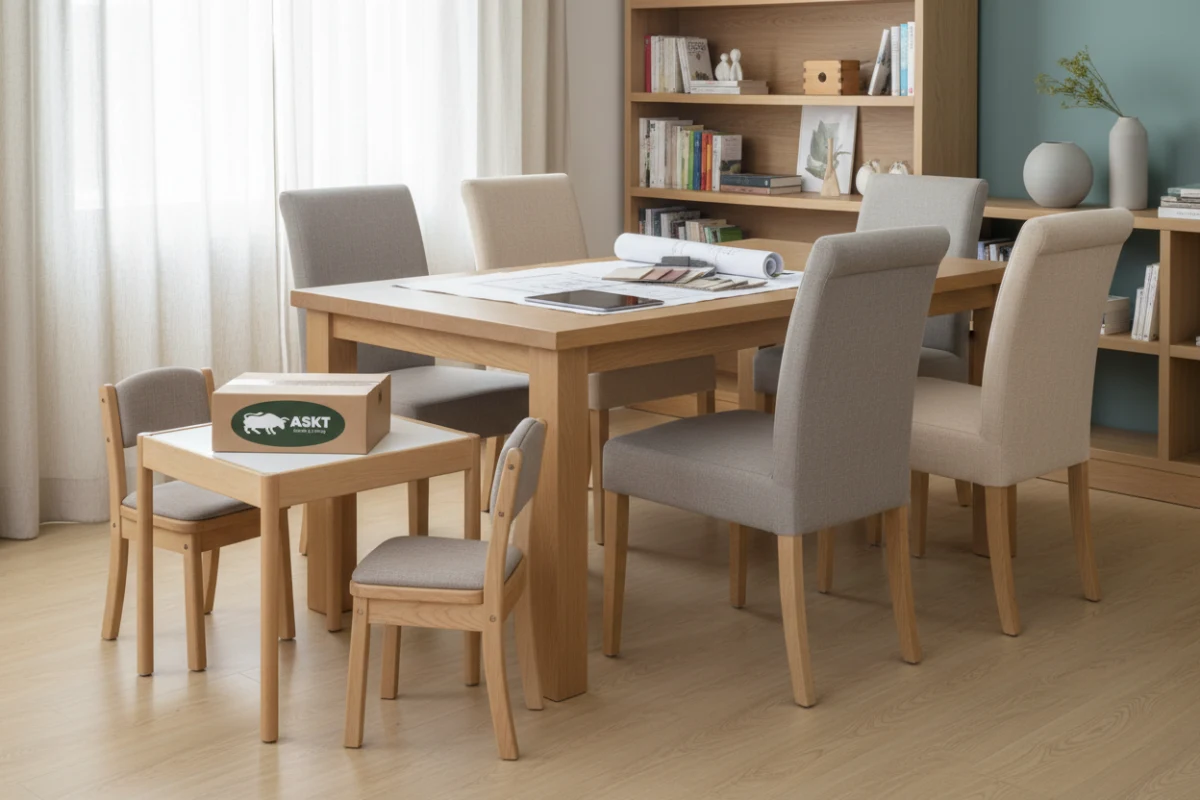
European residential trends have undergone a profound evolution over the past decade. The traditional, rigid boundaries separating child-specific play zones from formal adult living areas are fading rapidly. In key European markets such as Germany, the Netherlands, the United Kingdom, Poland, Switzerland, and Ireland, contemporary families are actively seeking unified, multifunctional living environments where the dining area serves as a communal hub. In these modern spaces, the central dining area is no longer used exclusively for evening meals. Instead, it operates dynamically throughout the day as a home office, a school homework station, a creative crafting bench, and a children's play surface. Sourcing products that cater directly to this multi-generational lifestyle has become a highly lucrative yet challenging priority for furniture retail groups, e-commerce brands, and wholesale importers. This demographic shift has elevated a major product category: the Home and Kids Furniture Collective.
Sourcing for this specialized segment requires a meticulous balance between contemporary aesthetic appeal, strict European safety compliance, and robust structural engineering. For professional B2B buyers, evaluating family-centric furniture is not simply a matter of visual curation; it is an exercise in technical verification, material safety assessment, and supply chain risk mitigation. When a dining chair must safely support a heavy adult, survive frequent food and liquid spills from toddlers, and resist the scratching of household pets, standard residential furniture grades are no longer sufficient. This detailed B2B guide explores the manufacturing principles, compliance standards, material selections, and modular logistics strategies necessary to construct a highly successful and reliable family dining range.
Sourcing for the Home and Kids Furniture Collective: Market Realities and Commercial Strategy
Why has the concept of a coordinated Home and Kids Furniture Collective captured the attention of category managers and product development teams across Europe? The primary driver is the demand for space efficiency in urban open-plan homes. Modern parents are unwilling to compromise their home's interior design aesthetic for the sake of utility. They reject brightly coloured, temporary plastic children's furniture in favour of cohesive pieces that blend seamlessly with high-end Scandinavian or contemporary adult interiors. Sourcing an integrated range allows retail chains and importers to capture cross-category sales from design-conscious parents who want coordinated styling across all seating and tables in their living spaces.
From a purely commercial perspective, stocking separate adult and children's collections carries substantial inventory risks, increases warehousing overheads, and leads to high minimum order quantities (MOQs). By integrating design signatures, raw materials, and manufacturing processes into a single collective, B2B buyers can purchase unified shipments and optimize container loading. A single coordinated shipping container can contain matching upholstered dining chairs, high-durability extension dining tables, matching dining benches, and baby-friendly seating options that share identical fabric selections, powder-coated metal frames, and premium oak veneer finishes. This operational alignment satisfies the consumer's demand for visual harmony while reducing procurement complexities and minimizing stock holding costs.
In addition, partnering with a B2B manufacturer that has a deep understanding of European design trends allows sourcing managers to customize dimensions, fabrics, and configurations. Wholesalers can request specific colorways and finishes that are tailored to regional preferences—such as neutral, muted tones for German buying groups or minimalist, warm wood accents for Dutch retail outlets. Sourcing a complete collective ensures that your product lines remain highly consistent in quality, which is crucial for building consumer trust and brand loyalty in the competitive home furnishing sector.
Safety First: Navigating European Furniture Compliance BSCI and Technical Regulations
When products are engineered to be used around young children, safety compliance ceases to be optional and becomes a primary legal and financial risk factor. For European buyers, ensuring that your manufacturing partner adheres to strict global and regional standards is the first step in protecting your brand. This begins with verifying European furniture compliance BSCI (Business Social Compliance Initiative) across the manufacturing supply chain.
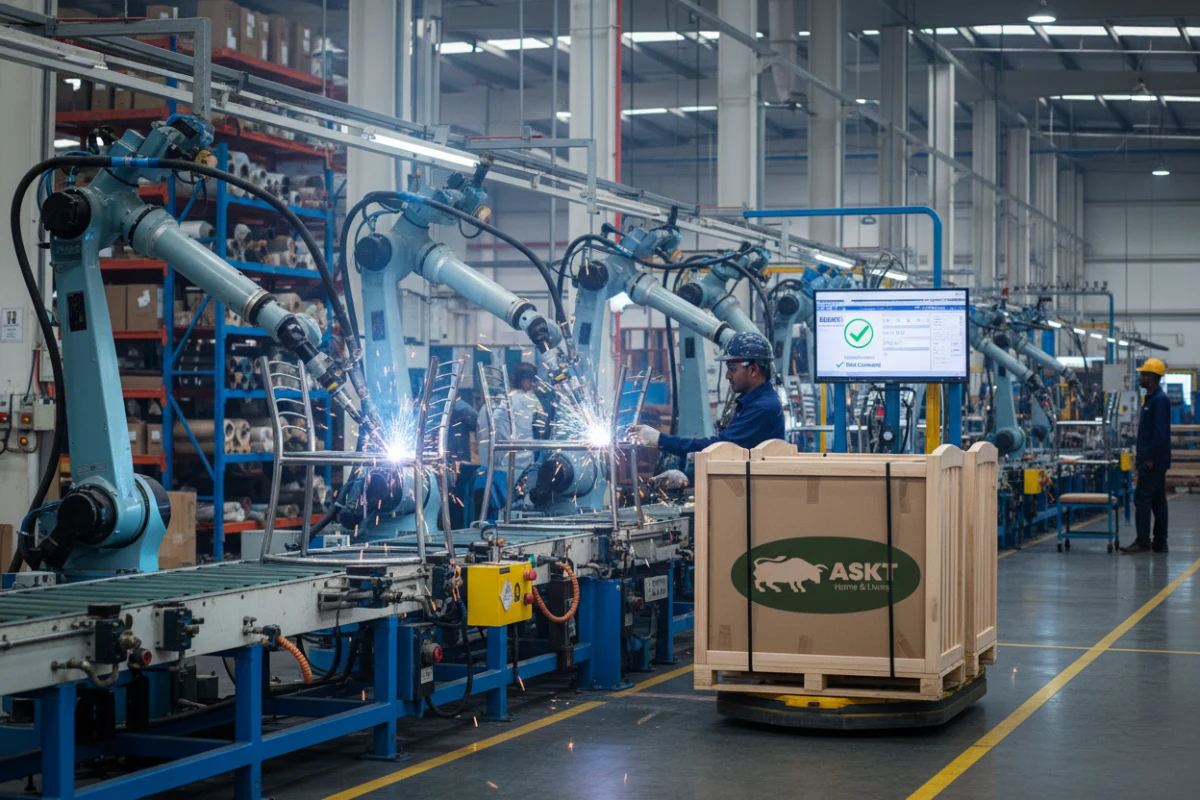
An audited BSCI factory demonstrates a deep commitment to social responsibility, ethical labor practices, and transparent production processes. From a B2B buyer's viewpoint, sourcing from a BSCI-compliant factory guarantees operational continuity and production consistency. When workers operate in safe, regulated conditions with proper ventilation, protective gear, and fair management, the risk of sudden production delays, quality fluctuations, and material substitutions is dramatically minimized. At ASKT, our production facility prioritizes these compliance standards, ensuring that every dining chair, table, and bench is manufactured under clean, safe, and highly regulated conditions. This disciplined manufacturing environment directly influences the physical, structural integrity of the finished furniture.
Beyond social compliance, technical and chemical safety regulations are exceptionally stringent for any family-focused collection. Furniture destined for European homes must adhere to rigorous product safety guidelines:
- Chemical Safety and Emissions: All engineered wood components, birch plywood, MDF backrests, and premium oak veneer tabletops must meet strict European formaldehyde emission standards. Ensuring that adhesives, paints, and wood finishes contain zero or minimal volatile organic compounds (VOCs) is critical for preserving indoor air quality where toddlers crawl and play.
- Physical Hazard Mitigation: A dedicated family dining range must undergo extensive product testing to eliminate physical risks. This includes removing pinch points where small fingers could get trapped, ensuring there are no sharp metal burrs or rough wooden edges, and verifying structural stability.
- Centre of Gravity and Stability: Children rarely sit completely still. They slide, climb, and lean over the edges of dining chairs. Manufacturers must design frames with a stable centre of gravity to prevent the furniture from tipping sideways or backward when dynamic vertical and lateral loads are applied.
Fabric Performance: Partnering with an OEKO-TEX Dining Chair Manufacturer
In a bustling family household, dining upholstery is subjected to extreme wear and tear. Spilled milk, dropped food, oil stains, and pet claws are part of daily life. Parents want soft, premium-feeling fabrics, but they also demand exceptional durability and chemical non-toxicity. Sourcing from a certified OEKO-TEX dining chair manufacturer is one of the most effective ways for a B2B importer to establish trust with retail buyers and consumers.
An OEKO-TEX certification guarantees that every component of the upholstered chair—including the outer fabric, the sewing threads, the internal polyurethane foam padding, and the water-based laminating glues—has been thoroughly tested for harmful chemicals and toxic residues. This ensures that the seating is completely safe for direct skin contact, protecting infants and young children from skin irritations and chemical exposure. Furthermore, offering sustainable fabric options, such as upholstery made from recycled post-consumer plastics, allows B2B buyers to align their product portfolios with European green procurement policies and ESG initiatives, appealing directly to environmentally conscious consumers.

Beyond chemical safety, fabric performance must be engineered to withstand heavy residential use. This requires focusing on key technical fabric specifications:
- Abrasion Resistance: The upholstery must achieve excellent ratings in standard abrasion tests to ensure the fabric does not thin, pill, or tear after years of daily friction from clothing and movement.
- Waterproof and Easy-Clean Technologies: Family-centric dining collections rely on advanced fabric performance. We utilize high-performance, easy-clean fabrics with hydrophobic characteristics. Liquid spills pool on the surface of the fabric rather than absorbing into the interior foam core, allowing parents to wipe away messes with a simple damp cloth before stains can form.
- Colour Fastness: Fabrics must maintain their visual appeal even when placed near large dining room windows. High colour fastness to light prevents premature fading and ensures that coordinated sets retain their uniform look over time.
- Pet-Friendly Materials: Standard fabrics with loose weaves are highly vulnerable to snagging from cat and dog claws. Sourcing high-density woven fabrics or specialized microfibres ensures that pet claws cannot easily catch the threads, extending the overall lifespan of the furniture in pet-owning households.
Technical Criteria for Baby Friendly Dining Chairs Wholesale
When category managers evaluate factory samples for a baby friendly dining chairs wholesale program, they must look past superficial aesthetics and inspect the physical engineering of the seating frames and cushions. A secure, child-safe dining chair requires specific structural attributes that prevent accidental injuries and handle heavy-duty daily use.
First, consider frame geometry and structural stability. Traditional dining chairs with completely vertical legs have a narrow base footprint, making them prone to tipping under sudden lateral force. For a family collective, seating should feature splayed legs or an angled metal frame base that extends the support footprint beyond the perimeter of the seat shell. This low, stable center of gravity ensures that the chair remains firmly planted on the ground, even when a child attempts to climb up or push against the underside of the dining table.
Second, edge and corner mitigation is critical. Sharp, 90-degree corners on wooden seat pans, metal support tubes, or stone table edges represent significant impact hazards for active children. B2B buyers should ensure their manufacturer utilizes advanced CNC machining and precise wood routing to round off all edges and corners to a smooth, safe radius. There must be no exposed hollow metal tubes; all leg ends should be sealed with heavy-duty, flush-fitting ABS plastic glides that protect both curious fingers and delicate hardwood floors.
Third, examine the internal seating construction. To support healthy posture and long-term seating comfort, chairs should incorporate ergonomic contours. Utilizing high-density, high-resiliency polyurethane foam is essential to prevent the cushioning from sagging or losing its shape over time. For premium dining chair lines, incorporating pocket spring seating interiors provides superior comfort and structural rebound, ensuring the seat cushion recovers its original loft even after thousands of compression cycles.
Finally, the structural frame material is key to long-term reliability. While traditional solid wood frames can loosen at the joints due to seasonal humidity changes in European homes, high-gauge carbon steel metal frames provide exceptional durability. Applying an electrostatic powder coating to these metal frames creates an ultra-durable, scratch-resistant matte finish that resists impact chipping from toys, cleaning equipment, and daily knocks.
For coordinated dining tables within the collective, material selection is equally vital. We focus on two primary premium finishes:
- Sintered Stone Tops: Created under extreme pressure, sintered stone is completely scratch-proof, heat-resistant, non-porous, and hygienic. Children can draw directly on the surface, and hot pans can be placed down without leaving a trace.
- Oak Veneer Finishes: For homes demanding natural warmth, we apply premium grade-A European oak veneer over highly stable Birch plywood or MDF cores, sealed with certified zero-VOC, formaldehyde-free, water-based topcoats. This design resists warping and splitting while keeping the indoor air clean.
Modular Dining Furniture Sourcing: Lowering Inventory Risk and Optimizing Container Loading
One of the most persistent challenges in modern B2B furniture procurement is balancing the need for product variety with the high carrying costs of holding inventory. If a retailer wants to offer a dining chair in six distinct fabric colours and three different frame designs (such as matte black metal legs, oak veneer legs, and swivel bases), they are forced to stock eighteen independent stock-keeping units (SKUs). This fragmentation drastically inflates warehousing costs and complicates container load planning.
To solve this major operational pain point, savvy category managers implement a strategy of modular dining furniture sourcing. This approach relies on manufacturing standardized, interchangeable seat shells and independent, modular base assemblies that share identical bolt-pattern configurations.
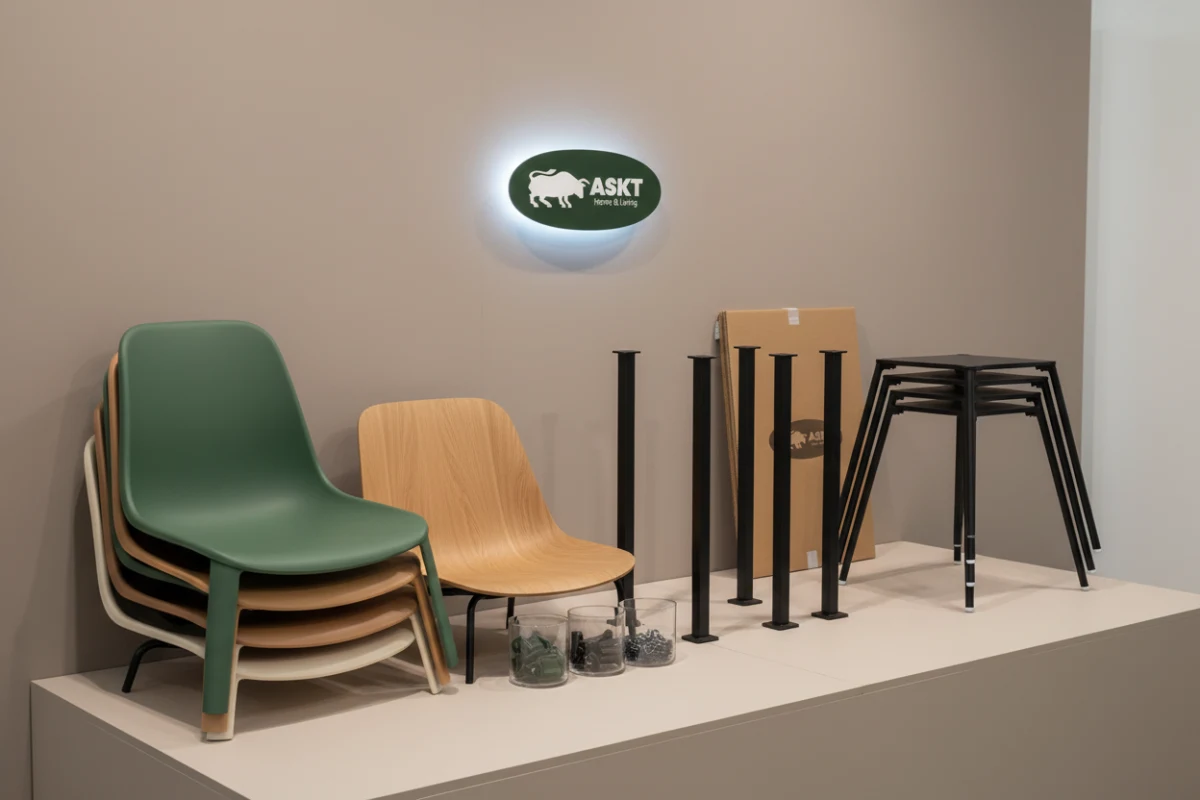
By utilizing modular construction, a wholesaler or importer can source separate components and configure them dynamically based on active market demand. This engineering strategy provides several transformative business benefits:
- Substantial MOQ Reductions: Importers can purchase a large volume of a single, standardized seat shell style to meet fabric dyeing minimums, while pairing them with a variety of metal, wood, or swivel bases to create distinct product lines with minimal upfront inventory investment.
- Optimized Container Loading and KD Structures: Fully assembled chairs contain a massive amount of empty, non-revenue-producing air space inside a shipping container. By utilizing Knock-Down (KD) structures, seat shells stack tightly together, and base frames pack flat. This packaging optimization allows up to four times more units to fit into a standard 40-foot high-cube container, drastically lowering the ocean freight cost per unit and improving supply chain margins.
- Rapid Adaptation to Trends: If a specific frame finish—such as matte black metal or a specialized swivel mechanism—starts selling rapidly, the buyer can reorder only those specific components without accumulating excess, unsellable seat cushions.
At ASKT, we provide comprehensive OEM and ODM support, including customized packaging solutions, drop-test verified boxes, and private-label branding. Our product testing lab subjects all new modular designs to rigorous load-bearing fatigue trials and mechanical stability tests before mass production. This ensures that when your flat-packed modular shipments arrive at your distribution centers, they are ready for immediate retail assembly or direct-to-consumer delivery, with zero quality surprises.
Conclusion: Building a Reliable Family-Centric Portfolio with ASKT
Sourcing a successful Home and Kids Furniture Collective requires a professional B2B partner that understands the delicate balance between design aesthetics, strict safety compliance, and logistical efficiency. European furniture wholesalers, retail chains, and e-commerce brands cannot afford to compromise on chemical non-toxicity, structural stability, or shipping optimization. Partnering with an ethical, experienced manufacturer ensures that your family-oriented product lines perform beautifully in the showroom and safely in the home.
ASKT brings over twenty years of dedicated furniture manufacturing and supply chain expertise to our global B2B partners. By combining reliable Chinese manufacturing efficiency with a deep understanding of European compliance standards and contemporary designs, we help you eliminate sourcing risks, optimize your shipping logistics, and maximize retail margins. If you are looking to expand your contemporary dining collections, develop customized private-label solutions, or optimize your material compliance, our engineering and design team is ready to assist. To start designing your next highly successful collection, please Submit Product Brief.