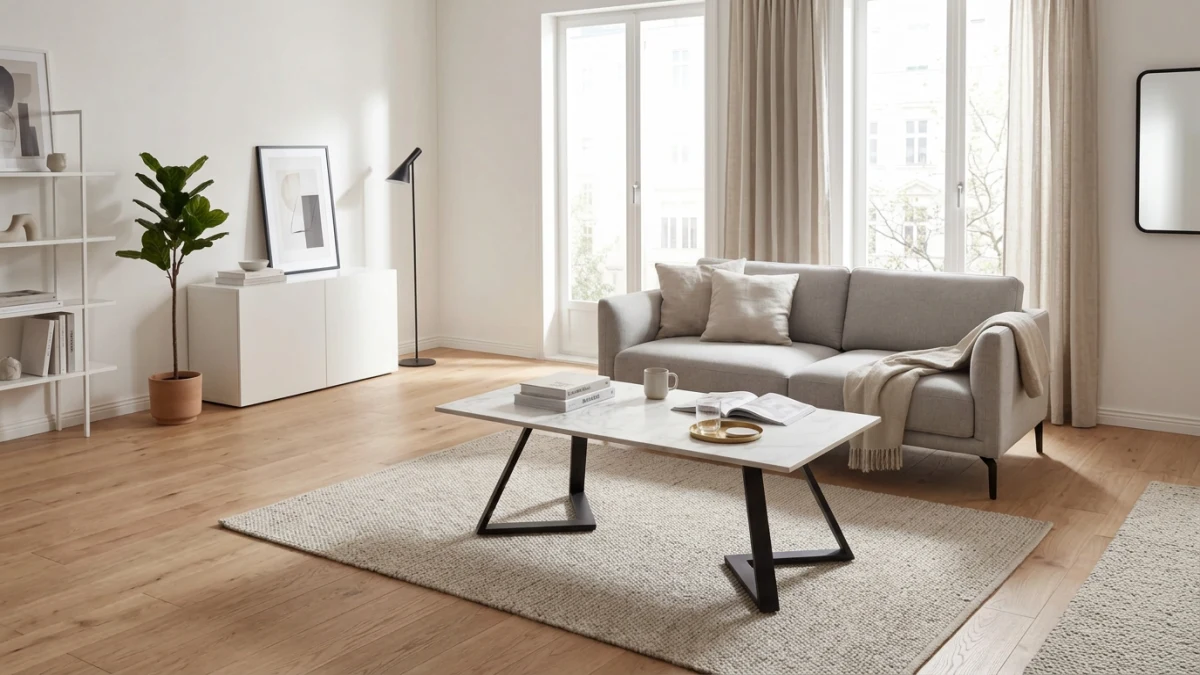
Hotel Coffee Tables Buying Guide — Materials, Finishes, and Contract Specifications
Sourcing contract hotel coffee tables requires evaluating structural frame stability, high-performance surface materials like sintered stone and oak veneer, edge detailing, and optimised packaging to withstand high-frequency hospitality use. Professional procurement teams must balance aesthetic appeal with contract hospitality specifications, ensuring scratch resistance, easy cleaning, knock-down assembly integrity, and container freight efficiency to achieve long-term commercial value across European hotel developments.
What Are the Core Hospitality Coffee Table Specifications for Commercial Projects?
Procuring furniture for commercial hospitality projects involves operational demands that residential-grade furniture cannot withstand. While domestic coffee tables are designed for occasional light use by a small household, contract hotel coffee tables placed in guest rooms, executive suites, and bustling reception lounges endure continuous mechanical wear, frequent sanitisation, and unpredictable guest treatment. Establishing comprehensive hospitality coffee table specifications before issuing requests for quotation (RFQs) ensures that your supplier manufactures pieces capable of surviving heavy commercial service.
Key baseline parameters for commercial hospitality coffee tables include:
- Structural Load Capacity: Coffee tables in hotel environments must withstand unexpected point loads, such as guests sitting on the edge or resting heavy luggage during check-in. Contract tables must maintain complete structural integrity under static loads of at least 100 kg to 150 kg without frame deflection or joint loosening.
- Impact and Tipping Stability: European commercial testing standards, including EN 12521 (safety, strength, and durability for domestic and contract tables), dictate lateral stability criteria. Tables must resist tipping when lateral force is applied to the perimeter edge.
- Chemical and Stain Resistance: Daily housekeeping protocols rely on sanitising agents, ethanol solutions, and commercial detergents. Table surfaces must resist chemical degradation, discolouration, and moisture rings caused by hot beverages, acidic juices, or alcoholic drinks.
- Wear and Scratch Resistance: High-contact surfaces must withstand sliding tableware, laptop computers, keys, and room service accessories without developing unsightly micro-scratches.
- Indoor Air Quality and Environmental Standards: Contract furniture must comply with strict European environmental and chemical emission regulations, utilising formaldehyde-free adhesives and low-VOC finishes.
To understand the technical gap between residential furniture and contract-grade products, review the comparative baseline specifications below:
| Specification Parameter | Residential Grade | Contract Hospitality Grade |
|---|---|---|
| Static Weight Capacity | 40 kg – 60 kg | 100 kg – 160 kg+ |
| Surface Scratch Resistance | 2H – 3H pencil hardness | Mohs 6–7 (Sintered Stone) / High-build PU coating (Oak Veneer) |
| Metal Wall Thickness | 0.8 mm – 1.0 mm tubular steel | 1.2 mm – 2.0 mm structural carbon steel |
| Coating Type | Standard air-dry paint / single lacquer | Electrostatic thermoset powder coating (60–90 µm) |
| Joint Mechanism | Direct wood screws / basic cam locks | Pre-embedded steel inserts / reinforced welded brackets |
| Packaging Standard | 3-ply carton / standard bubble wrap | 5-ply/7-ply double-wall cartons + drop-tested edge protection |
How Do Hotel Coffee Table Materials and Finishes Perform in High-Traffic Environments?
Selecting appropriate hotel coffee table materials and finishes requires assessing the specific location and operational traffic of each hotel zone. A coffee table specified for a luxury presidential suite experiences different wear patterns than a low coffee table placed in a busy lobby lounge or bar waiting area. Understanding material properties allows sourcing specialists to specify solutions that maintain their original appearance over extended lifecycles.
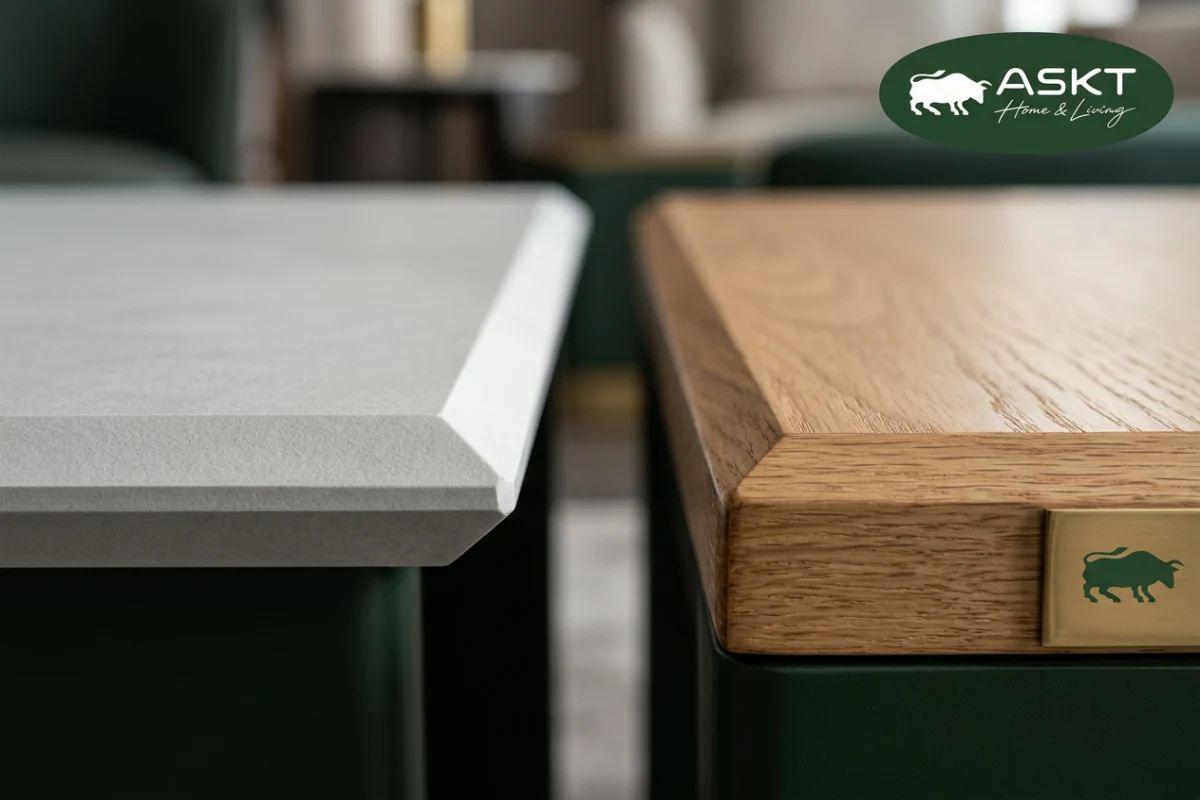
Commercial table surfaces must balance visual appeal, tactile quality, housekeeping maintenance, and long-term repairability. The three dominant material categories used in modern European hotel procurement include:
- Sintered Stone: A high-tech composite created by compacting natural minerals under extreme heat and pressure. It delivers exceptional durability, non-porous hygiene, and authentic stone textures.
- Oak Veneer and Engineered Wood: Thin slices of premium natural oak bonded to high-density composite substrates. It provides warmth, acoustic softening, and biophilic interior harmony.
- Powder-Coated Metal: Carbon steel or aluminium components used for structural subframes and table surfaces, offering clean geometric profiles and impact resilience.
Why Is a Sintered Stone Coffee Table Contract Specification Superior for Modern Hotels?
A sintered stone coffee table contract specification has become the benchmark for four-star and five-star hospitality developments across Europe. Natural marble and granite have traditionally delivered luxurious visual texture, but their natural porosity makes them vulnerable to staining, acid etching, and micro-cracking in hotel environments. Sintered stone eliminates these maintenance challenges while replicating the rich veining of Calacatta, Laurent Black, Carrara, and travertine.
Key manufacturing and performance advantages of sintered stone include:
- Virtually Zero Porosity: Sintered stone has a water absorption rate below 0.1%. Red wine, black coffee, citrus juices, and tea cannot penetrate the surface, preventing deep stains and eliminating the need for periodic chemical sealing.
- Exceptional Scratch and Abrasion Hardness: Rated at Mohs 6 to 7, sintered stone resists scratches from cutlery, abrasive ceramic cups, metal room keys, and luggage hardware.
- High Thermal Resistance: Hot teapots and coffee mugs can be placed directly on sintered stone surfaces without scorching, blistering, or leaving permanent discolouration rings.
- Hygienic and Easy to Clean: The dense, non-porous surface prevents bacterial colonisation and can be disinfected quickly using standard hospitality-grade cleaning solutions.
- UV and Fade Resistance: Inorganic mineral pigments remain colourfast even when placed near sunlit hotel atrium windows or floor-to-ceiling glass facades.
When specifying sintered stone for commercial coffee tables, buyers must ensure the factory uses adequate slab thickness (typically 6 mm or 12 mm). For 6 mm slabs, a solid composite backing board or a rigid metal subframe must be integrated beneath the stone to distribute downward impact loads and prevent fracturing.
When Should Hospitality Buyers Specify Oak Veneer or Metal Surfaces?
While sintered stone excels in heavy-traffic and food-and-beverage environments, wood and metal finishes remain essential for specific interior concepts and operational zones.
Specifying Oak Veneer for Hospitality Suites
Oak veneer bonded over high-density fiberboard (HDF) or multi-layer plywood creates warm, tactile, and acoustically balanced atmospheres. In hotel guest rooms and private executive lounges, natural timber grain softens the acoustic profile of the room and complements upholstered lounge seating.
To make oak veneer suitable for commercial hospitality use, procurement teams must verify the finishing protocols:
- Multi-Coat Polyurethane (PU) or UV-Cured Sealers: Commercial veneer requires durable polyurethane or UV-cured topcoats that seal wood pores against moisture ingress while preserving the natural matte grain texture.
- Solid Timber Edge Banding: Applying 1.5 mm to 3.0 mm solid oak edge banding prevents perimeter delamination when housekeeping equipment or luggage strikes the table edge.
- Substrate Density: Using high-density moisture-resistant core boards prevents warping and dimensional movement caused by room humidity fluctuations.
Specifying Powder-Coated Metal Surfaces
All-metal coffee tables fabricated from folded sheet steel or spun aluminium provide a minimalist, industrial aesthetic. They offer extreme impact resistance, are non-flammable, and can be finished in a broad spectrum of architectural colours. Metal surfaces are ideal for outdoor hotel terraces, rooftop bars, and boutique urban hotel lounges.
How Do Metal Frame Engineering and Powder Coating Prevent Structural Failure?
The structural understructure of a commercial coffee table determines its functional longevity. Frame failure, such as broken weld joints, leg flexure, or chipped paint, is a primary reason hotels retire furniture prematurely. Commercial buyers must scrutinise the engineering details of the metal framework.
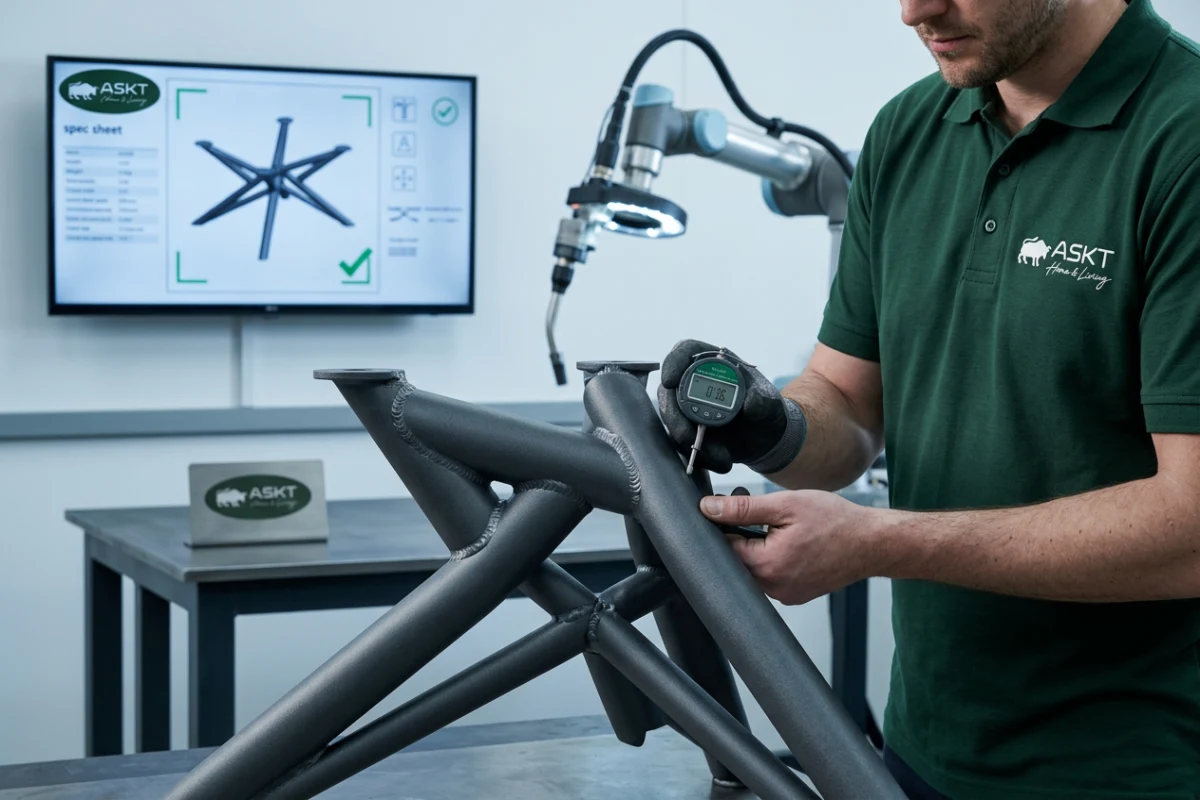
Robotic Welding and Structural Tubing
High-volume contract furniture manufacturing relies on precision robotic welding to achieve consistent weld depth, eliminating cold welds and structural weak points:
- Steel Wall Thickness: Commercial specifications require a minimum wall thickness of 1.2 mm for carbon steel legs and 1.5 mm to 2.0 mm for structural cross-bracing and cantilevered base designs.
- Perimeter Support Frames: For coffee tables with sintered stone or heavy timber tops, the metal frame must incorporate a continuous perimeter apron or diagonal cross-ties. Unsupported spans over 800 mm risk sagging or joint stress over time.
- Hidden Weld Grinding: High-grade manufacturing processes grind and polish structural weld beads smooth prior to coating, ensuring flawless aesthetic transitions at all frame junctions.
Commercial Powder Coating Process Standards
Contract metal frames must receive electrostatic powder coating rather than conventional wet spray paint. The industrial powder coating process delivers superior adhesion, impact resistance, and corrosion protection:
- Multi-Stage Pre-Treatment: Metal components undergo chemical degreasing, pickling, and phosphating washes to eliminate industrial oils and create microscopic adhesion anchoring on the steel.
- Electrostatic Application: Dry thermosetting polymer powder is charged electrostatically and sprayed uniformly across grounded metal components.
- Thermal Curing: Parts are baked in curing ovens at temperatures between 180°C and 200°C, melting the powder into a continuous, chemically cross-linked protective barrier.
- Dry Film Thickness Control: Maintaining a coating thickness between 60 µm and 90 µm ensures impact resistance against vacuum cleaner scuffs and cleaning trolley bumps.
- Tactile Textured Finishes: Specifying fine-sand matte black, textured anthracite, or bronze metallic powders effectively hides daily handling marks and minor scratches compared to high-gloss smooth finishes.
What Edge Detailing and Base Geometries Optimize Guest Safety and Housekeeping?
Edge detailing and base geometries are critical considerations in hotel coffee table design, directly affecting guest safety, liability risks, and housekeeping efficiency.
Edge Detailing for Sintered Stone and Solid Tops
Sharp, 90-degree square corners on stone or glass tabletops represent a chipping vulnerability and an injury hazard in public spaces. Contract specifications must incorporate protective edge detailing:
- Bevelled / Chamfered Edge (1 mm – 2 mm): A subtle 45-degree micro-bevel removes sharp apexes, significantly reducing chip vulnerability when struck by service trolleys or luggage.
- Bullnose or Half-Bullnose Profile: A rounded edge that dissipates impact energy and provides a comfortable, soft tactile contact for guests.
- Recessed Metal Apron: Positioning the sintered stone slab inside a protective metal collar shields stone edges entirely from lateral impacts.
Base Geometries and Operational Housekeeping
- Open Four-Leg Bases: Offer maximum stability, even weight distribution, and generous under-table clearance, allowing housekeeping staff to vacuum and mop floor areas quickly.
- Central Pedestal Bases: Eliminate corner leg obstructions around lounge seating groupings. Pedestals must incorporate heavy cast-iron or thick steel base plates to maintain a low centre of gravity and prevent tipping.
- Floor Protection Glides: High-traffic hotel floors (hardwood, polished concrete, or luxury vinyl tile) are prone to scratching. Contract tables should be fitted with heavy-duty M8 adjustable levelling glides featuring non-marking nylon or integrated felt bases.
How Do Knock-Down Structures and Packaging Optimization Reduce Sourcing Costs?
For European furniture wholesalers, importers, and contract procurement directors, international logistics efficiency and packaging durability directly impact project profitability and delivery schedules. Freight costs for fully assembled coffee tables can quickly erode budget margins due to empty air volume inside shipping containers.
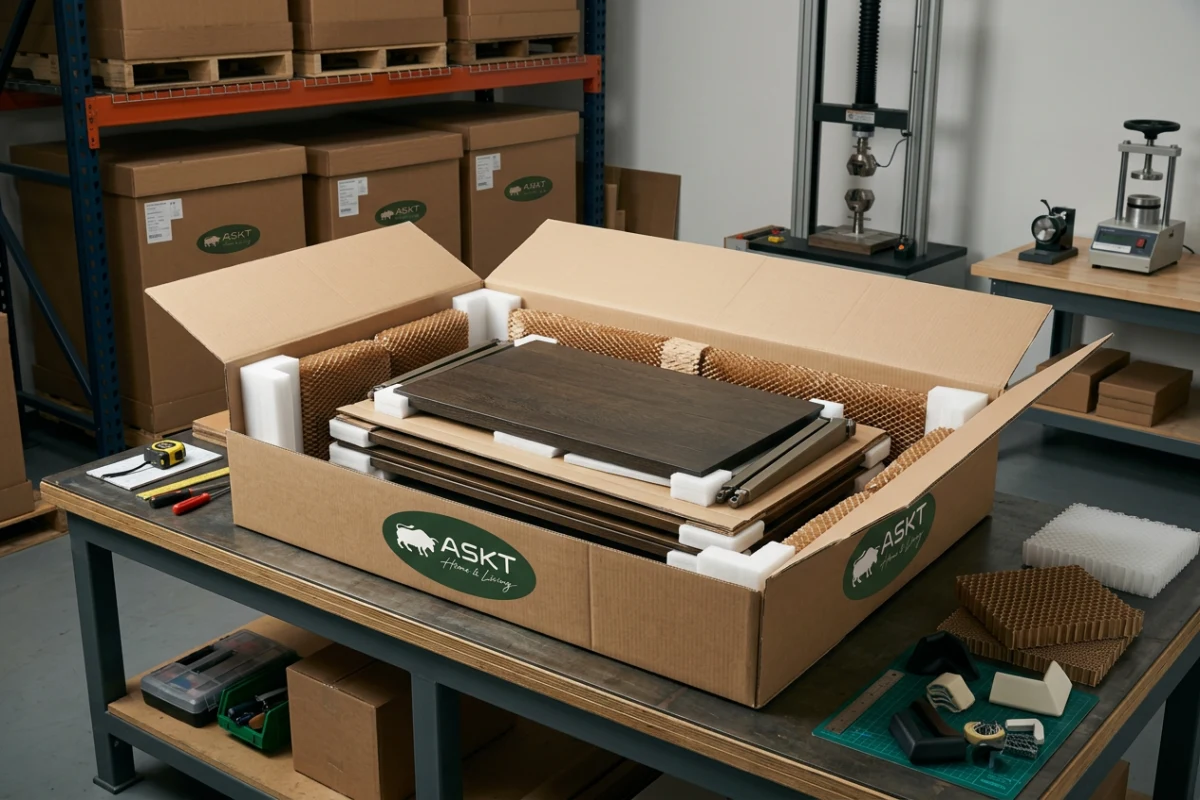
Knock-Down (KD) Engineering vs. Fully Assembled Frames
Modern knock-down (KD) engineering allows manufacturers to ship contract coffee tables in flat-packed formats without compromising structural stability on site. KD coffee tables utilise precision CNC-machined steel connector brackets and threaded inserts that allow rapid assembly in 4 to 6 minutes using standard hex hardware.
| Operational Metric | Knock-Down (KD) Design | Fully Assembled Design |
|---|---|---|
| 40' HQ Container Capacity | 400 – 600 units | 120 – 180 units |
| Freight Cost Per Unit | Significantly Lower | 2.5x to 3.5x Higher |
| Carton Handling Damage Risk | Low (compact flat profiles) | High (large volumetric boxes) |
| Warehouse Storage Efficiency | High pallet density | Consumes high cubic volume |
| On-Site Assembly Requirement | 4 – 6 minutes per table | Immediate deployment |
Engineered Export Packaging and Drop Protection
Transporting heavy sintered stone tops alongside metal frames requires rigorous export packaging standards:
- High-Density Edge Protection: Replace low-density brittle expanded polystyrene (EPS) with high-density expanded polyethylene (EPE) foam edge profiles and rigid honeycomb paperboard wraps.
- Component Separation: Metal legs and crossbars must be individually sleeved in protective polyethylene foam to prevent metal-to-metal rubbing during sea freight vibration.
- Reinforced Double-Wall Cartons: Use 5-ply or 7-ply export-grade corrugated kraft cartons with reinforced burst strength ratings to prevent corner crushing during pallet handling.
- Wooden Crate Reinforcement for Stone Tops: Bulk sintered stone slabs must be packed within reinforced wooden skeletal crates lined with shock-absorbing foam to prevent transit fractures.
How Should Professional Buyers Evaluate OEM and ODM Customization Options?
Contract hospitality projects often require bespoke adaptations to align with architectural plans, interior palettes, and brand standards. European buyers must evaluate the trade-offs between Original Equipment Manufacturing (OEM) and Original Design Manufacturing (ODM) paths.
ODM Sourcing (Customising Established Modular Platforms)
ODM sourcing involves selecting existing factory-engineered coffee table platforms and tailoring finishes to project specifications:
- Benefits: Low minimum order quantities (MOQs), fast sampling turnaround (7 to 14 days), proven structural engineering, and pre-existing tooling.
- Customisable Parameters: Sintered stone patterns, oak veneer stain tones, powder coating colours, and tabletop dimensions within standard tooling limits.
- Best Suited For: Hotel refurbishment projects, regional purchasing groups, and furniture wholesalers requiring dependable supply with minimal tooling lead times.
OEM Manufacturing (Fully Bespoke Product Development)
OEM development involves creating entirely new table profiles based on custom architectural drawings and interior design packages:
- Benefits: Complete design exclusivity, tailored dimensional proportions, and bespoke functional integrations (such as hidden cable management or under-mount power modules).
- Considerations: Higher initial tooling investments, longer sampling cycles (30 to 45 days), and higher production MOQs to offset custom fabrication costs.
- Best Suited For: Large-scale new hotel builds, international hospitality brand rollouts, and custom contract projects.
Manufacturers like ASKT offer both flexible ODM modular platforms and comprehensive OEM customisation, assisting European buyers in balancing design vision, structural reliability, and production economics.
What Factory Quality Control Checklist Safeguards B2B Furniture Sourcing?
To safeguard project timelines and avoid costly warranty claims, commercial furniture buyers should mandate that manufacturing partners execute a thorough factory-level quality inspection prior to container loading.
A practical 7-point quality control checklist for contract hotel coffee tables includes:
- Dimensional and Tolerance Verification: Measure tabletop length, width, thickness, and total height against approved shop drawings, ensuring tolerances stay within ±1.0 mm for frames and ±0.5 mm for stone slabs.
- Surface Planarity and Visual Inspection: Inspect tabletops under angled 1000-lux inspection lighting to verify surface flatness, absence of warping, consistent grain/vein printing, and chip-free chamfered edges.
- Powder Coating Adhesion and Film Thickness: Verify dry film thickness (60–90 µm) using a digital gauge and conduct cross-hatch adhesion tests on sample production runs to ensure coating durability.
- Weld Integrity and Finishing: Examine all structural joints for full weld penetration, absence of porosity or slag, and smooth grinding along visible junctions.
- Hardware Alignment and Thread Engagement: Test-assemble 5% to 10% of boxed production samples. Ensure machine bolts thread smoothly into embedded inserts without cross-threading or binding.
- Structural Stability and Leveling Check: Place assembled tables on a calibrated granite reference surface to confirm stability, zero frame wobble, and correct levelling glide operation.
- Packaging Drop Test and Labelling Compliance: Perform international standard 1-corner 3-edge 6-face drop tests on packaged units and verify carton shipping marks, barcode accuracy, and assembly guide inclusions.
Frequently Asked Questions About Contract Hotel Coffee Tables
Why is sintered stone preferred over natural marble in hotel coffee tables?
Natural marble is porous, absorbing liquids, red wine, and coffee within minutes, and has a low scratch hardness of Mohs 3 to 4, making it susceptible to acid etching, staining, and cracking. Sintered stone has a non-porous structure with water absorption below 0.1% and a scratch resistance rating of Mohs 6 to 7. This provides the identical visual luxury of marble without requiring periodic chemical sealing, intensive polishing, or expensive restoration maintenance.
What table height is ideal for hotel guest rooms versus lobby lounges?
For standard guest room lounge seating, coffee tables should measure between 420 mm and 480 mm in height, matching or sitting slightly below the sofa seat cushion height. In active public lobbies and executive working lounges where guests frequently place laptops, beverages, and dining trays, a slightly higher profile of 480 mm to 520 mm offers improved ergonomics and easier accessibility.
How can buyers prevent knock-down (KD) coffee tables from loosening over time?
Joint loosening occurs when wood screws strip or standard bolts work loose under lateral table dragging. To prevent joint failure, contract buyers should mandate pre-embedded steel or brass threaded inserts paired with high-tensile metric machine bolts and spring lock washers, rather than relying on direct timber screws or basic cam-lock fasteners.
What are standard production lead times and MOQs for contract hospitality coffee tables?
Standard contract production lead times typically range from 30 to 45 days following pre-production sample approval. For established modular ODM designs, factory MOQs generally start from 50 to 100 units per model, whereas fully bespoke OEM designs requiring custom tooling and extrusion dies typically require 200 units or full container load (FCL) commitments.
If you are planning an upcoming hospitality development, wholesale furniture programme, or contract sourcing project for the European market, consult our dedicated Hotel Coffee Tables Buying Guide — Materials, Finishes, and Contract Specifications to collaborate with our engineering team and source high-durability contract furniture with full manufacturing transparency.