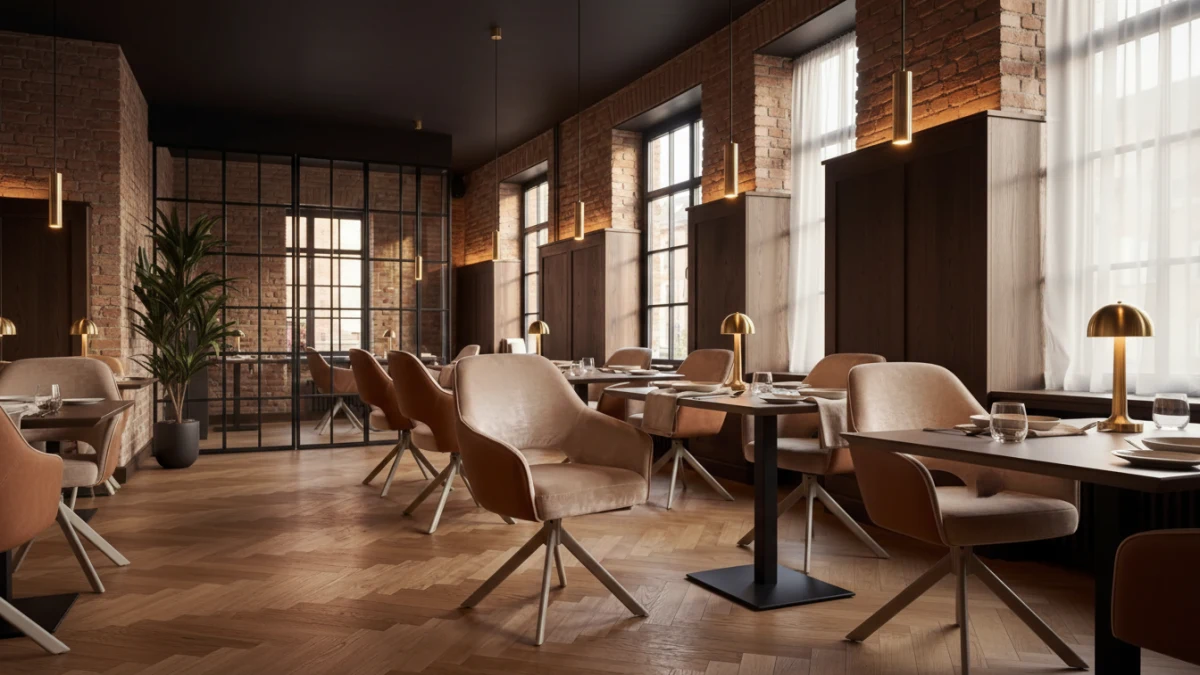
How Hotel Furniture Buyers Use a Color and Finish Schedule for Sample and Batch Consistency
Hotel furniture buyers control samples and production consistency by converting design specifications into a binding hotel furniture color and finish schedule that defines standardized finish codes, physical furniture golden sample approval sign-offs, clear visual tolerance ranges, and first-article retain sample workflows across every factory production run.
What Is a Hotel FF&E Finish Schedule and Why Is It Critical?
A hotel FF&E finish schedule is a centralized technical document used by procurement teams, interior designers, and manufacturing partners to define every approved surface material across guestrooms, dining areas, lounges, and public spaces. Rather than relying on subjective design notes or general descriptions such as "black metal legs" or "natural oak finish," the schedule cross-references every furniture item against exact factory codes, gloss levels, base substrates, and surface treatment requirements.
In hospitality projects, furniture packages frequently include dining chairs, bar chairs, lounge chairs, dining tables, coffee tables, and office desks. These items combine diverse materials—such as metal frames, oak veneer tops, sintered stone surfaces, and upholstered seat shells—that are processed across distinct factory workstations. A centralized schedule acts as a unified technical standard to eliminate discrepancies between designer intent and factory execution.
| Schedule Column Header | Factory Function | Procurement Risk Mitigation |
|---|---|---|
| Item Reference & Zone | Connects each furniture piece to its specific hospitality area | Prevents component allocation errors across large fit-outs |
| Base Substrate | Specifies core materials such as tubular steel, solid wood, or oak veneer | Prevents surface adhesion problems and structural mismatching |
| Finish Code | Designates specific powder coating, wood stain, or upholstery references | Eliminates visual drift between production containers |
| Sheen Level & Texture | Defines gloss targets (such as matte, fine texture, or smooth finish) | Ensures uniform light reflection under hotel lighting |
| Golden Sample Reference | Links components to physical, signed master approval samples | Provides clear, indisputable criteria for quality inspections |
By establishing these parameters within a standardized hotel furniture color and finish schedule, buyers eliminate subjective evaluations during factory audits and provide clear, enforceable benchmarks for production teams.

How Should Buyers Establish Finish Codes for Metal Frames, Wood Veneer, and Upholstery?
To establish reliable finish codes across multiple substrates, buyers must standardize parameters based on the physical properties and manufacturing processes of each material family.
- Metal Frames and Metal Hardware: Specify exact coating systems, such as powder coating on tubular steel or knock-down (KD) frames. Detail exact colour standards alongside required surface textures, such as smooth matte, sand texture, or fine structure. For high-volume dining chairs or bar chairs assembled with automated welding machinery, ensure specifications include proper surface cleaning and pre-treatment so powder coatings adhere evenly around joints.
- Wood and Oak Veneer Components: Wood is an organic material with natural grain and porosity variations. A comprehensive finish schedule must document the base wood substrate, veneer thickness, grain orientation, stain reference, and topcoat chemistry. Specifying clear sheen requirements rather than descriptive terms prevents mismatched reflections across dining tables, coffee tables, and desks.
- Upholstery and Performance Fabrics: Fabric specifications should detail fabric composition, weave structure, and required functional treatments. For hospitality and contract dining environments, finish schedules should highlight performance requirements including abrasion resistance, colour fastness against light and rubbing, breathability, and easy-clean or waterproof characteristics. Pet-friendly and stain-resistant finishes should be recorded to ensure the correct fabric batch is allocated.
- Sintered Stone and Table Surfaces: Document the exact slab pattern reference, thickness, edge profile, and surface finish (such as matte or polished). This ensures consistent visual continuity between dining tables and occasional tables across different areas of the property.
By establishing detailed technical finish codes for every material category, buyers ensure that metal fabricators, woodworkers, and upholstery teams work toward a single, coherent standard.
Why Is Furniture Golden Sample Approval Essential for Project Consistency?
Furniture golden sample approval serves as the crucial link between conceptual design specifications and full-scale factory production. A golden sample is not a preliminary prototype made by hand in a development workshop; it is an engineered, pre-production unit manufactured with the exact tooling, jigs, automatic welding, fabric cutting equipment, and surface lines planned for batch manufacturing.
During golden sample evaluation, hotel buyers and quality control teams inspect practical performance and aesthetic details:
- Ergonomics and Seating Comfort: Evaluating seat height, backrest angle, lumbar support, and internal construction—such as pocket spring seating or resilient foam density—to ensure long-term comfort.
- Mechanical Integration: Verifying the smooth operation of 360-degree swivel mechanisms and auto-return swivel units on dining chairs and bar stools under repeated movement.
- Coating Adhesion and Surface Uniformity: Checking that powder coating on metal frames and KD structures displays an even film thickness without pinholes, bubbling, or edge thinning.
- Upholstery Tailoring and Stitching: Inspecting seam straightness, piping alignment, fabric tension, and resistance to creasing under normal use.
Once approved, the golden sample becomes the binding physical benchmark for all subsequent production. The buyer and factory quality representatives sign physical tags attached directly to identical duplicate units, establishing clear alignment before serial production begins.
How Can Buyers Control Tolerances and Prevent Contract Furniture Batch Consistency Issues?
Contract furniture batch consistency issues arise when minor differences in raw material batches, ambient factory temperatures, or coating application accumulate across multiple production runs. To prevent colour and sheen drift across separate shipments, buyers must define clear tolerance boundaries within their supply agreements.
- Raw Material Receipt: Inspect incoming fabric rolls, steel tubing, veneer panels, and powder coatings against approved master swatches.
- Production Line Setup: Calibrate automated welding, fabric cutting, and coating lines against golden sample parameters.
- First-Article Sign-Off: Inspect the first fully assembled piece from the production line before mass assembly proceeds.
- In-Line Quality Control: Monitor coating uniformity, stitching accuracy, and frame assembly throughout the run.
- Pre-Shipment Audit: Conduct final visual, functional, and packaging checks before container loading.
Tolerances for Metal Powder Coating
On metal chair legs and table bases, slight shifts in oven curing temperature or powder chemistry can alter gloss levels and hue. Technical specifications should define acceptable visual limits under standardized lighting. Surface finish quality control also involves cross-hatch adhesion checks to verify that the coating will not peel or chip when subjected to daily contract use and hospitality cleaning routines.
Tolerances for Oak Veneer Stains
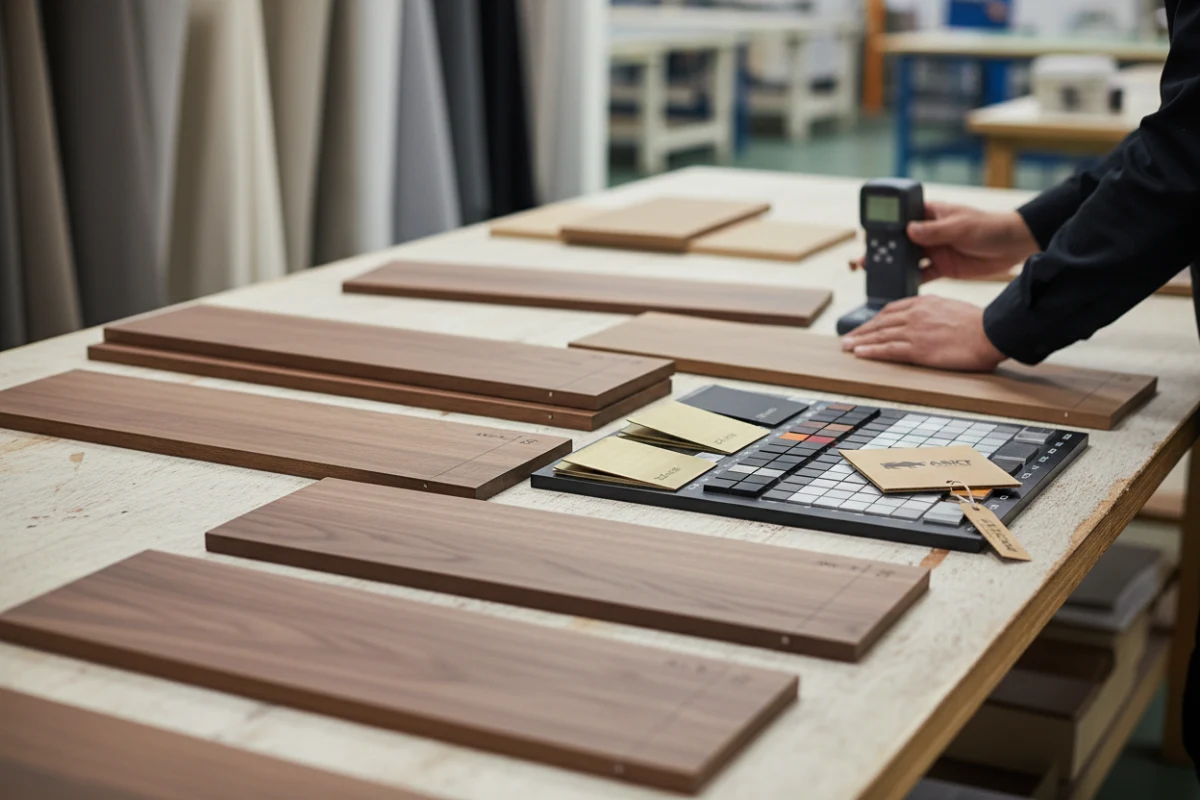
Because natural oak varies in grain density and natural tannin levels, evaluating finished wood against a single sample chip can lead to unnecessary rejections. Experienced buyers establish a multi-sample tolerance range:
- Light Boundary Plaque: The lightest acceptable variation of the specified stain.
- Target Master Plaque: The exact golden sample stain reference.
- Dark Boundary Plaque: The darkest acceptable variation of the specified stain.
Any finished wood surface that falls within the boundary between the light and dark plaques is approved, while components that fall outside the defined range are corrected prior to final assembly.
Tolerances for Upholstery Dye Lots and Textures
When large hotel projects require hundreds of dining chairs delivered in phased containers, fabric rolls often come from different production dye lots. Buyers should require factories to inspect fabric roll cuttings against master swatches under consistent, neutral daylight lamps. Maintaining systematic records of roll lots ensures that chairs placed in the same dining room or guestroom zone share identical visual tone and texture.
What Procedures Ensure Surface Finish Quality Control Across Multiple Production Runs?
A dependable furniture surface finish quality control workflow depends on structured sample retention and first-article verification routines. Without archived physical reference samples, resolving finish variations between early and later production batches is difficult.
- Triplicate Golden Sample Distribution: Three identical sets of finish swatches and complete furniture samples are signed. Set A is kept by the buyer's procurement team; Set B is maintained in the factory's quality management department; Set C is placed directly on the factory floor for daily line reference.
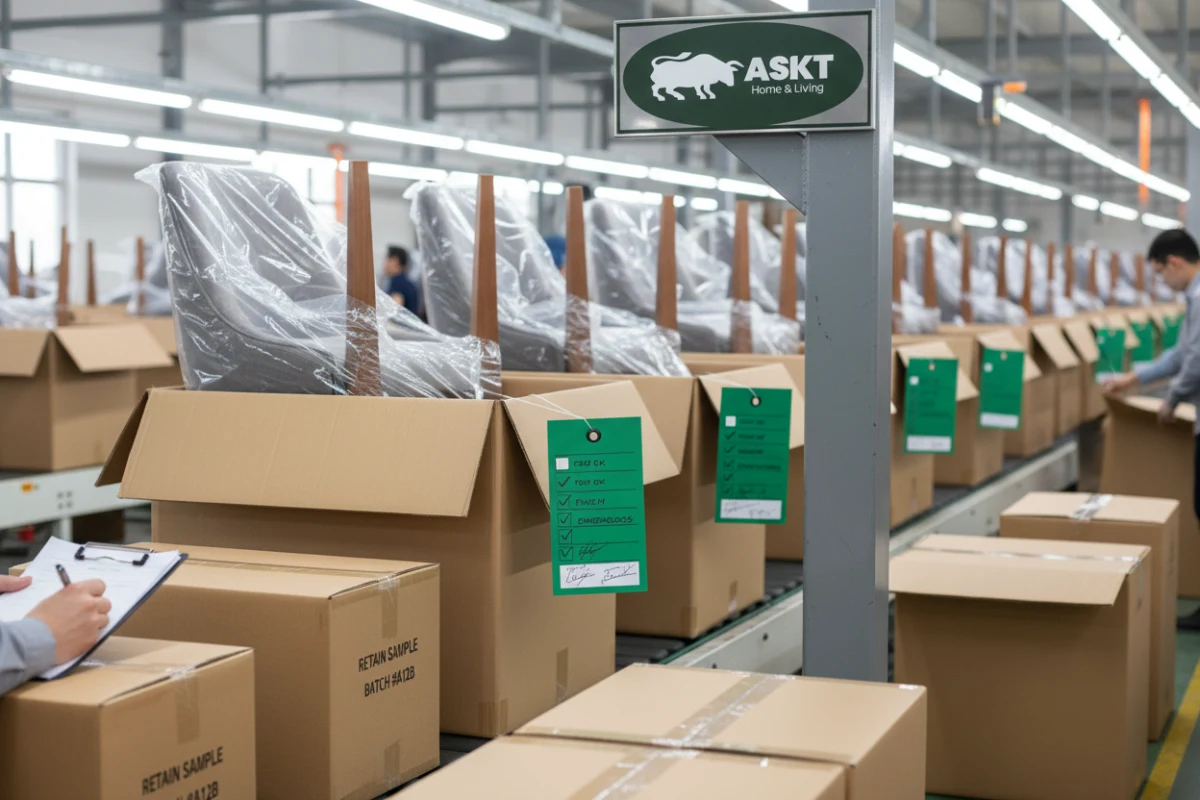
- First-Article Sign-Off (FAS): When factory machinery begins full batch output, the first completed unit is pulled from the line for detailed inspection. Quality managers verify dimensions, frame welds, finish texture, foam resilience, and upholstery alignment against the master sample before authorizing full production.
- Container Retain Swatch Archives: During manufacturing, quality control teams collect retain swatches of coated metal tubes, stained veneer panels, and fabric roll ends from each container batch. These samples are labelled with production dates and purchase order references and safely archived for future re-order matching.
- Transit Packaging and Loading Verification: Finished goods are inspected for packaging protection—such as reinforced corner guards and durable honeycomb paperboard—to prevent surface abrasion, rubbing, or pressure marks during container transport and handling.
How Does ASKT Support Contract Buyers in Controlling Furniture Finishes and Batch Quality?
ASKT applies structured engineering workflows and modern manufacturing technology to solve finish consistency challenges for European furniture wholesalers, retail chains, and contract buyers. In high-volume dining chair, bar chair, and dining table production, ASKT minimizes process variation through automated manufacturing equipment, including automatic welding robotic arms for consistent metal frames, automated fabric cutting systems for pattern precision, and modern pressing machinery for wood boards.
With over 20 years of manufacturing experience serving European markets like Germany, the Netherlands, the UK, Poland, Switzerland, and Ireland, ASKT provides reliable OEM and ODM customization. Product options include pocket spring seating, 360-degree swivel mechanisms, auto-return systems, KD metal frames, oak veneer tops, and sintered stone surfaces. ASKT also offers certified, durable fabrics—ranging from waterproof, breathable, and easy-clean options to pet-friendly and recycled materials—combined with sustainable honeycomb paper packaging optimized for container loading.
For European wholesalers, retailers and project buyers looking for reliable dining furniture supply from China, https://www.asktfurniture.com/ can help turn product ideas into commercially stable collections.