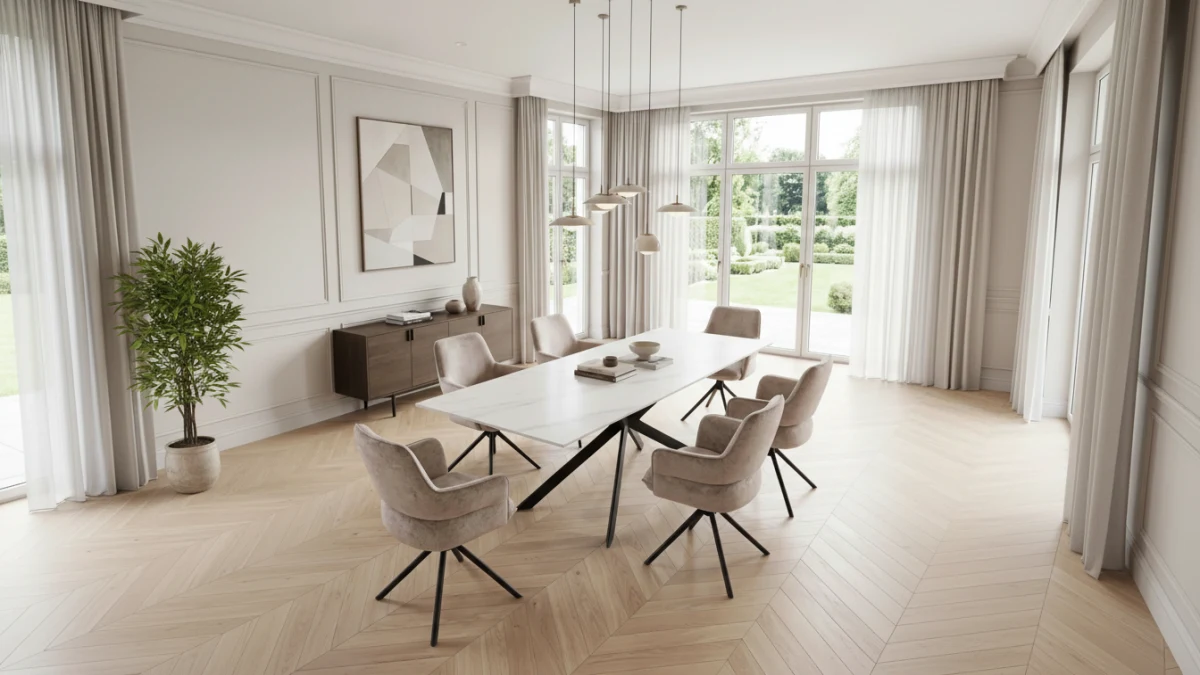
Sourcing Guide: Selecting Sintered Stone Tops, Metal Frames, and Finishes for European Furniture Collections
To successfully develop a contemporary ceramic dining table collection for European markets, B2B buyers must strategically align premium sintered stone tops with structurally certified metal frames and consistent powder-coated finishes. Focusing on design cohesion, durability, secure packaging, and compliance through strict supplier testing processes helps reduce sourcing risks and ensures long-term retail success across European distribution networks.
Why are sintered stone and ceramic tops a key growth driver for European furniture collections?
Over the past decade, European consumer preferences have shifted decisively from traditional solid wood and glass dining tables toward high-performance ceramic and sintered stone surfaces. This trend is particularly prominent across Germany, the Netherlands, the UK, and other European regions, where open-plan living demands multi-functional, hard-wearing furniture. Dining tables are no longer used just for dining; they serve as home offices, homework stations, and primary food preparation hubs.
Sintered stone, which is produced under extreme industrial pressure and high-temperature firing, offers an almost indestructible surface. It is virtually non-porous, highly scratch-resistant, heatproof, and immune to common household stains. For European retailers, this durability directly translates to an exceptionally low rate of customer returns, fewer warranty claims, and higher consumer satisfaction.
From an aesthetic perspective, sintered stone allows manufacturers to replicate the luxurious veining of rare natural marbles or the raw texture of industrial concrete without the high maintenance, weight, and fragility of natural stone. Integrating these high-durability tops with sleek metal structures creates a highly marketable modern aesthetic that fits perfectly into contemporary European interiors, matching the design sensibilities of urban homeowners.
How to choose ceramic table tops and frames for European furniture collections to ensure structural integrity?
When planning how to choose ceramic table tops and frames for European furniture collections, professional buyers must look beyond mere surface aesthetics. The integration of the table top and its metal frame is a delicate balancing act between flexural strength, load-bearing capacity, and visual proportion.
To ensure a successful product pairing, sourcing managers should follow key structural guidelines during product development:
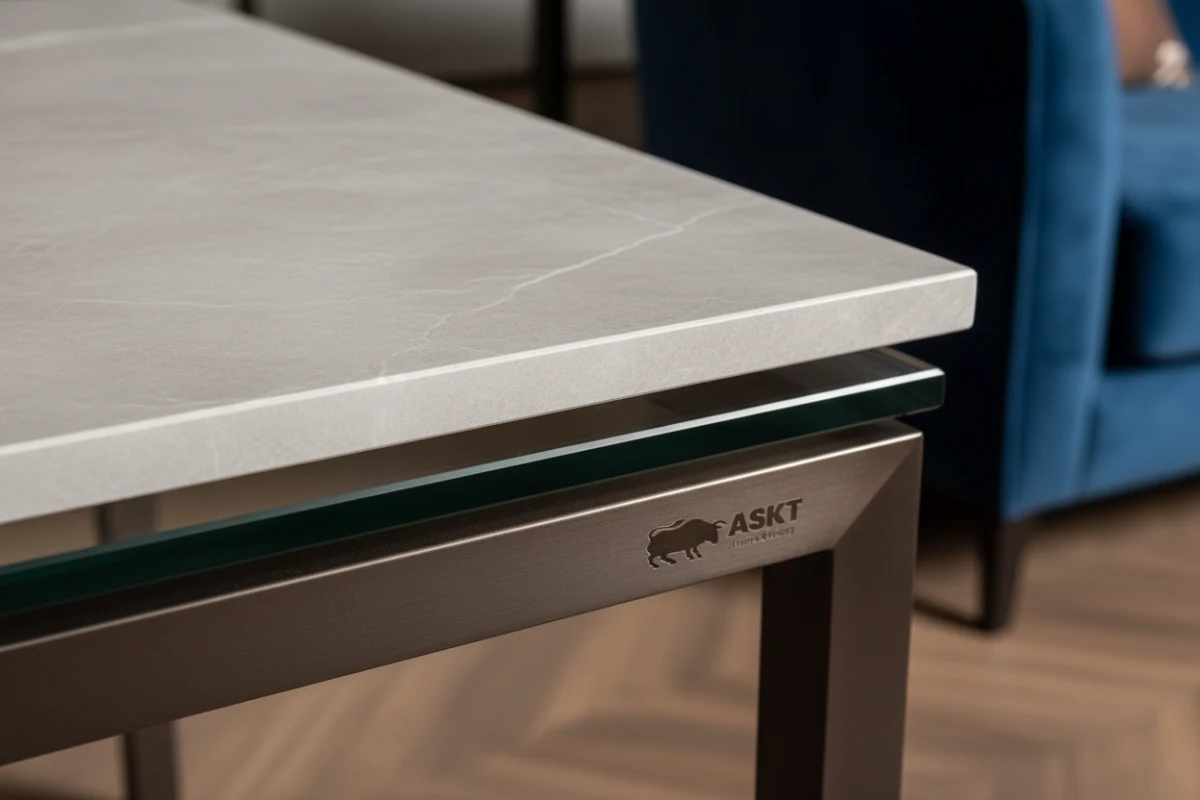
- Verify Lamination Options and Backing Materials: A thick solid sintered stone top provides excellent luxury appeal but adds significant weight to the furniture piece. For many European retail chains, a thinner sintered stone sheet laminated to a tempered glass or high-density fiberboard backing is preferred. This combination provides high impact resistance while reducing overall container weight. Sourcing teams must ensure the lamination uses high-grade, low-emission adhesives that withstand temperature fluctuations in European homes without delaminating.
- Align the Frame Support with Top Weight: Sintered stone tops are naturally heavy. If the metal base does not have a comprehensive support grid or a solid mounting sub-plate, the top may sag or crack under point-impact forces. The frame's mounting plates must be strategically positioned to distribute load evenly toward the leg structures.
- Assess Mechanical Tolerances for Extension Tables: European buyers frequently request extension dining tables to accommodate compact urban dining spaces. When selecting extension frames, ensure that the slide track mechanisms operate with tight tolerances. Sintered stone has zero flexibility; therefore, the metal slide frames must align precisely to prevent uneven edges at the table joints when extended.
What manufacturing specifications are essential for a sintered stone dining table wholesale program?
Wholesalers evaluating a sintered stone dining table wholesale program must establish clear quality control metrics with their manufacturing partners. Sintered stone is not a uniform material; its quality depends heavily on the mineral composition, the pressing technology, and the precision of the edge-cutting process.
To secure high-end retail placement, B2B buyers should specify the following technical parameters and features:
- Low Water Absorption Rate: Premium sintered stone must exhibit a very low water absorption rate. This ensures that spilled liquids like red wine, black coffee, or olive oil cannot penetrate the surface, making the table exceptionally easy to clean and maintain.
- Surface Scratch Resistance: The surface hardness should be tested to ensure that domestic steel knives and cutlery will not leave scratches during daily dining activities.
- Precision Edge Profiling: Raw cut edges are highly susceptible to chipping. For the European market, tops must feature bevelled, rounded, or chamfered edges rather than sharp, straight angles. Precision cutting is required to eliminate microscopic cracks along the perimeter, which could expand into full fractures under stress.
- Under-Side Backing Integration: The safety backing must be perfectly flush with the ceramic sheet. Splicing or misaligned lamination creates uneven tension, leading to potential structural failure during shipping or domestic use.
| Top Structure | Weight Profile | Impact Resistance | Primary Application | Edge Profile Options |
|---|---|---|---|---|
| Laminated Sintered Stone (Glass Backing) | Moderate | Excellent (Glass absorbs energy) | Extension tables & urban dining | Straight bevelled, rounded edge |
| Solid Sintered Stone (Thick Profile) | Heavy | High | Large luxury dining tables | Chamfered, bullnose, mitred |
| Laminated Sintered Stone (Fiberboard Backing) | Light to Moderate | Good | Promotional & volume retail | Straight edge, edge-banded |
How does metal dining table frame customization prevent stability and safety risks?
European markets impose rigorous product safety standards. Dining tables sold through major retail chains or used in commercial contract projects must pass certified European testing standards for domestic tables, which cover stability, strength, and fatigue resistance. Standard off-the-shelf metal bases rarely meet these requirements without structural modification.
Utilizing professional metal dining table frame customization allows sourcing teams to address specific European structural challenges directly at the factory level:
- Wall Thickness of Steel Tubes: While domestic markets may accept thinner steel tubes, European safety standards require thick, heavy-duty steel walls for load-bearing legs. This prevents lateral deformation when the table is dragged across a room during daily use.
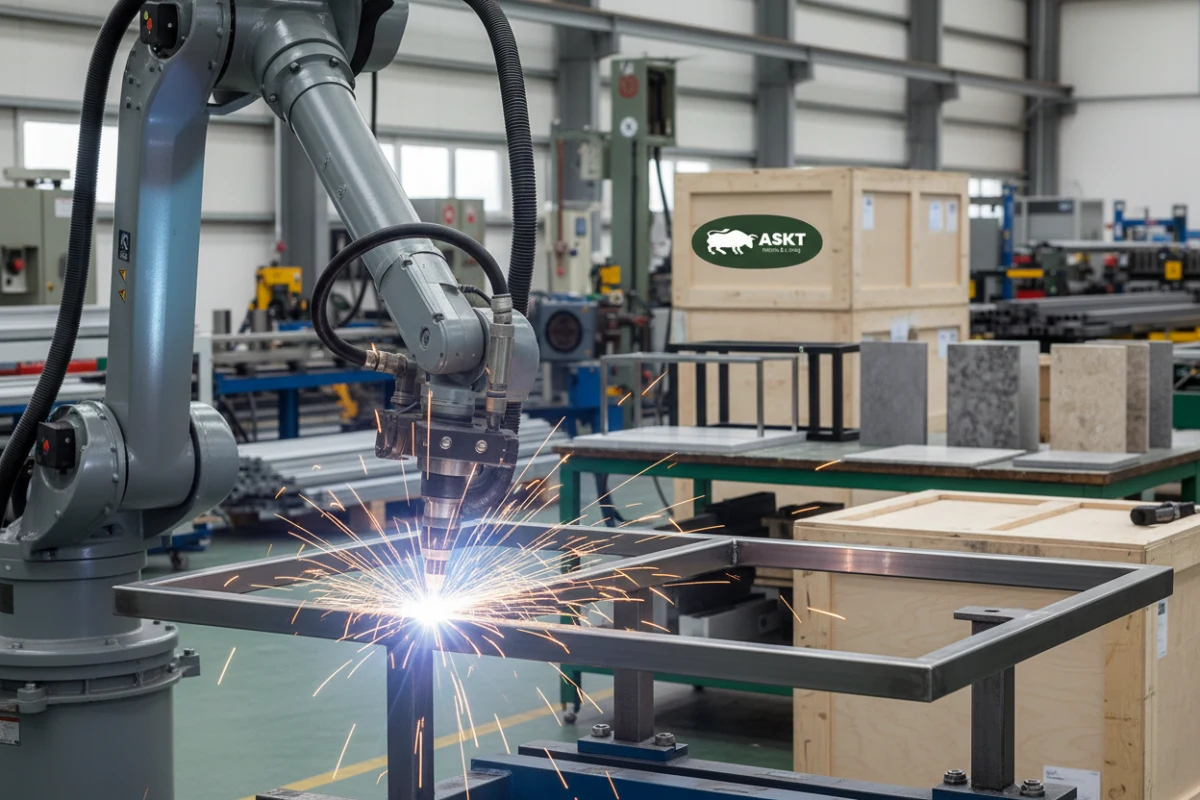
- Joint Integrity via Precision Welding: Hand-welded joints often suffer from structural inconsistency and visible weld slag, which are rejected by European quality control inspectors. Implementing automated robotic welding ensures deep, uniform weld penetration, resulting in seamless joints that easily pass high-frequency vibration and fatigue testing.
- Anti-Tip Weight Distribution: Sintered stone tops are top-heavy. Customized frames must be engineered with a low centre of gravity. For central pedestal designs, the steel base plate must be thick and heavy enough to ensure the table remains stable even when a person leans heavily on its edge.
How should B2B buyers specify metal finishes to guarantee color consistency and corrosion resistance?
Metal frames for European collections are predominantly finished with powder coatings to achieve a clean, modern look. However, minor variations in temperature, chemical pre-treatment, or pigment batches can lead to colour drift, which ruins the visual consistency of a collection when displayed on a retail floor or shipped to a single customer.
To prevent these quality discrepancies, sourcing specialists should enforce the following finish specifications:
- Standardized Color Referencing: All finishes must be specified using universal colour systems, such as the RAL standard catalog. The most popular tones in Germany and Scandinavia include fine matte blacks and deep anthracite greys.
- Multi-Stage Chemical Pre-Treatment: Before powder application, the raw steel must undergo a multi-stage cleaning process, including degreasing, rust removal, and phosphating. Any trace of oil or oxidation left on the metal will cause the powder coating to bubble, peel, or chip over time.
- Curing Temperature Control: The powder-coated parts must be cured in a specialized bake oven at a stable, controlled temperature. Under-curing results in a fragile coating that easily scratches during assembly, while over-curing can cause discoloration.
- Texture and Gloss Level: For contemporary European collections, specify low-gloss, ultra-matte textures. Textured powders look highly premium and are far more effective at hiding fingerprints and micro-scratches compared to smooth, high-gloss finishes.
How do table dimensions and extension designs impact developing furniture collections for European retailers?
European housing styles vary significantly by region. In metropolitan areas like Amsterdam, London, and Munich, apartments are compact, making space optimization a high priority. In contrast, suburban homes can accommodate larger formats. Sourcing directors must structure their collections to address these diverse architectural realities when developing furniture collections for European retailers:
- Standard Dimensional Demands: Fixed tables must be offered in standard European length increments, typically ranging from 140cm (seating 4-6) up to 220cm (seating 8-10). The width should ideally remain narrow to comfortably accommodate European table settings without overwhelming narrow dining spaces.
- Extension System Choices: For space-conscious buyers, extension mechanisms are essential. End-pull extensions, where the legs slide out on rollers to reveal an insert leaf, are highly stable and keep the legs at the corners to maximize legroom. Butterfly extension systems, where the centre of the table splits to reveal a folding leaf, provide a more traditional, symmetrical aesthetic.
- Knock-Down (KD) Structure Design: To minimize shipping volume and reduce domestic delivery costs, the entire metal frame must be designed as a knock-down (KD) structure. The assembly joints must use heavy-duty steel threaded inserts welded inside the tubes, allowing retailers or end-consumers to assemble the table with simple tools without stripping the threads.
- Aesthetic Synchronization: The metal leg profiles and powder-coated finishes of the dining tables must exactly match those of the dining chairs in the collection. For example, if a table uses a tapered, black powder-coated leg, the collection's chairs should utilize the same leg profile and finish to present a unified, premium look to retail customers.
What are the operational advantages of working with a B2B dining table manufacturer China?
Sourcing high-end sintered stone and metal furniture requires a partner that understands the high-quality expectations of the European market. Partnering with a specialized B2B dining table manufacturer China offers critical advantages in manufacturing capability, quality control, and supply chain transparency.
- Advanced Machinery and Automation: High-performance factories employ state-of-the-art production technology, including precision glass-cutting lines, automated laser-welding robotic arms, and heavy-duty CNC milling machines. This high level of automation reduces manual human error, guarantees batch-to-batch consistency, and lowers production lead times.
- Comprehensive Social and Environmental Compliance: Leading B2B manufacturers align with European ESG (Environmental, Social, and Governance) principles. Factories must guarantee fair labour standards, safe working conditions, and the use of eco-friendly, non-toxic manufacturing consumables, such as formaldehyde-free adhesives and low-VOC powder coatings.
- Transparent Quality Assurance: A reliable manufacturing partner maintains a rigorous, multi-stage quality control workflow. This includes inbound material testing (testing stone hardness and steel wall thickness), in-line assembly checks, and outbound drop testing. Every new table design must pass strict load-bearing and impact testing modeled on European standards before container loading.
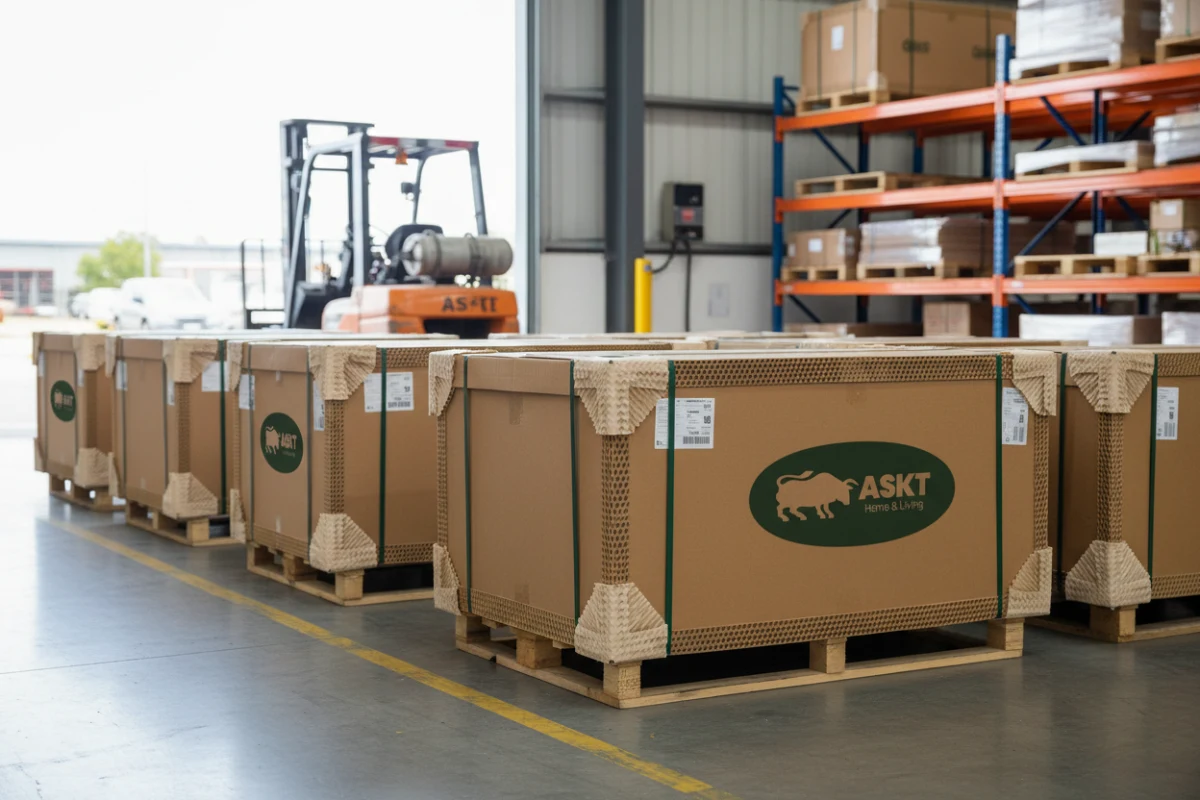
- Eco-Friendly and Secure B2B Packaging: Packaging must be optimised to survive long-distance maritime transport and domestic courier handling. Premium manufacturers use plastic-free, highly protective honeycomb paper corner guards and robust cardboard boxes, reducing shipping damage while helping European retailers meet their corporate sustainability goals.
If you are evaluating dining chair or dining table suppliers for the European market, ASKT can support you with product development, customization, quality testing and stable export experience. To discuss your upcoming collection or request custom material samples, connect with our sourcing team at https://www.asktfurniture.com/ today.