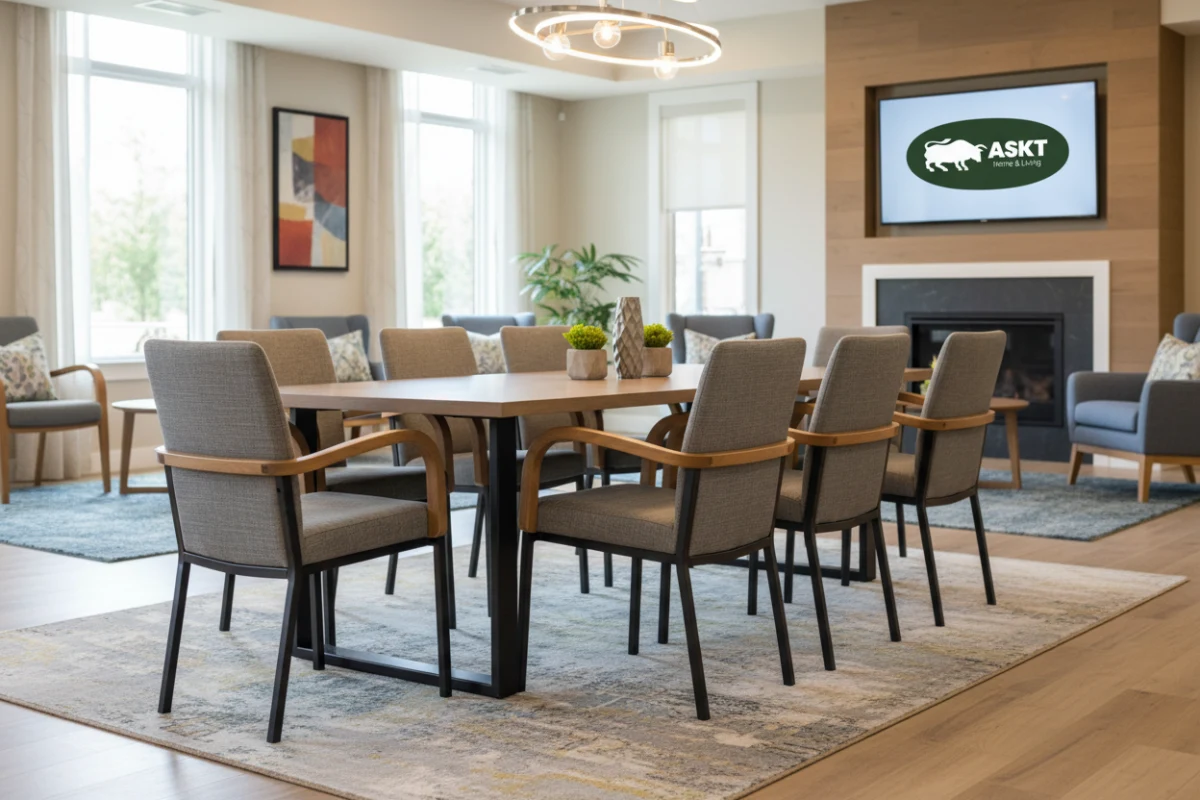
Evaluating Cleanability, Safety, and Comfort in Senior Living Chairs: A B2B Sourcing Guide
B2B buyers can evaluate senior living chairs by using a comprehensive three-pillar framework that assesses cleanability through performance fabrics and non-porous finishes, safety via rigorous structural load and stability tests, and comfort through senior-specific dimensions like optimized seat height and pocket spring support. Prioritizing these technical criteria minimizes long-term replacement costs, reduces legal liability, and ensures compliance with contract-grade expectations in the European market.
Sourcing contract furniture for assisted living, care homes, and retirement communities requires a completely different approach than procurement for standard residential or hospitality spaces. In senior environments, dining areas and communal lounges are high-frequency hubs where residents spend multiple hours every day. This continuous usage puts immense mechanical strain on furniture frames, upholstery, and moving mechanisms. For furniture wholesalers, importers, and retail chains, purchasing sub-standard seating leads to rapid wear, high returns, and compromised safety.
One of the major challenges is balancing a welcoming, residential aesthetic with heavy-duty commercial durability. Modern European facility operators are moving away from sterile, institutional designs. They demand warm, comforting aesthetics that make residents feel at home. However, domestic-grade furniture cannot survive the harsh sanitization protocols and constant physical loading required in senior care. Professional buyers must find products that successfully bridge this gap, offering domestic styling combined with contract-level performance. When purchasing senior living dining chairs, buyers must look beyond the visual design and evaluate the underlying engineering, material quality, and manufacturing consistency.
How to Evaluate Senior Living Chairs for Cleanability and Material Performance?
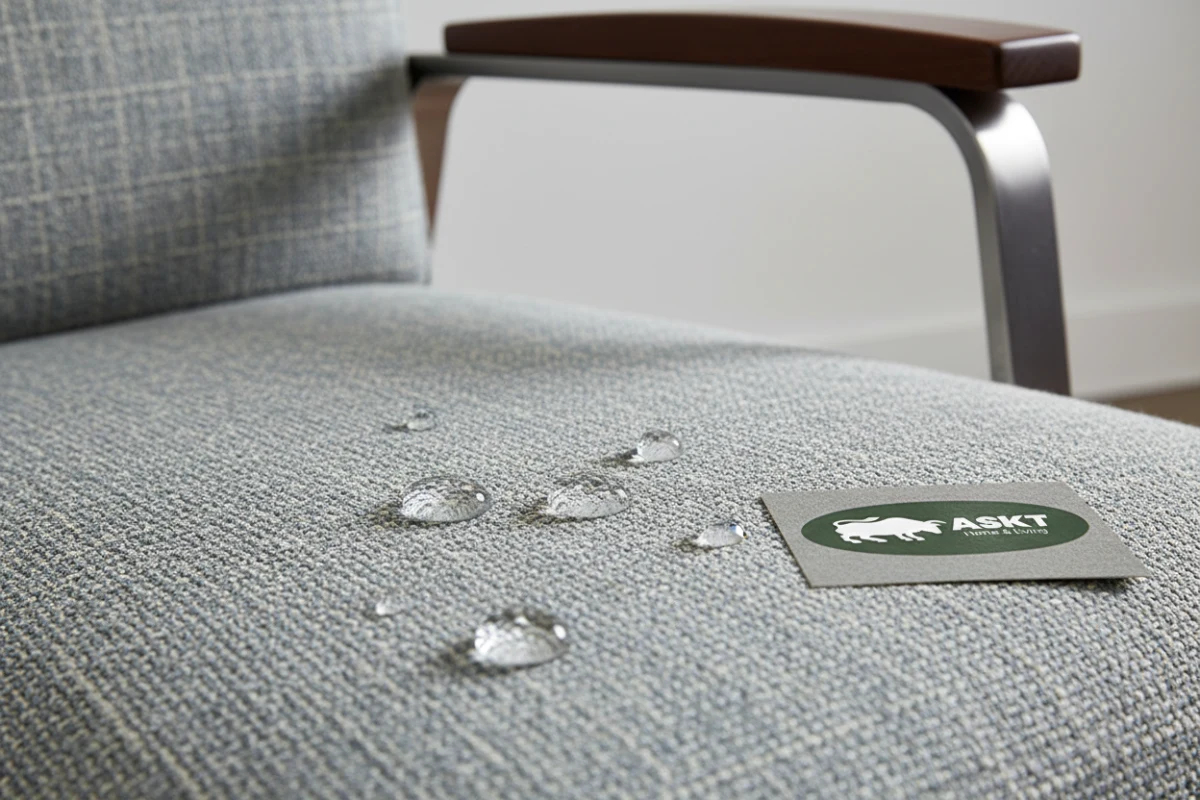
Hygiene is a non-negotiable priority in healthcare and senior living environments. Spills, food stains, and contact with bodily fluids are daily occurrences. If liquid penetrates the fabric cover and enters the underlying foam cushion, the entire chair can quickly become a sanitation hazard, harboring bacteria, mold, and unpleasant odors. Therefore, understanding how to evaluate senior living chairs for cleanability is crucial for protecting the buyer’s investment.
To secure truly cleanable healthcare seating, buyers must focus on fabric performance and moisture barriers. Standard topical liquid-repellent coatings often wash off after a few rounds of commercial cleaning. Instead, buyers should source fabrics engineered with deep hydrophobic properties at the fiber level. This ensures that liquids bead on the surface and can be wiped away easily, without compromising the breathability of the textile. High breathability is essential to prevent heat buildup and sweating during long sitting sessions.
Additionally, professional buyers should verify the following material specifications:
- Abrasion Resistance: Look for high-performance fabrics with high durability ratings under standard wear tests (such as the Martindale method, aiming for at least 50,000 to 100,000 rubs) to withstand constant cleaning.
- Colour Fastness: Fabrics must resist fading or degrading when exposed to harsh disinfectants, rubbing, and natural sunlight.
- Pet-Friendly Qualities: Materials must resist scratching and tearing, which is increasingly important as care facilities adopt pet-friendly policies to improve resident well-being.
- Frame Cleanability: While wood frames offer warmth, they are porous and can absorb moisture over time. Metal frames finished with robust powder coating or realistic wood-grain transfers are completely non-porous, making them easy to sanitize with chemical cleaners without risking rot or warping.
What Structural Factors Ensure Compliance with Senior Living Chair Safety Standards?
Safety in eldercare is paramount. Senior residents often have limited mobility, reduced balance, and weaker muscles. When sitting down or standing up, they frequently place their entire body weight on the arms and edges of the chair, creating severe leverage and torsional forces. Therefore, manufacturers must adhere to strict senior living chair safety standards to prevent structural collapses or tipping accidents.
To evaluate structural safety, B2B buyers must inspect the frame construction and connection points. For dining and lounge chairs, metal frames provide the highest level of joint integrity. Unlike wood, which can expand, contract, and weaken at the joints, welded metal frames maintain their structural strength under prolonged stress. Professional buyers should prioritize suppliers that utilize automated robotic welding. Robotic welding ensures extreme precision and uniformity across thousands of production units, eliminating human error and weak welds that are common in manual fabrication.
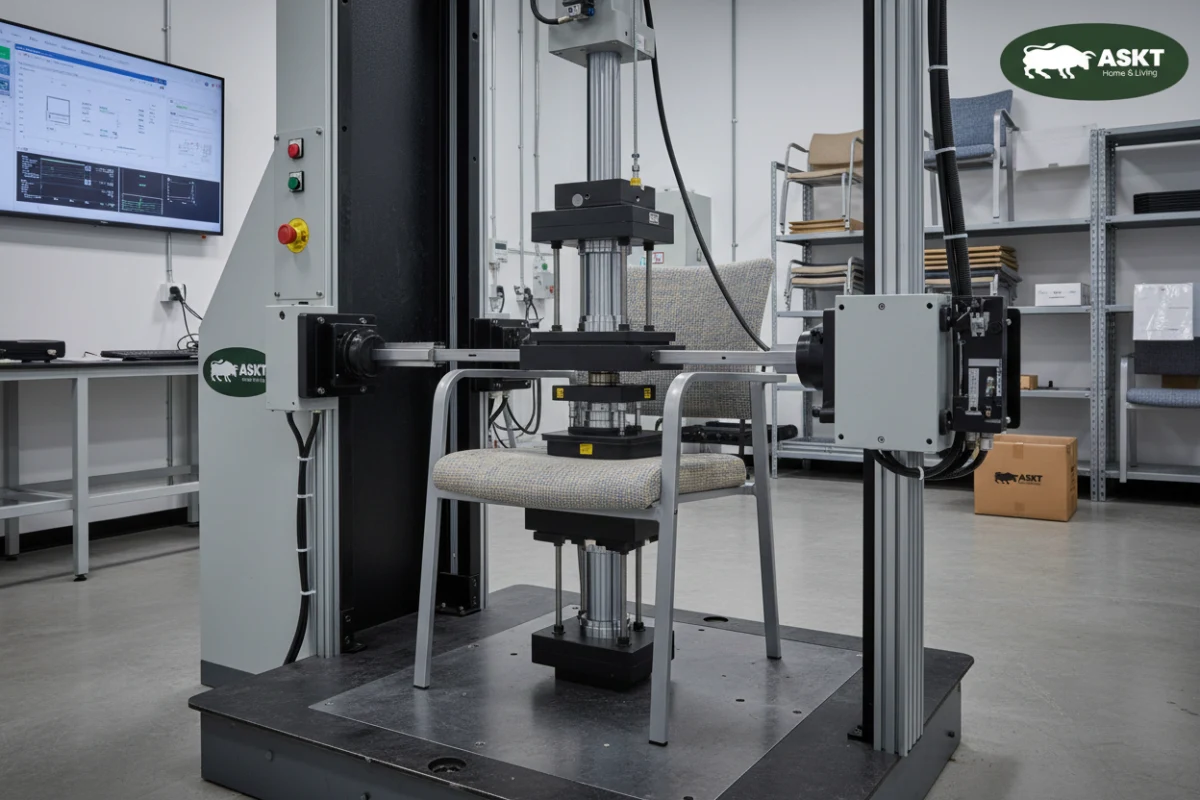
To verify safety, buyers should request documented results from rigorous mechanical testing, focusing on:
- Static Load Testing: Verifying that the seat and backrest can withstand high vertical and horizontal forces without permanent deformation.
- Fatigue and Durability Testing: Repeatedly applying heavy loads to the seat and backrest thousands of times to simulate years of heavy daily use.
- Stability Testing: Ensuring the chair does not tip forward, backward, or sideways when weight is applied to the very edge or when a resident leans heavily on the armrests.
- Chemical and Finish Safety: Frame coatings and glues must be non-toxic, lead-free, and formaldehyde-free to protect the indoor air quality of care facilities.
How to Deliver True Ergonomic Comfort for Elderly Seating?
A chair can be perfectly cleanable and completely safe, but if it does not provide physical comfort, residents will avoid using it, which can lead to posture issues and physical discomfort. Achieving genuine ergonomic comfort for elderly seating requires specialized dimensions and support structures that cater to the physiological changes associated with aging.
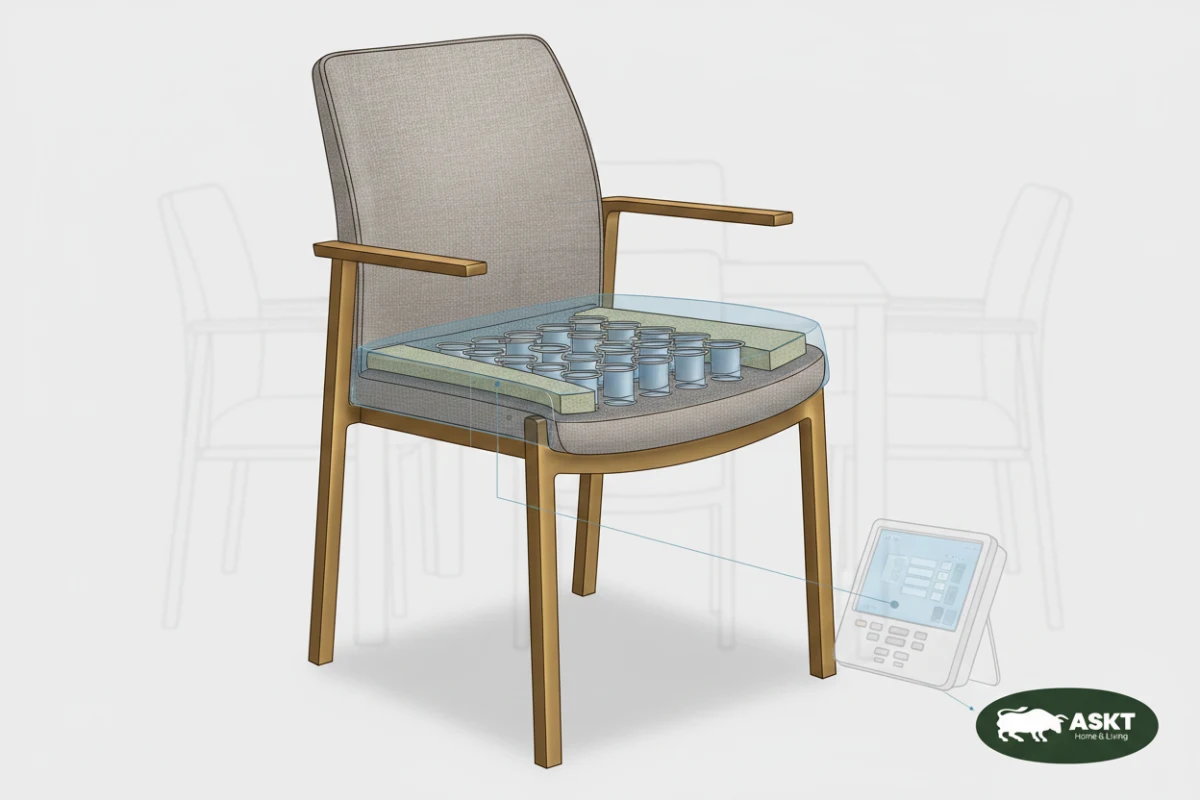
As people age, they lose muscle mass and bone density, making firm yet pressure-relieving support essential. Standard dining chairs often rely on thin foam layers over rigid wooden boards, which create pressure points and cause discomfort over time. To solve this, premium senior seating utilizes advanced cushioning technologies:
- Pocket Spring Seating Core: Integrating pocket spring units within high-density polyurethane foam distributes body weight evenly, reduces pressure on the tailbone, and maintains its supportive shape over years of constant compression without sagging.
- Optimized Seat Height: Seat heights must be carefully calibrated (typically between 450 mm and 480 mm) to allow residents to keep their feet flat on the floor, providing a stable foundation for standing up.
- Proportionate Seat Depth: The seat depth should be short enough (around 430 mm to 450 mm) to allow residents to utilize the backrest comfortably without the front edge of the seat pressing against the back of their knees.
- Armrest Design: Armrests should extend slightly forward and have a flat, solid grip surface, enabling residents to leverage their arm strength easily when exiting the chair.
For residents with severe mobility restrictions, heavy-duty swivel mechanisms equipped with auto-return systems are highly beneficial. An auto-return swivel allows the seat to turn smoothly, enabling the user to enter and exit the dining position without having to slide the entire heavy frame across the floor. Once the resident stands, the seat automatically swivels back to its original position, keeping the dining hall organized and eliminating tripping hazards in public pathways.
How Do Cleanable Healthcare Seating Solutions Lower the Total Cost of Ownership?
For contract buyers, procurement managers, and wholesalers, purchasing decisions are driven by financial sustainability and risk mitigation. While cheap, residential-grade chairs may seem appealing initially, they quickly become an operational liability. Standard chairs require frequent maintenance, are prone to structural failures, and stain easily, leading to high replacement costs and potential safety claims.
Investing in high-quality, cleanable healthcare seating significantly lowers the Total Cost of Ownership (TCO). By utilizing robust metal frames, powder-coated finishes, and commercial-grade performance fabrics, facilities can extend the lifespan of their furniture by several years. Easy-to-clean materials reduce the labor hours required for maintenance and allow housekeeping staff to quickly sanitize dining rooms between meals. This operational efficiency is a powerful selling point for furniture wholesalers and importers pitching to European healthcare providers and procurement groups.
What Supply Chain and Logistics Strategies Reduce Sourcing Risks for B2B Buyers?
Sourcing contract furniture from international manufacturers involves navigating logistics costs, quality consistency, and minimum order quantities (MOQs). To maintain profitability, European buyers must look for manufacturing partners who optimize their production and shipping processes.
- KD (Knock-Down) Structures and Modular Design: Flat-packed, knock-down furniture structures allow for packaging optimization, significantly reducing the shipping volume. This enables more units to fit into a single container, lowering ocean freight costs per unit and optimizing warehousing space in Europe.
- Sample Development and Customization: A reliable supplier should offer flexible OEM and ODM services, allowing buyers to customize fabrics, dimensions, finishes, and colors to match specific project briefs. Developing physical samples for rigorous inspection before full-scale manufacturing is essential to prevent mass-production errors.
- In-house Quality Control: Consistent product quality depends on a "Test first, ship second" manufacturing philosophy. Reliable partners perform continuous quality checks—from raw material inspection and robotic weld checks to fabric wear tests—ensuring that the shipped batch matches the approved sample perfectly.
How Do Buyers Choose the Right Manufacturing Partner for Senior Seating?
When evaluating potential supply chain partners, B2B buyers must prioritize manufacturers that demonstrate a deep understanding of the contract market's unique demands. A partner should not simply sell off-the-shelf products but should offer tailormade support, transparent manufacturing processes, and reliable export capabilities.
Wholesalers and project importers should seek suppliers based in major manufacturing hubs like China that have long-standing experience serving the European market (such as Germany, the Netherlands, and the UK). These suppliers understand European aesthetic preferences, quality expectations, and compliance needs. By choosing a partner with vertically integrated production—from metal fabrication to upholstery—buyers gain better control over lead times, product consistency, and customization flexibility.
Senior Living Seating Evaluation Checklist
To assist professional procurement teams, here is a practical evaluation framework summarizing the critical metrics for senior living dining and lounge chairs:
| Evaluation Category | Key Sourcing Criteria | Practical Verification Method | Target Standard for Senior Seating |
|---|---|---|---|
| Cleanability | Hydrophobic fabric performance, non-porous frame coatings | Rub-resistance tests, stain release checks, chemical resistance | Liquid-beading fabric, powder-coated metal frame |
| Safety Standards | High frame stability, zero structural joint failures | Mechanical load testing, fatigue testing, tilt-resistance checks | High-precision welds (robotic), zero tipping risk |
| Ergonomic Comfort | Elderly physical support, tailbone pressure relief | Ergonomic dimension analysis, cushion deformation checks | Pocket spring core, ideal height & depth, auto-swivel |
| Logistics Efficiency | Flat-pack optimization, secure transit protection | Container loading optimization, drop-testing packaging | KD structure, sustainable cardboard packaging |
Evaluating senior living furniture requires an uncompromising focus on hygiene, structural durability, and physical support. Partnering with an experienced, B2B-focused contract furniture manufacturer like ASKT ensures that your project meets the highest commercial expectations while optimizing shipping costs and supply chain stability.
To streamline your evaluation and procurement workflow, Request Evaluation Scorecard to access a professional, customizable B2B template designed specifically for European furniture buyers.