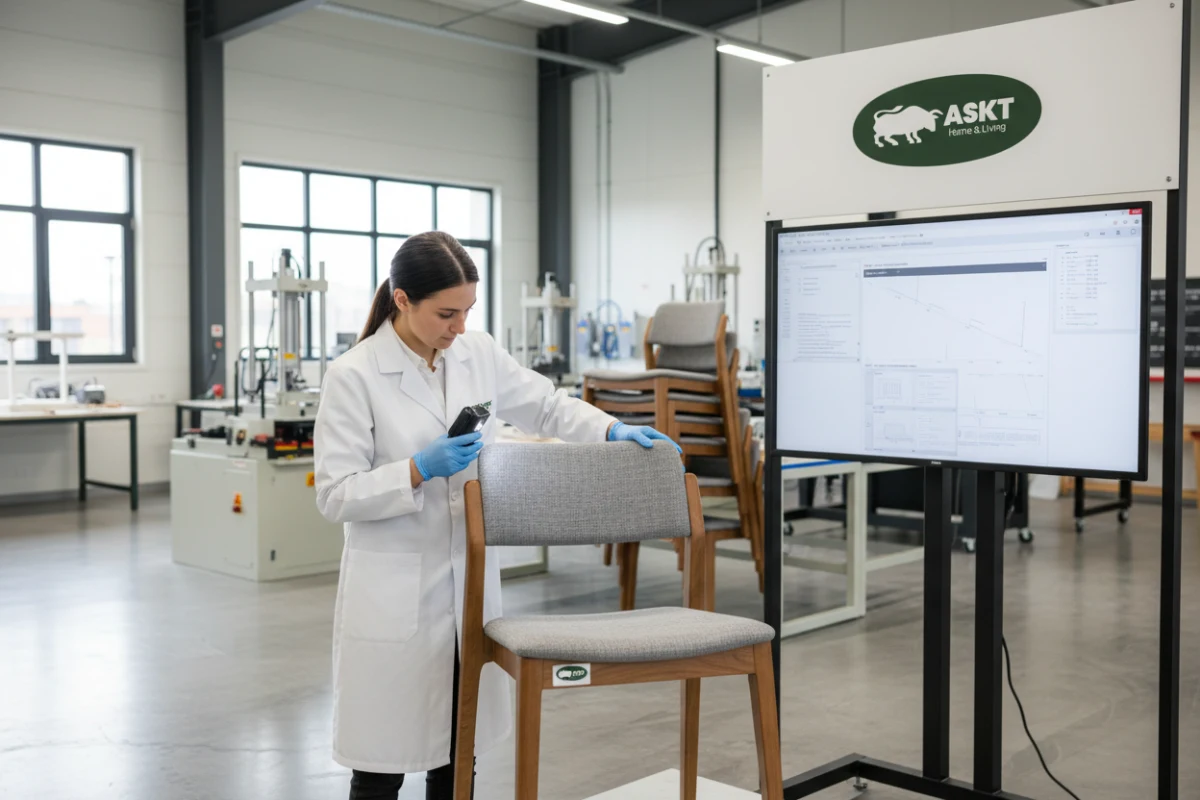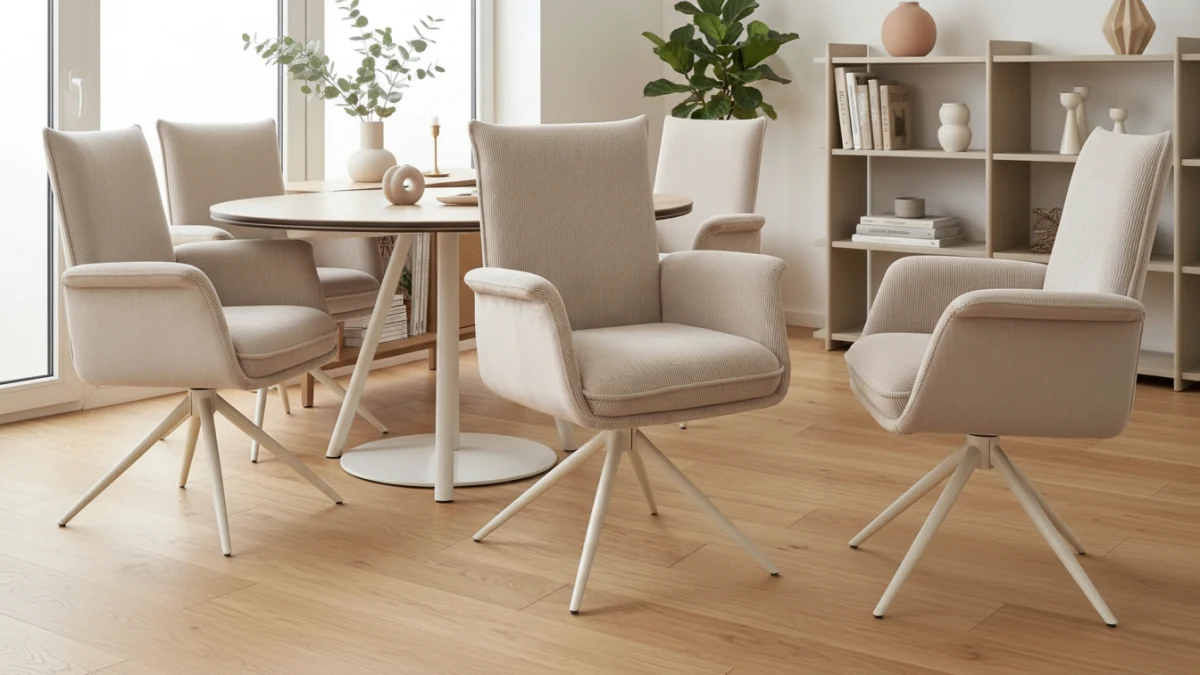
How We Test Dining Chairs to BS EN 12520 and EN 16139 Standards
Testing dining chairs to BS EN 12520 and EN 16139 standards verifies their safety, structural strength, and stability under intense loads. By ensuring compliance with BS EN 12520 domestic safety and EN 16139 contract chair standards, B2B furniture importers can dramatically reduce return rates, protect their brands from liability, and guarantee long-term performance across residential and high-traffic commercial environments.
What Are the Primary Differences Between BS EN 12520 and EN 16139 Standards?
For professional European furniture importers, wholesalers, and project managers, understanding the distinct criteria of European furniture regulations is the first line of defence against product failure. The distinction between domestic and contract environments is not merely administrative; it defines the raw material tolerances, wall thickness of metal frames, and joint reinforcement techniques applied in manufacturing lines.
BS EN 12520 domestic safety sets out the minimum requirements for the safety, strength, and durability of all types of domestic seating for adults. This standard is designed to simulate typical household use, assuming the chair is used moderately and handled with care.
Conversely, the EN 16139 contract chair standards govern non-domestic seating. This standard applies to public, commercial, and hospitality spaces—such as restaurants, hotels, cafes, and offices—where chairs are subjected to frequent, heavy, and often careless usage. EN 16139 is divided into two distinct test severity levels:
- Level 1 (General Use): Suitable for hotels, cafes, restaurants, and offices where the chairs are used regularly but not continuously under extreme stress.
- Level 2 (Severe Use): Required for night clubs, transport terminals, police stations, and areas prone to extreme high-frequency impact or heavy abuse.
Selecting the correct standard is critical. While a domestic chair might be visually appealing, placing it in a busy commercial cafe will inevitably lead to structural failure, high return rates, and potential legal liabilities. This is why professional buyers require clear certification before placing purchase orders.
In Germany, the UK, France, and the Netherlands, major buying groups and retail chains utilize strict compliance portals. Importers cannot list a product for sale without first uploading valid, accredited laboratory test certificates. Mismating a domestic chair for a commercial project not only violates building safety codes but can also result in costly product recalls and loss of retail partnerships. Therefore, selecting the correct standard during the initial product development stage is crucial for a smooth market entry.
| Performance Parameter | BS EN 12520 (Domestic) | EN 16139 Level 1 (General Contract) | EN 16139 Level 2 (Severe Contract) |
|---|---|---|---|
| Target Environment | Residential homes, private dining | Restaurants, cafes, hotels, offices | Night clubs, public halls, terminals |
| Seat Static Load Force | 1,200 N | 1,600 N | 2,000 N |
| Back Static Load Force | 410 N | 560 N | 760 N |
| Seat Fatigue Cycles | 25,000 cycles | 100,000 cycles | 200,000 cycles |
| Back Fatigue Cycles | 25,000 cycles | 100,000 cycles | 200,000 cycles |
How Does Dining Chair Strength Testing Simulate Real-World Commercial Loading?
To guarantee that dining chairs meet the high expectations of European buyers, manufacturing laboratories and third-party testing partners execute exhaustive dining chair strength testing protocols. These mechanical tests are designed to push the limits of a chair's structural components, simulating extreme, sudden forces—such as a heavy individual sitting down forcefully or leaning back abruptly.
The primary strength evaluations involve static load tests, which verify that the frame and joints can withstand high vertical and lateral forces without snapping or permanent deformation:
- Seat and Back Static Load Test: A high vertical force is applied to the seat plate, combined with a concurrent horizontal rearward force applied to the backrest. This is repeated multiple times to ensure no structural deformation occurs at the joints.
- Leg Static Load Tests: Standardised vertical forces are applied to the seat while lateral forces are applied to the legs, testing their ability to withstand sideways sliding and shear stress on uneven floors or carpet.
- Armrest Static Load Test: A vertical load is applied to the front and back of the armrests to check if they can support a user pushing up from the chair.
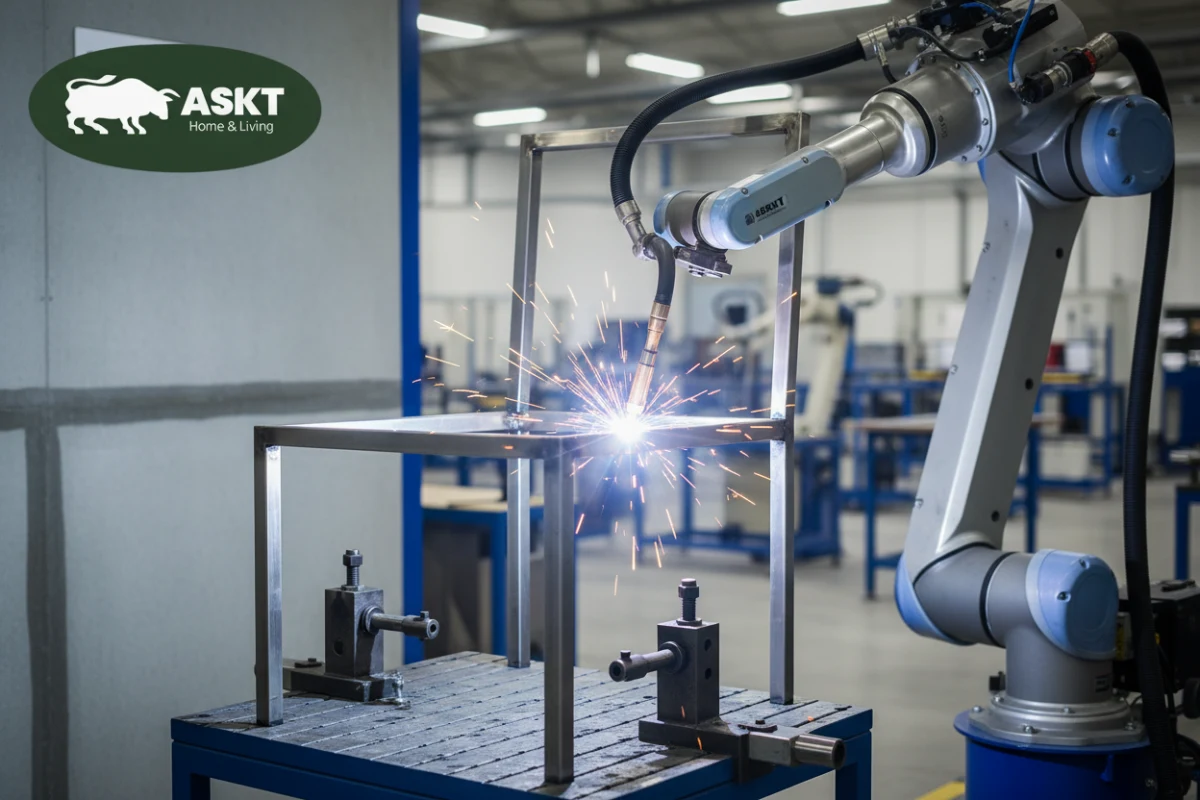
For B2B buyers, these parameters translate directly to manufacturing choices. Hand-welded metal frames often suffer from microscopic air pockets and inconsistent weld thickness, which easily crack under high loads. This is why reliable factories use automatic welding robotic arms. By automating the welding process, manufacturers ensure perfectly consistent weld depth and thickness across every single joint. Our computer-controlled manufacturing process eliminates the human error common in traditional factories, drastically reducing structural defects.
A critical factor in passing these static strength tests is the thickness of the metal tubing and the quality of the finish. In contract furniture, a frame must utilize optimal metal tube wall thickness to resist bending under 2,000 N of force. Furthermore, before powder coating is applied, the metal frame must undergo thorough cleaning and pre-treatment. This prevents rust and corrosion, which can slowly degrade the structural integrity of joint welds over time. At ASKT, our powder coating and automatic welding processes are closely monitored to ensure that every metal-frame dining chair maintains its full structural capacity under heavy commercial loads.
Additionally, when manufacturing wooden or hybrid chairs, high-precision punching machines are used for batch wood preparation. This ensures that every pre-drilled screw hole is mathematically centred, preventing splitting when high loads are applied. Specialized nailing machines install four-legged nails into the wooden boards, securing the seat shell to the metal base with absolute structural stability. This mechanical precision is a cornerstone of B2B furniture quality control China.
Which Structural Areas Face the Highest Risks During Durability and Fatigue Testing?
While static testing verifies a chair’s absolute force limits, durability and fatigue testing evaluate long-term resilience. Think of this as simulating ten to fifteen years of continuous daily use in a bustling Munich or London restaurant. Under both standards, durability tests are conducted over hundreds of thousands of cycles.
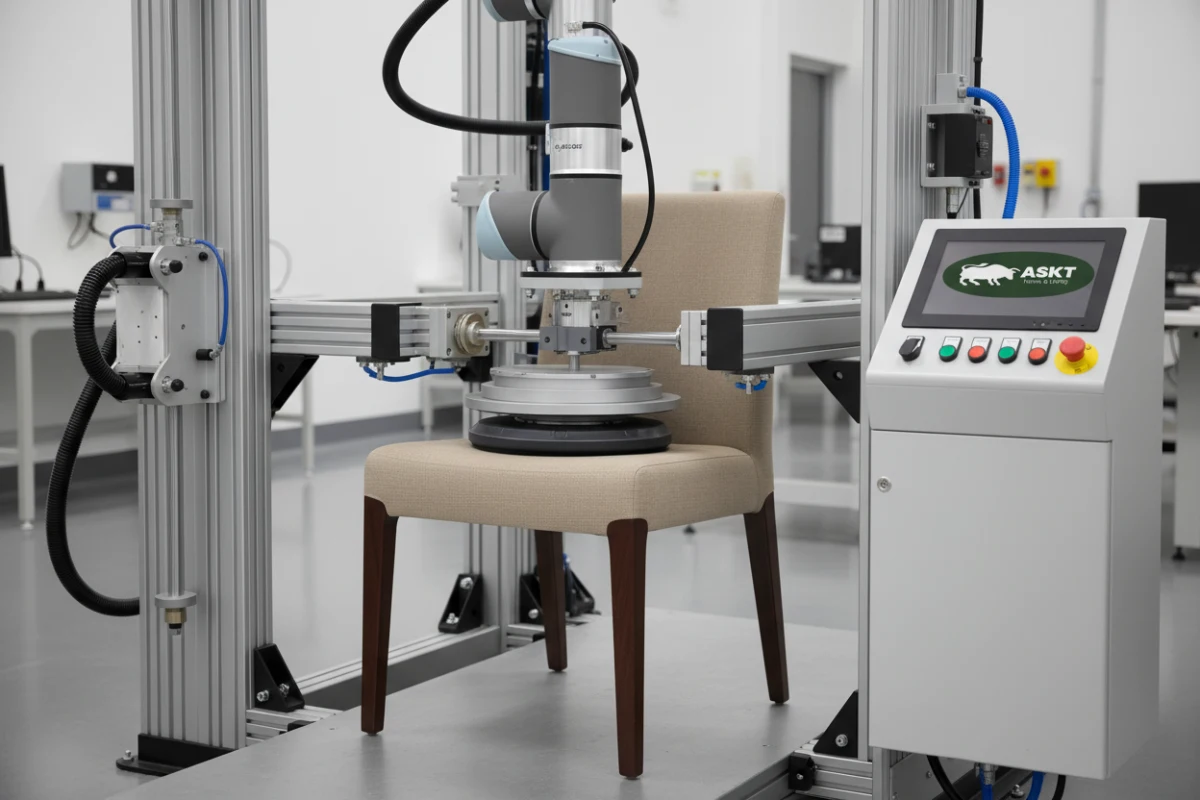
The fatigue testing machine repeatedly applies a downward force to the seat cushion, followed immediately by a horizontal force against the backrest. For BS EN 12520 domestic safety, this must be repeated 25,000 times. For the more stringent EN 16139 contract chair standards, the cycle count escalates to 100,000 cycles for Level 1, and a grueling 200,000 cycles for Level 2.
During these extensive runs, certain components are at a significantly higher risk of failure:
- The Leg-to-Seat Connection: This joint experiences severe shear forces when users lean back or rock on the legs.
- The Seat Plate Core: Repeated flexing can cause wood or plastic seat bases to crack or lose their original shape.
- Swivel and Auto-Return Mechanisms: High-frequency swiveling can cause internal bearings or springs to wear out, leading to loose seats or grinding noises.
Additionally, the choice of seat cushioning significantly impacts durability. For instance, dining chairs utilizing pocket spring seating offer superior long-term resilience compared to standard foam-only seats. During high-cycle fatigue tests, standard low-density foam can rapidly collapse, leading to a sagged appearance and a loss of comfort. In contrast, pocket spring seating structures distribute weight evenly and bounce back to their original shape even after 100,000 cycles. This structural durability ensures the chair continues to offer premium ergonomic support throughout its entire lifespan, which is a major selling point for high-end German and Dutch retail chains.
To eliminate these risks before a single container leaves our facility, we implement a highly disciplined modular engineering approach. Sourcing teams often struggle with high Minimum Order Quantities (MOQs) and the financial risks of developing new chair designs from scratch. By standardising a selection of structurally proven, pre-tested seat shells and metal bases, buyers can mix and match standardised shells with various bases to create unique designs without risking structural failure. Because these core modular components have already passed extensive durability cycles in our labs, we can confidently uphold our "test first, ship second" philosophy, giving our European wholesale partners total peace of mind.
How Do We Conduct Stability Testing to Prevent Tip-Over Hazards in Commercial Spaces?
A chair can have exceptional load capacity, but if it tips over easily, it poses a severe safety hazard. Stability testing is a mandatory phase of both BS EN 12520 and EN 16139, ensuring the chair remains upright during dynamic user movements.
During stability assessments, the chair is placed on a flat, high-friction testing bed. Standardised testing rigs apply forces in multiple directions to simulate typical user seating behaviours:
- Forward Stability: A vertical force is applied near the front edge of the seat, and a horizontal force is directed forward to ensure the chair does not tip when a user sits on the edge or leans forward.
- Rearward Stability: A vertical load is placed on the seat, and a horizontal force is applied to the backrest, pulling it backward. The chair must not tip over, simulating a user leaning back.
- Sideward Stability: Standardised forces are applied laterally to confirm that if a user reaches over the side to pick something up, the chair will not flip sideways.
This becomes even more critical when testing swivel dining chairs with auto-return mechanisms or dining benches. Because a swivel mechanism introduces dynamic rotation, the center of gravity changes as the user turns. Our engineering team conducts stability tests at multiple angles of rotation to guarantee that the auto-return mechanism does not create an unbalanced momentum that could cause a tip-over. Ensuring stability at every angle of rotation is a key requirement for commercial spaces where guests frequently turn to converse.
For B2B furniture buyers, stability compliance is a vital shield against product liability claims. In Germany, the Netherlands, and the UK, commercial establishments can face severe legal consequences if a guest is injured due to a tipping chair. For European contract and hospitality projects, this is a non-negotiable metric of safety. Designing seating with optimised leg angles, wide footprints, and balanced centres of gravity ensures that even under dynamic shifts in posture, the dining chairs remain completely stable on both hard floors and thick carpets.
How Do Fabric and Upholstery Quality Control Measures Support Structural Testing?
A dining chair’s frame can survive 200,000 structural cycles, but if the fabric tears, stains, or fades within a year, the product is still a failure. This is why a comprehensive B2B furniture quality control China protocol subjects upholstery materials to intensive physical testing alongside mechanical frame testing.
We test all fabrics in core performance areas to ensure they can withstand the rigours of commercial and residential environments:
- Abrasion Resistance (Martindale Method): This test rubs the fabric under a set pressure in a continuous figure-eight pattern. For residential chairs, a rating of 20,000 rubs is acceptable. However, for commercial use under EN 16139, we utilise high-durability fabrics that withstand 50,000 to over 100,000 rubs without fiber breakage.
- Color Fastness Testing: We verify that our textiles resist fading when exposed to intense light and prevent colour transfer when wet or dry. This is especially important for chairs placed near large dining room windows or outdoor-adjacent dining areas.
- Easy-Clean and Pet-Friendly Properties: To satisfy modern consumer demands, we offer fabrics treated with high-performance water-resistant and stain-resistant finishes. These materials resist claws, scratch marks, and common spills, making them perfect for families with pets or high-traffic restaurants.
Additionally, compliance with chemical and environmental standards is essential for the European market. Our upholstery components are selected to meet OEKO-TEX standard requirements, ensuring they are formaldehyde-free and non-toxic. Furthermore, we support sustainability goals by offering recycled fabrics made from plastic bottles, helping our partners align with modern ESG guidelines and the European Green Policy.
Why Does Certified Compliance Minimize Sourcing Risk in B2B Furniture Quality Control?
Sourcing furniture internationally introduces substantial variables. For purchasing directors, retail category managers, and contract buyers, certified compliance to European standards is the ultimate tool to manage and minimize these risks. When a supplier can guarantee that every batch of chairs meets BS EN 12520 and EN 16139, it eliminates the anxiety of bulk production inconsistency.
Our factory's commitment to quality control is embedded in every stage of our workflow:
- Consistent Manufacturing Standards: By introducing high-end automated equipment like CNC fabric cutters, computer-guided metal punches, and robotic welding arms, we eliminate the physical variation that occurs with manual labour. This guarantees that the 1,000th chair off the production line is structurally identical to the approved golden sample.
- Social and Ethical Compliance: In the modern European market, compliance is about more than just structural safety. Our manufacturing facilities are fully BSCI human rights certified. We prioritise worker safety by providing metal cut-resistant gloves for cutters, protective overalls, and professional gas masks for workers handling glues. Furthermore, all adhesives used in our upholstered chairs are eco-friendly, non-hazardous, and completely formaldehyde-free.
- Sourcing Optimization and Logistics: Standardised testing allows us to design products with KD (Knock-Down) structures that maintain structural integrity while optimizing container loading. This reduces logistics costs and carbon footprints per unit.
By choosing a supply chain partner that bridges Chinese manufacturing efficiency with deep European market compliance, you secure a reliable, long-term partner capable of delivering consistent, market-ready, and commercially stable furniture collections.