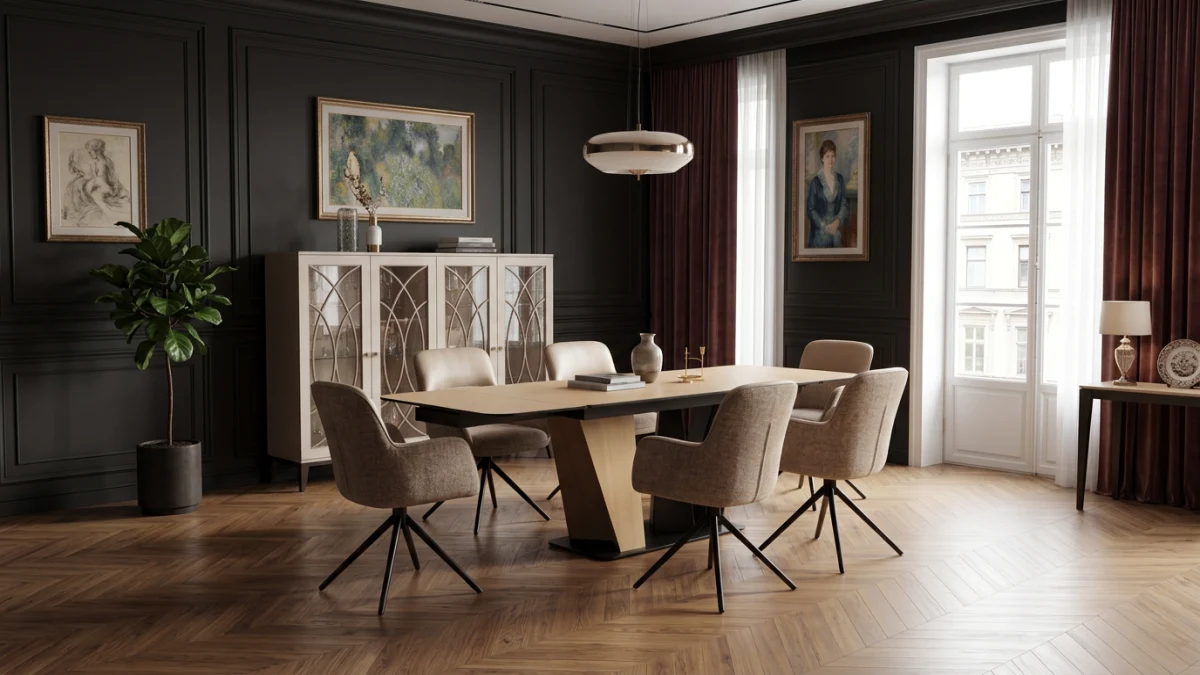
HPL Tabletop Problems: Preventing Scratches, Substrate Swelling, and Edge Damage in B2B Furniture Sourcing
Common HPL tabletop problems such as surface scratches, edge delamination, and substrate moisture swelling stem from substandard surface overlays, inadequate adhesive chemistry, low-density core boards, or unsealed perimeter joints. While high pressure laminate is inherently durable, manufacturing oversights and incorrect material specifications create severe vulnerabilities under daily commercial use. B2B furniture importers, wholesalers, and contract buyers can systematically eliminate these risks through precise technical specifications, moisture-resistant bonding methods, and structured factory quality inspection protocols.
What Are the Most Common HPL Tabletop Problems in Commercial Dining Furniture?
High Pressure Laminate (HPL) is widely specified across European dining table collections, commercial hospitality environments, and educational or office settings because of its versatile aesthetic appeal and durable surface characteristics. However, when furniture manufacturing lacks strict process controls or cost-cutting compromises material grades, tabletops exhibit distinct structural and cosmetic failures over extended use.
Understanding these defect mechanisms is vital for B2B furniture buyers, retail category managers, and contract procurement specialists. Identifying defects at the factory sample or inline inspection stage prevents costly warranty claims, customer returns, and reputational damage across European retail and hospitality channels.
| Failure Category | Typical Visual Symptoms | Root Manufacturing Cause | Commercial & Operational Impact |
|---|---|---|---|
| Surface Abrasions & Scratches | Hairline surface marring, dull patches, loss of decorative clarity | Low-grade surface overlay, soft resin impregnation, improper finish selection | Early cosmetic degradation, customer dissatisfaction, increased return rates |
| Edge Delamination | Edge band peeling, visible adhesive line gaps, perimeter chipping | Inadequate glue coverage, low-grade thermoplastic adhesive, sharp 90-degree edge profile | Moisture ingress gateway, aesthetic failure, potential hazard from exposed laminate edges |
| Substrate Moisture Swelling | Raised perimeter ridges, bubbling under laminate, panel warping | Unsealed core edges, low-density particleboard, missing underside balancing sheet | Irreversible dimensional deformation, loose hardware, structural table failure |
| Corner & Joint Impact Damage | Chipped decorative corners, cracked laminate seams | Missing edge chamfer radius, brittle laminate grades, rough transit handling | Immediate reject upon delivery, transit damage claims, unbox failures |
| Fastener Pull-Out | Loose legs, wobbly subframes, stripped screw channels | Insufficient core board density, direct wood screwing without metal inserts | Structural instability in knock-down (KD) furniture, safety hazards |
Addressing these vulnerabilities requires examining how each component layer functions within the complete tabletop assembly.
Why Does High Pressure Laminate Scratch Resistance Fail in High-Frequency Hospitality and Retail Environments?
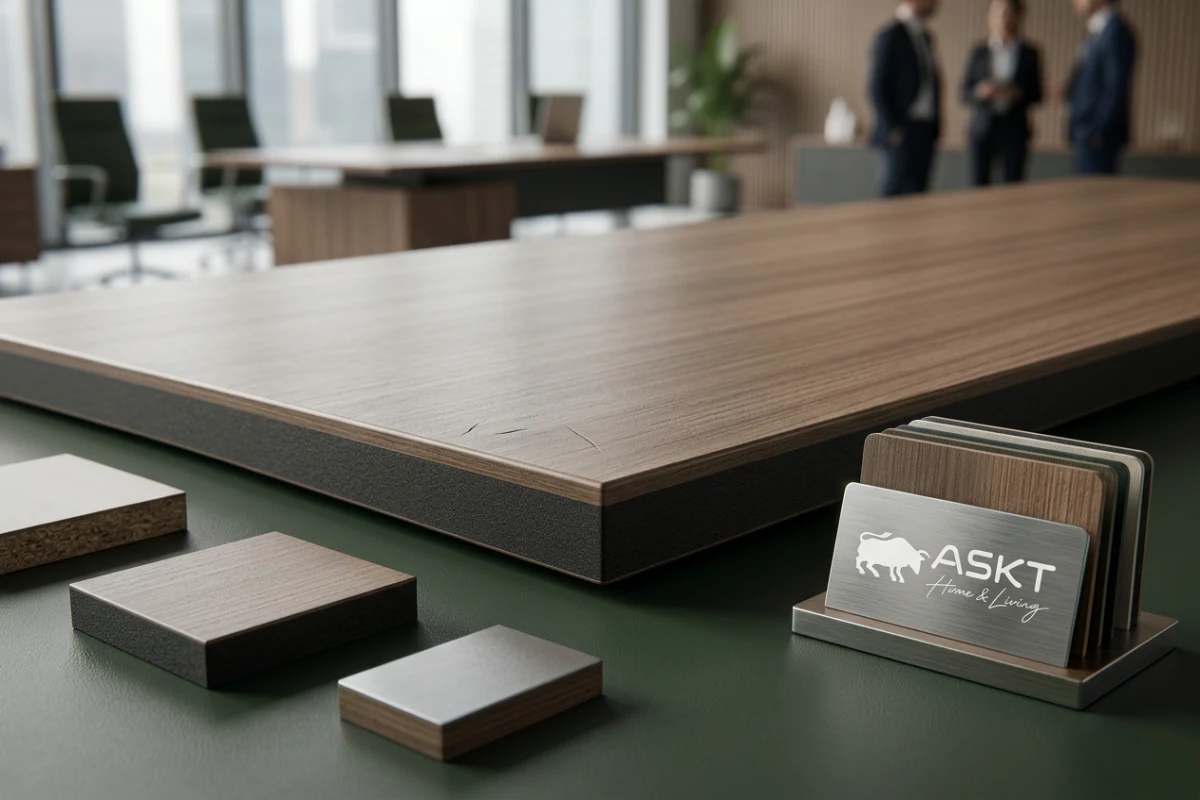
High pressure laminate scratch resistance is governed by the resin saturation, curing density, and protective transparent wear layer applied over the decorative printed paper. When dining tabletops develop fine scratches, dull spots, or cutlery marks after brief commercial deployment, specific production and material shortcuts are typically responsible.
1. Specification of Vertical-Grade Rather than Horizontal-Grade Laminate
Laminate sheets are manufactured in different performance grades. Vertical-grade HPL, designed for wall cladding, cabinet facades, and acoustic panelling, features a thinner resin matrix and minimal wear protection. When suppliers use vertical-grade laminate on horizontal dining surfaces to reduce material costs, the surface lacks the abrasion resistance required to withstand sliding ceramic plates, metal cutlery, glassware, and commercial tableware.
2. Inadequate Melamine Resin Impregnation and Rushed Press Curing
During the laminate manufacturing process, decorative papers are saturated with melamine formaldehyde resin and cured under heat and high pressure. If the resin saturation ratio is diluted, or if press cycles are shortened to maximise factory output, the cross-linked polymer matrix remains relatively soft. This under-cured surface cannot resist micro-abrasions from everyday items like salt shakers or coarse cleaning sponges.
3. Selection of Unforgiving Surface Textures and Gloss Levels
High-gloss and ultra-smooth flat-matte finishes highlight micro-scratches dramatically under direct dining lighting. In contrast, textured, satin, suede, or fine woodgrain embossed surfaces diffuse reflected light and provide enhanced resistance to micro-abrasions. European contract buyers should specify light-diffusing matte or tactile textures for high-traffic restaurant and residential dining collections.
4. Transit Friction and Packaging Failures
Surface damage frequently occurs before the table reaches the end consumer. If knocked-down tabletops are packed with direct cardboard-to-laminate contact, continuous micro-vibrations during container shipping cause friction burnishing. Protective surface foils, non-woven foam interlayers, and rigid edge guards are essential packaging requirements to preserve flawless finishes during export transit.
What Causes Tabletop Substrate Moisture Swelling and Core Warping?
Tabletop substrate moisture swelling represents a critical quality failure in dining table manufacturing. While the cured HPL top surface is impermeable to water, the core substrate board—typically Medium-Density Fibreboard (MDF), particleboard (chipboard), or plywood—is naturally hygroscopic. If ambient humidity, liquid spills, or cleaning fluids penetrate unsealed seams, the wood fibres swell and deform permanently.
Moisture ingress and panel deformation develop through three primary mechanisms:
- Capillary Ingress Along Perimeter Glue Lines: Spilled liquids pool at the junction where the horizontal laminate sheet meets the vertical edge band. If the adhesive application contains microscopic voids or lacks water resistance, moisture migrates into the core, causing localised edge swelling that lifts the laminate surface.
- Unsealed Underside Cutouts and CNC Routing Channels: Knock-down dining tables require underside drilling and routing for leg mounting brackets, metal support rails, extension mechanisms, and threaded inserts. If these exposed cutouts are left unsealed, ambient atmospheric moisture enters the core board during sea shipping and seasonal humidity changes.
- Asymmetrical Surface Tension and Missing Balancing Sheets: Wood-based panels naturally expand and contract with environmental humidity. When a dense HPL sheet is applied to the top surface while the underside is left raw or backed with lightweight paper, the imbalance in surface tension causes panel bowing, cup warping, or perimeter curling.
| Tabletop Layer | Functional Purpose | Recommended Specification | Failure Risk if Omitted |
|---|---|---|---|
| Top Wear Layer | Scratch and stain protection | High-density melamine overlay with horizontal rating | Rapid surface scratching and gloss degradation |
| Decorative Layer | Visual woodgrain, stone, or solid colour pattern | Lightfast pigmented decorative paper | Colour fading and uneven surface appearance |
| Top Adhesive Bond | Permanent adhesion between laminate and core | Waterproof reactive hot-melt adhesive | Blistering, bubbling, and surface sheet delamination |
| Substrate Core | Structural stability and screw-holding capacity | High-density moisture-resistant MDF or compact core | Edge swelling, thickness variation, hardware pull-out |
| Bottom Adhesive Bond | Moisture barrier and backing sheet adhesion | Continuous, void-free adhesive spread | Incomplete seal against underside humidity |
| Balancing Backer | Counterbalance top sheet tension | Matched thickness phenolic balancing sheet | Severe panel bowing, warping, and dimensional instability |
Because swollen particleboard and MDF fibres do not return to their original calibrated thickness after drying, preventing moisture penetration at the factory stage is essential.
Why Does HPL Table Edge Delamination Occur and How Can Sourcing Teams Prevent It?
HPL table edge delamination occurs when the bond separating the substrate core, surface laminate, and peripheral edge profile fails. This defect ruins the aesthetic appeal of the furniture and exposes the raw substrate core directly to environmental moisture and mechanical impacts.
Adhesive selection and edge milling geometry represent the two most influential factors determining edge bond longevity.
Adhesive Technology Selection
In commercial furniture production, edge banding machinery generally uses one of three adhesive technologies:
- Standard EVA Hot-Melt Adhesive: Ethylene Vinyl Acetate (EVA) is cost-effective and straightforward to process. However, as a thermoplastic adhesive, EVA re-softens at elevated temperatures and provides limited resistance to moisture and cleaning solvents. Over time, heat and humidity weaken the glue line, resulting in peeling edge bands.
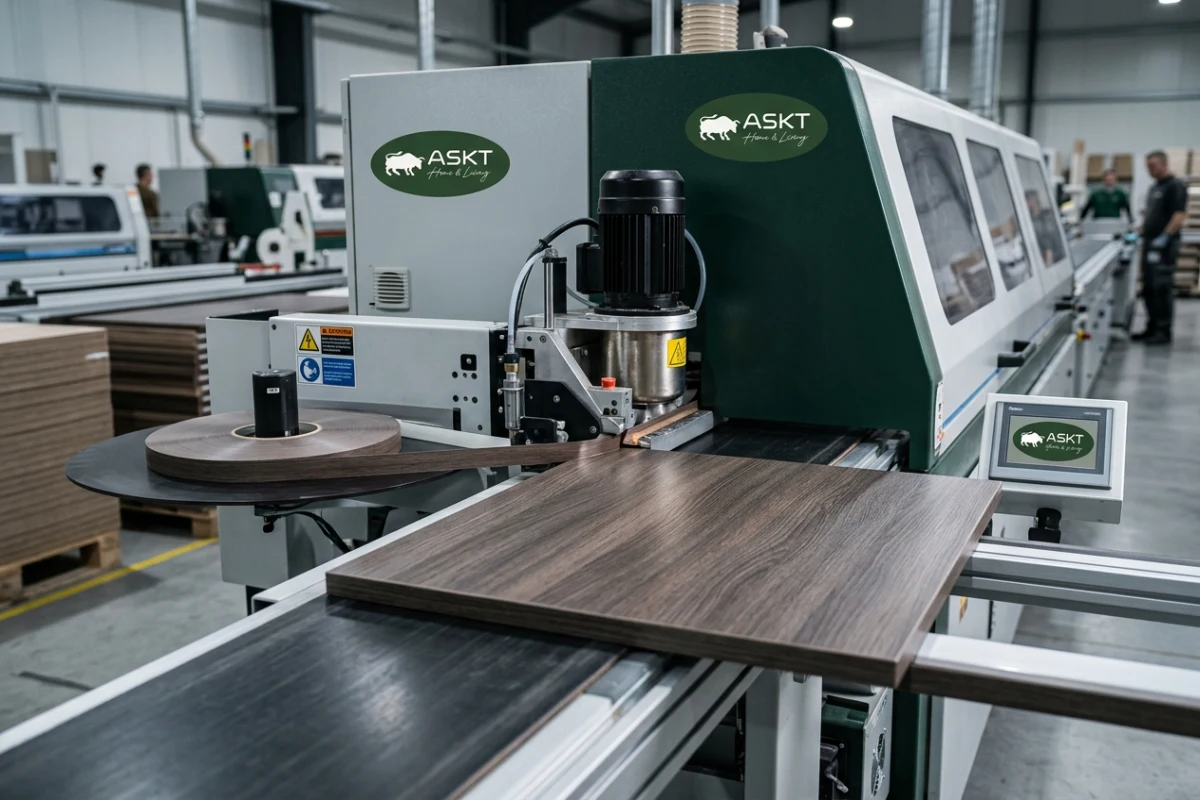
- PUR (Polyurethane Reactive) Hot-Melt Adhesive: PUR adhesive undergoes a chemical cross-linking reaction as it cures, creating an irreversible, heat-resistant, and highly moisture-tight bond. PUR edge banding produces thin, clean glue lines and provides superior defence against water penetration, steam, and cleaning chemicals.
- Laser and Zero-Joint Edge Banding: This technology uses pre-coated edge banding tapes fused directly to the substrate using laser or hot-air units, eliminating the traditional glue pot entirely. The resulting seamless joint is virtually invisible and fully waterproof, offering exceptional protection for high-end dining and commercial contract furniture.
Edge Profile Milling and Chamfer Radii
Sharp 90-degree laminate corners are naturally brittle. When dining chairs bump against square table edges during daily use, the unchamfered laminate edge chips or cracks easily. Furthermore, cleaning cloths and clothing can snag on sharp edges, gradually prying the laminate away from the substrate.
To prevent impact chipping and delamination, automated factory edge banders should apply a precise 1.0 mm to 2.0 mm chamfer or radius bevel across all top and bottom perimeter transitions. A subtle radius deflects impact energy from chair frames and protects the adhesive seam from mechanical peeling.
How Does Substrate and Core Board Selection Impact Dining Table Longevity?
Evaluating the internal core board of an HPL tabletop is essential for professional furniture sourcing. Two tabletops that look identical on the surface can deliver vastly different durability depending on their internal density, moisture resistance, and screw-holding capacity.
European buyers should evaluate core substrate options based on the target retail price point, usage environment, and structural requirements of the table design.
1. Moisture-Resistant Medium-Density Fibreboard (MR-MDF)
MR-MDF is manufactured with hydrophobic resin formulations and paraffin wax emulsions, providing uniform internal density (typically 720 to 800 kg/m³). Its smooth, homogeneous edges allow for precise edge banding and clean CNC profiling. MR-MDF provides reliable screw-holding performance for knock-down metal subframes and resists seasonal humidity fluctuations effectively.
2. Furniture-Grade Particleboard (Chipboard)
Particleboard features a three-layer structure with coarser wood flakes in the centre and finer particles near the surfaces. While lightweight and cost-effective, standard particleboard has lower internal bond strength and swells rapidly upon direct contact with moisture. It is suitable for budget residential furniture intended for climate-controlled indoor spaces, provided all edges and cutouts are completely sealed.
3. Solid Compact Laminate (Solid Phenolic Core)
For heavy-traffic hospitality, healthcare, and outdoor-indoor dining projects, solid phenolic compact laminate replaces wood-based cores entirely. Constructed from dense kraft paper sheets saturated with phenolic resin and cured under high pressure, compact board is entirely waterproof, impact-resistant, and homogeneous. Although heavier and costlier, it completely eliminates core swelling and edge delamination risks.
| Substrate Material | Typical Density Range | Screw Holding Strength | Moisture Swelling Characteristics | Optimal B2B Sourcing Application |
|---|---|---|---|---|
| Standard Furniture Particleboard | 600 - 680 kg/m³ | Moderate | Higher swelling upon water contact; requires complete edge sealing | Cost-driven residential retail collections in climate-controlled spaces |
| Moisture-Resistant MDF | 720 - 800 kg/m³ | High | Enhanced moisture resistance; uniform density across core | Mid-to-high-end dining tables, contract dining, extension tables |
| High-Density Fibreboard (HDF) | 800 - 900 kg/m³ | Very High | High stability; excellent impact resistance | Slim-profile designer tabletops, heavy-use commercial desks |
| Solid Compact Phenolic Core | 1350 - 1450 kg/m³ | Very High (with threaded metal inserts) | 100% waterproof; immune to substrate thickness swelling | High-traffic hospitality, cafes, healthcare, outdoor dining |
In addition to density and moisture behaviour, European buyers must ensure all wood composite substrates comply with formal formaldehyde emission standards (such as EN E1 regulations) to guarantee consumer safety and market compliance.
What Quality Control Protocols Define B2B Dining Table Quality Inspection for Laminate Surfaces?
A thorough B2B dining table quality inspection protocol is essential to verify manufacturing consistency before final shipments depart the factory. Sourcing teams and third-party inspectors should implement structured inspection gates across both inline production and finished-goods audits.
- Raw Board & Component Inspection: Verify core board moisture content (ideally 6% to 10%), panel thickness calibration, and surface flatness before laminate pressing.
- Pressing & Bonding Quality Check: Inspect balancing sheet matching, surface adhesion consistency, and panel flatness across pressed master boards.
- Edge Banding & PUR Application Audit: Check glue line continuity, adhesive temperature settings, chamfer radius uniformity, and perimeter seam tightness.
- CNC Milling & Underside Sealing Check: Inspect pilot hole precision, metal insert torque performance, and protective sealing over all raw routing channels.
- Finished Product & Packaging Audit: Conduct cross-cut adhesion tests, surface visual inspection under multi-angle lighting, and ISTA transit packaging validation.
Key Testing Dimensions for Pre-Shipment Quality Audits
- Visual and Optical Inspection: Inspect tabletop surfaces under calibrated, glare-free overhead lighting (minimum 1000 lux). Check for telegraphing (substrate particle impressions showing through the laminate), resin starvation marks, foreign particle inclusions, or gloss inconsistencies across seams.
- Glue Line Continuity and Seam Adhesion: Examine 100% of the perimeter edge joints. Confirm zero glue starvation gaps, excess adhesive squeeze-out, or loose tape sections. On production sample off-cuts, conduct a peel test: the adhesive bond should pull wood fibres from the substrate rather than separating cleanly at the glue line.
- Steam and Heat Exposure Verification: To confirm PUR adhesive curing, expose edge seams on test off-cuts to localised steam or warm water immersion. Reliable PUR bonding maintains edge integrity without lifting, bubbling, or substrate edge expansion.
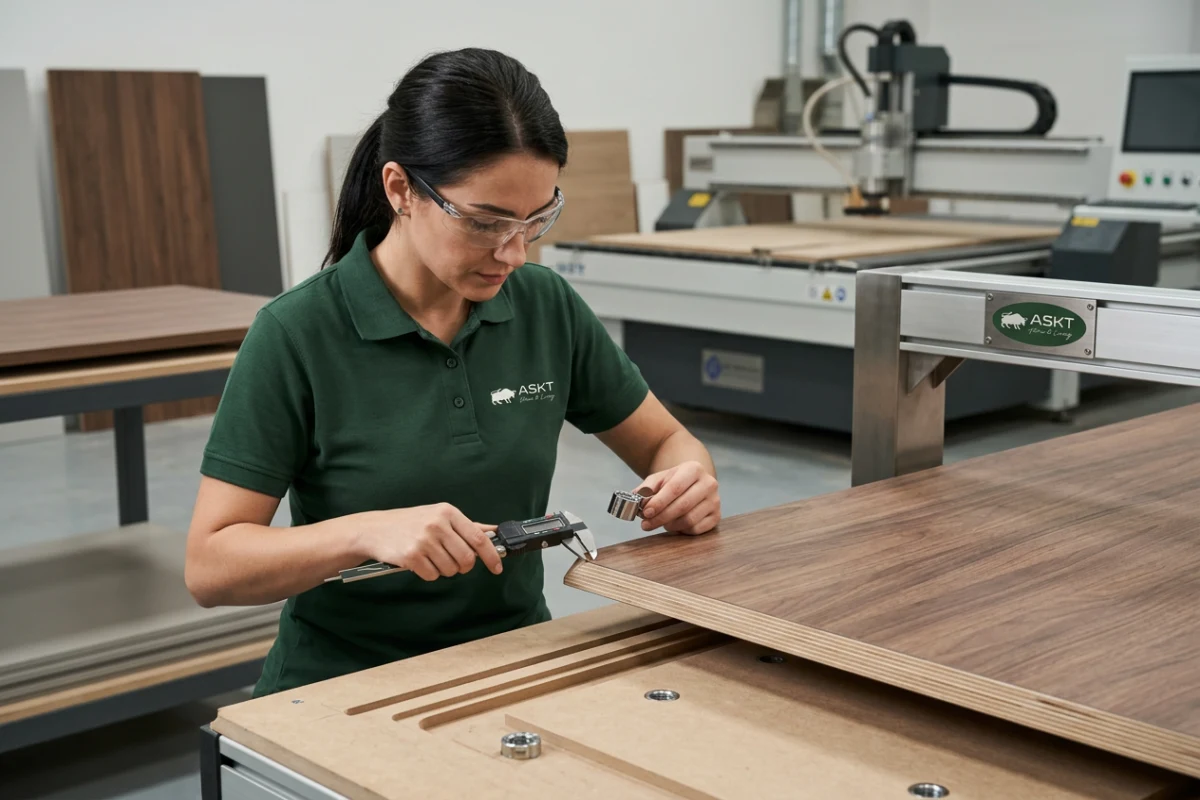
- Hardware Torque and Anchor Retention Testing: Inspect threaded metal inserts embedded in the table underside. Using a calibrated torque wrench, tighten assembly bolts to the specified torque rating to confirm that internal wood fibres do not strip or crush under structural mechanical load.
- Transit Packaging and Corner Protection Audit: Inspect corner protectors, edge foam density, honeycomb buffer inserts, and outer carton burst strength to ensure safe handling during palletisation and ocean freight transit.
How Can European Furniture Buyers Prevent Tabletop Defects During Sourcing and Supplier Evaluation?
Preventing quality defects requires an airtight procurement approach from initial factory qualification through Request for Quotation (RFQ) documentation and mass production. Providing manufacturing partners with detailed Technical Data Sheets (TDS) rather than generic aesthetic descriptions ensures clear performance expectations.
To safeguard commercial collections and build reliable supplier partnerships, buyers should implement the following procurement checklist:
- Specify Horizontal-Grade Laminate: Explicitly require horizontal commercial-grade HPL with a minimum surface thickness of 0.6 mm to 0.8 mm, backed with a matched phenolic balancing sheet on the underside to prevent panel warping.
- Mandate Moisture-Resistant Core Substrates: Specify moisture-resistant MDF (MR-MDF) or high-density core boards for dining collections, ensuring all underside routing channels and hardware cutouts receive protective sealant coating.
- Require Waterproof PUR Edge Banding: Specify PUR hot-melt adhesive or laser zero-joint edge banding across all commercial and residential dining table programs, prohibiting standard low-temperature EVA glue for high-risk applications.
- Define Corner Radius and Edge Chamfer Specifications: Mandate a consistent 1.0 mm to 2.0 mm chamfer radius on all top and bottom edges to prevent chair impact chipping and snagging.
- Implement Threaded Metal Inserts for KD Construction: Require pre-installed metal threaded inserts for knock-down leg mounting plates rather than direct wood screws, ensuring repeated assembly without structural degradation.
- Enforce Export Packaging Standards: Require heavy-duty 5-ply corrugated export cartons, high-density edge and corner protectors, and internal desiccant packs to prevent moisture condensation (container rain) during sea freight.
By establishing clear technical criteria and auditing production processes transparently, B2B buyers can deliver durable, moisture-stable, and scratch-resistant HPL dining collections that uphold their brand reputation across competitive European markets.
Frequently Asked Questions (FAQ)
What is the difference between standard melamine facing and High Pressure Laminate (HPL)?
Standard melamine facing (Direct Pressure Laminate or DPL) is produced by fusing a single resin-impregnated decorative paper directly onto a particleboard or MDF core under brief, single-stage pressing. High Pressure Laminate (HPL) is manufactured separately under intense pressure and heat using multiple layers of phenolic resin-impregnated kraft paper topped with a clear protective overlay. HPL is significantly thicker, more impact-resistant, and substantially more durable against surface scratching and gouging than standard melamine boards.
Can minor scratches on an HPL tabletop be polished out or repaired on site?
Unlike solid timber, High Pressure Laminate features a thin, dense melamine protective overlay that cannot be sanded, buffed, or polished with conventional wood finishes. Very fine micro-scratches can sometimes be visually diminished using specialised laminate cleaning compounds or matte conditioners. However, deep gouges that penetrate the decorative paper layer require colour-matched hard wax or resin repair compounds, or complete panel replacement.
Why is a balancing backing sheet necessary on HPL dining tables?
Balancing backing sheets are applied to the underside of the table core to counterbalance the surface tension, thermal expansion, and moisture absorption characteristics of the top decorative HPL sheet. Because composite wood boards naturally expand and contract with humidity changes, an unbalanced panel will cup, bow, or warp over time. A balanced backing sheet keeps the tabletop flat across changing seasons.
Which edge banding material performs best on commercial HPL dining tables?
ABS (Acrylonitrile Butadiene Styrene) and Polypropylene (PP) edge banding paired with moisture-resistant PUR hot-melt adhesive deliver optimal performance for commercial dining tables. Compared to conventional PVC, ABS offers higher impact elasticity, does not shatter when struck by dining chairs, and is chlorine-free and recyclable. When properly chamfered with a subtle edge radius, ABS creates a durable, moisture-tight barrier around the tabletop perimeter.
For European furniture wholesalers, retail chains, and commercial project buyers seeking reliable dining furniture manufacturing from China, ASKT provides transparent quality control and robust engineering support. Discuss your quality requirements with ASKT to develop durable, defect-free dining table collections tailored to your market standards.