
ISTA Packaging Tests for Flat Pack Dining Furniture: A Buyer’s Guide to Reducing Transit Damage
If you source flat pack dining furniture for European markets, you have almost certainly opened a container or courier parcel and found a scratch, a chipped edge, a bent metal frame or a damaged table top. Damage happens. The question is not whether it can ever occur, but whether your supplier is systematically testing packaging to keep damage rates predictable and low. That is where ISTA packaging tests for flat pack dining furniture come in.
ISTA, the International Safe Transit Association, develops standardised test procedures that simulate the stresses products face during distribution. For furniture buyers, these tests are not just a quality checkbox. They are a practical tool for reducing returns, protecting brand reputation and comparing supplier performance on something that directly affects your bottom line.
In this guide, we break down what ISTA tests actually measure, which procedures matter most for flat pack dining furniture, how to interpret results, and how to use testing data as part of your sourcing and supplier evaluation process.
Why ISTA Packaging Tests Matter for European Furniture Buyers
For European furniture wholesalers, retail chains and e-commerce brands, flat pack dining furniture is one of the most logistics-sensitive product categories. Dining tables are large, heavy and often made of brittle materials such as sintered stone or glass. Dining chairs have protruding legs, metal frames and upholstered surfaces that can scuff, dent or tear. Benches, bar stools and extendable table mechanisms add further complexity.
When packaging fails, the costs go far beyond a single damaged item. You face return shipping, restocking, replacement parts, customer service time and, in e-commerce channels, public review damage that can slow an entire product line. This is why flat pack furniture transit damage reduction is such a high priority for professional buyers.
ISTA test procedures for furniture shipping provide a common, repeatable framework for evaluating packaging performance. Instead of waiting for real shipments to fail, you can test packaging in a controlled environment and adjust it before full production begins. For buyers working with Chinese manufacturers, asking for ISTA test data is also one of the clearest ways to separate suppliers that take logistics quality seriously from those that treat packaging as an afterthought.
What ISTA Actually Tests: Core Simulation Categories
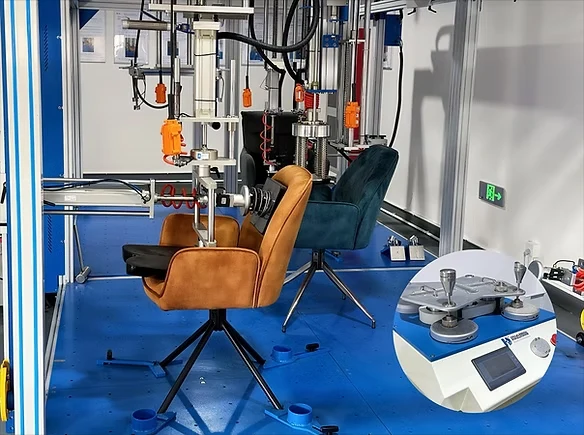
At their core, ISTA procedures replicate the physical forces that packages encounter from the factory floor to the end customer's home. For flat pack dining furniture, four simulation categories matter most.
Vibration
Trucks, vans, forklifts and conveyor belts all create continuous vibration. Over long distances, this vibration can loosen screws, rub components against each other, wear through protective foam and gradually weaken carton structure. Vibration testing reproduces these conditions to see how packaging and internal product positioning hold up over time.
Shock and Drop
Manual handling introduces sudden impact. Workers drop packages from hand height, tilt them onto edges, or lower them roughly onto pallets. Drop testing simulates these events onto corners, edges and flat faces, showing where internal protection is most likely to fail first.
Compression
In warehouses, containers and delivery vehicles, packages are stacked on top of each other. Compression testing applies controlled vertical load to the carton to measure stacking strength and resistance to crushing. For flat pack dining furniture, this is especially relevant for long, narrow boxes such as table leg packs and chair frames that can buckle if stacked incorrectly.
Atmospheric and Environmental Exposure
Temperature and humidity changes can affect carton strength, adhesive performance and even the behaviour of protective materials such as foam and honeycomb paper. Some ISTA procedures include environmental conditioning to make sure packaging performs reliably across different climate conditions.
Common ISTA Procedures for Flat Pack Dining Furniture
Not every ISTA procedure is equally relevant to dining furniture. The right procedure depends on your distribution channel, package weight, shipping route and final delivery model. Below are the procedures most commonly used for flat pack dining furniture.
ISTA 1A: Basic Performance Test for Packages Under 150 lb / 68 kg
ISTA 1A is one of the most widely used entry-level procedures for individual packaged products. It combines vibration and drop testing to give a basic indication of packaging integrity. For smaller flat pack items such as dining chairs, benches and compact table tops, 1A provides a useful baseline of protection.
It is important to note that 1A is a general performance test. It does not replicate a specific distribution cycle. For buyers who need a quick qualification test or a comparison between two packaging designs, 1A is a practical starting point.
ISTA 2A: Combined Test for Individual Packaged Products
ISTA 2A builds on the basic 1A procedure by adding compression and atmospheric conditioning. This makes it more suitable for products that travel through multiple handling environments, including warehouse storage, ocean container transport and last-mile delivery.
For dining furniture buyers shipping from China to Europe, where packages may spend weeks in containers and pass through several logistics hubs, 2A gives a more complete picture than 1A alone.
ISTA 3A: Parcel Delivery System Simulation
ISTA 3A is designed specifically for packages shipped through parcel delivery networks, where they are handled as individual units rather than full pallet loads. This makes it highly relevant for e-commerce furniture brands that ship directly to consumers or use omnichannel fulfilment.
3A includes vibration, drop, shock and compression elements tailored to the typical stresses of parcel networks. For e-commerce furniture return rate packaging improvements, 3A is often the procedure of choice because it most closely mirrors the high-handling environment of direct-to-consumer delivery.
ISTA 3E: Unitised Loads and Palletised Shipments
For wholesale and container shipments where dining furniture moves on pallets, ISTA 3E simulates the handling of unitised loads. This is relevant for buyers receiving full container loads or palletised wholesale deliveries, where pallet stability, stretch wrap performance and carton stacking behaviour are critical.
ISTA 6 Series: Retailer-Specific and Channel-Specific Protocols
The ISTA 6 series includes procedures developed for specific retailers and distribution channels. Some large European furniture retail chains and e-commerce platforms have their own packaging test requirements based on ISTA 6 protocols. If you supply major retail groups, it is worth checking whether their specification is based on an ISTA procedure or requires additional testing.

How to Match the Right ISTA Test to Your Shipping Route
Choosing the right test is not about picking the most rigorous one available. It is about matching the test to your actual distribution environment. A test that is too severe will lead to over-engineered packaging and higher costs. A test that is too mild will miss real damage risks.
For flat pack dining furniture shipped from China to Europe, the right procedure depends on three main factors.
Final delivery model. If the product goes to a retail distribution centre and is then delivered to customers in its original packaging, you need a procedure that covers both container transport and last-mile handling. ISTA 2A or 3A are usually appropriate.
Package size and weight. Heavier, bulkier dining table packages are more likely to be palletised, making 3E relevant. Lighter chair boxes moving through parcel networks suit 3A.
Channel return rate history. If you already sell similar products and know that damage happens mostly in last-mile delivery, focus your testing on drop and vibration. If damage appears mainly after long container voyages, compression and atmospheric conditioning become more important.
What Damage Patterns Tell You About Packaging Weaknesses
One of the most useful aspects of ISTA testing is that it does not just give you a pass or fail result. It reveals specific failure patterns that point to clear packaging improvements. For dining furniture, certain damage patterns come up again and again.
Corner and edge chipping on table tops. Sintered stone, glass and laminated table tops almost always fail at corners and edges first. If you see chipping in these areas after a drop test, the protective corner pieces are either too thin, too hard, or not positioned correctly.
Scuffed upholstery on dining chairs. Fabric scuffing usually happens when vibrating components rub against each other inside the box. This often points to insufficient internal separation, weak polybag protection, or components that are not secured tightly enough.
Bent metal frames. If chair or table frames arrive bent, the problem is rarely the carton itself. It is usually a lack of internal bracing, especially at leg ends and joint areas where impact forces concentrate.
Carton crushing at the bottom of stacks. When the lowest box in a stack collapses, the issue is compression strength. It may be a carton grade problem, a pallet stacking pattern problem, or a product weight distribution problem inside the box.
Loose hardware and small parts. If screws, dowels and assembly parts shift during vibration, you risk missing parts complaints, even if the furniture itself is undamaged. This usually points to inadequate internal bag fixation or poor component layout.
Reading these patterns correctly is how ISTA testing translates directly into flat pack furniture transit damage reduction. Each failure mode has a specific fix, and a good supplier will use test results to iterate packaging design rather than just reporting the outcome.
How Manufacturers Use ISTA Results to Improve Packaging
For manufacturers that take dining furniture packaging testing standards seriously, ISTA testing is part of the product development process, not a final inspection step. At ASKT, for example, packaging is reviewed alongside structural design, material selection and container loading planning, because all four are connected.
When a test reveals a weakness, there are several ways packaging can be improved.
- Corner and edge protection upgrades. Thicker foam corners, honeycomb paper edge boards or expanded polypropylene protectors can reduce impact damage on brittle surfaces.
- Internal bracing. Cardboard inserts, moulded pulp trays or custom foam inserts hold components in position and stop them from shifting during transport.
- Carton grade adjustment. Using a higher flute grade or double-wall carton improves compression and puncture resistance, though it adds cost and volume.
- Component repositioning. Sometimes damage comes from how parts are arranged inside the box. Rotating a frame, separating heavy parts or balancing weight distribution can reduce stress on the carton.
- Sustainable material substitution. Many European buyers now want to reduce plastic packaging. ISTA testing helps verify that alternatives such as honeycomb paper, moulded pulp and paper cushions provide equivalent protection.
The goal is always to find the right balance between protection, cost, volume and environmental impact. There is no single perfect packaging design. What works for an upholstered dining chair will not work for a heavy sintered stone dining table. Good packaging engineering is about matching the solution to the product and the distribution environment.
Practical Checklist for Evaluating a Supplier's Packaging Testing
When you are evaluating a furniture manufacturer, asking about testing is easy. Understanding what a credible testing programme looks like is harder. Use this checklist to assess whether a supplier's approach to ISTA packaging tests for flat pack dining furniture is meaningful or just marketing.
| Evaluation Point | What to Look For | What to Watch Out For |
|---|---|---|
| Test procedure selection | Supplier can explain why a specific procedure was chosen for your product and shipping route | Generic statements that all products pass ISTA without specifying procedure |
| Test frequency | Tests repeated after design, material or packaging changes | One test done years ago on a different product |
| Sample preparation | Test samples represent actual production packaging | Specially prepared or reinforced test samples |
| Damage documentation | Photos of failure points, written analysis and improvement actions | Only a pass/fail report with no detail |
| Packaging iteration | Evidence of multiple design rounds based on test results | First design always passes |
| Test facility | In-house equipment or trusted third-party lab | Unspecified testing location or unclear authority |
| Cost and volume awareness | Supplier discusses trade-offs between protection, cost and container loading | Supplier always proposes the thickest, most expensive packaging |
| Channel relevance | Supplier understands e-commerce vs wholesale vs retail distribution differences | Same packaging offered for every sales channel |
This checklist is not about finding the supplier with the most tests. It is about finding the supplier that uses testing as a tool to solve your specific logistics problems.
ISTA Testing vs. Real-World Transit: What Buyers Should Know
It is important to be realistic about what ISTA test procedures for furniture shipping can and cannot do. Standardised tests are excellent for comparing packaging designs, identifying obvious weaknesses and setting minimum performance expectations. They do not guarantee that zero damage will ever occur in real shipments.
Real-world transit contains variables that no laboratory test can fully replicate. Forklift operators handle loads differently. Road conditions vary between countries. Weather changes. Parcel sorting equipment differs between carriers. Some last-mile delivery teams carry packages up stairs, while others use lifts.
What ISTA testing does give you is confidence that packaging has been designed thoughtfully and that common failure modes have been addressed. For professional buyers, that confidence is valuable because it reduces uncertainty. It means you can forecast return rates more accurately, negotiate better with logistics partners, and have a clear reference point when discussing packaging improvements with your supplier.
For e-commerce furniture brands in particular, this predictability matters a great deal. E-commerce furniture return rate packaging performance directly affects profitability. When you know your packaging has been properly tested, you can set clearer customer expectations, reduce post-purchase disappointment and protect your review scores.
Frequently Asked Questions About ISTA Packaging Tests
What are ISTA packaging tests for flat pack dining furniture?
ISTA packaging tests are standardised procedures that simulate real-world transport conditions such as vibration, shock, drops and compression to evaluate how well flat pack dining furniture packaging protects the product during shipping and handling.
How do ISTA test procedures help with flat pack furniture transit damage reduction?
By identifying packaging weaknesses in a controlled test environment, manufacturers can adjust protective materials, internal bracing and carton design before full production, reducing the likelihood of damage occurring during actual transit.
Are dining furniture packaging testing standards mandatory for European imports?
ISTA procedures are industry standards rather than legal requirements, but many European furniture retailers, e-commerce brands and purchasing groups require ISTA test reports as part of their supplier qualification and quality assurance process.
How does packaging testing affect e-commerce furniture return rate packaging performance?
For e-commerce channels, transit damage is a leading cause of returns. Proper ISTA testing reduces visible and hidden damage, which in turn lowers return rates, reverse logistics costs and customer dissatisfaction.
How often should packaging tests be repeated for flat pack dining furniture?
Packaging tests should be repeated when product design changes, packaging materials are modified, carton dimensions change, or when switching to a new shipping route, carrier or fulfilment model.
Conclusion: Using ISTA Data to Reduce Sourcing Risk
Packaging is one of those parts of furniture sourcing that is easy to overlook until something goes wrong. Once you have dealt with a container of damaged dining tables or a wave of e-commerce returns caused by scuffed chairs, you start to see packaging engineering as what it really is: a core part of product quality, not an afterthought.
ISTA packaging tests for flat pack dining furniture give you a structured, repeatable way to evaluate packaging performance, compare suppliers and make sure the furniture you source arrives in the condition your customers expect. They are not a magic solution that eliminates all transit damage, but they are one of the most practical tools available for keeping damage rates low, predictable and manageable.
If you are currently evaluating flat pack dining furniture suppliers for the European market and want to discuss how packaging testing can support your quality and return rate targets, discuss your shipping conditions and packaging testing requirements with ASKT. As a B2B furniture manufacturer with long experience supplying European wholesalers, retailers and e-commerce brands, ASKT can work with you to develop packaging that balances protection, sustainability and cost efficiency for your specific distribution needs.