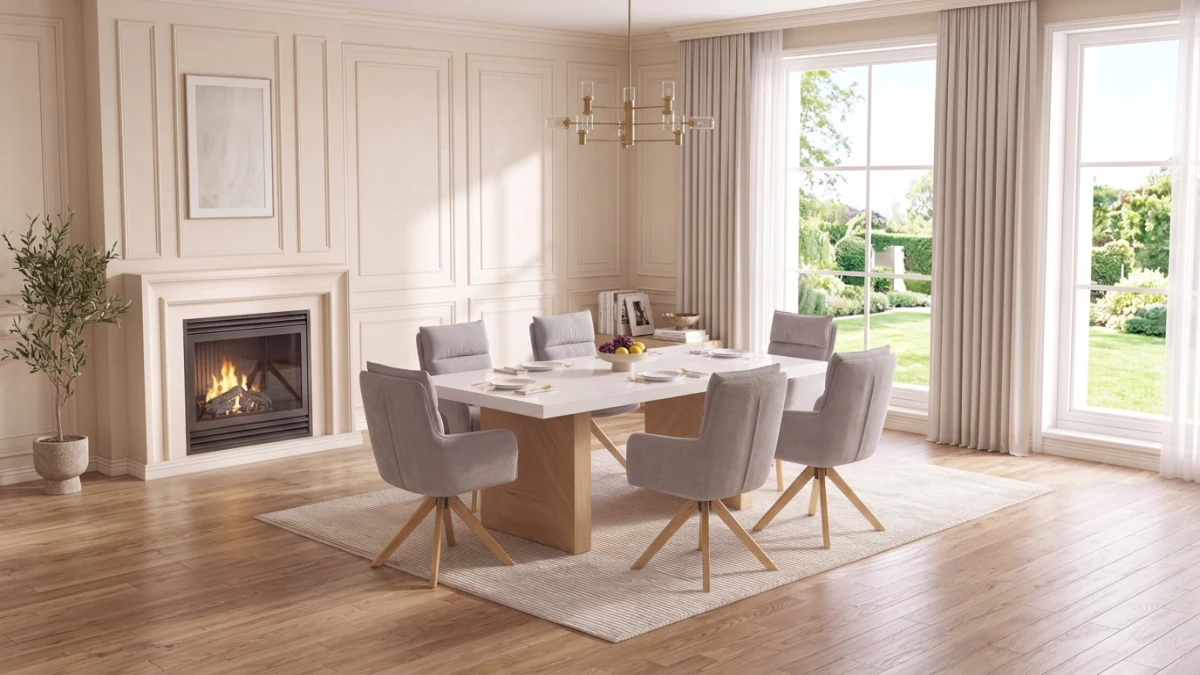
Lightweight vs Heavy Dining Table Shipping Costs: B2B Sourcing Guide
Tabletop weight directly dictates container payload efficiency, domestic delivery fees, and transit damage risks, making structural design and packaging optimization critical for landed profit margins. Sourcing heavy dining tables often results in containers reaching maximum weight limits before utilizing total cubic capacity, while lightweight engineered designs maximize container volume, improve handling safety, and reduce overall supply chain expenses for European furniture buyers.
How Does Tabletop Weight Influence Ocean Freight and Container Capacity?
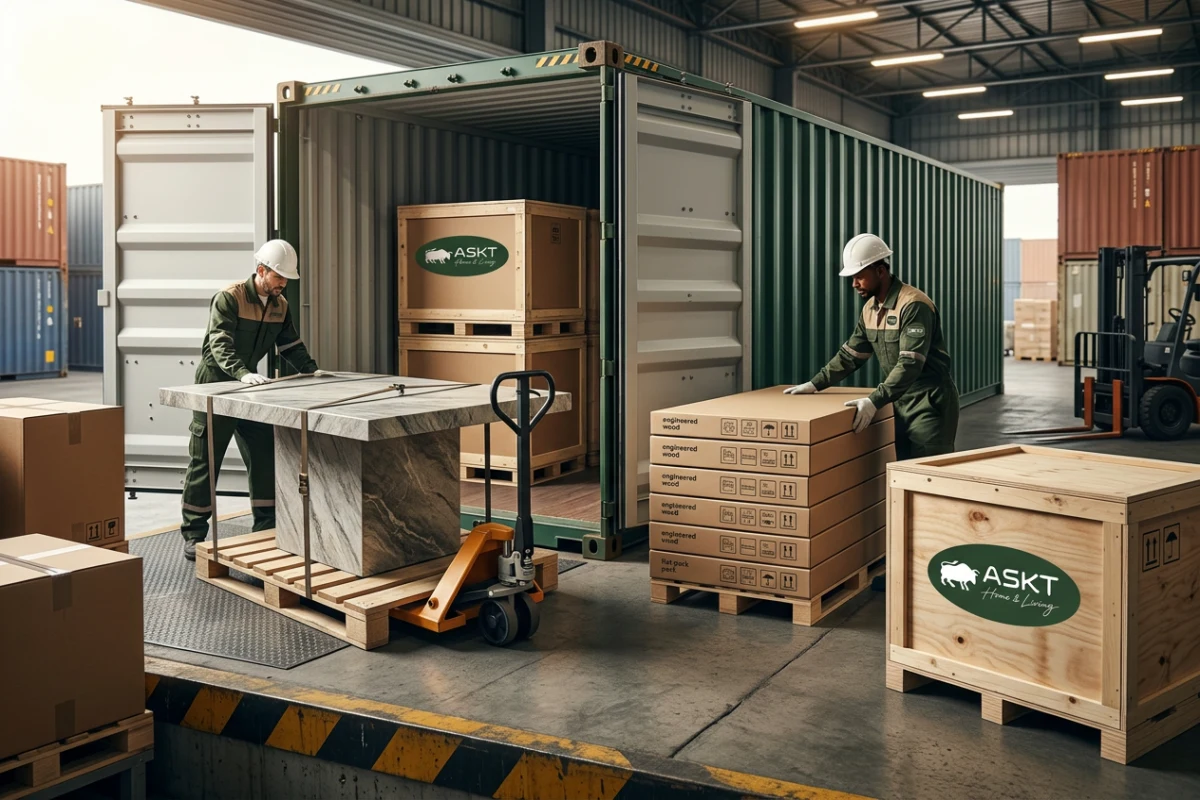
When managing international furniture logistics, ocean freight efficiency depends heavily on the relationship between cargo volume and cargo mass. In standard sea container shipments, freight capacity is constrained by two physical thresholds: the maximum internal volume and the gross permissible payload weight. Sourcing decisions directly determine whether a shipping container reaches its maximum cubic capacity first or reaches its gross weight capacity while space remains empty.
When evaluating lightweight vs heavy dining table shipping costs, understanding how tabletop weight shipping costs affect container utilization is essential. Dining tables manufactured with heavy, thick slabs—such as solid stone or dense hardwood—add significant mass per unit. As a consequence, a container filled with heavy dining tables reaches its legal road and maritime weight limits well before filling the container volume. This condition leaves valuable overhead and internal cargo space unutilized, driving up the freight cost allocated to each individual piece.
In contrast, dining tables engineered with lightweight tabletop configurations—such as sintered stone surfaces paired with supportive substrates, or oak veneer over engineered cores—provide a balanced weight-to-volume ratio. This reduction in tabletop weight allows European importers to load significantly more units per shipping container. Spreading the fixed ocean freight fee across a higher unit volume lowers the per-unit shipping expense and improves import margins across retail and wholesale distribution channels.
| Tabletop Construction Type | Weight Profile | Container Loading Impact | Handling Complexity | Relative Freight Efficiency |
|---|---|---|---|---|
| Heavy Solid Construction | High Weight per Unit | Reaches container weight limit early | Requires specialized handling | Lower per-container volume efficiency |
| Engineered Sintered Stone | Moderate Balanced Weight | Balances weight and volume capacity | Standard team handling | High container utilization |
| Oak Veneer with Engineered Core | Lightweight Profile | Maximizes total cubic space | Easy domestic handling | Optimal volume distribution |
| Knock-Down (KD) Metal Frame Tables | Compact & Lightweight | Maximizes flat-pack stacking density | Streamlined automated sorting | Highest overall logistics efficiency |
Why Is Container Loading Optimization Essential for B2B Dining Table Sourcing?
Achieving effective dining table container loading optimization requires careful alignment between furniture structure, flat-pack dimensions, and packaging engineering. Dining tables do not ship as fully assembled furniture; their commercial feasibility depends entirely on how efficiently their components pack down into secure cartons.
Heavy tables present unique container loading challenges because their high mass restricts vertical stacking. When dense, heavy cartons are stacked inside a shipping container, the bottom layers endure immense static and dynamic pressure throughout sea transit. If the packaging or internal frame lacks adequate load-bearing support, the lower cartons risk crushing, forcing shipping handlers to limit stack height and leaving upper container space unused.
Lightweight dining table construction resolves these container loading issues through several structural advantages:
- Improved Vertical Stacking: Lighter cartons exert less downward pressure on bottom packaging tiers, enabling higher, safer vertical stacking inside high-cube shipping containers without structural box collapse.
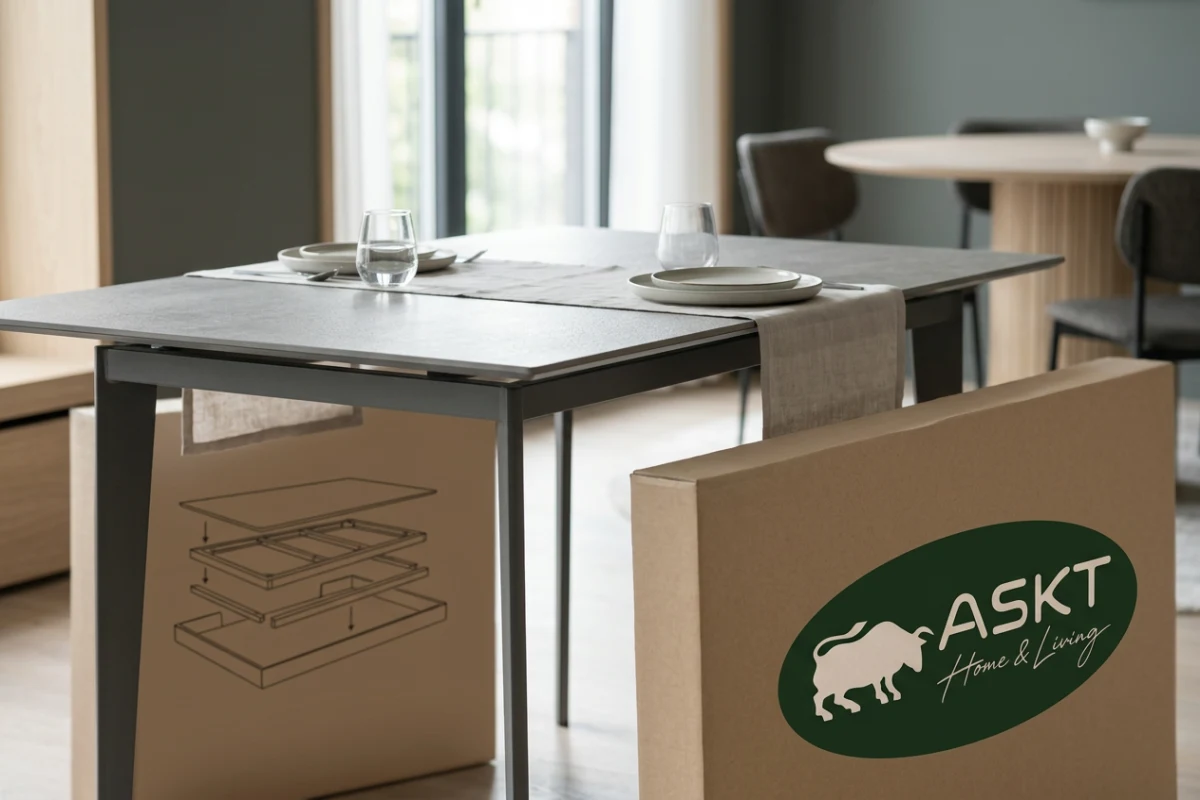
- Knock-Down (KD) Metal Frames: Designing tables with modular KD metal frames and detachable legs allows bulky framework to pack flat alongside the tabletop, significantly reducing carton depth and gross cubic volume.
- Optimized Payload Balance: Lightweight designs prevent premature container weigh-out, allowing B2B buyers to order mixed container loads of dining tables, dining chairs, and dining benches without exceeding road transport weight limits.
- Standardized Warehouse Stacking: Lighter flat packs integrate seamlessly onto standard European transport pallets and warehouse racking systems, streamlining intermediate logistics for distributors and fulfillment centers.
Integrating flat-pack KD engineering and structural weight management into early product development creates a dependable framework for B2B dining table freight optimization, ensuring resilient supply chain margins across international trade routes.
How Do Last-Mile Delivery Surcharges Vary Between Heavy and Lightweight Tables?
For European furniture importers, e-commerce retailers, and commercial contract suppliers, last-mile logistics represents a substantial portion of overall distribution expenditure. Domestic parcel networks and regional freight carriers throughout Germany, the Netherlands, the UK, Poland, Switzerland, and Ireland maintain strict weight cut-offs and handling categories for residential and commercial deliveries.
Heavy dining tables that exceed standard courier weight thresholds incur substantial logistics surcharges:
- Specialized Multi-Person Handling: Packages that surpass standard single-handler parcel limits cannot move through standard courier networks. They must be routed through specialized two-man delivery fleets or dedicated freight hauliers, increasing base delivery rates.
- Palletized Tail-Lift Requirements: Oversized and heavy dining table cartons often require dedicated pallet shipping with tail-lift lorries, scheduled delivery appointments, and curbside drop-off restrictions that complicate final delivery.
- Manual Non-Conveyable Surcharges: Freight networks apply manual handling and non-conveyable parcel fees to heavy, bulky cartons that cannot pass through automated warehouse conveyor belts and sorting hubs.
Conversely, lightweight dining tables engineered for modular packaging keep carton weights within standard courier limits. By packaging the tabletop and the KD metal legs into well-balanced single cartons or nested two-box configurations, retailers can utilize standard parcel distribution networks. This approach eliminates two-man freight penalties, lowers fulfillment costs, and accelerates delivery times to the end customer.
How Does Tabletop Weight Affect Packaging Protection and Transit Damage?
Product mass directly affects how a carton behaves when subjected to vibrations, drops, impacts, and handling shocks during international freight transit. Addressing furniture packaging and transit damage requires recognizing that heavier products generate greater kinetic force during handling than lighter alternatives.
When a heavy solid table carton experiences a sudden drop or shift inside a container or distribution hub, the heavy slab exerts severe internal momentum against the packaging interior. This force can crush protective corners, split outer corrugated cartons, and cause edge chipping or structural fractures on rigid surfaces. As a result, heavy tables demand extensive internal bracing, heavy wooden reinforcement crates, and bulky foam blocks to survive multi-modal transport.
Lightweight dining tables behave differently under transit stress:
- Lower Impact Forces: Because lightweight tabletops carry less total mass, standard drop and vibration forces generate substantially less internal shock against outer packaging walls.
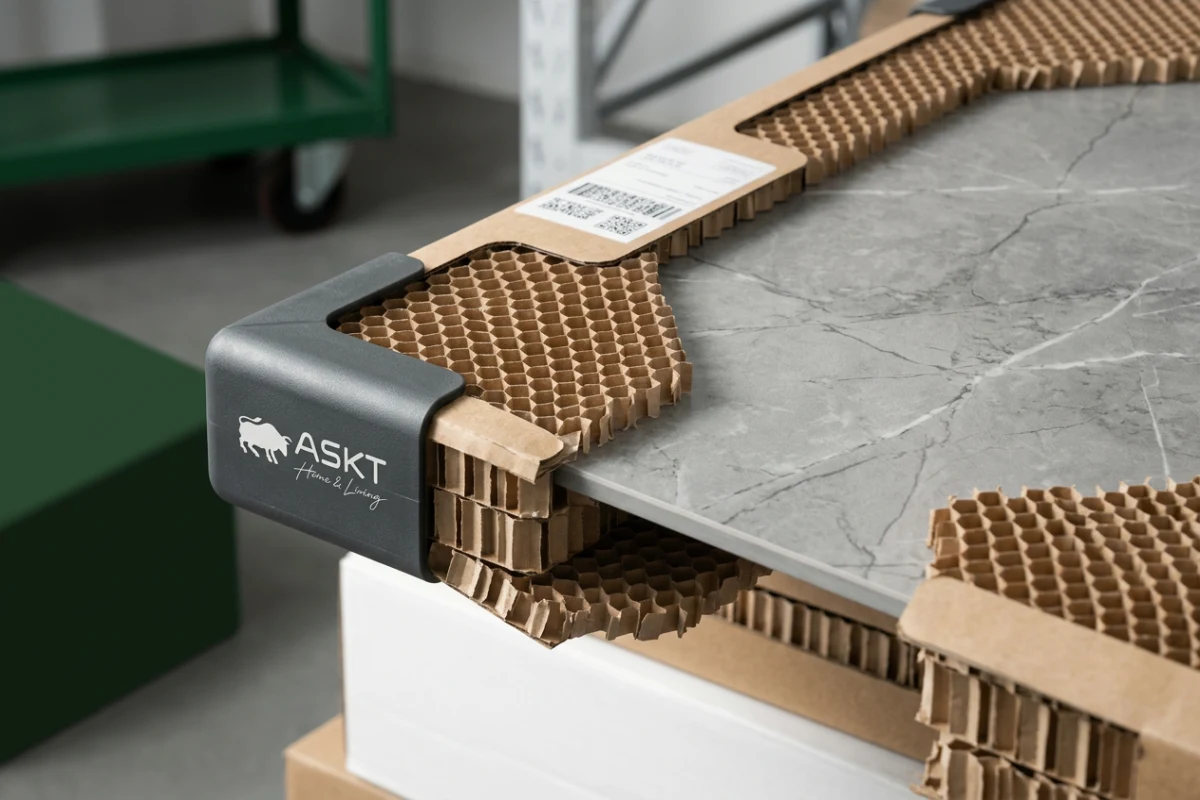
- Effective Cushioning with Reduced Bulk: Lighter tabletops can be fully protected using streamlined corrugated paper structures, reinforced edge boards, and high-density corner guards without adding excessive packaging volume.
- Sustainable Packaging Integration: Lightweight structures enable manufacturers to adopt sustainable packaging with reduced plastic use, replacing bulky expanded foams with recyclable honeycomb paperboard and paper-based edge protectors that comply with European environmental priorities.
By selecting engineered lightweight tabletop solutions, furniture buyers lower transit damage rates, decrease costly product returns, and simplify packaging disposal for commercial and residential clients.
Which Materials and Structural Designs Balance Aesthetic Substance with Freight Efficiency?
European furniture buyers do not need to sacrifice visual presence, tactile quality, or commercial durability to achieve logistics savings. Modern OEM and ODM manufacturing techniques allow brands to create premium, substantial dining tables using optimized material combinations and intelligent structural design.
Sintered Stone Surfaces
Sintered stone provides a sophisticated appearance, offering realistic mineral veining alongside heat, scratch, and stain resistance. Rather than using excessively thick monolithic slabs, modern furniture engineering pairs a slim, high-performance sintered stone top with a durable supporting substrate or sub-frame. This delivers the premium look and tactile durability expected in contemporary dining spaces while significantly reducing overall tabletop mass and lowering ocean freight costs.
Oak Veneer over Engineered Cores
Natural oak veneer over an engineered core provides the warmth, authentic wood grain, and visual thickness of traditional timber furniture without the excessive weight and moisture-related warping associated with thick solid wood slabs. This engineered approach creates a visually substantial tabletop with dependable structural stability, flat-pack compatibility, and efficient shipping weight.
Knock-Down Metal Frames and High-Durability Powder Coating
Pairing lightweight tops with precision-engineered metal frames offers exceptional structural rigidity. Tubular steel bases with high-durability powder coating provide robust stability, modern aesthetics, and compliance with European strength and durability testing requirements. Because these metal frames disassemble into compact, flat components, they pack neatly alongside the tabletop, maximizing container loading density.
What Sourcing Factors Should Importers Review to Evaluate Landed Dining Table Costs?
To ensure commercial viability and supply chain reliability, B2B purchasing managers and product development teams should evaluate the total landed cost of dining table collections rather than focusing solely on factory-gate unit pricing. Evaluating the full scope of manufacturing and logistics variables helps buyers make informed sourcing decisions:
- Weight vs. Volume Balance: Review the gross weight and cubic volume of each packaged SKU to ensure optimal container utilization without premature weigh-out.
- Packaging Design and Plastic Reduction: Check that packaging incorporates reinforced edge protection, recyclable honeycomb paper structures, and reduced plastic content while maintaining transit durability.
- Knock-Down Structural Integrity: Verify that KD metal frames, internal fastening hardware, and mounting plates deliver rigid assembly and meet European durability requirements.
- Domestic Freight Thresholds: Check that individual carton dimensions and gross weights align with domestic parcel network criteria across key target markets such as Germany, the UK, and the Netherlands.
- Transit Protection Testing: Ensure the factory conducts standardized drop, stacking, and vibration tests to verify packaging performance before mass shipment.
- Factory Customization Support: Confirm that the manufacturer provides flexible OEM and ODM customization options for tabletop materials, finishes, dimensions, and packaging specifications.
Analyzing these sourcing criteria enables retail chains, furniture wholesalers, and contract buyers to build resilient dining collections that protect commercial margins from the factory floor to the final installation.
How Can Buyers Collaborate with Manufacturers to Optimize Packaging and Logistics?
Developing freight-optimized dining furniture requires close collaboration with an experienced manufacturing partner. Sourcing teams benefit from working with manufacturers that combine deep production knowledge with practical understanding of European logistics requirements.
A capable B2B manufacturing partner supports logistics optimization by:
- Engineering Flat-Pack KD Configurations: Designing modular metal leg systems and compact tabletop packaging that minimize dead space within cartons.
- Developing Sustainable Protective Packaging: Creating custom-fitted honeycomb corner guards and recyclable protective cushioning that safeguard products during multi-modal transit while reducing plastic waste.
- Simulating Container Loading Plans: Calculating precise container loading configurations for 40HQ containers to balance gross payload weight with total cubic capacity.
- Maintaining Manufacturing and QC Consistency: Applying strict quality control over frame welding, powder coating finishes, veneer adhesion, and dimensional tolerances across all production batches.
By addressing structural weight, KD engineering, and packaging protection early in the product design phase, furniture importers establish an efficient, sustainable, and cost-effective supply chain. When planning your next furniture collection, you can discuss packaging and logistics requirements with ASKT to develop commercially stable, freight-optimized dining solutions.