Low MOQ Furniture Sourcing vs Full Container Orders: A Practical Guide for European Furniture Buyers
Whether working with a Möbelhersteller kleine Mindestbestellmenge or placing a full container order delivers better value depends on your stock turnover rate, assortment risk profile and per-unit transport costs. A structured comparison protects furniture importers from expensive mistakes and aligns order sizes with real commercial demand.
What are the advantages and risks of low MOQ furniture sourcing for European importers?
Working with a furniture manufacturer that offers a small minimum order quantity gives importers, e-commerce brands and retailers notable flexibility, especially when testing new products, entering new markets or managing seasonal ranges. For buyers who serve Germany, the Netherlands, the UK and other European markets, low MOQ furniture sourcing reduces the financial barrier to launching new dining chair, dining table or contract furniture collections.
On the positive side, smaller orders allow you to:
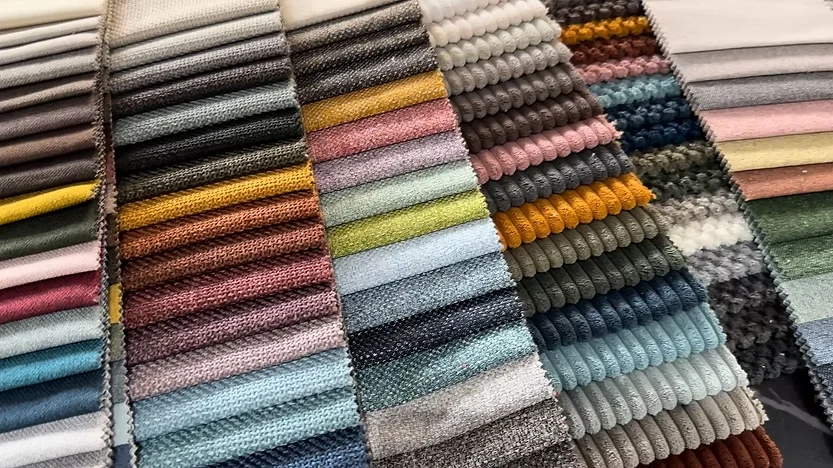
- Test new fabrics, colours and frame finishes without tying up large amounts of working capital
- Adapt faster to changing consumer preferences and interior design trends
- Maintain a broader assortment without proportionally increasing stock value
- Reduce the risk of slow-moving or obsolete inventory, especially for new SKUs
- Match order sizes more closely to actual sales velocity for niche or premium products
Low MOQ sourcing is particularly useful for product launches, trial listings, contract furniture projects with limited volumes, and buyers who operate lean inventory models. E-commerce brands, for example, often use small initial orders to validate demand before scaling up to larger production runs.
But small orders also carry real risks and hidden costs that many buyers underestimate. The most obvious is a higher unit price, because fixed production costs such as tooling setup, material preparation and quality inspection are spread across fewer units. Less obvious are the additional logistics expenses: LCL (less than container load) shipping typically costs significantly more per cubic metre than FCL (full container load), and handling fees at both origin and destination are charged on a per-shipment basis regardless of volume.
Quality consistency can also be harder to maintain on very small runs, especially if fabrics or components need to be sourced specially for one short production batch. For buyers focused on long-term supply reliability, frequent small reorders also increase the administrative burden and the chance of production scheduling delays if the factory has limited capacity.
Typical use cases where low MOQ sourcing makes commercial sense include first-time supplier evaluation, new market testing, high-margin niche collections, contract furniture projects with fixed quantities, and buyers with limited warehouse space.
When does a full container order deliver better value for furniture importers?
A full container order becomes the more economical choice once you have enough predictable demand to fill a container within a reasonable sales window. The voller Container vs kleine Bestellung Möbel debate ultimately hinges on whether the savings in production and logistics costs outweigh the additional inventory holding cost and risk.
For dining chairs, for example, a standard 40-foot HQ container can hold several hundred units depending on packaging design and whether the chairs are KD (knock-down) or fully assembled. That volume creates significant economies of scale in three areas: production, packaging and transport.
Production savings come from longer runs that reduce setup time per unit, allow more efficient material cutting, and make dedicated quality control inspections more cost-effective. Packaging savings are driven by bulk purchasing of cartons, honeycomb paper protection and pallet materials. Transport savings are the most visible: FCL rates per cubic metre are substantially lower than LCL, and you avoid the extra handling, consolidation and deconsolidation charges that come with shared container services.
Full container orders also offer practical advantages beyond cost. You have full control over the container loading plan, so you can optimise the mix of dining chairs, dining tables, bar chairs and coffee tables to maximise fill rate and reduce damage risk. You also reduce the number of shipments per year, which cuts down on customs documentation, import duty processing and incoming goods inspection time.
However, full container orders are not without risk. The biggest challenge is inventory holding cost and the risk of slow-moving stock. If demand falls short of forecast, you could be left with hundreds of units taking up warehouse space and tying up working capital for months. This is why Möbelimport Lagerrisiko berechnen is such a critical exercise for any buyer considering a large order.
Full container orders work best for established bestsellers with stable demand, promotional campaigns with confirmed volumes, purchasing groups combining orders across multiple members, and buyers who have already validated a product through smaller trial orders.
Why is unit price alone a poor basis for comparing small and large furniture orders?
When you run a Möbel MOQ Vergleich Stückkosten, the unit price difference between a 50-piece order and a 500-piece order can look dramatic. But the unit price on a proforma invoice tells you only part of the story. The true cost per unit includes many additional factors that can erase or even reverse the apparent savings of a larger order.
The table below shows the key cost components you need to compare when evaluating order size options:
| Cost component | Low MOQ small order | Full container order | Impact on true unit cost |
|---|---|---|---|
| Ex-factory unit price | Higher | Lower | Direct |
| Sea freight per unit | Much higher (LCL) | Much lower (FCL) | High |
| Origin handling & documentation | Higher per unit | Lower per unit | Medium |
| Import duty & VAT | Same percentage, but earlier cash outflow on larger volume | Same percentage, larger one-off cash impact | Cash flow |
| Inland transport to warehouse | Higher per unit | Lower per unit | Medium |
| Warehouse holding cost | Lower (less stock, faster turnover) | Higher (more stock, longer holding period) | Often underestimated |
| Risk of obsolescence | Lower | Higher | Can be decisive |
| Quality control cost per unit | Higher | Lower | Medium |
As you can see, the ex-factory unit price advantage of a full container can be partially or fully offset by holding costs, obsolescence risk and the opportunity cost of tying up capital in stock. For seasonal items, fashion-driven designs or new product launches, the risk of being left with unsold inventory is real and should be quantified before you commit to a larger volume.
This is why experienced furniture buyers calculate total landed cost per unit plus holding cost for the expected stock duration, rather than comparing ex-works prices in isolation. A product with a 15% higher unit price on a small MOQ can still be more profitable overall if it sells through quickly and avoids months of warehouse rent, insurance and capital cost.
How do you accurately calculate inventory risk for furniture imports?
Möbelimport Lagerrisiko berechnen is more than just estimating how long stock will sit in a warehouse. It is a structured assessment of the financial cost and commercial risk of holding inventory, measured against the savings you expect from ordering in larger volumes.
To calculate inventory risk properly, you need to account for four core factors:
Holding cost per month: This includes warehouse rent, insurance, utilities, inventory management staff and the cost of capital tied up in the stock. As a practical rule for European furniture importers, monthly holding cost typically ranges from 1.5% to 3% of the stock value, depending on your warehouse setup and financing terms.
Expected sales velocity: How many units do you realistically expect to sell per month? Base this on historical data, confirmed orders or market research—not optimistic forecasts. The difference between a best case and base case forecast is where most of the risk hides.
Obsolescence risk: Some furniture ranges are timeless, while others are tied to specific colour trends, fabric patterns or interior design movements. The higher the fashion component, the greater the risk that stock will need to be discounted or written off later. Dining chairs in neutral fabrics and classic metal frames generally carry lower obsolescence risk than bold colours or trend-driven designs.
Discount exposure: If you need to clear slow-moving stock, what discount level would be required? For furniture, end-of-line discounts of 30% to 50% are not uncommon, especially for products that are being replaced in a collection.
A simple way to compare two order sizes is to calculate total cost including holding and obsolescence risk. For example, if a 500-unit order saves €12 per unit compared with a 100-unit order, but you expect to hold the last 200 units for an average of eight months at 2% per month, the holding cost alone is €3.20 per unit for those units. Add a possible 20% discount risk on unsold stock and the apparent unit price advantage shrinks considerably.
This calculation is especially relevant for buyers who source from multiple product categories. A dining table might take up ten times more warehouse space than a dining chair, which changes the holding cost equation dramatically even if the unit price difference is similar.
Can mixed orders and modular ranges offer the best of both worlds?
Many buyers assume they must choose between low MOQ flexibility and full container efficiency. In practice, mixed orders and modular furniture systems often deliver the most balanced solution, combining multiple SKUs in a single container while keeping the effective MOQ for each individual product relatively low.
Modular ranges work on a simple principle: shared components reduce the minimum order quantity per finished SKU because the manufacturer can produce common parts in larger batches and assemble or finish them in smaller quantities per variant. For dining chairs, this might mean using the same metal frame base across multiple seat shell designs, fabric options and colour finishes.
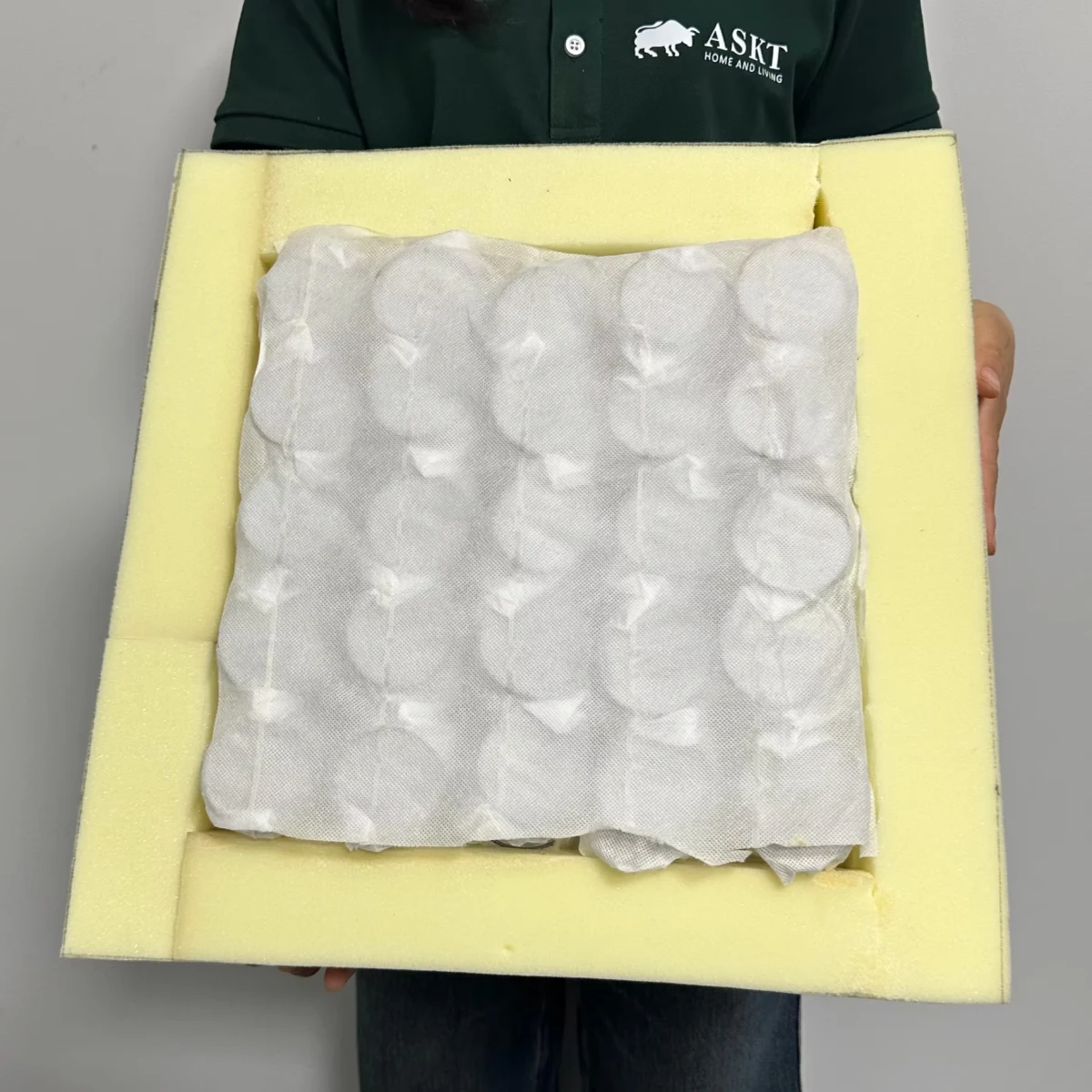
The KINEXA modular system is one example of this approach. By combining a limited number of seat shells and bases in different configurations, buyers can build a full dining chair collection with multiple SKUs while still filling a container efficiently. Each individual variant has a lower effective MOQ than if it were produced as a completely separate product, because the underlying components are shared.
Mixed orders also allow you to balance fast-selling and slow-selling items in one shipment. You might fill 60% of a container with proven bestseller dining chairs and use the remaining 40% for new designs, bar stools or dining tables that you want to test. This way, you get the freight cost benefit of a full container without committing to large volumes of unproven products.
For the approach to work well, you need a manufacturer that understands container loading optimisation and can handle mixed SKU production without compromising quality or lead times. Packaging standardisation across products is also important, because irregular carton sizes can reduce the fill rate of the container and erase some of the expected savings.
How do you decide the right order size for each furniture collection?
The optimal order size is different for every product and every buyer. Instead of applying a single rule to your entire assortment, you should evaluate each product or collection based on its demand profile, margin structure and strategic role in your catalogue.
Use this practical checklist to guide your decision:
- Confirm demand history: For existing products, base order quantities on actual sales data from at least the last six months, adjusted for seasonality. For new products, start with a low MOQ trial order until you have real market feedback.
- Calculate total landed cost: Include ex-works price, packaging, transport, insurance, duty, VAT and inland delivery. Compare LCL and FCL options to see the per-unit transport difference.
- Estimate holding period: Divide the order quantity by your realistic monthly sales forecast to get the average months of stock. Multiply by your monthly holding cost percentage to estimate the total holding cost per unit.
- Assess obsolescence risk: Rate each product on a simple scale from low (classic design, neutral colour, stable demand) to high (trend colour, fashion fabric, new unproven category). Adjust your risk calculation accordingly.
- Check supplier flexibility: Does the manufacturer offer reorder lead times short enough that you can replenish stock before it runs out? If reorder lead time is four to six weeks and you hold eight weeks of stock, you can safely order more frequently in smaller quantities.
- Evaluate container fill options: Can you combine multiple products, collections or even complementary categories from the same supplier to fill a container without overstocking any single SKU?
The most common mistake I see buyers make is ordering a full container of a new product purely because the unit price looks better, without having validated demand first. A small trial order that sells out quickly and is followed by a larger reorder is almost always more profitable than a large initial order that sits in a warehouse for a year.
What role does supplier choice play in managing MOQ and order size?
Your choice of furniture manufacturer has a direct impact on how much flexibility you get on minimum order quantities, and how efficiently you can combine different products into full containers. Not all manufacturers that advertise low MOQ are equally suited to professional B2B buyers.
When evaluating a Möbelhersteller kleine Mindestbestellmenge, look beyond the headline MOQ number and consider the following:
- Production consistency: Small batch production should still follow the same quality standards as large runs. Ask about inspection protocols, testing procedures and whether the same materials and components are used regardless of order size.
- Customisation options: Some manufacturers only offer low MOQ on standard catalogue items, with strict minimums for custom fabrics, colours or finishes. If you need OEM or ODM customisation, clarify the MOQ for each modification early in the discussion.
- Reorder reliability: A low MOQ is only useful if the supplier can consistently deliver reorders within acceptable lead times. Check whether small orders are deprioritised when the factory is busy.
- Container loading expertise: If you plan to combine multiple SKUs into mixed containers, the supplier should be able to provide accurate cubic metre calculations and loading plans to maximise container utilisation.
For European buyers working with Chinese manufacturers, it is also important to find a partner that understands European market requirements, BSCI-certified production, OEKO-TEX® STANDARD 100 certified fabrics, and packaging expectations including plastic reduction. ASKT, for example, specialises in dining furniture for the European market and works with wholesalers, retail chains, importers and e-commerce brands across Germany, the Netherlands, the UK, Poland, Switzerland and Ireland. The company offers flexible MOQ options supported by modular product structures, transparent quality control and container loading optimisation, designed to help buyers balance cost efficiency with inventory risk management.
Frequently Asked Questions
Q: Is low MOQ furniture sourcing always more expensive per unit?
A: Ex-works unit prices are usually higher for low MOQ orders because fixed production costs are spread across fewer units. However, when you factor in lower holding costs, reduced obsolescence risk and the ability to reorder more frequently based on actual demand, low MOQ sourcing can be more cost-effective overall for new or unpredictable product lines. The true comparison must include total landed cost plus inventory risk, not just the factory price.
Q: How many units do I need to fill a full container with dining chairs?
A: The exact number depends on whether the chairs are KD (knock-down) or fully assembled, the packaging design, and whether the chairs are stackable. KD dining chairs generally allow a higher quantity per 40-foot HQ container because they can be flat-packed efficiently. Your supplier should be able to provide a detailed loading plan and exact unit count based on your specific product mix and packaging requirements.
Q: Can I combine different furniture products in one container to reach full container efficiency while keeping per-product MOQs low?
A: Yes, mixed container orders are a common and effective strategy. Many buyers combine dining chairs, dining tables, bar chairs, lounge chairs or coffee tables from the same supplier to fill a container without overcommitting to any single product. Modular furniture systems that share components across SKUs make this approach even more efficient, as they reduce effective minimums per variant while maintaining production and logistics economies of scale.
Q: How do I know if my inventory holding cost estimate is realistic?
A: Start with your actual warehouse cost per square metre per month, plus insurance, financing costs and a provision for damaged or obsolete stock. If you do not have precise internal data, a working estimate of 1.5% to 3% of stock value per month is a reasonable range for European furniture warehousing, but you should refine it with your own figures over time. The most important thing is to include holding cost in your order size comparisons, rather than ignoring it completely.
If you are evaluating a new furniture order and want to explore how product combinations, packaging solutions and different order quantities could work for your business, book a sourcing consultation with ASKT. We can help you compare low MOQ and full container options based on your actual sales rhythm and risk profile.