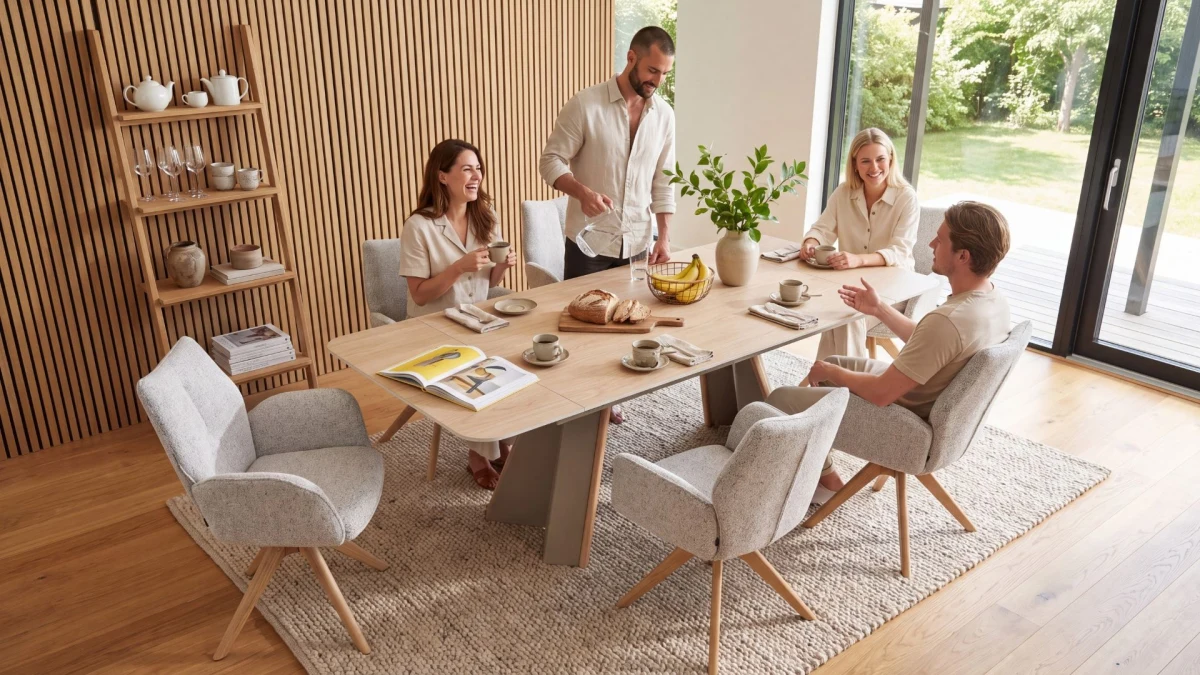
Martindale 40000 50000 Dining Chair Upholstery Colorfastness: A Practical Buyer’s Guide
If you have spent any time sourcing upholstered dining chairs for European markets, you have almost certainly seen Martindale numbers printed on fabric spec sheets. 20000, 30000, 40000, 50000 — they sound impressive, and many buyers assume that a higher number automatically means a better fabric. After more than 20 years working with furniture wholesalers, retail chains and contract buyers across Germany, the Netherlands, the UK and wider Europe, I can tell you the story is more complicated. Martindale 40000 50000 dining chair upholstery colorfastness is one of the most commonly misunderstood combinations in our industry.
A fabric can survive 50000 rubs on a test machine and still fade, transfer dye onto clothing or discolour after a few months of real use. The result is the same every time: customer complaints, returns, warranty headaches and damage to your brand. In this guide, I will break down what Martindale ratings really tell you, why colourfastness is just as important as abrasion resistance, and how professional buyers can specify upholstery fabrics with fewer surprises downstream.
What Martindale 40000 and 50000 Really Mean for Dining Chairs
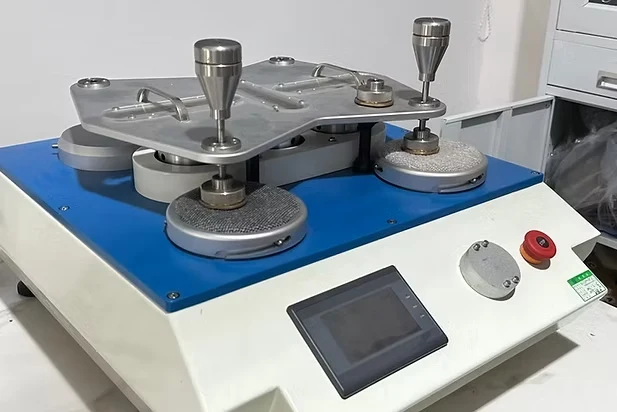
The Martindale abrasion test is a widely used method for measuring how resistant a fabric is to wear from rubbing. During the test, a fabric sample is rubbed with a standard abrasive material in a controlled circular motion. The number of rubs the fabric withstands before showing noticeable wear is recorded as its Martindale rating.
In the dining chair world, ratings are often grouped by typical use case. Lower ratings around 15000 to 25000 are generally considered suitable for light domestic use, such as occasional chairs in a bedroom or formal dining room. Ratings between 25000 and 40000 move into general domestic and medium-use commercial territory. When you reach Martindale 40000 to 50000, you are looking at fabrics positioned for heavy use — busy family homes, rental properties, restaurants, cafés and other contract environments where chairs are used every day, sometimes several times a day.
A high dining chair fabric abrasion resistance rating is a good starting point. It suggests the fabric will not thin out, pill badly or develop worn patches quickly. For buyers building a dining chair collection, that matters because wear and tear is one of the most visible failure modes customers notice. A chair that looks shabby after six months will always generate complaints, regardless of how comfortable it is.
Why Martindale ratings are only part of the picture
Here is the part that does not always come across in supplier presentations: the Martindale test measures abrasion resistance only. It does not tell you whether the fabric will repel stains, how it handles sunlight, whether dye transfers to clothing, or how the colour holds up after repeated cleaning. It also does not tell you anything about the fabric's breathability or hand feel.
In our experience at ASKT, dining chair failures in the European market rarely happen because the fabric wears through. They happen because the colour changes, the fabric attracts permanent stains, or the surface appearance deteriorates in ways the abrasion test does not capture. That is why a heavy use dining chair fabric Martindale guide that only talks about rub counts will never give you the full picture.
Why Abrasion Resistance Alone Does Not Guarantee Upholstery Success
I remember a conversation with a German retail buyer a few years ago. They had specified a dining chair with a 50000 Martindale fabric, confident it would withstand family use. Six months after launch, they started receiving complaints — not about worn fabric, but about colour transfer onto customers' jeans and a visible fading difference between chairs placed near windows and those further back. The fabric had passed the abrasion test with flying colours, but it was failing in the real world because its colourfastness performance was not strong enough for everyday use.
This is a very common pattern. Buyers focus on the Martindale number because it is easy to compare and easy to market. “50000 rubs” sounds robust, and it looks good on a product page. But upholstery performance in a dining environment is shaped by several factors working together, and abrasion resistance is only one of them.
How this translates into commercial risk
For a wholesaler or retailer, every complaint costs money. You have returns to process, replacements to ship, customer service hours to spend and — worst of all — reviews that hurt future sales. For contract furniture buyers, the risks are even larger. A hotel or restaurant chain cannot easily replace fifty chairs because the colour faded unevenly, and a reputation for poor-quality upholstery can cost you future projects.
Understanding how to reduce upholstery customer complaints starts with looking at the whole fabric, not just one number on a spec sheet. Colourfastness, stain resistance, cleanability and overall appearance retention all matter, and they need to be verified before you place a large order.
How Colorfastness Affects Returns and Customer Complaints in Europe
Colourfastness describes how well a fabric retains its colour when exposed to different influences. It is not a single property — it is tested in several ways, each relevant to a different real-world scenario.
For dining chairs used in European homes and contract spaces, the most important types of colourfastness are usually:
- Light fastness: how well the colour holds up under sunlight or artificial light exposure
- Wet fastness: how the colour behaves when the fabric gets wet, cleaned or wiped with water-based solutions
- Rub fastness (dry and wet): whether dye transfers onto other materials through rubbing, such as dark jeans or cushions
- Chemical fastness: how the fabric reacts to cleaning products or accidental spills
Upholstery color fastness for contract furniture matters because contract environments involve more frequent cleaning, more sunlight exposure and higher overall usage. A fabric that works perfectly in a residential living room may fail quickly in a busy café or hotel dining area.
Why colourfastness complaints are so damaging
Unlike a loose stitch or a small structural issue, colour problems are immediately visible. Fading, discolouration and dye transfer are hard to ignore, and customers almost always see them as a quality defect rather than normal wear and tear. Even if the fabric is still structurally sound and the chair is perfectly comfortable, a colour change makes the product look old and cheap.
In European markets, where customers expect furniture to retain its appearance for years, colourfastness issues can quickly erode trust in a brand. Retailers often find that colour-related returns are the hardest to resolve because the product cannot be easily repaired. The usual solution is a full replacement or refund, which cuts into margins and creates administrative work.
The link between colourfastness and product positioning
Colourfastness expectations also vary by market segment. A budget dining chair sold through discount channels may be accepted with lower colourfastness performance, as long as the price reflects it. Mid-range and premium collections, on the other hand, need much stronger colour stability because customers pay more and expect more.
For contract furniture buyers, the bar is higher still. Hotels, restaurants and co-working spaces need chairs that look consistent across an entire venue, even after years of use and cleaning. Uneven fading across a room full of chairs is unacceptable in a hospitality environment, where presentation directly affects customer experience.
The Link Between Fabric Performance and Long-Term Maintenance Cost
When buyers compare upholstery fabrics, they usually look at two things first: price per metre and Martindale rating. That makes sense on the surface — you want a durable fabric at a good price. But what often gets missed is the long-term maintenance cost, which can be much higher than the initial fabric saving.
A fabric with a very high Martindale rating but poor colourfastness may seem like a bargain at the purchasing stage. It sounds tough, it wears well, and the price is right. But if it fades unevenly, stains easily or requires special cleaning products, the cost over the product's lifetime can be much higher. End customers complain, retailers have to handle returns, and contract operators face reupholstery or replacement costs sooner than expected.
In our work with European buyers, we have seen many cases where a slightly more expensive fabric with better colourfastness and cleanability would have saved money overall. The difference of a few euros per metre at the factory door disappears very quickly when you are dealing with warranty claims, shipping returns and damaged customer relationships.
At ASKT, we put our fabrics through abrasion resistance, colour fastness and breathability testing, and we work with options that offer waterproof, stain-resistant and pet-friendly performance. We have also developed our ASKT-Tex functional fabric, which balances water and stain resistance with breathability and abrasion performance — something we discussed in detail with the German trade magazine möbelmarkt in 2025. The point is not that one fabric fits every situation, but that buyers should understand the full performance profile before they commit to a collection.
Key Tests to Verify Before Specifying Dining Chair Upholstery
If you want to reduce unpleasant surprises with dining chair upholstery, you need to look beyond the headline Martindale number and check a broader set of test results. Here are the key performance areas we recommend verifying with any supplier before you place a production order.
Abrasion resistance (Martindale)
This is the baseline. For general residential dining chairs, 25000 to 40000 rubs is usually sufficient. For heavy domestic use, rental furniture or light contract use, Martindale 40000 to 50000 is a more comfortable range. For high-traffic contract environments such as busy restaurants, you may want to look at even higher ratings or consider performance-enhanced fabrics.
Keep in mind that the Martindale rating tells you about wear resistance, not about appearance change. A fabric can have a 50000 rub rating and still look old because of pilling, fading or surface matting.
Colourfastness tests
Ask for results across multiple colourfastness categories, not just one general number. Light fastness, wet fastness and rub fastness each tell you something different. For dining chairs, pay particular attention to wet and light fastness, because spills and sunlight are two of the most common causes of colour-related complaints.
If you are supplying contract furniture, ask specifically about cleaning fastness — how the fabric responds to the types of detergents and cleaning routines used in hospitality settings. A fabric that passes a domestic cleanability test may not hold up to commercial cleaning products.
Stain resistance and cleanability
Check which types of stains the fabric is tested against, and what the recommended cleaning method is. For retail customers, a fabric that can be wiped clean with a damp cloth is much more user-friendly than one that needs professional treatment.
Breathability and comfort
A fabric that is highly abrasion-resistant but does not breathe can be uncomfortable to sit on for long periods, especially in warm weather. Breathability affects how the chair feels in use, and it can also influence long-term durability, because trapped moisture can degrade adhesives and padding over time.
Certifications and safety
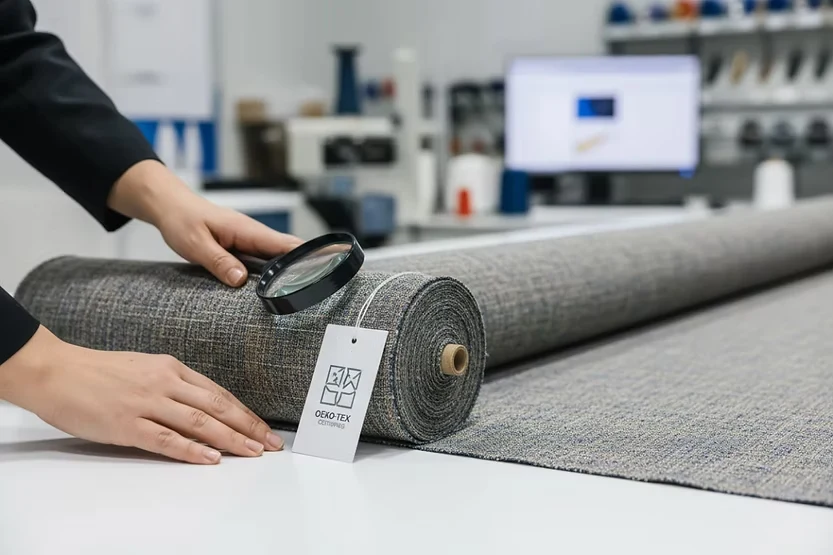
Look for independent certifications that confirm the fabric meets recognised safety and environmental standards. For example, OEKO-TEX® STANDARD 100 certification indicates that a fabric has been tested for harmful substances, which is increasingly important for European buyers and their customers. Fabrics made from recycled materials can also help your range align with European sustainability expectations and green policy trends.
How to Match Martindale and Colorfastness Levels to Your Market
There is no single perfect combination of Martindale rating and colourfastness that works for every buyer. The right balance depends on who your customer is, how the chairs will be used and what price point you are targeting.
Residential retail and e-commerce
For mid-range residential dining chairs sold through retail and e-commerce channels, Martindale 40000 is usually a solid choice. It gives customers confidence that the fabric will stand up to daily family use, without the cost of ultra-heavy contract fabrics. Pair it with good light and wet colourfastness performance, and you have a fabric that will satisfy most households.
If you are targeting premium residential buyers, you may want to move toward Martindale 50000 and stronger colourfastness, especially if the chairs are positioned as long-term investment pieces.
Contract and hospitality
For restaurants, cafés, hotels and office dining areas, the requirements are different. Usage is higher, cleaning is more frequent, and appearance consistency across many chairs matters enormously. Martindale 40000 to 50000 is a minimum starting point for most contract dining applications, but colourfastness and cleanability become even more critical than abrasion resistance.
Upholstery color fastness for contract furniture needs to handle repeated cleaning, sunlight through large windows and constant contact with different clothing types. A fabric that fades or transfers dye will quickly make a venue look tired, even if the structural condition of the chairs is fine.
Rental and student housing
In rental and student housing markets, durability is king, but so is ease of maintenance. These chairs get cleaned a lot, and they often get cleaned quickly by staff who may not follow delicate cleaning instructions. Here you want a high abrasion rating, strong colourfastness and straightforward cleanability, all at a price that makes sense for high-volume furnishing projects.
The trade-off every buyer should understand
It would be nice if the most durable, most colourfast, most comfortable and cheapest fabric all came in the same product. In reality, there are always trade-offs. Very high abrasion resistance can sometimes come with a stiffer hand feel. Exceptional stain resistance can affect breathability. The trick is to know which properties matter most for your specific market and customer base, and to prioritise accordingly.
Practical Checklist for Selecting Dining Chair Fabrics as a Buyer
After working with European buyers for two decades, we have found that the most successful collections are usually built around a structured fabric selection process, not a single eye-catching spec number. Here is a practical checklist you can use the next time you are evaluating dining chair upholstery options.
Before you request samples
- Define your target use case clearly: residential, contract, rental, premium or value
- Decide which performance properties are non-negotiable for your market
- Set a realistic budget per chair that includes fabric, manufacturing and logistics
When reviewing supplier data
- Look for Martindale rating and confirm which test standard was used
- Request colourfastness results for light, wet, dry rub and cleaning conditions
- Ask about stain resistance performance and recommended cleaning methods
- Confirm breathability and any relevant safety or sustainability certifications
- Check whether the fabric is available in the colours and minimum order quantities you need
Before placing a production order
- Order physical samples in all relevant colours, not just digital swatches
- Test the samples under real conditions: expose them to sunlight, spill common liquids on them, wipe them with cleaning products you know your customers use
- Check how the fabric feels to sit on, and whether it creases or wrinkles easily
- Ask your supplier about batch-to-batch colour consistency controls
- Verify quality control processes for upholstery in production, not just fabric testing on raw material
During production and before shipment
- Conduct inline inspections that include upholstery appearance, not just structure
- Check for consistent colour across chairs from the same production batch
- Confirm packaging protects the upholstery from moisture and dirt during transport
- Keep reference samples from each batch so you can compare if issues arise later
This checklist is not exhaustive, but it will help you avoid the most common mistake — choosing a fabric based only on its abrasion resistance rating and then being surprised by colour or cleanability problems down the line.
Frequently Asked Questions
Is Martindale 40000 good for dining chairs?
Yes, Martindale 40000 is generally considered suitable for heavy domestic use and many light commercial applications. It offers good abrasion resistance for everyday dining chair use. However, it should always be evaluated alongside colourfastness, stain resistance and cleanability, because abrasion resistance alone does not guarantee overall upholstery satisfaction.
Is 50000 Martindale better than 40000 for dining chairs?
In terms of pure abrasion resistance, 50000 is higher than 40000 and will generally withstand more rubbing before showing wear. But “better” depends on your market and priorities. A 40000 Martindale fabric with strong colourfastness and cleanability may perform better in real dining environments than a 50000 Martindale fabric with weaker colour stability. Always compare full performance profiles, not just one number.
What colourfastness properties matter most for dining chairs?
For dining chairs, the most important colourfastness properties are usually light fastness, wet fastness and rub fastness. For contract furniture, cleaning fastness with commercial detergents is also critical.
How can buyers reduce upholstery-related customer complaints?
The most effective approach is to verify full fabric performance before production, not just abrasion resistance. Check colourfastness across multiple categories, test cleanability with common stains, evaluate batch colour consistency and inspect upholstery quality during production. Choosing fabrics matched to the actual use environment, rather than simply selecting the highest Martindale number, also helps reduce returns.
Do high Martindale fabrics feel rough or uncomfortable?
Not necessarily. Modern fabric technology allows manufacturers to combine high abrasion resistance with a comfortable hand feel and good breathability. Always evaluate physical samples rather than relying on spec sheet numbers alone.
Conclusion: Balancing Durability, Color Stability and Commercial Value
Martindale 40000 50000 dining chair upholstery colorfastness is a topic that sounds technical on the surface, but it really comes down to one simple idea: a dining chair fabric has to perform in the real world, not just on a test report. Abrasion resistance matters, colour stability matters, cleanability matters — and ignoring any of them will eventually cost you money.
The buyers who build the most successful dining chair collections are the ones who look beyond the headline numbers. They understand that a 50000 Martindale rating is meaningless if the fabric fades after a summer near a window, or if dye transfers onto every customer's jeans. They ask for complete test data, they test samples under real conditions, and they work with suppliers who can explain the full performance story behind each fabric.
At ASKT, we work with a wide range of upholstery fabrics selected for European market conditions, with verified abrasion resistance, colour fastness and breathability performance. Our fabric options include OEKO-TEX® STANDARD 100 certified materials, recycled fabric options and our own ASKT-Tex functional fabric, all supported by transparent quality control and batch consistency checks.
If you are building or updating a dining chair collection for the European market and want to make sure your upholstery specification will hold up in real use, request the available fabric data sheets for your preferred upholstery options. Our team can walk you through the performance characteristics of each fabric and help you match the right combination of Martindale rating, colourfastness and cleanability to your specific market and customer base.