
Gemischte Möbelbestellungen and Mixed SKU Furniture Orders: Container Loading Optimisation Guide
Mixed SKU furniture orders — known in German-speaking markets as gemischte Möbelbestellungen — allow European importers and wholesalers to combine different furniture models, fabrics or finishes inside one container, reducing inventory risk while lowering per-unit logistics costs when planned correctly.
Why are mixed furniture orders attractive for European importers and wholesalers?
For furniture buyers serving Germany, the Netherlands, the UK, Poland and other European markets, single-SKU full-container orders used to be the default way to keep unit prices low. The problem is straightforward: if you fill an entire 40-foot container with one dining chair model in one colour, you tie up a lot of capital in one product and one style before you know how well it will sell.
Mixed SKU furniture orders change that picture. Instead of betting on one reference, a buyer can combine dining chairs, bar stools, lounge chairs, dining benches or even matching tables in the same shipment. The commercial logic is simple: broader assortment, lower stock concentration, faster reaction to customer demand and fewer dead-stock situations.
From my 20 years in furniture manufacturing and export, I have seen this shift happen especially among three buyer groups:
- E-commerce brands that need multiple SKUs to test market response before scaling up
- Retail chains that want to refresh their floor displays without placing oversized orders per model
- Hospitality and contract buyers that need several matching pieces for a single project
What many buyers underestimate, however, is that a Mixed SKU Möbelbestellung is not the same as simply splitting a container by volume. Production planning, packaging compatibility, MOQ thresholds and loading sequence all influence whether the order actually saves money or creates hidden costs.
How do mixed SKU orders reduce inventory risk for furniture buyers?
One of the strongest arguments for combining furniture models in one order is inventory de-risking. In German sourcing discussions, this is often described as Lagerrisiko senken durch Möbel Kombibestellung — and it is a real financial benefit, not just a logistics detail.
Here is how it works in practice. Suppose a wholesaler normally orders a full container of one dining chair to ship economically. If demand is slower than expected, the buyer carries all slow-moving stock, pays storage fees, may need to discount heavily and risks the product going out of trend before it sells through.
With a mixed order structure, the same container might hold upholstered dining chairs, bar chairs in a matching frame, lounge chairs, dining benches and extension tables or coffee tables. The total container volume stays similar, but the inventory risk is spread across several SKUs instead of one. If one model underperforms, the others can still sell at full margin and keep the overall collection profitable.
For buyers who follow a “test first, ship second” approach — a principle we apply with our KINEXA modular system — mixed orders are especially valuable because they let you validate several items with a lower financial commitment before scaling the winners into larger repeat orders.
That said, risk reduction is not automatic. If you mix too many SKUs with too few units each, you can run into MOQ problems, production delays, higher packaging costs and slower loading — all of which erode the financial benefit. The trick is to find the right balance between assortment breadth and operational efficiency.
Where are the limits of mixed furniture orders when it comes to MOQ and production?
Every buyer considering gemischte Möbelbestellungen sooner or later hits the same question: how many models can I combine, and what are the minimum quantities per model? This is where Möbel MOQ gemischte Bestellung negotiations really matter, and where inexperienced buyers often make costly assumptions.
First, it is important to understand why MOQs exist at all. Furniture production involves set-up steps for each model: frame tooling, upholstery lines, fabric cutting, powder coating batches, packaging preparation and quality inspection routines. Every time the production line switches from one SKU to another, there is downtime, material loss and additional labour. The more SKUs you add to one order, the smaller each batch becomes, and the higher the per-unit production cost.
In our experience at ASKT, the practical limits depend on how similar the products are to each other. We use this general framework when advising buyers:
| Product similarity | Typical MOQ per SKU | Typical max SKUs per 40 ft container | Comment |
|---|---|---|---|
| Same chair model, different fabrics | Lower per-colour quantity | 5–10 fabric variants | Easiest to mix; same frame, same packaging |
| Same category, different models | Moderate per-model quantity | 3–5 chair models | Requires line changeovers but same production flow |
| Mixed categories (chairs + tables + benches) | Higher per-SKU quantity | 2–4 categories | Different production lines, different packaging shapes |
| Fully custom ODM items | Higher MOQ per design | 1–2 custom items | Requires tooling, sampling and separate QC |
The important takeaway is that there is no universal minimum. A manufacturer that specialises in a narrow product range — dining chairs, for example — can usually offer more flexible mixed MOQs than a generalist factory that produces a wider spread of furniture.
Buyers should also be aware that MOQ is not the only limit. Lead time can increase with more SKUs, because more components need to be scheduled and more sub-assemblies need to pass quality control. If you need a fast delivery, fewer SKUs with larger quantities will almost always be faster and more reliable.
What matters most for container loading optimisation with mixed furniture?
Container Ladung Optimierung Möbel is where mixed orders either become a smart financial move or an expensive logistics mistake. Furniture packaging comes in different shapes, weights and stackability levels, and combining them well requires more than just adding up cubic metres.
From years of loading containers for European buyers, we have identified six factors that determine loading efficiency for mixed SKU orders:
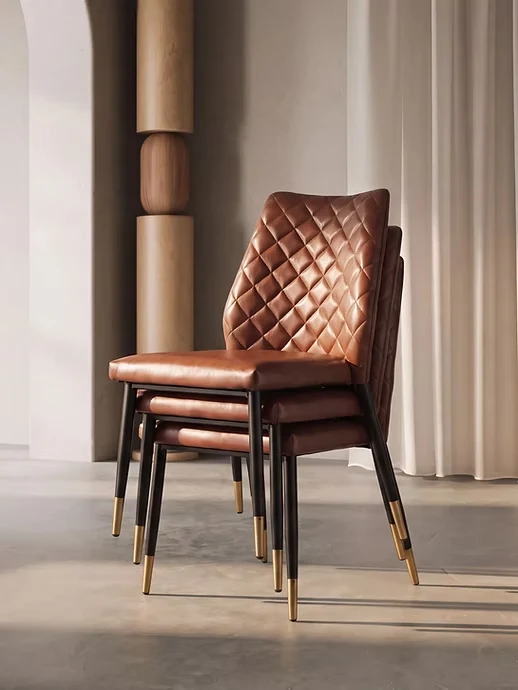
- Packaging dimensions and standardisation: Uniform box sizes stack cleanly and leave fewer gaps. If one product comes in long flat packs and another in tall upright cartons, the usable space drops because you cannot stack them efficiently.
- Weight distribution: Heavy items such as dining tables or metal frames must go on the bottom and near the container doors for balance. Lighter items such as upholstered chairs can fill the upper space. Mixed orders require careful weight planning to avoid transport damage and compliance issues.
- Stackability and crush resistance: KD (knock-down) furniture in rigid cartons can usually be stacked several layers high. Fully assembled or soft-pack items cannot. Mixing the two without a loading plan wastes vertical space.
- Unloading sequence: For retail buyers who distribute to multiple stores, the order in which products come out of the container matters. If you load by destination, you save warehouse handling time but may lose some fill rate.
- Protection between different SKUs: Tables with sintered stone tops, for example, need different packaging protection than fabric chairs. Combining them in one container requires edge protection, corner boards and proper separation — all of which take up space.
- Palletised vs loose loading: Pallets speed up loading and unloading but reduce usable volume. Loose loading maximises cubic metres but increases handling time and damage risk. Mixed SKU orders often work best with a combination of both.
At ASKT, we plan mixed container loads digitally before production is finished, using actual packaging dimensions from the production plan rather than theoretical estimates. This way, buyers know the exact fill rate, weight distribution and estimated unloading time before the container even arrives at the factory.
The single most common mistake we see is buyers focusing only on total volume and assuming that a figure close to the rated capacity means the load is optimised. Volume alone tells you very little. Two mixed orders with the same total cubic metre figure can have very different transport costs, damage rates and handling times, depending on how well the packaging shapes fit together.
What are the main advantages and disadvantages of mixed furniture orders?
Before you decide whether a Mixed SKU Möbelbestellung makes sense for your business, it helps to weigh the practical pros and cons against your specific situation. Mixed orders are not always better than single-SKU full containers — they are a trade-off between flexibility and efficiency.
Main advantages
- Lower inventory risk because capital is spread across multiple SKUs
- Faster assortment updates and easier market testing of new models
- Lower overall logistics cost per collection compared with shipping several small partial containers
- Better ability to match orders to customer demand and seasonal trends
- Easier to build coordinated product ranges for retail floors or project deliveries
Main disadvantages
- Higher per-unit production cost due to smaller batch sizes and more changeovers
- Longer lead times because more SKUs need to be scheduled and inspected
- Potentially lower container fill rate if packaging shapes are incompatible
- More complex quality control, because each SKU needs its own inspection criteria
- Higher risk of delays if one sub-batch falls behind, since the whole container waits for the last item
The decision usually comes down to what matters most to your business at that moment. If you are launching a new collection and need to test demand, the flexibility of a mixed order is worth the slight cost premium. If you are replenishing proven bestsellers and cost efficiency is the priority, a single-SKU or low-SKU full container is usually the better choice.
How should you plan a mixed furniture order step by step?
Planning a successful mixed furniture order is not difficult, but it requires structure. Over the years, we have developed a practical checklist that we share with all our European buyers who are considering gemischte Möbelbestellungen. It helps them avoid the most common pitfalls before production starts.
Define your commercial goal first Decide whether the order is for market testing, collection building, project delivery or stock replenishment. Your goal will determine how many SKUs you should include and how much flexibility you need on MOQ.
Group products by production similarity Start with products that share the same frame, the same production line or the same packaging format. The more similar the items, the easier and cheaper it is to mix them in one order.
Check MOQ thresholds per SKU with your manufacturer Do not estimate MOQs based on volume alone. Ask the factory for the minimum per model, per fabric and per finish, and compare the total to your expected sales. There is no point in mixing ten SKUs if you cannot sell the minimum quantities of each.
Request a loading plan with real packaging dimensions Ask for a container loading plan that shows box sizes, layers, weight distribution and estimated fill rate. Theoretical volume calculations are not enough — you need actual measurements from the production team.
Clarify quality control and inspection scope Each SKU in a mixed order needs its own QC checks. Make sure the inspection plan covers all models, all finish variants and all packaging configurations before shipment.
Agree on lead time and delivery sequence Mixed orders take longer to produce and load than single-SKU orders. Confirm the production schedule, the loading sequence and the expected unloading order at destination.
Compare total landed cost, not just unit price Calculate the full cost: unit price, packaging, MOQ premiums, loading, freight, insurance, handling and expected stock risk. A mixed order with a slightly higher unit price can still be cheaper overall if it reduces dead stock and storage costs.
FAQ
Is it cheaper to mix furniture models in one container or order them separately?
It depends on the quantities and the product mix. If the combined order still reaches efficient MOQ levels and the packaging shapes allow a high fill rate, a mixed order is usually cheaper than shipping several smaller partial containers separately. If the quantities per SKU are very low or the products are very different in size, the MOQ premium and lower fill rate can erase the logistics savings.
How many different furniture SKUs can normally fit in one 40-foot container?
There is no fixed number, but in practical B2B furniture sourcing, most mixed 40 ft HC containers hold between 3 and 10 SKUs. The number depends on how similar the products are, their packaging dimensions and whether they share the same frame or production line. Same-model, different-fabric variants can go into double digits, while mixed categories like chairs plus tables plus benches usually stay in the lower range.
Can custom ODM furniture be part of a mixed SKU order?
Yes, but custom items usually have higher MOQs and longer lead times because they require separate tooling, sampling and quality validation. If you include custom ODM pieces in a mixed order, plan the timeline around the custom item, because it will usually be the bottleneck that determines when the full container can ship.
If you want to combine different dining chair models — or even wider furniture ranges — in one order and would like to understand the technical and commercial possibilities, you can discuss your mixed order requirements with our team. We will walk through your SKU list, MOQ expectations and target container size, and give you a realistic assessment of production feasibility, loading efficiency and total landed cost.