Modern Dining Table Materials and Best Combinations for the European Market
Modern dining tables for the European market are typically made of high-performance materials like sintered stone, tempered glass, solid wood, and metal. These are combined to offer optimal durability, design appeal, and shipping efficiency for B2B buyers, with sintered stone and wood combinations leading current European market demand.
What Are the Most Common Modern Dining Table Materials Used Today?
To meet the diverse demands of European retailers and end consumers, manufacturers rely on a specific set of high-quality modern dining table materials. These materials determine not only the aesthetic value of the furniture but also its structural integrity, durability, and weight. Choosing the right material base is crucial for any importer looking to scale their product catalog.
- Sintered Stone: A highly durable, man-made material created by subjecting natural stone minerals to extreme pressure (over 30,000 tons) and heat (over 1200°C). It is stain-resistant, scratch-resistant, and heat-resistant. For bulk buyers, sourcing a sintered stone dining table wholesale provides a highly marketable, premium alternative to natural marble.
- Solid Wood & Engineered Wood (MDF/Oak): Wood remains a classic choice for the European market, offering warmth and natural textures. Minimalist designs heavily feature solid oak, ash, walnut, and high-density MDF with natural wood veneers. European consumers lean toward matte, low-gloss finishes that showcase natural grain.
- Tempered Glass: Frequently used in modern minimalist designs, offering a spacious feel. It is often paired with geometric metal bases and is popular in urban apartment setups.
- Metal (Steel/Aluminum): Mostly used for table legs and frames, providing exceptional stability and a sleek, industrial or modern aesthetic. Matte black powder-coated steel is currently the standard for contemporary dining bases.
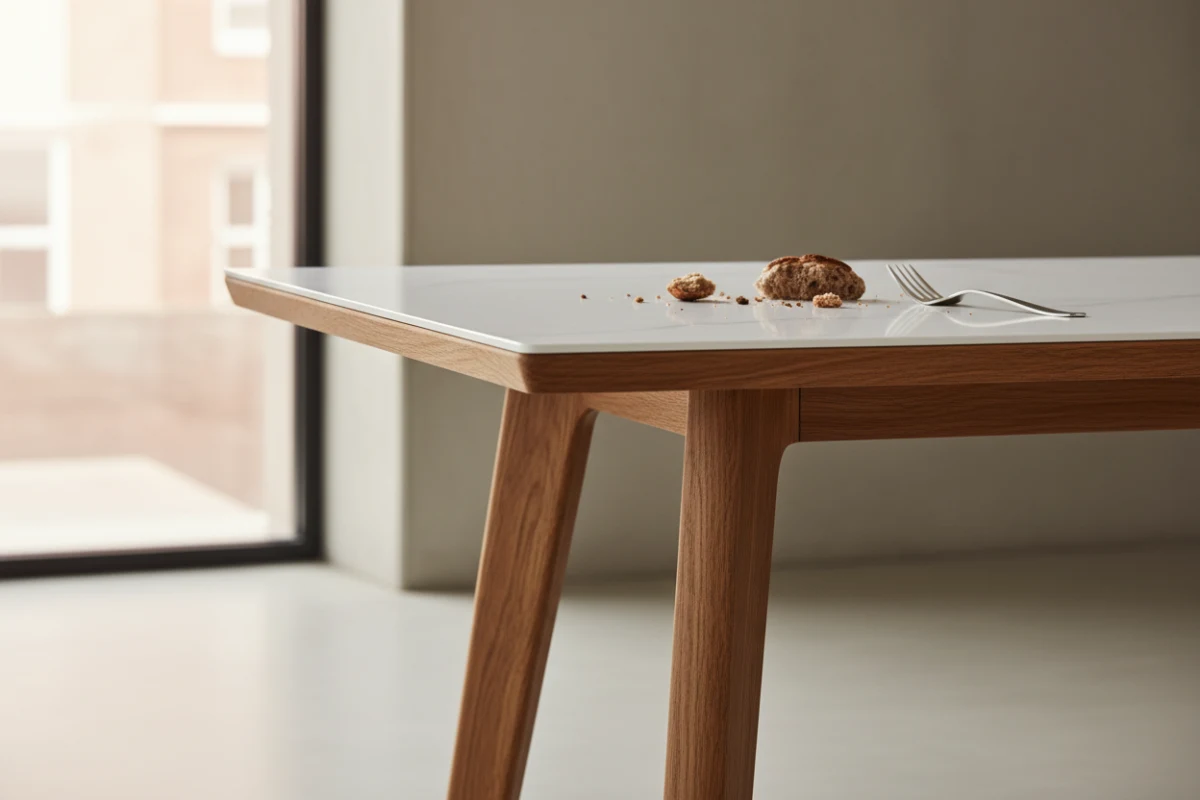 Elegant hybrid designs combining scratch-resistant ceramic with the warmth of natural wood.
Which Material Combinations Are Best Suited for the European Dining Table Market?
For dining table manufacturers for European market distribution, material combinations must balance aesthetic trends, structural durability, and shipping costs. Below are the most successful material combinations in Europe today:
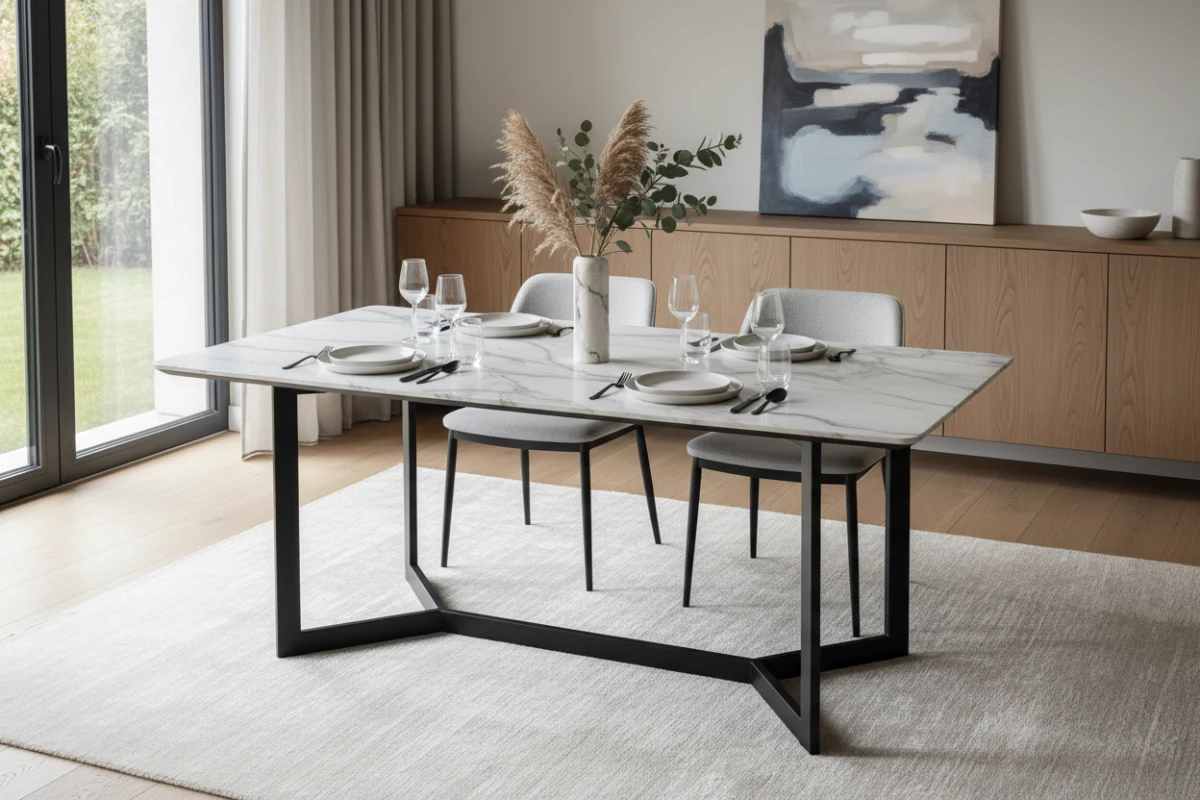
- Sintered Stone Tabletop + Powder-Coated Steel Frame: This is the current top-seller in the B2B space. The sleek, durable surface of sintered stone pairs beautifully with heavy-duty metal legs, offering a modern, maintenance-free dining experience. This combination is highly favored in Western and Central Europe.
- Ceramic and Wood Dining Tables: Combining a ceramic or thin sintered stone top with solid wood legs creates a warm, premium Nordic or mid-century modern aesthetic. This hybrid design provides the natural beauty of wood alongside the scratch-resistant utility of ceramic, solving the vulnerability issues of traditional wooden tabletops.
- Tempered Glass + Stainless Steel Legs: A timeless combination favored in urban apartments, emphasizing light and minimalist geometry. Glass tops are often equipped with extendable metal mechanisms to maximize small dining spaces.
How Do Different Furniture Materials Compare for B2B Importers?
When sourcing at scale, a comprehensive B2B furniture material comparison is essential to evaluate product viability, transport safety, and target retail pricing. Below is a structural breakdown of the major tabletop materials:
| Material | Durability | Scratch & Heat Resistance | Average Weight | Shipping Risk | Cost Level |
|---|---|---|---|---|---|
| Sintered Stone | Excellent | Exceptional | High | Medium | Medium to High |
| Solid Wood | High | Low to Medium | Medium | Low | High |
| MDF + Veneer | Medium | Low | Low | Low | Low to Medium |
| Tempered Glass | Medium | Medium | Medium | High | Low |
Sintered stone stands out as the ideal choice for modern luxury lines because it delivers the prestige of marble without the shipping fragility and high chemical sensitivity associated with natural soft stones.
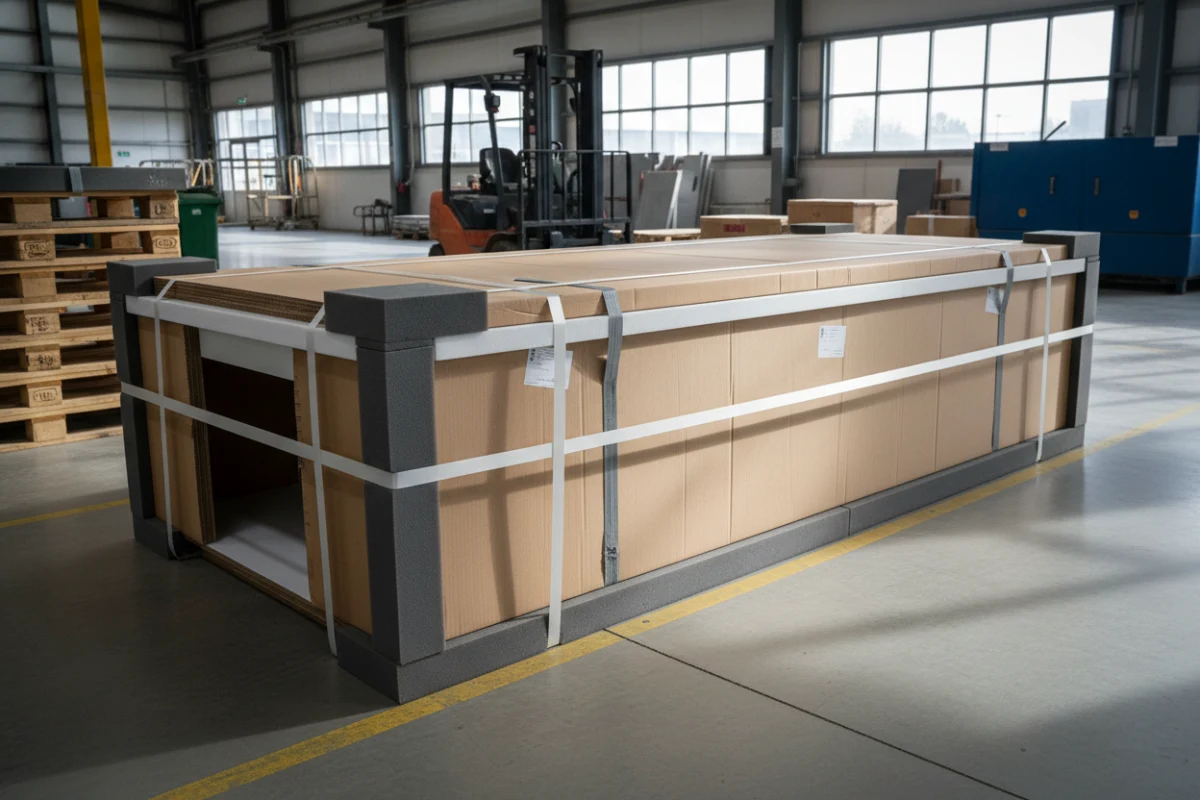 Heavy-duty packaging solutions designed for secure shipping to European B2B importers.
What Are the Key Considerations for Shipping and Packaging Dining Tables?
Shipping large dining tables to European countries requires careful packaging strategies to minimize damage rates during sea freight and last-mile delivery.
- Tabletop Protection: Sintered stone and glass tabletops require custom wood crates or dense EPS foam edge-protectors to absorb shocks during transit.
- Flat-Pack (KD) Design: Knock-down structures for metal or wooden legs reduce the shipping volume, allowing more units to fit into a 40HQ container, lowering per-unit freight costs.
- Mail-Order Standard (ISTA 3A): Importers who sell online must ensure their manufacturer provides ISTA 3A-compliant packaging to withstand rough handling during courier delivery.
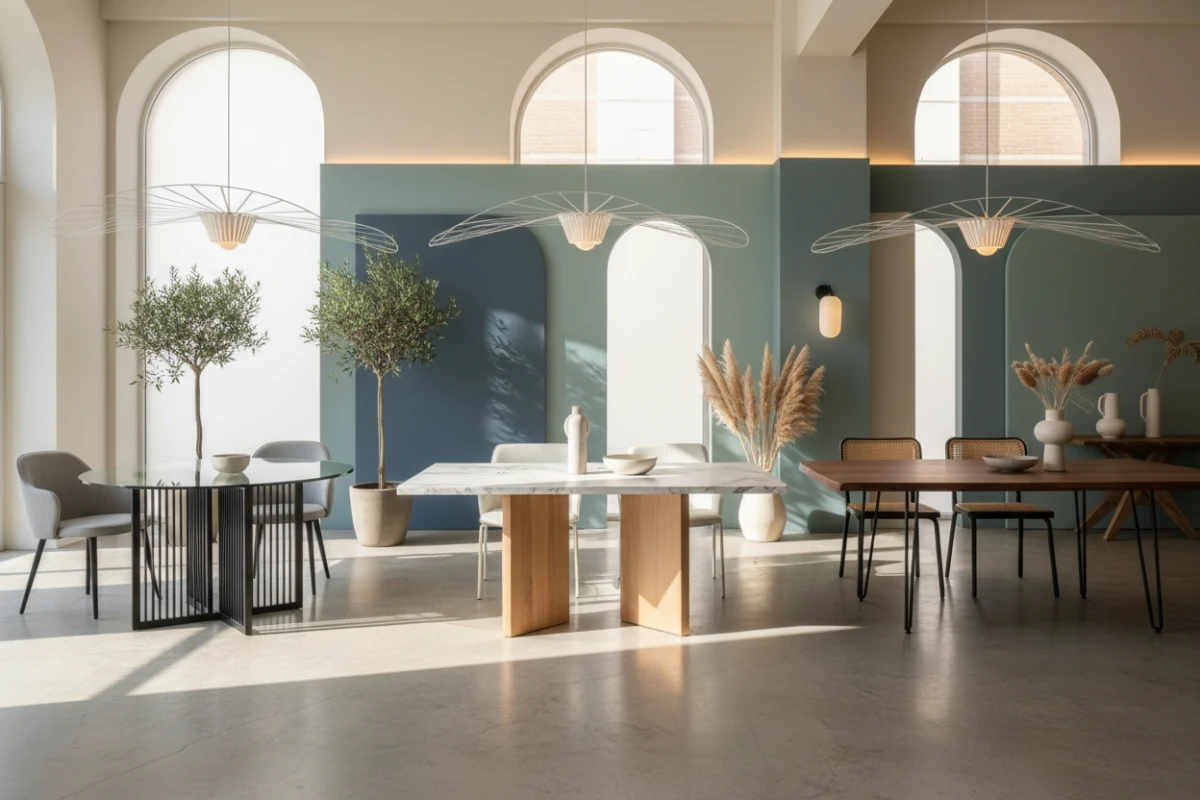 A diverse range of modern dining table materials tailored to the European market.
If you are planning to source premium dining tables tailored to the European market, ASKT offers customizable material options, structural designs, and comprehensive B2B support. If you need different tabletop materials, frame configurations, packaging solutions, and bulk quotes, please contact ASKT.