Why a Modular Dining Chair System is the Strategic Answer to SKU Inflation and Sourcing Risk
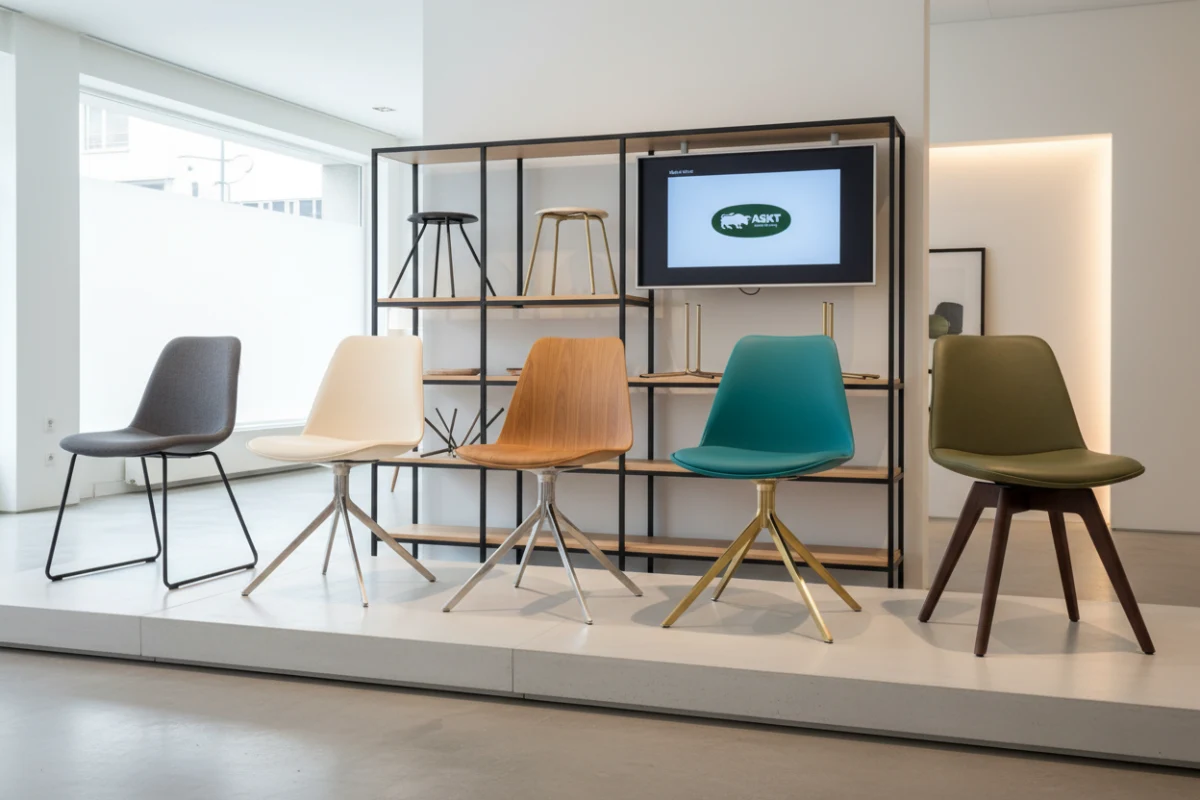
In the competitive European furniture market, balancing catalog variety with inventory efficiency is a persistent operational challenge. For purchasing managers, category directors, and sourcing teams at major wholesalers and retail chains across Germany, the UK, the Netherlands, and Poland, consumer expectations are shifting rapidly. Customers demand immediate availability of diverse dining furniture configurations, including various upholstery colours, metal finishes, and functional features such as swivel or auto-return mechanisms. For the B2B buyer, however, maintaining a massive inventory of fully assembled, distinct products introduces high storage costs and major capital risks. This operational dilemma, often referred to as the multi-SKU trap, locks up significant working capital in slow-moving stock while increasing the risk of stockouts for high-demand items. To address this challenge, forward-thinking importers are shifting away from traditional, rigid furniture importing models toward a highly efficient modular dining chair system. By separating the upholstered seat shell from the support structure, B2B buyers can offer a wide array of contemporary design variations while keeping their physical inventory exceptionally lean and manageable.
The Multi-SKU Trap: Why Upholstered Dining Chairs Create Inventory Risks for Retailers
When sourcing contemporary dining furniture, the traditional supply chain model requires B2B importers to purchase and stock every product variation as a completely separate, pre-assembled SKU. For example, if a retailer wants to offer five different seat shell styles, each available in four distinct fabric colours, and paired with four different leg designs, they must manage, track, and store eighty unique finished products. This rigid methodology heavily inflates warehouse overheads and exposes the business to severe market liabilities. If a specific trend fades—such as a particular fabric colour or leg style—retailers are left with obsolete finished stock that cannot be easily repurposed. Meanwhile, fast-selling models are frequently out of stock, leading to lost revenue and customer dissatisfaction.
Adopting a modular approach is highly effective for reducing furniture SKU risks. Instead of forecasting the demand for eighty unique finished products months in advance, sourcing teams can pivot to forecasting component-level demand. This structural shift allows wholesalers to stock a highly calculated volume of standardized upholstered shells alongside a separate inventory of interchangeable legs. By postponing the final product assembly to the end of the supply chain—either at a local European distribution center or directly at the consumer's assembly stage—importers can dynamically adapt to real-time market trends without carrying the financial weight of slow-moving finished goods.
What Is a Modular Dining Chair System? Sourcing Mechanics of the Modular Architecture
A modular dining chair system is built on the concept of component standardization and exact structural engineering. Unlike conventional furniture designs, where the seat shell and the support frame are treated as a single, inseparable unit, a modular system treats them as independent components that can be mixed and matched. The mechanical foundation of this architecture relies on a highly precise mounting system. Every seat shell within a specific collection must pair seamlessly with every option in the base catalog, regardless of whether the base is a static metal frame, a wooden design, or a complex functional swivel mechanism.
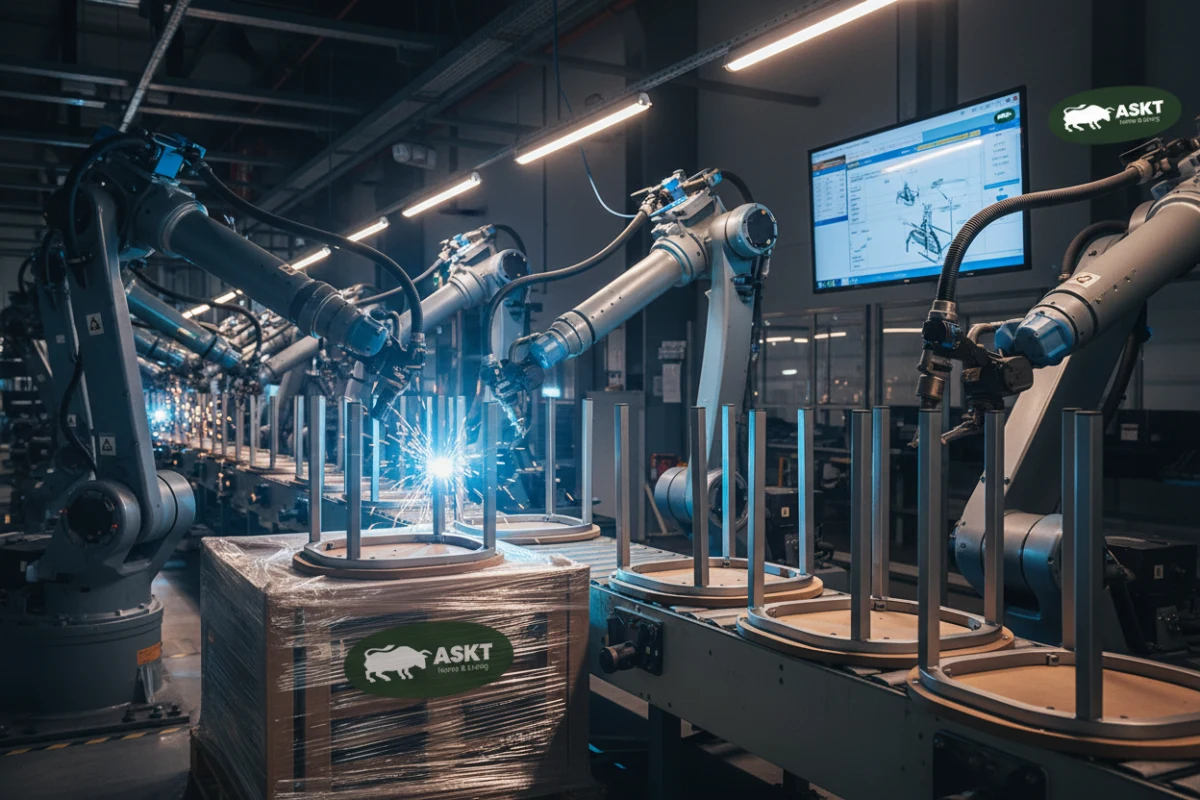
For this system to work reliably at a commercial scale, manufacturing tolerances must be strictly controlled. If the screw-hole pattern or mounting bracket on a batch of upholstered shells deviates by even a fraction of a centimetre, the local assembly team or the end consumer will face immediate structural misalignment. To eliminate this sourcing risk, modern manufacturing facilities must utilize automated production equipment. For instance, using computerized numeric control (CNC) wood routing machines and high-precision automatic welding robotic arms ensures that every component is built to identical dimensions. This rigorous control of tolerances guarantees that interchangeable dining chair bases can be swapped in and out effortlessly, allowing B2B buyers to confidently source components that fit together perfectly every single time.
SKU Rationalisation: How Component Interchanging Lowers Capital Investment and Storage Costs
To understand the commercial value of a modular dining chair system, it is helpful to look at the financial mathematics of SKU rationalisation. Consider a furniture wholesaler supplying retail outlets across Switzerland, Ireland, and the UK. If they want to offer a collection featuring four distinct upholstered shell designs, each in four fabric colours, and compatible with three different frame styles (such as matte black powder-coated legs, oak veneer legs, and an auto-return swivel base), the traditional stocking model requires: 4 Shells x 4 Colours x 3 Frames = 48 Finished SKUs. If the wholesaler maintains a standard buffer stock of 50 units per finished SKU to guarantee fast delivery times, they must store 2,400 finished chairs in their warehouse, tying up significant capital and requiring a massive amount of storage space.
By transitioning to a standardized furniture components supply chain, the inventory requirement is radically simplified. The wholesaler only needs to stock the individual components: (4 Shells x 4 Colours) + 3 Frames = 16 Shell SKUs + 3 Frame SKUs = 19 Component SKUs. To provide the exact same 48 design configurations to the market, the wholesaler now only manages 19 distinct component SKUs. Maintaining a safety buffer of 50 units per component SKU requires holding only 950 individual parts (800 shells and 150 frames) in stock. This represents a substantial reduction in total stored inventory volume while offering identical variety. Additionally, because unassembled seat shells stack tightly together and metal frames can be nested compactly, storing these 950 components takes up a fraction of the physical warehouse footprint required for 2,400 fully assembled, boxed chairs, directly lowering European overhead and warehousing costs.
Streamlining Compliance: Why Modular Systems Accelerate European Durability and Safety Testing
For professional B2B buyers and contract furniture importers operating in Europe, ensuring that products meet strict safety, strength, and durability standards is non-negotiable. Selling non-compliant furniture poses major liabilities, including costly product recalls and brand damage. However, conducting independent laboratory testing for dozens of different finished chair models is incredibly expensive and time-consuming.
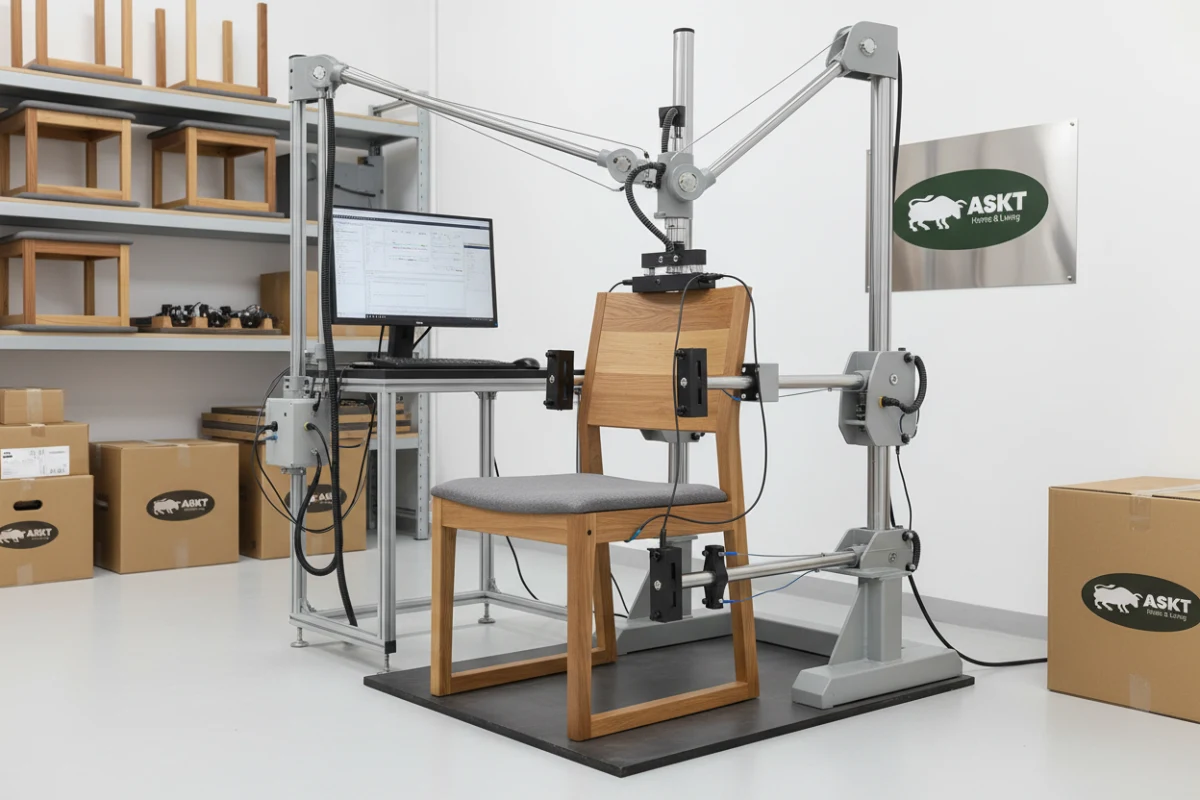
A modular approach solves this regulatory challenge by streamlining the testing process. Because the mounting patterns and structural connection interfaces are standardized across the entire collection, manufacturers can test and certify the core components independently. For example, the load-bearing metal frames, high-frequency swivel mechanisms, and structural plywood seat shells undergo rigorous mechanical testing as individual components rather than separate finished chairs. Once a base frame or a seat shell has been certified for structural strength and durability, it can be combined in various ways without requiring an entirely new round of laboratory testing for every single aesthetic combination. This component-level compliance strategy significantly reduces product development timelines, allowing wholesalers to introduce new fabric colours or minor frame variations to the market much faster while maintaining complete confidence in structural safety and compliance.
Overcoming Container Optimization Barriers and MOQ Targets with KD Flat-Packing
Logistics and shipping costs represent a major portion of the landed cost when importing contemporary indoor furniture from China to European destinations. Fully assembled dining chairs, and even many semi-assembled Knocked-Down (KD) designs, are highly inefficient to transport because they contain a large amount of "empty air." This poor space utilization drives up the per-unit ocean freight cost, eroding margins for wholesalers.
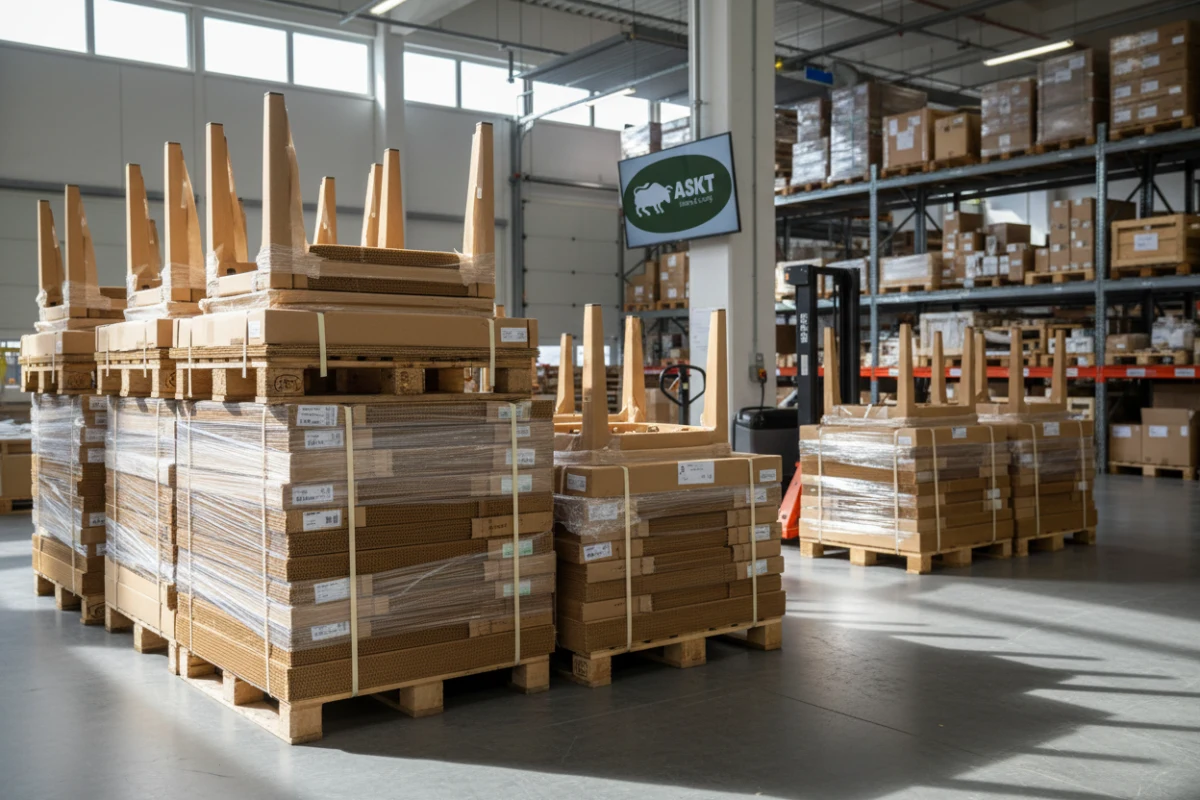
A modular system is engineered specifically for maximum container loading and packaging optimization. By decoupling the upholstered seat shells from the support frames, the components can be flat-packed and nested tightly together. The seat shells are stacked securely inside customized export carton boxes, while the metal and wood bases are nested inside separate compact packages. This structural design minimizes waste space inside shipping containers, allowing importers to load significantly more units per 40-foot High Cube (40HC) container compared to traditional pre-assembled designs.
Furthermore, this component-based sourcing model makes it much easier for purchasing teams to meet factory Minimum Order Quantity (MOQ) requirements in the modular dining room furniture wholesale sector. Instead of being forced to order a large volume of a single finished variant that may sell slowly, a buyer can order a larger batch of a standardized seat shell fabric and distribute it across various frame styles. This flexibility helps importers optimize their container loads, minimize transit damage through specialized packaging protection, and keep their importing operations highly cost-effective.
Balancing Variety and Complexity: Standardizing High-Performance Fabrics on Modular Frames
Managing fabric options is another area where B2B buyers face significant operational complexity. In high-traffic residential and contract environments, such as hotels and restaurants, upholstery must withstand daily wear while maintaining its visual appeal. Sourcing inferior textiles leads to rapid pilling, fading, or staining, resulting in customer returns and warranty claims.
Within a modular chair framework, manufacturers can standardize their textile offerings around a carefully curated selection of high-performance fabrics. These fabrics are engineered to meet strict commercial requirements, including high abrasion resistance, superior colour fastness to light, and built-in waterproof or easy-clean properties. Offering pet-friendly materials and fabrics that are easy to wipe down with a damp cloth ensures that the products meet the practical demands of modern European households and hospitality venues.
By standardizing these premium, high-durability fabrics across a core set of modular seat shells, wholesalers can easily multiply their product offerings. A single high-performance grey upholstered shell, for instance, can be transformed from a contemporary domestic dining chair to a sleek commercial office chair simply by switching between different interchangeable dining chair bases. This balance allows category managers to deliver high-quality, customized aesthetics without introducing unnecessary complexity to their production and procurement cycles.
Mitigating Sourcing Risks: Adopting a Systematic Quality Assurance Framework
Sourcing furniture from international manufacturing partners requires a structured approach to quality control and supplier evaluation. For European purchasing managers, distance can introduce anxiety regarding whether the mass-produced goods will match the approved sample. To eliminate this risk, professional B2B manufacturers implement comprehensive quality assurance protocols at every stage of production.
Because a modular system relies on absolute consistency, systematic quality inspections are integrated directly into the manufacturing workflow. From raw material testing of metal frames and plywood shells to final packaging drop tests, each batch is thoroughly evaluated before container loading. Importers receive transparent quality control reports, structural testing documentation, and detailed container loading schematics, providing peace of mind and ensuring long-term product consistency.
Additionally, sourcing from a manufacturer with over twenty years of B2B export experience allows buyers to explore custom OEM and ODM solutions with confidence. Wholesalers can request customized dimensions, private-label branding, and exclusive fabric selections to secure their market position. This systematic approach to manufacturing, combined with the versatility of modular design, provides European furniture buyers with a reliable, scalable, and risk-managed supply chain.
Optimizing Your Furniture Procurement Strategy
Embracing a modular dining chair system is a strategic decision that goes beyond product aesthetics; it is an effective tool for optimizing logistics, reducing capital investment, and safeguarding retail margins. By streamlining inventory through standardized components, B2B importers can confidently scale their businesses and easily navigate shifting market trends. If you are looking to lower your warehouse overheads and streamline your product portfolio, let us help you map out the ideal component configurations for your target market. Request Modular Collection Matrix today to discuss your sourcing requirements and explore our flexible OEM and ODM solutions.