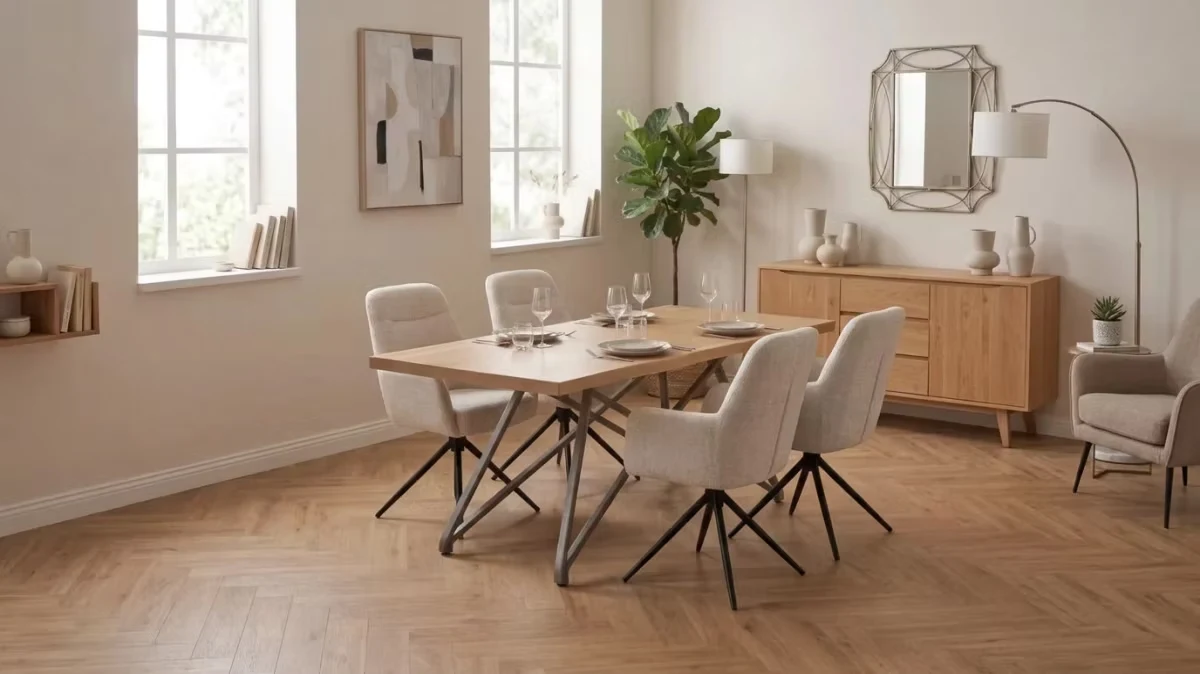
Modular Dining Chair Systems and SKU Optimisation for Furniture Buyers
Modulare Esszimmerstühle use a small number of standardised components, such as seat shells, frames and upholstery pads, so that retailers and wholesalers can offer a broad product range with significantly fewer SKUs, lower inventory risk and more flexible stock planning.
Why too many dining chair SKUs quickly become expensive
For many European furniture buyers, a wide dining chair range feels like a commercial strength. More colours, more fabrics, more frame options — in theory, that means more customers and more sales. In practice, every additional SKU adds cost and risk across the entire supply chain, from production planning and container loading to warehouse handling and end-of-life stock.
SKU-Optimierung Möbel is not about reducing choice. It is about delivering choice in a smarter way. A typical non-modular dining chair collection might offer multiple frame options, fabrics and leg finishes, which can quickly multiply into hundreds of finished SKUs. Each one needs its own product code, packaging label and forecast. Slow sellers still occupy shelf space. Fast sellers can run out of stock unpredictably. The result is a collection that looks rich on paper but ties up a lot of working capital.
Common cost drivers of a high-SKU dining chair range include:
- Higher inventory holding cost: more finished units to store, insure and count.
- Longer lead times: smaller batches per SKU mean lower production efficiency.
- Weaker pricing power: fragmented volume across many variants reduces negotiation leverage.
- More stock obsolescence: when trends change, slow-moving finished chairs are harder to clear.
- Heavier logistics planning: mixing many SKUs in containers complicates loading and delivery schedules.
From my experience working with furniture buyers across Germany, the Netherlands and the UK, the most profitable dining chair collections are rarely the biggest ones. They are the smartest ones — built around components that can be recombined without multiplying operational complexity.
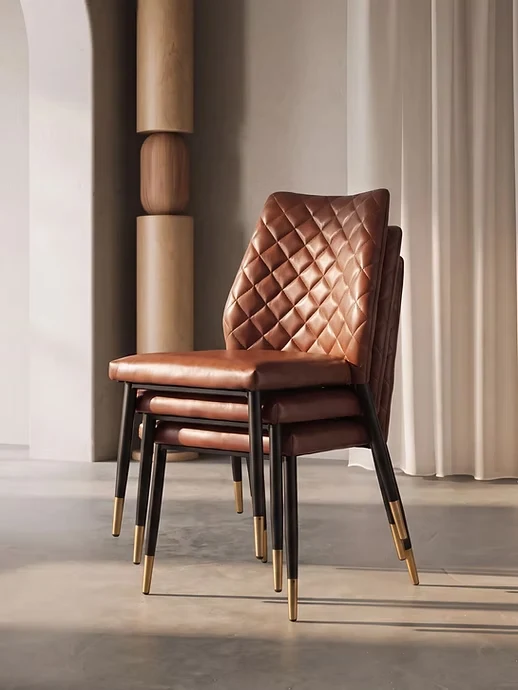
What exactly is a modular dining chair system?
A modular dining chair system is a product architecture in which a dining chair is built from a limited set of interchangeable, standardised modules instead of being designed and produced as one fixed finished product. The core idea is that shared components can be combined in different ways to create different looks, comfort levels and price points.
For example, a single seat shell might fit on three different base types — a four-leg metal frame, a wooden frame and a swivel base. The same frame might be offered with or without armrests. The same upholstery pad might be available in multiple fabrics, but the underlying foam and board structure stays identical.
This approach is very different from simply offering many colour options. In a traditional collection, each colour becomes a separate finished SKU produced in advance. In a modular system, many variants can be held as component stock and only finished, kitted or configured closer to the customer or the sales moment. For wholesale and retail buyers, that changes everything about cash flow and stock risk.
A well-designed modular dining chair system usually has three characteristics:
- Standardised interfaces: modules connect in consistent, repeatable ways.
- Shared core components: seat shells, frames and mechanisms are reused across variants.
- Configurable visible layers: fabric, colour and finish options create visual diversity without changing structural parts.
When these three elements come together, you get the commercial benefit of a wide collection without the operational penalty of managing hundreds of independent SKUs.
Which components can be combined in a modular system?
The exact modules depend on the manufacturer’s architecture, but most modular dining chair ranges are built around a small number of core building blocks. Understanding these blocks is the first step in judging whether a supplier’s modularity is genuine or just marketing language.
Typical modular components include:
- Seat shell: the rigid or semi-rigid base that forms the seat and often the backrest structure. A shared seat shell is the strongest driver of SKU efficiency.
- Frame or base: four-leg metal, wooden frame, sled base, swivel base or auto-return mechanism. Multiple bases can attach to the same shell interface.
- Upholstery pad: a removable or separately produced cushion layer that can be manufactured in different fabrics without changing the shell.
- Armrest module: a consistent armrest part that can be added or removed to create armless, low-armed or fully upholstered variants.
- Finish option: powder-coat colour, wood veneer tone or leg cap style, treated as a finish variant rather than a structural change.
The table below shows how a small component set can create a large number of marketable variants.
| Component | Number of options | Role in the system |
|---|---|---|
| Seat shell | 2 | Structural core, defines chair shape |
| Base type | 3 | Four-leg, swivel, sled frame |
| Upholstery pad | 1 shared pad, 8 fabrics | Visible comfort layer, drives colour choice |
| Armrest | 2 | With or without armrests |
| Frame finish | 4 | Powder-coat colours or wood tones |
In this example, only a small set of individual components generate a very large number of possible chair combinations. The buyer does not need to hold every combination as finished stock. Instead, Bestandsmanagement Esszimmerstühle becomes a question of managing component availability and assembly lead times. That is the heart of SKU-Optimierung Möbel in practice.
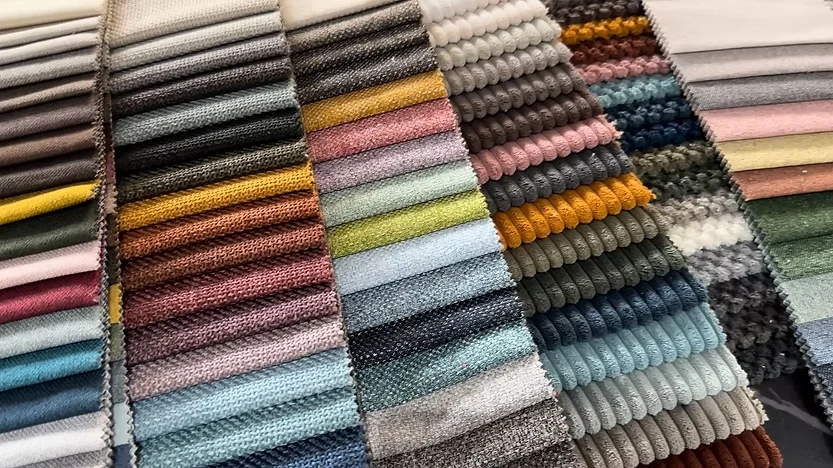
How modular systems simplify inventory management
One of the strongest reasons European buyers adopt modular dining chairs is the improvement in inventory management. When you move from finished-chair SKUs to component-based SKUs, several things happen at once.
First, you hold fewer finished units and more shared components. Shared components have higher turnover because they support multiple end products. A seat shell used in several chair variants moves through the warehouse much faster than a single finished SKU that only serves one niche. Higher turnover means lower average holding cost, less obsolescence and healthier cash flow.
Second, forecasting becomes more accurate. Demand volatility tends to cancel out across variants. One fabric may be down one season, but another may be up. If the underlying seat shell and frame are the same, you can shift production capacity between variants without starting a new tooling or development process. For purchasing managers, that stability is worth a lot more than a small unit-price discount.
Third, container loading becomes more efficient. Standardised components often pack more densely than fully assembled chairs. Flat-pack seat shells, nested frames and boxed upholstery pads can be loaded with less empty space per container. For importers who buy by the container, better cube utilisation directly reduces landed cost per unit.
Fourth, markdown risk falls. A finished chair in the wrong fabric or colour can become a clearance item. A component in the same wrong fabric can still be used across multiple base options, or re-covered, or re-allocated to a different channel. Modularity gives you options when market demand shifts.
For product managers building a range, the effect is very clear: you can present a wider, more flexible collection to your customers while actually reducing the number of core parts you need to plan, source, inspect and store.
What are the main benefits for product managers and purchasing teams?
Modulare Esszimmerstühle are not just a manufacturing trick. They change how a buying team works day to day, and they change the kind of collection a business can profitably offer. The benefits land differently depending on whether you are in product management, purchasing or operations.
For product managers, the biggest advantage is range flexibility. You can test new fabrics, new finishes or new base types with much lower commercial risk. Instead of committing to a full container of a brand-new finished chair, you can add one new fabric option to an existing seat shell and order a smaller initial quantity. If it sells well, scaling is fast because the rest of the supply chain is already in place. If it does not, your loss is limited to the fabric roll, not a whole SKU of completed chairs. This is a practical way to build a modulare Möbelkollektion aufbauen without overextending stock.
For purchasing managers, the advantage is leverage and simplicity. Fewer core components mean larger volumes per part, stronger negotiation positions and fewer supplier part numbers to manage. Quality control also becomes more consistent: once you have validated a seat shell or frame design, you do not re-validate it for every colour variant. Inspection can focus on the critical structural parts and the incoming fabric batches, rather than treating every finished chair as a completely new product.
For operations and warehouse teams, modular systems reduce handling complexity. There are fewer SKU codes to track, fewer packaging variants to store and fewer picking errors when components are shared. Returns and spare parts are also easier to handle, because a damaged base or a stained cushion can often be replaced without replacing the whole chair.
What should you look for in a modular chair supplier?
Not every supplier that uses the word modular delivers real modular value. Some simply offer many options, still produced as separate SKUs. Others have a modular structure on paper, but the interfaces are unreliable, the lead times for components are unworkable, or the quality drifts between batches.
When evaluating a modular dining chair system supplier, I recommend checking four areas carefully.
Component consistency Modularity only works if parts are truly interchangeable. That requires tight manufacturing tolerances, consistent tooling and good process control. Ask the supplier how they ensure that every seat shell fits every base, every time. Request information about their testing routines, their incoming inspection of metal frames and their control of critical dimensions. A supplier with clear tolerance standards and documented QC is much more likely to deliver a working modular system in practice.
Interface reliability The connection point between modules is where most problems appear. Screws must align, brackets must be consistent and assembly must be repeatable. Ask about the fastening method, the expected service life of the connection and whether the system has been tested to relevant European furniture durability standards. If a chair will be used in hospitality or contract settings, interface durability matters even more.
Flexible MOQ structure One of the main commercial reasons to choose modular is lower inventory risk. That advantage disappears if the supplier forces you to order huge minimum quantities of every module. A good modular partner will let you order core components in efficient volumes while allowing smaller trial quantities of new fabrics, finishes or optional modules. The MOQ structure should support your SKU-Optimierung Möbel goals, not undermine them.
Range roadmap Modularity is a long-term investment. You want a supplier that will continue developing the system, not abandon it after one season. Ask whether new modules will be added, whether existing interfaces will be maintained and how the supplier handles end-of-life components. For a buyer building a collection, continuity matters as much as the initial price.
Practical example: how the KINEXA modular architecture from ASKT works
To make this more concrete, let me share how ASKT approaches modular dining chairs through the KINEXA system, which was introduced to European buyers in the February 2026 issue of möbelmarkt. The starting point for this system was a real buyer problem: many European partners wanted a broad dining chair offer, but they struggled with MOQ pressure, container filling and stock risk when every model was developed separately.
The KINEXA modular dining chair system reverses that logic. Instead of designing many separate chairs, the system is built around a small number of seat shells and base types that can be combined in standardised ways. Because the structural cores are shared, buyers can scale up volume on the parts that move fastest, while testing new looks or fabrics with much smaller commitments.
From a manufacturing perspective, the system relies on consistent metal-frame production, controlled seat-shell tooling and standardised fastening points. ASKT’s BSCI-audited factories use automated cutting, punching and welding equipment to keep component dimensions stable across production batches. That consistency is what makes modular assembly reliable in real conditions, not just on a product sheet.
On the material side, the upholstery layer can be specified across a wide range of fabrics, including ASKT-Tex functional fabrics with waterproof, stain-resistant and pet-friendly performance, as well as OEKO-TEX® STANDARD 100 certified options and recycled-polyester fabrics made from plastic bottles. Because the fabric is applied to a standard pad structure rather than a unique chair shape, the buyer gets visual variety without a new development cycle for each option.
For buyers who want to build a modulare Möbelkollektion aufbauen gradually, the approach supports a test-first mentality. You can start with one seat shell, two base types and a curated fabric set, then expand based on actual sales data rather than upfront guesswork. This reduces the cost of being wrong, which is one of the most underappreciated benefits in furniture sourcing.
As with any supply decision, modularity is not the right answer for every buyer. If you only sell one high-volume basic chair, a modular system may add more complexity than it saves. But if you are trying to serve multiple channels, multiple price points or multiple national markets with the same product family, modularity is one of the most effective ways to keep your offer broad and your operations lean.
FAQ
How many SKUs can I typically reduce with a modular dining chair system?
The exact reduction depends on the size of your range, but a well-designed system usually replaces a large number of finished-chair SKUs with a much smaller number of component SKUs. Instead of forecasting and stocking every finished combination, you stock shared seat shells, frames and upholstery options, then combine them according to demand. The biggest savings appear in finished-goods inventory, obsolescence risk and warehouse handling.
Is a modular dining chair system suitable for contract and hospitality buyers?
Yes, it can work very well for contract projects, but only if the system is robust enough for high-frequency use. The key points to check are interface durability, frame stability and fabric performance. Modularity can also help with hospitality logistics, because spare components can replace damaged parts without removing entire chairs from service. Always confirm test data and component consistency with the supplier before committing to a project order.
Can I still offer custom fabrics and finishes with a modular system?
Yes, that is one of the practical strengths of a modular approach. Custom fabrics, colours and frame finishes can be introduced as variant options on a standard structural base, instead of requiring a completely new chair development. This makes customisation faster and lower risk, which is especially useful for private-label brands and retail buyers who want their own look without full product-development cost.
If you want to make your dining chair collection more flexible with fewer core components and lower inventory complexity, you can discuss modular product concepts with ASKT by speaking to our team about modular dining chair solutions.