How to Reduce Furniture Inventory and Unsold Stock: 7 Practical Strategies for Wholesalers and Retailers
Seven practical strategies help furniture retailers and wholesalers reduce stock levels, cut storage costs and lower future inventory risk through demand-aligned purchasing and modular collections. The goal is not just to clear unsold pieces once, but to build a purchasing system that prevents excess stock from building up in the first place.
Why is unsold furniture stock such an expensive risk for the furniture trade?
Unsold furniture inventory ties up far more capital than many buyers realise at first. A dining chair or dining table sitting in a warehouse is not just a product waiting to sell — it is rented floor space, insurance, handling time, packaging wear and capital that cannot be reinvested in faster-selling items. For European furniture wholesalers, retailers and e-commerce brands, storage pressure alone can erode an entire season’s margin.
The real problem is that furniture is bulky, heavy and slow to discount gracefully. A small accessory can be marked down and cleared in a week. A slow-moving dining chair collection may sit for months, taking up valuable pallet positions and blocking new products from entering the range. This is why Lagerkosten senken Möbelhandel is such a high-impact topic: every euro saved in unnecessary storage falls almost directly to the bottom line.
From my experience working with European furniture buyers for many years, I have seen companies lose more money to unmanaged stock than to supplier quality issues. The reason is simple: quality problems are visible and painful, while excess stock builds up quietly, SKU by SKU, until suddenly the warehouse is full and cash flow is tight.
How do you identify slow-moving furniture stock before it becomes a problem?
The first step to Möbel Lagerbestand reduzieren is to see the problem clearly. You cannot reduce what you do not measure. Many businesses know their total inventory value, but they do not break it down by rotation speed, category or age of stock. That makes it almost impossible to act early.
Start by classifying every item in your warehouse according to how quickly it turns. A simple classification by turnover category works well for furniture:
- Fast movers: sell reliably within a short window after arrival, generate consistent turnover and deserve the most shelf space
- Medium movers: sell at a steady pace, usually form part of a stable range and are worth keeping in moderate quantities
- Slow movers: take considerably longer to sell, consume disproportionate storage space and should be reviewed regularly
For furniture specifically, you also want to track age of stock by production batch, because finishes, fabrics and packaging condition can change over time. A dining chair stored for many months may still be structurally fine, but if the fabric colour has shifted slightly or the packaging is damaged, it becomes harder to sell at full price.
Once you have identified your langsam drehender Möbelbestand, evaluate each item against three questions: Is this still on-trend? Can it be bundled or repositioned? Should we stop reordering it? Not every slow seller needs to be dumped at a loss, but every slow seller deserves an active decision, not passive neglect.
How can you align purchasing with real market demand to avoid overstock?
The cheapest way to reduce inventory is to stop buying too much of the wrong product. This sounds obvious, but in the furniture trade it is surprisingly hard to do. Long lead times, container economics, MOQ requirements and trend uncertainty all push buyers toward larger orders than the market actually needs.
Demand-aligned purchasing means you base reorder quantities on actual sales data, not on supplier minimums, gut feeling or last year’s forecast alone. For dining chairs and dining tables, this is especially important because product variants — different fabrics, frame colours, leg styles — can multiply SKU count very quickly.
A practical approach for furniture buyers:
- Review your top-performing SKUs every two weeks and adjust reorder quantities based on recent sell-through
- For new items, avoid committing to full container quantities before you have real market feedback
- Use point-of-sale data, online conversion rates and customer inquiries to spot weak items early
- Separate core range products from trend products, because they need different stock strategies
The biggest mistake I see is treating every new collection item the same way. A classic oak-veneer dining table with steady long-term demand can justify higher stock levels. A trendy upholstered chair in a specific fabric colour should not be ordered in the same volume, no matter how good the sample looks in the showroom.
How do modular furniture collections reduce inventory risk?
Modular product design is one of the most powerful tools for Bestandsrisiko Möbel reduzieren, and it is underused by many European furniture buyers. The idea is simple: instead of treating every chair or table as a completely separate product, you build your range around shared components that can be combined in multiple ways.
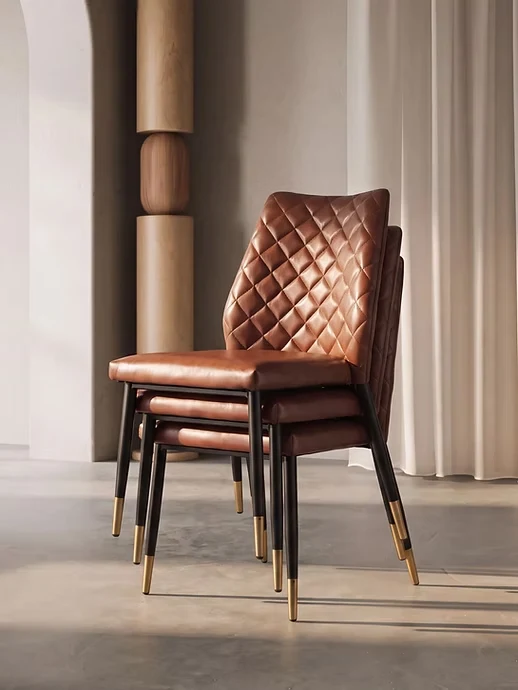
For dining chairs, for example, a standard seat shell paired with different base options — metal legs, wooden legs, swivel mechanisms, bar-height frames — allows you to offer a wide visual range without stocking ten completely different chair structures. The same applies to dining tables: shared table-top sizes with different finishes or leg designs reduce the number of unique parts you need to hold.
The inventory benefit is direct. Instead of stocking a large number of finished chair SKUs in depth, you stock a smaller number of common components and assemble or configure them according to actual orders. This lowers total stock value, reduces the chance of being stuck with unpopular variants and shortens effective lead times for customers.
Modular collections also make it easier to test new fabrics, colours or finishes without betting on large finished-goods orders. You can introduce a new fabric option on an existing seat shell, measure demand, and scale up only if it sells. That flexibility is exactly what protects buyers from being stuck with unverkaufte Möbel loswerden problems later.
Why should you test small quantities before placing large furniture orders?
“Test first, ship second” is one of the most reliable principles for avoiding Möbel Lagerbestand reduzieren headaches. In practice, it means ordering a small batch of a new product — enough to test in your sales channels — before committing to a full container or a full season’s stock. ASKT’s modular KINEXA system, for example, is built around this exact logic: validate demand with a limited number of components before scaling up.
The logic is straightforward. No showroom presentation, product photo or supplier forecast is as accurate as real customer behaviour. A dining chair that looks perfect on paper may sell slowly because the seat height does not fit common European dining tables, or because the fabric colour clashes with popular flooring tones in your market. This is why ASKT bases its design research on real German household dining scenarios rather than abstract trend forecasts.
Small test orders give you real data on:
- Actual sell-through rate in your specific sales channels
- Customer feedback on comfort, size and finish
- Return rates and damage patterns during delivery
- Which variants perform best and which ones underperform
From a sourcing perspective, this is where flexible MOQs and short lead times become strategically important. If your supplier can support test batches instead of forcing a high minimum order, you can validate demand before you tie up capital in stock that may not move.
I always advise buyers to treat the first order of any new product as a market test, not as the main volume order. The cost of a small test batch is nothing compared with the cost of storing hundreds of slow-moving chairs for a year and eventually selling them at a steep discount.
How can packaging and container optimisation lower inventory and storage costs?
Packaging and container loading have a surprisingly large impact on Lagerkosten senken Möbelhandel outcomes. When products are packed efficiently, more units fit in each container, which reduces per-unit shipping cost. But the benefit does not end at the port. Well-designed KD packaging also means you can store more units in the same warehouse space, which effectively lowers your storage cost per item.
For furniture retailers and wholesalers, this matters because storage cost is usually calculated by space or by pallet position. If a dining chair arrives fully assembled and takes up far more space than a KD version, every unit in stock is more expensive to hold, even before you count the extra damage risk from handling bulkier cartons.
Optimised packaging also reduces damage during transport and storage. Damaged packaging or scuffed products are a hidden cause of langsam drehender Möbelbestand: the item is technically in stock, but it cannot be sold at full price and slowly drifts toward clearance.
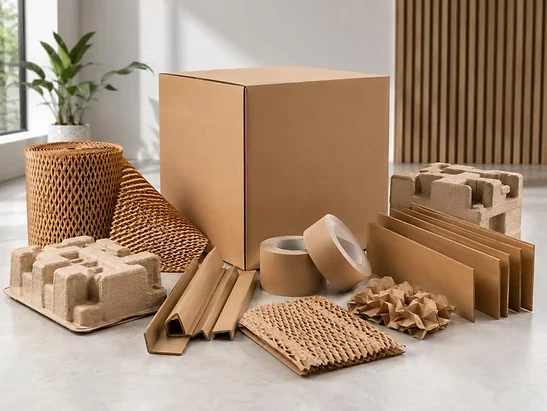
When evaluating suppliers, look beyond the unit price and ask about packaging volume, pallet configuration and container fill rate. A slightly higher unit price with much better packaging efficiency can actually reduce your total cost of ownership, because you ship more per container, store more per pallet and suffer fewer damage-related markdowns. Sustainable packaging solutions, such as reduced plastic use and honeycomb paper protection, also support your ESG commitments without raising long-term inventory costs.
What role do flexible suppliers play in reducing furniture inventory risk?
Your supplier’s flexibility directly determines how much inventory you need to hold. If lead times are long and MOQs are high, you have to order early and order more, which naturally increases stock levels and makes Bestandsrisiko Möbel reduzieren more difficult. If lead times are short and order quantities are flexible, you can buy closer to actual demand and keep less on the shelf.
For European furniture buyers, this is one of the most under-discussed levers in inventory management. Companies spend a lot of time negotiating unit price, but they do not always price the value of shorter lead times or smaller minimum orders. Yet those two factors can easily be worth more than a modest price discount, because they reduce stock risk, storage cost and the chance of needing clearance sales later.
When evaluating a furniture manufacturing partner, consider:
- Minimum order quantities for new items and repeat orders
- Standard lead times from order confirmation to shipment
- Ability to split orders across variants without pushing up MOQs
- Production transparency, so you can plan reorders with confidence
- Modular product options that let you broaden the range without broadening stock
The right supplier should be an extension of your inventory strategy, not a reason you have to carry extra stock. At ASKT, for example, we have structured our manufacturing around the reality that European buyers need flexibility — whether that means testing a new dining chair fabric in a small batch, scaling up a proven seller quickly or building a modular collection that keeps stock complexity low.
How can planning tools and data improve long-term inventory management?
Once you have the right purchasing habits and the right supplier setup, data and planning tools help you make the system consistent. The goal of better planning is not to create more spreadsheets; it is to reduce surprises, stop emotional ordering decisions and make sure stock levels match actual demand.
For furniture businesses, the most useful planning habits are usually simpler than full enterprise software implementations. They include regular stock reviews, clear sell-through targets by category, and a written policy for when to reorder, when to pause and when to clear an item.
Useful metrics to track for furniture inventory:
- Sell-through rate: how much of a delivered batch has sold after set intervals
- Stock turn: how many times your average inventory value is sold in a year
- Days of inventory on hand: how long current stock would last at current sales rates
- Clearance share: what percentage of revenue comes from discounted or clearance items
The value of these numbers is not precision down to the last unit. It is having an early warning system. If a new dining chair range is underperforming after two months, you know it is time to adjust marketing, reconsider the next order or plan a controlled clearance — before it becomes a long-term warehouse problem.
Digital tools can also help with purchasing clarity. The Sunbin KI platform developed by ASKT, for example, uses structured questioning to help buyers clarify their exact range and volume needs, reducing the information loss that often leads to over-ordering and excess stock.
If you want to plan your product range more precisely and build market-aligned dining chair and dining table collections with lower inventory risk, discover how ASKT can support your range planning and sourcing strategy.
Frequently Asked Questions
How quickly can I reduce slow-moving furniture stock without heavy discounting?
You can start identifying and acting on slow-moving furniture stock within a few weeks, but meaningful reduction usually takes several months if you combine targeted promotions, bundle offers and adjusted reordering. The biggest long-term savings come from preventing overstock in the first place through demand-aligned purchasing, modular collections and small test orders, rather than only clearing existing stock through markdowns.
Can flexible MOQ suppliers really help lower inventory risk for furniture retailers?
Yes, suppliers with flexible minimum order quantities and shorter lead times reduce Bestandsrisiko Möbel reduzieren pressure because you can order smaller batches more frequently instead of filling a warehouse with unproven items. This is especially valuable for dining chairs and dining tables, where frame, fabric and finish combinations can easily multiply SKU count and tie up capital.
What is the difference between clearing unsold furniture and preventing inventory buildup?
Clearing unverkaufte Möbel loswerden is a short-term reaction: discounts, outlet sales, bundles or project sales. Preventing inventory buildup is a long-term strategy based on sales data, supplier flexibility, modular product design and small test orders. For sustainable profitability, furniture retailers and wholesalers need both, but prevention usually delivers stronger margin protection.
How do modular dining chair collections affect MOQ and container loading?
Modular collections reduce MOQ pressure because shared seat shells and base components can be combined across multiple finished SKUs, making it easier to fill production and container capacity without betting on a single high-volume design. This flexibility supports both better container loading efficiency and lower finished-goods inventory risk.