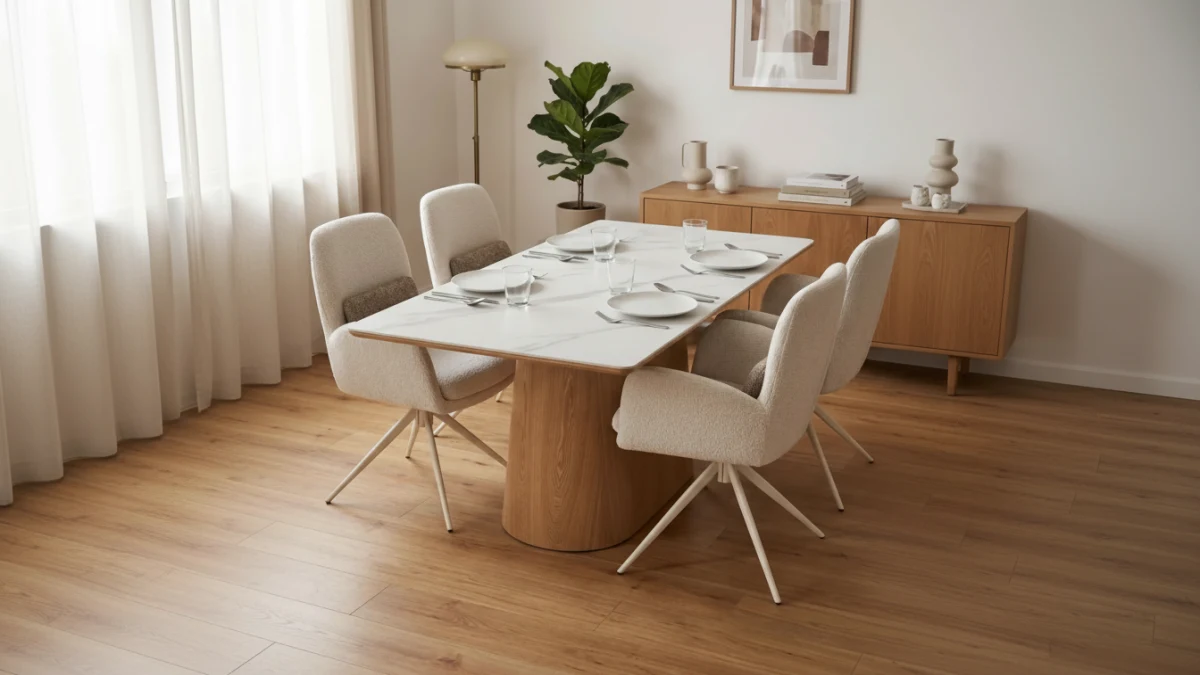
Who Are Reliable Dining Room Furniture Suppliers for European Retailers?
Reliable dining room furniture suppliers for European retailers must bridge manufacturing efficiency in China with strict European quality compliance, localized design insight, and digital supply chain transparency. A trustworthy B2B partner provides audited, certified products, protects retail margins through territorial design exclusivity, and utilizes modular production to mitigate logistical and inventory risks.
What Key Challenges Do European Retailers Face When Sourcing Dining Furniture?
For European furniture wholesalers, retail chains, and purchasing groups, sourcing dining furniture from overseas involves navigating complex operational obstacles. The traditional importing model is often plagued by a lack of design uniqueness, unpredictable transport costs, regulatory non-compliance, and poor structural quality that leads to high return rates from end consumers.
When evaluating a partner, importing teams must look beyond digital catalogues, as products must withstand real-world use and pass customs inspections. Key challenges include:
- Market Saturation and Price Erosion: Many suppliers sell identical, generic designs to multiple competing retailers within the same territory. This lack of market differentiation triggers aggressive price wars, eroding profit margins for local retailers.
- High Return Rates Due to Structural Failure: Poorly constructed metal frames, low-grade welding, and weak joint engineering lead to rapid wobbling or complete structural failure in high-use environments.
- Regulatory Non-Compliance: Products that fail to meet strict chemical safety standards can lead to devastating customs seizures, product recalls, and severe brand damage.
- Inflexible Container Loading and High MOQs: Wholesalers are often forced to commit to massive minimum order quantities (MOQs) for a single design or colour, inflating warehousing costs and locking up valuable working capital in slow-moving inventory.
To overcome these hurdles, sourcing specialists require highly transparent and technically capable partners who understand how to minimize these supply chain risks.
Why is Contract Dining Furniture Factory Compliance a Non-Negotiable Standard for Europe?
For professional B2B buyers, regulatory and social compliance is a crucial legal safeguard. When importing products into European markets, especially for commercial use in hotels, offices, and restaurants, ensuring strict contract dining furniture factory compliance is paramount to protecting your business from legal liabilities.
Social and Ethical Standards (BSCI)
A reliable supplier must prioritize ethical labor practices and worker safety. A factory with passed Business Social Compliance Initiative (BSCI) human rights certification demonstrates a commitment to fair wages, safe working conditions, and ethical treatment of staff. In a professional manufacturing setup, this extends to physical worker protection, such as providing standardized protective wear and adhering to strict factory safety regulations.
Chemical Safety and Fabric Certification
All raw materials used in dining chairs must be safe for close human contact. This is particularly crucial for upholstered furniture. Sourcing partners must guarantee that all fabrics carry the OEKO-TEX Standard 100 certification. This label proves that every component—from the threads to the dyes and coatings—has been thoroughly tested for harmful substances and is completely formaldehyde-free and safe for home use. Furthermore, all adhesives and bonding glues used in the internal wooden boards must be verified as environmentally friendly and low-emission, preventing toxic off-gassing in the consumer’s home.
Alignment with European Green Policies
With the implementation of strict environmental expectations and broader ESG criteria, sustainable sourcing is now a commercial necessity. Leading manufacturers actively respond to these expectations by integrating eco-friendly practices directly into their product development, such as:
- Recycled Material Integration: Offering high-performance fabrics engineered from recycled plastic bottles, directly supporting circular economy goals.
- Plastic-Free and Sustainable Packaging: Utilizing protective honeycomb paper board structures and reducing single-use plastic wraps to lower carbon footprints and minimize disposal fees for retail buyers.
- Verifiable Timber Sourcing: Ensuring that all internal wooden boards and frames are sourced from responsibly managed forests, avoiding illegal logging risks.
How Can a B2B Dining Chair Manufacturer in China Guarantee Structural and Material Quality?
To stand out as a premier B2B dining chair manufacturer China, a factory must invest heavily in automated machinery, standardized testing procedures, and advanced material engineering. The durability of an upholstered dining chair relies on the quality of its internal metal frame, the precision of its assembly, and the performance of its surface textiles.
Advanced Manufacturing Technology
Handmade components introduce human error and batch inconsistencies. To maintain absolute consistency across thousands of units, high-performance factories introduce specialized high-end machinery:
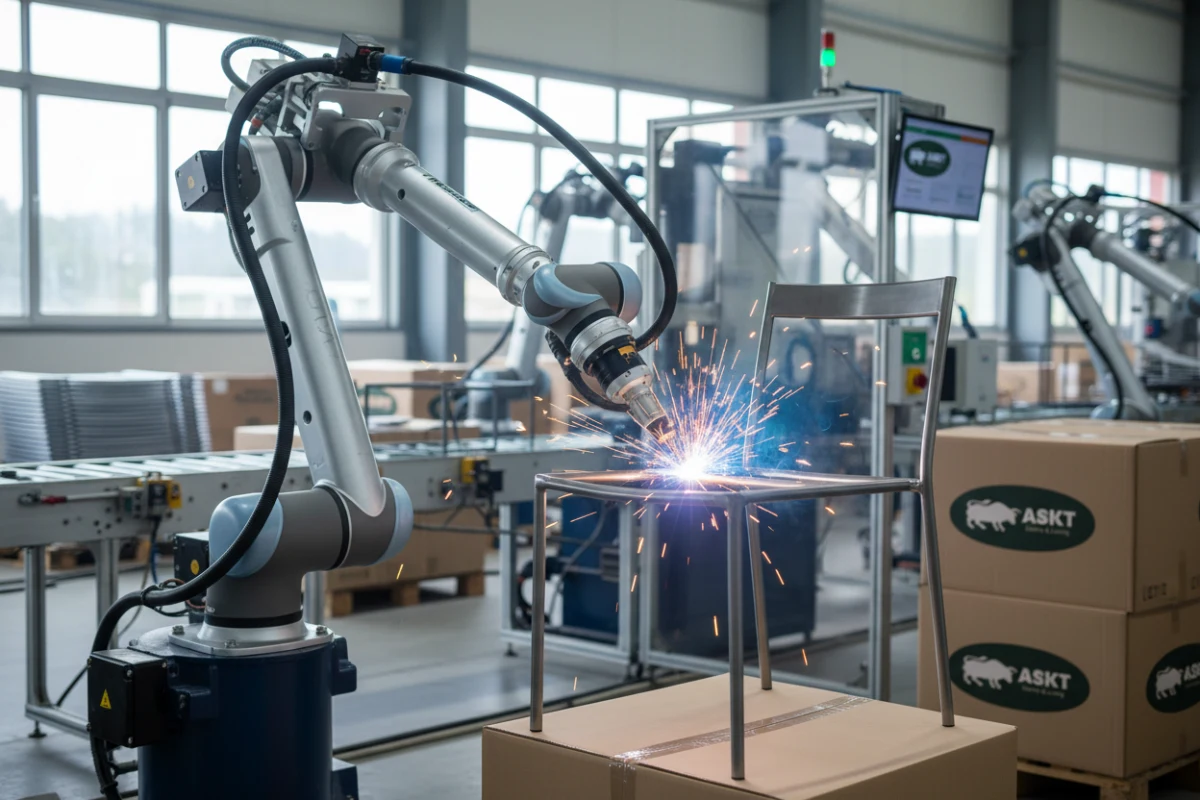
- Automatic Welding Robotic Arms: Ensure perfect, clean metal joint welds on frames, eliminating weak points that could cause cracking or bending under load-bearing stress.
- Batch Fabric Cutting Machines: Utilize computerized digital patterns to cut upholstery fabrics with millimeter-level precision, preventing loose or misaligned covers.
- Automated Wood Punching and Assembly Machines: Install structural components and pre-drilled holes in wooden seat boards with uniform pressure, avoiding splits and loose joints.
Material Science: High-Performance Fabric Features
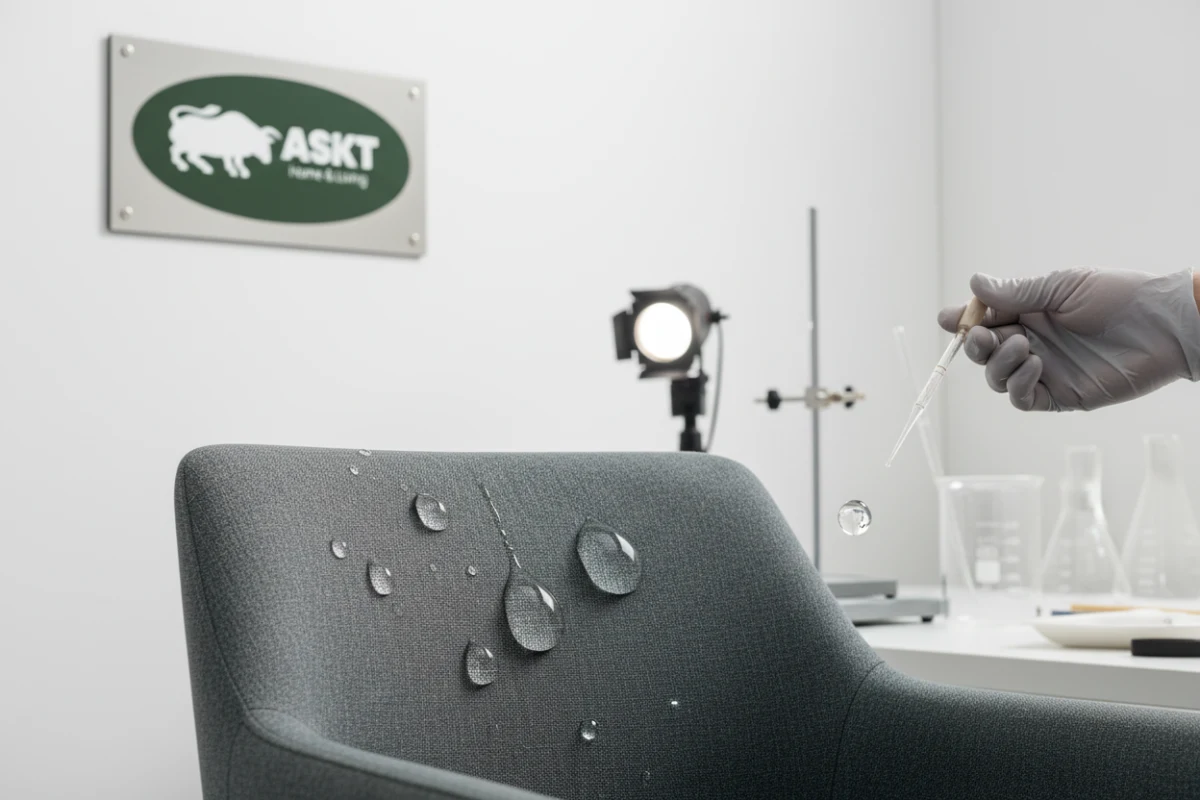
Surface fabrics must withstand years of friction, spills, and scratches without losing their visual appeal. This has led to the development of highly engineered materials like the exclusive ASKT-Tex fabric, which represents a major breakthrough in material engineering. This material balances a luxury touch with commercial-grade durability:
| Technical Feature | Engineering Detail | B2B Commercial Value |
|---|---|---|
| Hydrophobic Treatment | Molecular-level liquid barrier | Spills (coffee, wine, water) bead up on the surface, making them easy to wipe away. Highly stain-resistant. |
| Micro-Ventilation Weave | Breathable structure | Prevents sweat and heat buildup, ensuring an extremely comfortable sitting experience in all seasons. |
| High Abrasion Resistance | Tested to withstand massive friction cycles | Resists scratching from pets and high-frequency wear, making it suitable for both commercial contracts and busy households. |
| High Colour Fastness | Resistant to light and friction fading | Keeps the fabric looking new and vibrant, eliminating customer returns due to premature fading. |
| Formaldehyde-Free | Formulated without toxic additives | Ensures absolute safety for families, pets, and children, complying with strict chemical safety rules. |
By combining these material innovations with robust powder-coated steel or metal frames, reliable suppliers create products that meet or exceed the performance requirements of European testing standards.
What Role Does Design Exclusivity Play in Dining Furniture Sourcing for European Wholesalers?
In the competitive European marketplace, particularly within highly demanding regions like Germany, the Netherlands, the UK, and Switzerland, offering generic products leads to a rapid race to the bottom. Successful dining furniture sourcing for European wholesalers requires a collaborative design process that delivers unique, localized, and legally protected furniture collections.
Localized, Data-Driven Design
A reliable partner does not design products in a vacuum. Instead, product development must be grounded in comprehensive, localized market research. For example, progressive manufacturers base their design aesthetics on detailed surveys of European households, studying actual dining room layouts, table-and-chair color matching trends, common flooring colors, and home traffic flow patterns.
This deep understanding of localized lifestyles allows design teams to create upholstered chairs and tables with precise ergonomics, tailored seat heights, and frame designs that match contemporary European interiors. Whether it is a sleek minimalist frame for a modern apartment in Amsterdam or an elegant, fabric-upholstered armchair with a smooth auto-return swivel mechanism for a spacious dining room in Munich, designs are tailored to actual market demands.
Absolute Design Exclusivity
Once a wholesaler or retail chain invests time and resources into developing a product line, they must be protected from copycats. Reliable suppliers offer formal design exclusivity agreements for specific countries or regions. This means the manufacturer will not sell the identical design to any other buyer within your protected territory. This exclusivity secures your retail pricing power, prevents direct competitor replication, and fosters a long-term commercial partnership built on mutual trust and shared growth.
How Can Contemporary Dining Table OEM ODM Suppliers Resolve MOQ and Inventory Pressures?
High minimum order quantities (MOQs) and rigid container loading requirements are a major pain point for purchasing managers. Traditional manufacturing setups require large production runs for every single configuration, which forces buyers to order massive quantities of a single chair style and fabric colour to fill a shipping container.
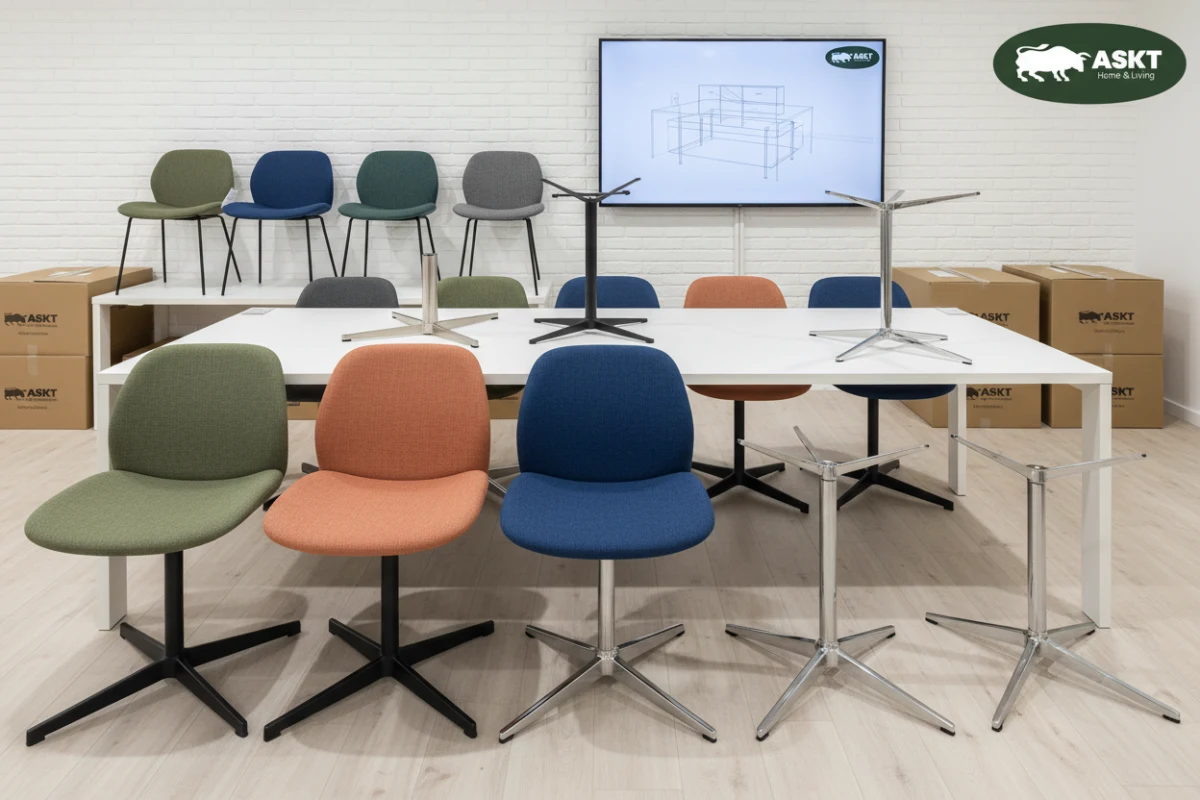
Experienced contemporary dining table OEM ODM and chair suppliers solve this issue through structural and logical modularity, most notably demonstrated by advanced modular systems like KINEXA.
The KINEXA Modular Sourcing Strategy
The KINEXA system is designed to provide maximum flexibility with minimal inventory risk. By standardizing the connection interfaces between chair seat shells and metal bases, a retail buyer can mix and match different elements without requiring the factory to launch separate, high-volume production runs.
- A Standardized Pool of Components: The factory maintains a standard selection of upholstered seat shells (varying in fabric type, color, and stitching) and a set of universal metal bases (including four-legged frames, sled bases, and auto-return swivel mechanisms).
- Interchangeable Configurations: Buyers can purchase a single container containing multiple seat shells and different bases. The parts are shipped in flat-packed Knock-Down (KD) structures and easily assembled at the local warehouse or by the end consumer.
- Lower Sourcing Risks: This modularity dramatically reduces the effective MOQ per stock keeping unit (SKU). It allows retail product managers to test new colors and designs in smaller batches, evaluate real consumer reaction, and scale up orders only after seeing positive market results.
To see the direct comparison, consider how modular sourcing restructures procurement metrics:
| Sourcing Metric | Traditional Sourcing Model | KINEXA Modular Sourcing Model |
|---|---|---|
| Effective MOQ per SKU | High (often 100+ units of the exact same color/frame combo) | Low (mix-and-match seat shells and universal bases in a single container) |
| Inventory Risk | High (stuck with large volumes of slow-moving specific colors) | Low (bases can be combined with popular selling seat shells dynamically) |
| Lead Time for Reorders | Long (complete production of the entire chair assembly is required) | Short (standardized components can be quickly packaged and dispatched) |
| Container Space Optimization | Low (bulky, fully assembled or semi-assembled units waste shipping space) | High (ultra-compact, flat-packed KD designs maximize container volume) |
How Does Digital Sourcing Transparency Reduce Cross-Border Communication Risks?
When working with a manufacturer located thousands of miles away, miscommunications regarding specifications, material selection, or product compliance can lead to costly manufacturing errors and project delays. Reliable B2B partners eliminate this friction by utilizing cutting-edge digital sourcing tools.
Interactive digital platforms, such as conversational B2B AI assistants like the Sunbin KI platform, transform how category managers and product developers collaborate with factories. These digital systems act as expert cross-border bridges:
- Structured "Reverse Questioning": Instead of relying on vague design sketches, the digital assistant uses structured, proactive questioning to clarify every exact product specification—including precise frame finishes, dimensions, foam specifications, fabric abrasion thresholds, stitching types, and packaging protections.
- Instant Specification Alignment: By documenting every detail in a single, transparent digital specification sheet, the system eliminates language barriers and prevents critical information loss between purchasing teams and the factory floor.
- Real-Time Production Tracking: Digital integration allows buyers to monitor quality control checkpoints, structural testing progress, and container dispatch schedules with absolute clarity.
This commitment to absolute operational transparency ensures that the physical product delivered to your warehouse is identical to the approved golden sample, ensuring zero surprises upon arrival.
Summary: How to Evaluate Your Next Dining Furniture Supply Partner
When choosing a supplier for your upcoming collections, use this quick checklist to separate standard exporters from truly reliable, long-term B2B partners:
- Certified Compliance: Does the factory have a current BSCI social audit? Are the fabrics OEKO-TEX Standard 100 certified, and are the glues formaldehyde-free?
- Structural Testing: Does the manufacturer conduct in-house load-bearing, stability, and product testing conforming to rigorous European standards?
- Advanced Material Engineering: Do they offer proprietary high-durability textiles, such as the stain-resistant, breathable ASKT-Tex functional fabric?
- Supply Chain Flexibility: Can they offer modular production models (like KINEXA) to minimize your inventory risk and lower MOQ pressures?
- Design Exclusivity: Are they willing to offer formal territorial design protection to safeguard your retail margins?
- Digital Transparency: Do they utilize transparent communication systems and digital tracking platforms (such as the Sunbin KI assistant) to prevent specifications errors?
If you are evaluating dining chair or dining table suppliers for the European market, ASKT can support you with customized fabric development, structural metal engineering, strict compliance testing, and highly optimized packaging. For European wholesalers, retailers, and contract project buyers looking for reliable dining furniture supply from China, ASKT can help turn your product ideas into commercially successful, long-term collections.