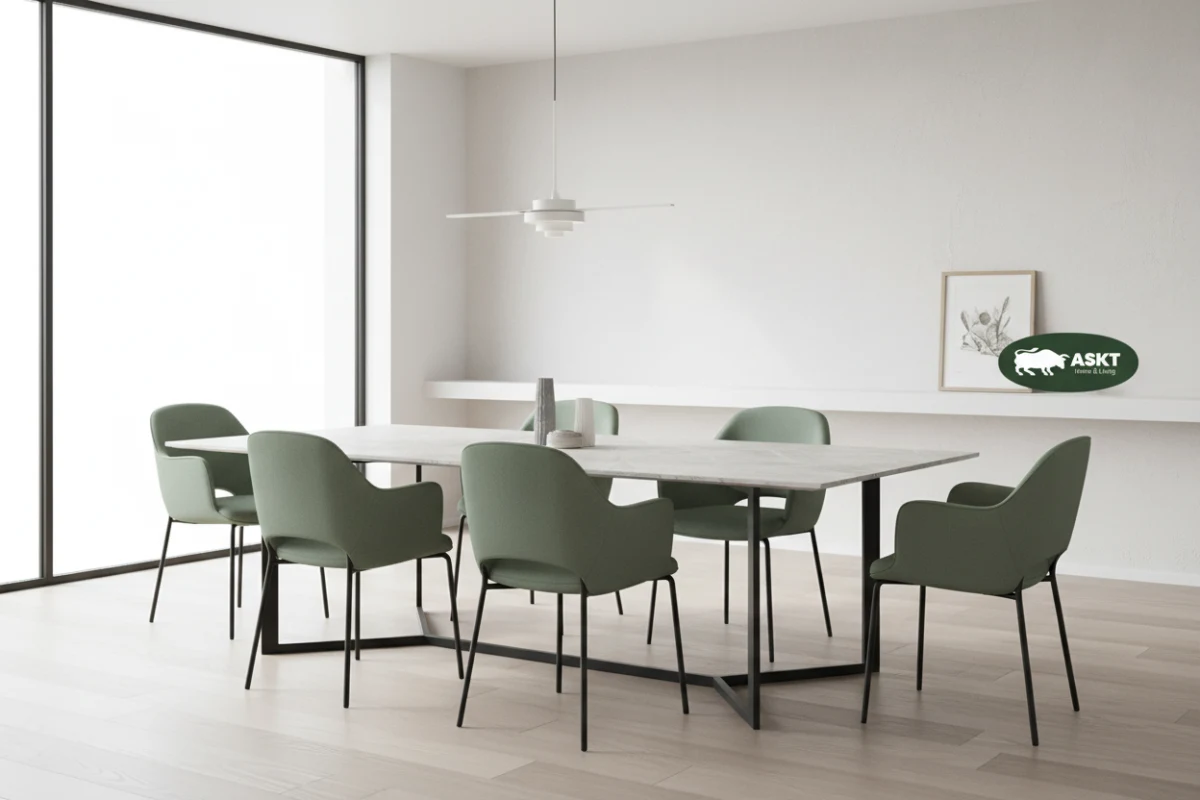
A B2B Buyer’s Guide to Sintered Stone Dining Table OEM Projects
For European furniture importers, e-commerce brands, and purchasing groups, developing a premium dining furniture collection is a complex balance between striking design and robust engineering. In recent years, sintered stone has emerged as a dominant material choice in markets like Germany, the Netherlands, and the United Kingdom. Its scratch-proof, stain-resistant, and heat-proof properties appeal directly to modern consumers who value longevity and minimalist design. However, converting these aesthetic benefits into a commercial success requires precise technical planning during product development.
When executing a sintered stone dining table OEM project, professional buyers cannot simply rely on attractive catalogue pictures. Managing supply chain risks requires a deep dive into material science, mechanical support structures, and robust logistics packaging. Miscalculating tabletop thickness or failing to specify proper frame support leads to high deflection rates, point-load fractures, and costly retail returns. This guide explores the exact technical steps needed to design, secure, and source a structurally sound custom sintered stone dining table collection that protects your retail margins and elevates your brand reputation.
Tabletop Thickness: Sintered Stone Dining Table OEM Material Selections
When starting a new sintered stone dining table OEM project, the first decisions revolve around the physical composition of the tabletop. Sintered stone is produced by subjecting natural minerals to extreme pressure (often exceeding 15,000 tonnes) and intense heat (above 1200°C). This process of sinterisation creates an exceptionally dense surface, but the material’s structural behaviour is dictated by how it is backed and its ultimate thickness.
As an experienced sintered stone table manufacturer, we know that professional buyers typically choose between three main construction methods:
1. Solid 12mm or 15mm Sintered Stone
Solid, un-laminated sintered stone slabs represent the premium tier of the market. They offer a heavy, tactile feel that mimics natural marble. These slabs are extremely sturdy but carry significant weight and cost. For a solid 12mm tabletop, the material cost is higher, and the shipping weight increases dramatically, which limits container load optimisation and increases domestic shipping surcharges. Therefore, this option is usually reserved for luxury, high-end bespoke collections where the end consumer is willing to pay a premium.
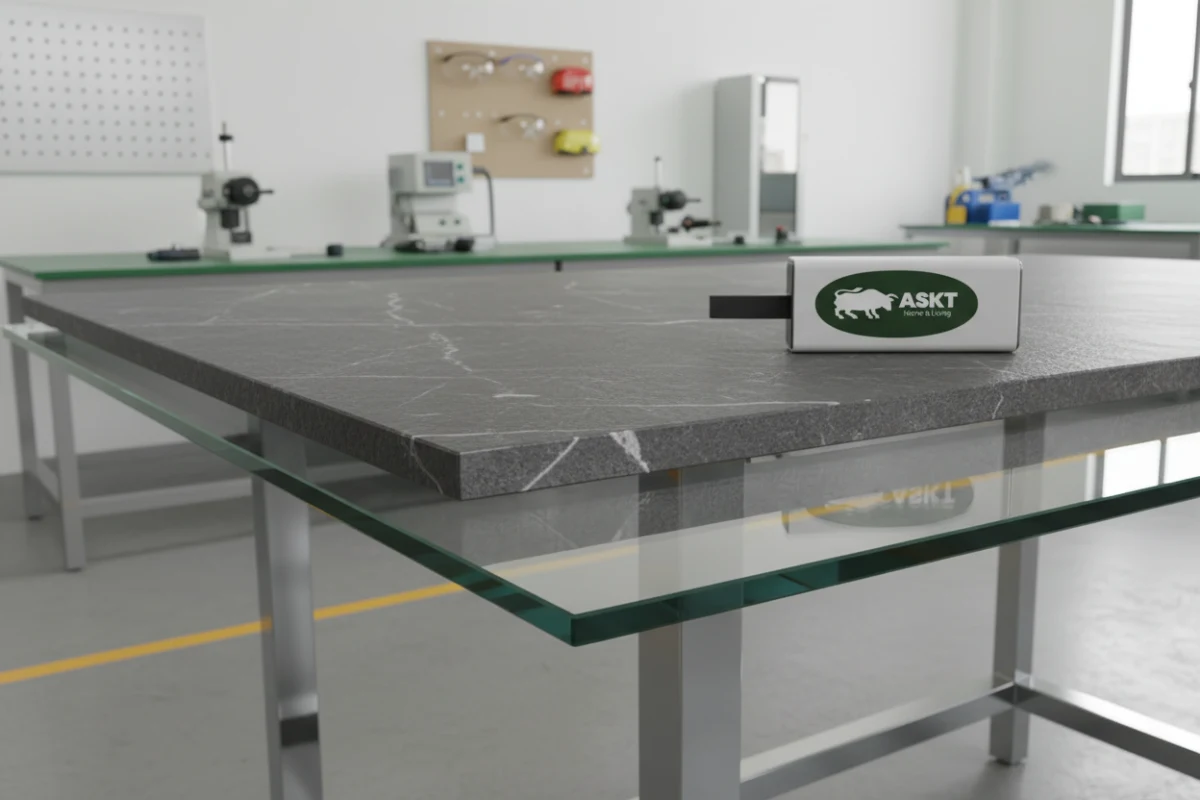
2. Sintered Stone Laminated on Tempered Glass (3mm/6mm + 8mm/10mm)
To optimise cost and freight efficiency, a reliable sintered stone table manufacturer will often suggest laminating a thinner stone sheet on a tempered glass base. Typically, a 3mm or 6mm sintered stone sheet is bonded with premium industrial adhesive to an 8mm or 10mm tempered glass sheet. The glass acts as a shock-absorber and structural support, reducing the overall weight while maintaining high structural integrity. This combination is highly resilient against sudden impacts and is the standard for high-volume retail. For a balanced sintered stone dining table OEM configuration, this is the most commercially viable selection.
3. Sintered Stone Laminated on Medium-Density Fibreboard (MDF)
This method bonds a 3mm or 6mm sintered stone slab to a 15mm to 18mm painted or veneered MDF board. While highly cost-effective, MDF backing must be treated to prevent moisture absorption and warping. MDF also adds thickness to the table edge, which alters the contemporary slim profile that many European buyers prefer.
| Specification | Solid Sintered Stone (12mm) | Sintered Stone on Glass (3mm + 10mm) | Sintered Stone on MDF (6mm + 18mm) |
|---|---|---|---|
| Aesthetic Profile | Sleek, ultra-modern, raw edge | Modern, double-layered edge | Thick profile, modern-traditional |
| Weight Factor | Extremely Heavy | Balanced (Optimised freight) | Heavy but manageable |
| Impact Resistance | Medium-High (Risk of edge chipping) | High (Glass absorbs point impact) | High (MDF provides solid backing) |
| Cost Bracket | Premium / High-End | Mid-to-High Market | Budget / Entry-to-Mid Market |
| Moisture Risk | Zero (Non-porous) | Zero | Moderate (Requires edge sealing) |
Selecting the right backing is a strategic trade-off for any sintered stone dining table OEM project. For high-end design boutiques in Germany or Switzerland, a solid 12mm slab or a 6mm stone laminated on ultra-clear tempered glass is preferred to ensure a flawless edge-profile and a luxury tactile experience. Conversely, high-volume e-commerce brands looking for price-point optimisation often specify a 3mm stone laminated on tempered glass to keep shipping costs manageable.
Structural Under-Support: Prevent Deflection and Point-Load Cracking
Sintered stone has incredible tensile strength under direct vertical pressure, but it lacks structural elasticity. If a table frame allows the centre of the tabletop to flex—a phenomenon known as deflection—the stone will eventually crack when subjected to a sudden point load (such as a heavy object being placed in the middle or a person leaning on the table edge). Therefore, designing the dining table OEM specifications requires careful attention to the under-support frame.
A common mistake among buyers is purchasing tables where the stone top is supported only by the outer corners of a metal frame. To build a commercial-grade table, a professional B2B supply partner will implement one of two support systems:
- Full-Perimeter Under-Boards: A solid MDF or plywood panel is mounted directly to the frame beneath the stone top. The stone is bonded to this wood support using non-corrosive silicone or polyurethane adhesives. This design ensures that every square centimetre of the stone is backed by a solid material, eliminating structural deflection and deadening the "hollow" sound that occurs when dinnerware hits an unbacked stone top.
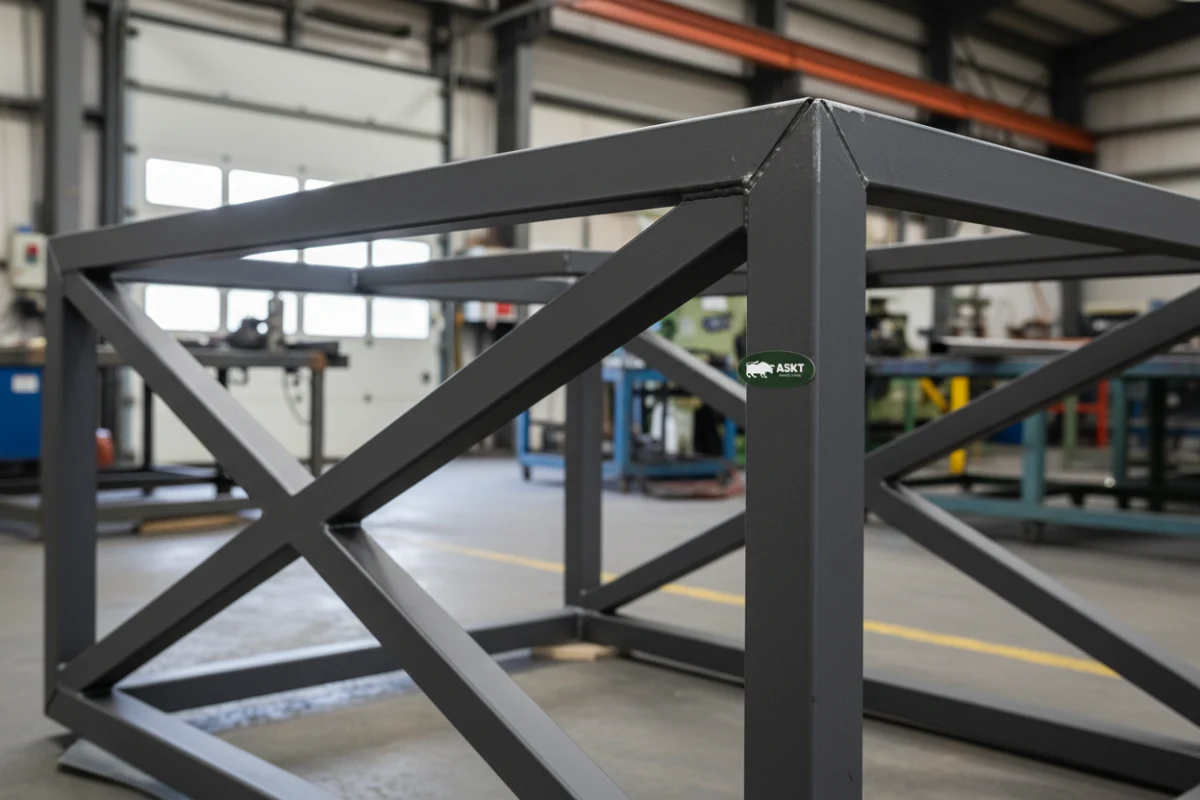
- Cross-Braced Metal Support Systems: For designs requiring an open or floating look, the table frame must feature welded steel cross-braces spaced no more than 30 to 40 centimetres apart. These steel tubes must be finished with electrostatic powder coating to prevent corrosion. Additionally, high-durability rubber dampeners must be placed along the braces to distribute loads evenly, which is crucial for a custom sintered stone dining table intended for long-term use.
Our extensive research in metal frame engineering indicates that the choice of metal frame wall thickness is critical. While a 1.0mm wall thickness is common in budget residential furniture, we mandate a minimum of 1.2mm to 1.5mm high-grade steel for our European commercial and residential clients. This ensures the table can withstand severe load-bearing tests without bending or shaking, satisfying safety requirements such as the European standard EN 12521 for strength, durability, and safety in domestic dining tables. This structural integrity is vital for long-term commercial success in highly regulated European markets and must be specified in the early stages of a sintered stone dining table OEM development process.
Aligning Dining Table OEM Specifications with European Retail Segments
To ensure your new collection succeeds, your product specifications must align with the target pricing and quality expectations of your regional market. Sourcing directors must define their target retail pricing brackets and work backward to draft their ideal sintered stone dining table OEM technical sheet.
In the European market, we generally observe three distinct retail segments for sintered stone tables:
- The Entry-to-Mid Segment (E-commerce & High-Volume Retail): Driven by competitive online pricing, buyers in this tier prioritise low shipping weights and flat-pack capability. The ideal specification here is a 3mm sintered stone surface laminated to an 8mm or 10mm tempered glass sheet, supported by a knock-down (KD) steel frame with 1.2mm wall thickness. This construction keeps the retail package under standard parcel delivery weight limits, minimising domestic shipping costs.
- The Mid-to-High Segment (Established Retail Chains & Wholesalers): Buyers in this category look for solid quality indicators, such as silent-swivel extending mechanisms or highly synchronised grain matching. They often specify a 6mm stone laminated on a 10mm glass base with a heavier, fully welded metal chassis. These collections are designed for two-person delivery networks and are heavily tested for daily high-frequency use.
- The Premium Contract & Designer Segment (Bespoke Projects & Hospitality): This segment demands solid 12mm or 15mm imported sintered stone slabs, featuring seamless mitered edges and custom solid-wood or architectural powder-coated metal legs. Deflection tolerances must be near zero, and fabrics or surrounding finishes must align with commercial grade performance, such as fire-retardant certifications.
Understanding these market tiers allows B2B buyers to make smart trade-offs. For example, opting for a KD structure instead of a fully welded frame can reduce container space usage by up to 40%, directly lowering your cost per unit and allowing you to invest those savings into premium surface finishes or advanced table extension mechanisms. When collaborating with a trusted B2B dining table supplier China, clarifying these commercial goals during the initial R&D phase prevents costly redesign loops and ensures the dining table OEM specifications are perfectly balanced.
Sourcing Security: Packaging and Logistics Specs to Prevent Transit Breakage
Even the most beautifully engineered dining table is a commercial liability if it arrives at your customer's warehouse in pieces. Sintered stone’s chief vulnerability is its susceptibility to edge-chipping and corner impacts during maritime transit and overland handling. Therefore, selecting a reliable B2B dining table supplier China that understands transit dynamics is a critical business safeguard.
To eliminate the risk of shipping damage, strict packaging and logistics protocols must be enforced for long-distance export to Europe. When drafting your procurement contracts for a sintered stone dining table OEM order, your quality control agreement should mandate the following protective measures:
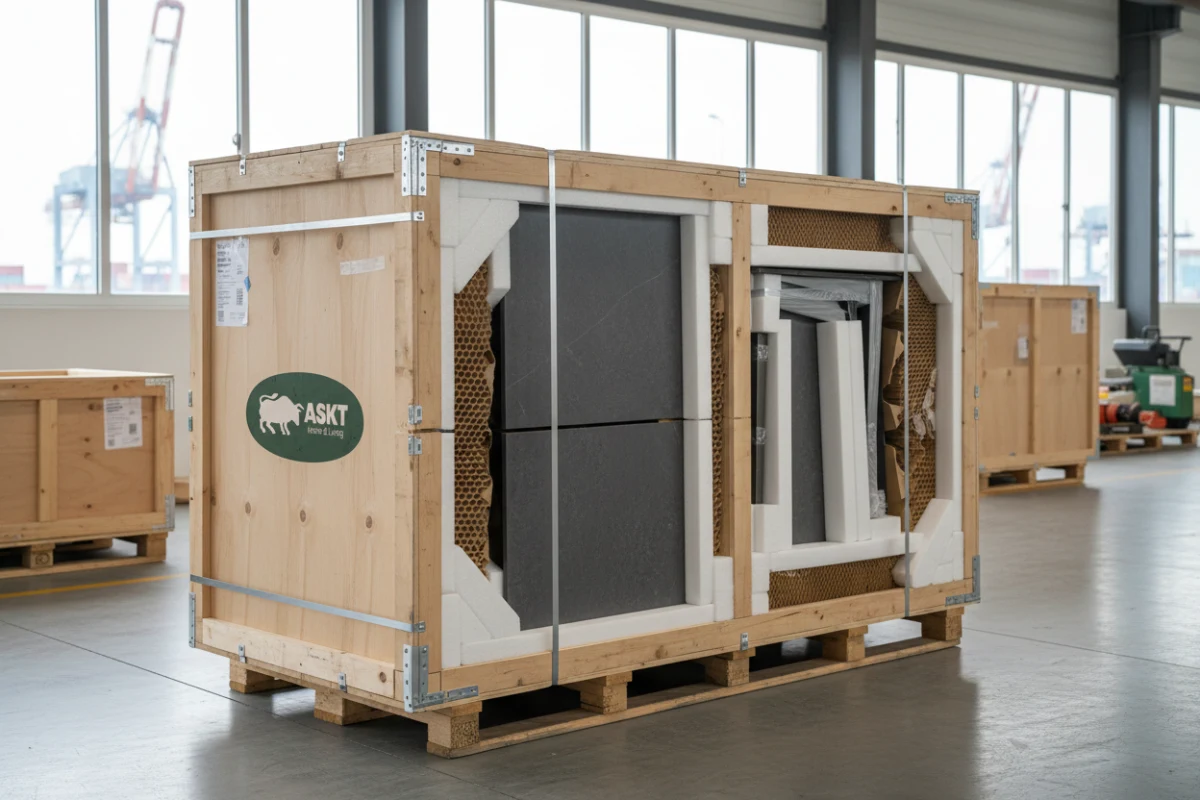
- Five-Layer Double-Corrugated Outer Cartons: Standard packaging cartons are insufficient for heavy stone tables. Outer cartons must have a minimum edge-crush test (ECT) rating of 45 lbs/inch or higher to withstand stacking pressure inside shipping containers.
- High-Density Polyethylene (EPE) Foam Corner Guards: Every corner and edge of the sintered stone top must be encased in custom-molded, high-density EPE foam. Sintered stone is most fragile at its sharpest points; protecting the corners prevents shipping-related micro-fractures.
- Integrated Honeycomb Board Protective Panels: Placing heavy paper honeycomb panels between the cardboard box and the stone top provides a puncture-resistant barrier. Honeycomb paper is highly effective at absorbing point impacts if a box is dropped or bumped by a forklift. It also aligns perfectly with modern European environmental and ESG expectations by reducing plastic waste compared to expanded polystyrene (EPS) foam.
- Flat-Pack and Container Load Optimisation: Tables designed with a knock-down (KD) structure allow the legs and the tabletop to be flat-packed into separate cartons. This not only minimises shipping box volume but also allows loaders to position the heavy stone tops vertically or flat on reinforced wooden pallets, maximising container space utilisation and reducing per-unit freight costs.
To verify the effectiveness of these packaging systems, we recommend that all new custom sintered stone dining table designs undergo rigorous drop-testing, such as the ISTA 1A or 3A standards, before mass production begins. Conducting a standardised drop test at the factory level ensures that packaging performance is based on empirical data rather than simple guesswork, which is a hallmark of a professional sintered stone table manufacturer.
Manufacturing QC and Compliance Benchmarks for Sintered Stone Production
Partnering with a reliable sintered stone table manufacturer requires looking past standard sales presentations and evaluating real manufacturing discipline, testing practices, and supply chain transparency. Sintered stone tables cannot be built with standard workshop tools; they require high-end industrial capabilities and a commitment to quality control.
When auditing a prospective B2B dining table supplier China, sourcing directors should evaluate four critical operational benchmarks:
- Raw Material Sourcing Consistency: Sintered stone slabs can vary widely in density, print definition, and backing quality. A reliable manufacturer maintains strong partnerships with top-tier slab brands to ensure that replacement parts or future production batches match original sample colours and grain patterns exactly.
- Factory Compliance and Social Responsibility: European retail groups and institutional purchasers require factories to comply with strict environmental and human rights standards. Ensure your manufacturing partner has passed third-party audits such as the Business Social Compliance Initiative (BSCI). At ASKT, our factories are fully BSCI audited, and we place a premium on worker safety, providing protective equipment like metal cut-resistant gloves and specialised ventilation for gluing areas.
- Advanced Cutting and Polishing Equipment: Sintered stone requires highly precise water-jet cutting and double-edge polishing machines to achieve crisp mitered cuts and smooth, chip-free chamfered edges. Low-end suppliers using manual cutting tools often produce tables with micro-fissures along the edges that can easily crack under load. Ensure these are factored into your dining table OEM specifications.
- Digital Integration and Supply Chain Transparency: B2B purchasing managers require clear, prompt, and accurate communication. To streamline project development and eliminate communication gaps during your sintered stone dining table OEM project, we utilise advanced digital tools like our Sunbin KI platform. This system acts as an expert digital procurement partner, helping buyers specify product features, manage minimum order quantities (MOQs), and track production and testing phases in real-time.
Conclusion: Streamlining Your Sintered Stone Sourcing Journey with ASKT
For more than 20 years, ASKT has served as a trusted B2B manufacturing and supply chain partner for prominent European wholesalers, importers, and retail chains. Combining European design sensibilities with efficient, highly managed Chinese manufacturing, we help our clients minimise sourcing risks and build highly profitable indoor furniture collections.
We specialise in high-durability dining chairs, bar stools, and custom-engineered dining tables. Our manufacturing philosophy is rooted in absolute transparency and a strict zero-defect policy, particularly for complex products like a custom sintered stone dining table. By mastering the delicate balance between structural frames, optimised lamination thicknesses, and heavy-duty, eco-friendly transit packaging, we ensure your furniture collections land in Europe safely, look spectacular, and perform reliably for years to come.
Are you looking to expand your contemporary dining room portfolio or launch a new sintered stone dining table OEM programme with a reliable partner? Request Sintered Stone Table Spec today to explore our engineering configurations, customised frame designs, and container loading solutions tailored for the European market.