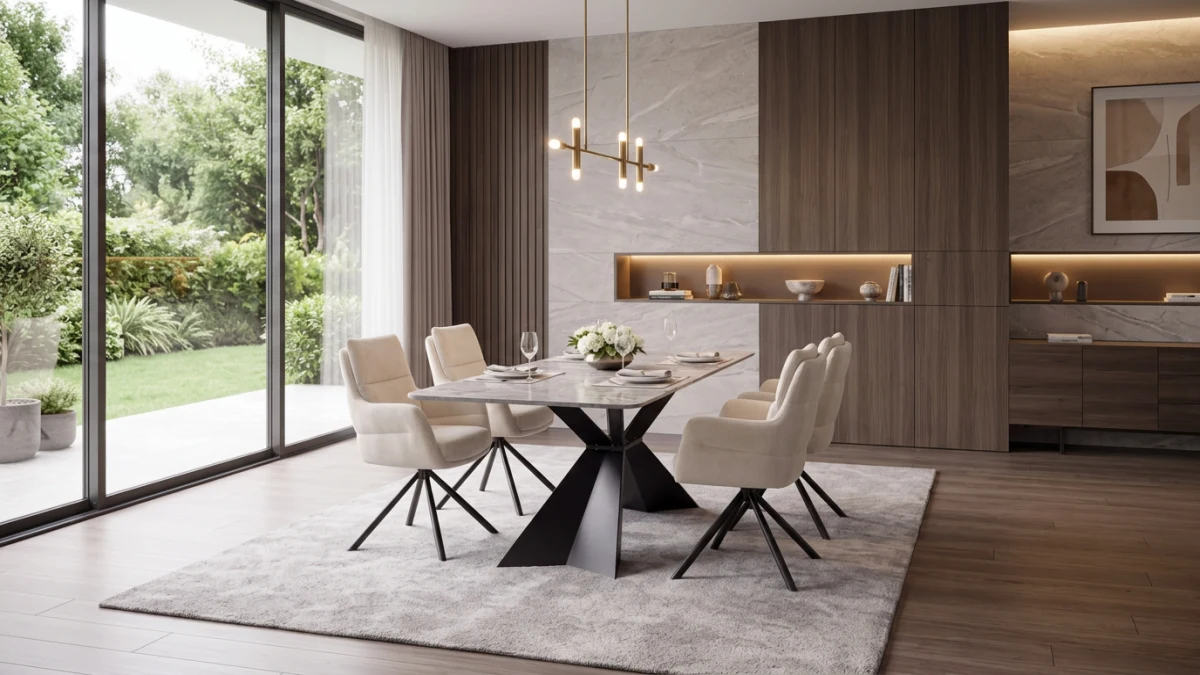
Sintered Stone Tabletop Thickness: 6mm vs 12mm Sourcing Guide for B2B Furniture Buyers
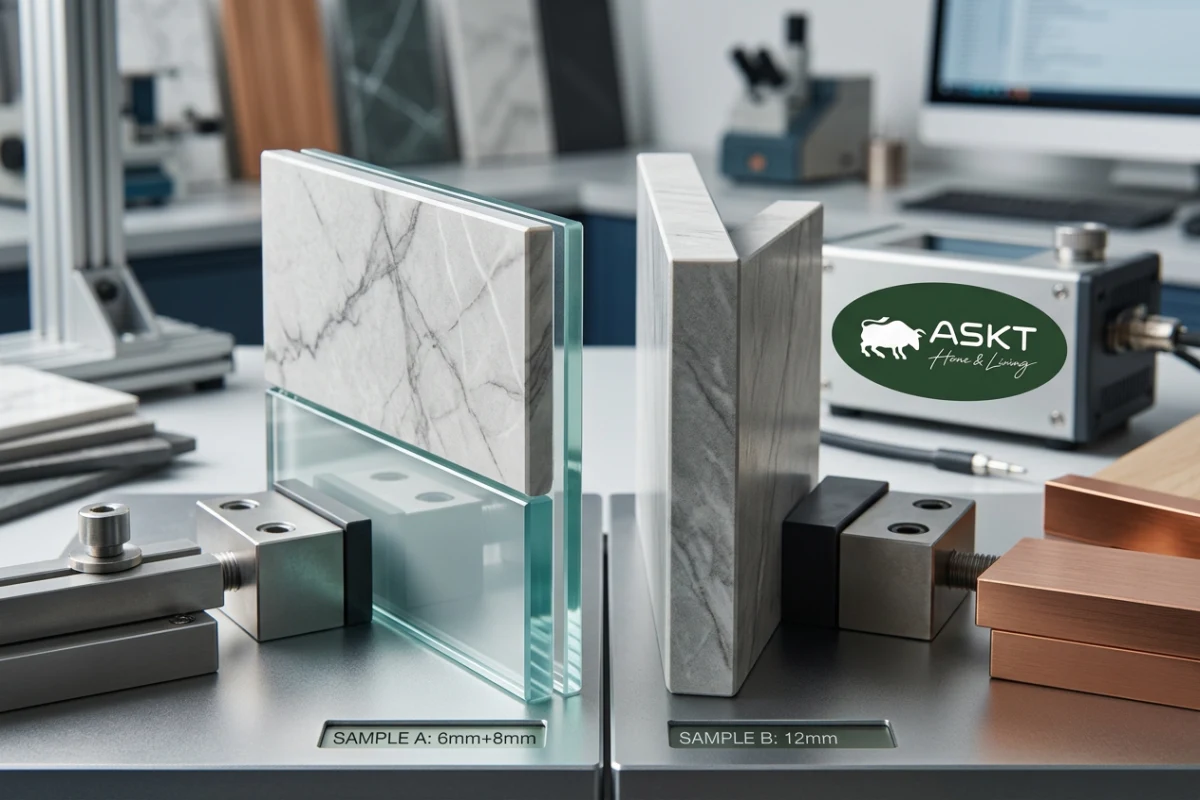
When comparing sintered stone tabletop thickness 6mm vs 12mm, the primary distinction is structural composition and engineering support. A 12mm solid sintered stone dining table provides a monolithic, self-supporting stone slab suitable for premium retail collections. In contrast, a composite sintered stone table top pairs 6mm sintered stone with a tempered glass or engineered sub-layer, delivering identical surface resistance against scratches, heat, and stains while offering enhanced impact dampening and reduced weight for efficient container shipping.
What Is the Technical Difference Between 6mm Composite and 12mm Solid Sintered Stone Tabletops?
Understanding sintered stone tabletop thickness 6mm vs 12mm requires examining how these surfaces handle structural loads, material mass, and everyday dining use.
A 12mm solid sintered stone dining table is manufactured as a single, homogenous ceramic slab. Because of its thickness and material density, a 12mm slab possesses standalone flexural rigidity. This enables it to span dining table bases without requiring an extensive solid under-board, creating an authentic, solid stone edge with refined bevelled or chamfered detailing. European high-end retail consumers and interior designers often favour this monolithic look because it closely resembles natural marble while eliminating porosity and maintenance issues.
However, a 6mm sintered stone slab used without reinforcement lacks the structural mass to bridge typical dining table spans safely. Under concentrated loads or sudden impacts, an unbacked 6mm slab is vulnerable to flexural stress cracking. For this reason, modern sintered stone table manufacturing combines a 6mm slab with an engineered substrate to create a composite sintered stone table top. The standard configuration pairs the 6mm surface face with an 8mm or 10mm tempered glass backing using industrial laminating resin adhesives. The resulting multi-layer panel achieves the necessary structural stability while preserving the slender visual profile popular in contemporary European furniture design.
| Engineering Attribute | 6mm Composite Tabletop System | 12mm Solid Sintered Stone Slab |
|---|---|---|
| Structural Profile | Multi-layer composite (e.g., 6mm stone + glass backer) | Single monolithic solid ceramic slab |
| Surface Performance | Scratch, heat, stain, and water resistant | Scratch, heat, stain, and water resistant |
| Edge Appearance | Dual-layer composite edge or slim bevelled line | Monolithic solid edge profile |
| Impact Dissipation | High (cushioned by adhesive interlayer and substrate) | Moderate (rigid mineral body, sensitive to perimeter shocks) |
| Primary Production Method | Precision waterjet cutting and cleanroom lamination | Heavy diamond saw cutting and CNC edge profiling |
| Recommended Base Integration | Flat mounting plates or structural perimeter frame | Heavy-duty perimeter rails and continuous support beams |
How Do 6mm Composite and 12mm Solid Tabletops Compare in Weight, Packaging, and Freight Costs?
For European furniture wholesalers, retail chains, and contract importers, transport economics and container payload capacities are critical factors when developing product collections. International shipping costs and domestic road transport limits make unit weight a direct driver of landed cost.
Sintered stone is a dense mineral material. When calculating product freight, buyers must evaluate the combined weight of the stone surface, its substructure, and the protective export packaging:
- 6mm Sintered Stone Slab Mass: A bare 6mm sintered stone sheet weighs approximately 14 to 15 kg per square metre. When laminated to an 8mm tempered glass backing, the total composite panel weighs approximately 34 to 36 kg per square metre.
- 12mm Solid Sintered Stone Mass: A monolithic 12mm solid stone slab weighs approximately 29 to 31 kg per square metre without any backing material.
- Total Assembled Table System Weight: Although a bare 12mm stone top appears lighter than a stone-and-glass sandwich panel, a 12mm solid stone dining table requires heavier internal steel chassis reinforcement and crossbeams to prevent span deflection. As a result, the total boxed product weight is often higher for solid stone models.
Packaging design and shipping safety also vary between the two specifications. In knock-down (KD) furniture logistics, container loading efficiency and freight damage rates directly affect profitability:
- Transit Impact Protection: A composite sintered stone table top benefits from composite lamination. Much like laminated safety glass, the resin interlayer holds the panel together under severe transit stress, reducing catastrophic breakage. A 12mm monolithic slab, while tough, behaves as a rigid ceramic plate and requires heavy wooden frame crating and dense corner bumpers to prevent corner fractures during maritime transit.
- Container Loading Optimization: Because composite tops are resilient and work seamlessly with modular KD steel legs, manufacturers can pack them into space-efficient flat cartons. This allows European buyers to load more complete table units into a 40-foot High Cube (40HQ) container compared to solid stone designs that demand heavy crating.
- Handling in E-Commerce and Final Delivery: E-commerce furniture brands and two-person delivery teams find composite tops easier to transport through narrow European staircases and urban flats, reducing shipping damage claims and customer return rates.
What Subframe and Chassis Engineering Is Required for 6mm vs 12mm Tabletops?
A frequent quality issue in imported dining tables is pairing rigid stone tops with inadequate metal frames. Sintered stone has minimal elastic flexibility; it does not flex like solid wood or MDF. Therefore, the supporting subframe must provide a stable, flat plane that prevents bending stresses.
Frame Support for 6mm Composite Systems
Because a composite sintered stone table top features a flat tempered glass or engineered substrate base, it provides an even mounting plane. Key chassis engineering practices include:
- Direct Plate and Pad Mounting: The smooth underside substrate can be fixed to powder-coated steel crossbeams using specialized elastic adhesive pads or mechanical brackets, distributing clamping forces evenly across the surface.
- Cantilever and Overhang Tolerance: Composite panels handle moderate overhangs beyond the table base effectively, as downward pressure is absorbed across both the stone face and the supportive glass or board layer.
- Integration with Extension Mechanisms: In extendable dining tables, 6mm composite panels are ideal. Their balanced weight reduces strain on internal slide tracks, synchronised gears, and butterfly folding mechanisms, ensuring reliable daily operation.
Frame Support for 12mm Solid Sintered Stone Dining Tables
A 12mm solid sintered stone dining table requires rigid, uninterrupted structural support underneath the slab to eliminate planar deflection:
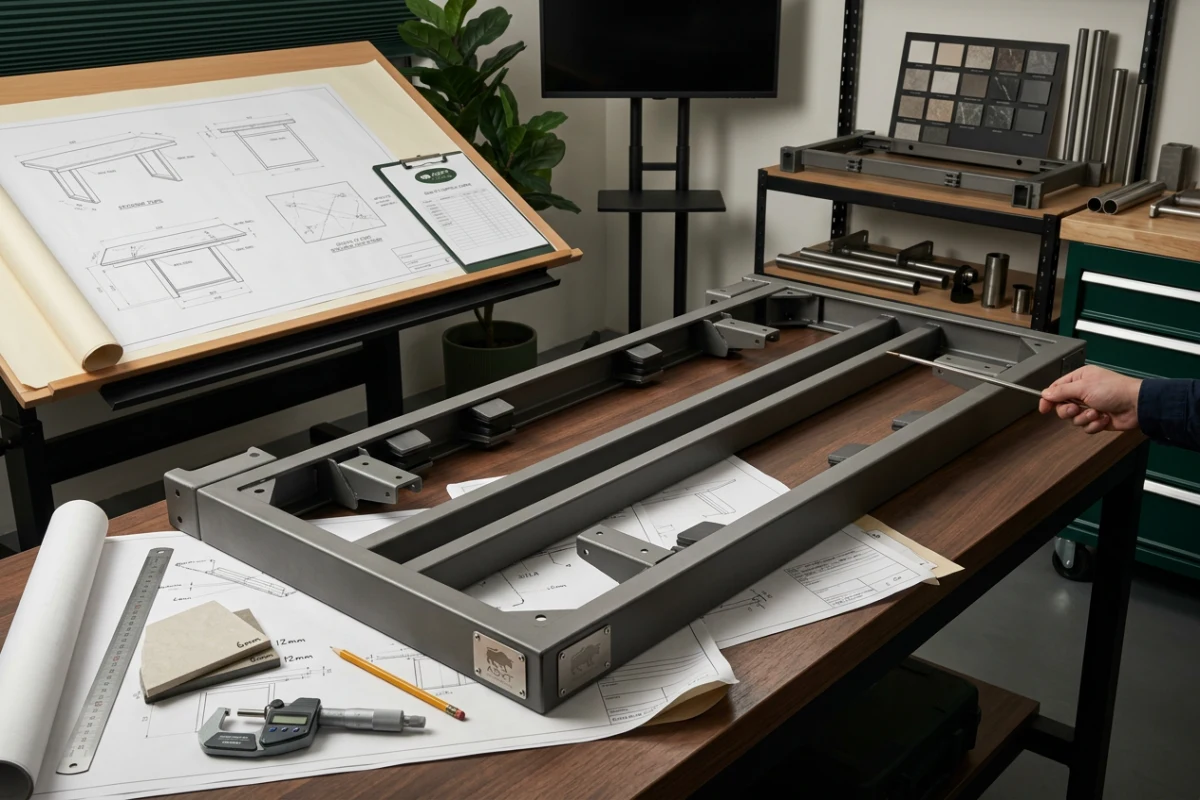
- Continuous Perimeter Subframes: Metal table legs cannot be screwed directly into pre-drilled holes in a 12mm ceramic slab without risking stress concentration cracks. A dedicated powder-coated steel or aluminium subframe must bridge the legs and cradle the stone top.
- Deflection Control: The supporting steel chassis must maintain high structural stiffness across the full length of the table. If the subframe flexes when heavy downward weight is applied to the centre, that bending force transfers into the stone, potentially causing fractures.
- Thermal Expansion Isolation: Steel frames and sintered stone expand and contract at different rates during seasonal indoor temperature changes. Factory assembly must incorporate elastomeric isolation gaskets and slotted mounting channels to allow subtle microscopic movement without stressing the stone.
How Do 6mm Composite and 12mm Solid Surfaces Perform in European Durability and EN Testing?
European commercial dining and domestic furniture collections must meet stringent mechanical safety and durability standards, including European standards EN 12520 for domestic dining furniture and EN 12521 for commercial or contract use. Both 6mm and 12mm tabletops exhibit distinct structural characteristics during mechanical testing.
Surface Hardness and Everyday Resistance
Because both formats use high-density sintered ceramic material for the exposed dining surface, their daily wear resistance is identical:
- Scratch Resistance: Both 6mm and 12mm surfaces resist scratches from cutlery, tableware, and domestic utensils, maintaining their surface finish over years of use.
- Heat and Thermal Shock Resistance: Both thicknesses tolerate direct contact with hot cookware without scorching, discoloration, or surface cracking.
- Stain and Chemical Impermeability: Sintered stone features near-zero water absorption, making both options impermeable to red wine, coffee, citrus acids, and cooking oils. Surfaces wipe clean with standard household cleaning agents.
Mechanical Impact and Load Dispersion
Differences emerge during dynamic impact testing and heavy static load tests:
- Vertical Drop Impacts: When dropped objects strike the table surface, a 6mm composite top laminated to tempered glass dissipates the impact energy across its adhesive resin layer. A 12mm solid slab possesses high structural hardness, but concentrated point impacts along an unchamfered perimeter edge can cause localized chips if the edge profile lacks proper rounding.
- Edge Chamfering and Perimeter Protection: In factory production, applying a smooth micro-bevel or rounded chamfer to the outer stone edge is essential. This detail prevents chipping during chair impacts or accidental knockdowns during assembly.
- Static Weight Distribution: Under static downward load testing, a properly framed 12mm solid stone table displays outstanding rigidity. A 6mm composite table also meets EN load requirements when supported by longitudinal steel rails.
How Does Sintered Stone Table Manufacturing Differ Between 6mm Composite and 12mm Solid Lines?
Understanding the manufacturing processes behind both table constructions helps sourcing managers and quality inspectors evaluate factory capabilities and ensure production consistency.
Production Steps for 6mm Composite Tabletop Systems
High-precision sintered stone table manufacturing for composite dining tables involves several specialized processing stages:
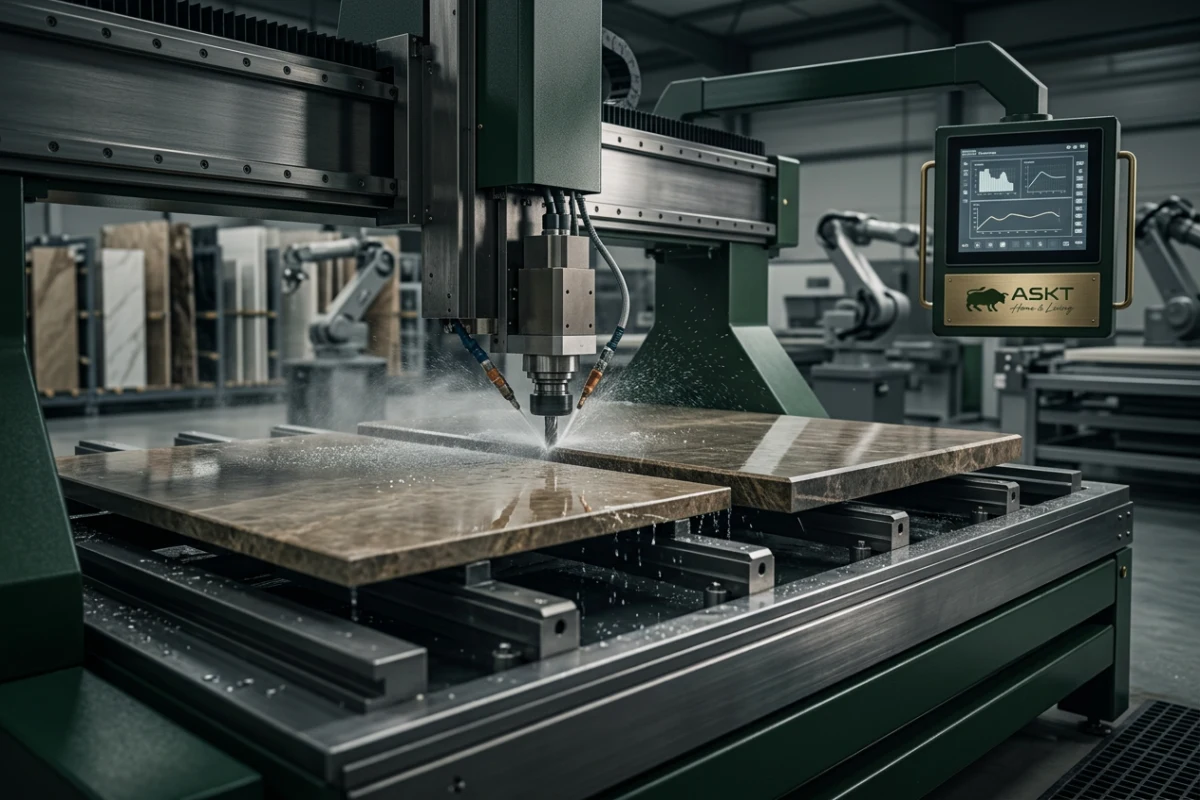
- Precision Waterjet Cutting: Sintered stone slabs and tempered glass sheets are cut to exact matching dimensions using automated CNC waterjet cutters with continuous water cooling to prevent thermal micro-cracks.
- Automated Edge Chamfering: CNC polishing tools grind a clean micro-chamfer around the perimeter to eliminate sharp burs and edge stress points.
- Cleanroom Adhesive Application: Stone slabs and glass substrates are cleaned thoroughly in a dust-free environment. High-strength structural laminating resin is applied evenly across the entire surface.
- Vacuum Hydraulic Pressing: The bonded layers are cured under uniform hydraulic pressure in a vacuum lamination machine, eliminating air bubbles and ensuring durable bond strength in diverse indoor climates.
Production Steps for 12mm Solid Sintered Stone Dining Tables
Fabricating a premium 12mm solid sintered stone dining table requires heavy-duty ceramic and stone processing equipment:
- High-Power Bridge Saw Cutting: Heavy bridge saws fitted with industrial diamond blades cut the dense 12mm monolithic slab at controlled feed rates with continuous water coolant.
- Multi-Axis CNC Edge Profiling: Automated CNC routing heads shape, bevel, and polish the monolithic edges, creating smooth bullnose, bevelled, or chamfered profiles.
- Underside Structural Recesses: If internal tension rods or metal mounting plates are required, high-precision router heads mill shallow channels into the underside of the slab without weakening its core flexural strength.
Which Tabletop Thickness Best Fits Your European Furniture Channel?
Choosing between a 6mm composite sintered stone table top and a 12mm solid sintered stone dining table depends on your distribution model, target price point, and product portfolio.
When European Importers and Retailers Should Choose 6mm Composite Tops
- E-Commerce Furniture Brands: Online retail requires reliable parcel and pallet transport. The impact-dampening laminated structure and compact carton profiles of 6mm composite tables reduce transit breakage and lower return rates.
- Volume Retail Chains and Wholesalers: For retailers targeting accessible mid-market price tiers, composite dining tables offer premium aesthetic appeal at manageable production costs, maximizing container loading capacity.
- Extendable Dining Table Collections: Butterfly extensions, pull-out end leaves, and rotating swivel mechanisms perform best with lighter tabletops. A 6mm composite surface reduces mechanical wear on metal rails and extension hardware.
- Hospitality and Restaurant Projects: Commercial dining spaces benefit from the impact-resistant lamination and easy reconfigurability of composite dining tables.
When European Importers and Retailers Should Choose 12mm Solid Tops
- High-End Showrooms and Independent Retailers: Showrooms catering to premium consumers value the substantial weight, authentic monolithic stone edge, and luxury feel of solid 12mm stone.
- Architectural and Minimalist Dining Collections: Designs featuring open metal trestle bases or slender structural frames showcase the self-supporting monolithic profile of 12mm solid stone.
- Contract Executive Dining and Boardrooms: Premium commercial boardrooms and luxury residential developments demand the prestige and visual weight of a solid monolithic ceramic slab.
| Buyer Business Model | Recommended Construction | Key Sourcing Benefit |
|---|---|---|
| Online Furniture Brand | 6mm Composite System | Lower courier breakages, compact flat-pack packaging |
| High-Volume Retail Chain | 6mm Composite System | Maximized container yield, attractive consumer price point |
| Premium Furniture Showroom | 12mm Solid Sintered Stone | Monolithic stone profile, high perceived product value |
| Extension Table Line | 6mm Composite System | Smooth hardware operation, reduced mechanism strain |
| Contract Hospitality Buyer | 6mm Composite System | Reliable impact dampening, durable daily performance |
What Sourcing Factors Should Buyers Evaluate When Selecting a Sintered Stone Dining Table Supplier?
Selecting an experienced sintered stone dining table supplier requires reviewing production standards and quality control protocols to protect product consistency and brand reputation.
- Adhesive Quality and Lamination Integrity: For composite tables, verify that the supplier uses structural, temperature-stable laminating resins rather than standard solvent glues. Substandard adhesives can degrade over time when exposed to European seasonal heating changes, causing surface clouding or delamination.
- Automated Edge Chamfering Quality: Inspect sample edges to confirm that perimeter cuts receive smooth CNC micro-chamfering. Rough or sharp 90-degree sawn edges are prone to chipping during warehouse handling and customer assembly.
- Export Packaging Standards: Ensure the manufacturer uses multi-layer export packaging, including reinforced honeycomb corner protectors, high-density edge foam, and sturdy wooden crates for solid stone slabs to prevent transit damage.
- Integrated Subframe Engineering: Sourcing tabletops and metal chassis from a single specialized manufacturer guarantees that frame tolerances, expansion buffers, and load-bearing rails are properly aligned and tested together.
At ASKT, we bring over 20 years of B2B furniture manufacturing experience to European furniture wholesalers, retail chains, and contract buyers. Our production lines combine automated CNC stone fabrication, durable metal subframe manufacturing, and comprehensive quality control processes aligned with European durability requirements.
Inquire about suitable tabletop constructions for your product range to learn how our engineering expertise, custom OEM and ODM solutions, and container-optimized packaging can support your dining furniture business.